Easy Fractions of Shapes Worksheets for Ages 6-9
23 filtered results
-
From - To
Discover our “Easy Fractions of Shapes Worksheets” designed specifically for children ages 6-9! These engaging, printable worksheets make learning about fractions fun and accessible. Kids will explore fractions through colorful shapes, helping them visualize concepts such as halves, thirds, and quarters. Each worksheet features interactive problems that promote critical thinking and enhance math skills. Perfect for classroom activities or at-home learning, these worksheets cater to various learning styles and ensure a comprehensive understanding of fractions in a creative way. Start your child’s journey into the world of fractions today, and watch their confidence soar in math! Download now!
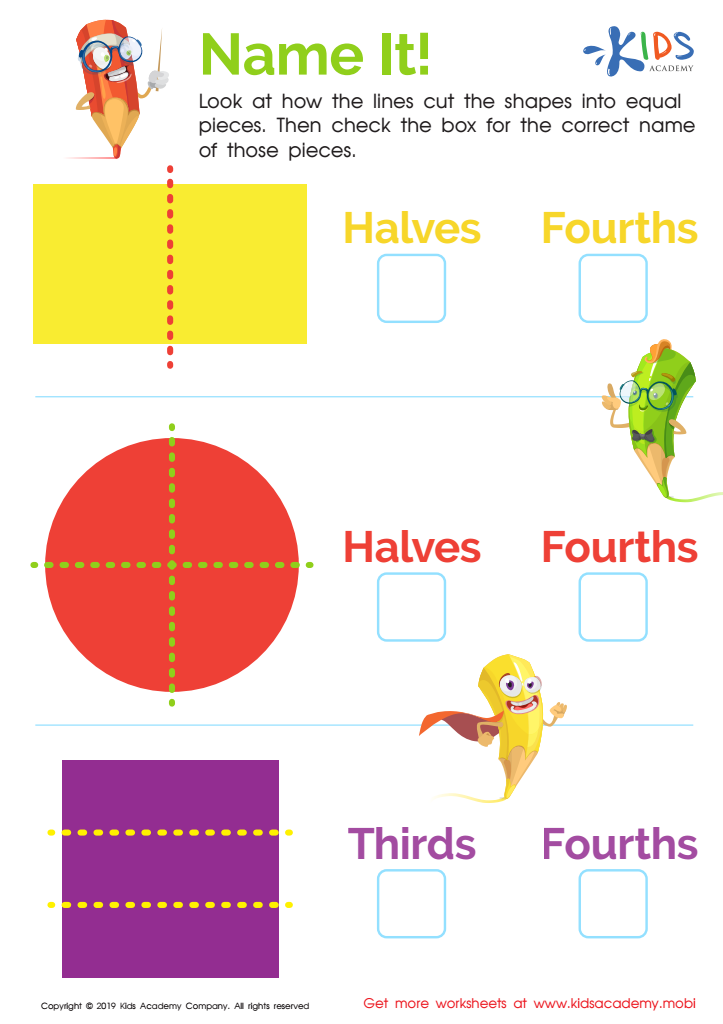
Name It! Worksheet
 Assign to My Students
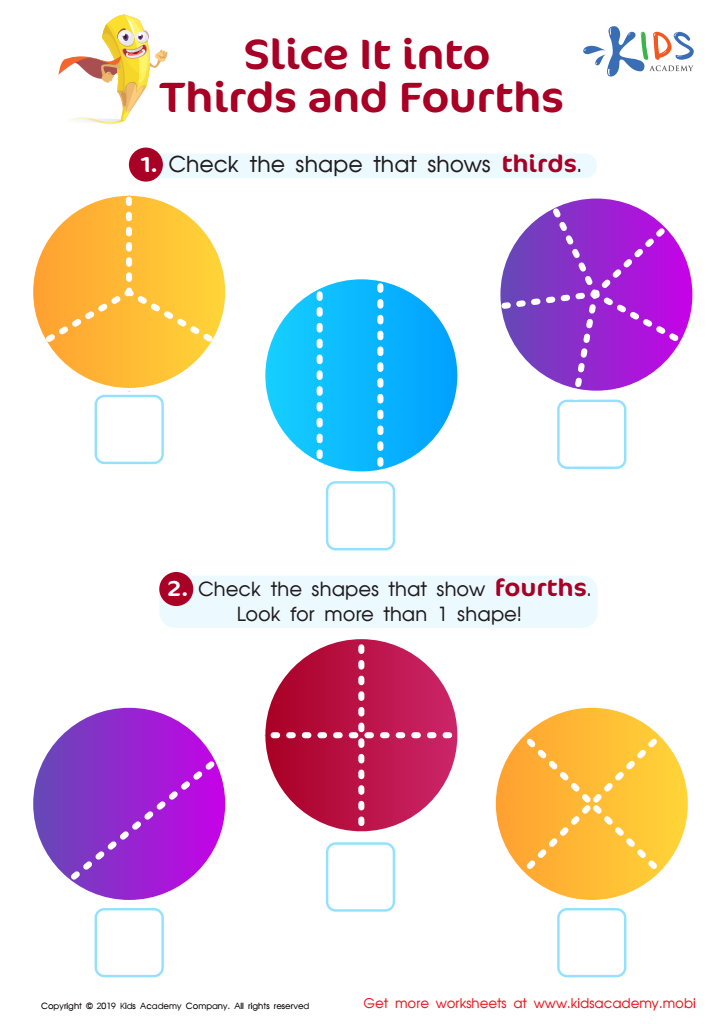
Slice in Thirds Fourths Worksheet
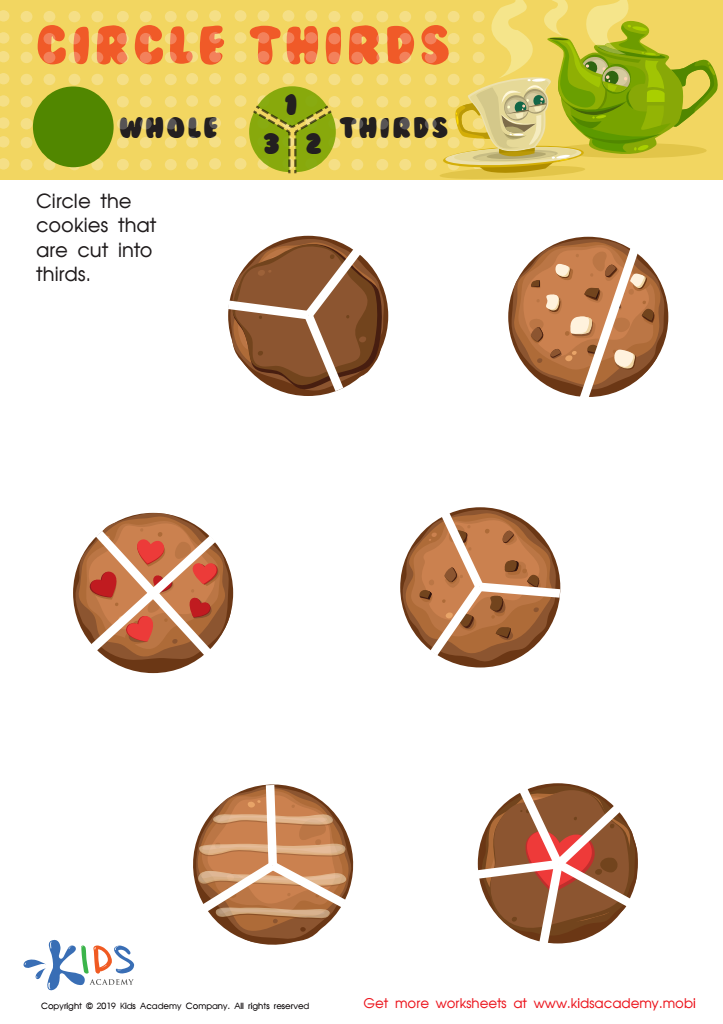
Circle Thirds Worksheet
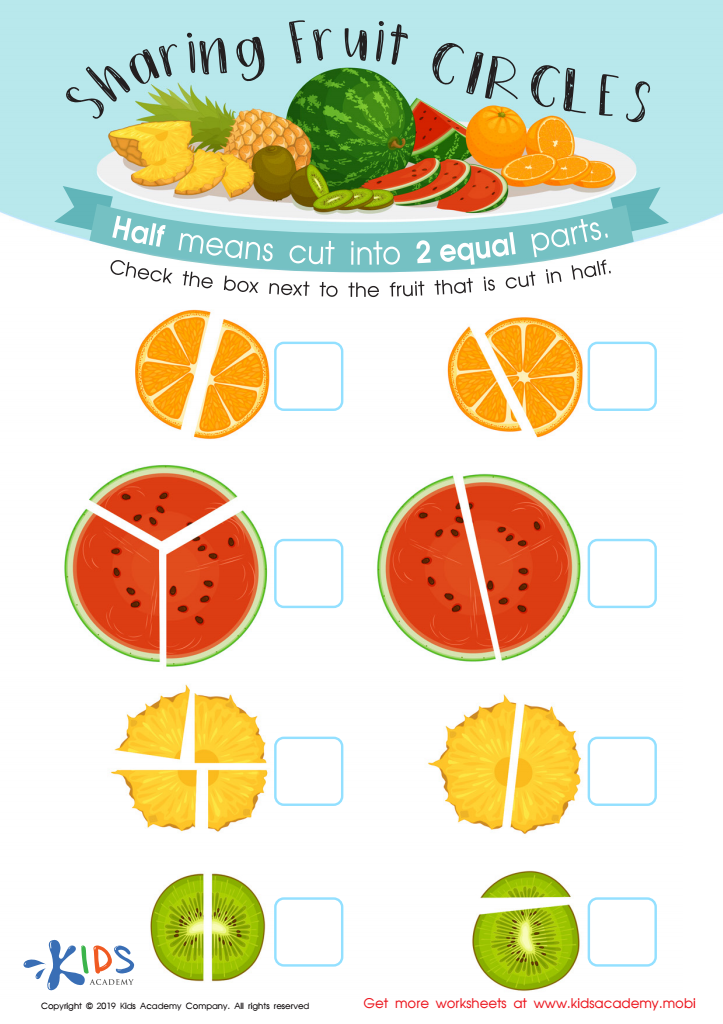
Sharing Fruit Circles Worksheet
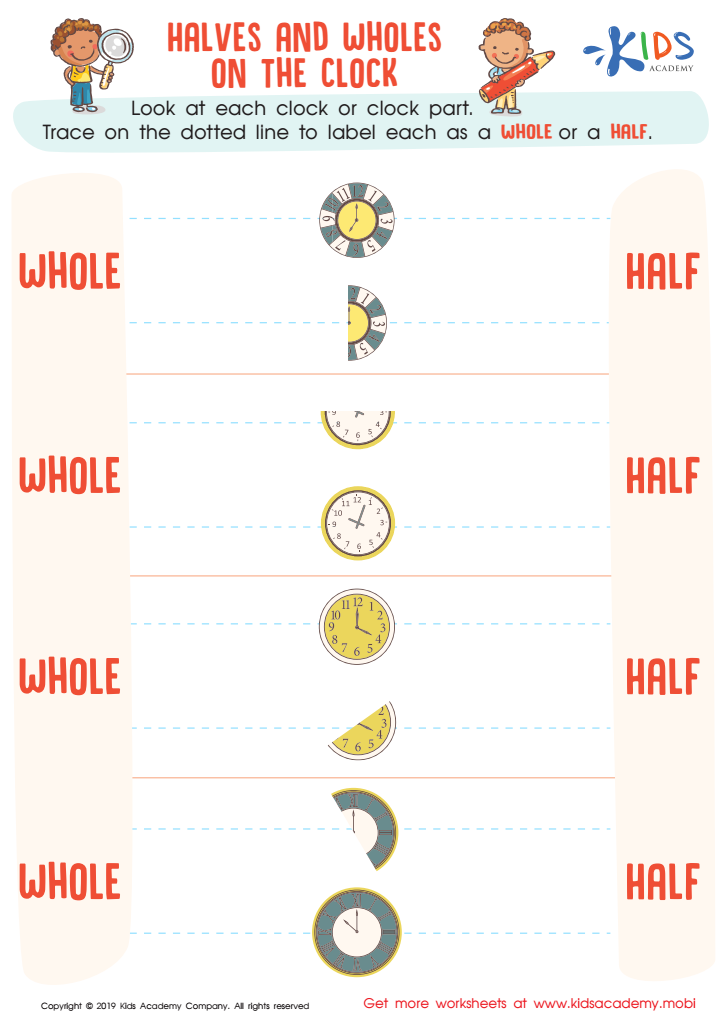
Halves and Wholes on the Clock Worksheet
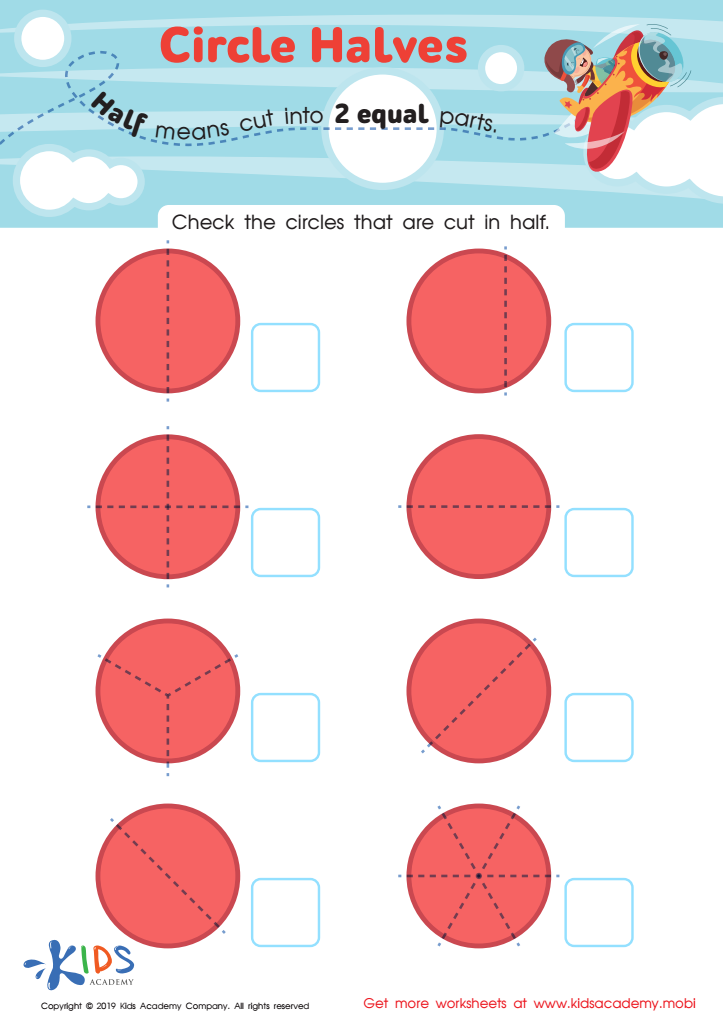
Circle Halves Worksheet
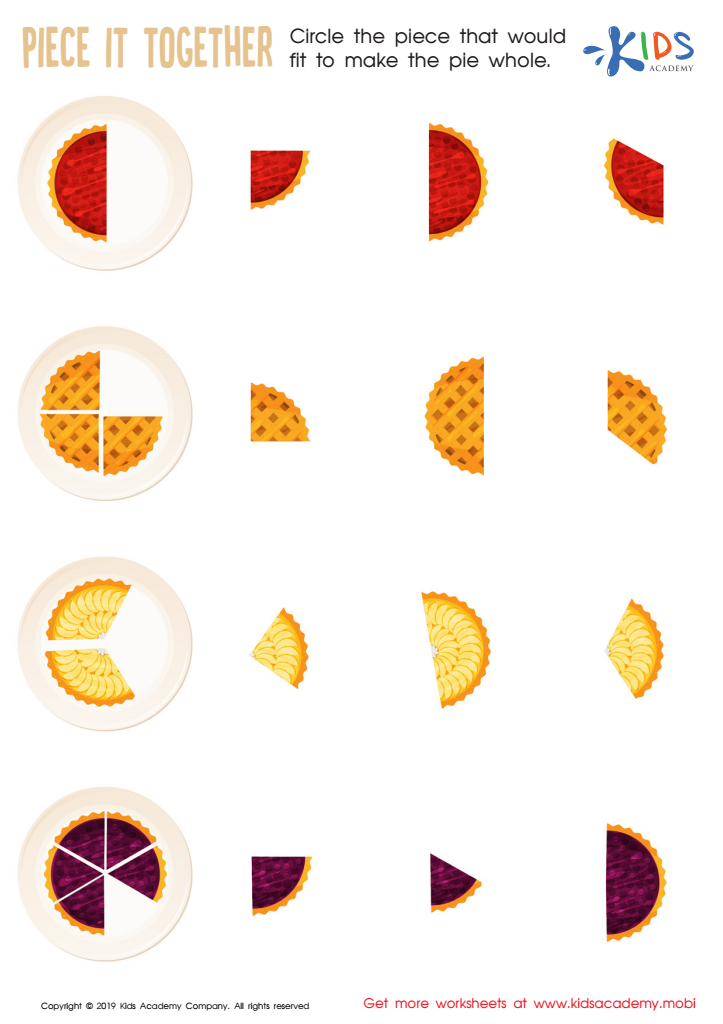
Piece it together Worksheet
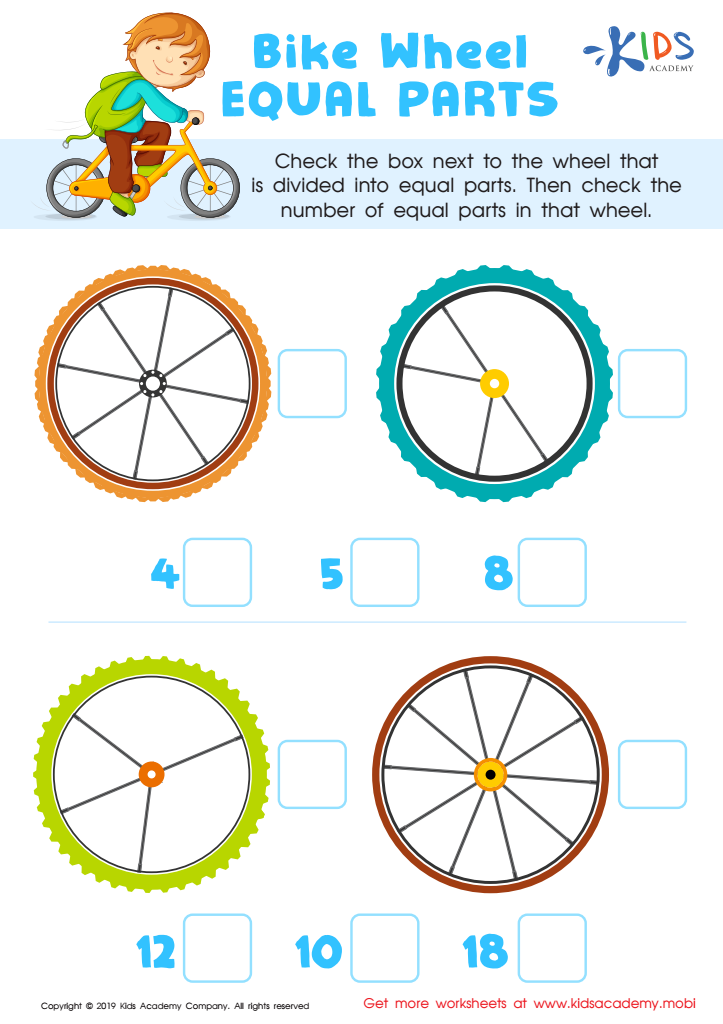
Bike Wheel Equal Parts Worksheet
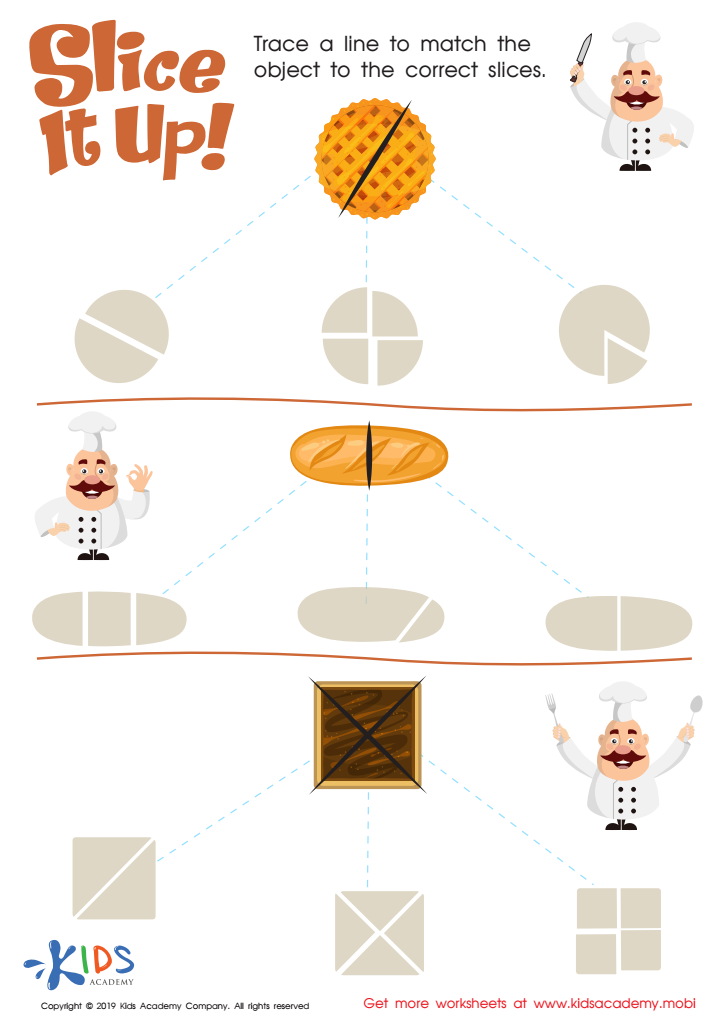
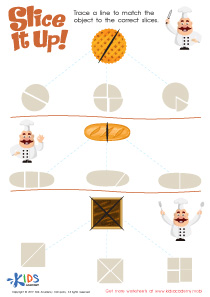
Slice It Up Worksheet
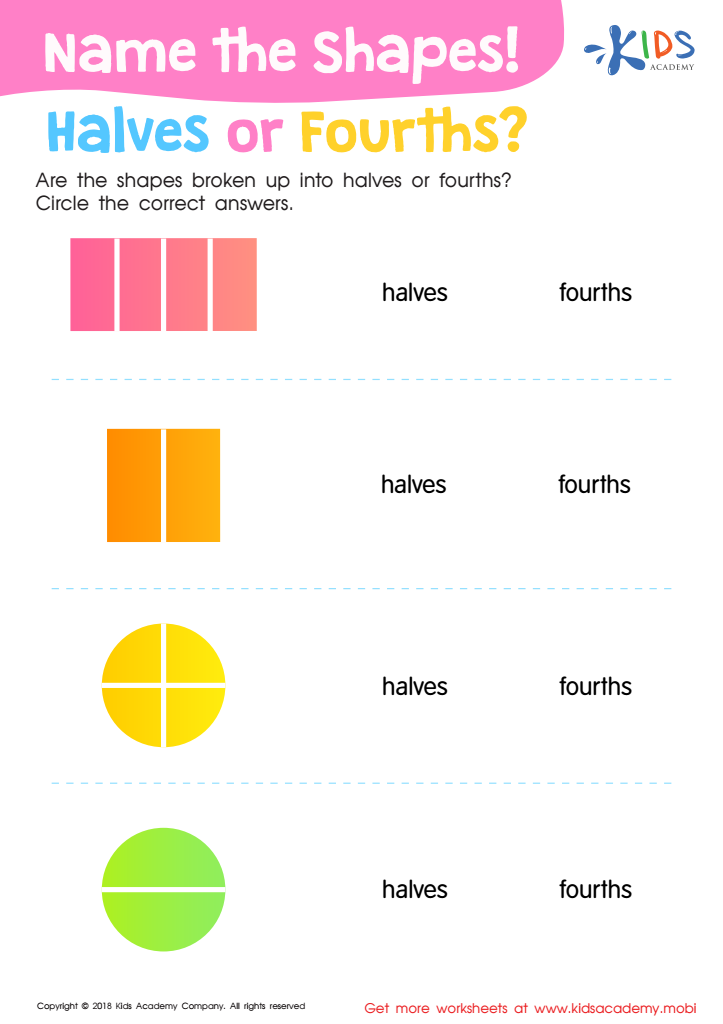
Name the Shapes Halves or Fourths? Worksheet
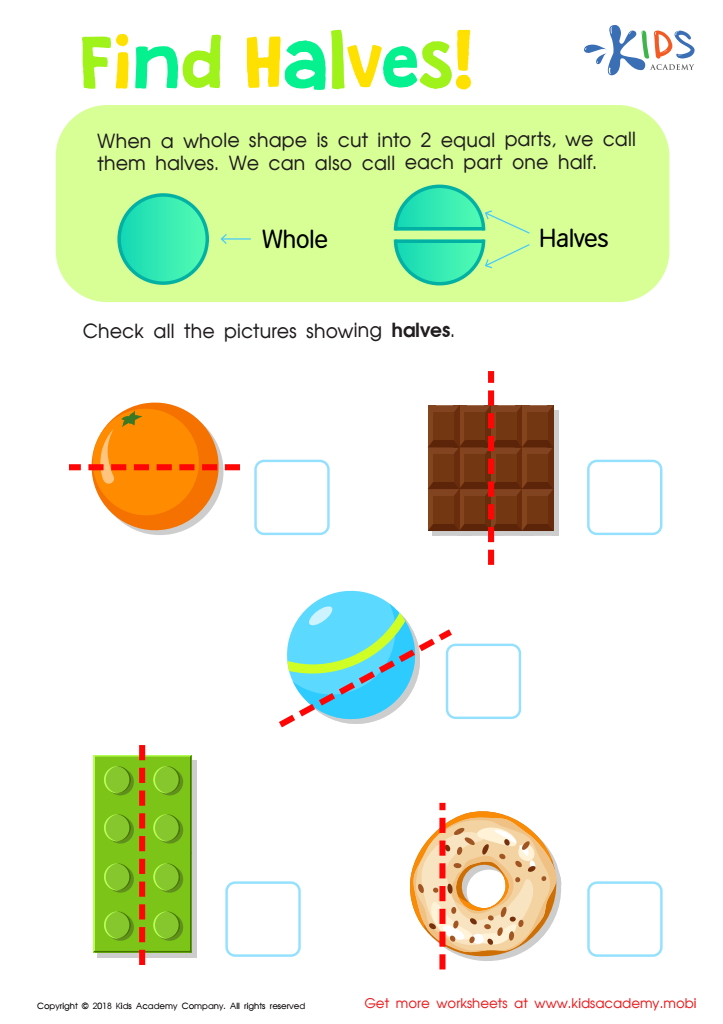
Find Halves Worksheet
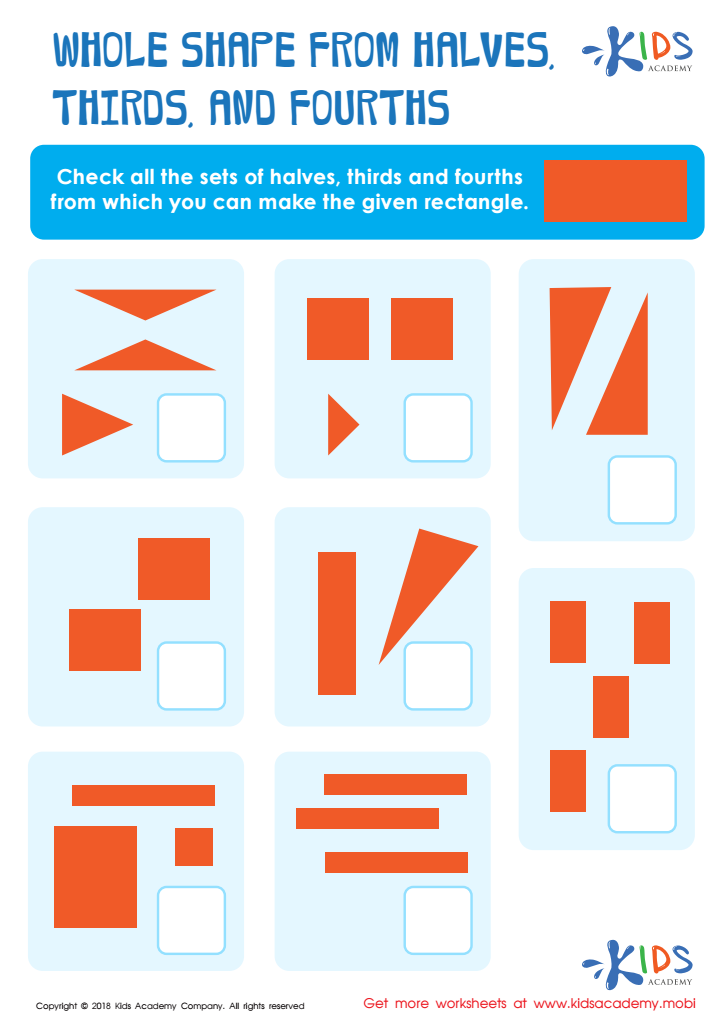
Whole Shape from Halves, Thirds and Fourths Worksheet
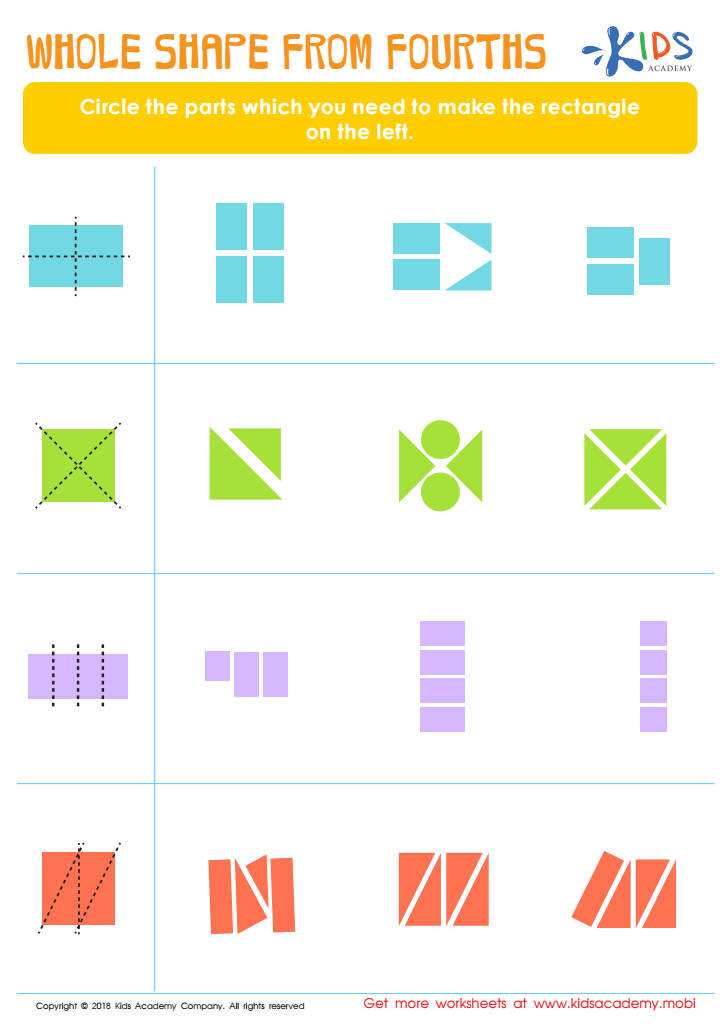
Whole Shape from Fourths Worksheet
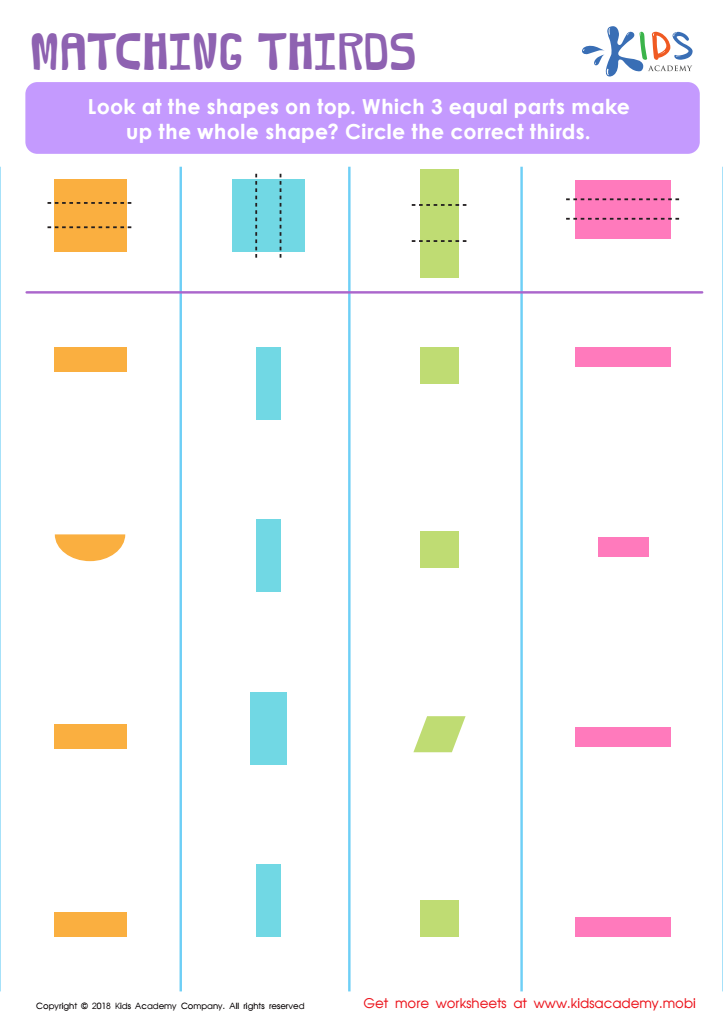
Matching Thirds Worksheet
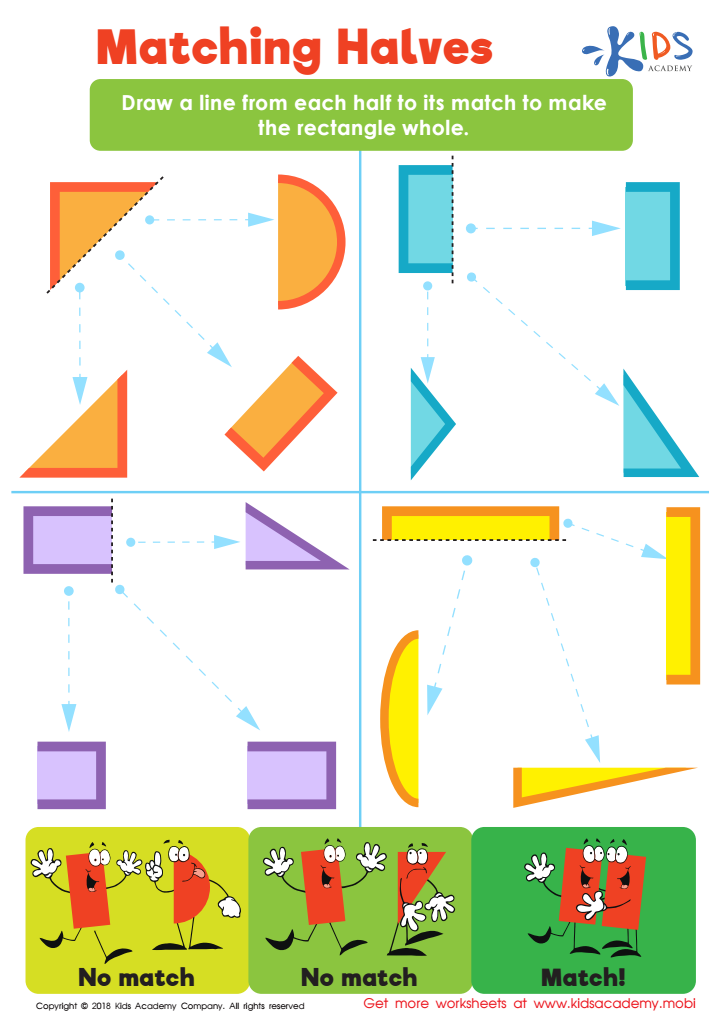
Matching Halves Worksheet
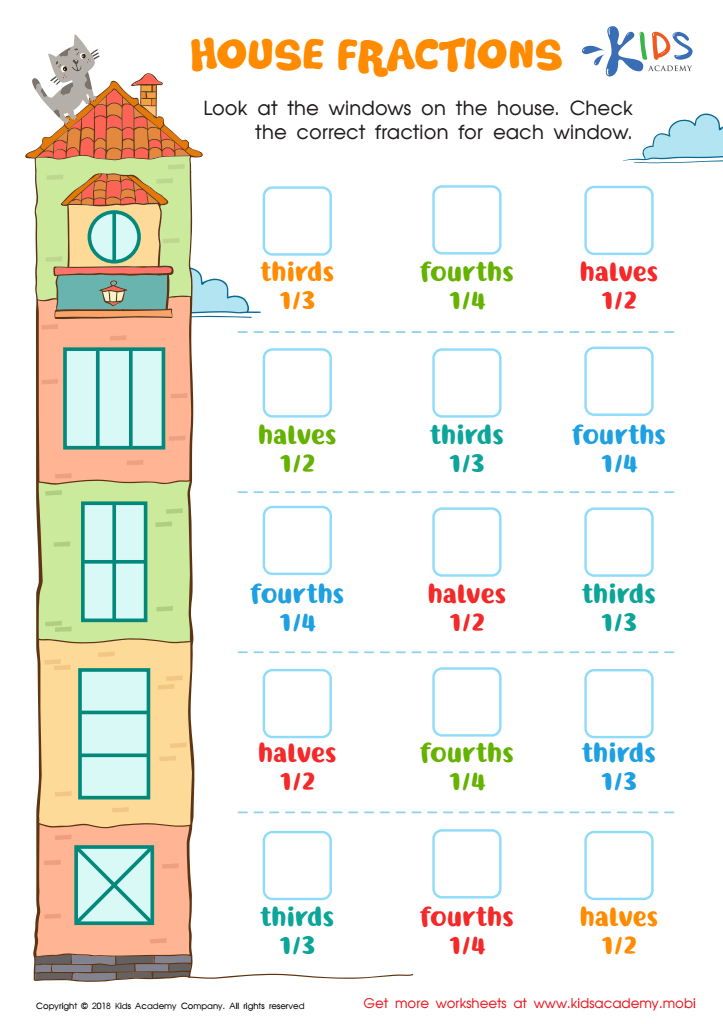
House Fractions Worksheet
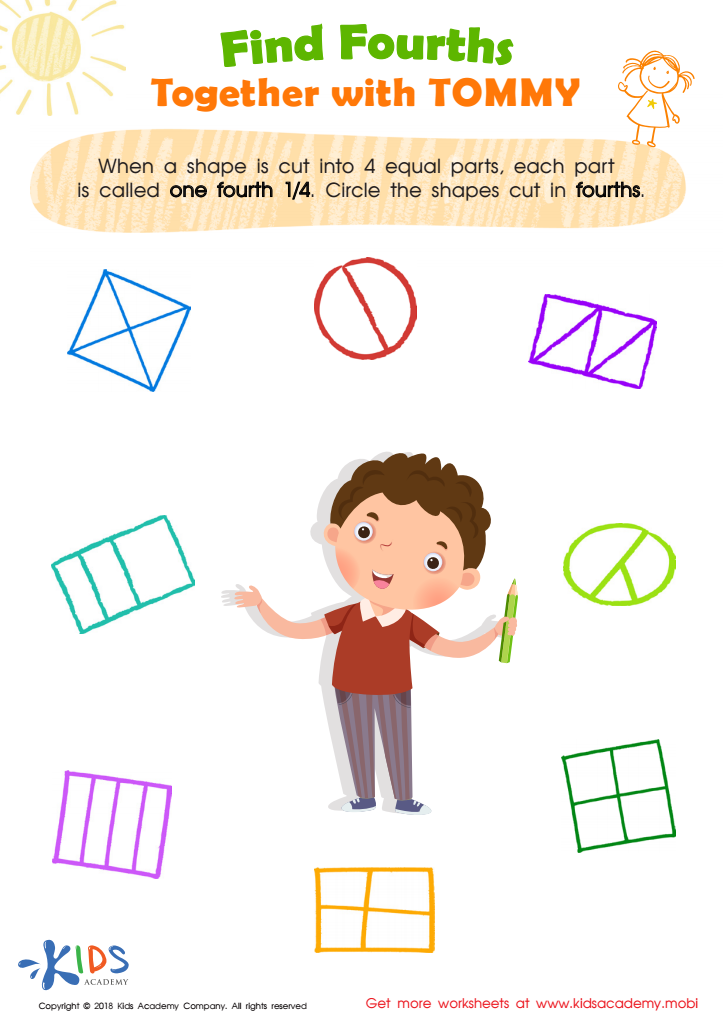
Find Fourths Together with Tommy Worksheet
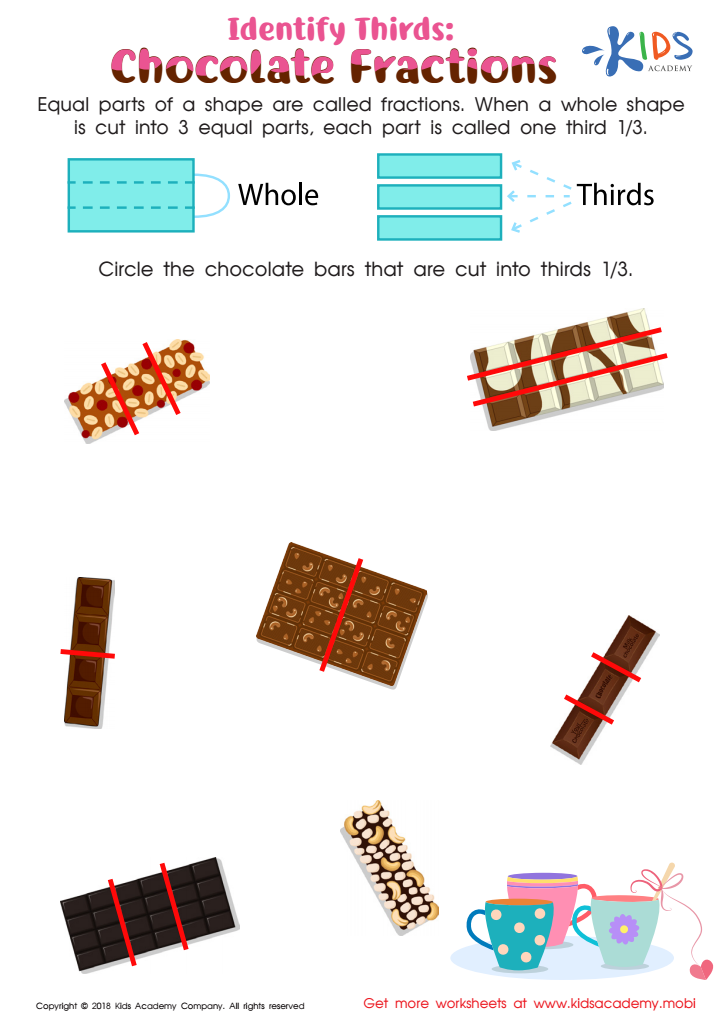
Identify Thirds: Chocolate Fractions Worksheet
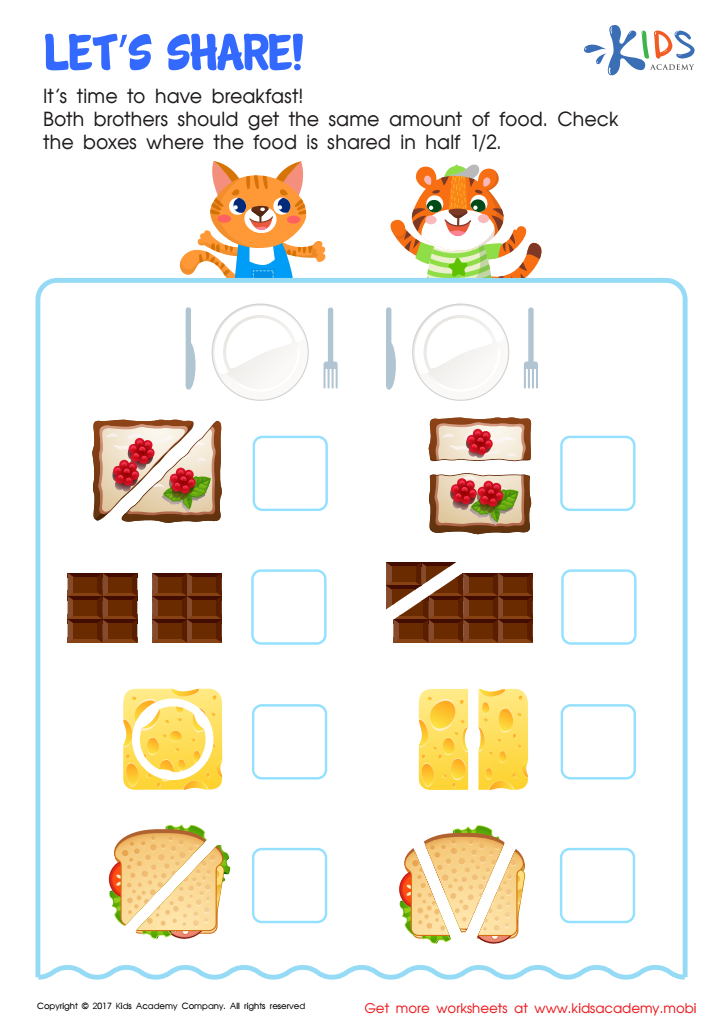
Let's Share Worksheet
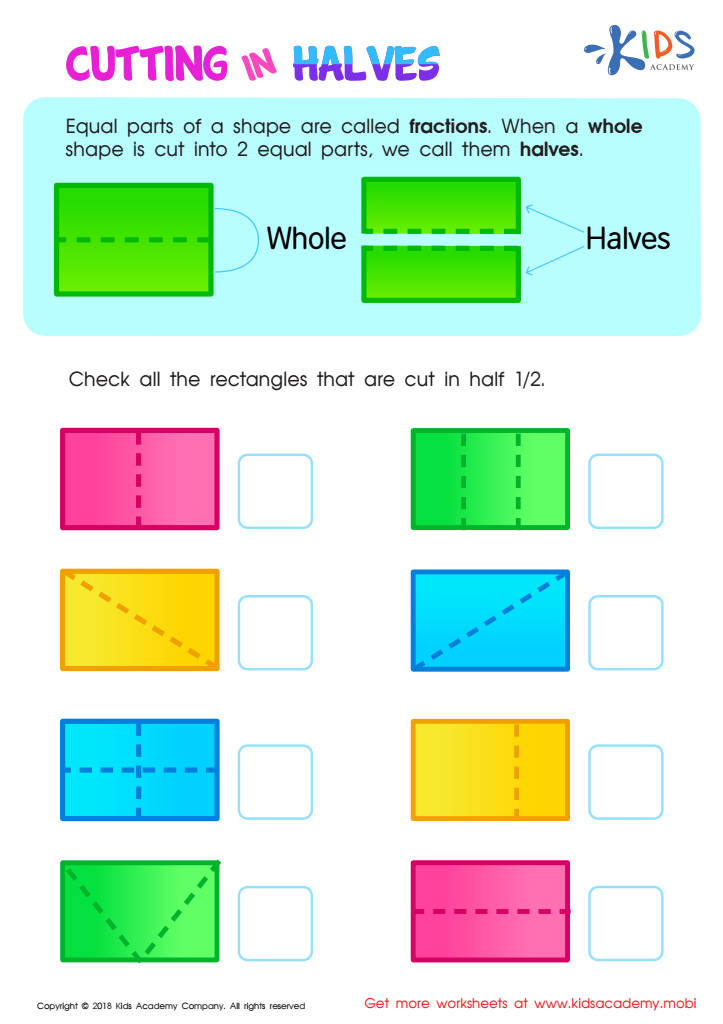
Cutting in Halves Worksheet
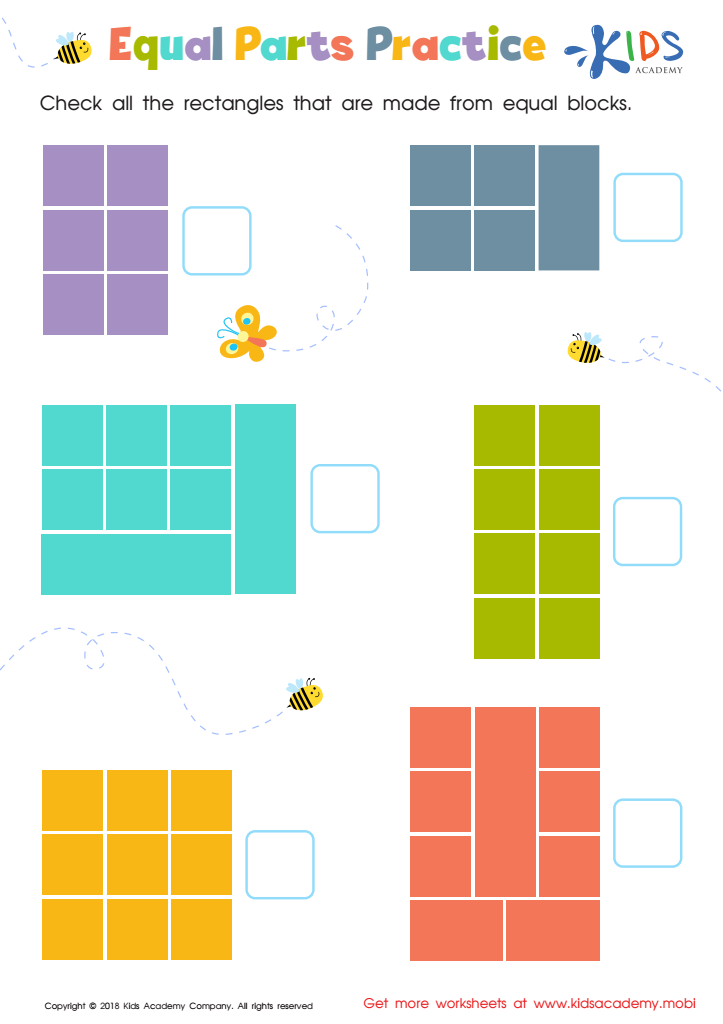
Equal Parts Practice Worksheet
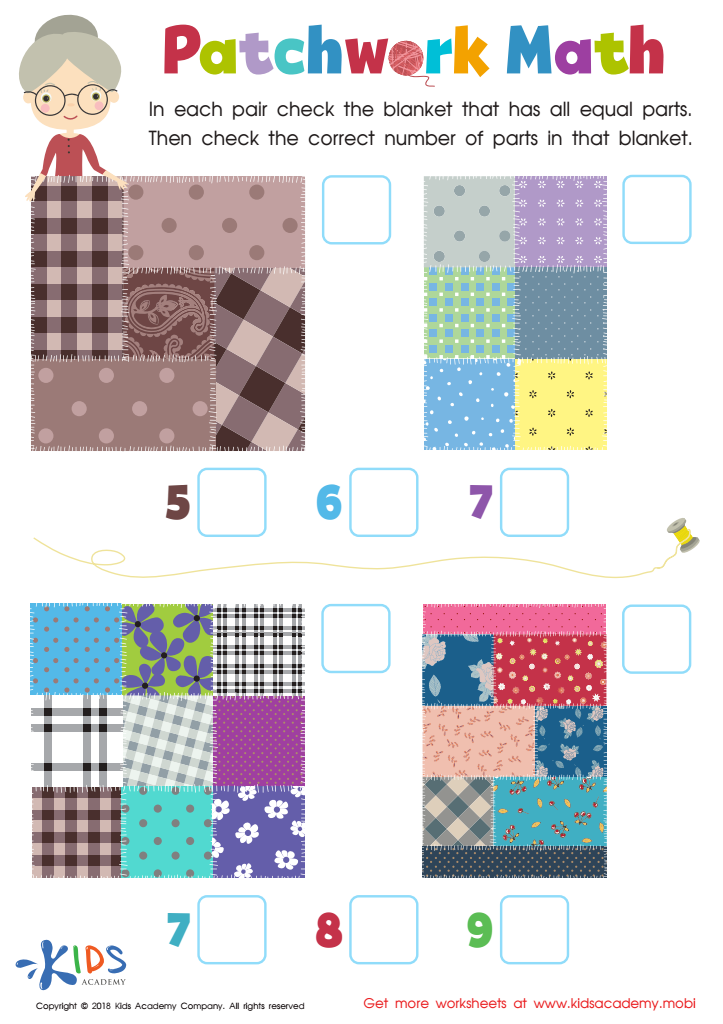
Patchwork Math Worksheet
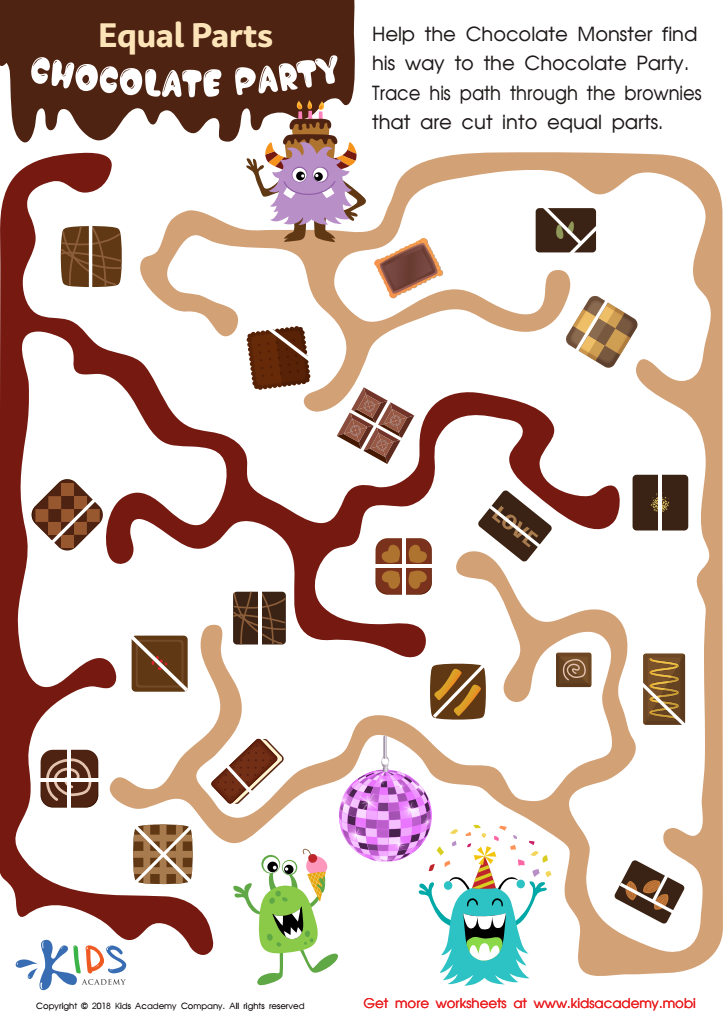
Equal Parts: Chocolate Party Worksheet








Understanding easy fractions of shapes is a vital skill for children ages 6-9, serving as a building block for their mathematical development. At this age, children are beginning to grasp fundamental concepts of partitioning shapes into equal parts. This understanding helps them recognize that fractions represent a portion of a whole, which is crucial for future learning in both math and real-life situations.
Teaching fractions through shapes enhances visual and spatial reasoning, enabling children to visualize how parts relate to a whole. For example, when a child divides a circle into halves or quarters, they learn not only about mathematical concepts but also about equality and fairness. This intrinsic connection fosters critical thinking as kids learn to relate fractions to everyday contexts, such as slicing a pizza or sharing a chocolate bar.
Furthermore, grasping fractions encourages collaboration and communication among peers, as children often share ideas and strategies during hands-on activities. By focusing on easy fractions, teachers and parents lay a strong foundation for more complex mathematical concepts such as equivalency, addition, and subtraction of fractions in later grades. Investing time and effort in understanding fractions during these formative years ultimately leads to greater confidence and competence in mathematics as children progress through their education.