Easy Online MathWorksheets for Kids - Page 10
357 filtered results
Difficulty Level
Grade
Age
-
From - To
Subject
Activity
Standards
Favorites
With answer key
Interactive
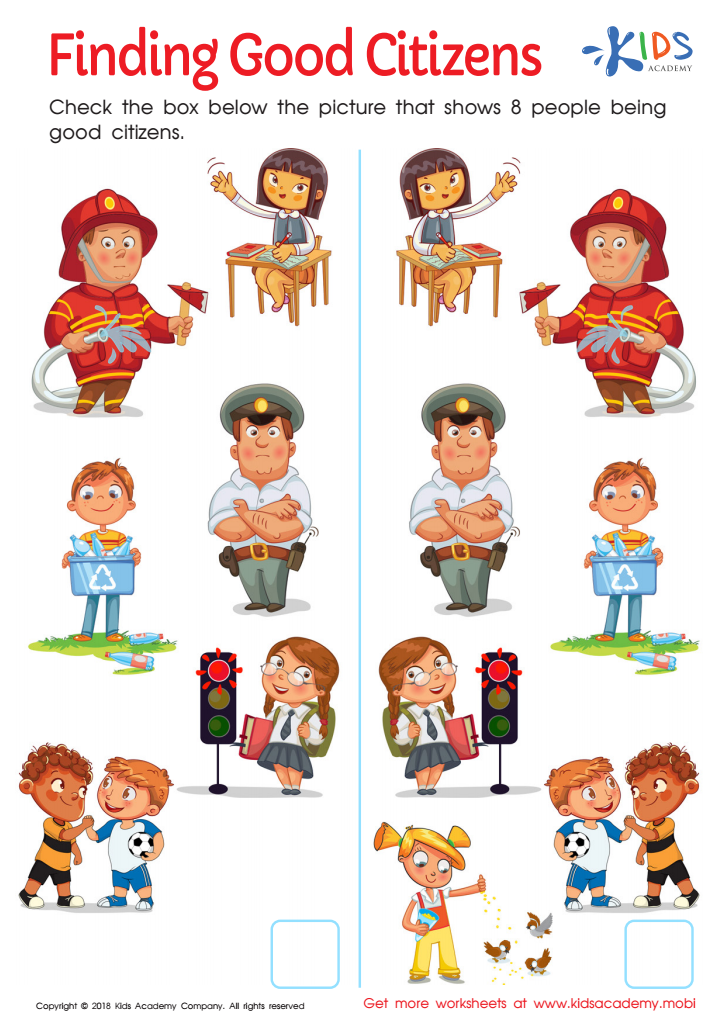
Finding Good Citizens Worksheet
Teach your students what it takes to be a responsible citizen in their community. Test their knowledge by having them identify good citizen acts in pictures. Ask them to check the box showing 8 people being good citizens. Challenge their comprehension and make sure they understand the importance of being a good citizen.
 Assign to My Students
Finding Good Citizens Worksheet
Worksheet
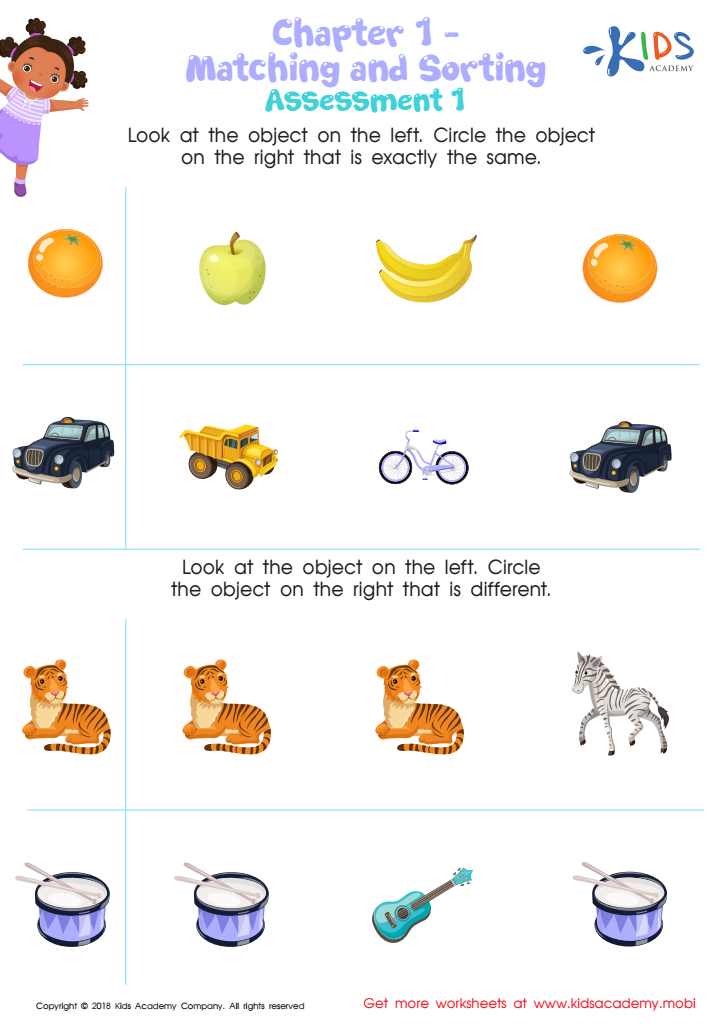
Matching and Sorting for Preschool: Assessment 1 Worksheet
Test your child's matching skills with this worksheet! Ask them to name each of the objects pictured, then circle the ones that are the same. Repeat for the second task. It's a great way to assess their skills and have fun at the same time!
Matching and Sorting for Preschool: Assessment 1 Worksheet
Worksheet
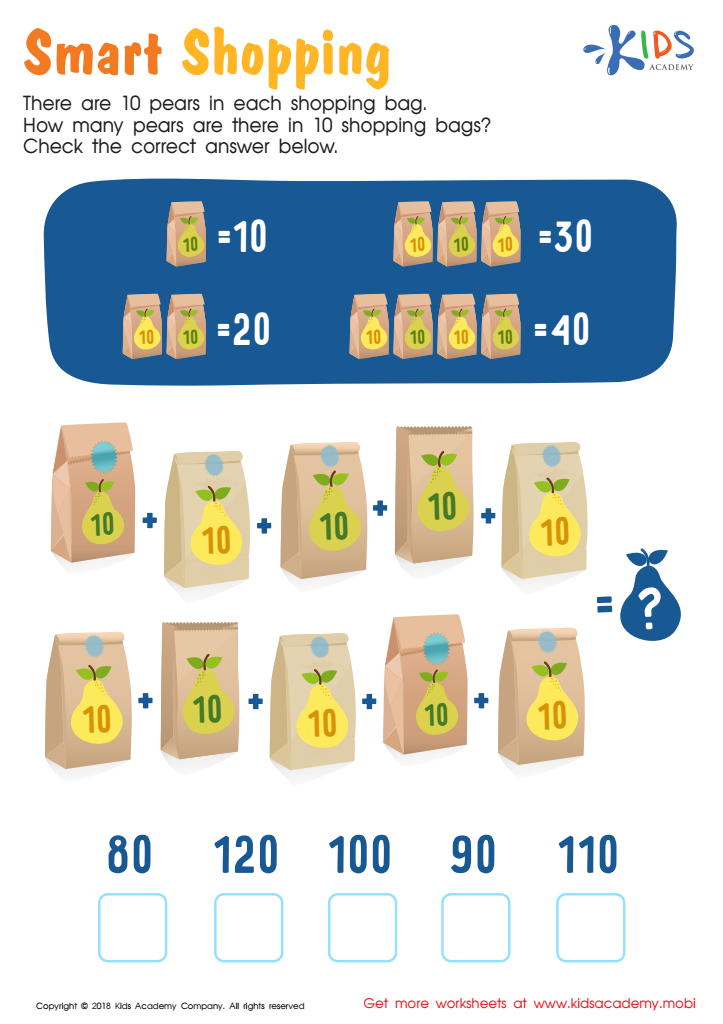
Smart Shopping: Trade Tens for a Hundred Worksheet
Use this worksheet to test counting skills: each bag has 10 pears. Ask your child how many pears are in 10 bags. Guide them as they count through the printout and check the answer below. See if they got it right!
Smart Shopping: Trade Tens for a Hundred Worksheet
Worksheet
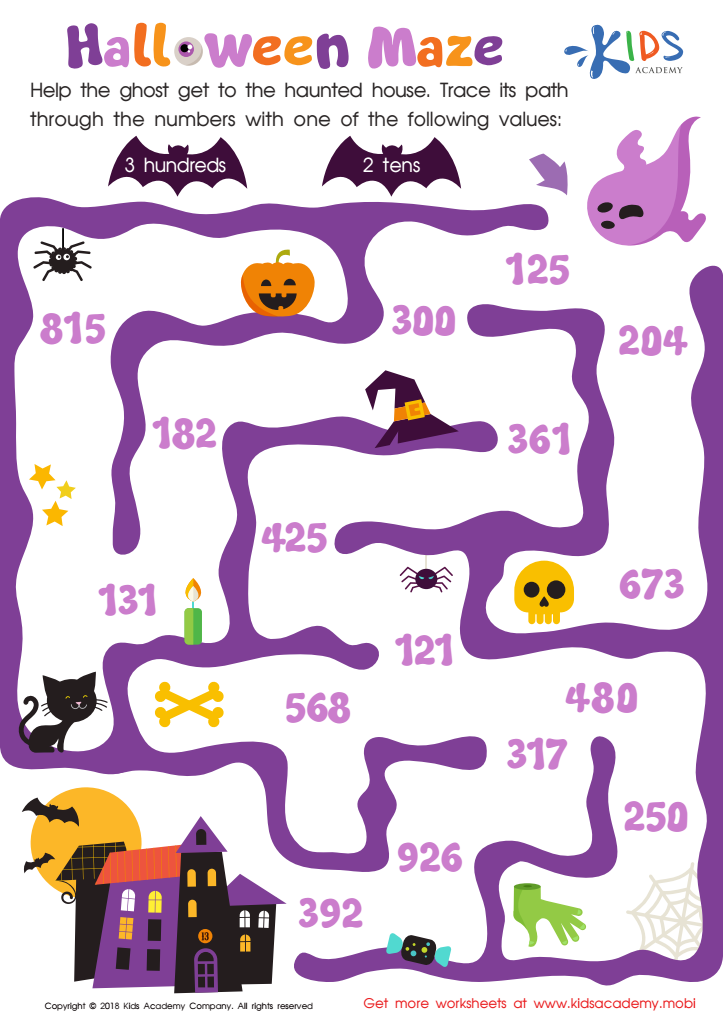
Place Value: Halloween Maze Worksheet
Kids who love haunted houses and Halloween will love this worksheet! Help the ghost reach its haunted house by tracing the path of 3 hundreds or 2 hundreds numbers. At the end is the ghost's spooky home. Have fun!
Place Value: Halloween Maze Worksheet
Worksheet
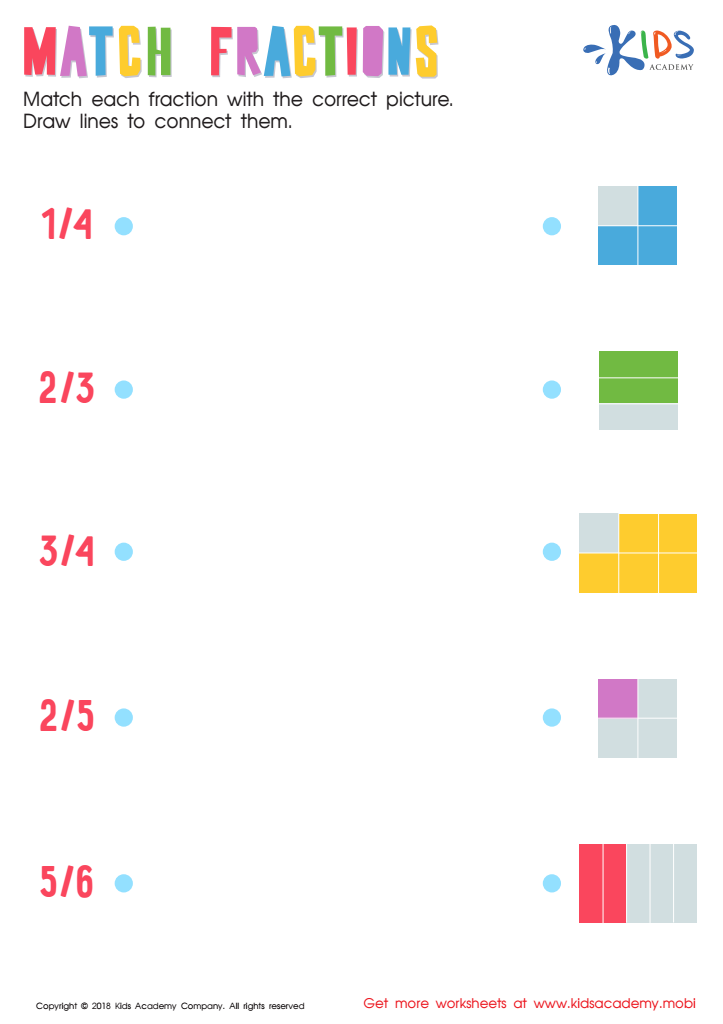
Match Fractions Worksheet
Have your child match fractions to images with this worksheet. There are five fractions on the left and five pictures on the right. Ask them to draw lines to connect each fraction to the right image. It's a great way to learn while having fun!
Match Fractions Worksheet
Worksheet
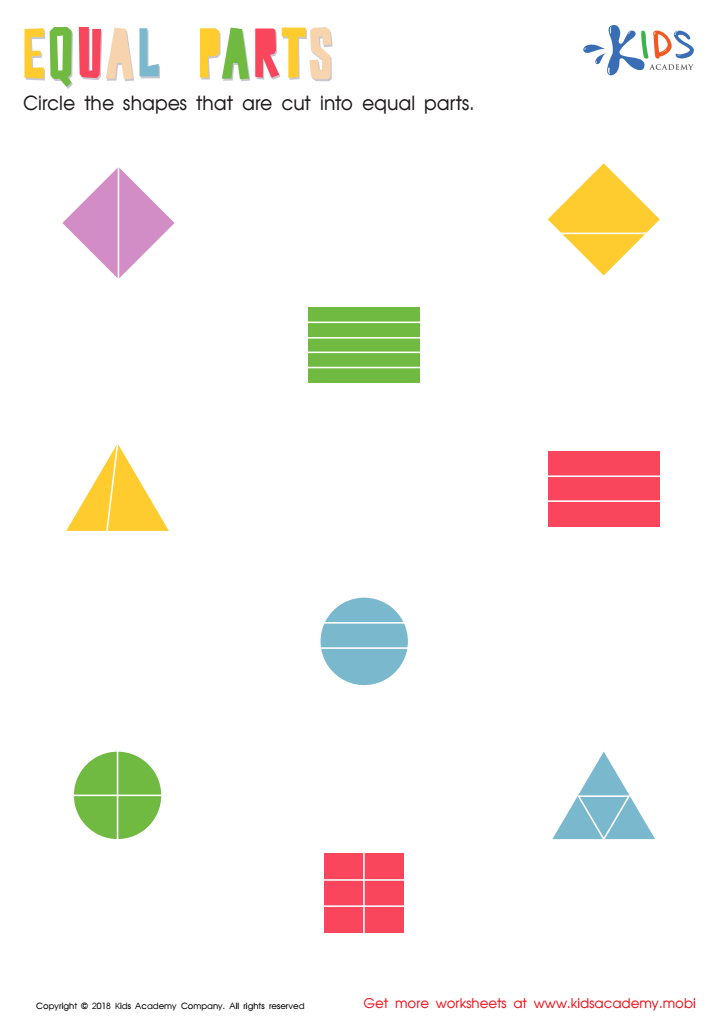
Equal Parts: Shapes Worksheet
Test your child's ability to cut shapes into equal parts with this colorful printout. It includes rectangles, kites, circles, squares, and triangles - your child must circle the shapes that are split evenly. A simple task, but it will show if they understand the concept.
Equal Parts: Shapes Worksheet
Worksheet
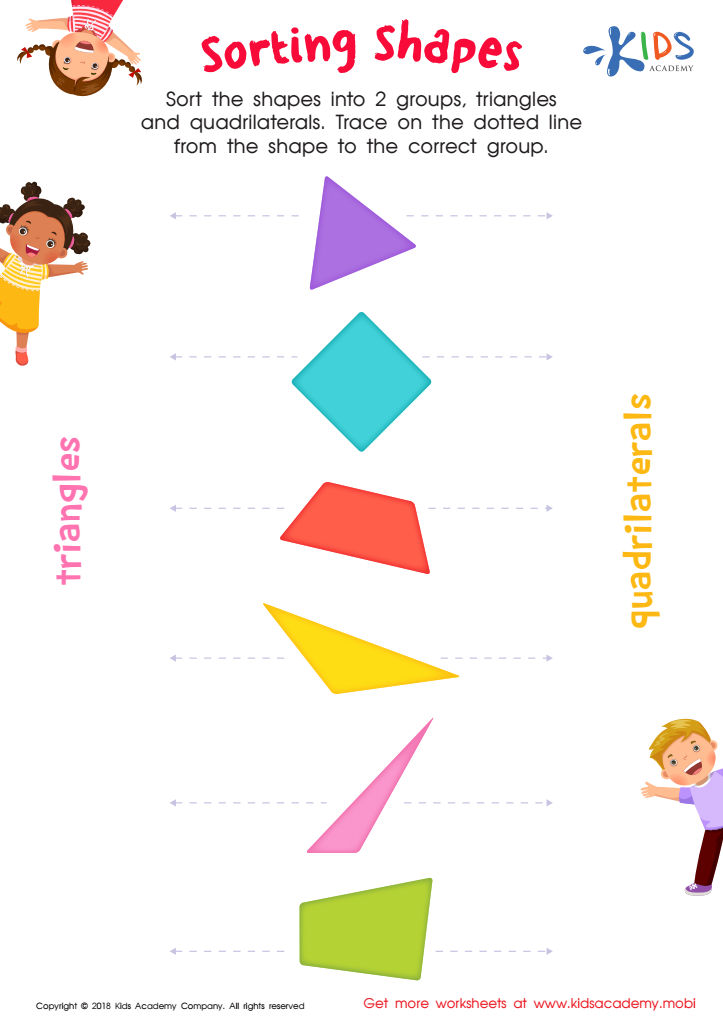
Sorting Shapes Worksheet
Before beginning, ensure your child is familiar with quadrilaterals (4 sides) and triangles (3 sides). This tracing exercise is easy: sort the shapes into the two groups and trace the dotted lines to the correct group.
Sorting Shapes Worksheet
Worksheet
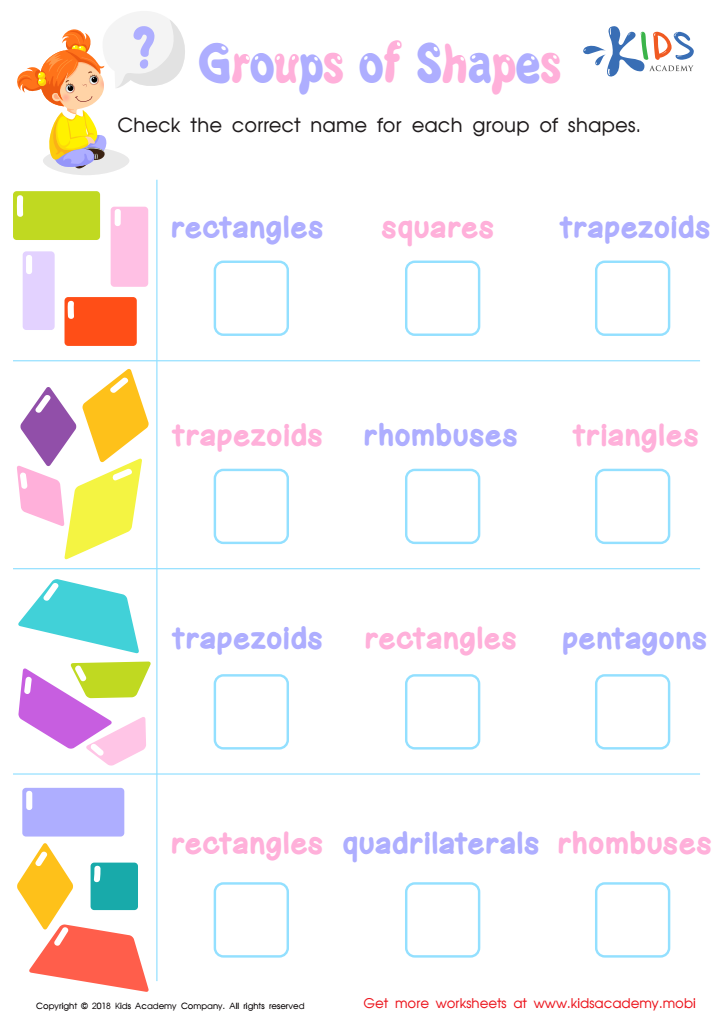
Groups of Shapes Worksheet
Can your child identify and name shapes? Help them learn the unique features of each and have them check the correct name for each group in the colorful pictures on this worksheet.
Groups of Shapes Worksheet
Worksheet
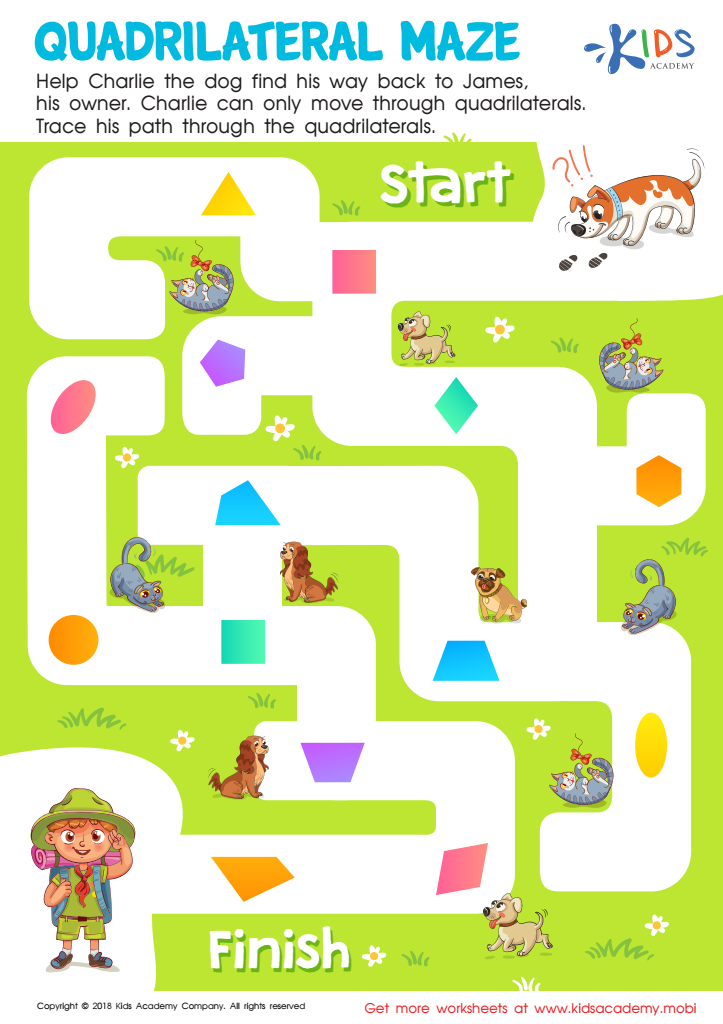
Quadrilateral Maze Worksheet
Does your kid love dogs? If so, this exercise is ideal for them! Help Charlie the pup find his way back to his owner, James, in the quadrilateral maze worksheet. Your child must trace Charlie's path only through squares and rhombuses in order to solve it. Careful planning is key!
Quadrilateral Maze Worksheet
Worksheet
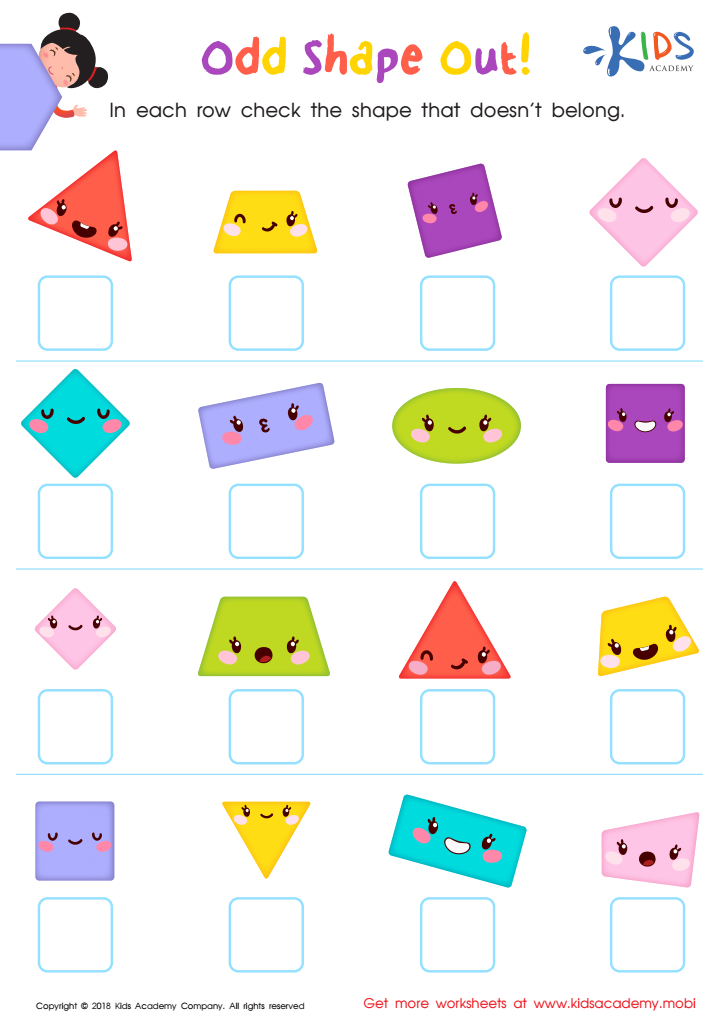
Odd Shape Out Worksheet for Grade 3
Time to test your child's shape knowledge! With this worksheet, help them find the odd shape out in each row and check the box under it. Print out the pdf and look through it with them – each row has four brightly colored shapes. See if they can spot any differences among them and then check the box below the shape that does not belong.
Odd Shape Out Worksheet for Grade 3
Worksheet
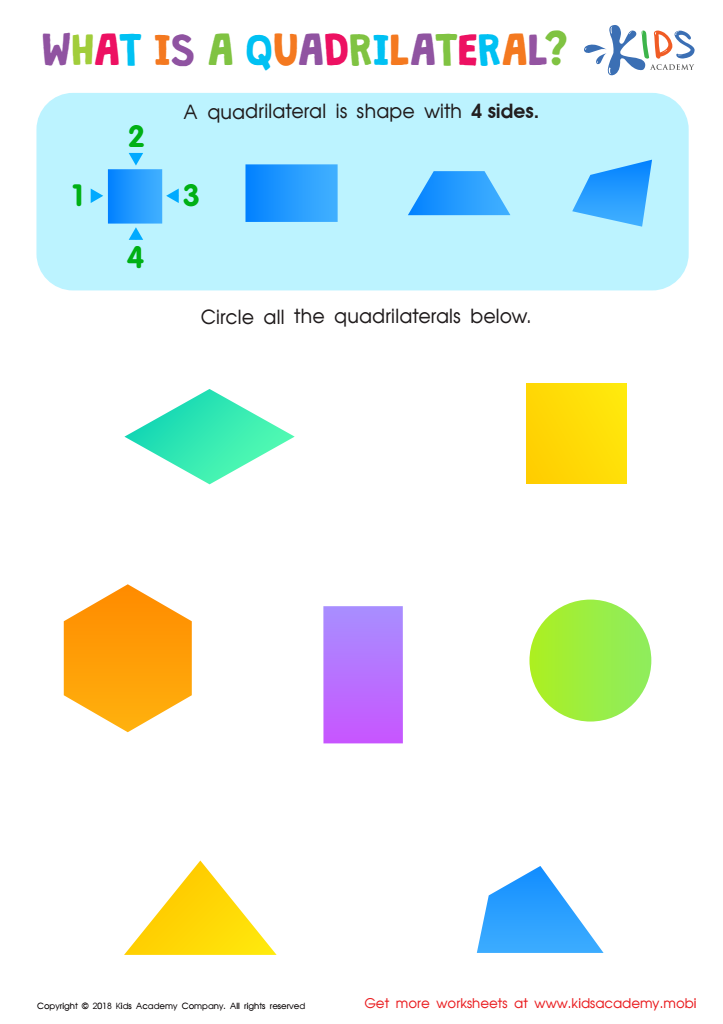
What Is a Quadrilateral? Worksheet
Does your kid know what a quadrilateral is? If not, this worksheet can help teach them. Explain that a quadrilateral is a shape with four sides and give examples, like a square or a rectangle. Then ask them to circle the quadrilaterals in the pictures. If they already know what a quadrilateral is, this task might be too easy.
What Is a Quadrilateral? Worksheet
Worksheet
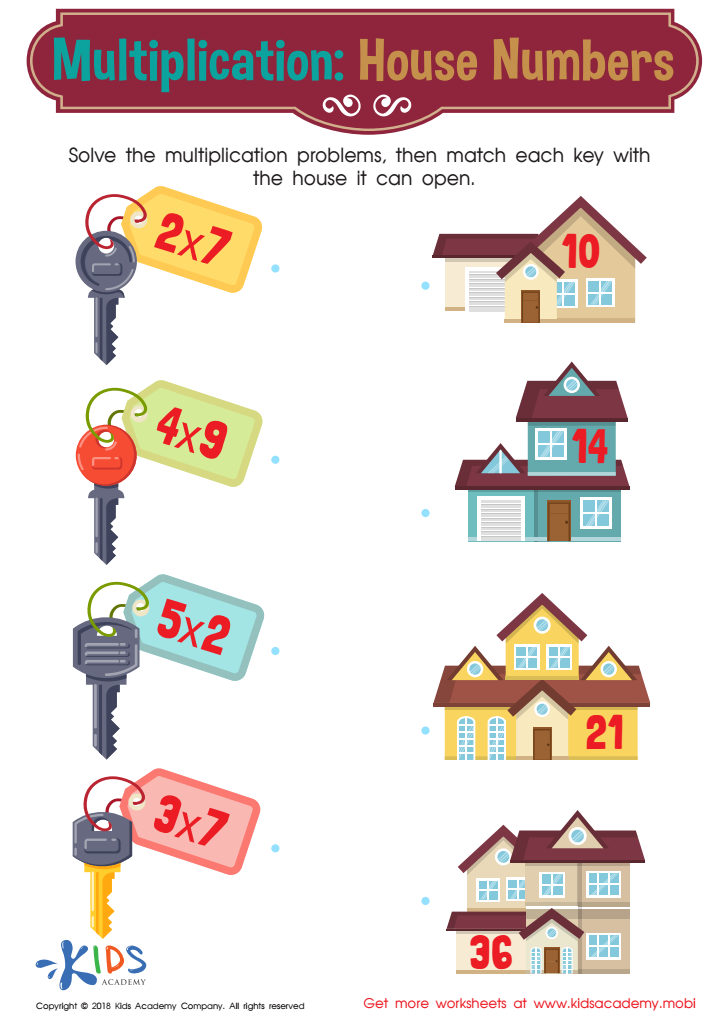
House Numbers Worksheet
This multiplication worksheet is perfect for grade 3 students to sharpen their math skills! Each problem unlocks the door to a house on the page - can they figure out which key fits which door? By solving each problem, they'll boost their multiplication skills and have fun along the way.
House Numbers Worksheet
Worksheet
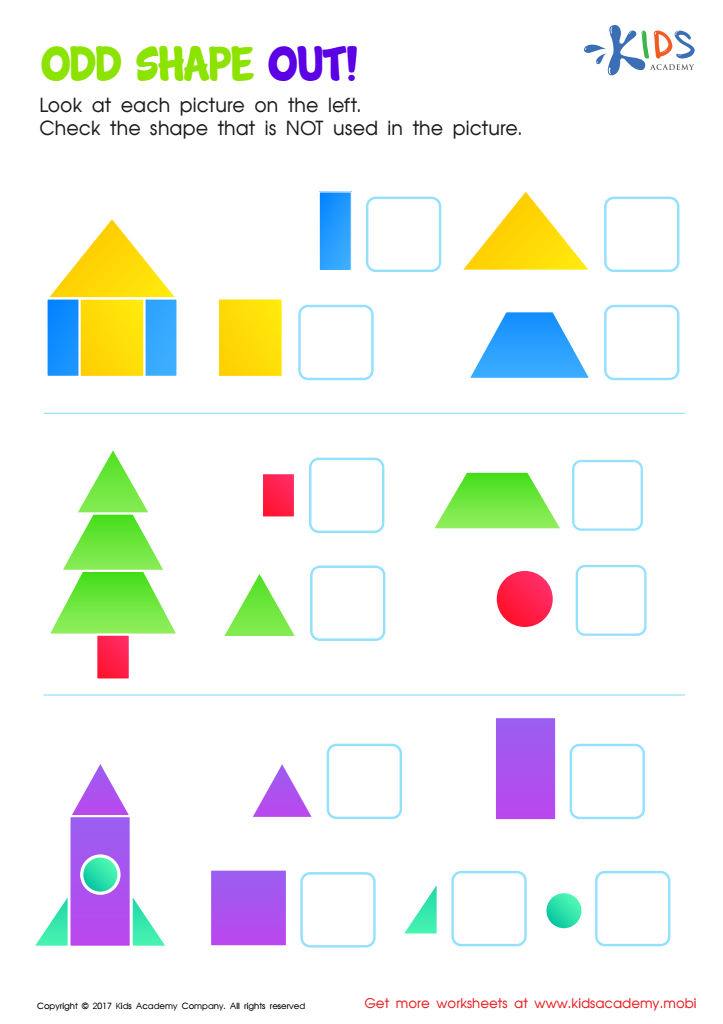
Odd Shape Out Worksheet for Grade 1
This worksheet can help your kids test their knowledge of shapes. They should have already been introduced to the most common shapes and be able to identify and draw them. Look at the picture and help your child identify each shape. Then, check which one isn't used to make the object.
Odd Shape Out Worksheet for Grade 1
Worksheet
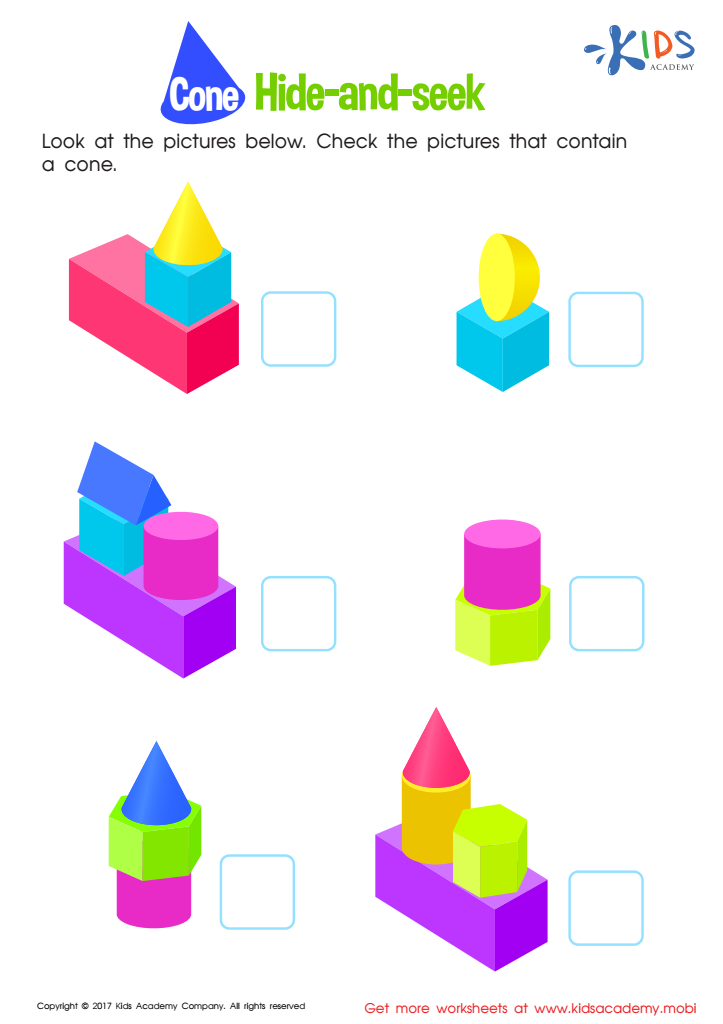
Cone Hide-and-Seek Worksheet
Prior to starting this worksheet, quiz your kid on shapes. If they gave quite a few, you've done well! This pdf will teach them more about cones; show them the pictures in the printout and have them identify which ones contain a cone.
Cone Hide-and-Seek Worksheet
Worksheet
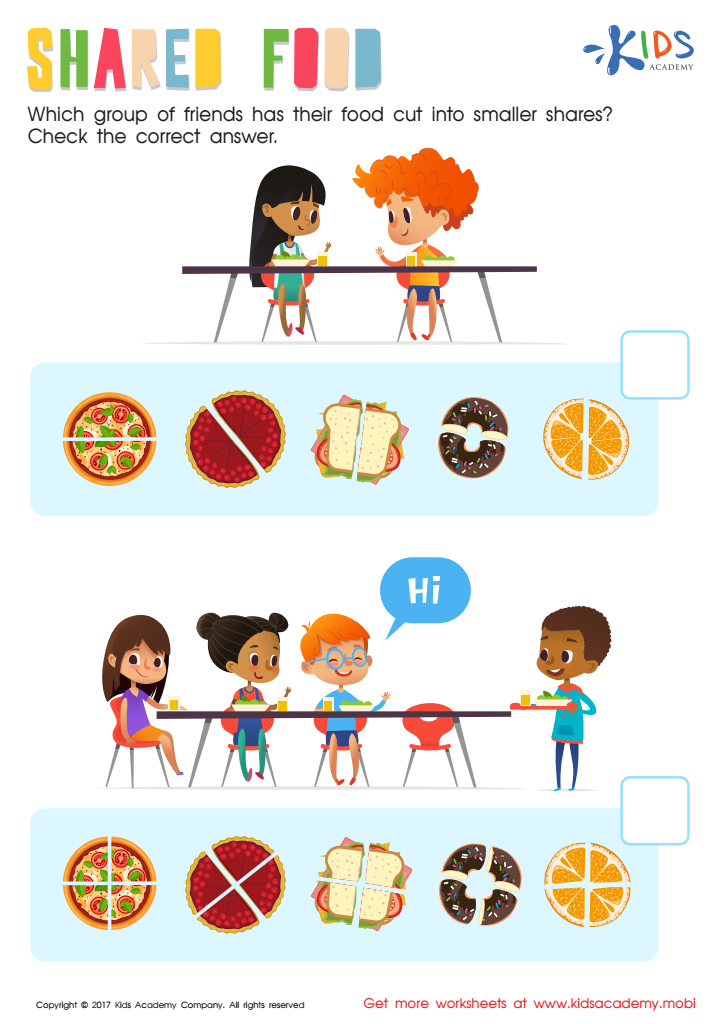
Shared Food Worksheet
In this worksheet, kids learn about sharing and cutting shapes into equal parts. There are two groups of friends: one with two, the other with four. Ask your child which group has their food cut into smaller shares, and help them find the right answer.
Shared Food Worksheet
Worksheet
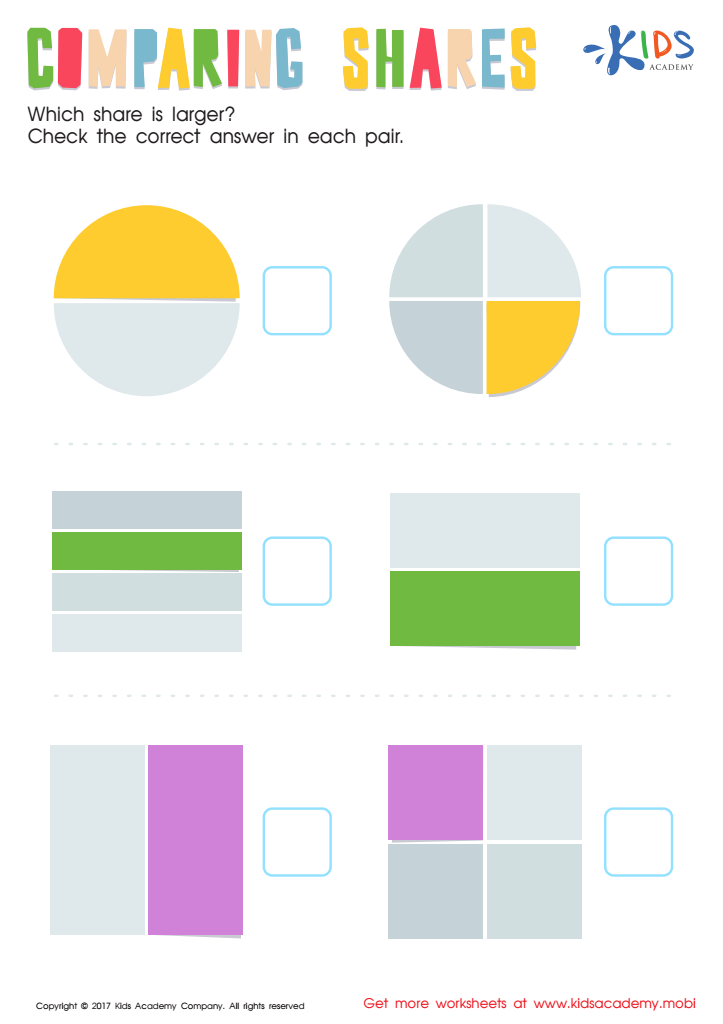
Comparing Shares Worksheet
Can your students identify and draw shapes correctly? If so, this exercise may be too easy. For those who are still learning, extra help may be needed. The worksheet requires students to select which shape is larger in each pair; circles and squares are included.
Comparing Shares Worksheet
Worksheet
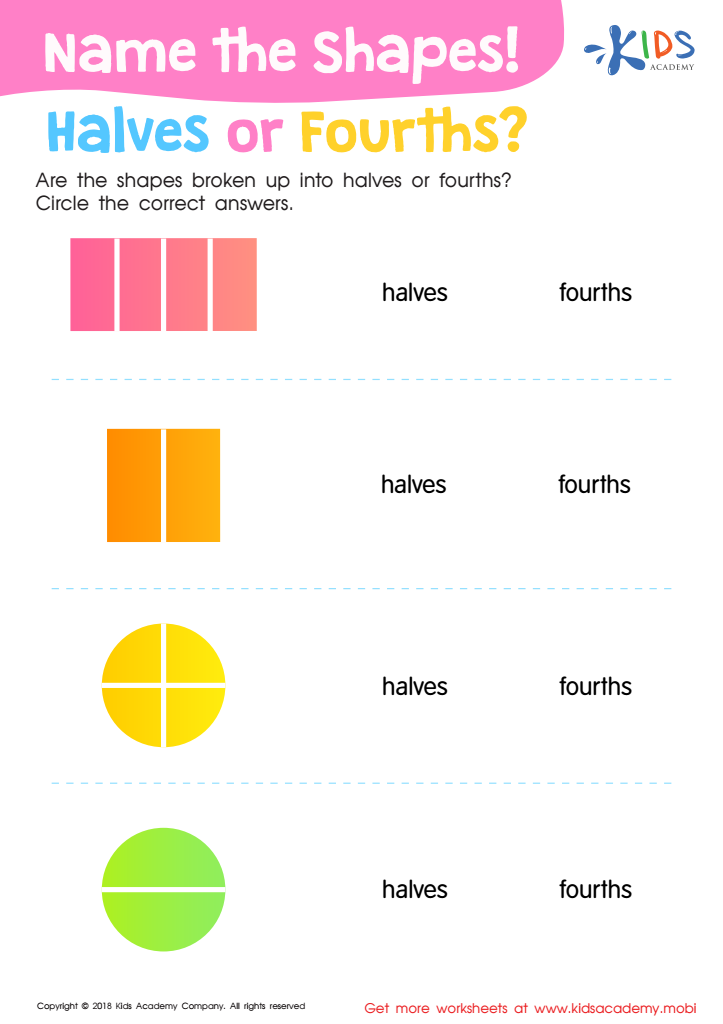
Name the Shapes Halves or Fourths? Worksheet
Before starting, ask your child if they understand what halves and fourths are. If they can answer correctly, move on with the worksheet. Help them circle the right option beside each shape, showing if it's split into halves or fourths.
Name the Shapes Halves or Fourths? Worksheet
Worksheet
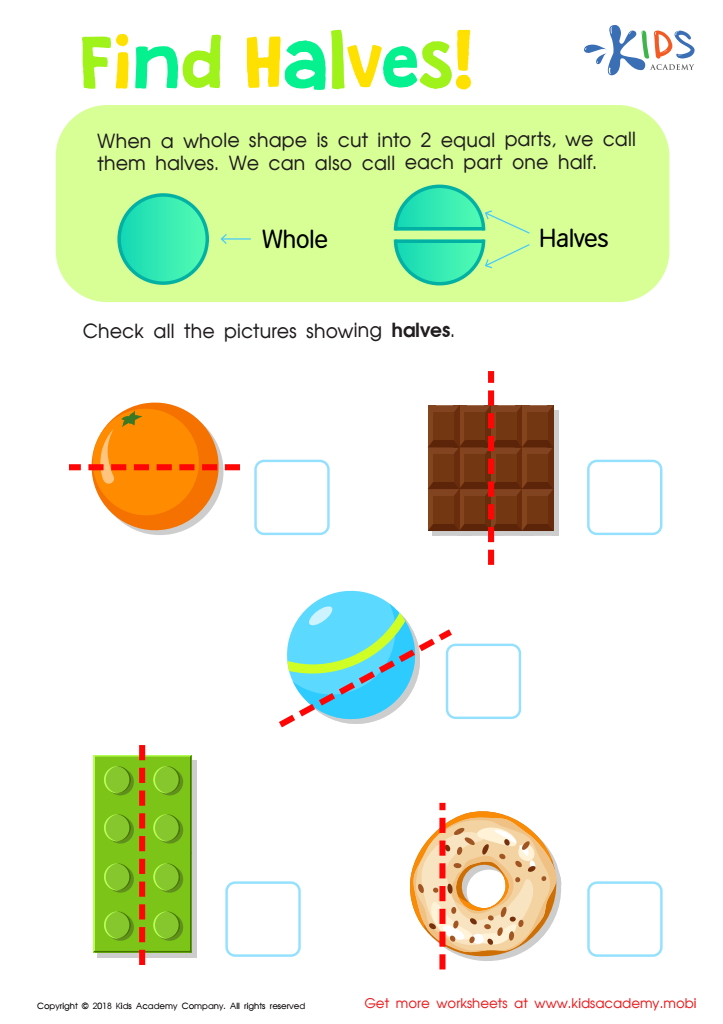
Find Halves Worksheet
If your child can tell you what two, three and four equal parts are called, give yourself a pat on the back! If not, this worksheet can help. Halves are two equal parts of a whole shape. Check the pictures in this printable pdf to help your child understand.
Find Halves Worksheet
Worksheet
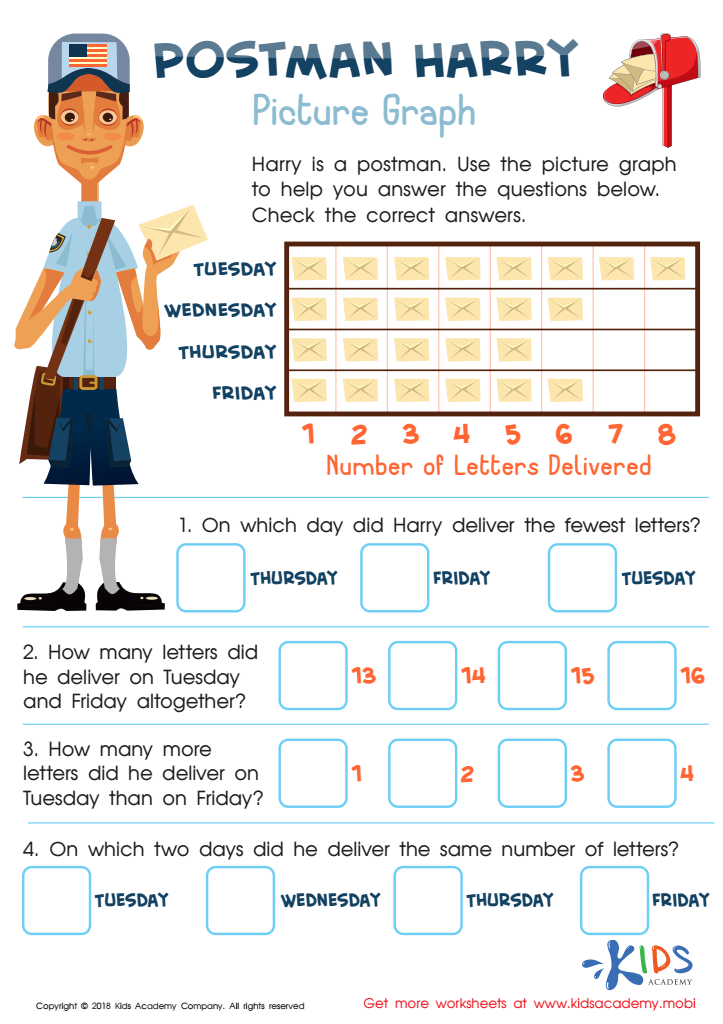
Postman Harry: Picture Graph Worksheet
Show your kids a picture of Harry the Postman and ask if they can identify his profession. Then, with this simple picture graph worksheet, help Harry out by having your kids answer the questions below the picture graph. It shows the number of letters he delivered, and on what day. Get your kids to use the picture graph to solve it.
Postman Harry: Picture Graph Worksheet
Worksheet
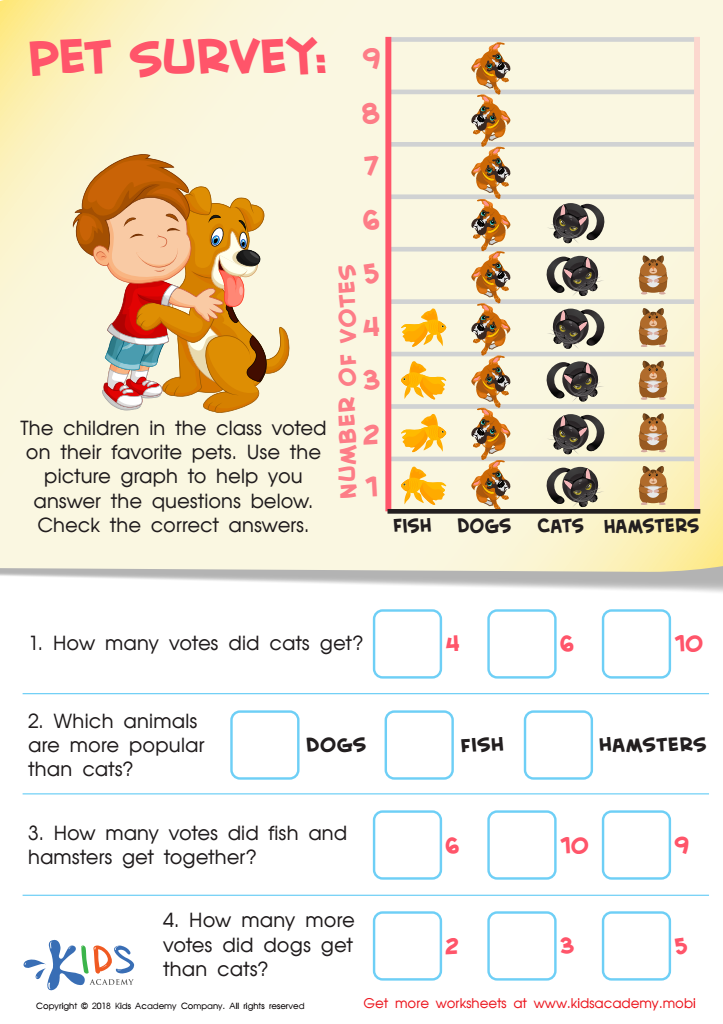
Pet Survey Worksheet
Do you have a furry family member? If the answer is yes and your kids love animals, they'll enjoy this worksheet. The picture graph shows the children's votes for their favorite pet - fish, dog, cat and hamster. Ask your child to use the graph to answer the questions. Guide them to check the right answer.
Pet Survey Worksheet
Worksheet
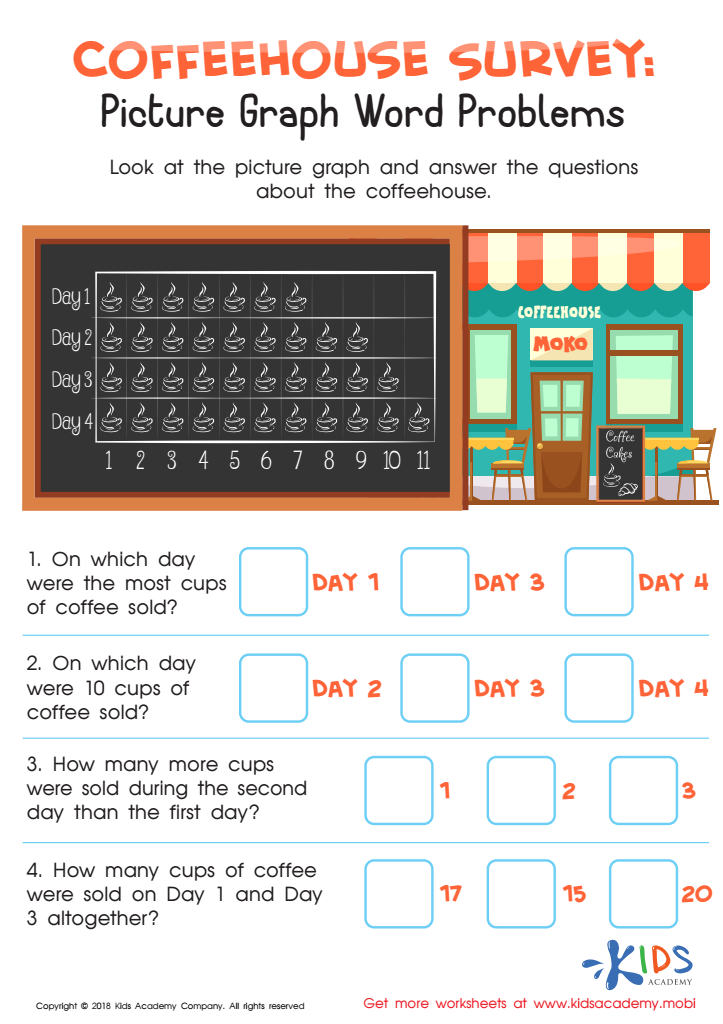
Coffeehouse Survey: Picture Graph Word Problems Worksheet
This coffeehouse survey helps children interpret pictures and answer questions. Your child will look at a picture graph displaying daily coffee cup sales from Day 1 to Day 4. Aid them in answering questions on the number of cups sold and which day had the most sales.
Coffeehouse Survey: Picture Graph Word Problems Worksheet
Worksheet
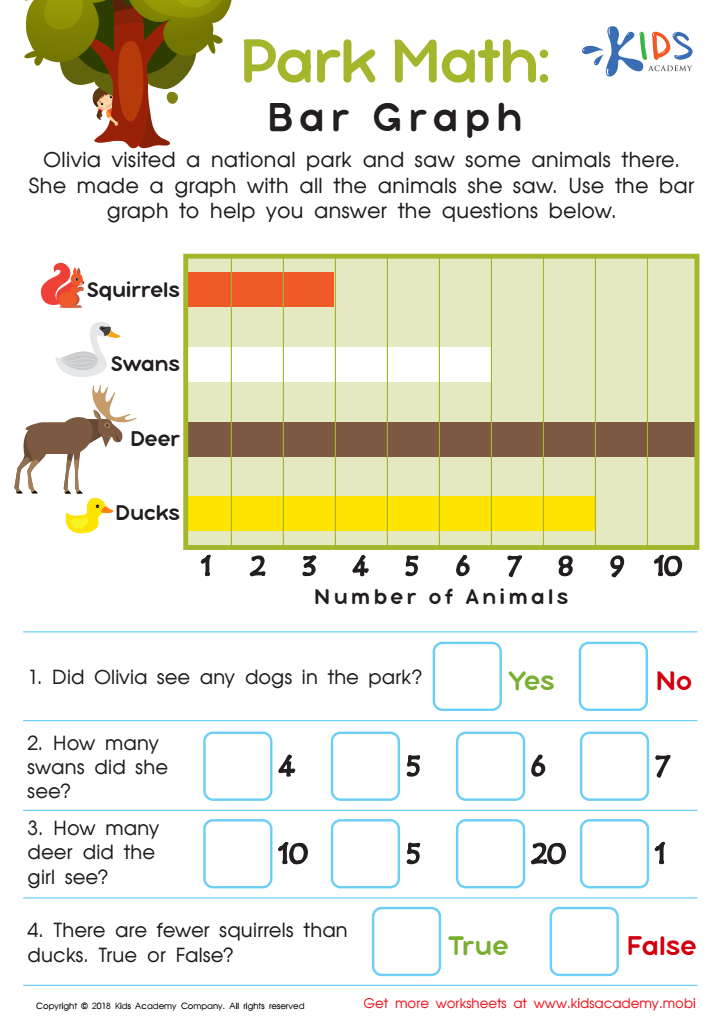
Park Math: Bar Graph Worksheet
Do your children love the park? Ask them to tell you some of their favorite animals. Then, have them look at Olivia's graph. She visited a National Park and recorded all the animals she saw. Use the graph to answer the questions given.
Park Math: Bar Graph Worksheet
Worksheet
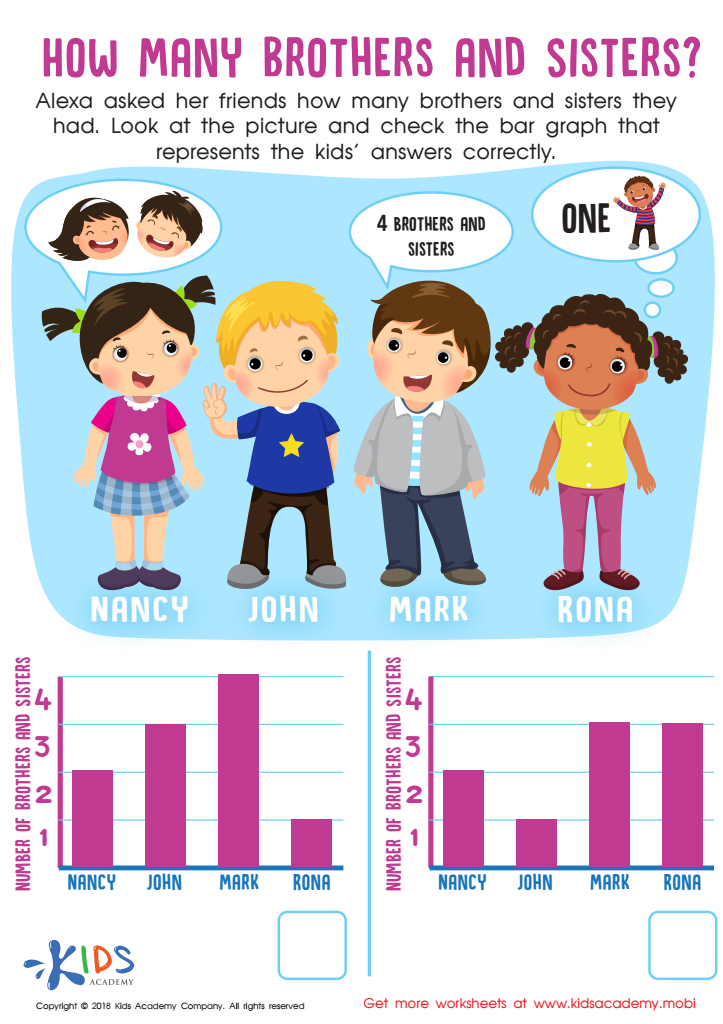
How Many Brothers and Sisters? Worksheet
With this worksheet, Alexa has asked her friends how many siblings they have. Have your child look at the picture and use it to answer the bar graph correctly. Can they tell you how many siblings their friends have? See if they can get it right!
How Many Brothers and Sisters? Worksheet
Worksheet
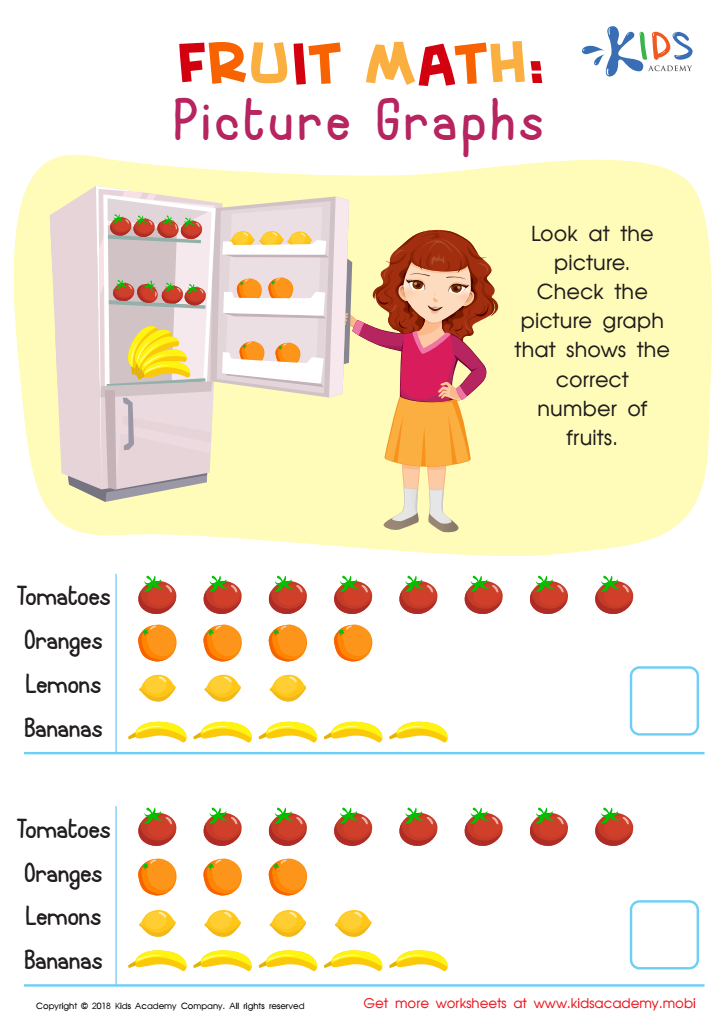
Fruit Math: Picture Graphs Worksheet
Help your child learn to draw graphs by having them look at pictures. Ask them to identify a graph that accurately portrays the data and have them explain why. This will prepare them to easily draw more complex graphs in the future. For example, have them look at the picture with the number of fruits in the colorful worksheet and explain why the graph is accurate.
Fruit Math: Picture Graphs Worksheet
Worksheet
Join Kids Academy for Free
Who is primarily going to use this learning content?