Extra Challenge Skip Counting Worksheets for Ages 3-7
4 filtered results
-
From - To
Unlock your child's potential with our Extra Challenge Skip Counting Worksheets, specifically designed for ages 3-7! These engaging and interactive worksheets will help young learners master skip counting skills vital for their mathematical foundation. Tailored to spark curiosity and promote critical thinking, our worksheets cover various challenges, from counting by twos to fives and beyond. Perfect for home or school use, they encourage independent exploration and enhance number fluency. With colorful visuals and age-appropriate tasks, your little ones will enjoy practicing skip counting while building confidence in their math abilities. Get started today and watch them thrill at the numbers!
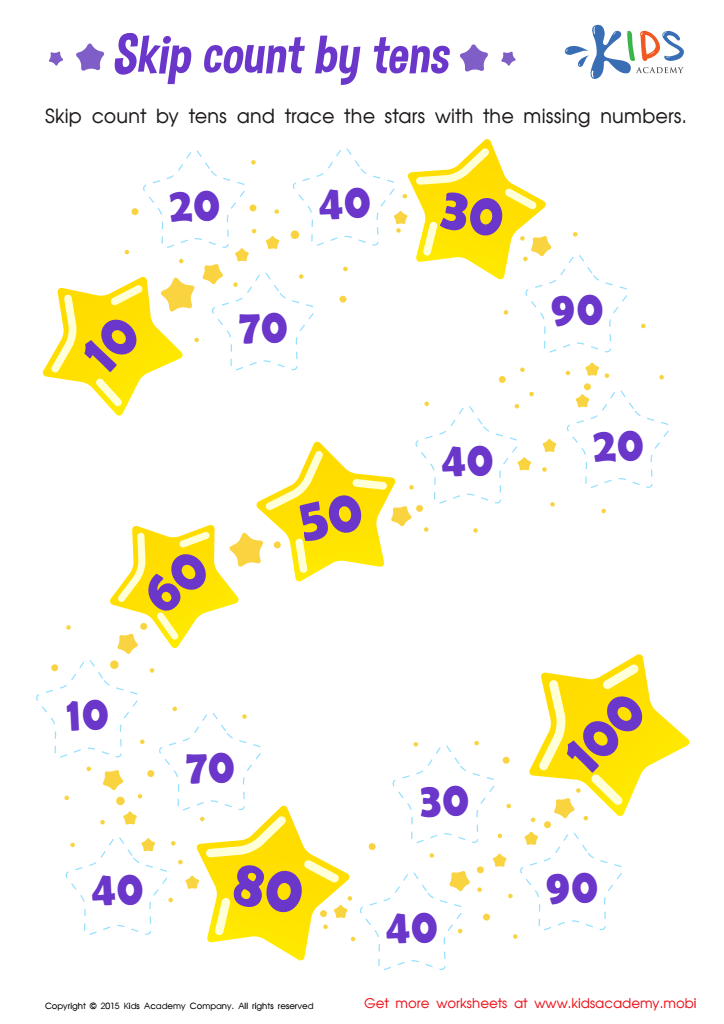
Learn dozens: Skip Count by Tens Printable
 Assign to My Students
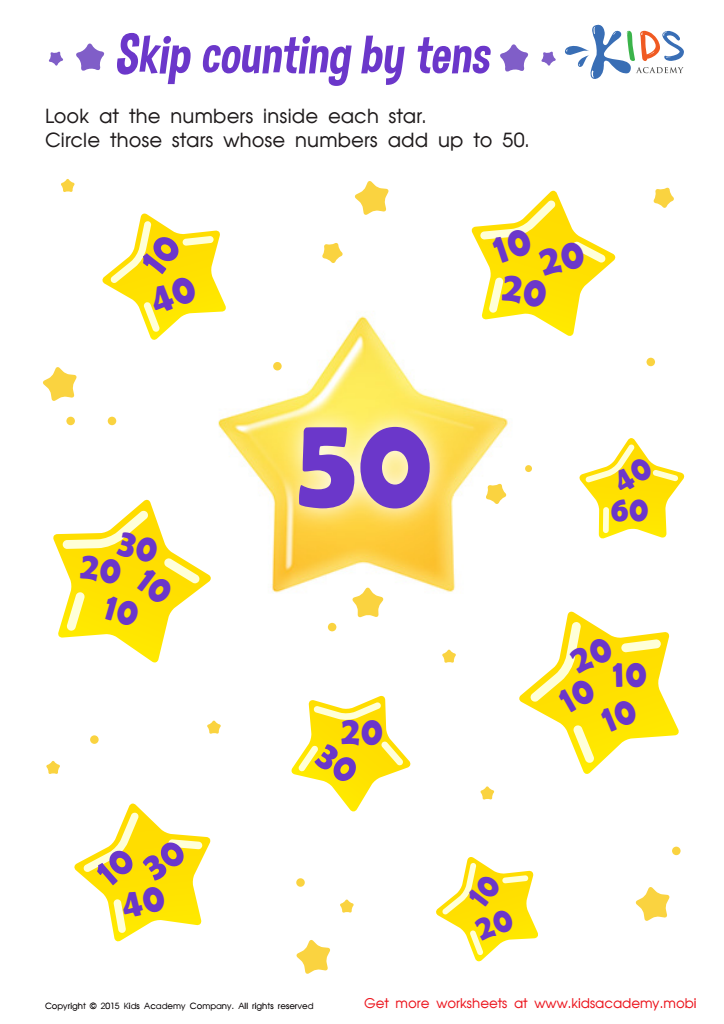
Learn Dozens: Skip Counting by Tens Printable
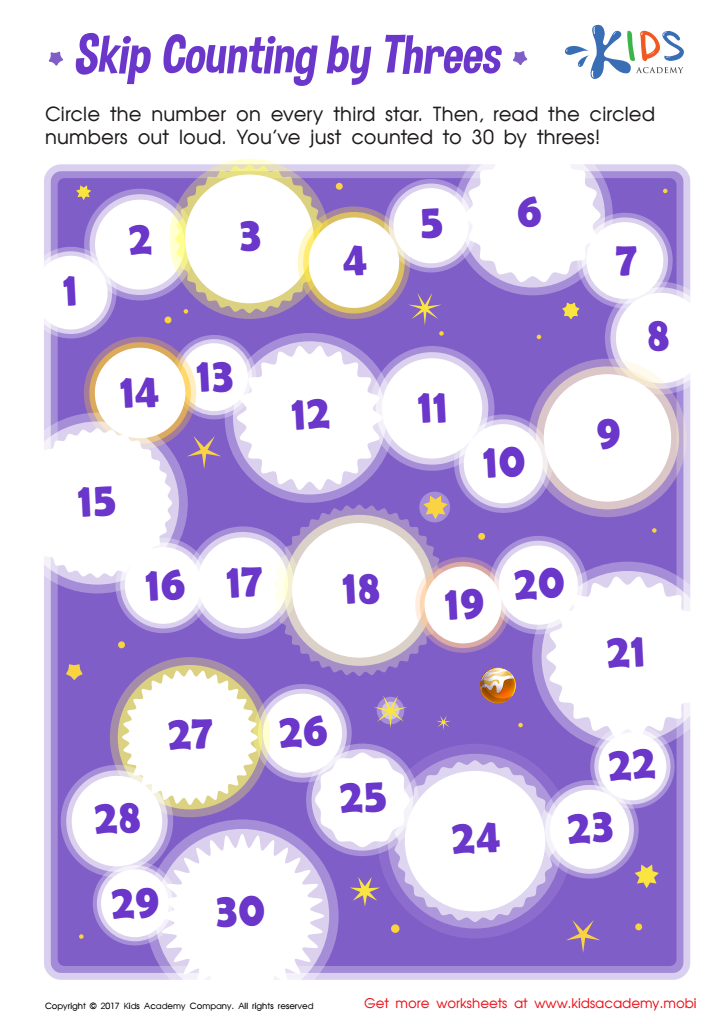
Skip Counting By Three Printable
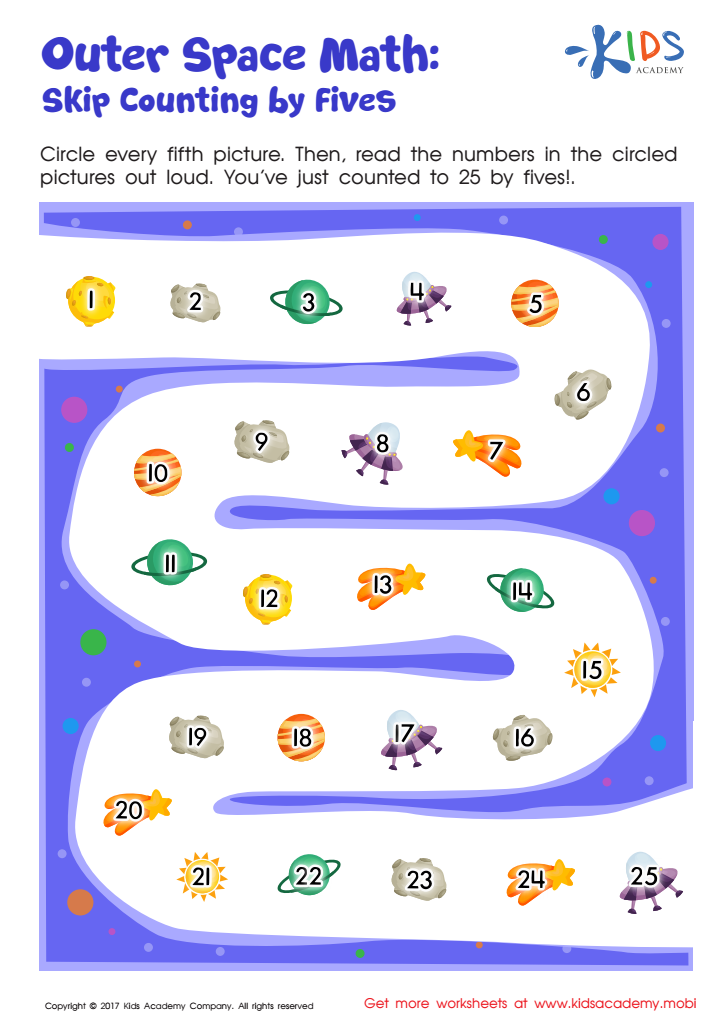
Skip Counting by 5s: Outer Space Math Printable








Extra Challenge Skip Counting is a crucial educational activity for children aged 3-7 that can have lasting benefits in their mathematical development. First and foremost, it strengthens foundational numeracy skills by helping children recognize number patterns and sequences. This early exposure builds confidence in their mathematical abilities and prepares them for more advanced concepts, including addition and multiplication.
Moreover, skip counting fosters critical thinking and problem-solving skills. By identifying patterns, children learn to make connections in mathematics, which enhances their overall cognitive development. As they practice skip counting by twos, fives, or tens, they also engage in repetitive practice that improves memory retention.
Particularly for parents and teachers, incorporating Extra Challenge Skip Counting in educational activities not only makes learning fun but also encourages interactive engagement, fostering a positive learning environment. It provides an opportunity for parents to bond with their children over educational topics and for teachers to differentiate instruction, meeting the varying needs of their students.
Lastly, skip counting lays the groundwork for fluency in mathematics, essential for daily life skills such as budgeting and time management, ultimately equipping children for future academic success. By prioritizing skip counting, adults can help nurture confident, capable, and mathematically literate learners.








