Extra Challenge Subtraction Worksheets for Ages 3-7
18 filtered results
Difficulty Level
Grade
Age
-
From - To
Subject
Activity
Standards
Boost your child's math skills with our Extra Challenge Subtraction Worksheets for ages 3-7! Designed for young learners ready to take their subtraction abilities to the next level, these engaging worksheets provide a fun and interactive way to practice basic math concepts. Each worksheet features age-appropriate challenges that foster critical thinking and problem-solving skills while keeping your child motivated. With vibrant illustrations and varying difficulty levels, these resources cater to different learning styles, ensuring that every child can succeed. Perfect for use at home or in the classroom, our worksheets provide essential practice to help your little ones master subtraction confidently!
Favorites
With answer key
Interactive
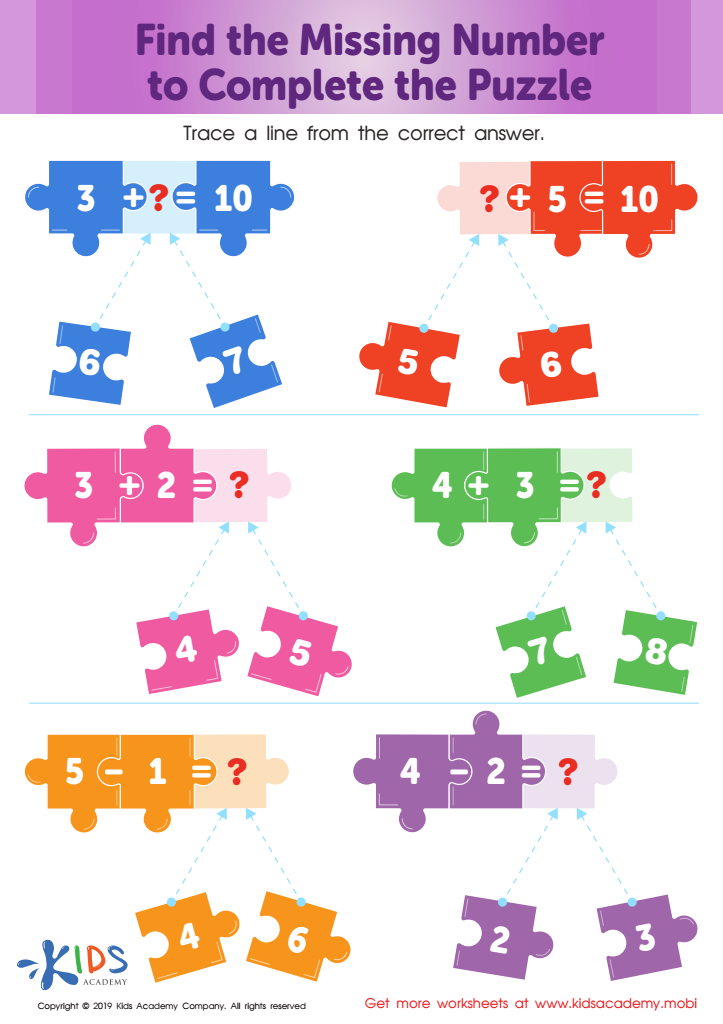
Find the Missing Number to Complete the Puzzle Worksheet
Teach math with fun puzzles! Have kids solve the six equations and trace lines to the correct answer. Puzzles engage minds and help students learn. Try this worksheet to make math learning fun.
 Assign to My Students
Find the Missing Number to Complete the Puzzle Worksheet
Worksheet
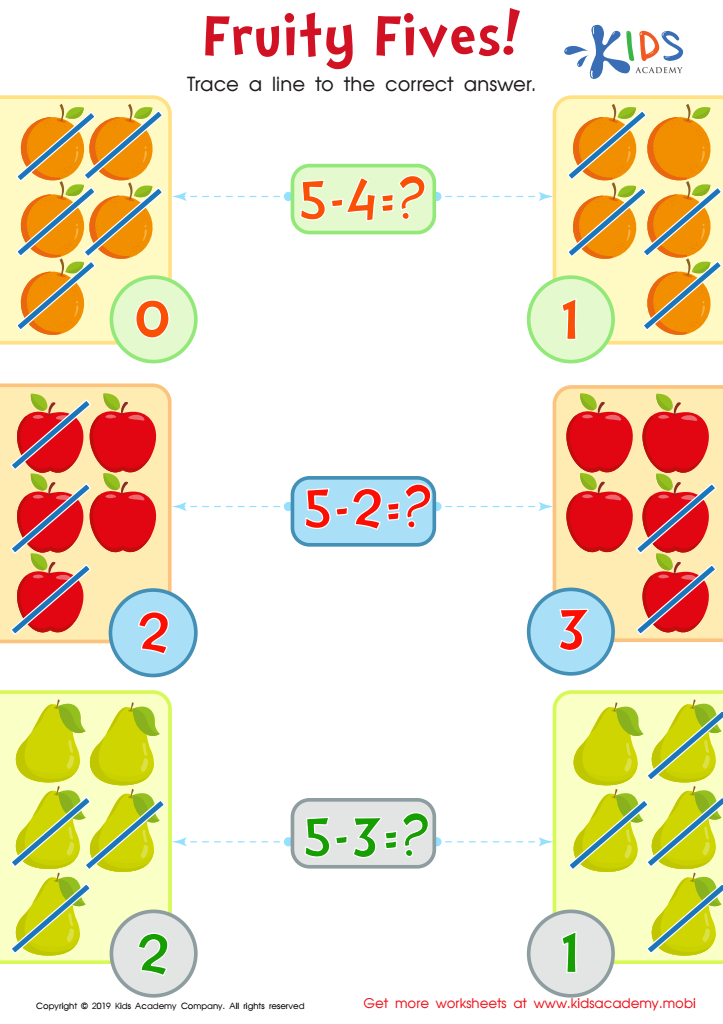
Fruity Fives! Worksheet
This tracing sheet has three equations for your kids to solve. Make learning fun with colorful objects and text! They may need help, so be prepared to assist them. Help them solve the equations and trace a line to the correct answer.
Fruity Fives! Worksheet
Worksheet
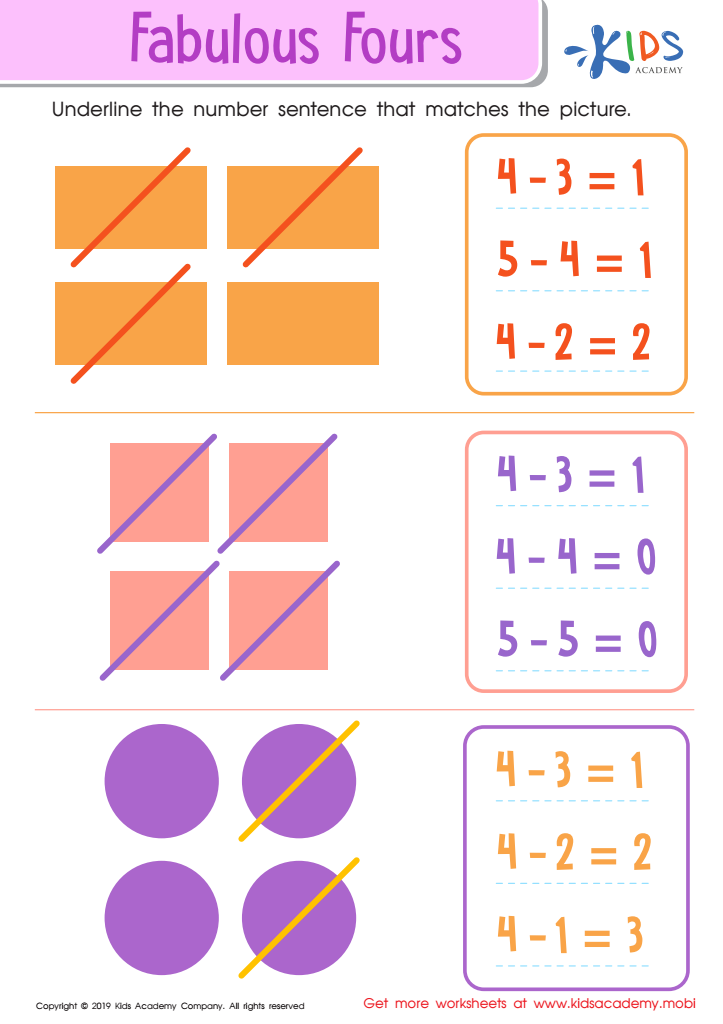
Fabulous Fours Worksheet
Mastering basic math like addition and subtraction is essential for your kids. Use fun exercises and tests to evaluate their understanding of equations. Challenge them with this worksheet - have them count the objects in each picture, then trace a line to the pictures which show the equation 3-2.
Fabulous Fours Worksheet
Worksheet
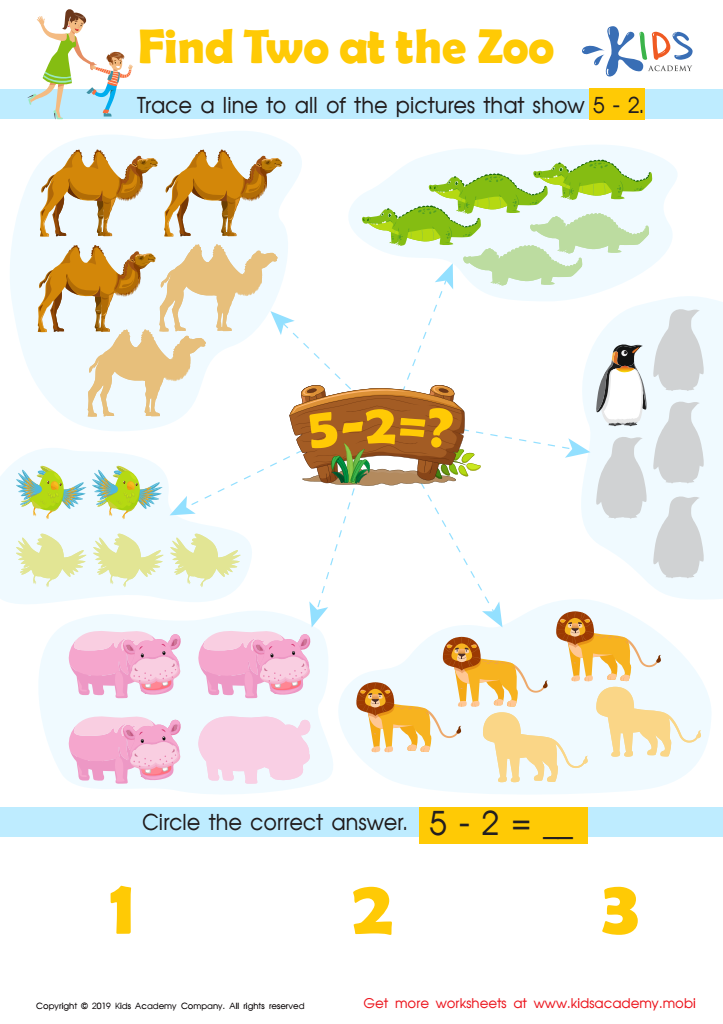
Find Two at the Zoo Worksheet
Help your kids overcome math fears and practice subtracting numbers with this traceable PDF. Ask them to identify the 6 groups of animals in the picture and count the animals in each group. Then, help them trace a line to all of the pictures that illustrate the equation 5-2.
Find Two at the Zoo Worksheet
Worksheet
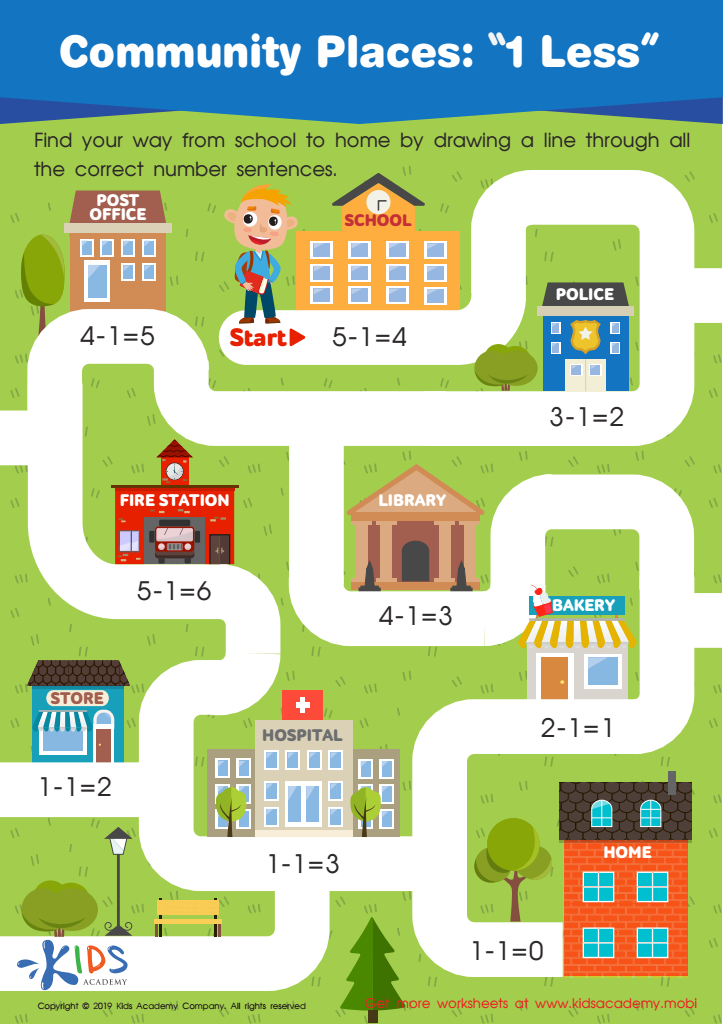
Community Places: 1 Less Worksheet
Have your kindergarteners draw a line through the correct number sentences as they find their way home from school. Ask them to identify the people, places, and buildings in their community and the jobs they do.
Community Places: 1 Less Worksheet
Worksheet
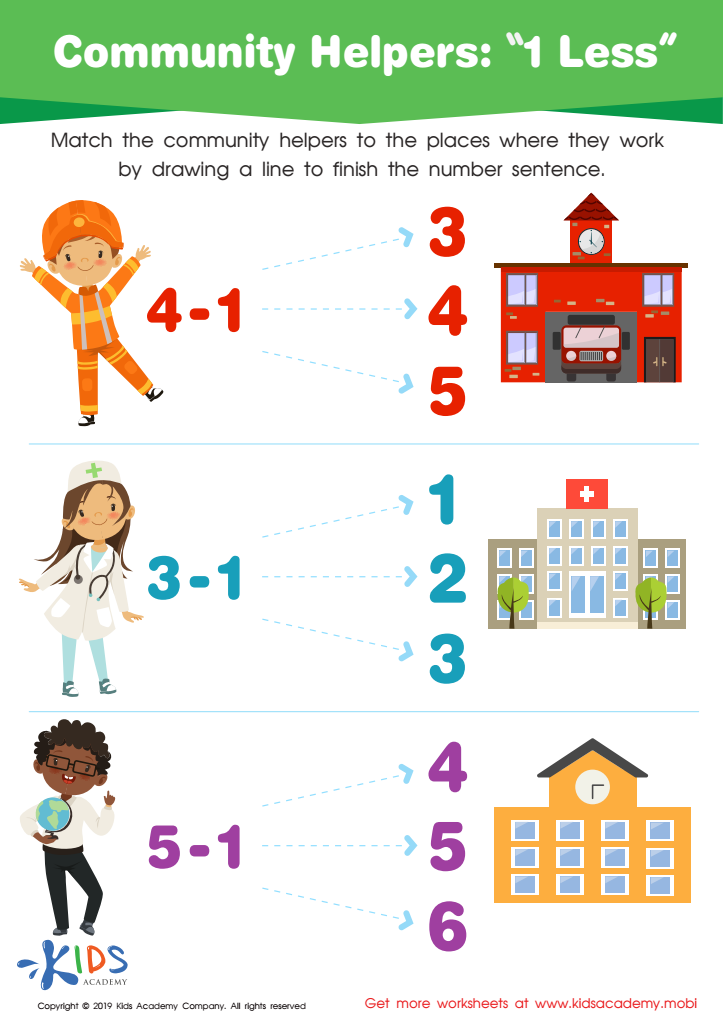
Community Helpers: 1 less Worksheet
Look at this worksheet with your child and ask them to identify the different community helpers. Match them to the places where they work by drawing a line to finish the number sentence. This helps them identify the people that help keep the community organized and running smoothly. Examples of community helpers include doctors, police officers, firefighters, teachers, etc.
Community Helpers: 1 less Worksheet
Worksheet
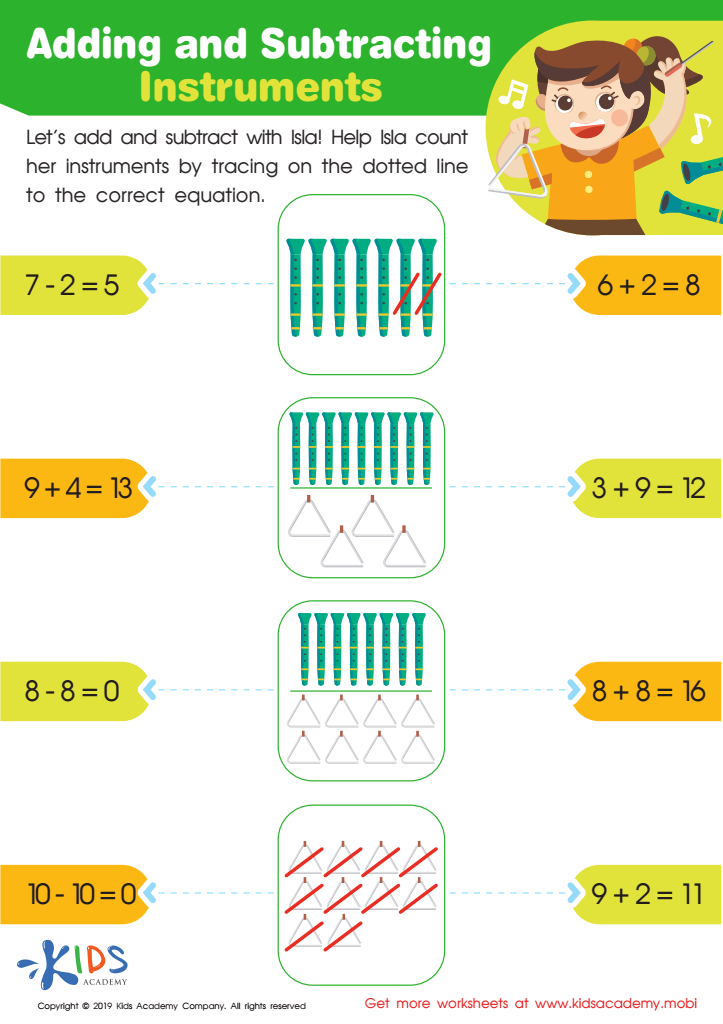
Adding and Subtracting: Instruments Worksheet
Children can help Isla count her musical instruments with this fun worksheet. The downloadable PDF gives them a chance to practice addition and subtraction by connecting pictures to equations. It's also a great way to learn the order of operations.
Adding and Subtracting: Instruments Worksheet
Worksheet
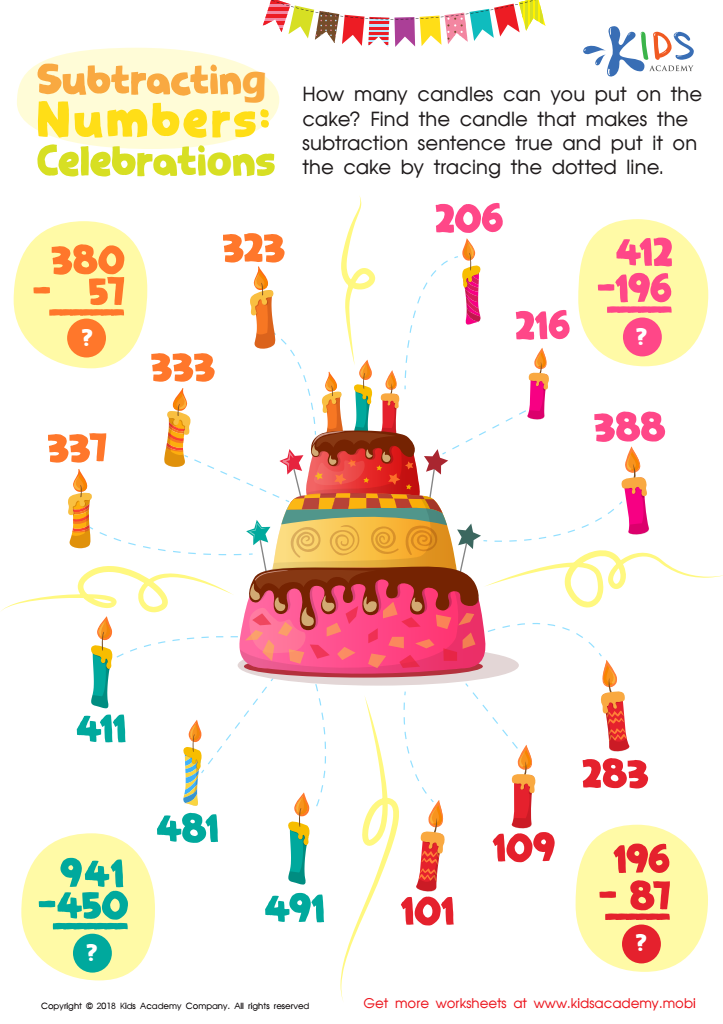
Subtracting Numbers: Celebrations Worksheet
Have your kids list their favorite birthday activities and treats. Then use this worksheet to help them figure out how many candles to put on the cake. Have them find the number that makes the subtraction sentence true, then trace the dotted line to add the candle to the cake. Help them complete the task and celebrate! 80 words
Subtracting Numbers: Celebrations Worksheet
Worksheet
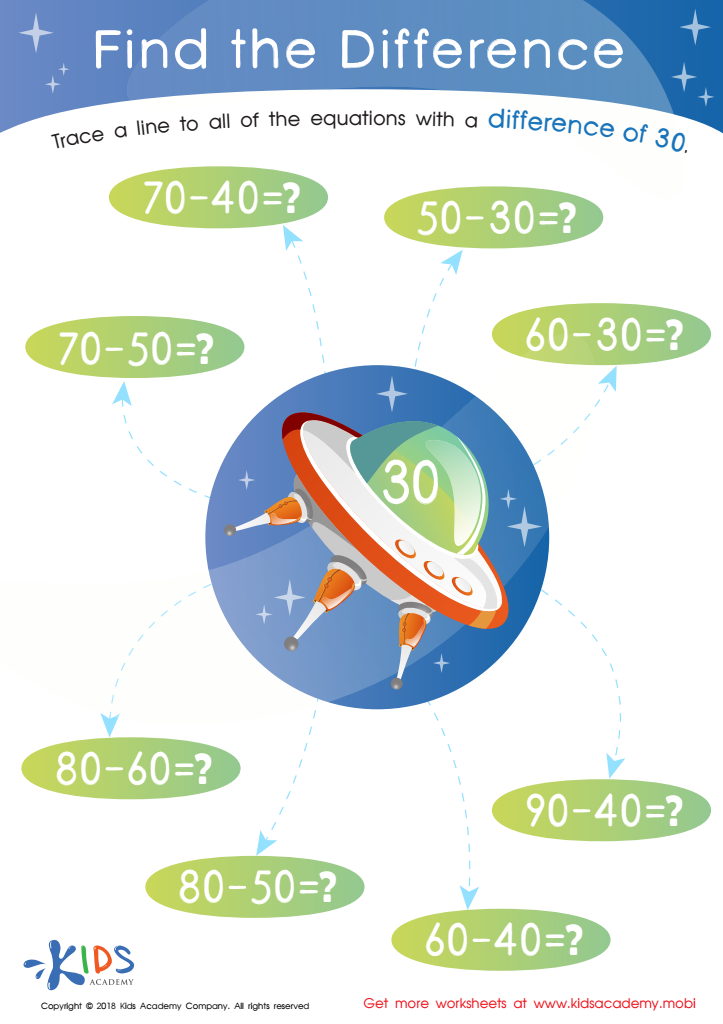
Find The Difference Worksheet
Kindergarteners need to work out subtraction problems and get the right answers. To help them, point to the alien ship with '30' in it on the worksheet. Get them to follow a line to the equations with a difference of 30. Solving these simple subtraction problems will give the answers.
Find The Difference Worksheet
Worksheet
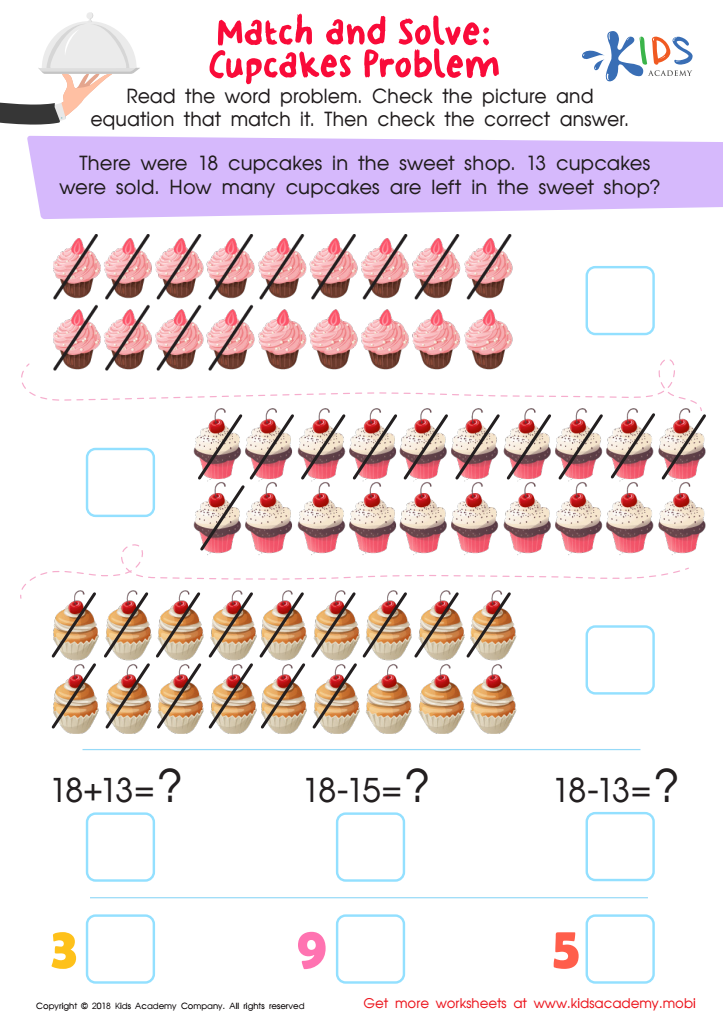
Match and Solve: Cupcakes Problem Worksheet
This math worksheet will excite your kid! Read the word problem and look at the cupcakes; the slashes mean some are being taken away. Select the picture that matches the text, then complete the equation to find the solution!
Match and Solve: Cupcakes Problem Worksheet
Worksheet
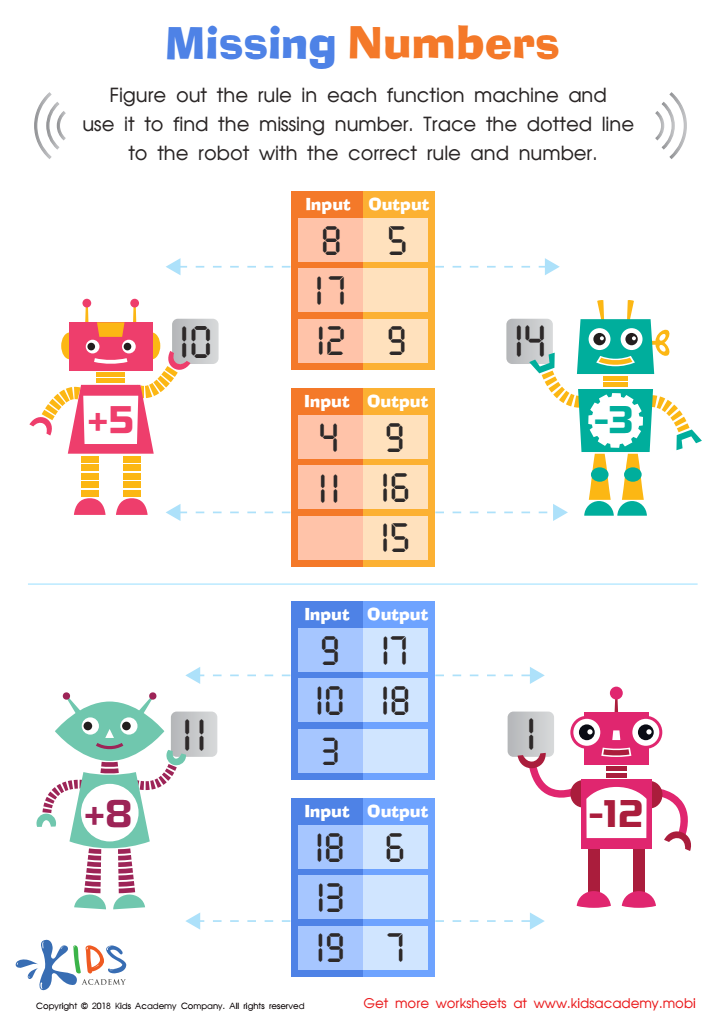
Missing Numbers Worksheet
Elementary students can learn the important pre-algebra skill of solving for missing numbers! Our robots guide them along with number-filled bellies and missing answers in their hands. Kids can examine the other numbers in each graph, use the rule to solve the missing number, and check their work with the missing number to ensure correctness.
Missing Numbers Worksheet
Worksheet
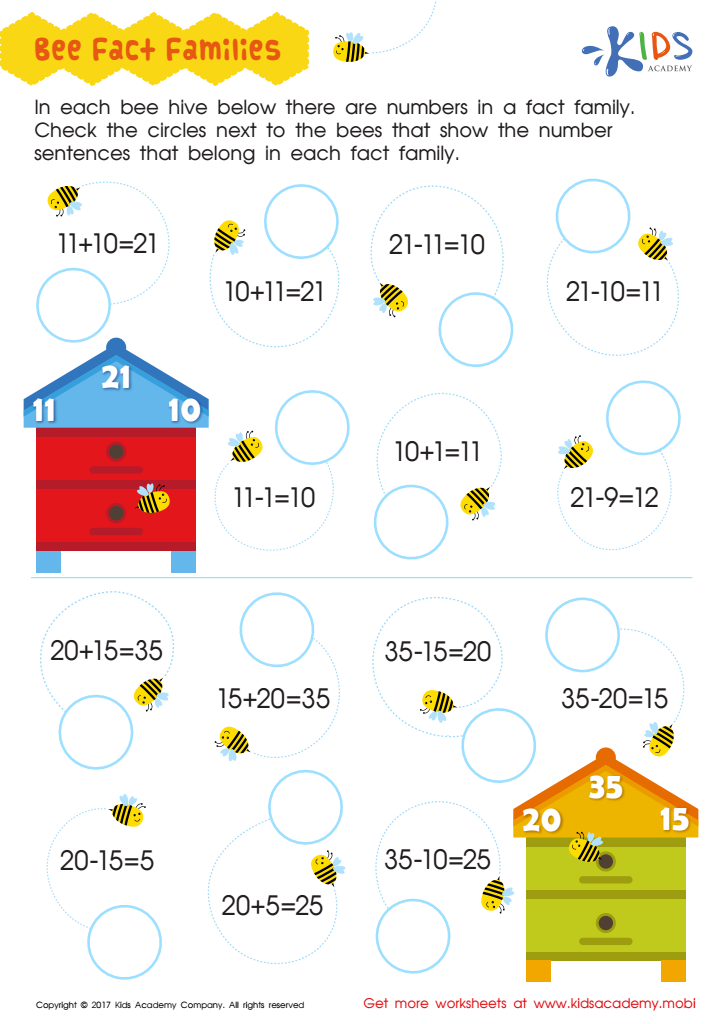
Fact Families Worksheet
Your 2nd grader will love this engaging activity.
Kids will buzz about fact families with this fun worksheet! Images of bees and their hives make learning numeracy enjoyable. Engaging and entertaining, your 2nd grader will love this activity.
Fact Families Worksheet
Worksheet
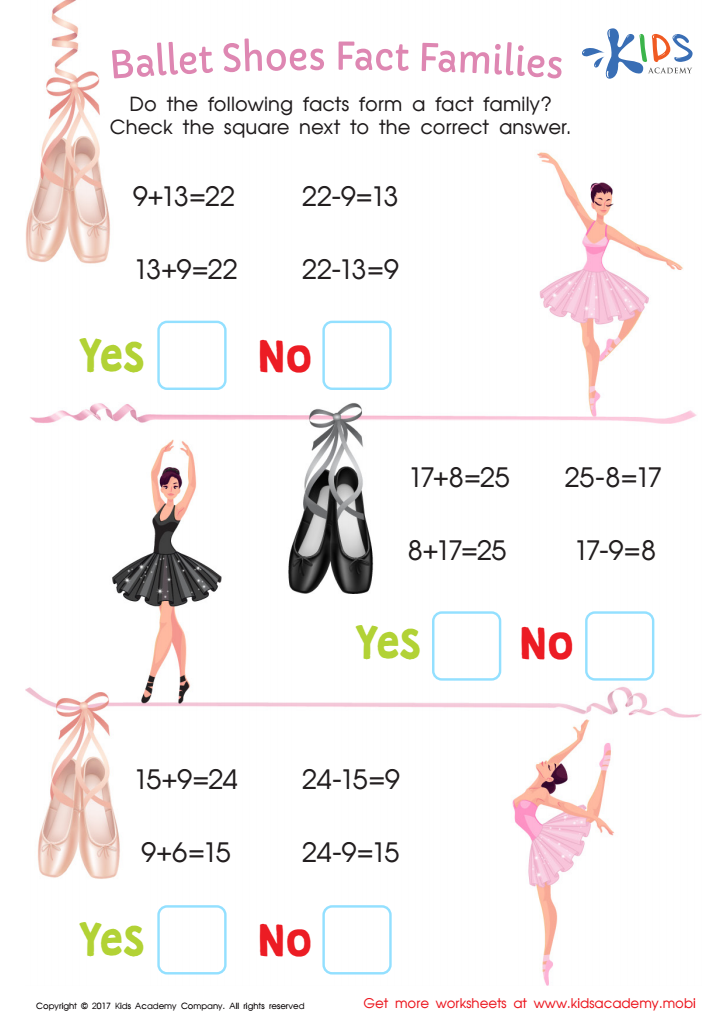
Ballet Shoes Fact Family Printable
Have them observe the equations and determine which groupings are fact families for a delightful learning experience. It encourages critical thinking, showing how addition and subtraction are related.
Ballet Shoes Fact Family Printable
Worksheet
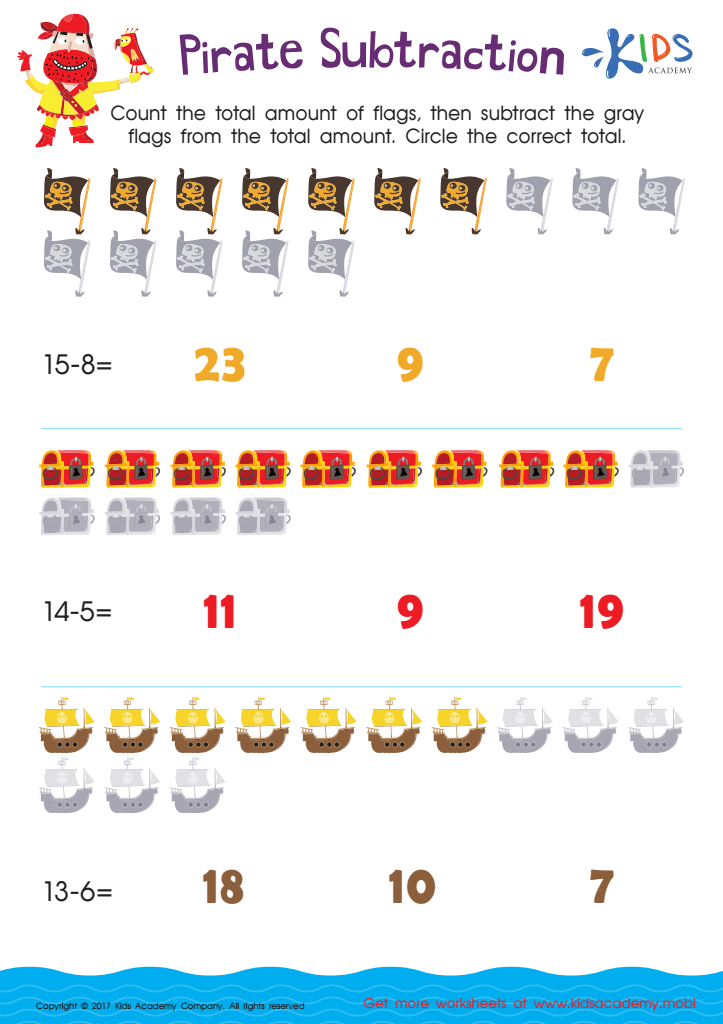
Pirate Subtraction Substraction Worksheet
Ahoy! Learn to subtract with pirate-themed math fun! This worksheet has ships and treasure chests to help your little one understand subtraction using a helpful strategy. Colorful illustrations make it a great learning experience.
Pirate Subtraction Substraction Worksheet
Worksheet
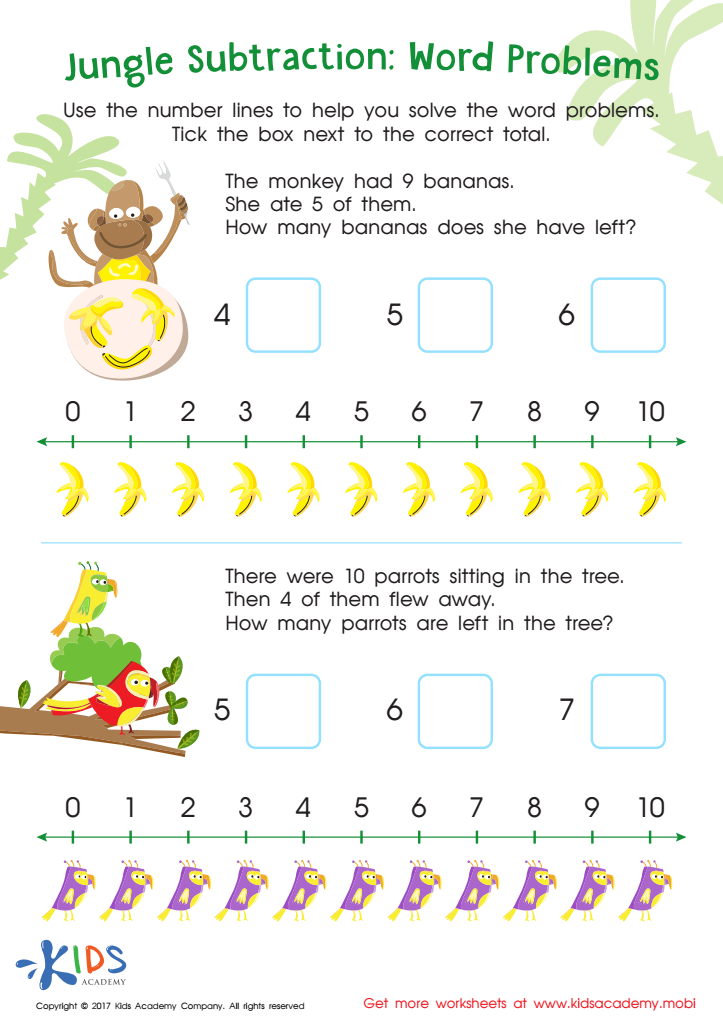
Jungle Subtraction Word Problems Substraction Worksheet
Kids will love this jungle-themed worksheet: subtraction word problems! Help the monkey work out how many bananas he has, using the number line. Encourage your child to use colorful parrots to subtract with ease and make calculations fun!
Jungle Subtraction Word Problems Substraction Worksheet
Worksheet
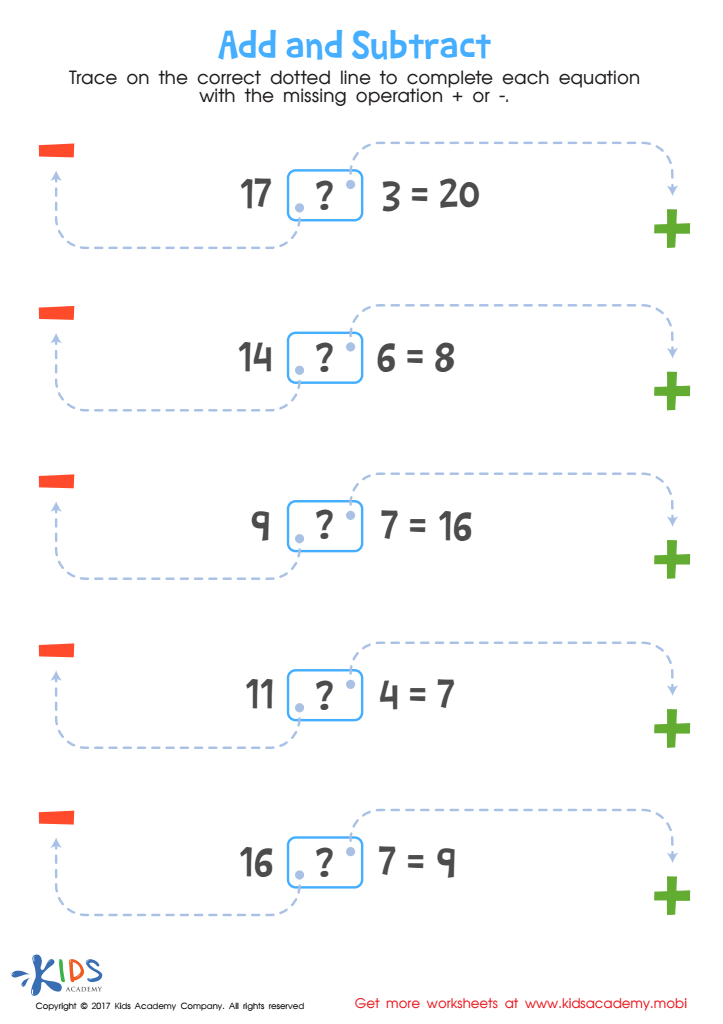
Add and Subtract Worksheet
Introduce your child to equations and advanced math concepts with this worksheet - designed to help them learn add and subtract up to 20. This logical reasoning exercise will help them gain a better understanding of math, preparing them for future success. Start early and watch them excel!
Add and Subtract Worksheet
Worksheet
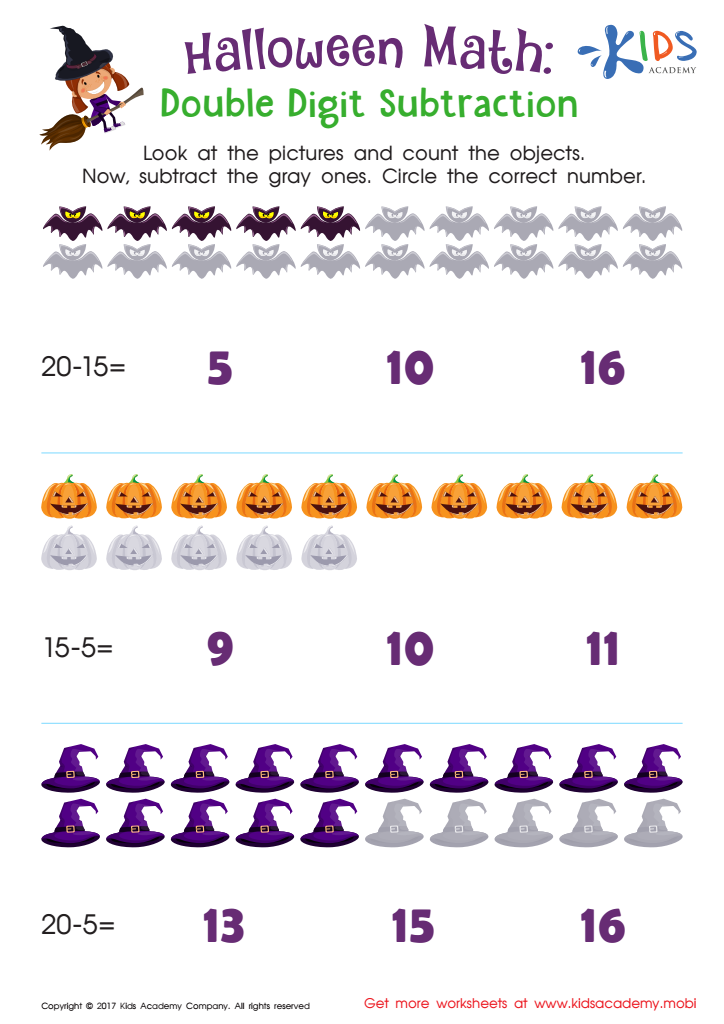
Halloween Math Subtraction Worksheet
Kids can easily understand subtraction by using the visuals provided in this worksheet. Get ready for some fun math!
This Halloween math worksheet uses spooky images to help kids understand subtraction. With it, they can count and solve double digit problems more easily. Get ready for some fun and engaging math practice!
Halloween Math Subtraction Worksheet
Worksheet
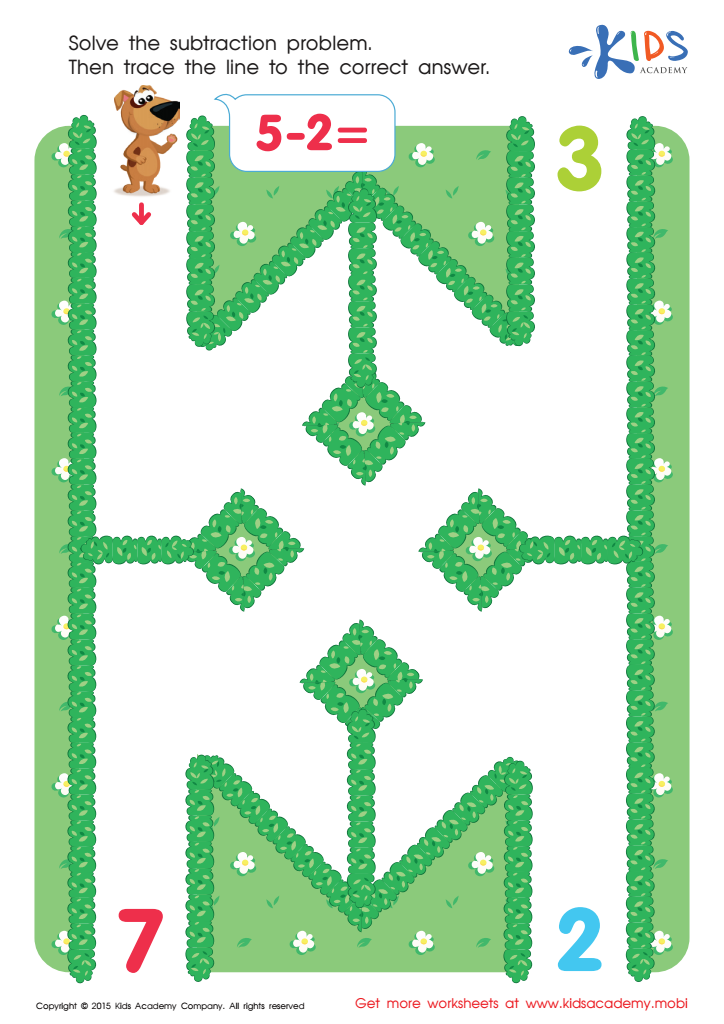
Five Minus Two Worksheet
Help the dog find its way by practising subtraction - trace the path and make sure to have fun!
Five Minus Two Worksheet
Worksheet
Join Kids Academy for Free
Who is primarily going to use this learning content?








Extra Challenge Subtraction for ages 3-7 is essential for a child's early mathematical development and cognitive growth. At this critical age, children are not just grasping numbers; they are learning to understand relationships between them. Developing subtraction skills boosts their problem-solving abilities and lays a strong foundation for later mathematical concepts.
By engaging in Extra Challenge Subtraction, children refine their critical thinking, develop reasoning skills, and enhance their ability to approach challenges systematically. It also fosters perseverance, as they learn to tackle more complex problems progressively. For parents and teachers, incorporating these extra challenges into learning fosters a growth mindset, encouraging children to view difficulties as opportunities to learn rather than obstacles.
Moreover, focusing on subtraction through varied methodologies—be it through games, visual aids, or real-life scenarios—makes learning enjoyable and relatable. This varied exposure keeps children motivated and enhances their enthusiasm for math. Parents and teachers who prioritize Extra Challenge Subtraction not only support their child's immediate academic skills but also promote a lifelong love for learning and problem-solving, essential skills in today’s rapidly evolving world. Through such engagement, adults can significantly influence a child's confidence and competence in mathematics.