Extra Challenge Skip Counting Worksheets for Ages 5-7
4 filtered results
-
From - To
Rev up your child's math skills with our "Extra Challenge Skip Counting Worksheets for Ages 5-7". These engaging and fun-filled worksheets take skip counting to the next level, helping young learners practice counting by 2s, 5s, and 10s. Created by expert educators, they are designed to challenge and inspire little mathematicians. Perfect for both classroom and home learning, these printable resources foster numerical fluency and build a strong math foundation. Encourage your child to conquer these exciting skip counting challenges and watch their confidence soar! Download now and give your child the extra boost they need in math.
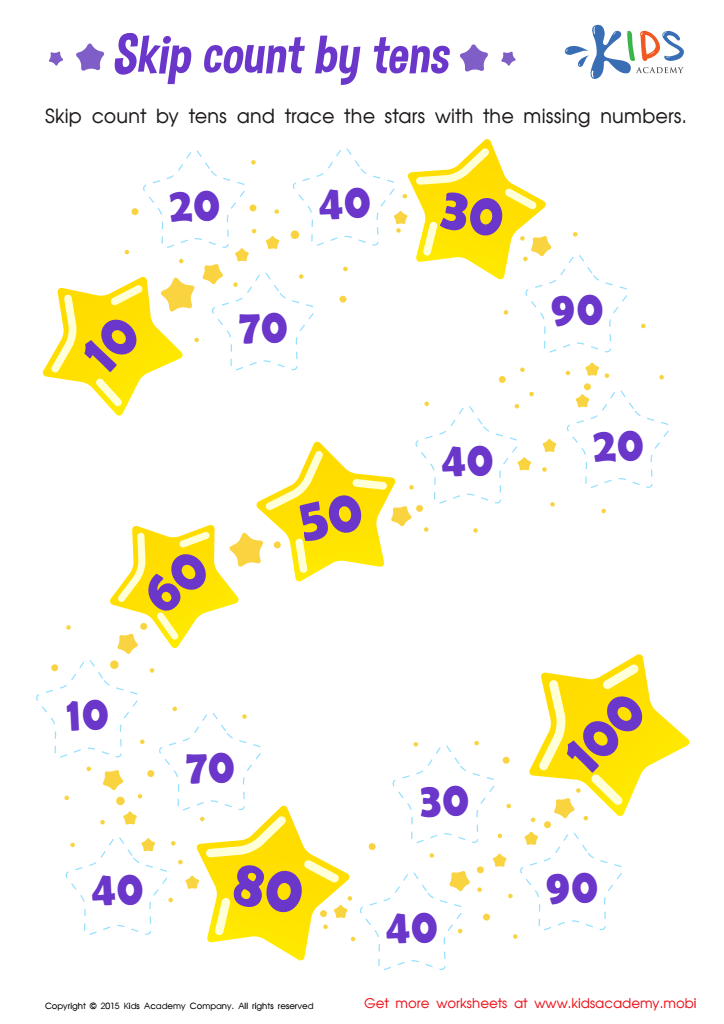
Learn dozens: Skip Count by Tens Printable
 Assign to My Students

Learn Dozens: Skip Counting by Tens Printable
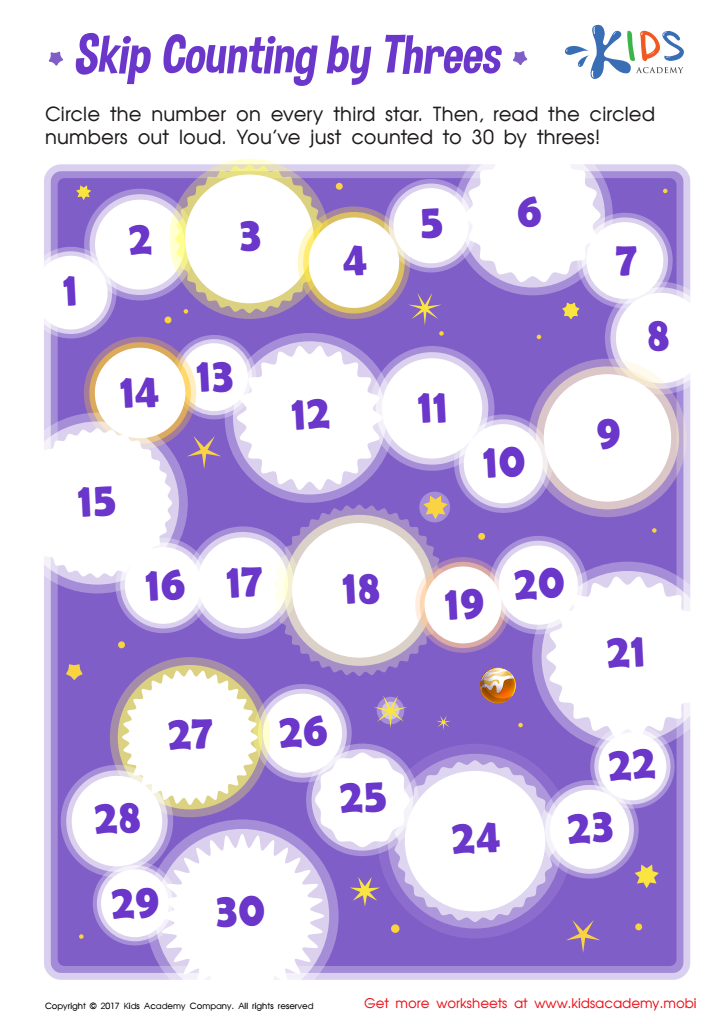
Skip Counting By Three Printable
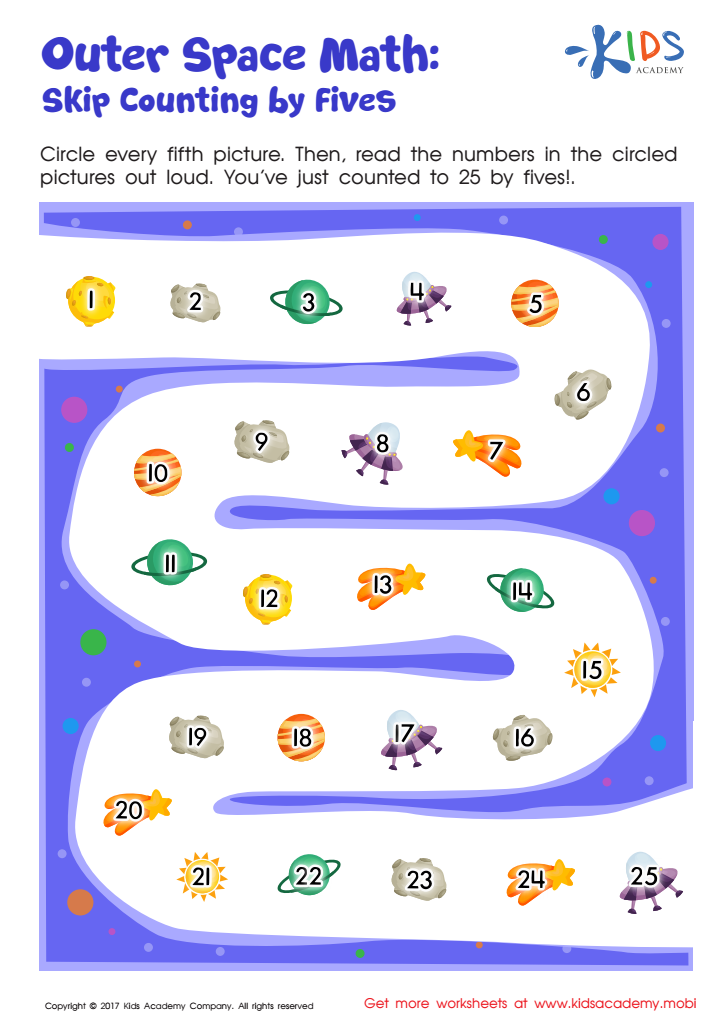
Skip Counting by 5s: Outer Space Math Printable



%20(1).jpg)




Extra Challenge Skip Counting for ages 5-7 is an immensely valuable activity for young learners. Here’s why parents and teachers should be keen on it:
Initially, skip counting builds a strong mathematical foundation. By mastering skip counting by 2s, 5s, 10s, and other intervals, children begin to understand and internalize patterns and sequences in numbers. This skill is a crucial stepping stone for learning more complex arithmetic, such as multiplication and division.
Additionally, it enhances number sense, making it easier for children to grasp concepts of addition and subtraction. When children are capable of skip counting, they can quickly calculate sums or differences, leading to improved mental math abilities.
Furthermore, engaging with Extra Challenge Skip Counting exercises boosts problem-solving skills and critical thinking. Being challenged helps children develop perseverance and the ability to find multiple solutions to problems.
Finally, these challenges are often presented in a fun and engaging manner, like games or puzzles, making learning enjoyable and less intimidating. This positive experience encourages a love for math at an early stage, fostering an ongoing interest in the subject.
In summary, Extra Challenge Skip Counting is not just about learning to count: it’s about creating a deep, lasting understanding and appreciation for mathematics. Parents and teachers who invest time in these activities are setting their children up for academic success and a lifelong love of learning.








