Normal Difficulty Online Worksheets for Kids - Page 9
1638 filtered results
Difficulty Level
Grade
Age
-
From - To
Subject
Activity
Standards
Favorites
With answer key
Interactive
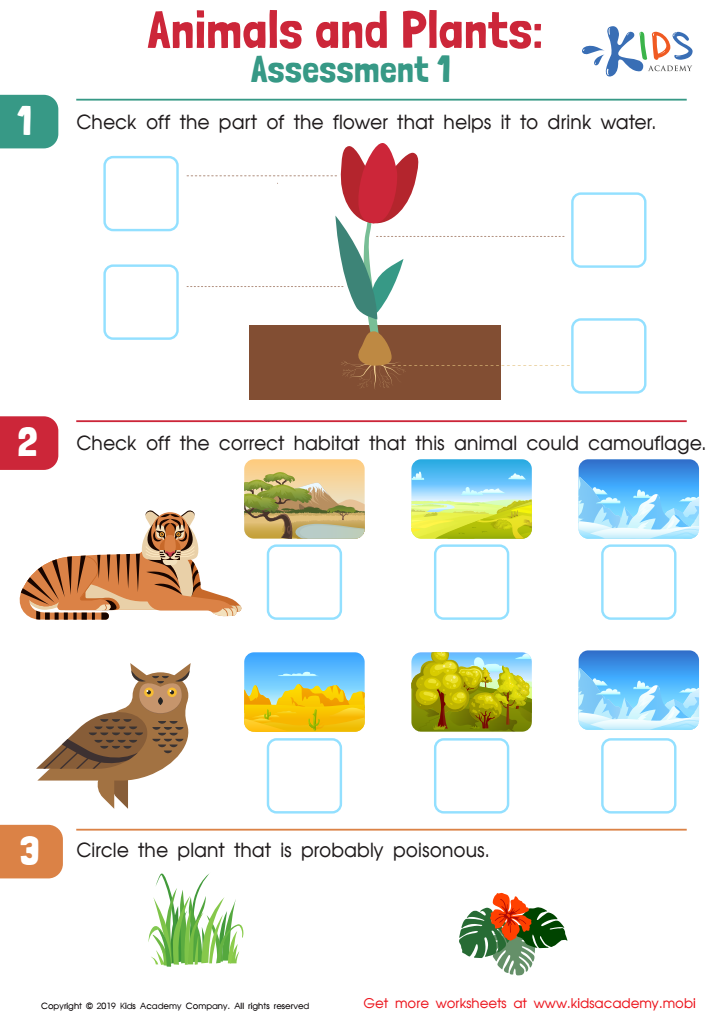
Animals and Plants: Assessment 1 Worksheet
Do you want to easily assess your child's understanding of basic science concepts? This colorful PDF offers a free opportunity for them to test their knowledge about parts of a flower, poisonous plants, animal habitats and more! Bright pictures make it fun and easy for you to see what they know.
 Assign to My Students
Animals and Plants: Assessment 1 Worksheet
Worksheet
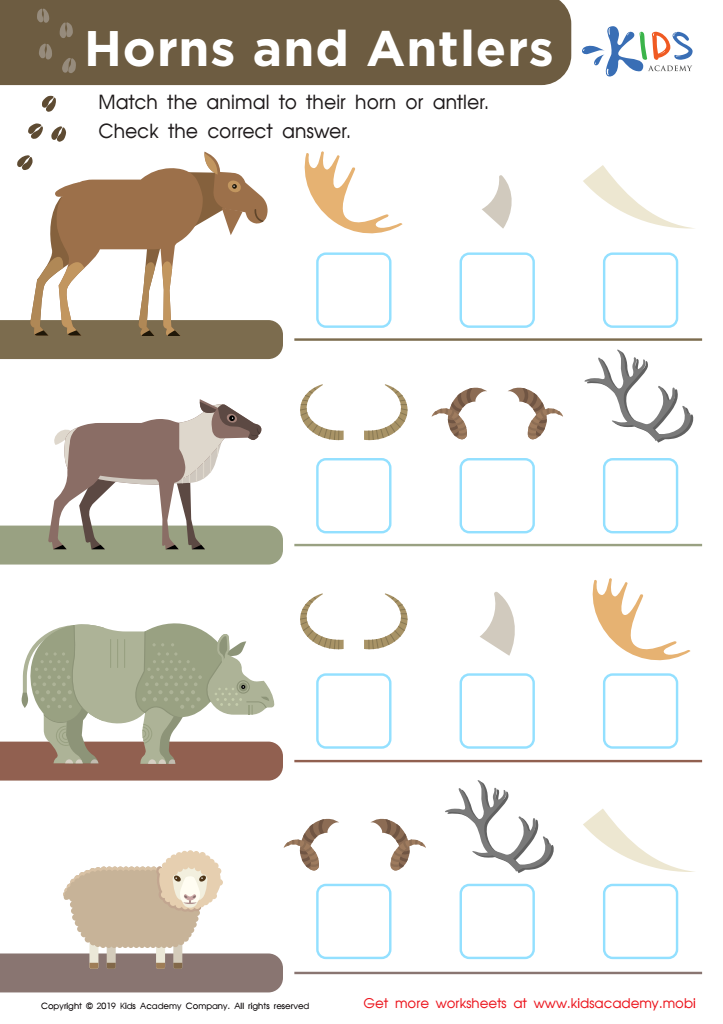
Horns and Antlers Worksheet
This free worksheet shows kids how horns and antlers differ. They'll observe animals' body parts and learn how these adaptations help them in their habitats. Children can check if the given animal has horns or antlers. All of this helps them understand animal body adaptations.
Horns and Antlers Worksheet
Worksheet
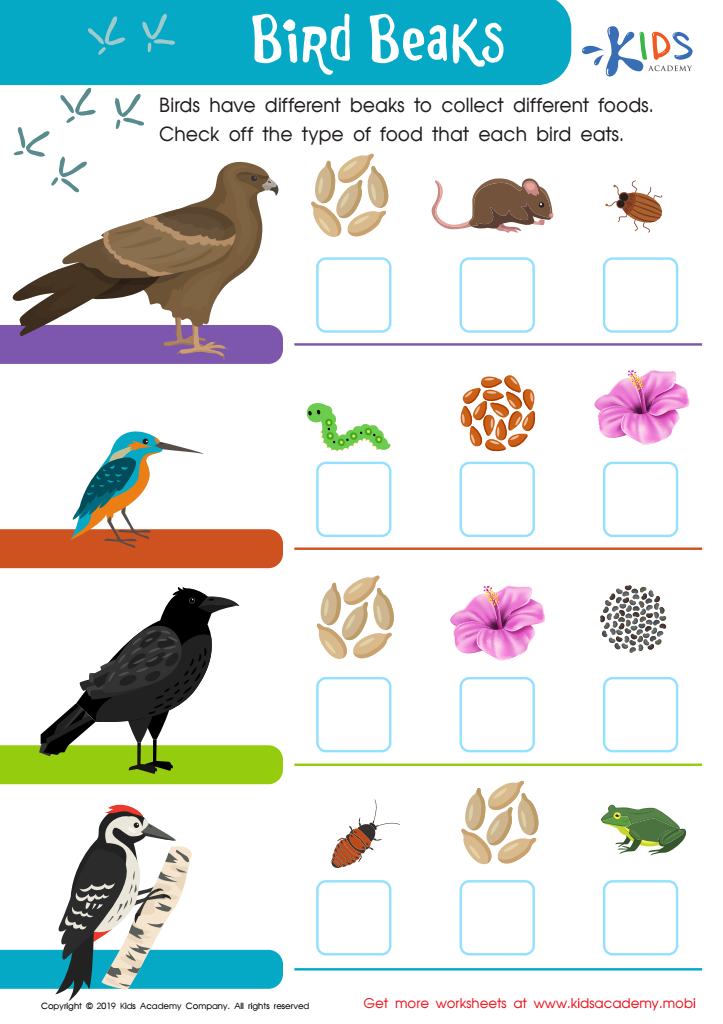
Bird Beaks Worksheet
Birds have beaks to eat different types of food. Let your little nature lover explore why with this free worksheet! They'll learn about different beak shapes and match them to the food that's best for them. Be an adorable bird watcher together!
Bird Beaks Worksheet
Worksheet
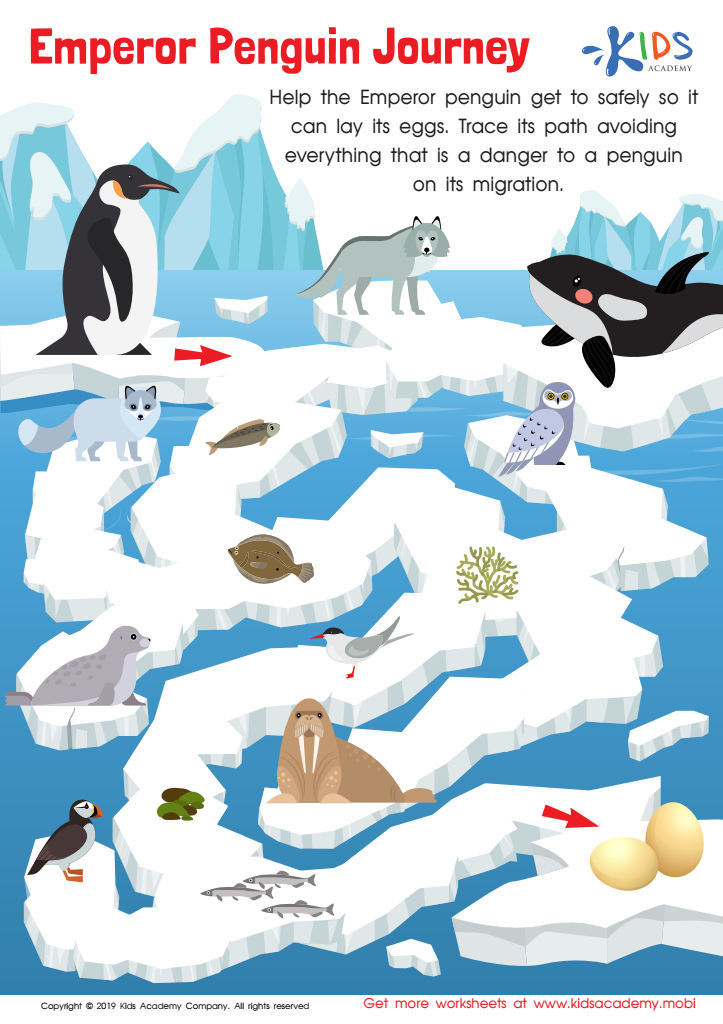
Emperor Penguin Journey Worksheet
Kids love learning about animal habitats! This bright worksheet on Emperor Penguins is a fun way for your child to explore the risks of migration. Download the free PDF and help the penguin make its way through the maze and to its eggs - all while stimulating fine motor skills. Kids will have a blast helping the Emperor Penguin waddle to safety!
Emperor Penguin Journey Worksheet
Worksheet
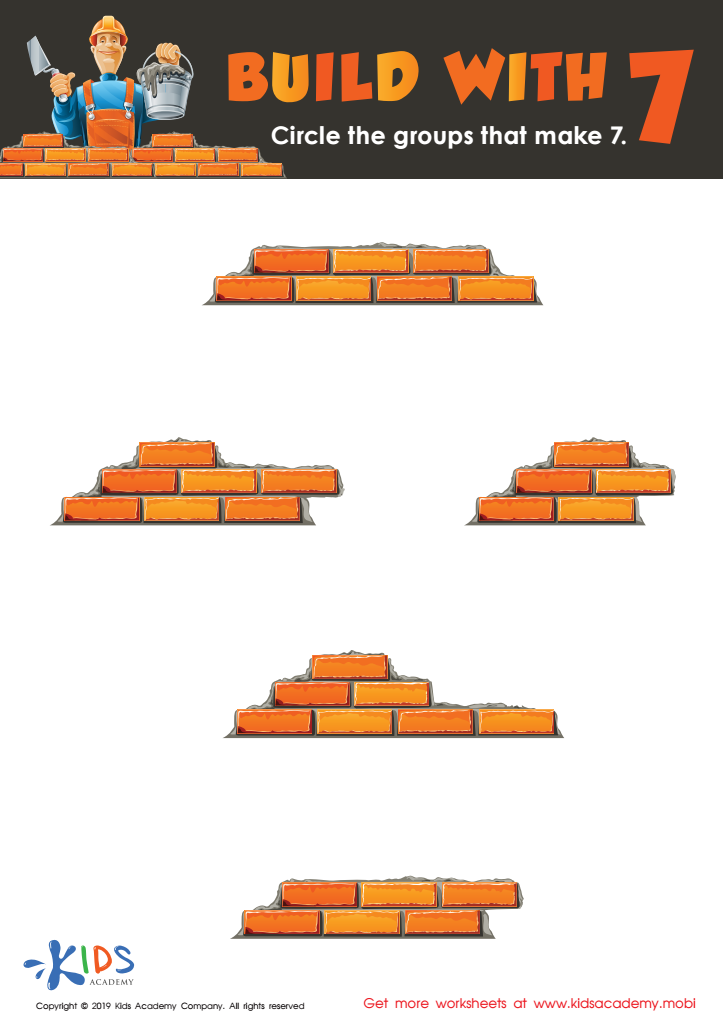
Build with 7 Worksheet
Kids learn best by practicing counting & number sense. This PDF helps them practice with the number 7, using picture representation. When they first start counting, picture representation provides an easy-to-understand & concrete way to remember things. Practice makes perfect!
Build with 7 Worksheet
Worksheet
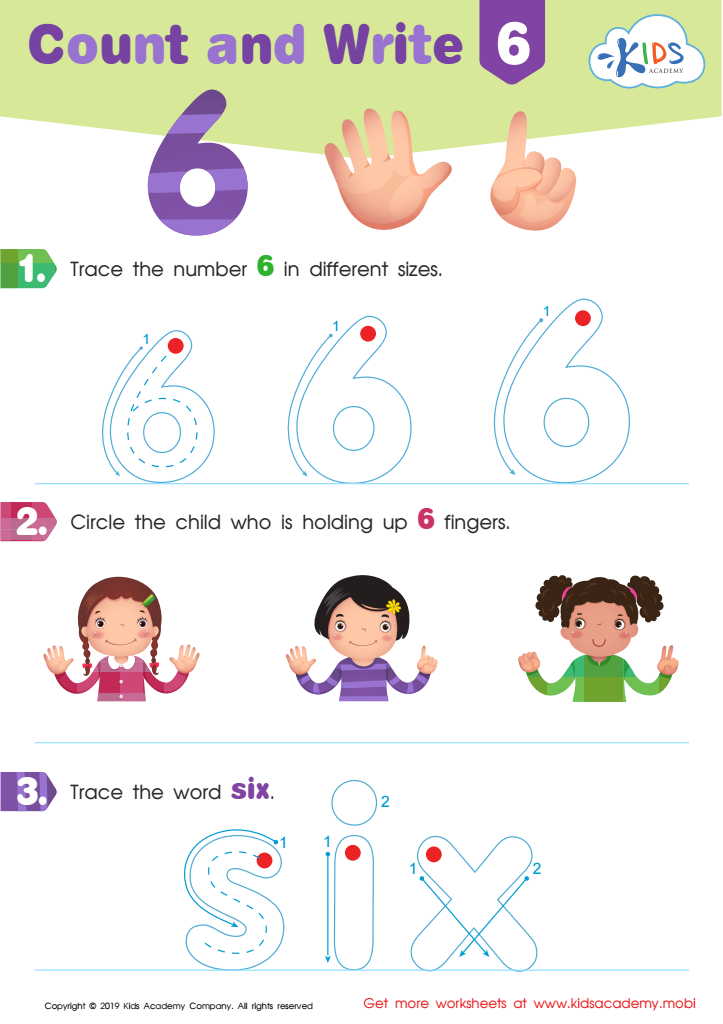
Count and Write 6 Worksheet
Kids begin math by mastering recognition skills. This worksheet helps with that by giving them practice writing "six" and the numeral 6, with guide dots and traceable lines. Giving kids multiple ways to learn the basics helps them build a strong math foundation.
Count and Write 6 Worksheet
Worksheet
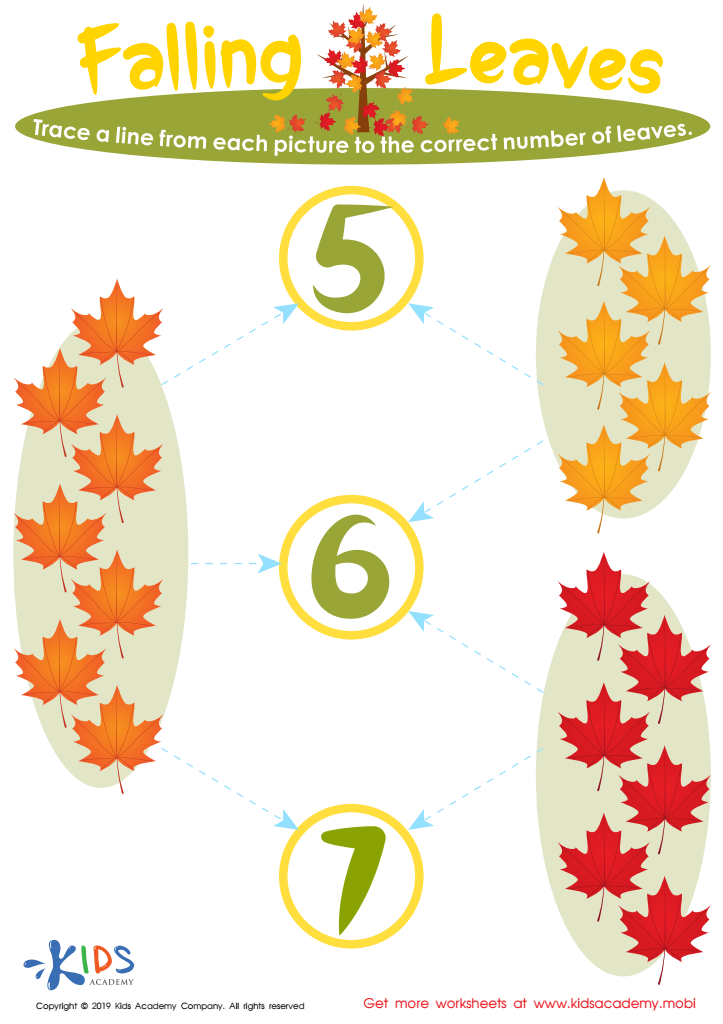
Falling Leaves Worksheet
Do your kids know the seasons? Ask them to name each one, then test their counting skills with a fun worksheet. Have them count from 1 to 10, then trace a line from each picture to the corresponding number of leaves. It's a great way to check their counting ability!
Falling Leaves Worksheet
Worksheet
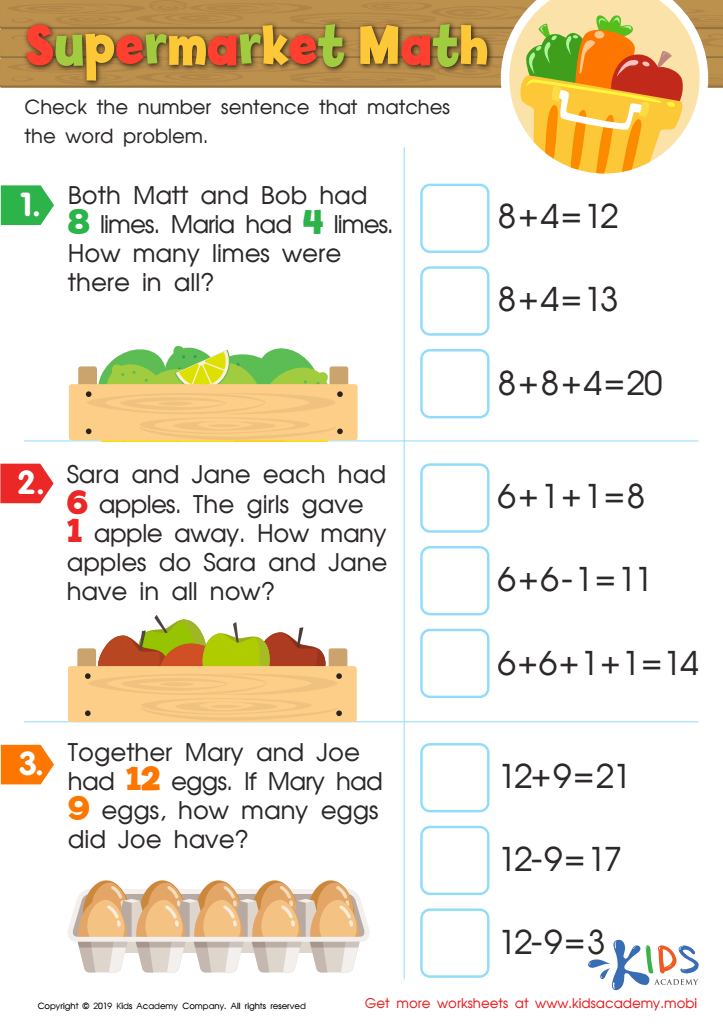
Supermarket Math Worksheet
Take your kids to the supermarket and ask what they're looking forward to buying. Help them solve the three questions in the worksheet by interpreting each one into an equation, then choose the right answer.
Supermarket Math Worksheet
Worksheet
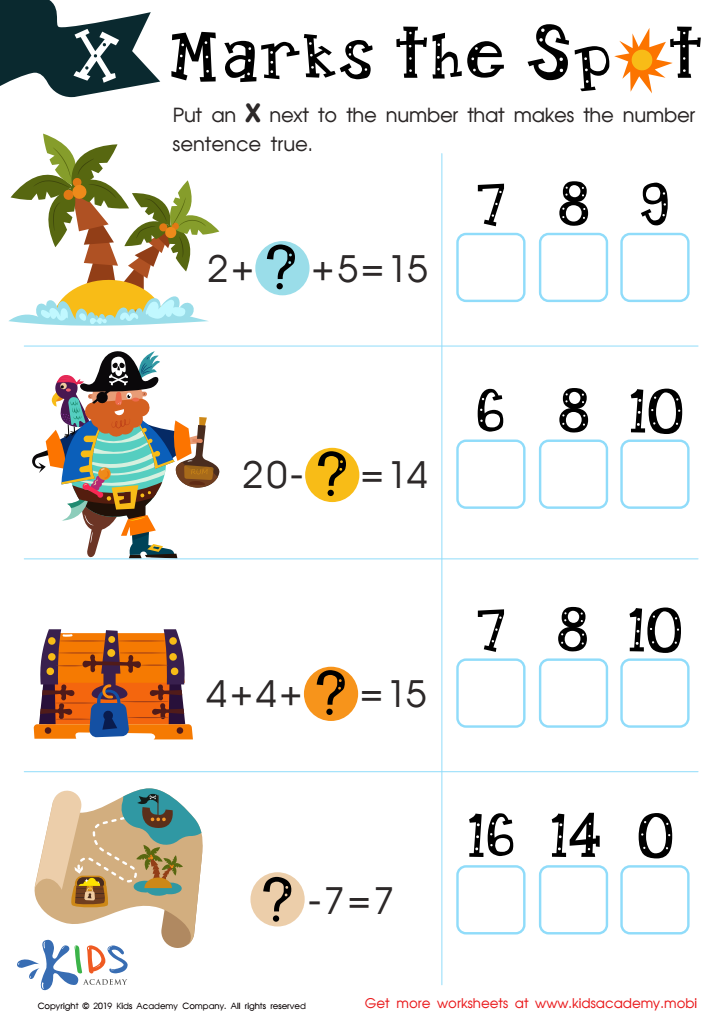
X Marks the Spot Worksheet
Let your kids explore the world of pirates! Ask them what they know about them, what they do and the phrases they like. Download the printout and point at the images, asking them to tell you what they see. Help them tick the box for the number that makes the sentence true. Let them have fun learning about pirates! (80 words)
X Marks the Spot Worksheet
Worksheet
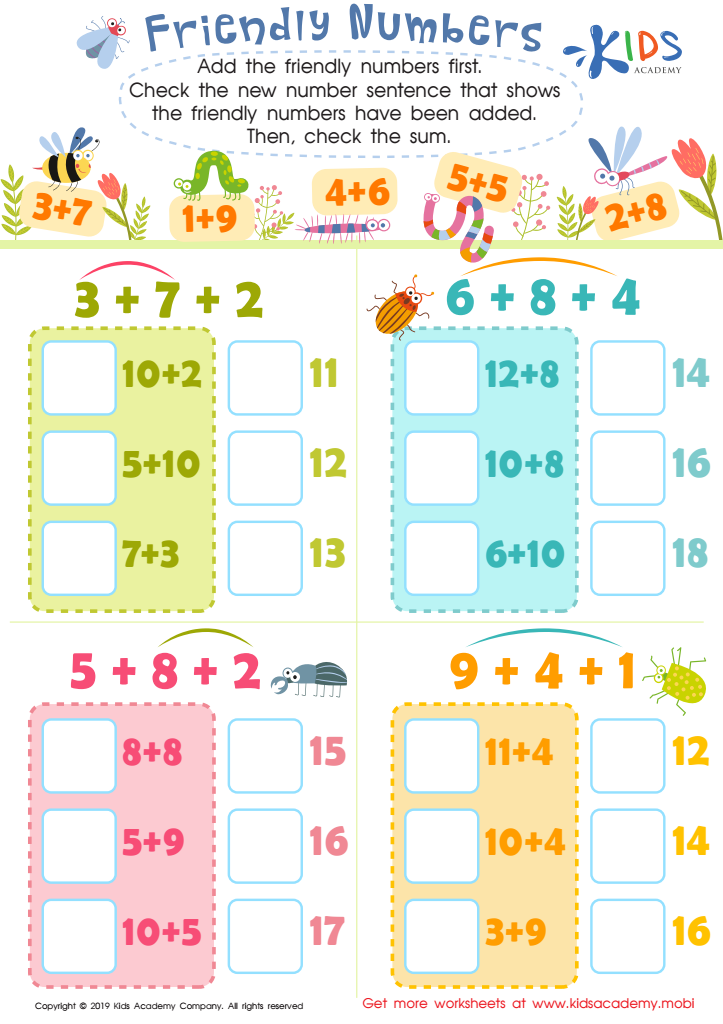
Friendly Numbers Worksheet
Help your students add the numbers at the top of the boxes. Check the new number sentences with friendly numbers. Assist them with simple addition and check the sum. It's easy, especially when they've already mastered counting and simple equations.
Friendly Numbers Worksheet
Worksheet
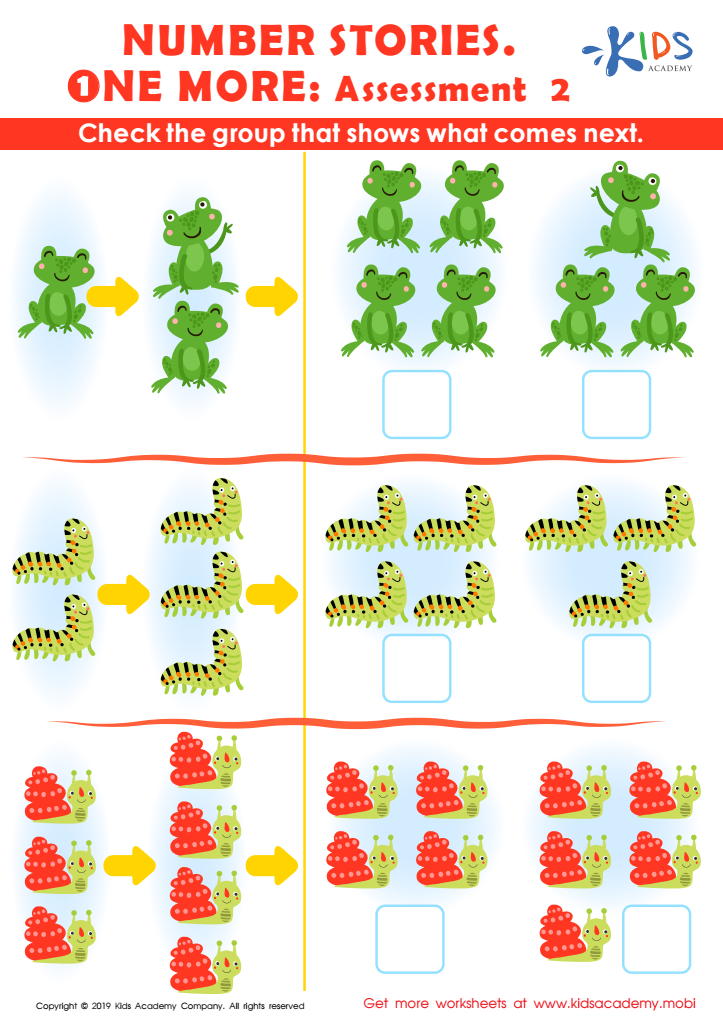
Number Stories One More – Assessment 2 Worksheet
Tracing is a great activity for kids. They can count and trace numbers, recognize animals, and practice drawing on dotted lines. It's entertaining and educational, helping children learn valuable counting skills.
Number Stories One More – Assessment 2 Worksheet
Worksheet
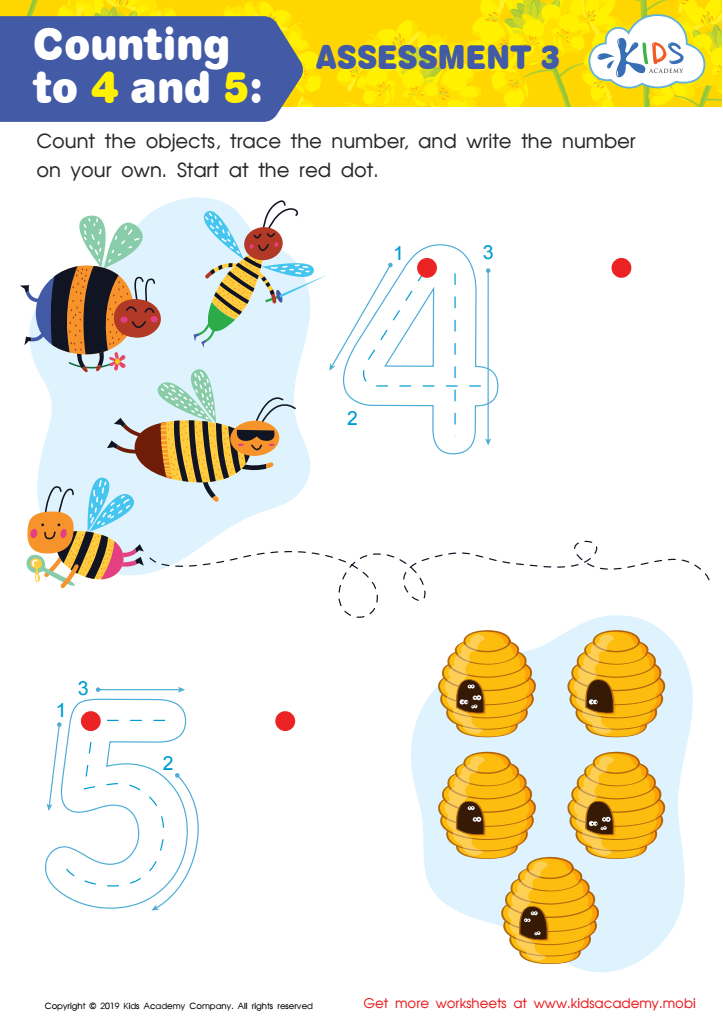
Counting to 4 and 5: Assessment 3 Worksheet
Help your kids learn to count with fun objects and items they like - like the bees in this worksheet. Ask them to count, trace the number, and write it down. Give guidance, starting at the red dot. This is an important first step in math and your kids will love it!
Counting to 4 and 5: Assessment 3 Worksheet
Worksheet
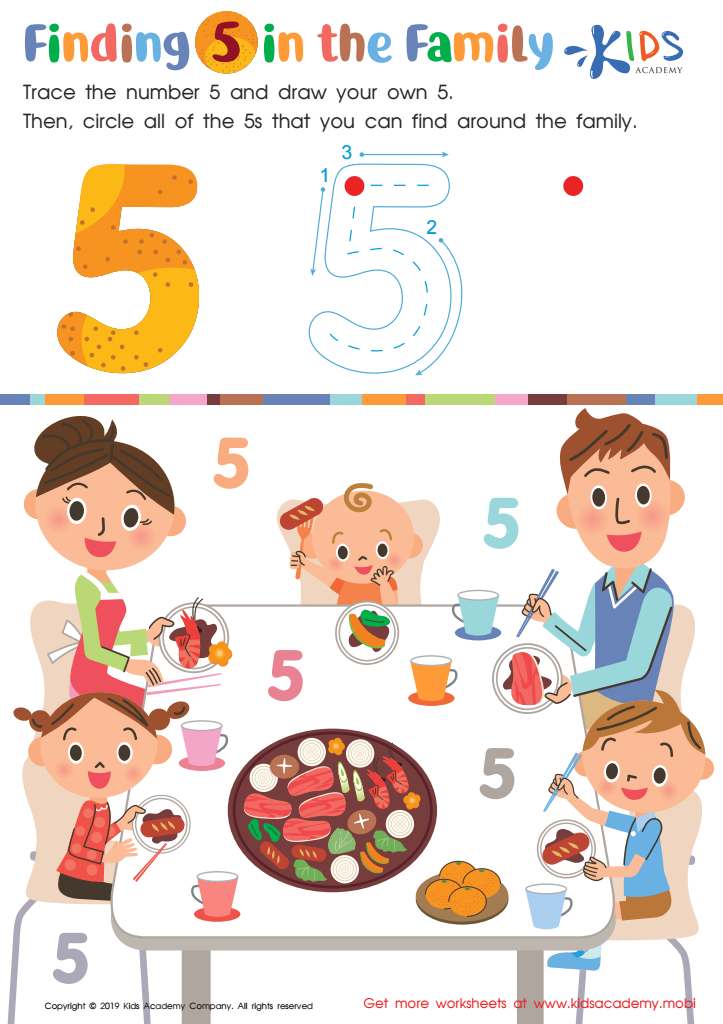
Finding 5 in the Family Worksheet
This worksheet helps kids identify and write the number 5. Ask what the family is doing and who the family members are. Help them trace and draw the 5, then have them circle all 5s in the picture.
Finding 5 in the Family Worksheet
Worksheet
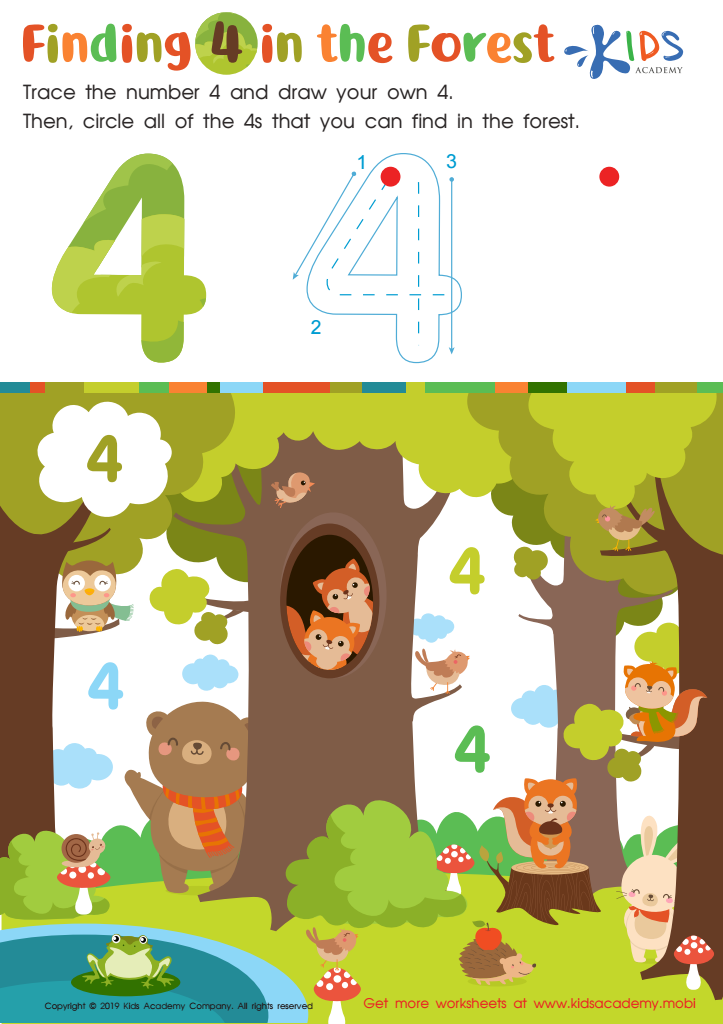
Finding 4 in the Forest Worksheet
Before starting, have your kids count as high as they can. Ask them to identify the setting and point out the 4s. Trace 4 and draw your own. Help your kids circle all the 4s they can find in the forest. How far can they count? How well did they find the hidden 4s?
Finding 4 in the Forest Worksheet
Worksheet
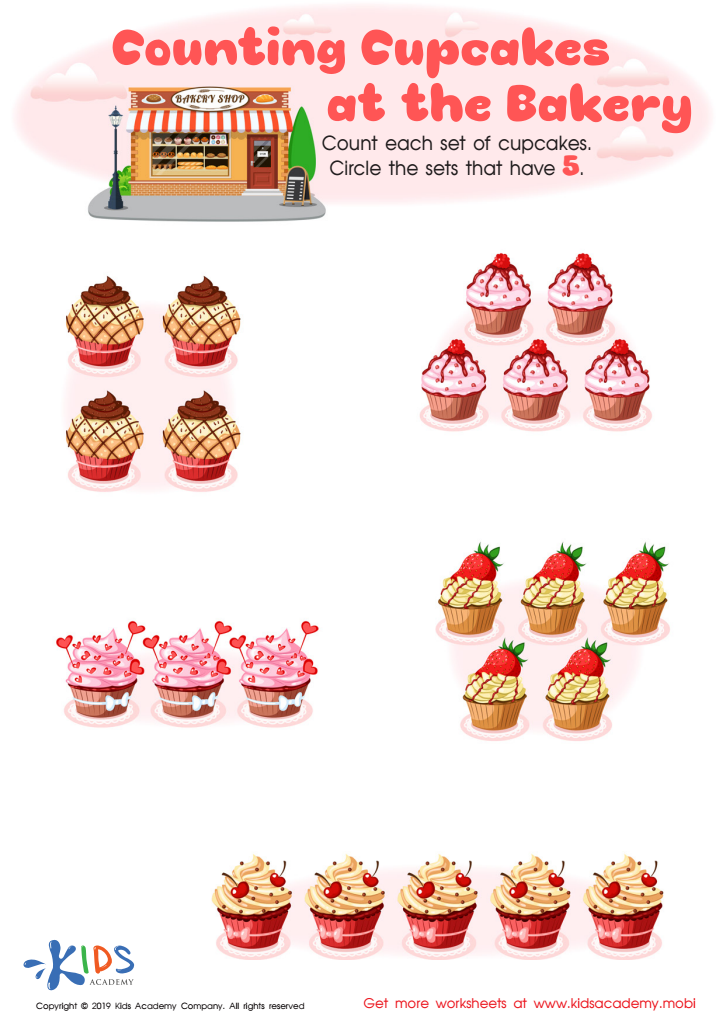
Counting Cupcakes Worksheet
This fun worksheet for preschoolers uses cupcakes to teach counting. Kids must circle the groups of cupcakes that add up to 5. The delicious treats make learning fun and engaging!
Counting Cupcakes Worksheet
Worksheet
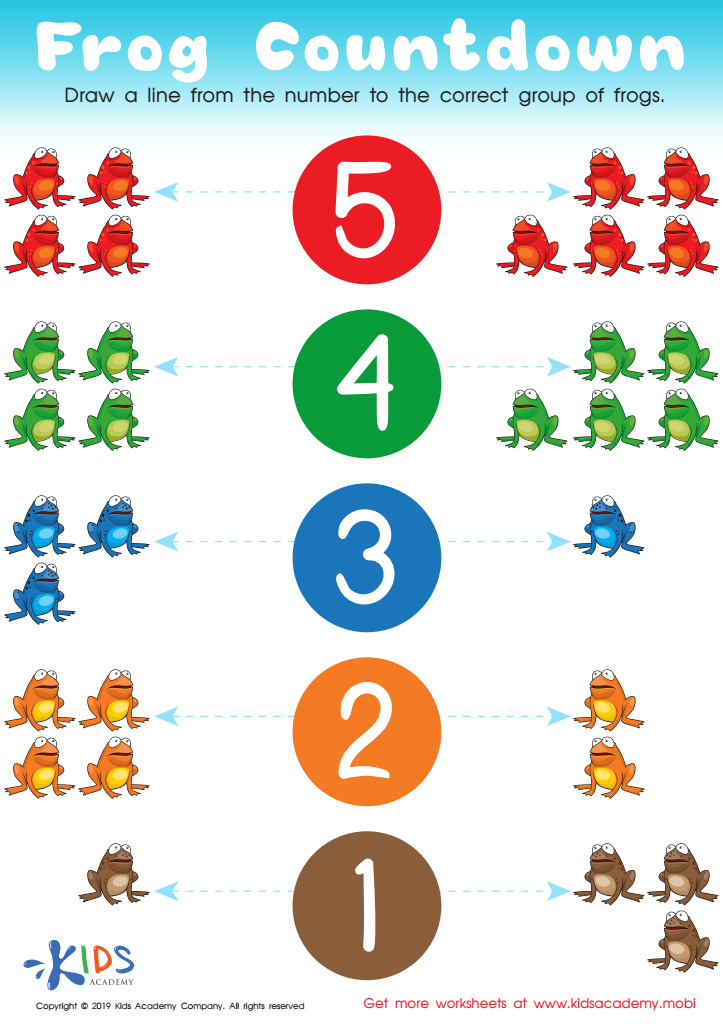
Frog Countdown Worksheet
Make learning fun for kids with traceable printouts! This exercise has kids counting frogs and drawing a line to match the number. Expand their knowledge with activities like this, beyond the basics they learn in school. Help them explore new ways of learning and make it enjoyable.
Frog Countdown Worksheet
Worksheet
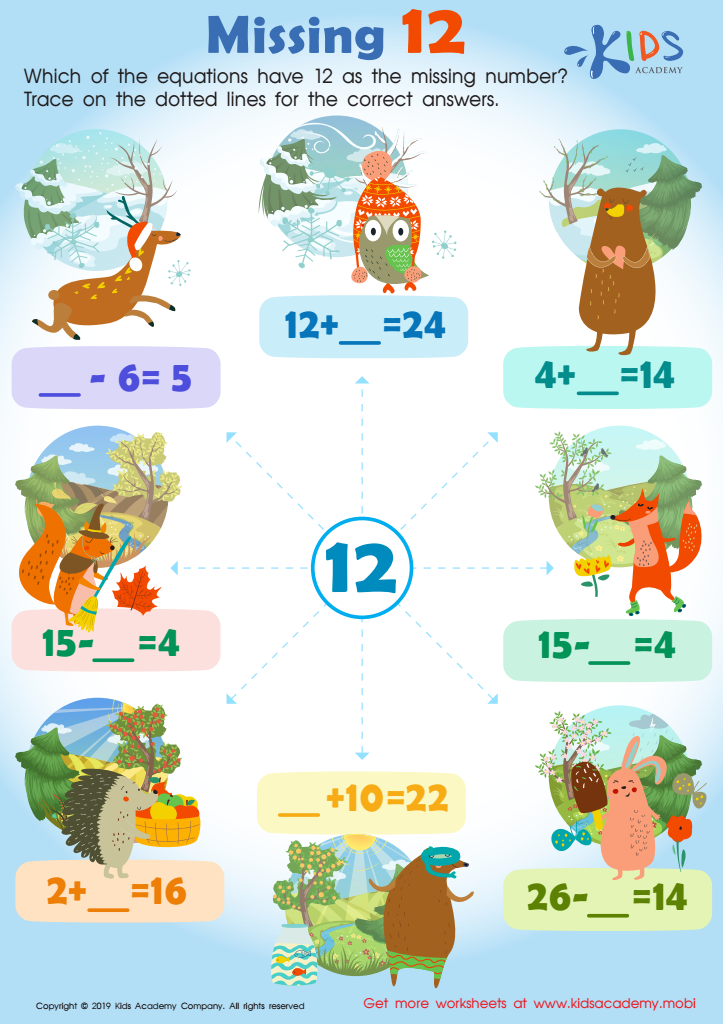
Missing 12 Worksheet
Help your kids find the missing number in this fun nature worksheet. Engage them with this educational exercise - combining teaching and fun. Encourage them to practice addition and subtraction skills. Look at the picture with them. Which equations have 12 as the missing number? Guide them to trace the dotted lines for the correct answers.
Missing 12 Worksheet
Worksheet
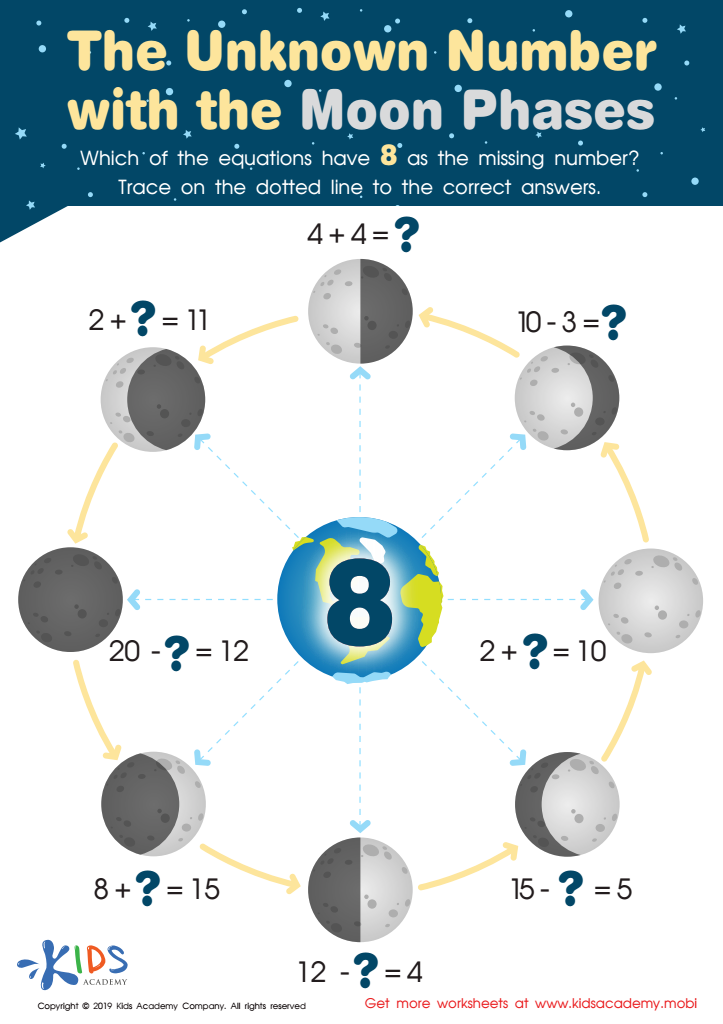
The Unknown Number with the Moon Phases Worksheet
Show your kids the moon one night! Explain why its shape changes during the month with a worksheet. Then, help them to solve math equations and trace the answer, where the missing number is '8'.
The Unknown Number with the Moon Phases Worksheet
Worksheet
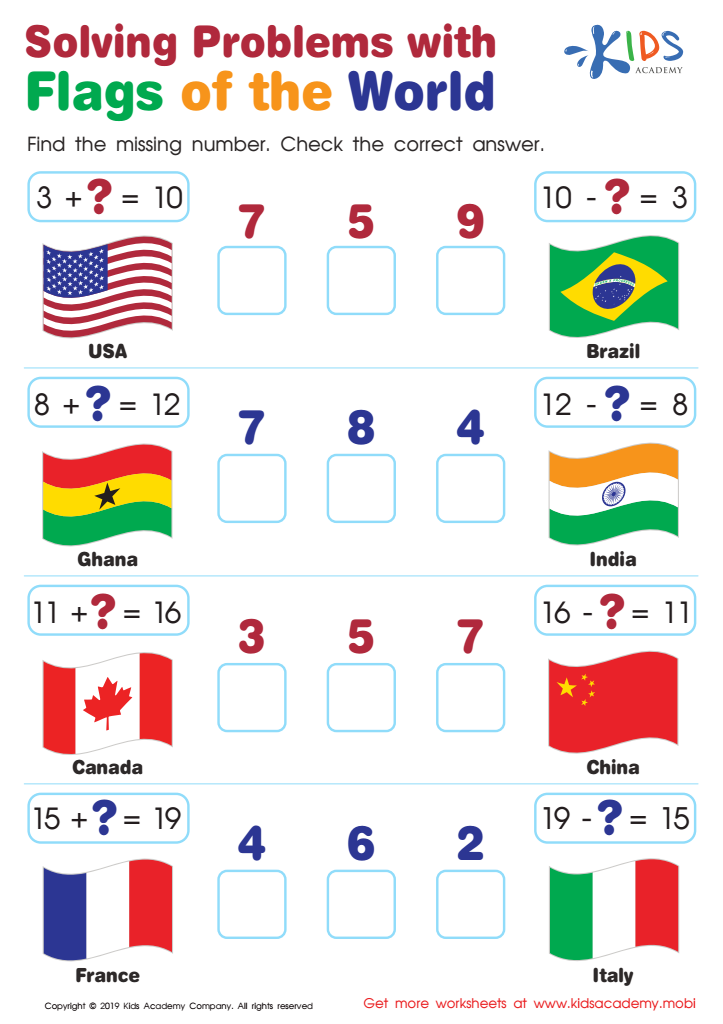
Solving Problems with Flags of the World Worksheet
Name some countries you know with your kids, then introduce their flags with this worksheet. Help them find the missing number in each addition problem, and then check the answer. It's a fun way to learn about different countries near and far.
Solving Problems with Flags of the World Worksheet
Worksheet
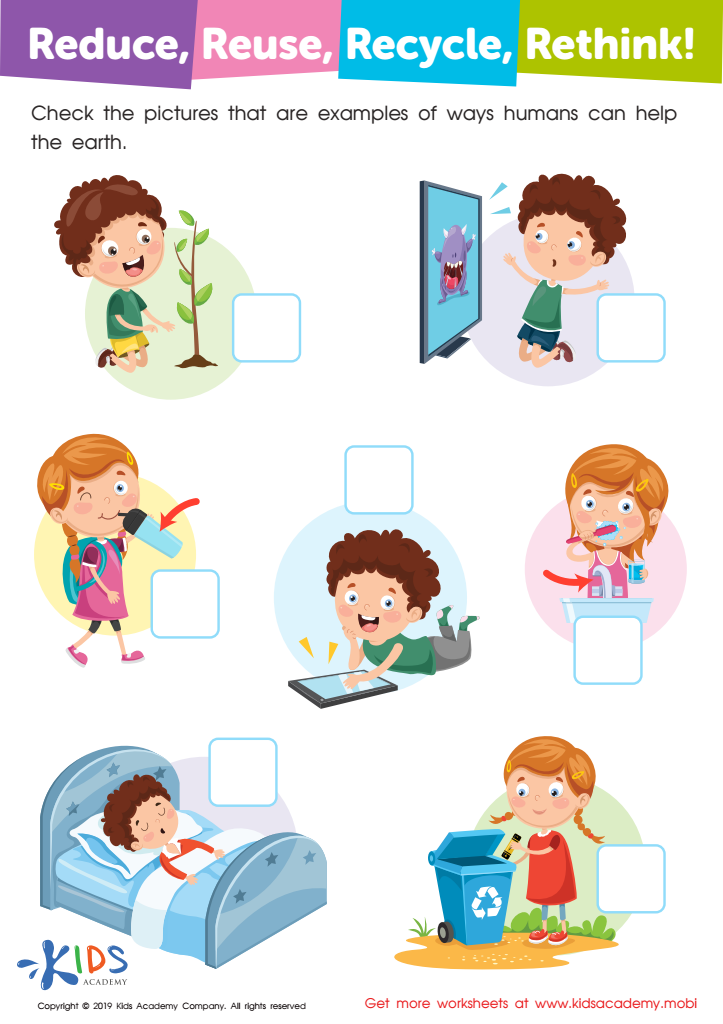
Reduce, Reuse, Recycle, Rethink Worksheet
Recycling is a great way to reduce waste and help our planet — instead of throwing away a can of soda, recycle it! Look at the pictures in the worksheet — what are the kids doing? They're learning about ways to help the environment. Check the pictures for examples of how to help the earth.
Reduce, Reuse, Recycle, Rethink Worksheet
Worksheet
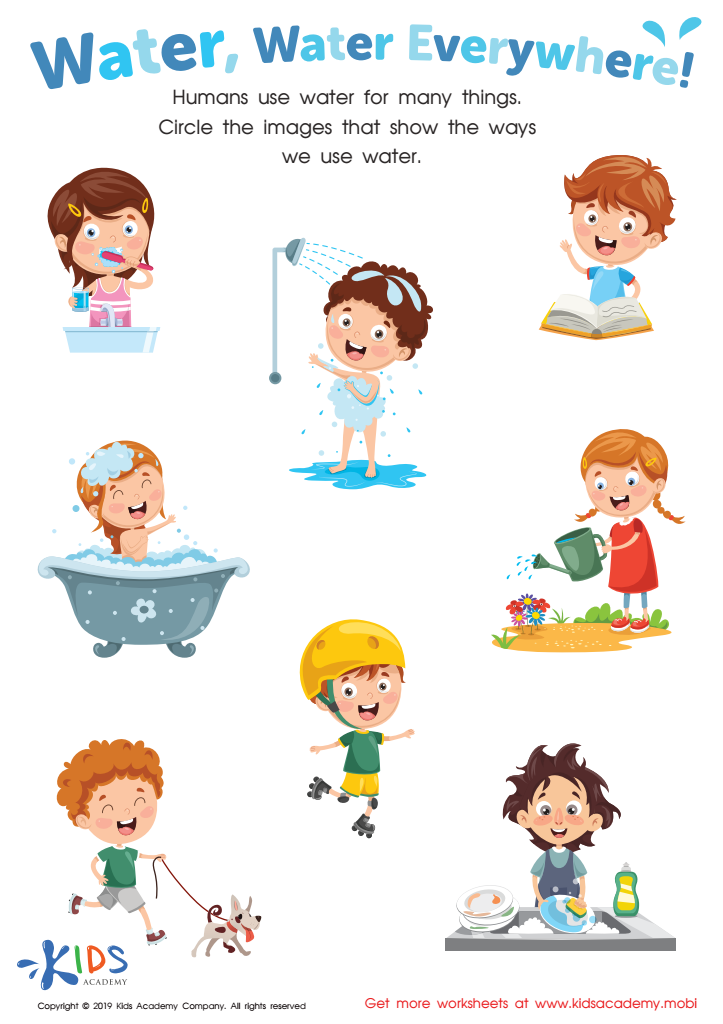
Water, Water Everywhere! Worksheet
Ask your kids how we use water daily. Point out how vital it is to the environment, as many living things couldn't exist without it. Show them this worksheet with kids doing different things that involve water. Ask them to identify what each one is doing, then help them circle the images which show the ways we use the water.
Water, Water Everywhere! Worksheet
Worksheet
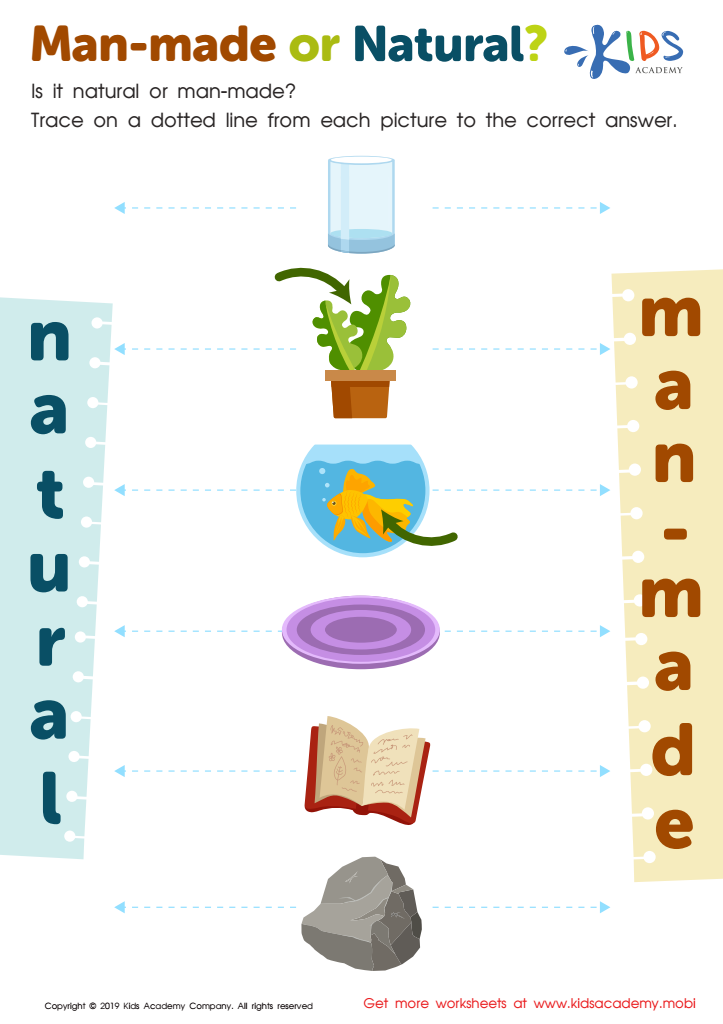
Man-Made or Natural? Worksheet
Ask your students to name natural and man-made objects. Check the worksheet to help them identify the objects, then trace the dotted line to determine if it's natural or man-made.
Man-Made or Natural? Worksheet
Worksheet
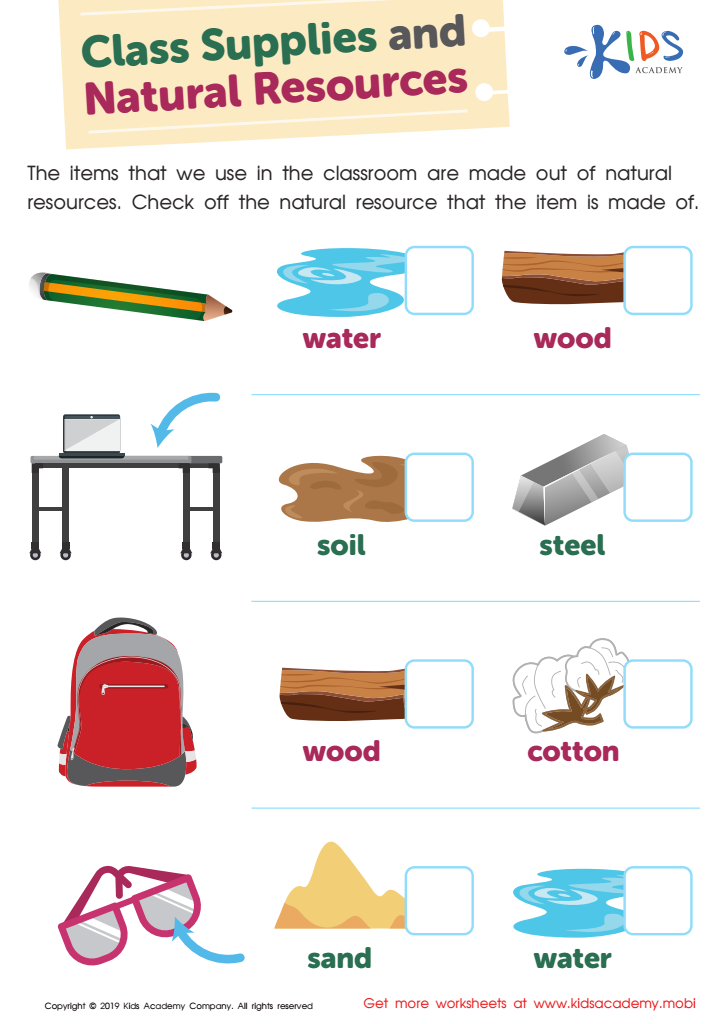
Class Supplies and Natural Resources Worksheet
Look around the classroom with your students. Can they identify objects and name their natural resources? E.g. wood, cotton, steel. Ask your child to find an object made from wood. Then, look at this worksheet together. Ask your students to identify each object and check off the natural resource it's made from.
Class Supplies and Natural Resources Worksheet
Worksheet
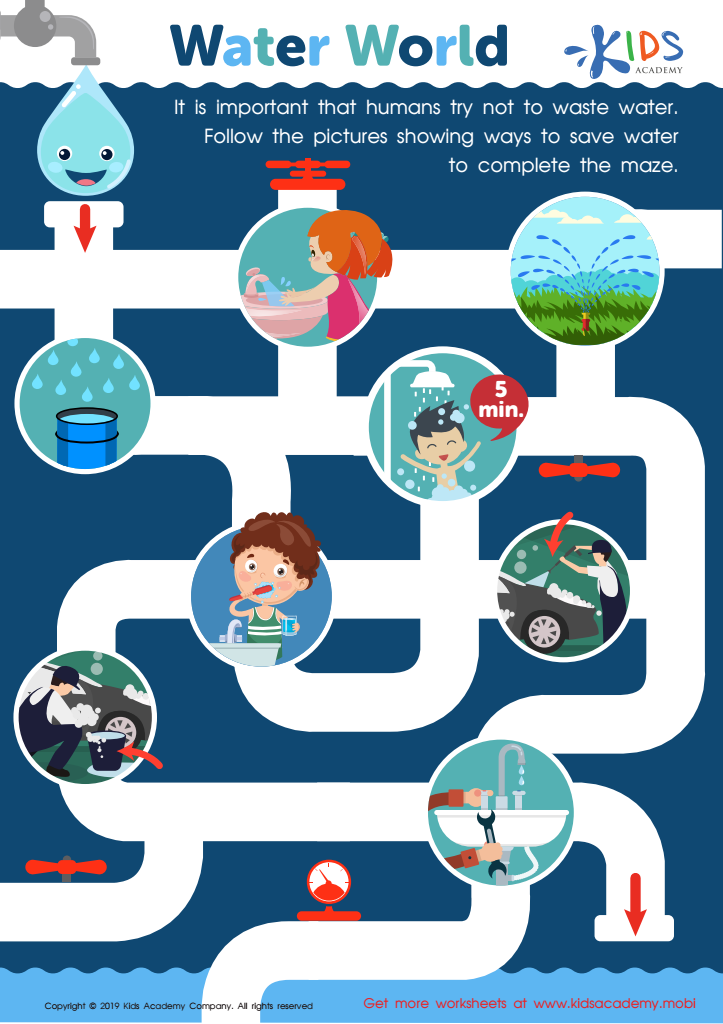
Water World Worksheet
Water is a vital necessity for living. Our bodies depend on it to stay healthy and survive. When we don't drink enough water, we become thirsty and run the risk of getting sick. Luckily, our planet is full of water and natural sources to stay hydrated. To prevent water waste, use this worksheet to teach your students how to conserve it and complete the maze.
Water World Worksheet
Worksheet
Join Kids Academy for Free
Who is primarily going to use this learning content?