Normal Difficulty Online Worksheets for Kids - Page 11
1638 filtered results
Difficulty Level
Grade
Age
-
From - To
Subject
Activity
Standards
Favorites
With answer key
Interactive
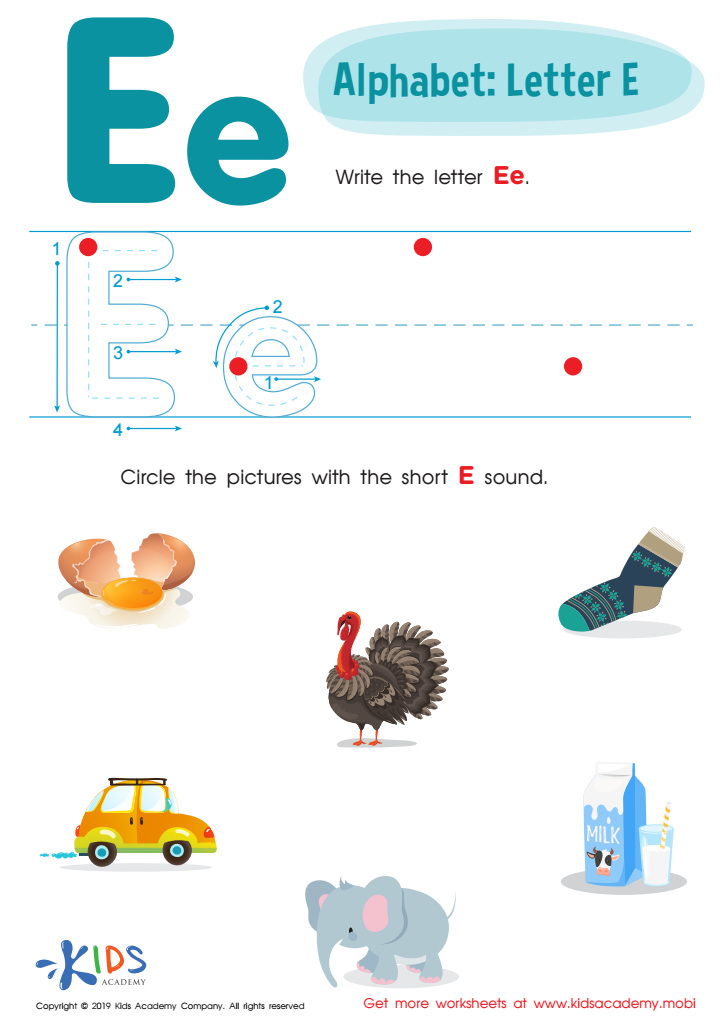
Letter E Tracing Worksheet
Students trace and write uppercase and lowercase letter E. They sound out "E" words, choosing those with short "E" sounds. Preschoolers identify the difference between the 'E' sounds in words like "egg" and "turkey." A tracing sheet helps them to understand.
 Assign to My Students
Letter E Tracing Worksheet
Worksheet
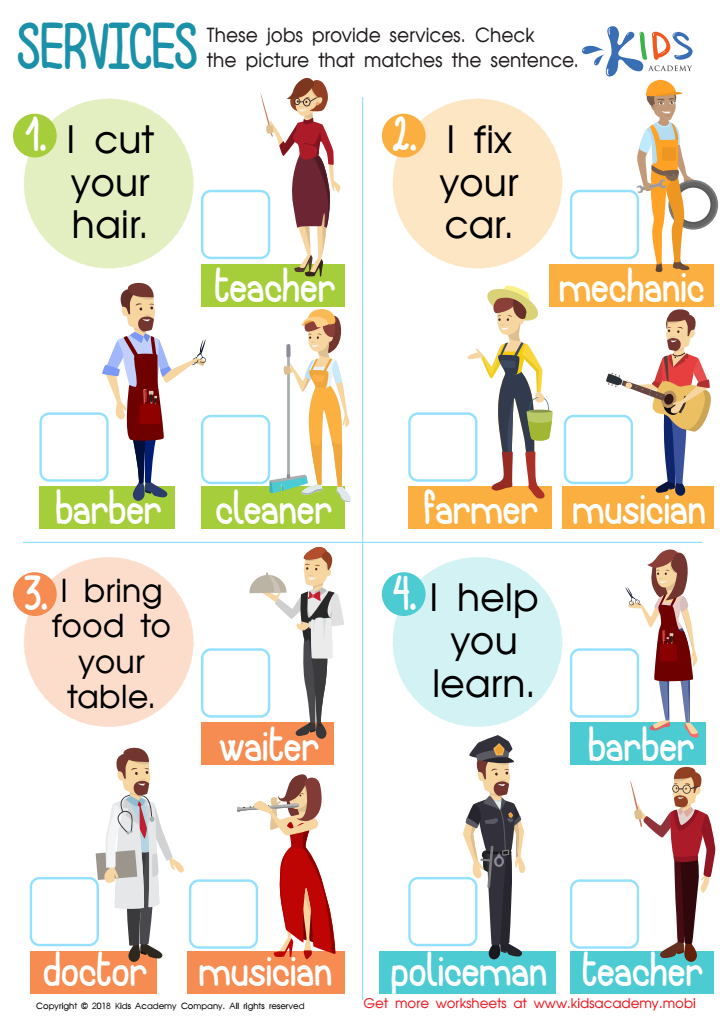
Services Worksheet
Help your child learn the difference between services and goods with this Kids Academy worksheet. Guide your child to read each sentence and select the correct worker who does the job for the service. With this worksheet, your child can learn about common services in the community.
Services Worksheet
Worksheet
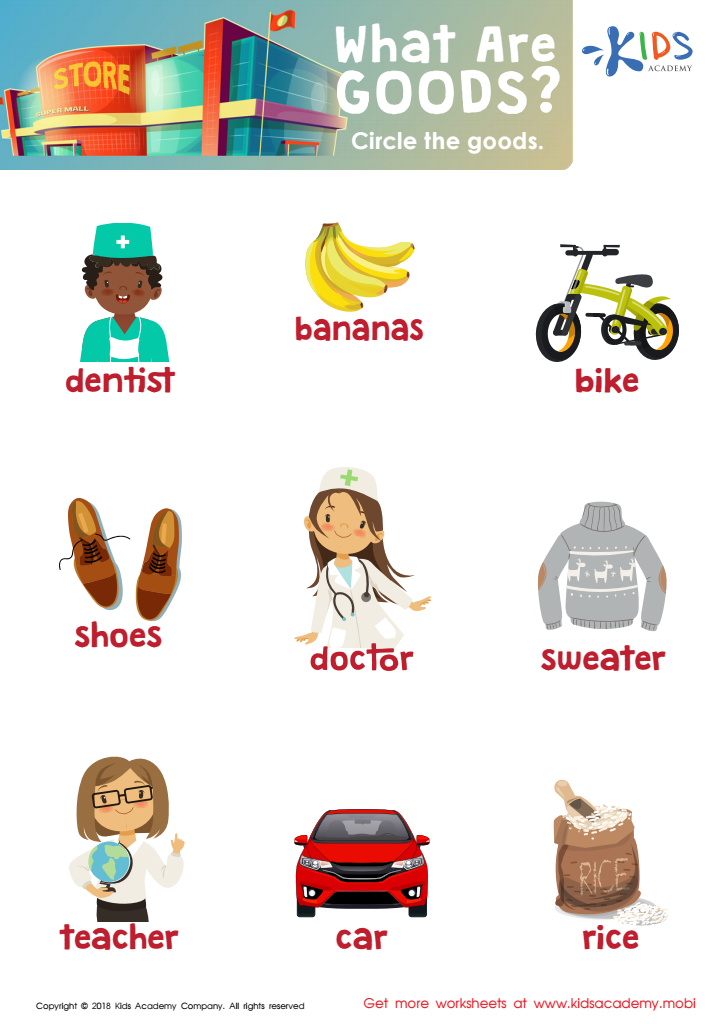
What Are Goods? Worksheet
Introduce your child to economics with this social studies worksheet! It helps kids differentiate between goods and services. Have them look at each picture, discuss what it does, and decide whether it's an object or a service. Encourage them to think carefully and circle the goods. It's a great way to start teaching the basics of economics.
What Are Goods? Worksheet
Worksheet
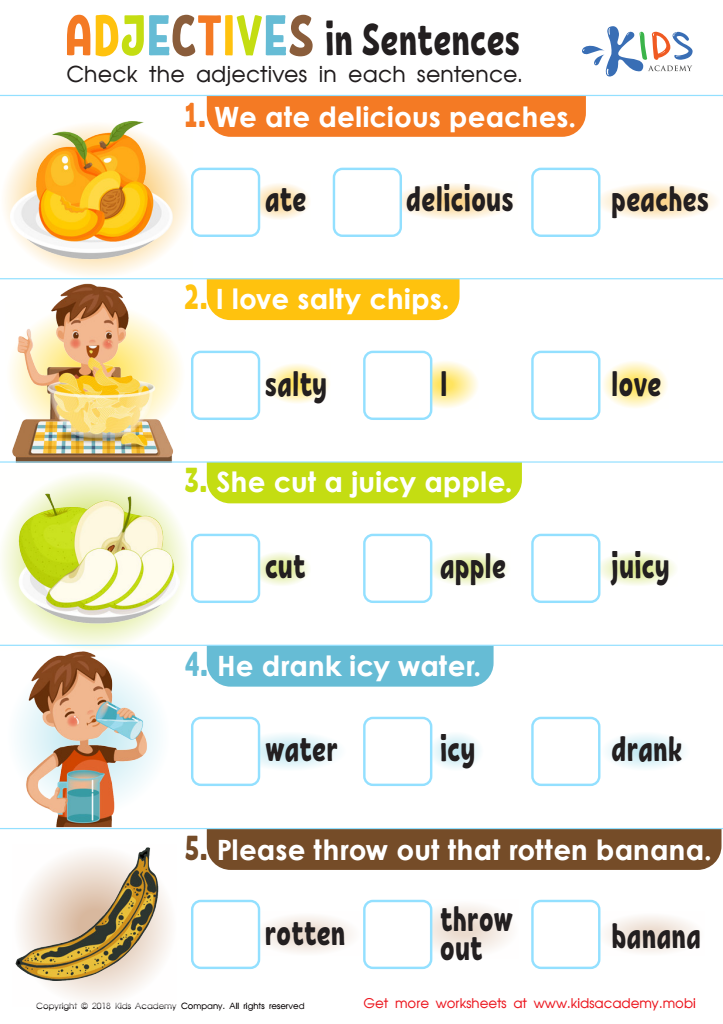
Adjectives in Sentences Worksheet
Our learners can find it hard to use writing to add detail, but adjectives can help. With this fun worksheet, kids can identify adjectives that describe food and drink. Guide them through each sentence, discussing the words and having them choose the one that gives information about the food/drink.
Adjectives in Sentences Worksheet
Worksheet
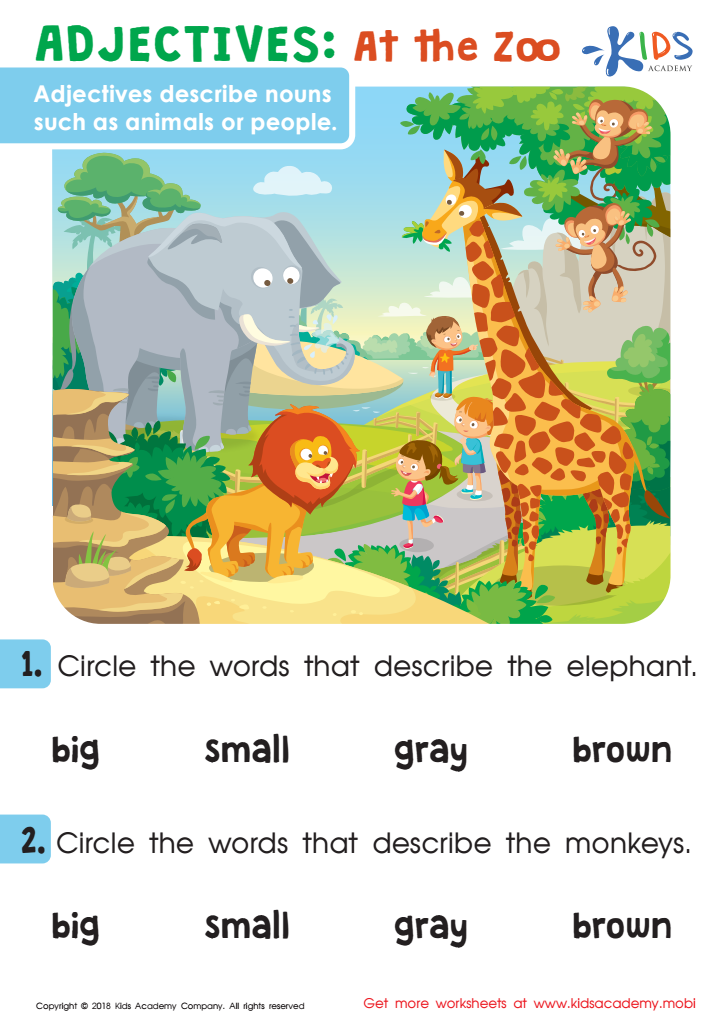
Adjectives: At The Zoo Worksheet
Take your kids to the zoo and ask them about their favorite activities and animals. This worksheet is a great way for kids to learn about adjectives. Explain that adjectives describe nouns like people or animals (e.g. big, tall, dark). Look at the printout with your kids and help them circle words that describe the animals in the picture.
Adjectives: At The Zoo Worksheet
Worksheet
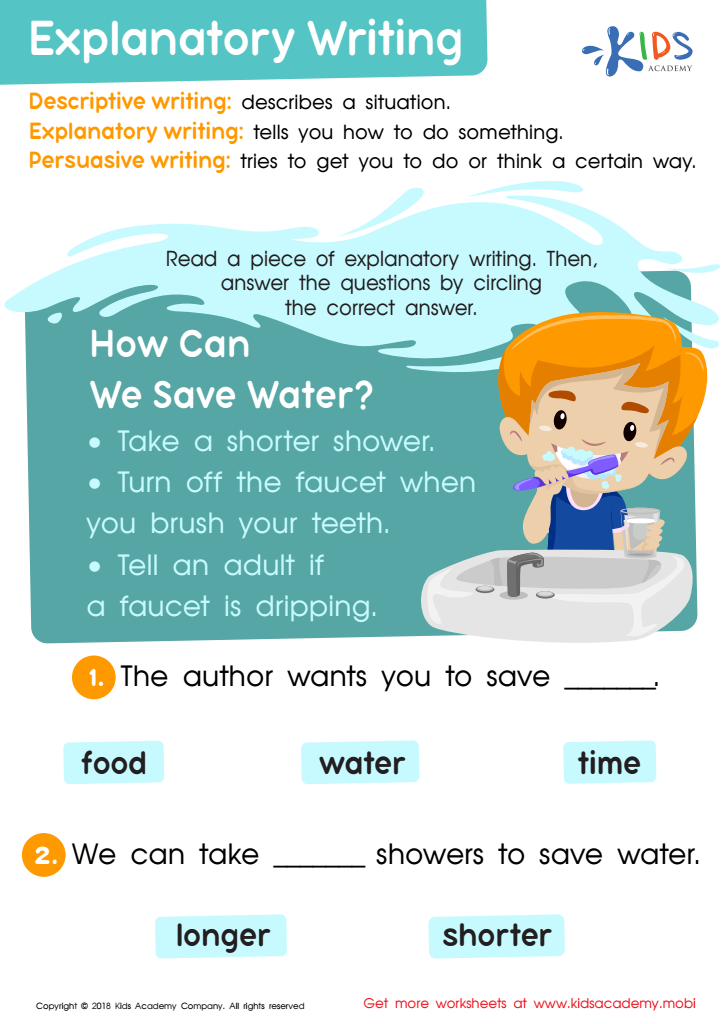
Explanatory Writing Worksheet
This worksheet teaches kids the three main types of writing. Descriptive writing describes a situation, explanatory writing explains how to do something, and persuasive writing is used to sway readers' opinions. Read the text and help your kids answer the questions by circling the right answer.
Explanatory Writing Worksheet
Worksheet
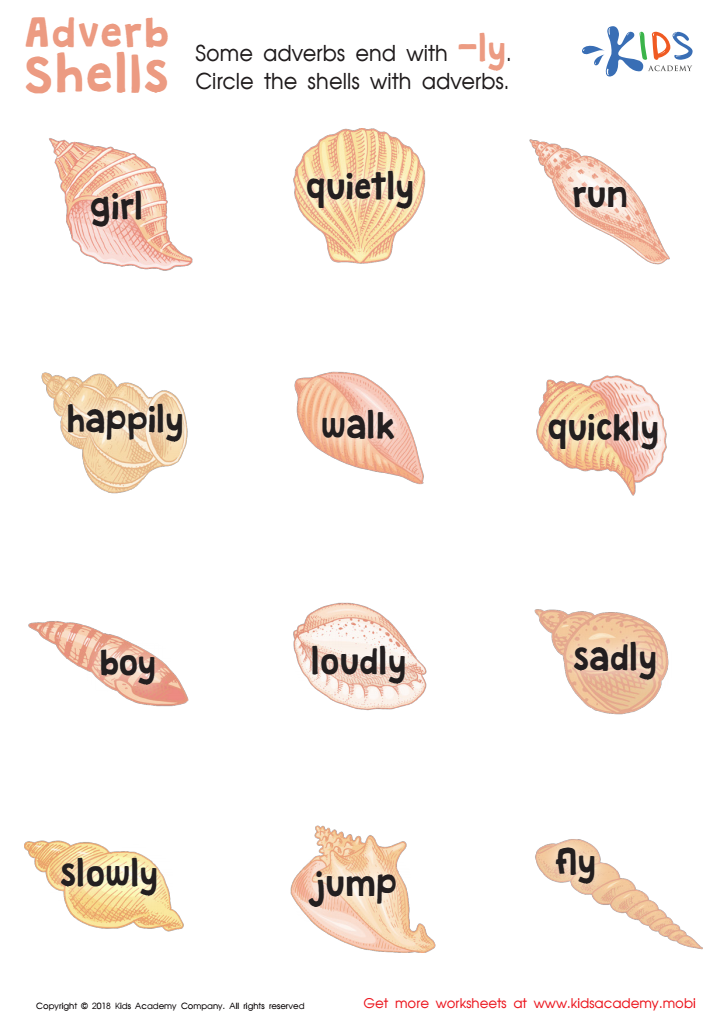
Adverb Shells Worksheet
Help your kids understand adverbs by giving them an example with an adverb. Ask them to point it out. Adverbs often end with –ly. Give them a worksheet to circle adverbs in a picture. This way, they'll easily identify them in a sentence.
Adverb Shells Worksheet
Worksheet
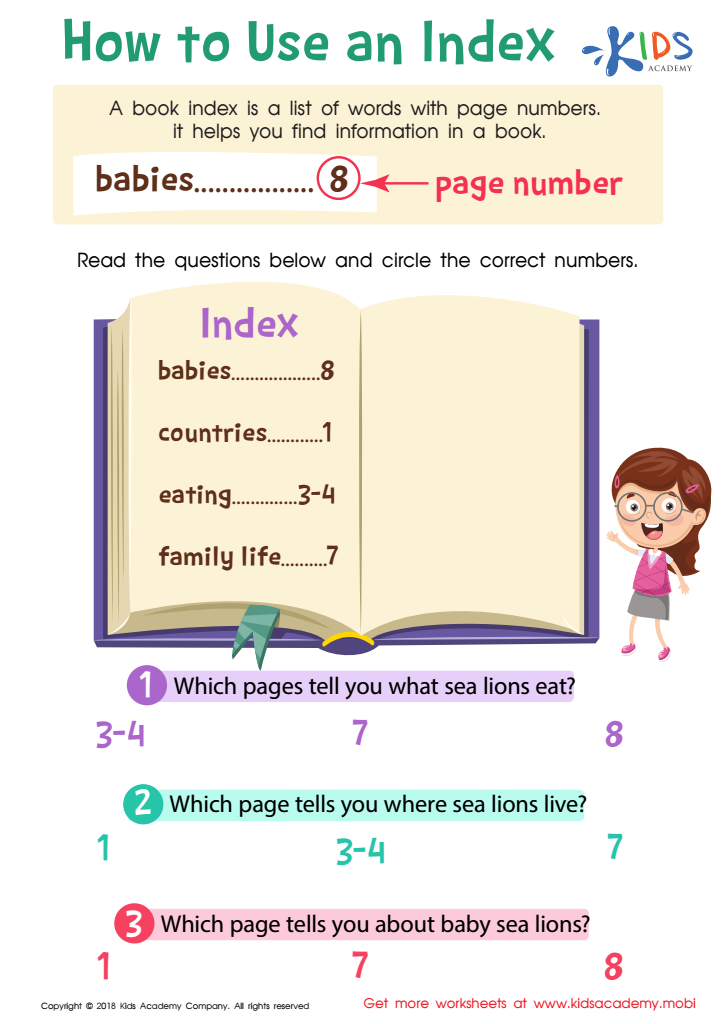
How Use Index Worksheet
Hand your kids a book, point out the index and explain that it's a list of words with page numbers. Ask them to look at the index in the worksheet and circle the correct number to the questions. Every book must have an index to help readers find chapters or information they need.
How Use Index Worksheet
Worksheet
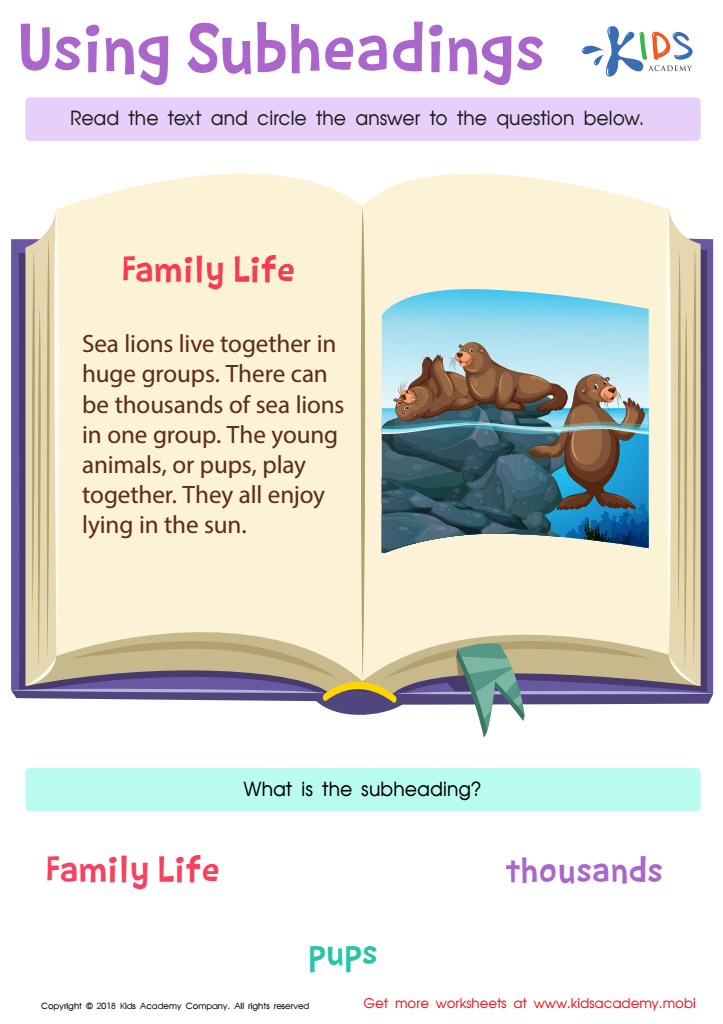
Using Subheadings Worksheet
Writers must follow many rules to make their work organized and easier to read. Subheadings are usually in bold font and centered at the top of the page. Read the text to your kids and have them circle the correct answer.
Using Subheadings Worksheet
Worksheet
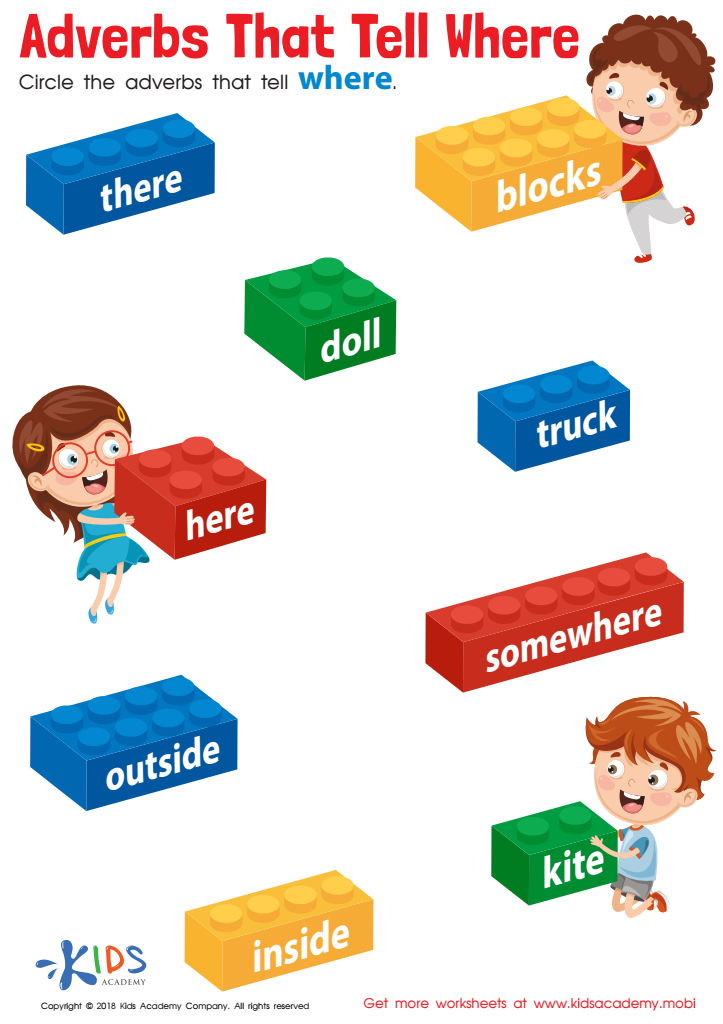
Adverbs That Tell Where Worksheet
Help your kids identify adverbs with a fun worksheet. Read the words aloud and ask them to circle the adverbs showing 'where.' Give them easy examples, like 'the girl stood over there.' See if they can create their own examples. This activity makes learning adverbs fun!
Adverbs That Tell Where Worksheet
Worksheet
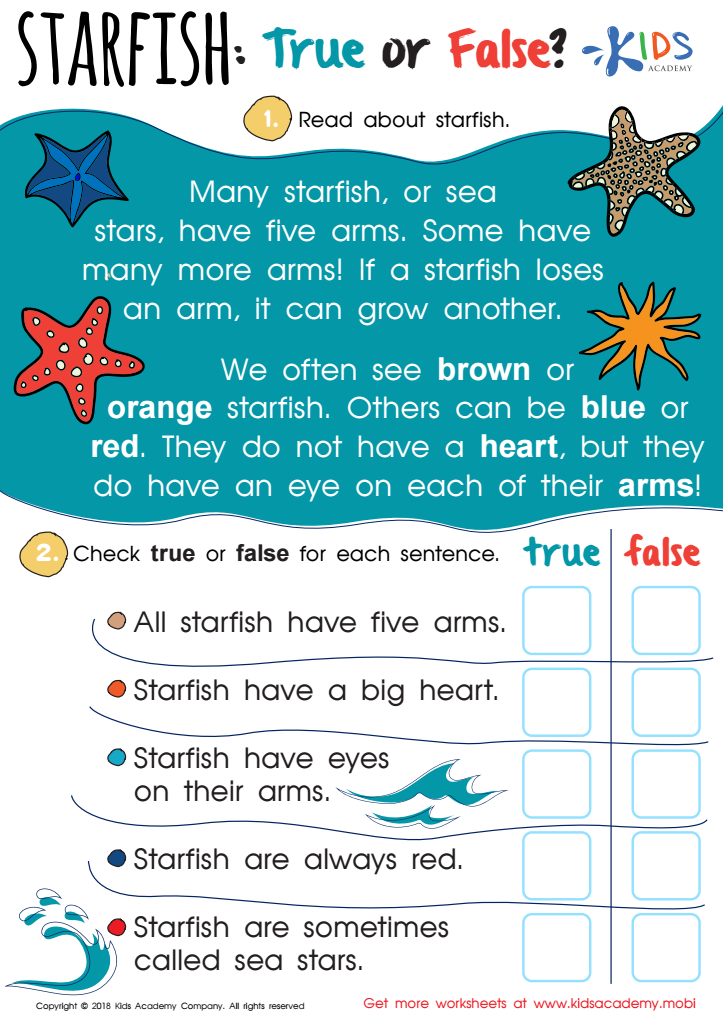
Starfish: True or False Worksheet
This worksheet helps kids learn more about starfish. Ask them what they know and read the text; it explains the creature's arms, color, and sight. At the end, read the questions and help them check true or false for each sentence.
Starfish: True or False Worksheet
Worksheet
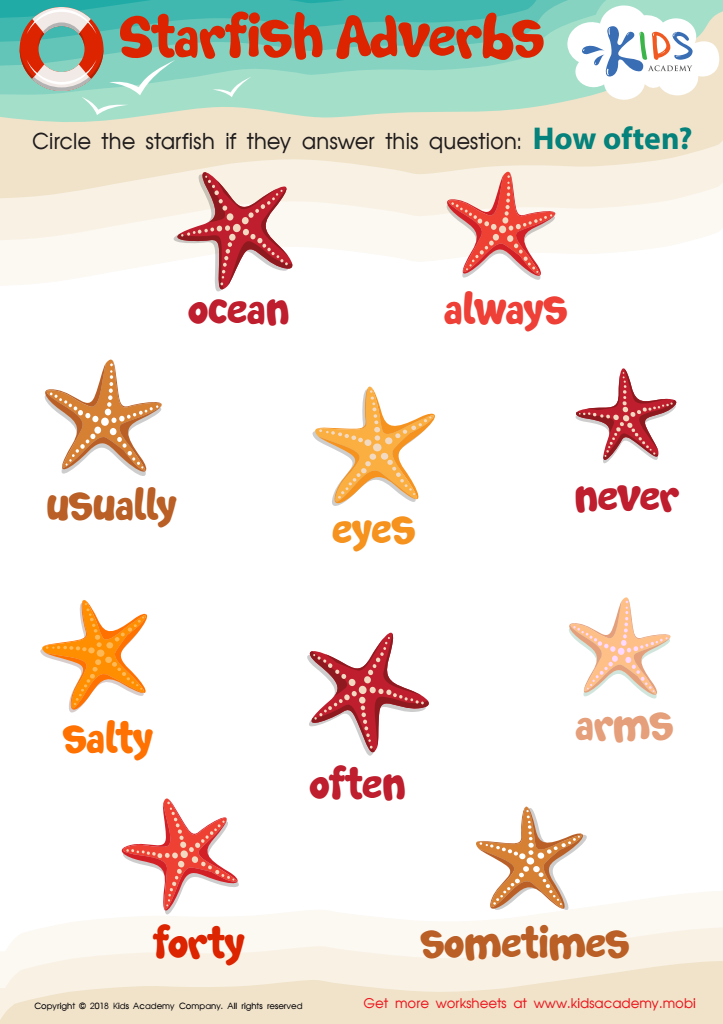
Starfish Adverbs Worksheet
Students will gain exposure to new words and parts of speech as they learn more. After nouns and verbs, adverbs are next. Ask students to give examples, like ‘quickly’ and ‘heavily’. Finally, help them circle the starfish that answer the question 'how often?' on the worksheet.
Starfish Adverbs Worksheet
Worksheet
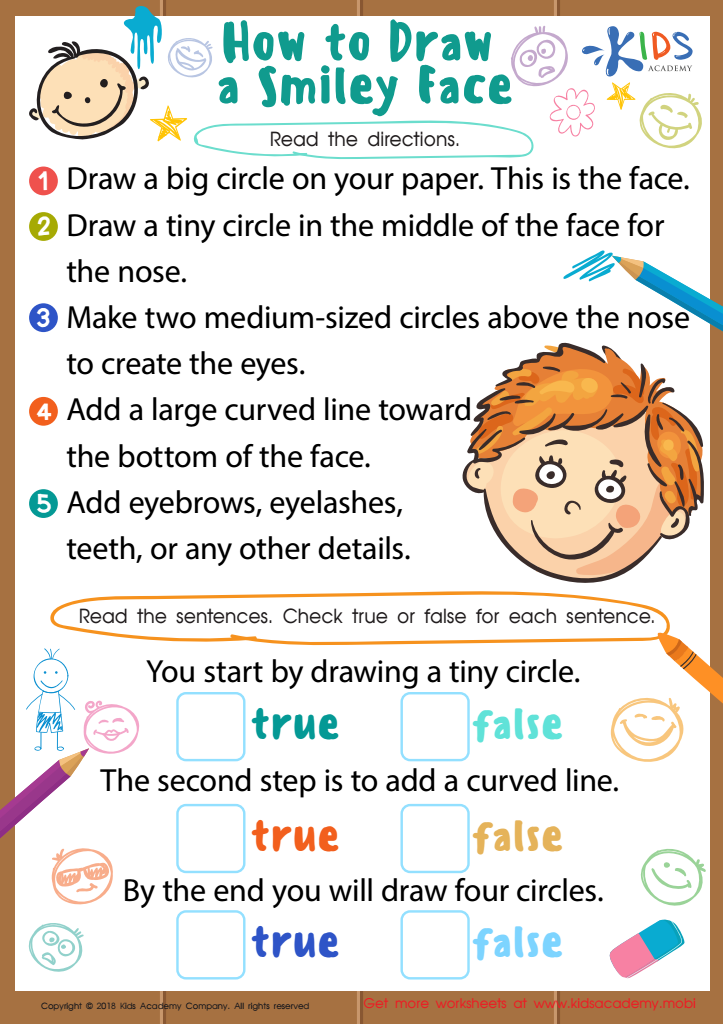
How to Draw a Smiley Face Worksheet
Can your students draw a smiley face? Simplify the process with this worksheet, which provides step-by-step instructions. Ask them to follow the directions, then check True or False for each sentence at the bottom of the page. A great way to teach kids how to easily draw a smiley face!
How to Draw a Smiley Face Worksheet
Worksheet
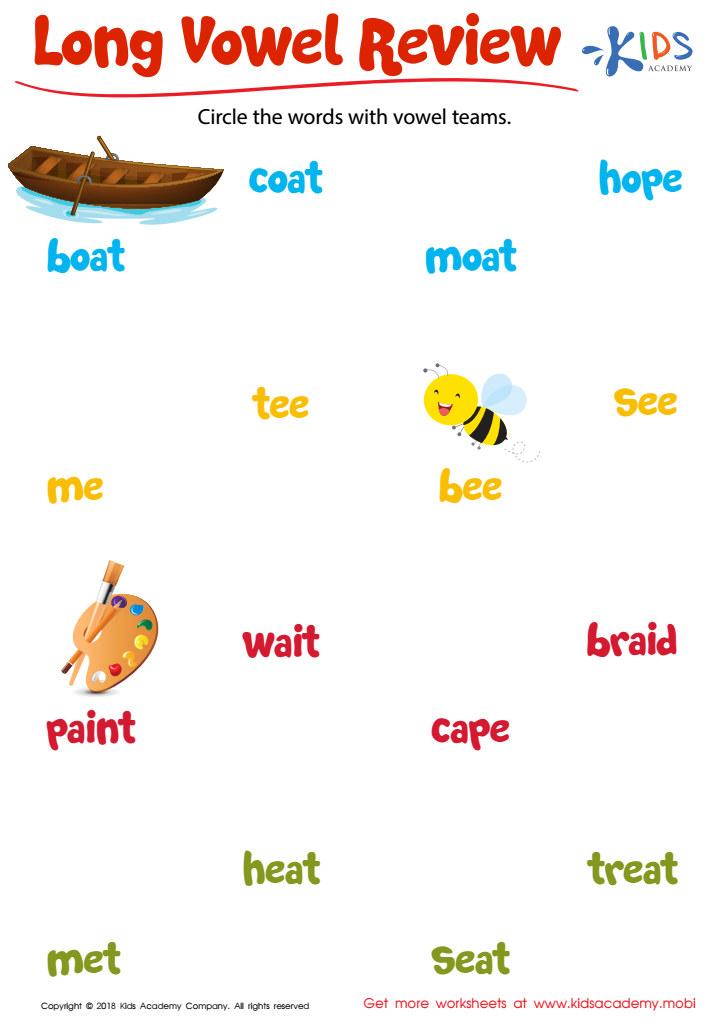
Long Vowel Review Worksheet
Vowel teams like "ea" and "ai" help us make words, and understanding these patterns aids emerging readers in becoming more fluent. This review worksheet has students finding words with vowel teams that make the long vowel sound, and helps them recognize high-frequency words.
Long Vowel Review Worksheet
Worksheet
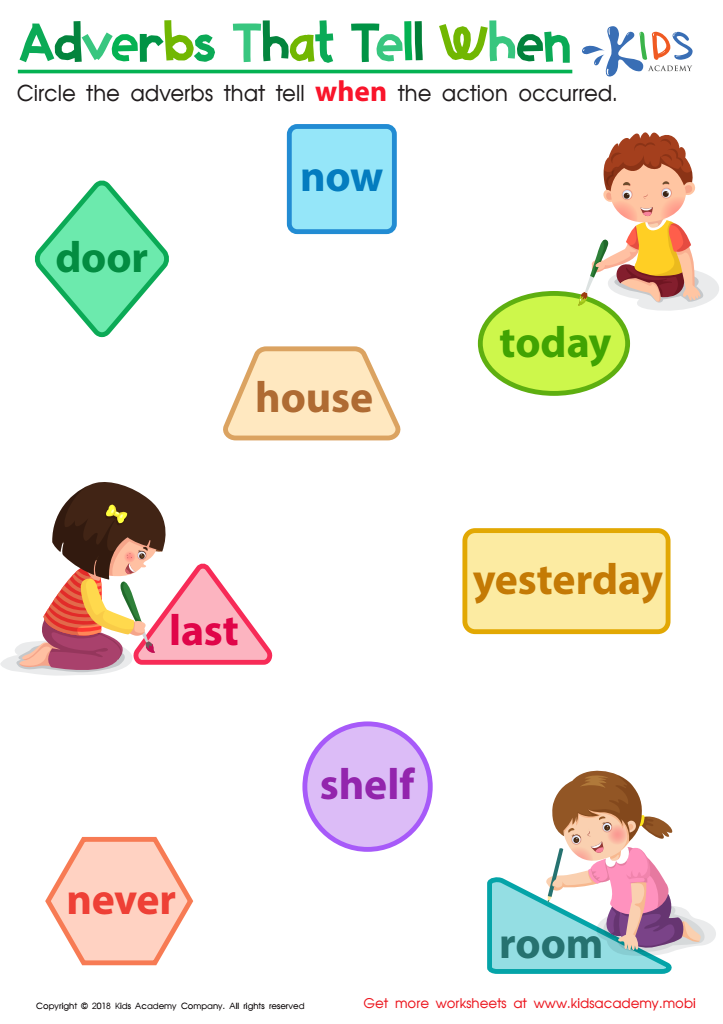
Adverbs That Tell us When Worksheet
Explain to your kids what an adverb is - a word which adds meaning to a verb - and provide simple examples. Ask them if they can also give examples. Now, help them circle adverbs which tell the time when an action occurred in this worksheet.
Adverbs That Tell us When Worksheet
Worksheet
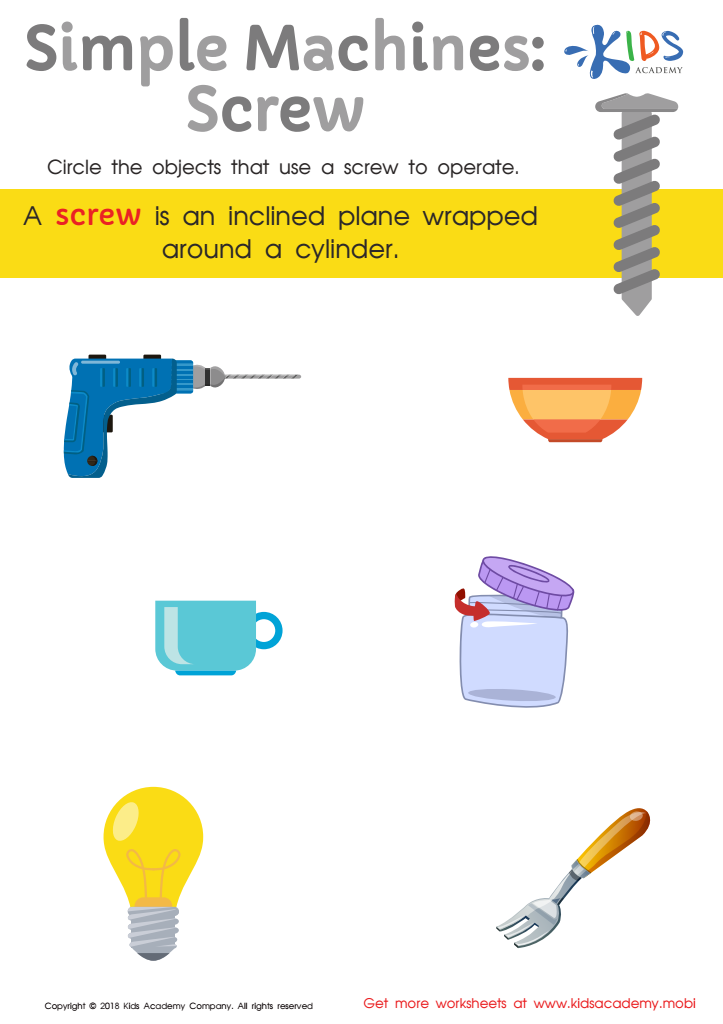
Simple Machines: Screw Worksheet
Explain to your kids that learning about simple machines can be fun - like the swings they love on the playground. Ask them to name some of their favorites. Point out that screws are used to connect simple machines. Then, look at pictures together and have your kids circle the objects that use a screw.
Simple Machines: Screw Worksheet
Worksheet
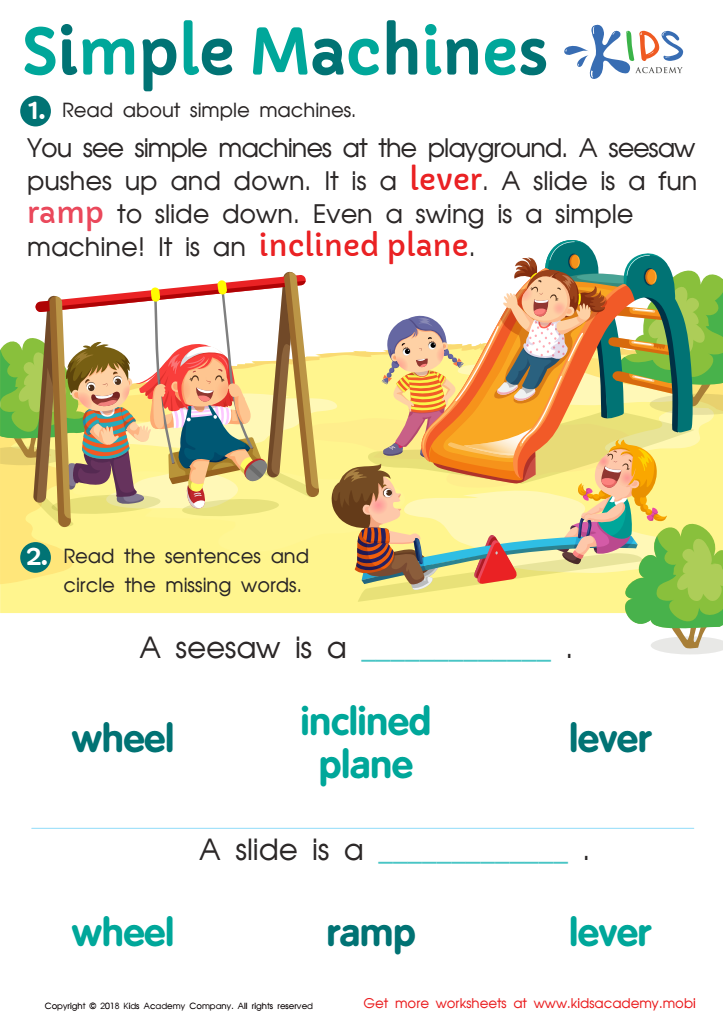
Simple Machines Worksheet
At the playground, your kids likely love to play and swing. Swings are simple machines – they work by using force to move something. Read the following sentences to them, with some words missing - help them fill in the blanks. Simple machines make work easier by __changing__ the size or __direction__ of a force. Swings use a _fulcrum_ and a _lever_ to move.
Simple Machines Worksheet
Worksheet
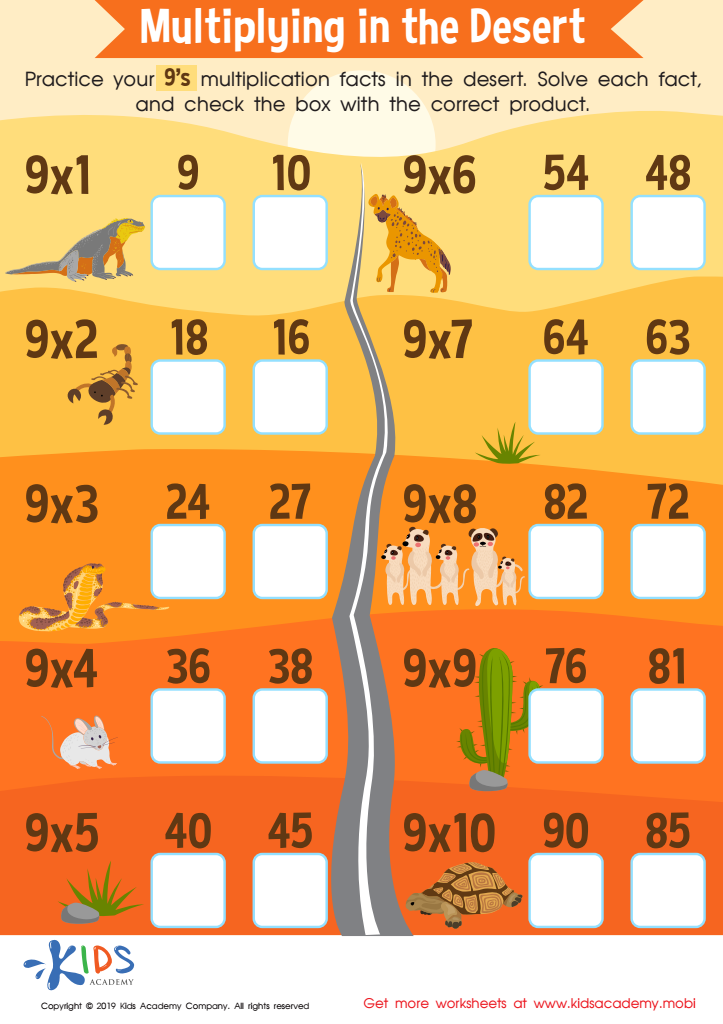
Multiplying in the Desert Worksheet
Help your kids learn the multiplication table faster by introducing them to this fun worksheet! It allows them to learn at a more engaging pace, with the added challenge of naming desert animals. Solve each fact and check the correct product, for an enjoyable and effective way to practice their 9’s multiplication facts.
Multiplying in the Desert Worksheet
Worksheet
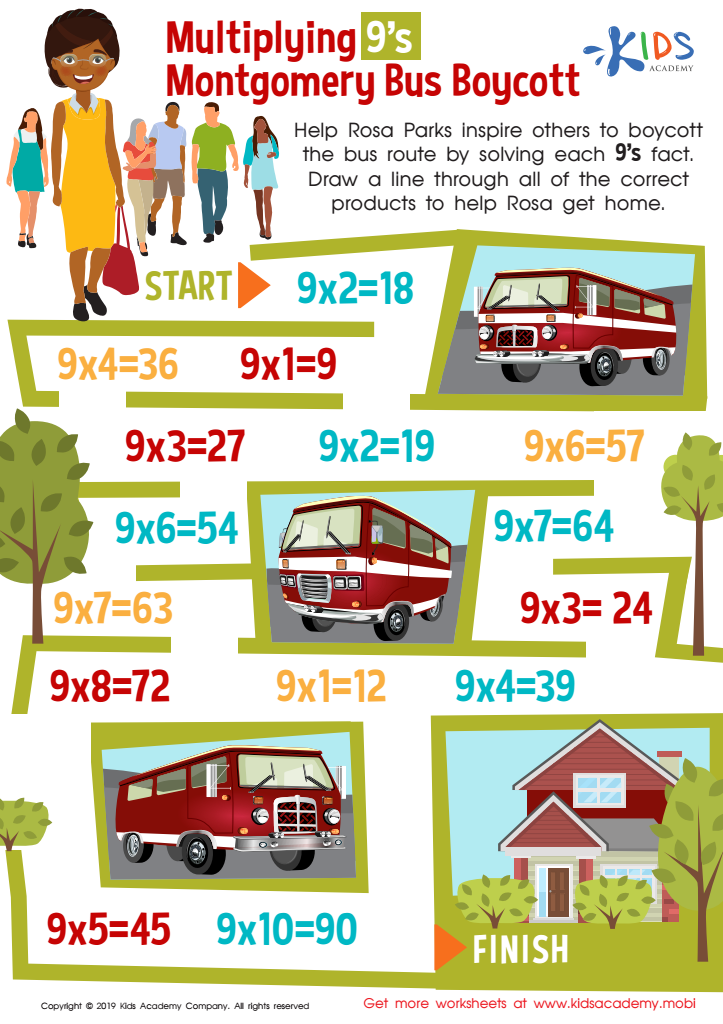
Multiplying 9’s Montgomery Bus Boycott Worksheet
As your students learn math, the numbers get bigger. This worksheet is great for learning the nine times table. Help Rosa Park get home - ask them to solve each multiplication fact, then draw a line through the correct products. Encourage your students to stand up for what's right!
Multiplying 9’s Montgomery Bus Boycott Worksheet
Worksheet
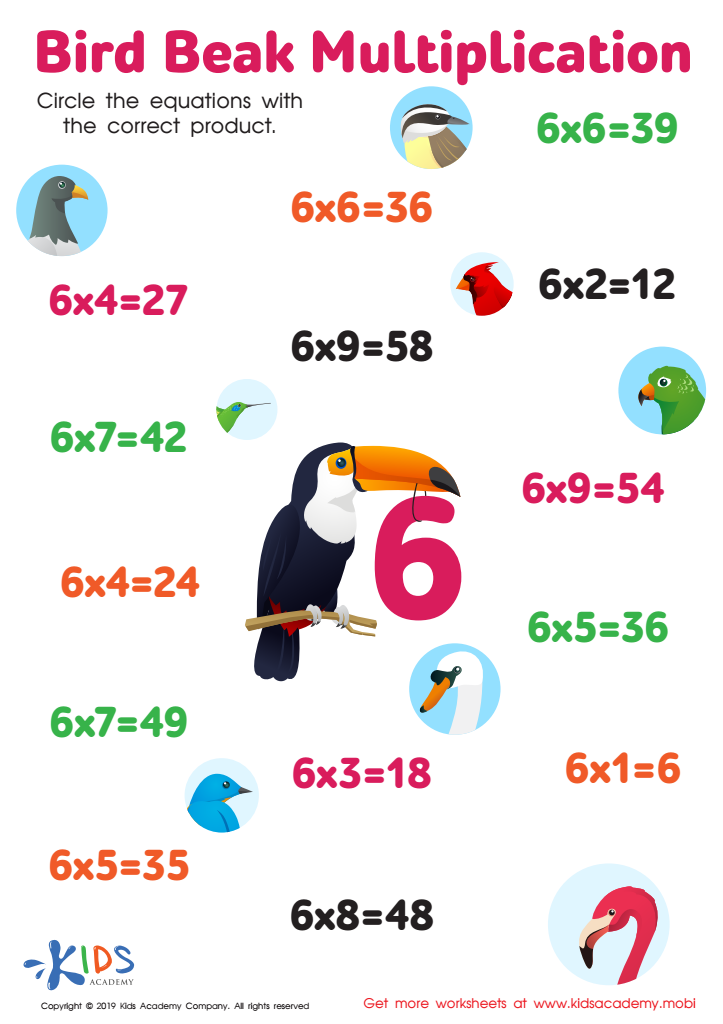
Bird Beak Multiplication Worksheet
Ask your kids to identify the birds in the pic and help them solve the equations. Then, have them circle the correct product. Encourage your kids to explore the wonders of nature with this bird-themed worksheet that'll take their interest to a whole new level, especially if they already have a pet bird or love birds!
Bird Beak Multiplication Worksheet
Worksheet
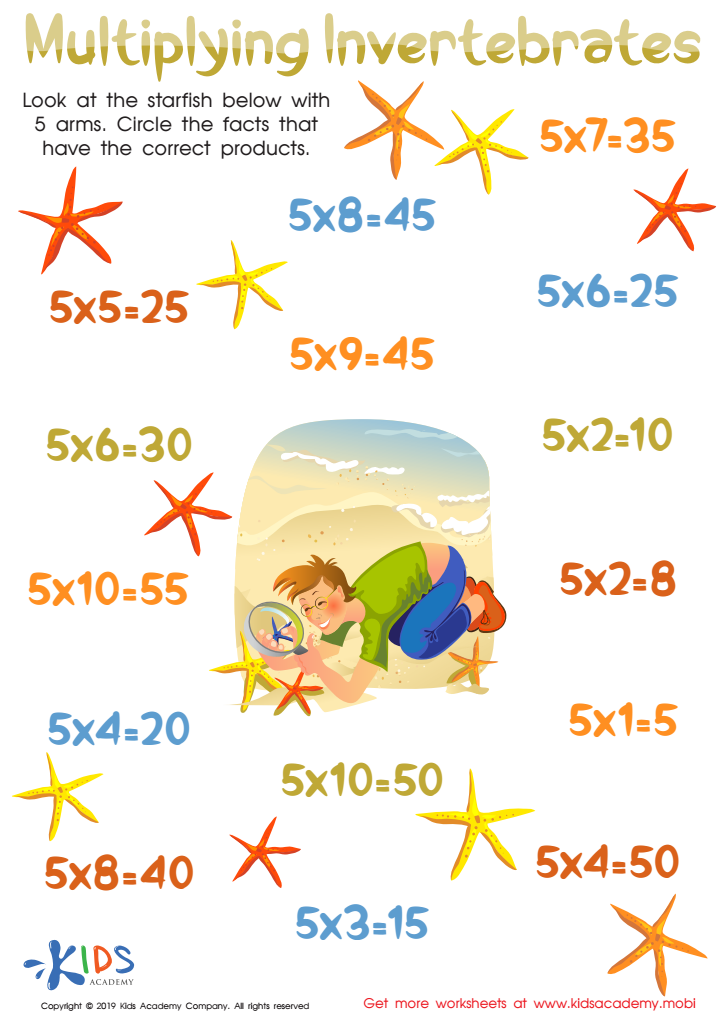
Multiplying Invertebrates Worksheet
Explain to your kids an invertebrate is an animal without a backbone. Examples: squid, jellyfish, octopus. Now, look at the starfish in the picture and help your kids circle the correct facts.
Multiplying Invertebrates Worksheet
Worksheet
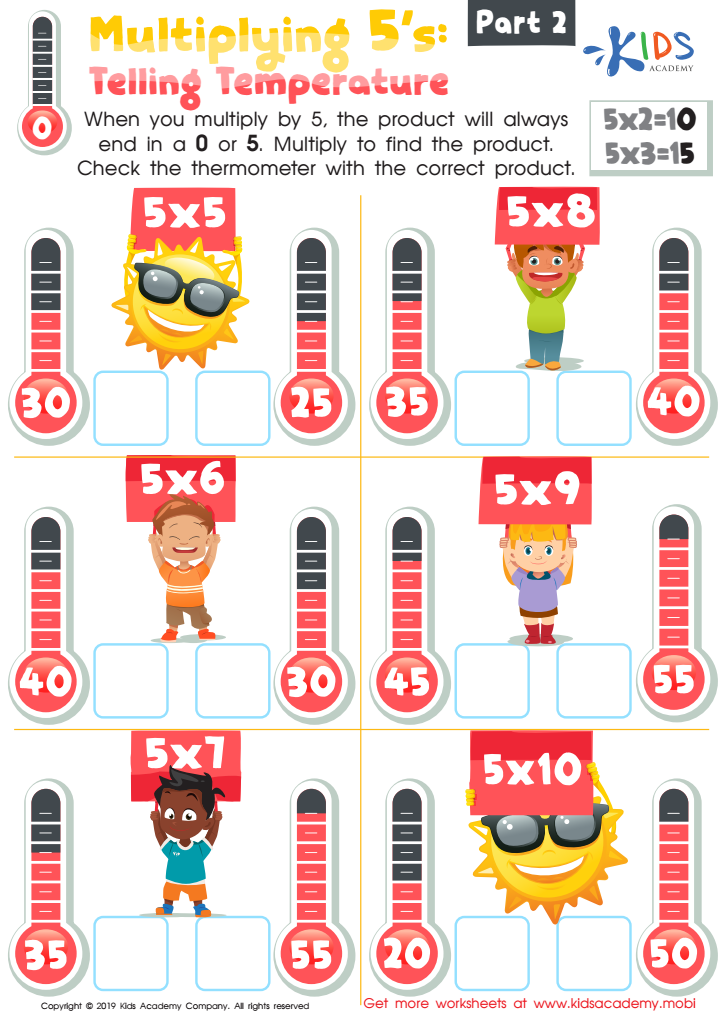
Multiplying 5’s: Telling Temperature Part 2 Worksheet
To help your child with multiplication, teach them some simple tricks. For example, when multiplying 10's the product always ends in a 0, and when multiplying by 5, the product will end in 0 or 5. Look at the problems in this worksheet and help your child find the product. Then, check the thermometer with the correct answer.
Multiplying 5’s: Telling Temperature Part 2 Worksheet
Worksheet
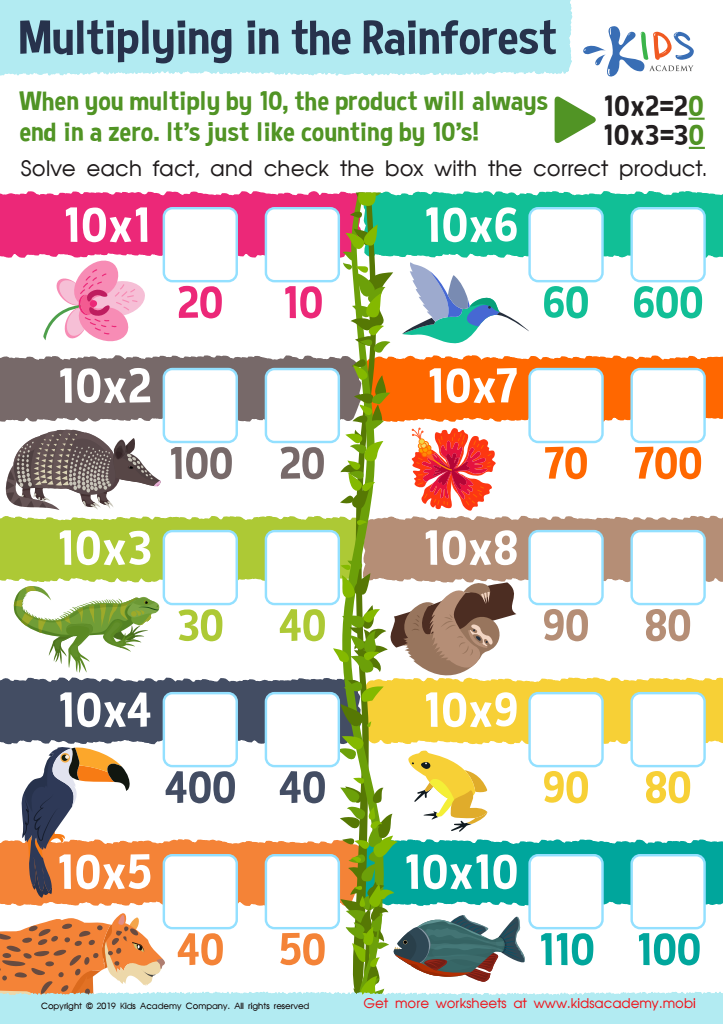
Multiplying in the Rainforest Worksheet
Teaching your child multiplication can be tricky. Help them out with some easy tips! Teach them that when multiplying by 10, the answer always ends in 0. Just like counting by 10's. Show them examples and encourage them to solve the facts, checking their answer with the correct product.
Multiplying in the Rainforest Worksheet
Worksheet
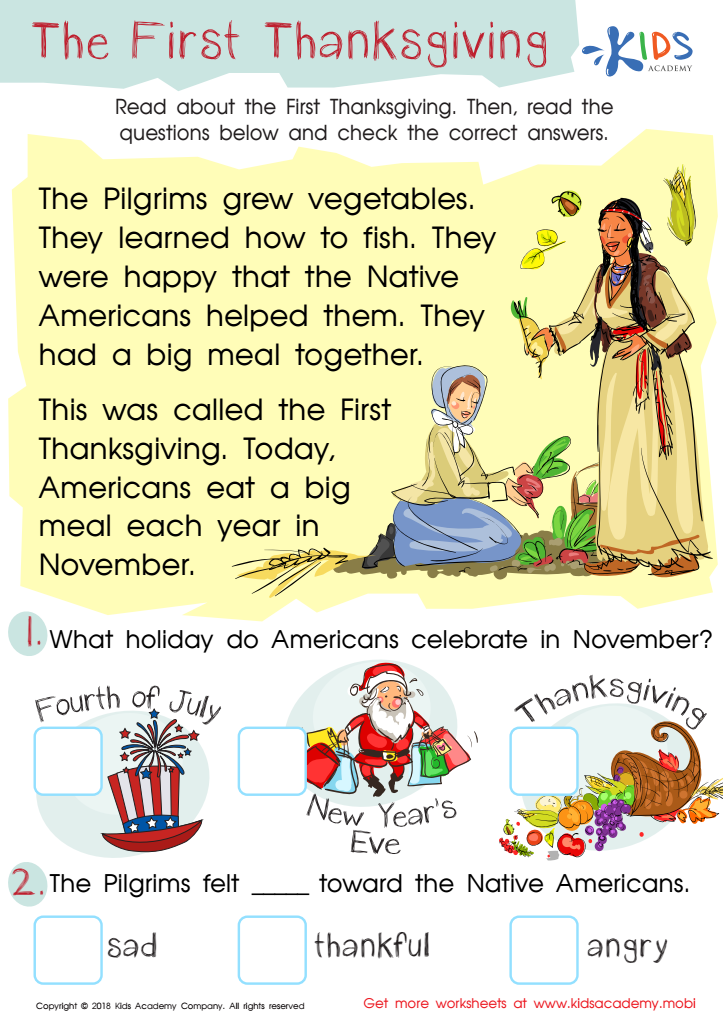
Assessment: First Thanksgiving Worksheet
When the Pilgrims arrived in America in 1620, they met the Native Americans and formed a pact to live in harmony. The Native Americans taught the Pilgrims how to survive in the new land, which helped them celebrate the First Thanksgiving. Read this text to your children and help them answer the questions below.
Assessment: First Thanksgiving Worksheet
Worksheet
Join Kids Academy for Free
Who is primarily going to use this learning content?