Filters

1047 filtered results

Clear all filters
Favorites
With answer key
Interactive

1047 filtered results

Difficulty Level

Grade


Check out this FREE Trial Lesson for age 3-6!

Count up to 5 Objects

Favorites
With answer key
Interactive
  • 3-6
  • Interactive
  • Normal
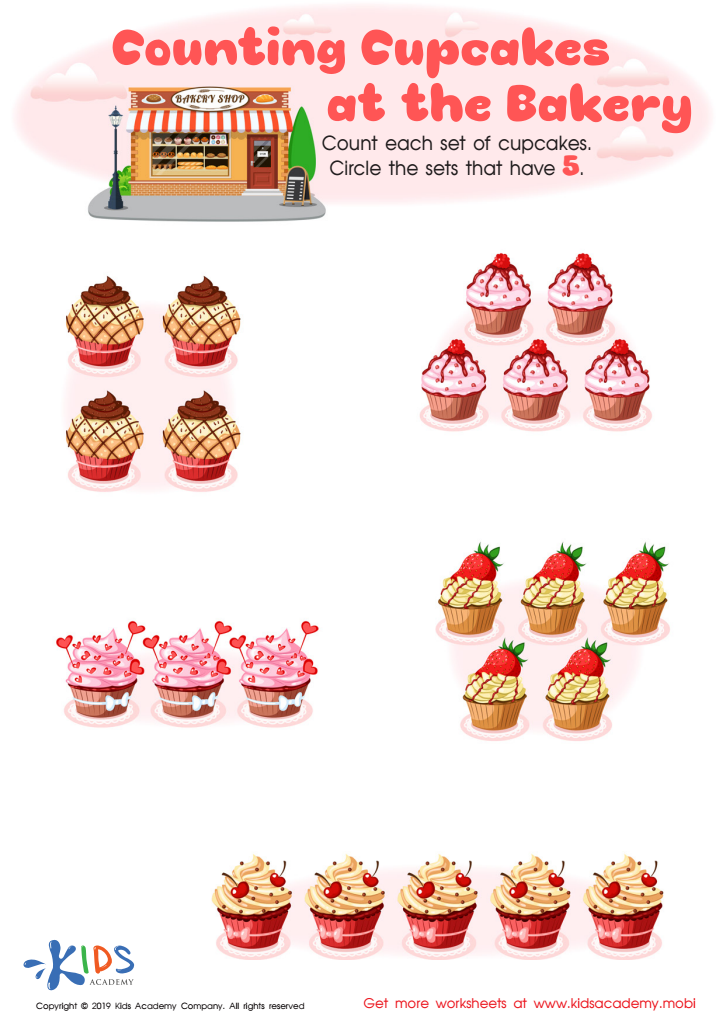
Counting Cupcakes Worksheet Preview

Counting Cupcakes Worksheet

This fun worksheet for preschoolers uses cupcakes to teach counting. Kids must circle the groups of cupcakes that add up to 5. The delicious treats make learning fun and engaging!
Counting Cupcakes Worksheet
Worksheet
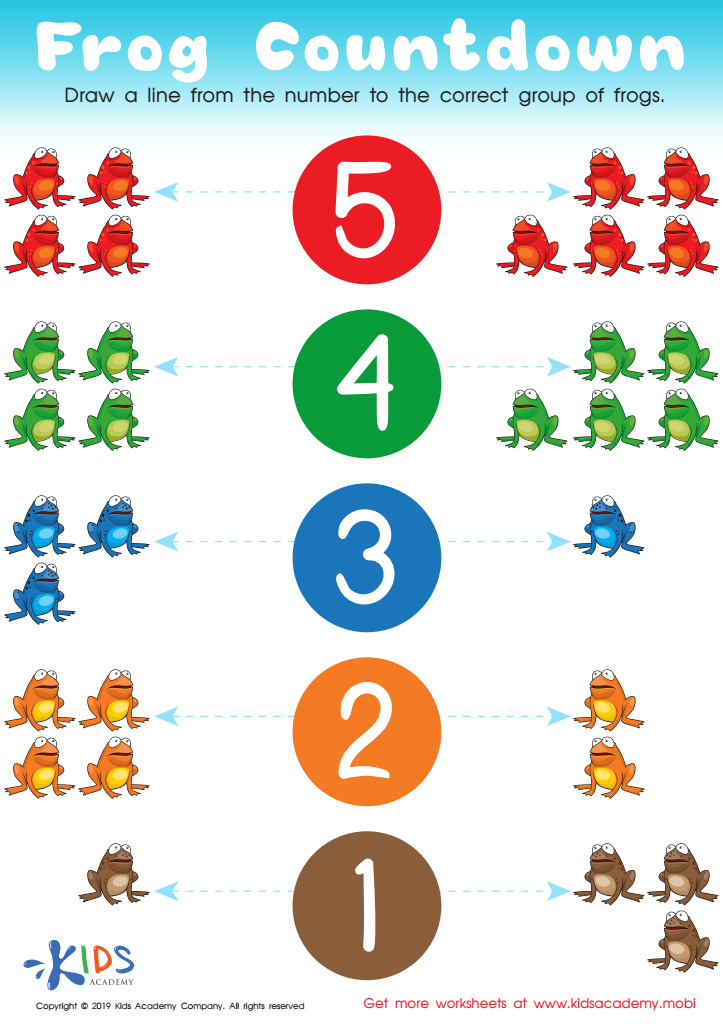
Frog Countdown Worksheet

Frog Countdown Worksheet

Make learning fun for kids with traceable printouts! This exercise has kids counting frogs and drawing a line to match the number. Expand their knowledge with activities like this, beyond the basics they learn in school. Help them explore new ways of learning and make it enjoyable.
Frog Countdown Worksheet
Worksheet
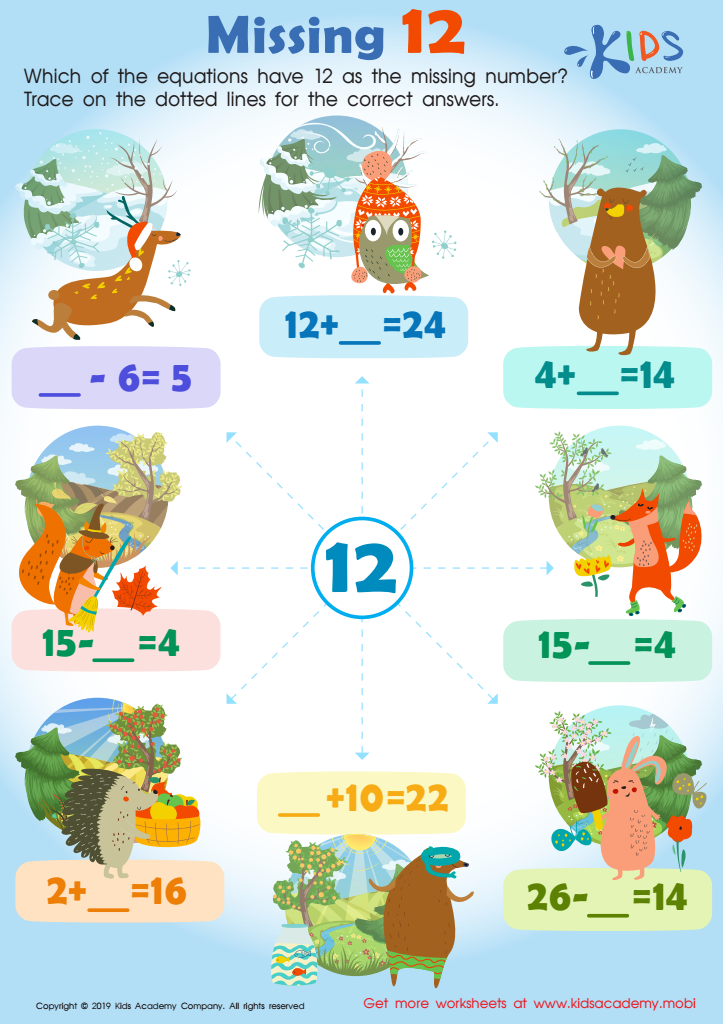
Missing 12 Worksheet

Missing 12 Worksheet

Help your kids find the missing number in this fun nature worksheet. Engage them with this educational exercise - combining teaching and fun. Encourage them to practice addition and subtraction skills. Look at the picture with them. Which equations have 12 as the missing number? Guide them to trace the dotted lines for the correct answers.
Missing 12 Worksheet
Worksheet
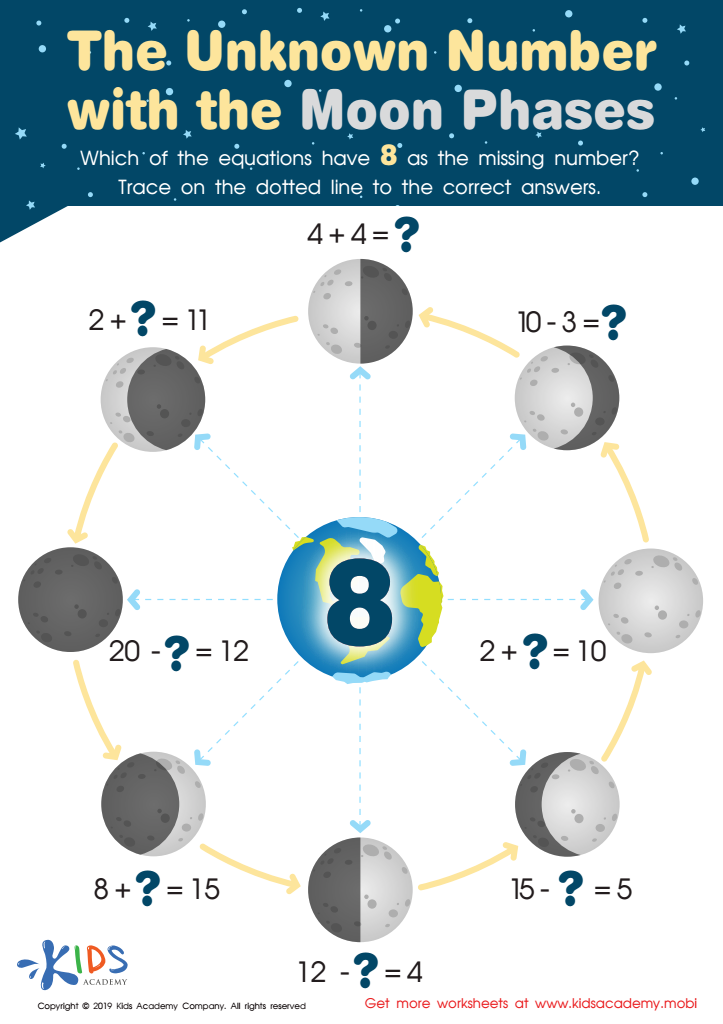
The Unknown Number with the Moon Phases Worksheet

The Unknown Number with the Moon Phases Worksheet

Show your kids the moon one night! Explain why its shape changes during the month with a worksheet. Then, help them to solve math equations and trace the answer, where the missing number is '8'.
The Unknown Number with the Moon Phases Worksheet
Worksheet
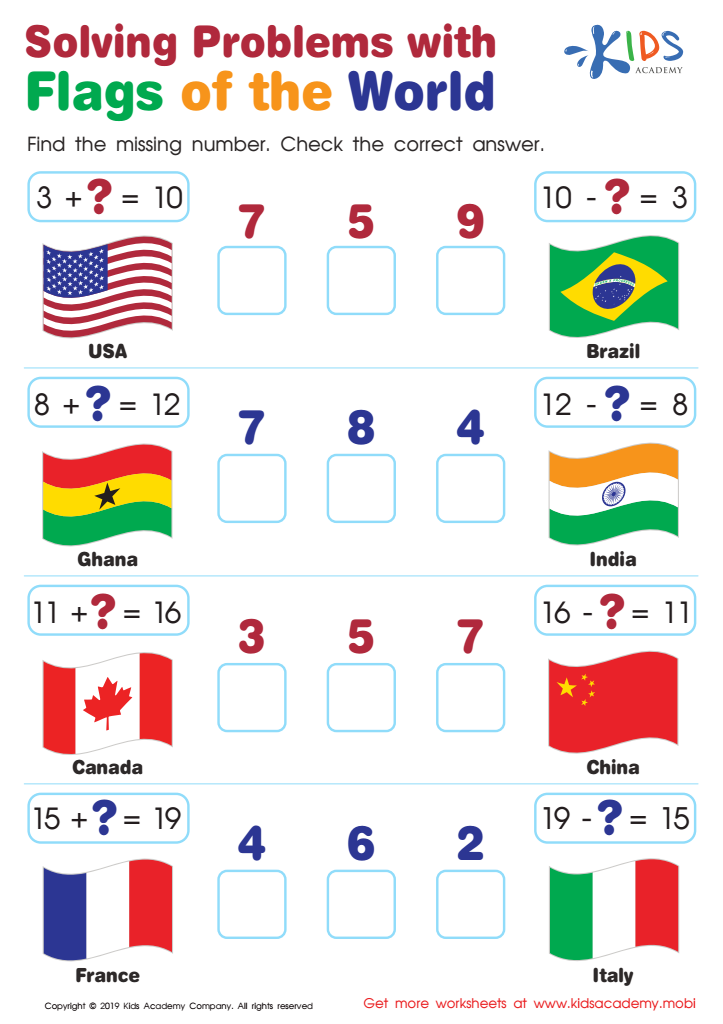
Solving Problems with Flags of the World Worksheet

Solving Problems with Flags of the World Worksheet

Name some countries you know with your kids, then introduce their flags with this worksheet. Help them find the missing number in each addition problem, and then check the answer. It's a fun way to learn about different countries near and far.
Solving Problems with Flags of the World Worksheet
Worksheet
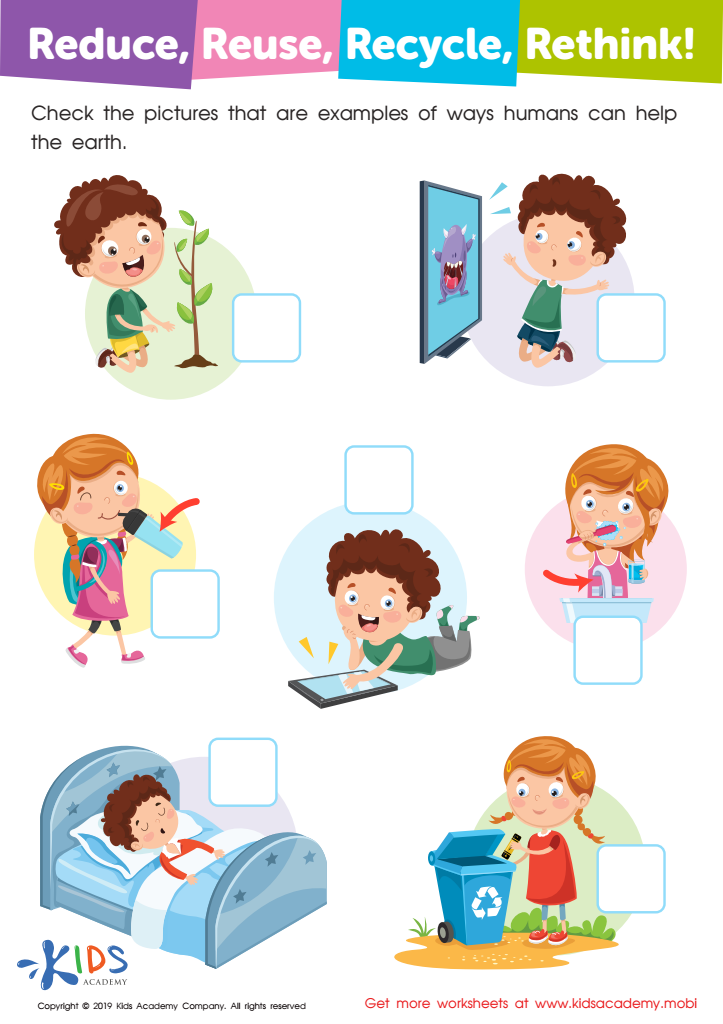
Reduce, Reuse, Recycle, Rethink Worksheet

Reduce, Reuse, Recycle, Rethink Worksheet

Recycling is a great way to reduce waste and help our planet — instead of throwing away a can of soda, recycle it! Look at the pictures in the worksheet — what are the kids doing? They're learning about ways to help the environment. Check the pictures for examples of how to help the earth.
Reduce, Reuse, Recycle, Rethink Worksheet
Worksheet
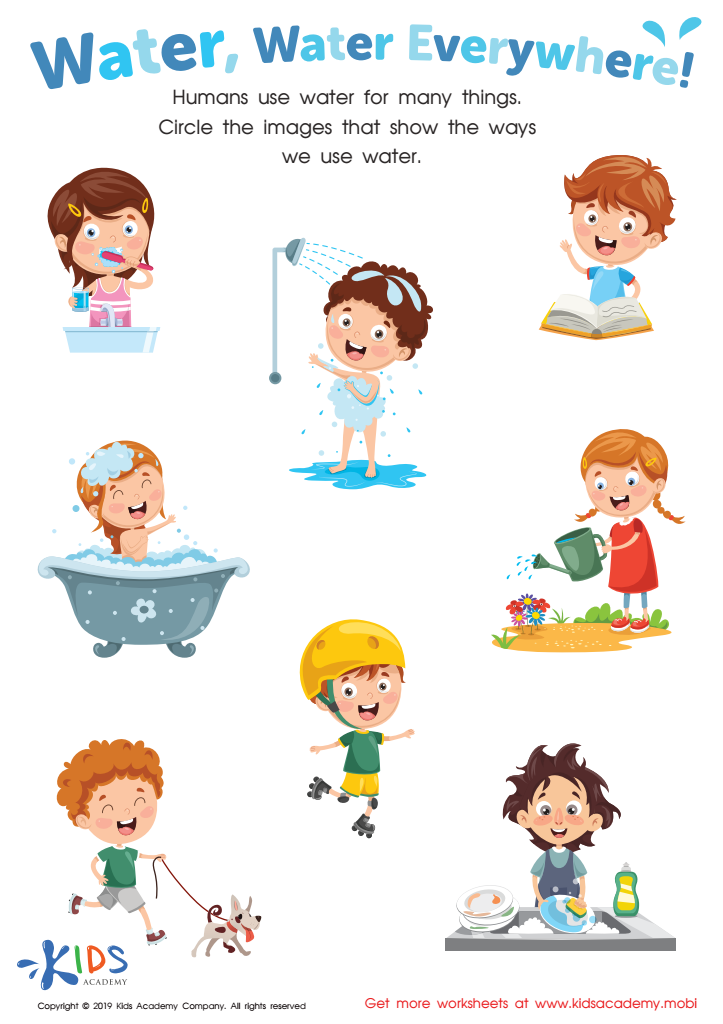
Water, Water Everywhere! Worksheet

Water, Water Everywhere! Worksheet

Ask your kids how we use water daily. Point out how vital it is to the environment, as many living things couldn't exist without it. Show them this worksheet with kids doing different things that involve water. Ask them to identify what each one is doing, then help them circle the images which show the ways we use the water.
Water, Water Everywhere! Worksheet
Worksheet
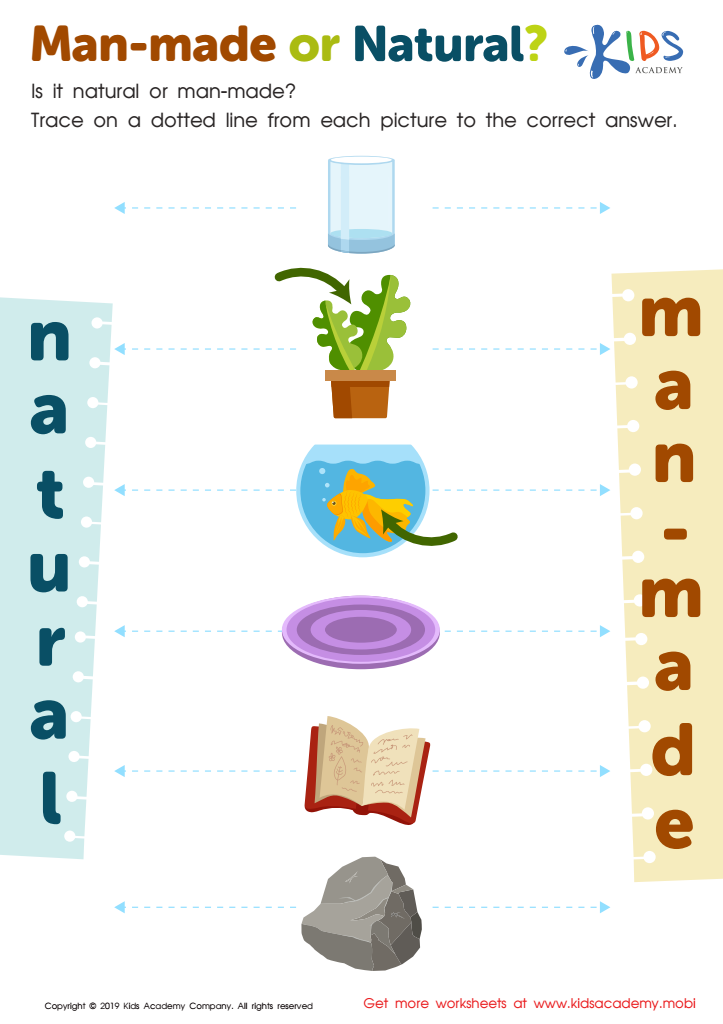
Man-Made or Natural? Worksheet

Man-Made or Natural? Worksheet

Ask your students to name natural and man-made objects. Check the worksheet to help them identify the objects, then trace the dotted line to determine if it's natural or man-made.
Man-Made or Natural? Worksheet
Worksheet
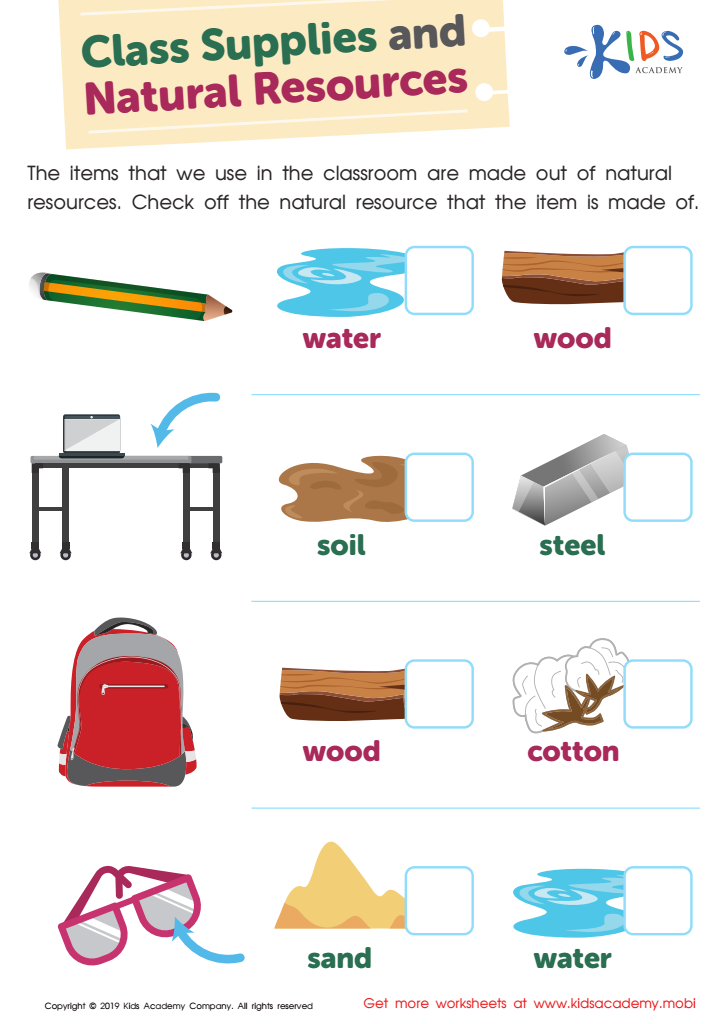
Class Supplies and Natural Resources Worksheet

Class Supplies and Natural Resources Worksheet

Look around the classroom with your students. Can they identify objects and name their natural resources? E.g. wood, cotton, steel. Ask your child to find an object made from wood. Then, look at this worksheet together. Ask your students to identify each object and check off the natural resource it's made from.
Class Supplies and Natural Resources Worksheet
Worksheet
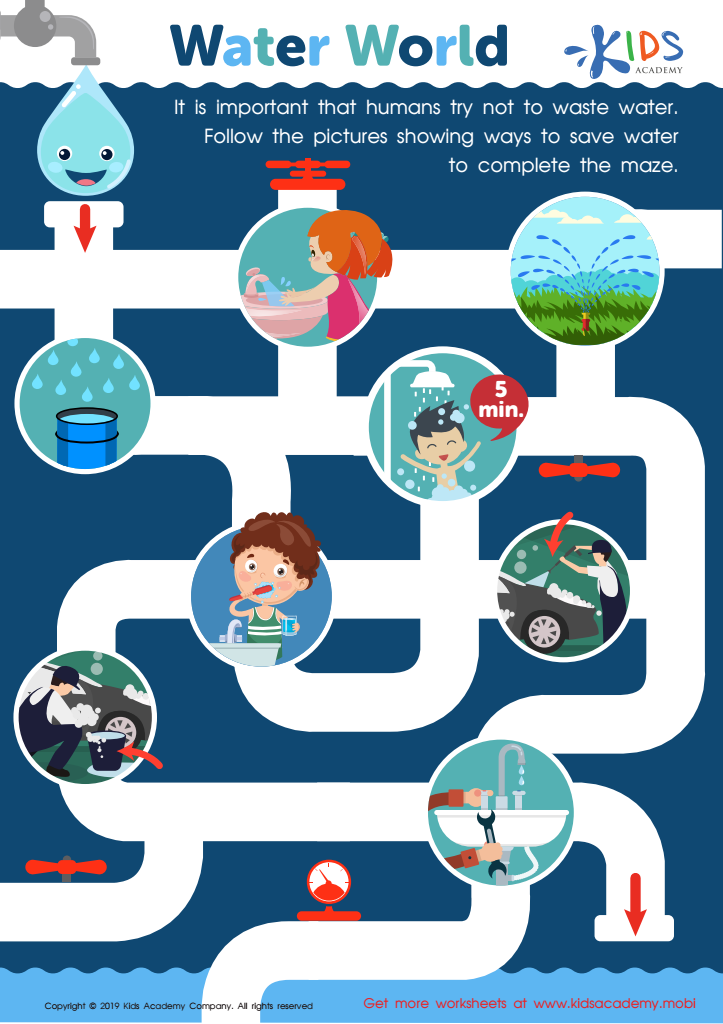
Water World Worksheet

Water World Worksheet

Water is a vital necessity for living. Our bodies depend on it to stay healthy and survive. When we don't drink enough water, we become thirsty and run the risk of getting sick. Luckily, our planet is full of water and natural sources to stay hydrated. To prevent water waste, use this worksheet to teach your students how to conserve it and complete the maze.
Water World Worksheet
Worksheet
Plant Fun Worksheet
Plant Fun Worksheet

Plant Fun Worksheet

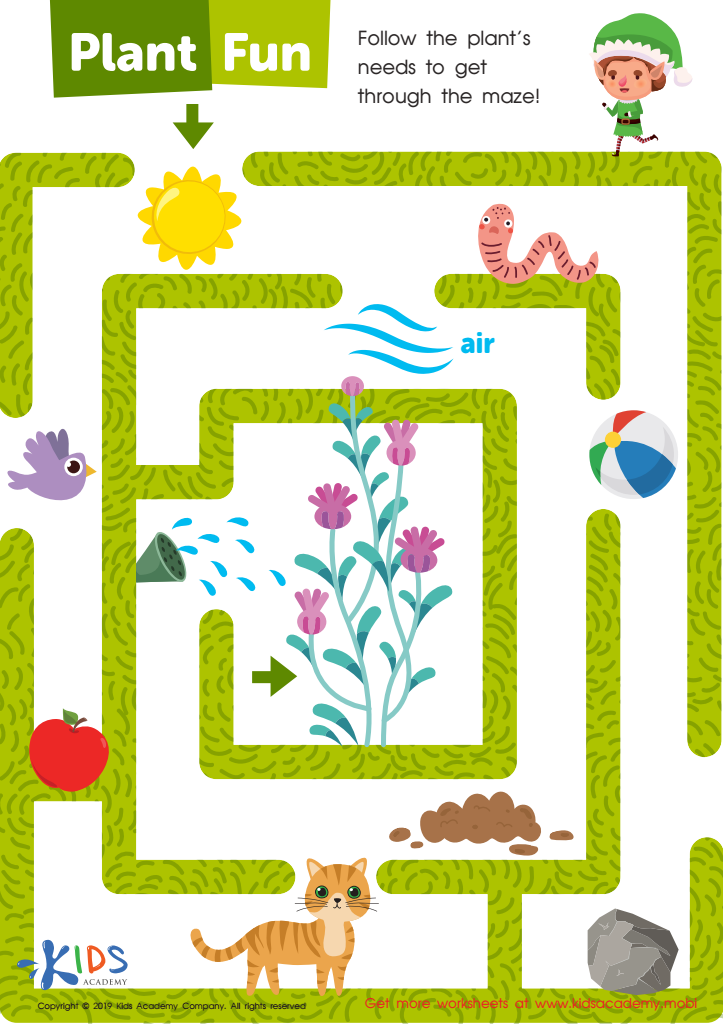
Engage your kid's mind by playing a learning maze! Ask them what plants do for us and what we need to do for the plants to help them grow. Then, help them find their way out of the maze while following the things that plants need.
Plant Fun Worksheet
Worksheet
Animal Homes Worksheet

Animal Homes Worksheet

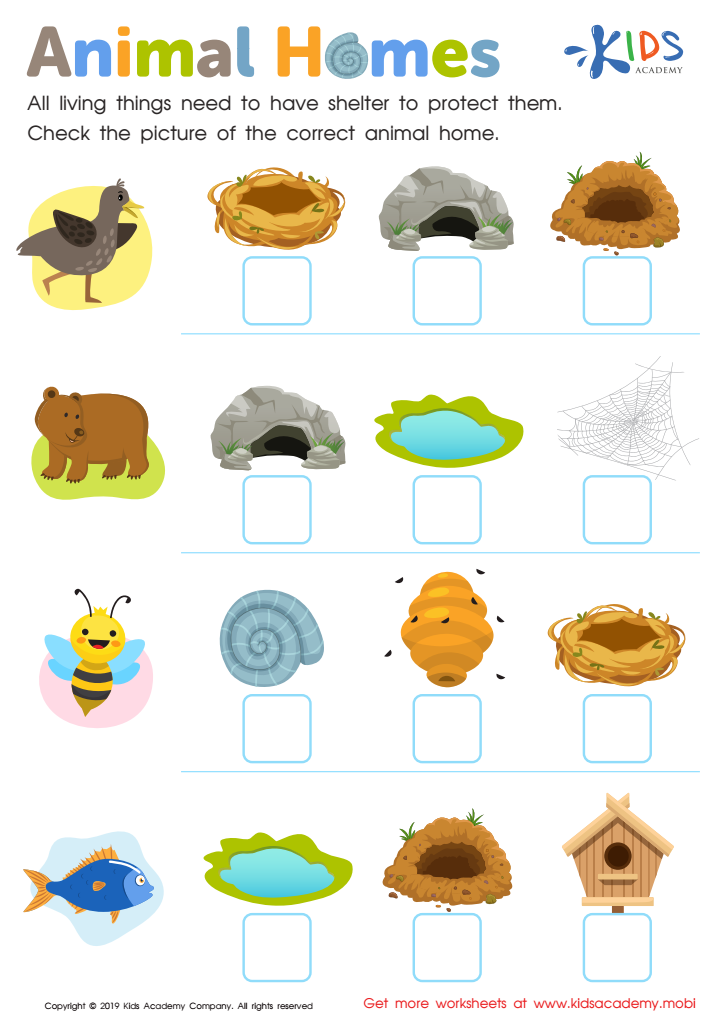
Students have homes where they can do things they love, sleep and stay safe from bad weather. Check the worksheet for animals and their shelters. Ask your kids to identify each and match the animal home to the picture. (80 words)
Animal Homes Worksheet
Worksheet
Spelling in the Kitchen Worksheet

Spelling in the Kitchen Worksheet

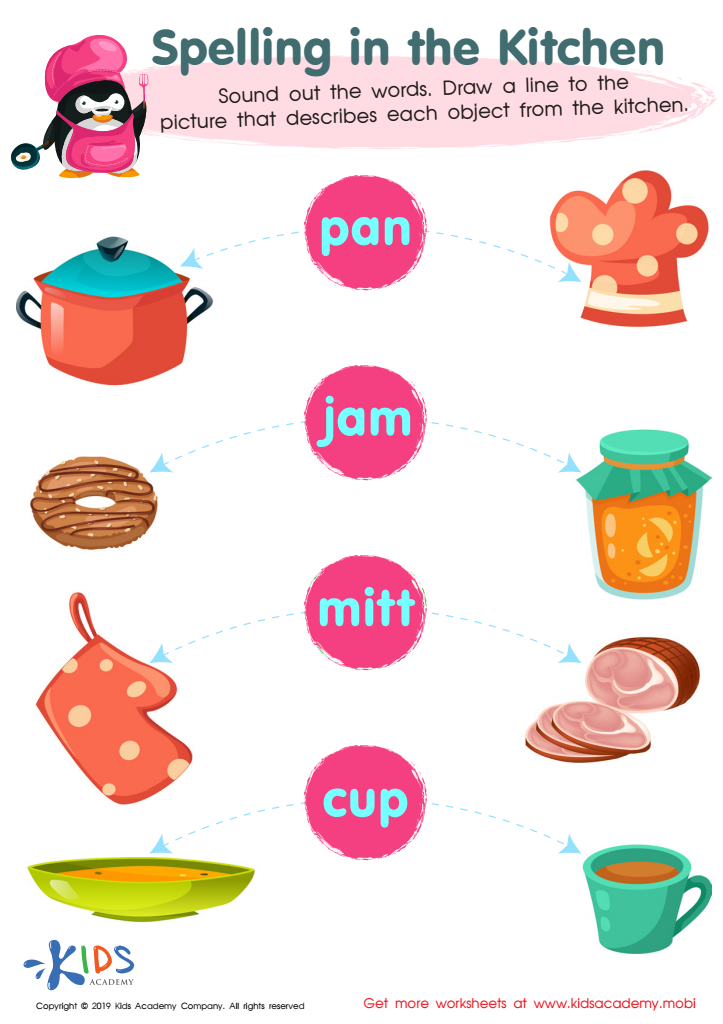
Your little ones can learn a lot if they help in the kitchen. Get them to identify and say the name of each item in the picture in this worksheet. Sound out the words for them and help draw a line to the right picture. It's a great way for them to learn about kitchen items!
Spelling in the Kitchen Worksheet
Worksheet
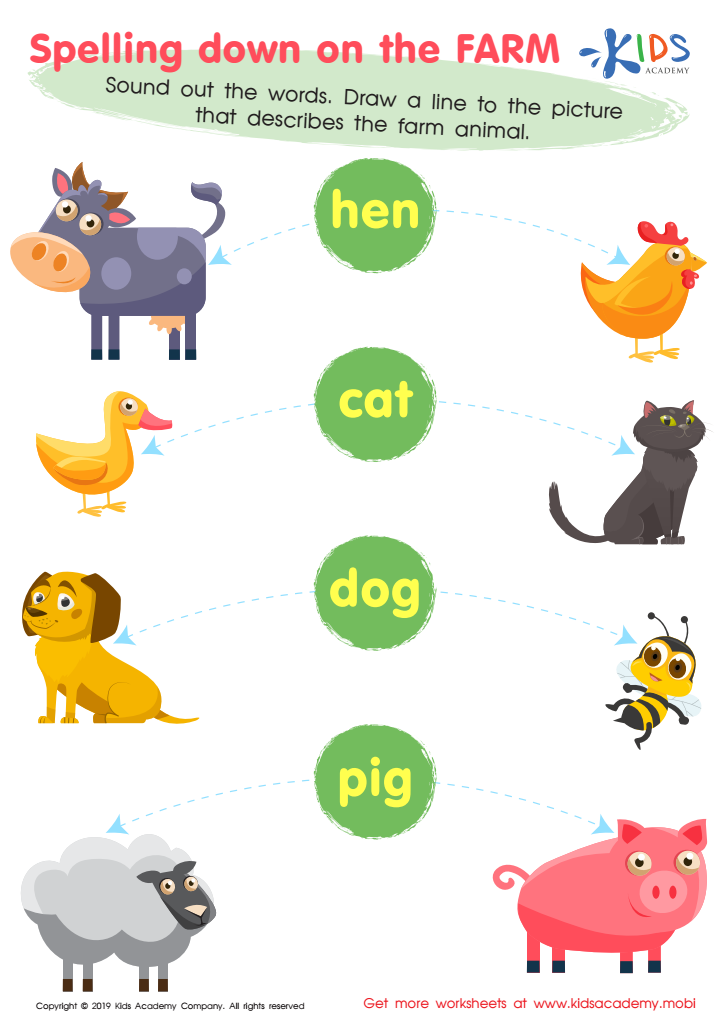
Spelling Down on the Farm Worksheet

Spelling Down on the Farm Worksheet

Want to help your kids nail their spelling? Introduce them to this farm animal worksheet! Get them to look at the animals in the tracing sheet, name them and then sound out the words. Have them draw a line to the picture that describes it. You'll be surprised at how quickly their skills improve.
Spelling Down on the Farm Worksheet
Worksheet
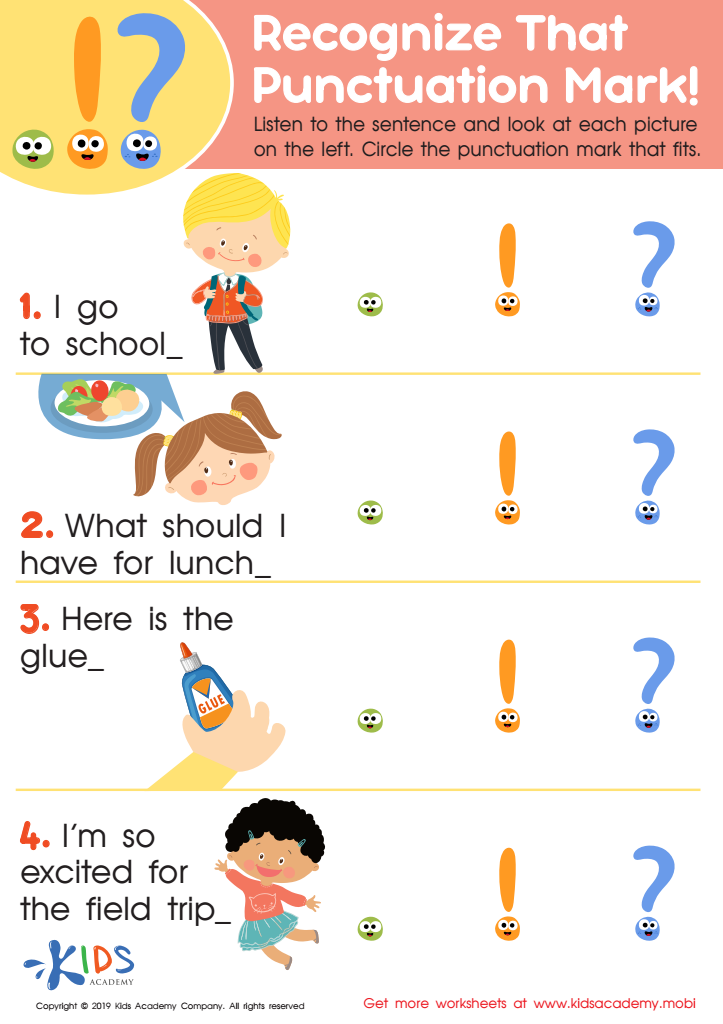
Recognize Punctuation Marks Worksheet

Recognize Punctuation Marks Worksheet

Before beginning the worksheet, ask your students to name punctuation marks they know and what they mean. Common punctuation marks are full stop, question mark and exclamation mark. Point out each one in the picture and read the sentences, helping them circle the right punctuation.
Recognize Punctuation Marks Worksheet
Worksheet
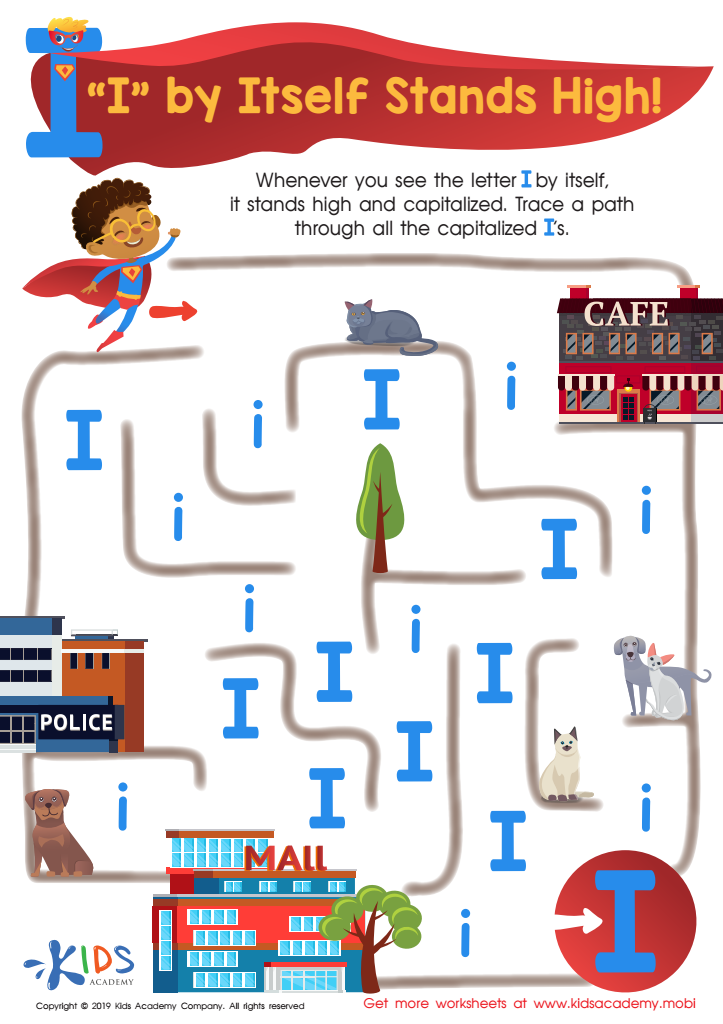
I Stands High Worksheet Preview

I Stands High Worksheet

Kids can use their imagination to help a superhero find the uppercase 'I's on the 'I By Itself Stands High' worksheet. This helps children learn capitalization, and they can join the superhero in flying over a city of cats, dogs and buildings to locate the needed letters.
I Stands High Worksheet
Worksheet
Archeology Word Problems Worksheet

Archeology Word Problems Worksheet

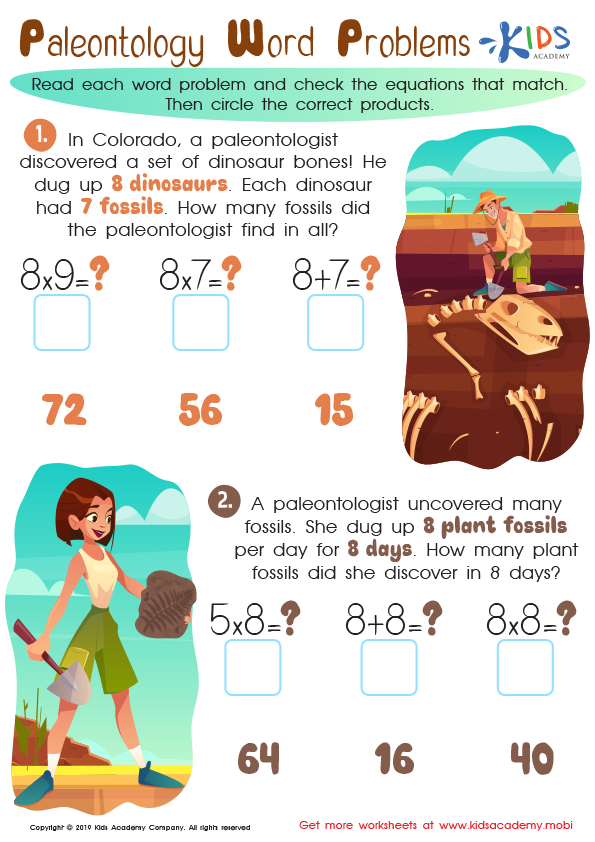
Encourage your child to explore their career options! Show them an archeologist's job with this worksheet - featuring a picture of a dinosaur bone discovery. Read the accompanying text, then solve the word problems. Help your kids circle the correct answers to better understand this profession.
Archeology Word Problems Worksheet
Worksheet
Multiplication Facts: Assessment 3 Worksheet

Multiplication Facts: Assessment 3 Worksheet

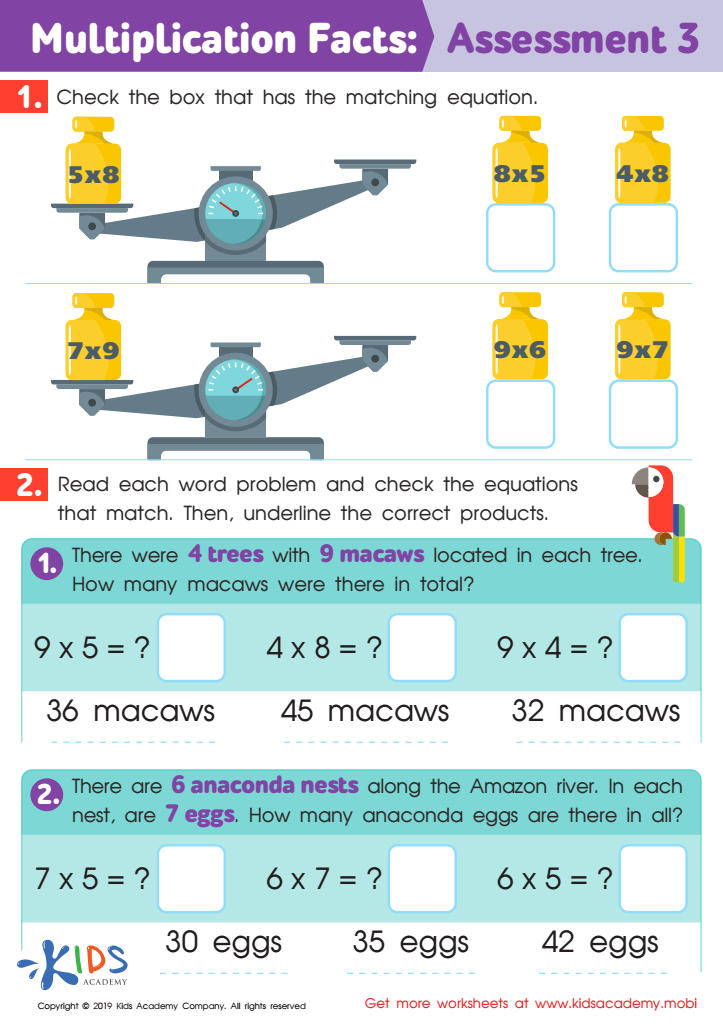
Test your kid's maths skills with this easy to use worksheet! Help them check the box that matches the equation in the first part, then read each word problem and underline the right answers to the second part. Assess your child's muliplication knowledge and find out where they need extra help.
Multiplication Facts: Assessment 3 Worksheet
Worksheet
Letter E Tracing Worksheet Preview

Letter E Tracing Worksheet

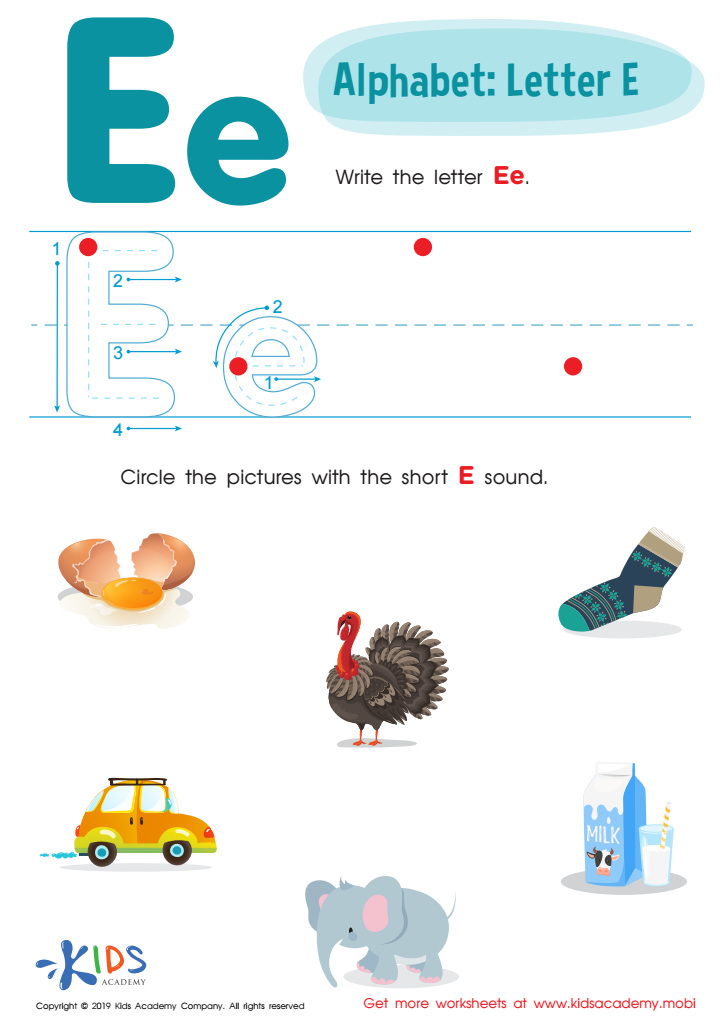
Students trace and write uppercase and lowercase letter E. They sound out "E" words, choosing those with short "E" sounds. Preschoolers identify the difference between the 'E' sounds in words like "egg" and "turkey." A tracing sheet helps them to understand.
Letter E Tracing Worksheet
Worksheet
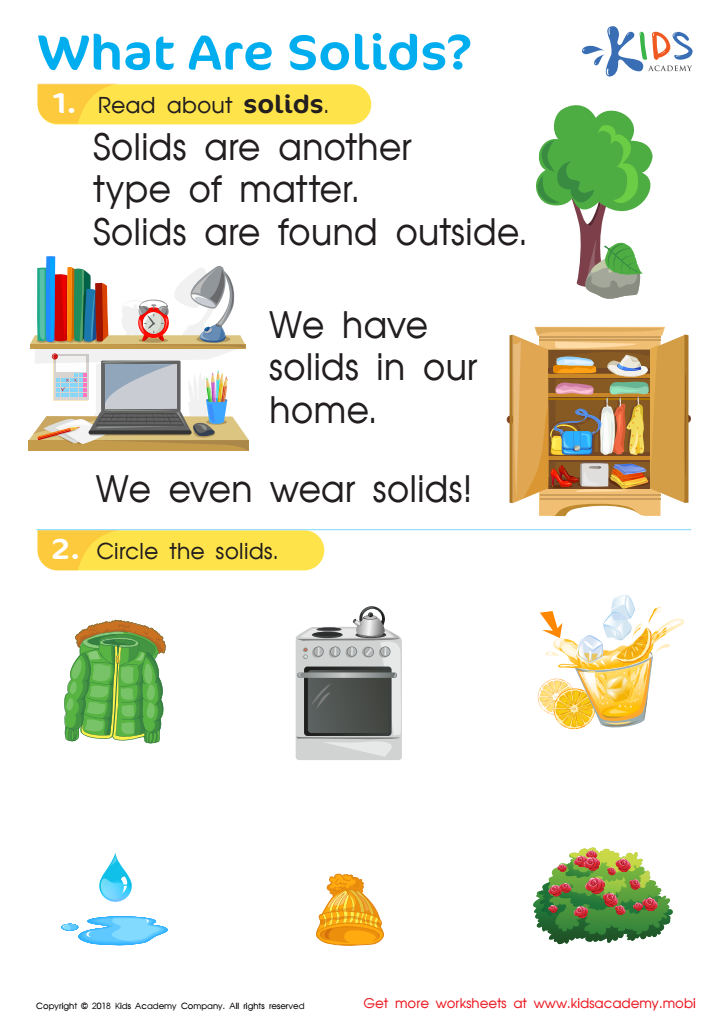
What Are Solids? Worksheet

What Are Solids? Worksheet

Help your kids understand matter's three forms - solid, liquid, and gas - with examples. Ask them to give their own and where to find them. Then, read and discuss the worksheet's facts about solids. Afterward, have them circle the solids among the provided objects.
What Are Solids? Worksheet
Worksheet
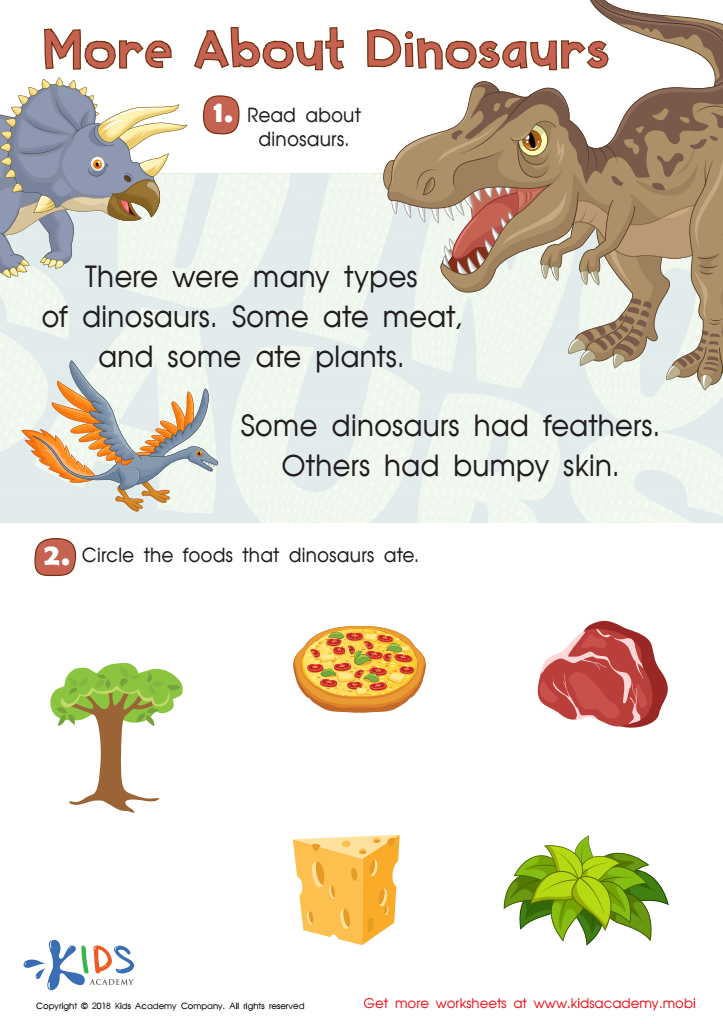
More About Dinosaurs Worksheet

More About Dinosaurs Worksheet

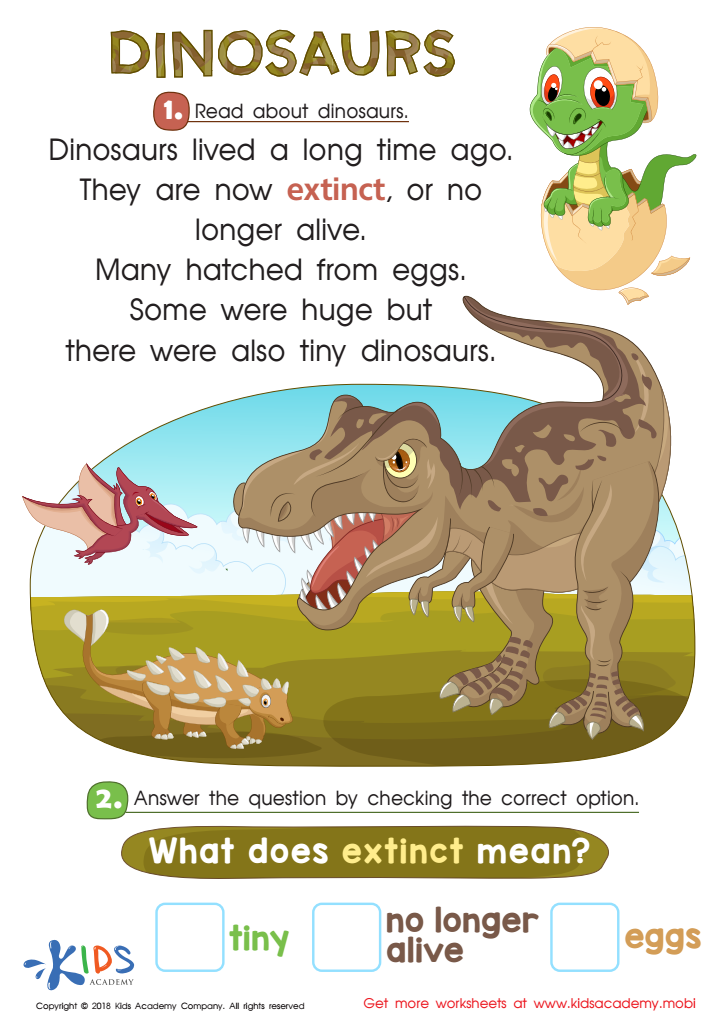
Dinosaurs captivate us with the unknown. Long gone before us, they left behind clues in their bones. Kids love to explore and uncover the secrets of these extinct creatures. Read the facts in this worksheet to them and help them answer the question at the end. Let their imaginations soar!
More About Dinosaurs Worksheet
Worksheet
Dinosaurs Worksheet
Dinosaurs Worksheet
Dinosaurs Worksheet

Kids are often fascinated by dinosaurs, creatures that roamed the Earth before man. Sadly, they are now extinct. To learn more, read facts on this worksheet to your kids and help them answer the question at the end by selecting the correct option.
Dinosaurs Worksheet
Worksheet
Contractions Worksheet

Contractions Worksheet

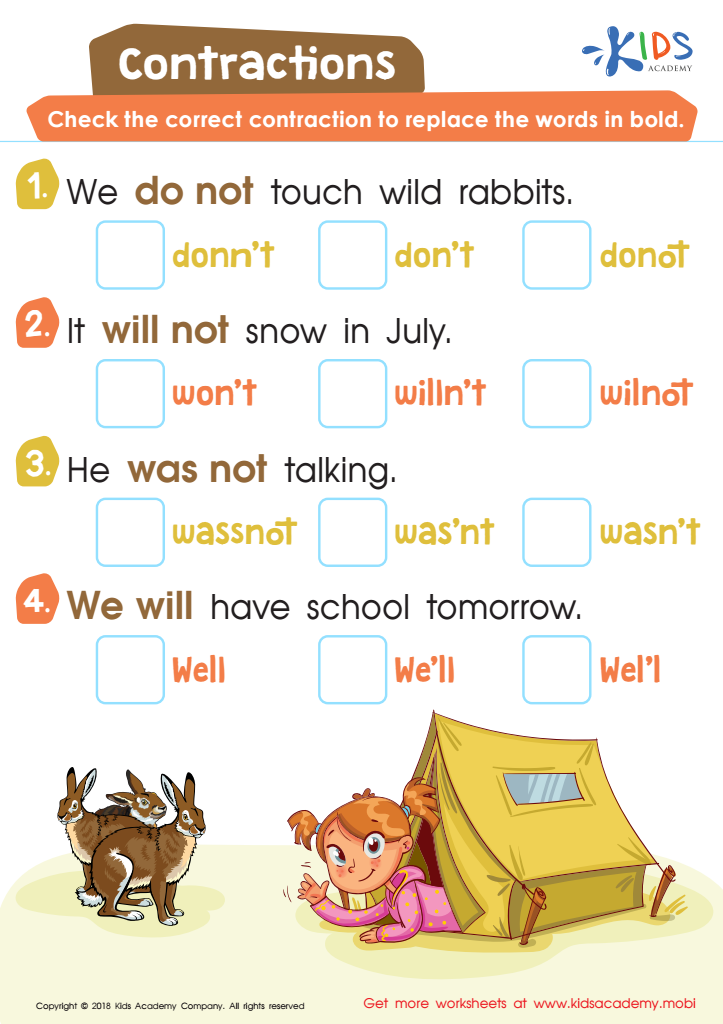
Contractions are popular in English and make writing/reading easier. For example: I'm, they're, she's. Ask your students to give more examples. Then, read the sentences in this worksheet and help them check the correct contraction to replace the words in bold.
Contractions Worksheet
Worksheet
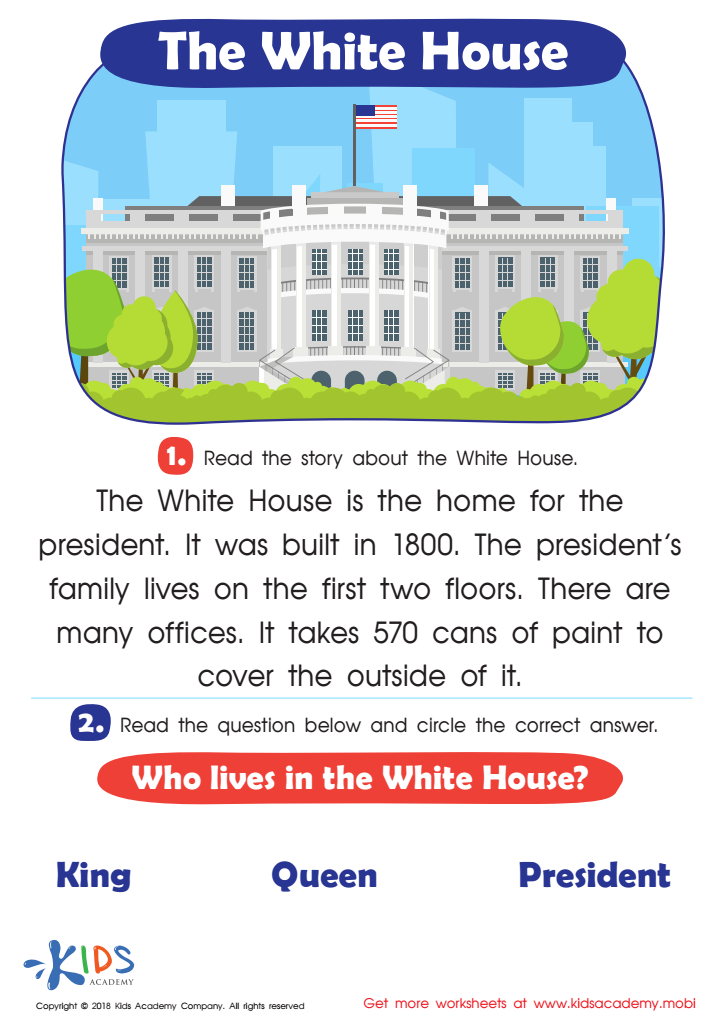
White House Worksheet

White House Worksheet

Read stories to your students to teach them new words, and about the White House. Before reading, ask your kindergartners what they already know. Then read short sentences for them to learn about the building the U.S President resides in.
White House Worksheet
Worksheet


Understanding developmental milestones in children aged 3-6 is crucial for parents and teachers, as this period is foundational for cognitive, social, and emotional growth. Children in this age range exhibit rapid changes; they begin to develop language skills, engage in imaginative play, and establish social relationships. Recognizing what is considered "normal" for this age helps caregivers identify potential areas of concern early on.

For instance, if a child is not meeting these milestones, it may indicate a need for additional support, intervention, or resources. Furthermore, being aware of common behaviors enables parents and teachers to nurture positive development actively, encouraging a love for learning and exploration.

Additionally, fostering routines and providing enriched experiences, such as reading together or engaging in arts and crafts, is vital during these years, as they promote creativity and critical thinking. This understanding also empowers teachers to tailor their instructional strategies appropriately, catering to diverse learning styles. In summary, being informed about normal development during ages 3-6 enables adults to create supportive, enriching environments that not only ensure children thrive but also build a strong foundation for lifelong learning.