Normal Vowel Blends Worksheets for Ages 3-6
3 filtered results
-
From - To
Introduce your child to the world of vowel blends with our engaging and educational worksheets designed for ages 3-6. These printable activities feature colorful illustrations and fun exercises to help early learners recognize and pronounce common vowel combinations. By fostering phonemic awareness and boosting reading readiness, our worksheets provide a solid foundation for your child's literacy journey. Perfect for classroom use or at-home practice, these resources make learning enjoyable and effective. With our Normal Vowel Blends Worksheets, your child will master essential phonics skills while having fun with interactive and dynamic activities. Start exploring today!
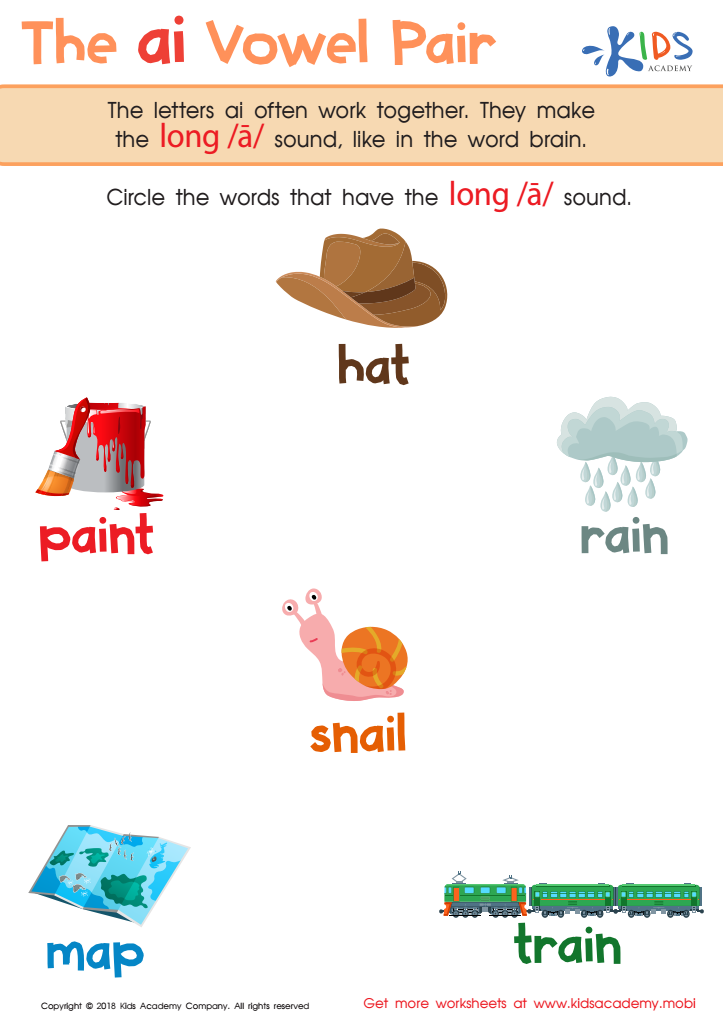
The AI Vowel Pair Worksheet
 Assign to My Students
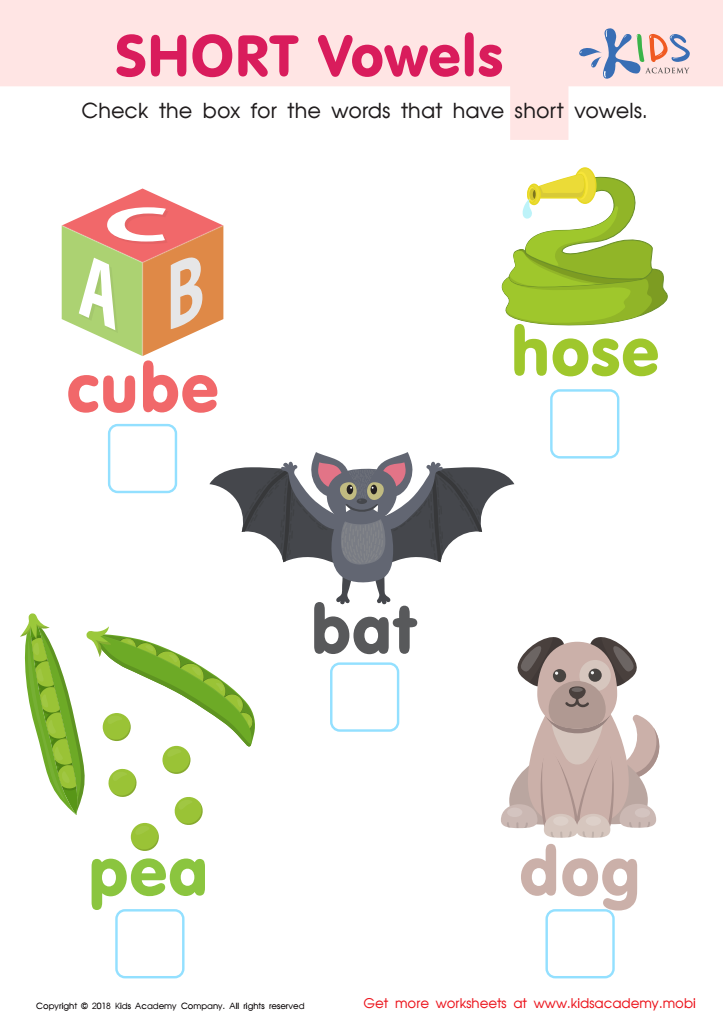
short vowels Worksheet
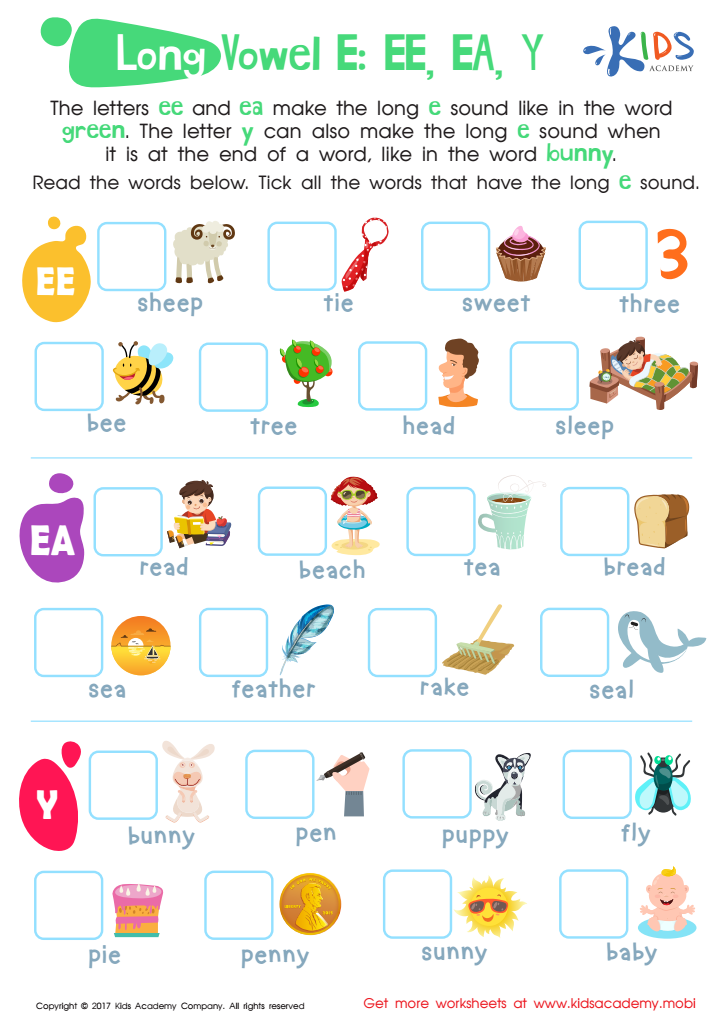
Long Vowel E Printable





Normal vowel blends, also known as vowel teams or diphthongs, are essential components of early literacy development in children aged 3-6. During this critical period, children are developing foundational reading and writing skills that set the stage for future academic success. When parents and teachers focus on vowel blends, they are equipping children with the tools needed to decode and spell words more effectively.
First, understanding vowel blends enhances phonemic awareness, which is the ability to hear, identify, and manipulate phonemes, the smallest units of sound. For example, recognizing that "ai" in "rain" or "ea" in "bread" produces distinct sounds helps children decode unfamiliar words. This skill is fundamental for reading fluency and comprehension.
Secondly, vowel blends facilitate smoother transitions from decoding to fluent reading. Proficient readers recognize vowel patterns without having to sound out each letter, leading to automaticity in reading. This speed and efficiency free cognitive resources for comprehension and critical thinking.
Lastly, fostering an awareness of vowel blends supports spelling proficiency. When children learn that certain vowel combinations make specific sounds, they can more accurately spell new words, boosting their writing capabilities and confidence.
By prioritizing vowel blends, parents and teachers provide a strong linguistic foundation, fostering a love for reading and a prosperous academic journey for young children.