Filters

1336 filtered results

Clear all filters
Favorites
With answer key
Interactive

1336 filtered results

Difficulty Level

Grade


Check out this FREE Trial Lesson for age 3-7!

Irregular Spellings

Favorites
With answer key
Interactive
  • 3-7
  • Interactive
  • Normal
Community Signs Worksheet

Community Signs Worksheet

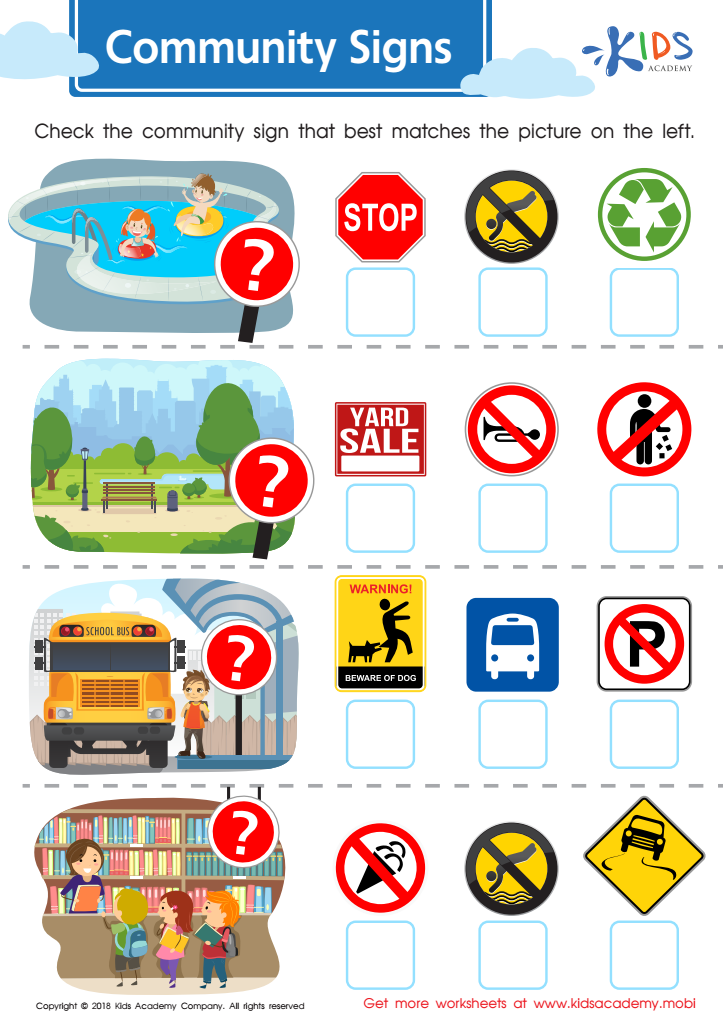
To stay safe, our kids need to know community signs. Ask them to name signs at the pool, park, etc. Then, have them check the worksheet for the picture that matches the community signs.
Community Signs Worksheet
Worksheet
Community Rules Worksheet

Community Rules Worksheet

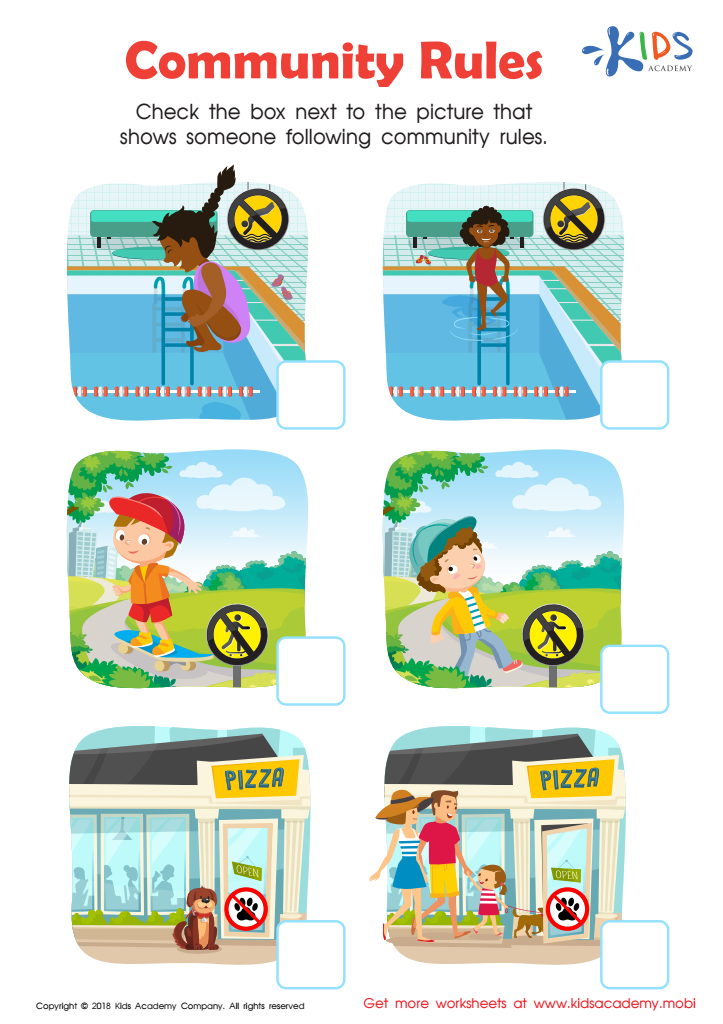
Communities are where different people live, work and worship. They're made up of homes, schools, places of worship, businesses and other buildings. To create a healthy, functioning community, it's important for members to follow the rules and guidelines. Use this printout to teach kids about community rules. Ask them to check the box next to the picture that shows someone following them.
Community Rules Worksheet
Worksheet
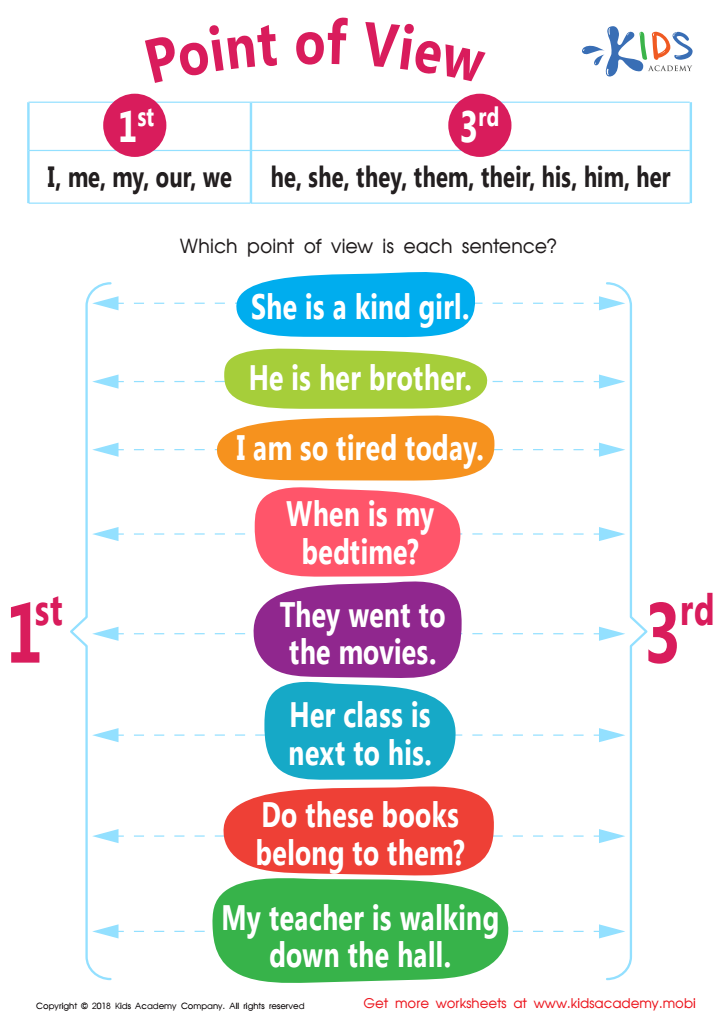
Point of View Worksheet

Point of View Worksheet

This printable worksheet helps kids understand Point of View by providing 1st and 3rd person choices. It's a fun way to practice differentiating between the two viewpoints and improve their reading comprehension. Match the sentences to 1st or 3rd person to strengthen understanding and enjoy the task!
Point of View Worksheet
Worksheet
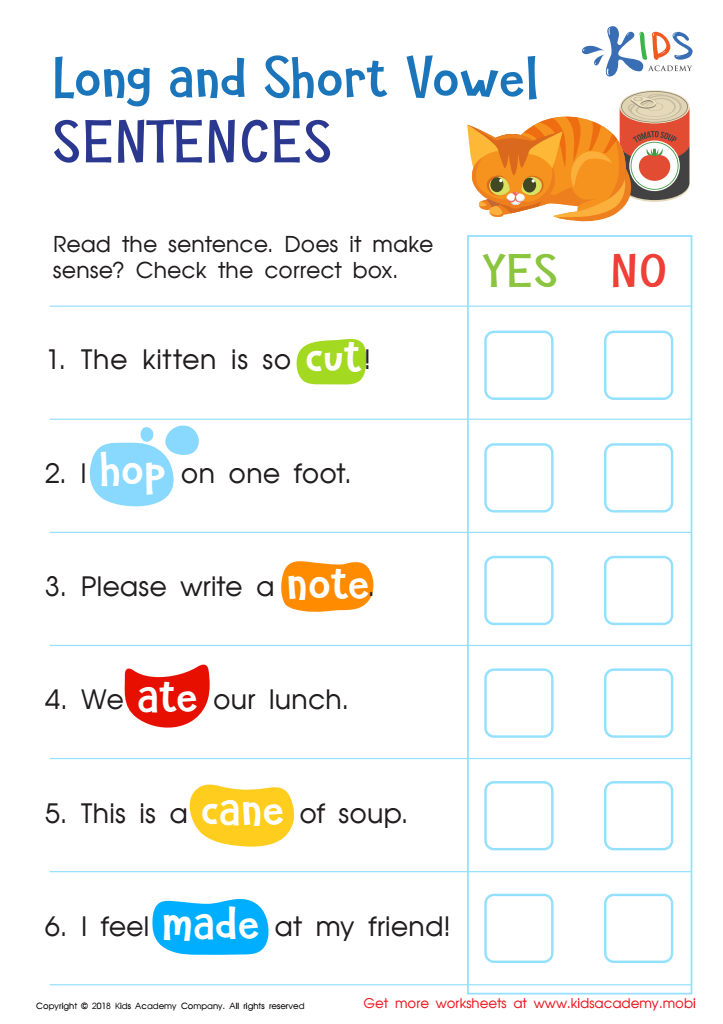
Long and Short Vowel Sentences: Assessment Worksheet

Long and Short Vowel Sentences: Assessment Worksheet

This printable worksheet helps kids practice differentiating between short and long vowel sounds. They'll use context clues to figure out which words make sense in simple sentences. A great way to build reading and writing skills!
Long and Short Vowel Sentences: Assessment Worksheet
Worksheet
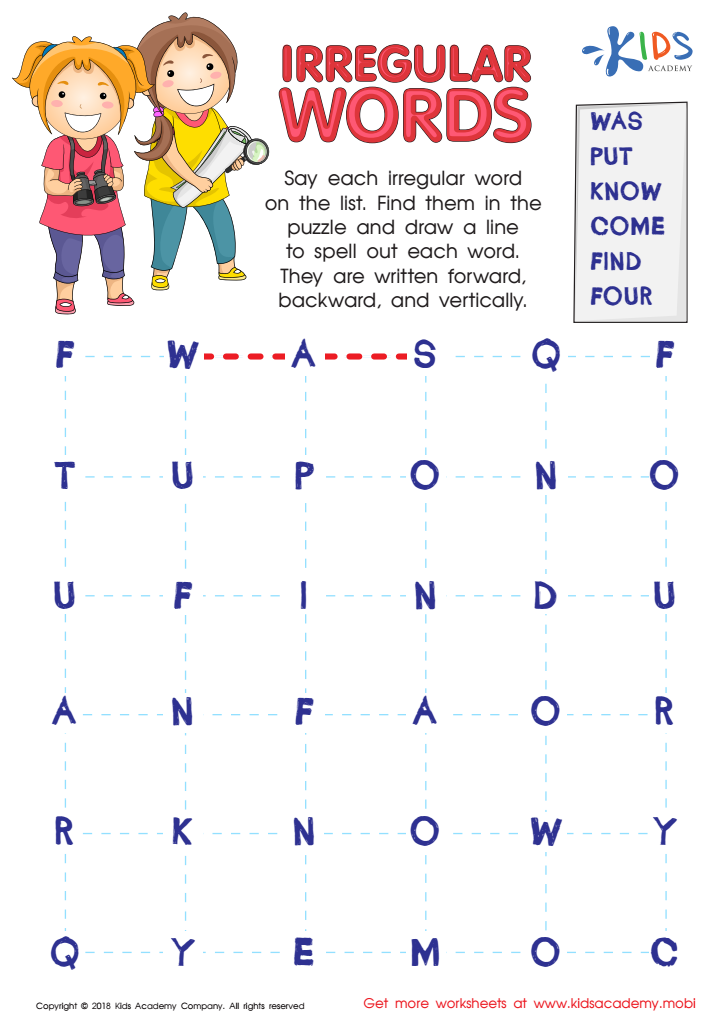
Irregular Words Worksheet

Irregular Words Worksheet

This fun word search worksheet helps kids practice reading irregular words and build their sight word banks. They'll also get practice with visual discrimination and fine motor skills as they hunt down the words.
Irregular Words Worksheet
Worksheet
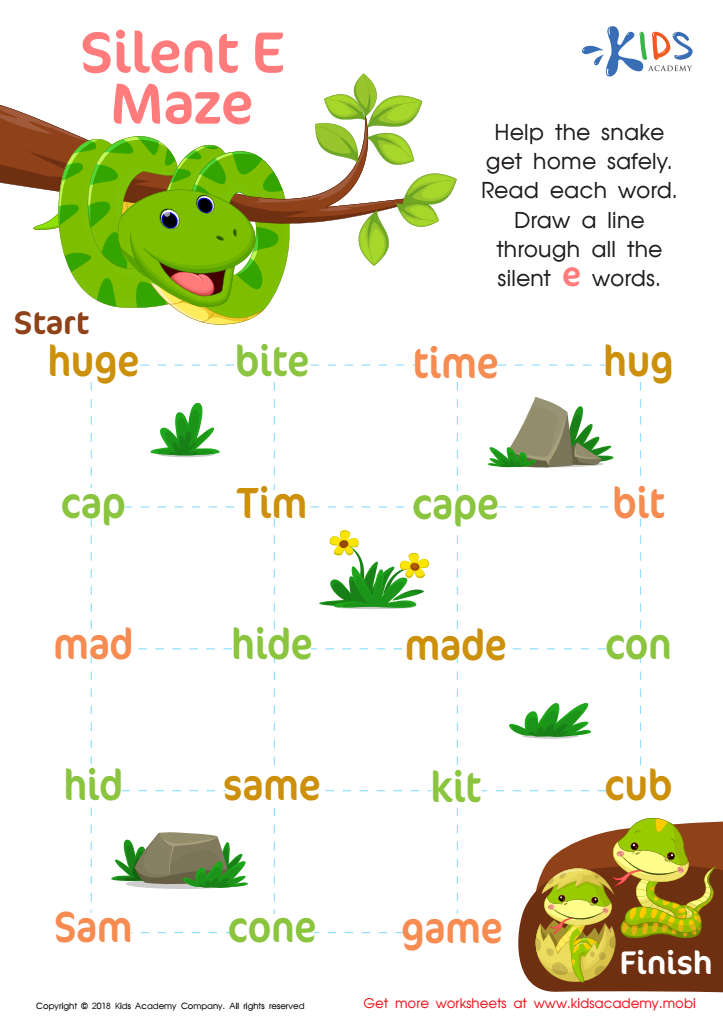
Silent E Maze Worksheet

Silent E Maze Worksheet

Kids love mazes! This fun printable worksheet lets them help a mama snake get home to her babies, using Silent E words. They'll practice fine motor skills, while they draw lines through words that have Silent E and words with closed syllables that don't. It's a great way to help them recognize Silent E words!
Silent E Maze Worksheet
Worksheet
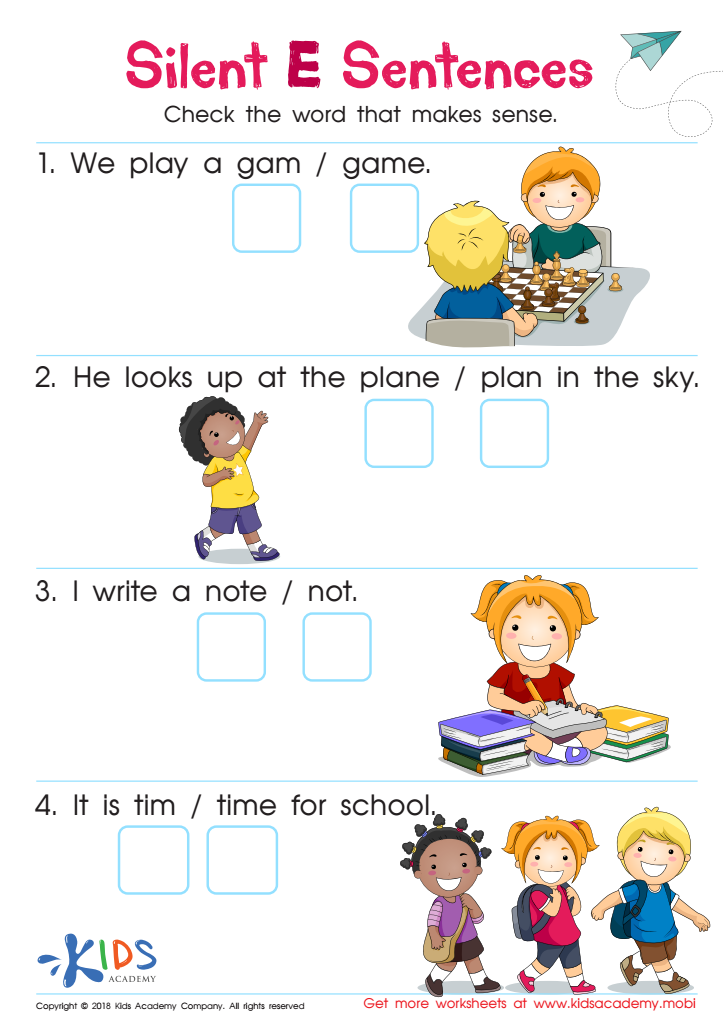
Silent E Sentences Worksheet

Silent E Sentences Worksheet

Young readers can find learning Silent E tricky, so this helpful worksheet can help! It teaches them to distinguish words that look the same but for the Silent E and choose the right word for sentence blanks. Kids can mark the correct answer and become familiar with closed syllables and words that require the E.
Silent E Sentences Worksheet
Worksheet
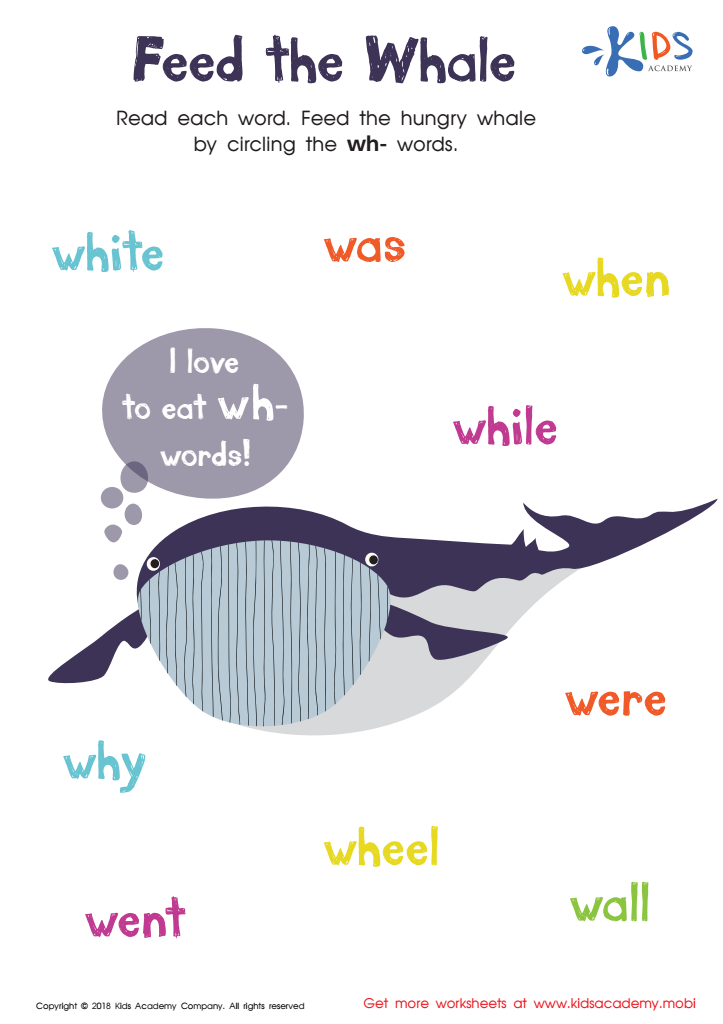
Feed the Whale Worksheet

Feed the Whale Worksheet

Help your early reader build beginning consonant and blend recognition with this fun whale worksheet! They'll feed the whale wh- words, circle sight words, and build fine motor skills—all while discriminating between differently colored words.
Feed the Whale Worksheet
Worksheet
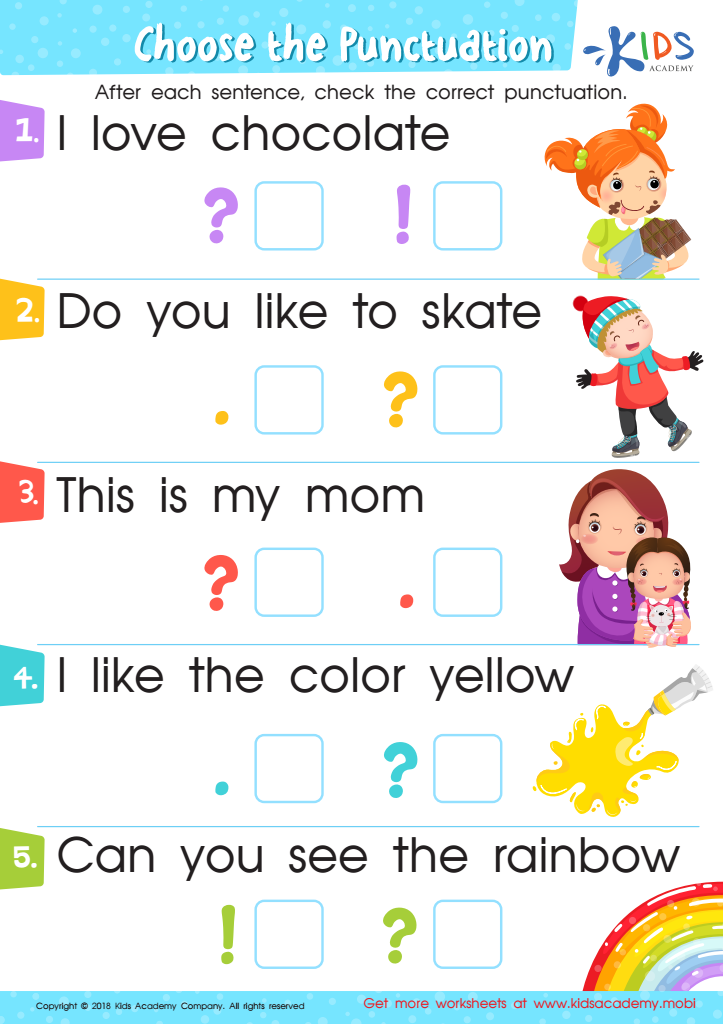
Choose the Punctuation: Assessment Worksheet

Choose the Punctuation: Assessment Worksheet

Does your child know punctuations? Found at the end of words, they signify the tone of the sentence. Ask them which punctuations they use daily. With your little one, look at a worksheet. Read each sentence aloud and ask them to identify the two punctuations given. Instruct them to choose the correct one. 80 words.
Choose the Punctuation: Assessment Worksheet
Worksheet
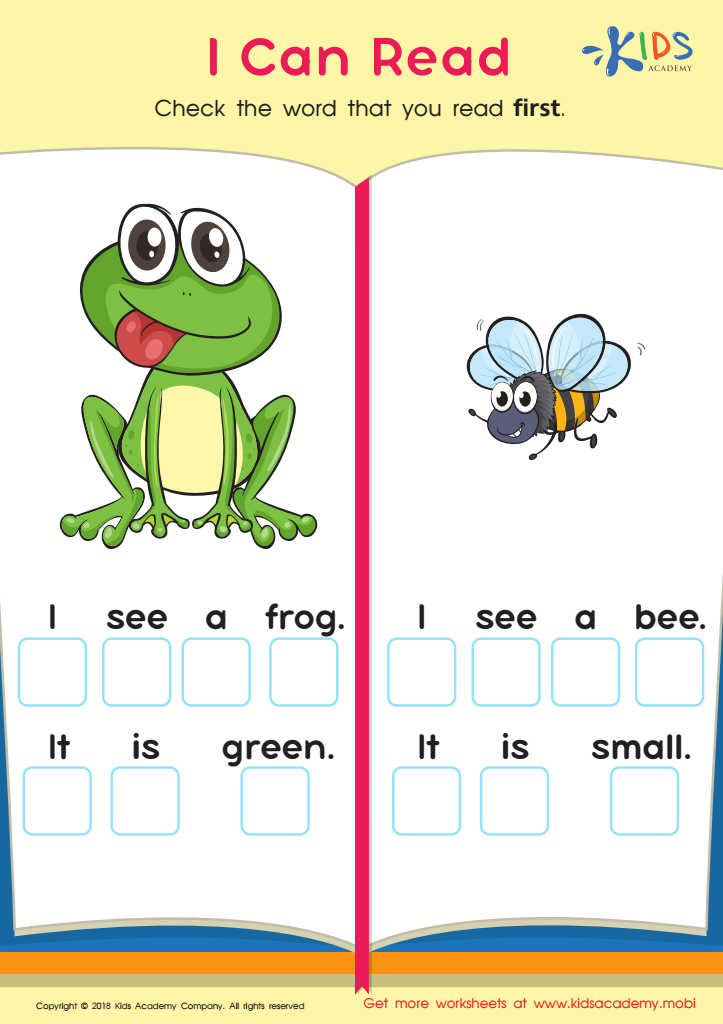
I Can Read Worksheet

I Can Read Worksheet

Test your child's reading skills with this fun worksheet. See how well they know one-letter, two-letter, and five-letter words. Ask your little one to read the sentences and tick the word they identify first. It's a great way to track their progress and help them become more confident readers.
I Can Read Worksheet
Worksheet
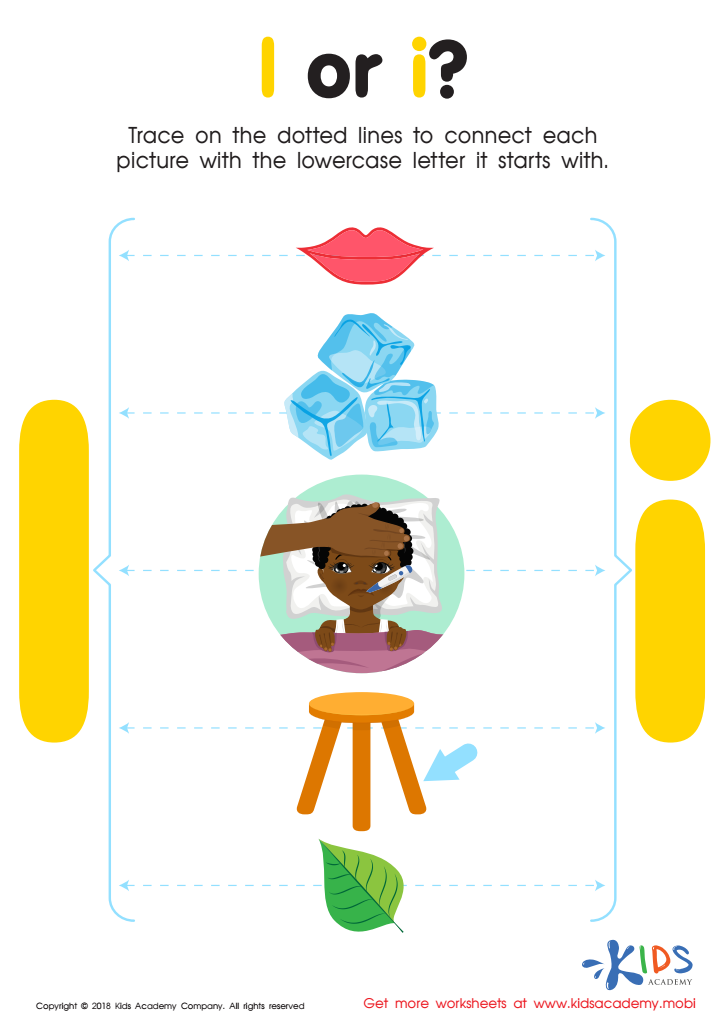
l or i? Worksheet
l or i? Worksheet

l or i? Worksheet

Trace the dotted lines on this worksheet to connect pictures with their lowercase letter. Ask your child what each picture is and the first letter of the word. Guide them to trace the letter with the dotted lines.
l or i? Worksheet
Worksheet
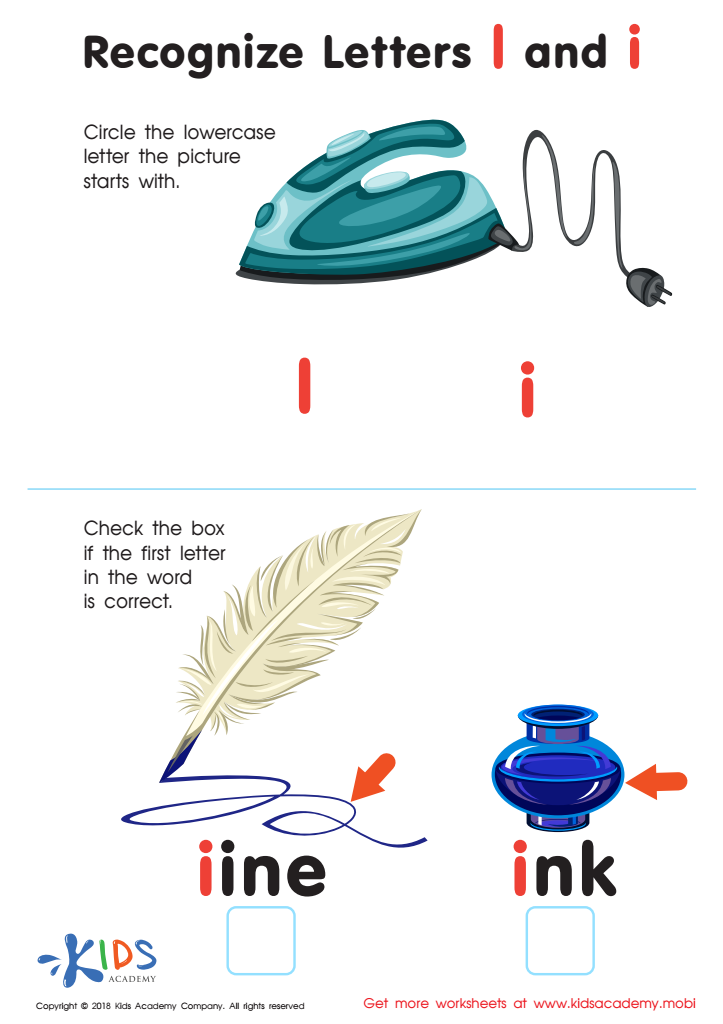
Recognize Letters l and i Worksheet

Recognize Letters l and i Worksheet

Help your child become familiar with uppercase and lowercase letters. Have them look at the pictures in the worksheet and circle the lowercase letter the picture starts with. For example: which one is the lowercase "i", the capital "I" or the small "i"?
Recognize Letters l and i Worksheet
Worksheet
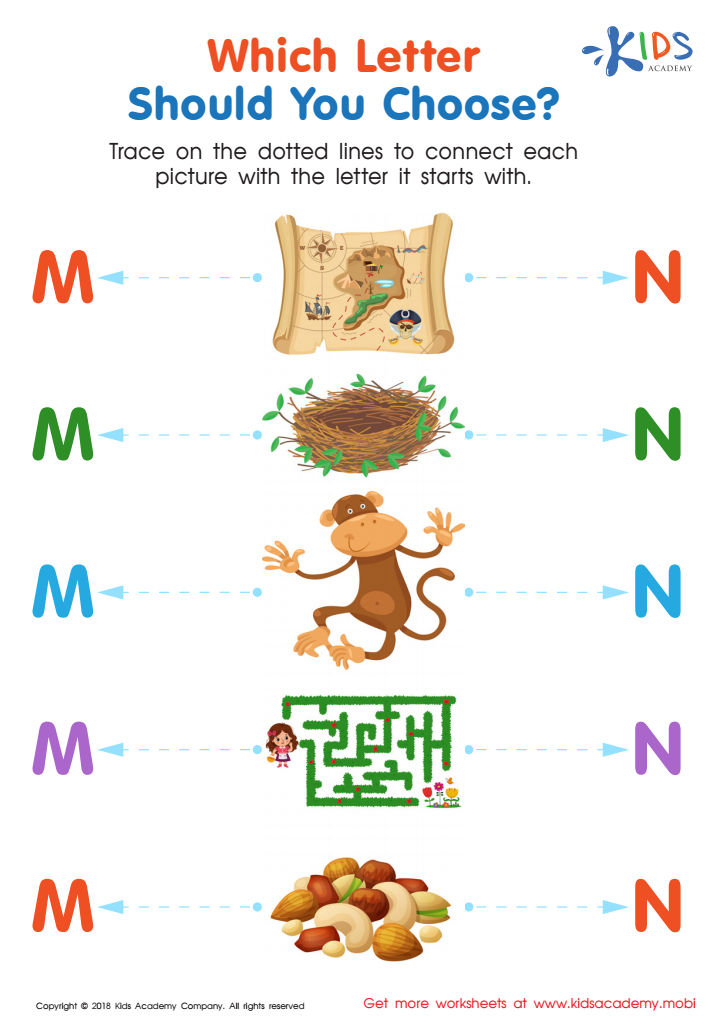
Which Letter Should you Choose? Worksheet

Which Letter Should you Choose? Worksheet

Trace the dotted lines to connect images with their first letter: "n" or "m." Challenge your child to name each picture, then identify the first letter and trace to the right letter! Five images in total.
Which Letter Should you Choose? Worksheet
Worksheet
Is It m or n? Worksheet

Is It m or n? Worksheet

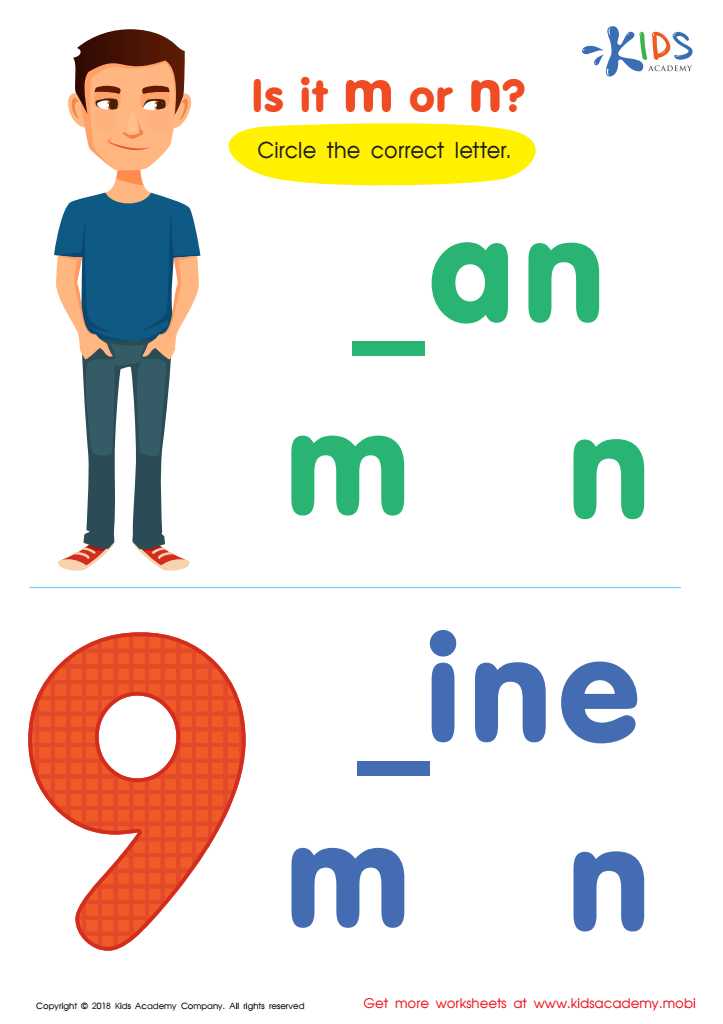
Help your child circle the letter that begins the words "man" and "nine" in the picture. This is a great way for them to learn the alphabet.
Is It m or n? Worksheet
Worksheet
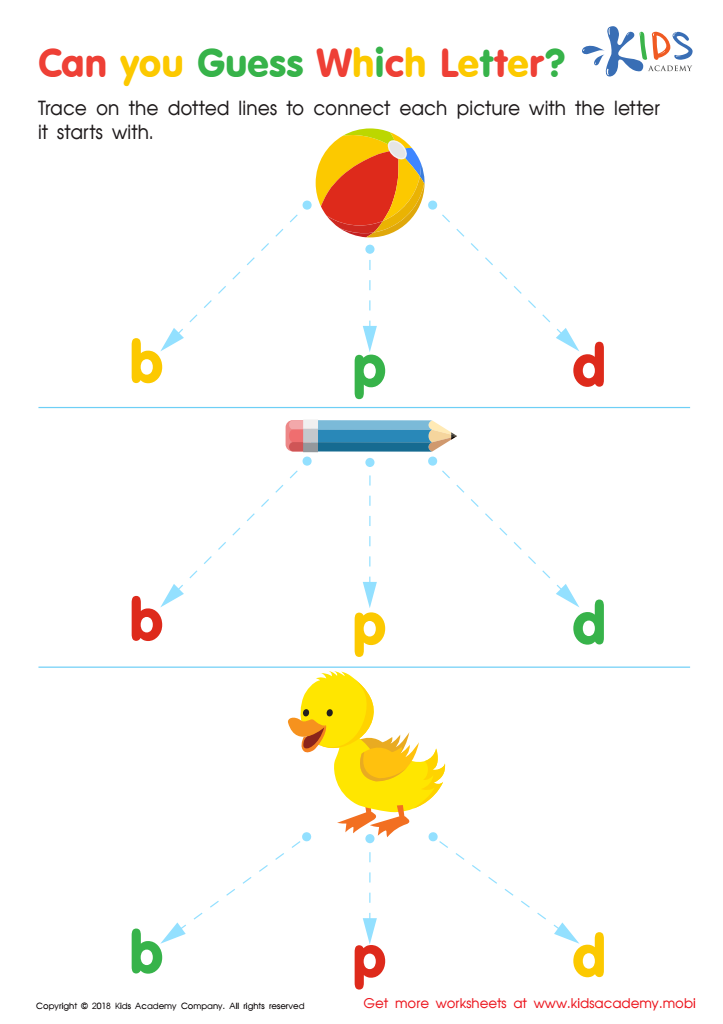
Can you Guess Which Letter? Worksheet

Can you Guess Which Letter? Worksheet

Connect the pictures with their corresponding letters with this fun worksheet! Ask your child what each picture is, then what letter it begins with. Download the PDF for colorful images and engaging texts to hold their attention, making learning an enjoyable activity.
Can you Guess Which Letter? Worksheet
Worksheet
Is it b, p or d? Worksheet
Is it b, p or d? Worksheet

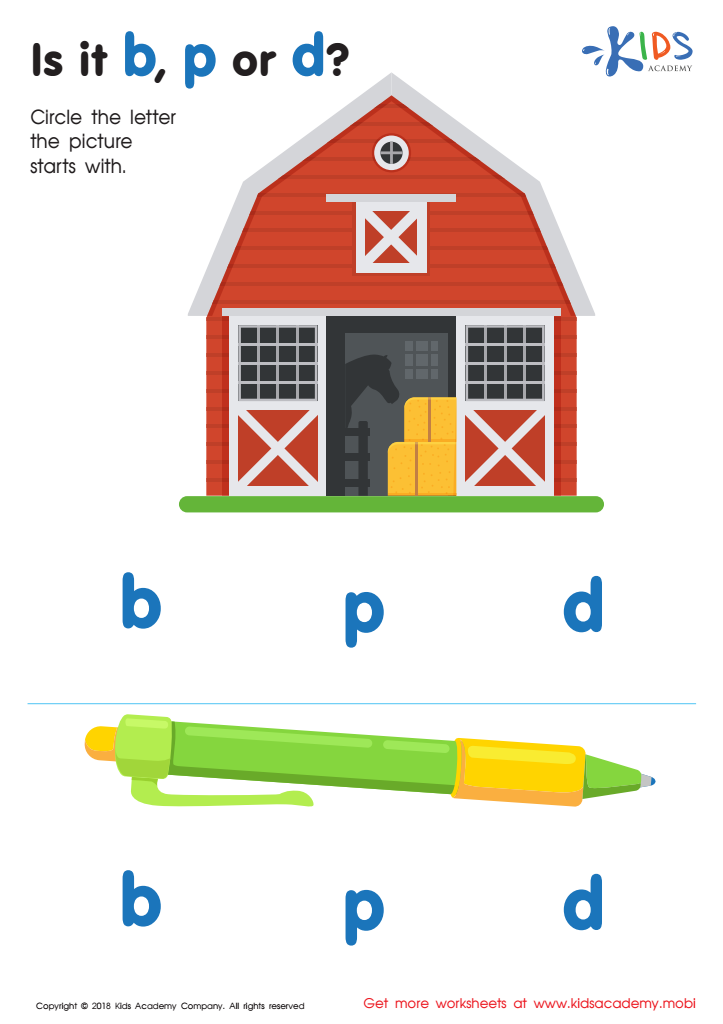
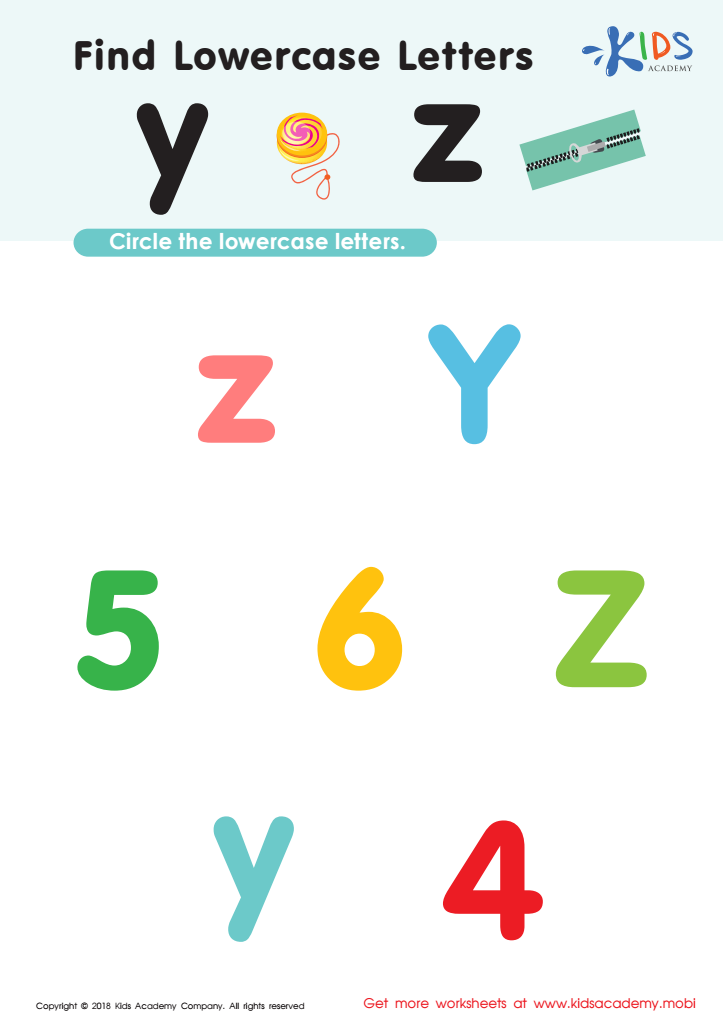
Test your child's identification skills with this worksheet. They must identify the image and then circle the letter it begins with: 'b', 'p', or 'd' (e.g. an image of the sun would mean they circle 's').
Is it b, p or d? Worksheet
Worksheet
Find Lowercase Letters y z Worksheet

Find Lowercase Letters y z Worksheet

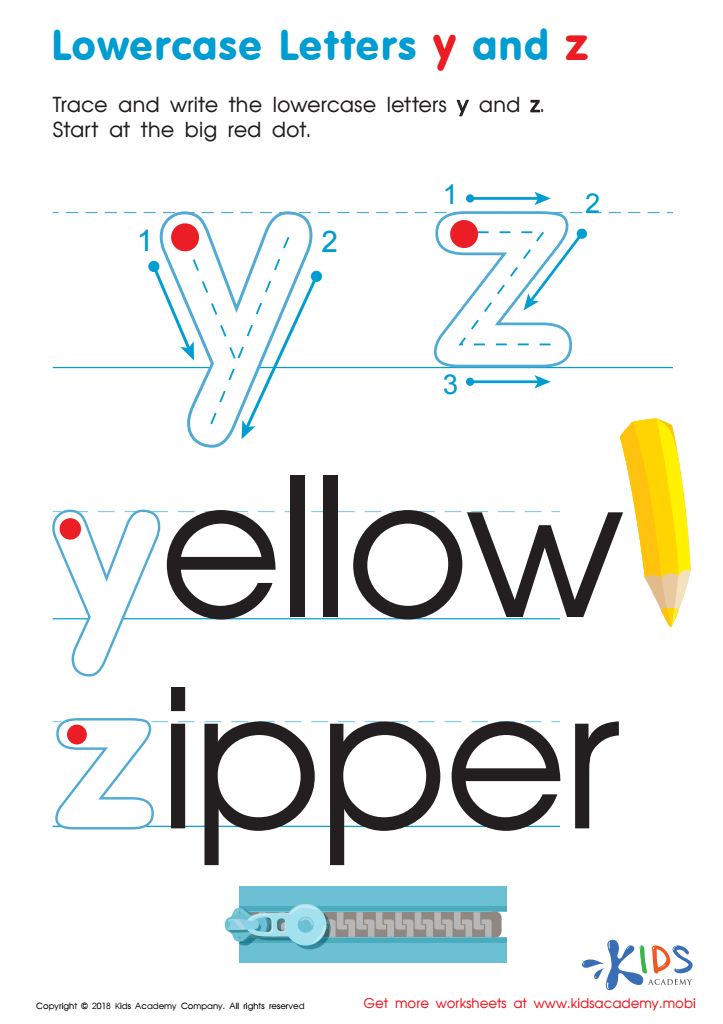
Help your kid learn the alphabet. Before they can move on to words and reading, they must first know the lower and uppercase letters. Show them how to find the letters y and z in this worksheet, which is filled with uppercase letters and numbers. Together, find and circle them.
Find Lowercase Letters y z Worksheet
Worksheet
Lowercase Letters y z Worksheet

Lowercase Letters y z Worksheet

Help your child get a good start in writing and reading by tracing and writing the lowercase letters y and z. With this activity, they will learn the alphabet, which is essential for literacy success. Guide them through the worksheet and make sure they form the letters correctly. This will help them learn the basics needed to write and read fluently.
Lowercase Letters y z Worksheet
Worksheet
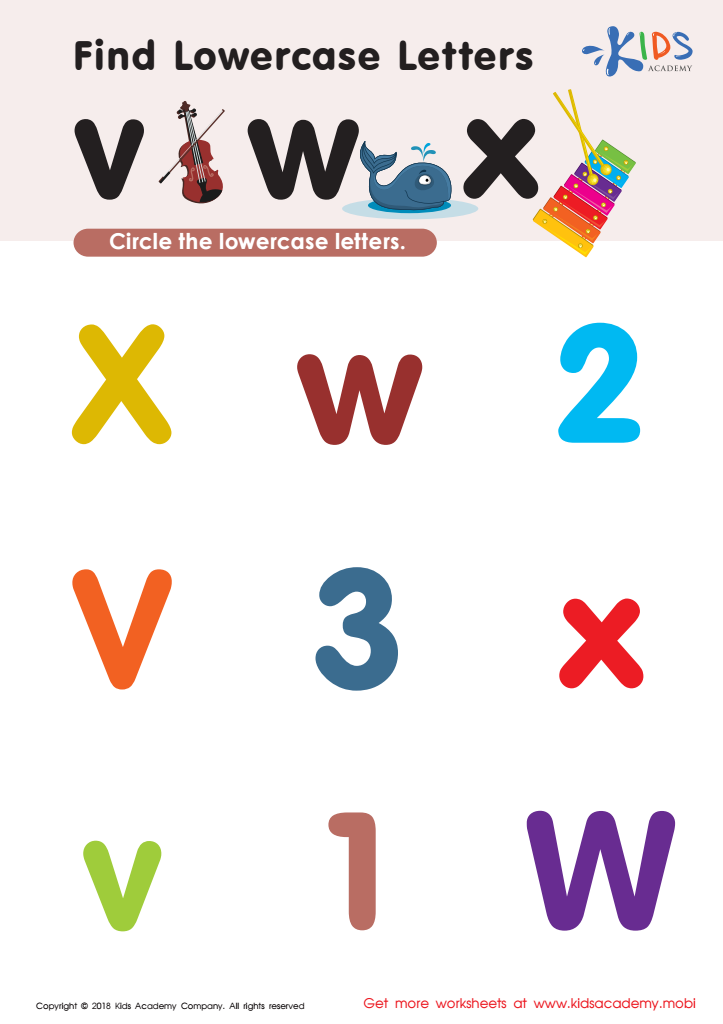
Find Lowercase Letters v w x Worksheet

Find Lowercase Letters v w x Worksheet

If your child doesn't know the alphabet, get them this helpful worksheet. It's an easy exercise to build their understanding of the alphabet and lowercase letters. Find the letters v, w, and x among other uppercase letters and numbers in the downloadable PDF.
Find Lowercase Letters v w x Worksheet
Worksheet
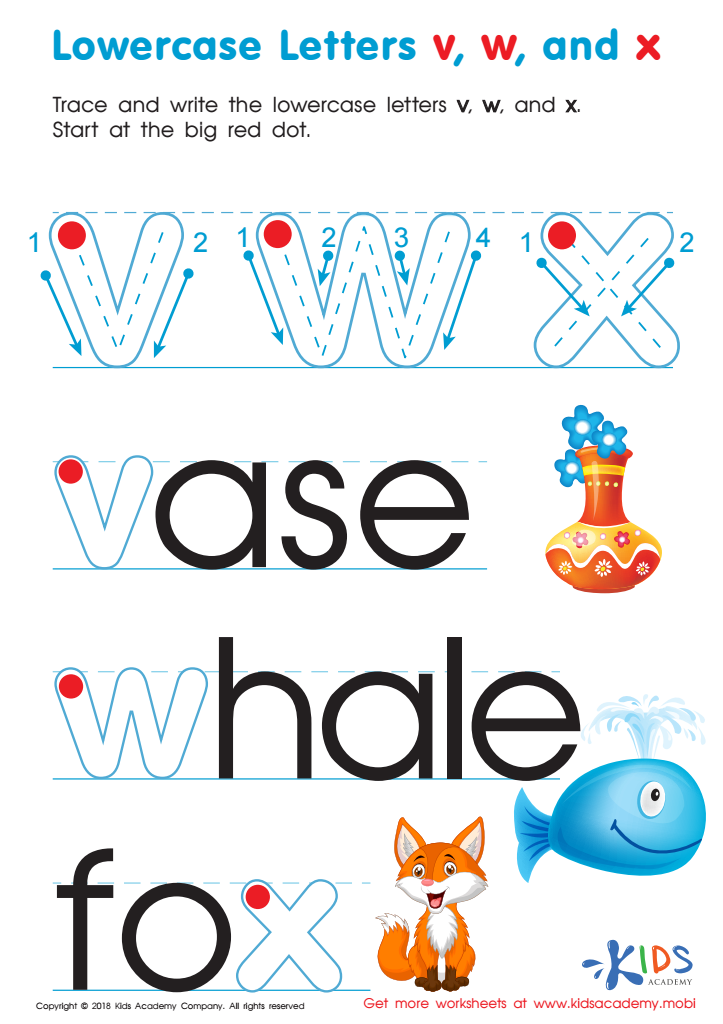
Lowercase Letters v w x Worksheet

Lowercase Letters v w x Worksheet

Help your child learn to write lowercase letters v, w, and x, starting at the big red dot. This activity will help them develop writing skills and correctly identify the letters. Guide them as they trace the letters and enjoy watching them improve!
Lowercase Letters v w x Worksheet
Worksheet
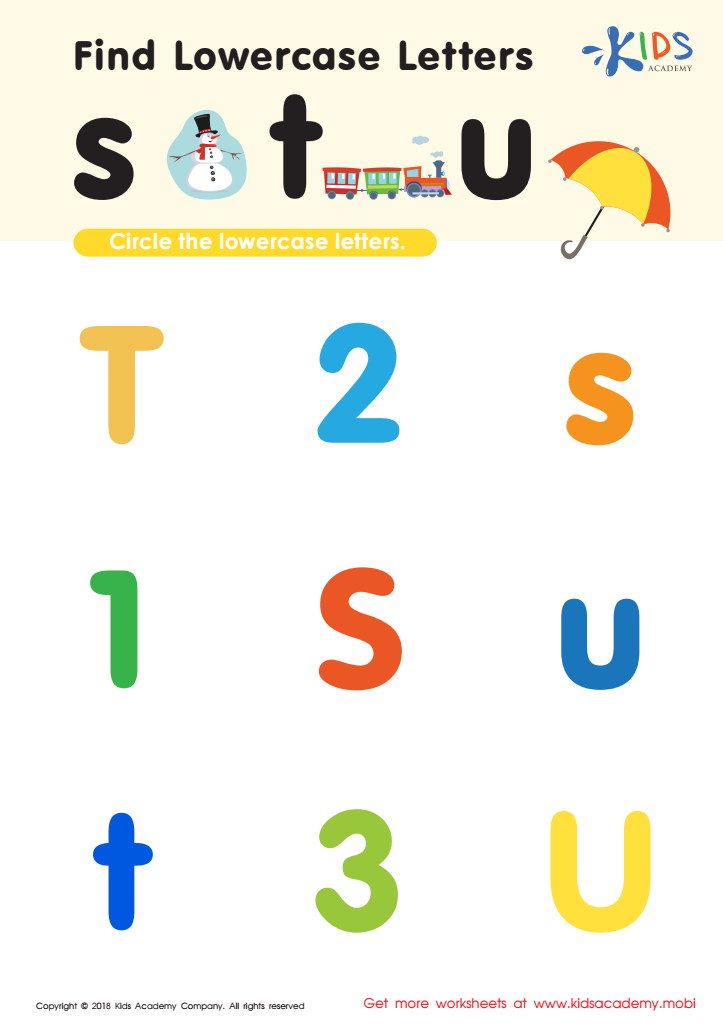
Find lowercase Letters s t u Worksheet

Find lowercase Letters s t u Worksheet

Puzzles are great for boosting your child's thinking skills. Can they identify lowercase letters s, t and u? This free printout contains the letters mixed in with uppercase letters and numbers, all presented in a fun, colorful format - sure to keep them entertained as they learn!
Find lowercase Letters s t u Worksheet
Worksheet
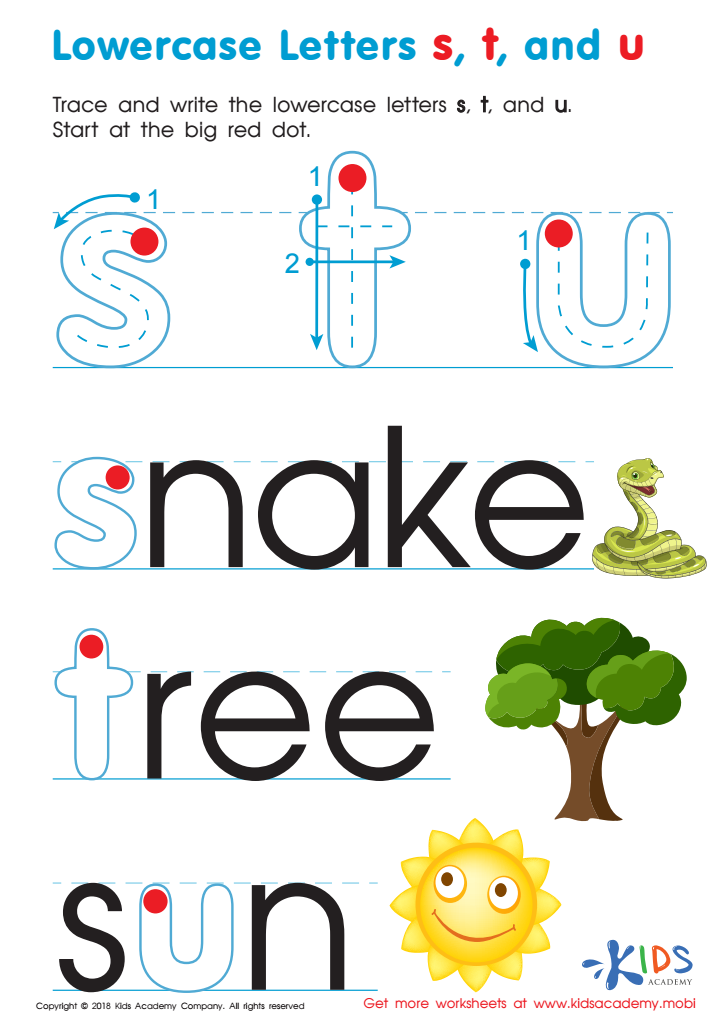
Lowercase Letters s t u Worksheet


Lowercase Letters s t u Worksheet

Help your child trace lowercase letters s, t and u. Ask questions like: "What word starts with 's'? What about 't' and 'u'? Point out the snake, tree and sun pictures. Start tracing from the big red dot.
Lowercase Letters s t u Worksheet

Worksheet
Find lowercase Letters p q r Worksheet

Find lowercase Letters p q r Worksheet

Help your child spot the lowercase letters among the numbers and uppercase letters in this worksheet. It's a great way to teach them to identify and write the lowercase and uppercase letters. Assist them in completing the exercise to give them a better understanding of the alphabets.
Find lowercase Letters p q r Worksheet
Worksheet
Lowercase Letters p q r Worksheet

Lowercase Letters p q r Worksheet

Trace and write lowercase letters p, q and r with this fun worksheet. Each letter has a large red dot to mark the start, and dotted lines to follow with a pencil. Colorful images and text make it an enjoyable way to learn.
Lowercase Letters p q r Worksheet
Worksheet


Understanding the concept of "normal" for children aged 3-7 is vital for both parents and teachers as it lays the groundwork for healthy development. At this early stage, children are rapidly developing cognitive, emotional, and social skills. Recognizing what is considered typical behavior and development allows parents and educators to provide appropriate guidance and support.

It helps in identifying milestones—both when children are meeting them and when there may be delays that require attention. Awareness of normal developmental benchmarks fosters a nurturing environment, enabling caregivers to encourage positive growth while also alleviating unnecessary concerns.

Additionally, understanding "normal" promotes empathy and inclusivity in educational settings, encouraging respectful interactions among peers. This knowledge helps educators tailor their teaching methods to meet diverse learning needs, ensuring that children feel valued and understood.

Moreover, focusing on normal development assists in creating age-appropriate educational experiences that Foster curiosity and motivation. Ultimately, being informed about what is normal empowers parents and teachers to cultivate a supportive atmosphere where children can thrive both academically and socially, laying a strong foundation for future learning and development.