Filters

1336 filtered results

Clear all filters
Favorites
With answer key
Interactive

1336 filtered results

Difficulty Level

Grade


Check out this FREE Trial Lesson for age 3-7!

Shadows

Favorites
With answer key
Interactive
  • 3-7
  • Interactive
  • Normal
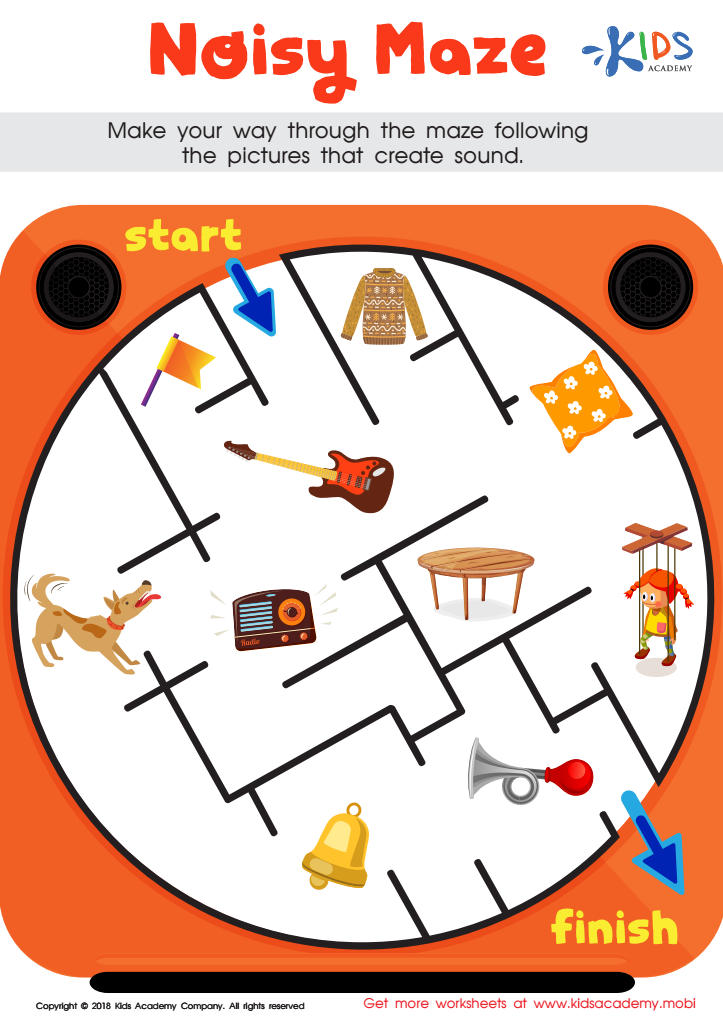
Noisy Maze Worksheet

Noisy Maze Worksheet

Have your kids name some objects that make noise? Then, look at the worksheet with them and help them identify each object. Guide them through the maze, following the sound-producing pictures.
Noisy Maze Worksheet
Worksheet
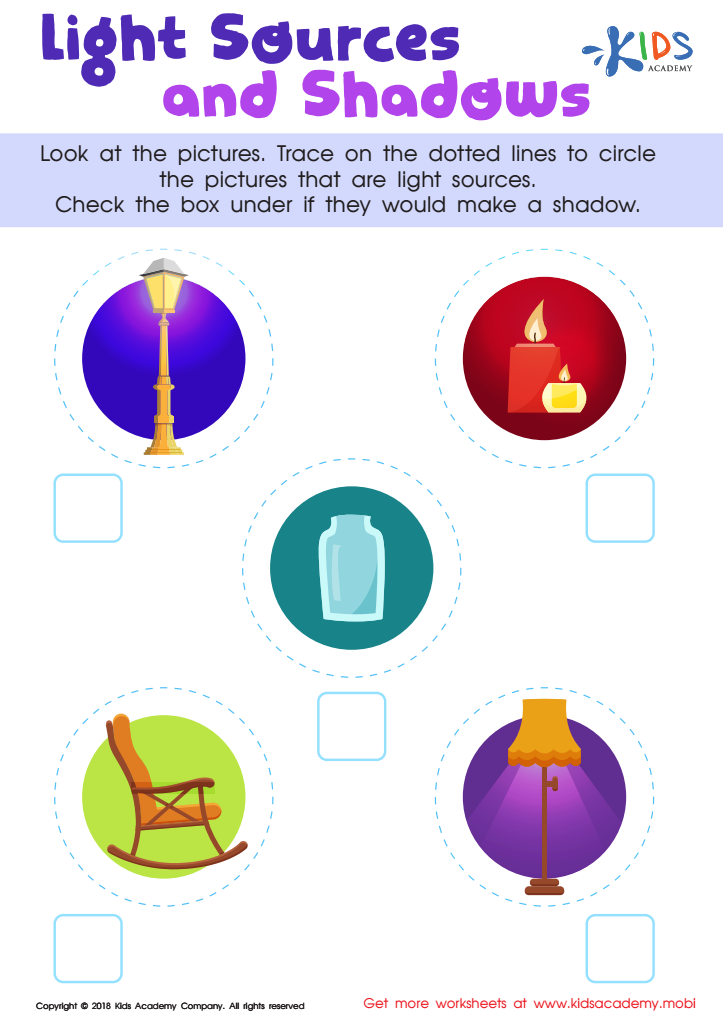
Light Sources and Shadows Worksheet

Light Sources and Shadows Worksheet

During the day, the sun radiates bright light. At night, when it's time for bed, the sun sets and darkness takes over. To light our way, we use other sources of light. With your students, trace the dotted lines around the pictures of light sources and check the boxes under the objects that will cast shadows.
Light Sources and Shadows Worksheet
Worksheet
Light to Communicate Worksheet

Light to Communicate Worksheet

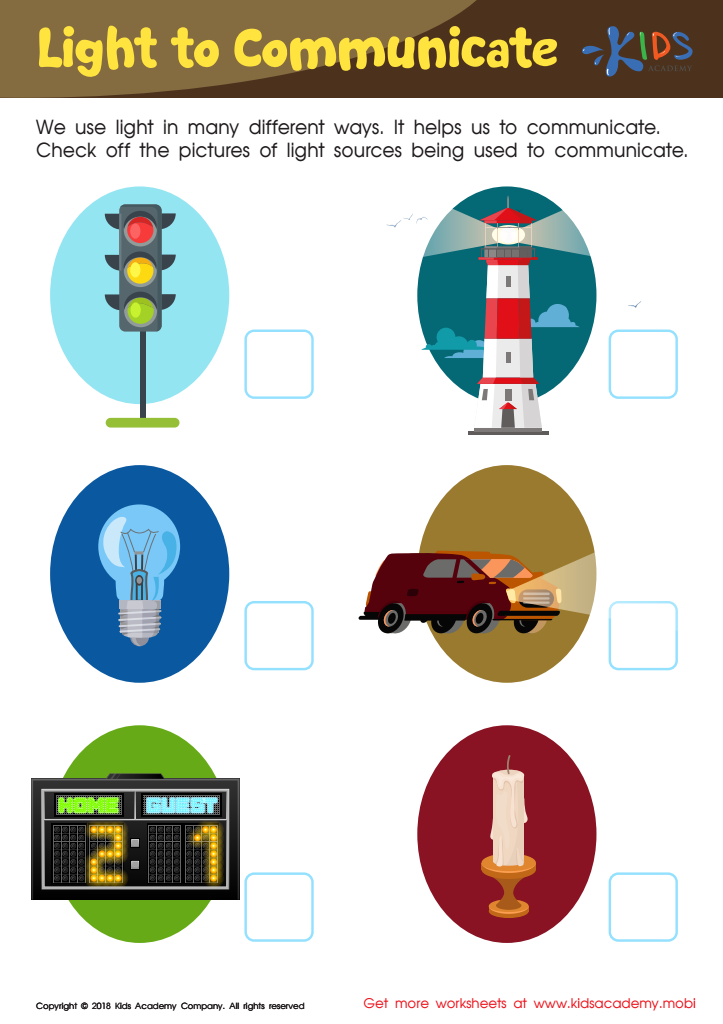
We can use lights to communicate effectively, like we use sounds. Ask your kids for examples and then help them tick off the pictures of light sources in the worksheet. This exercise will help them understand how light can be used to communicate.
Light to Communicate Worksheet
Worksheet
Sounds to Communicate Worksheet

Sounds to Communicate Worksheet

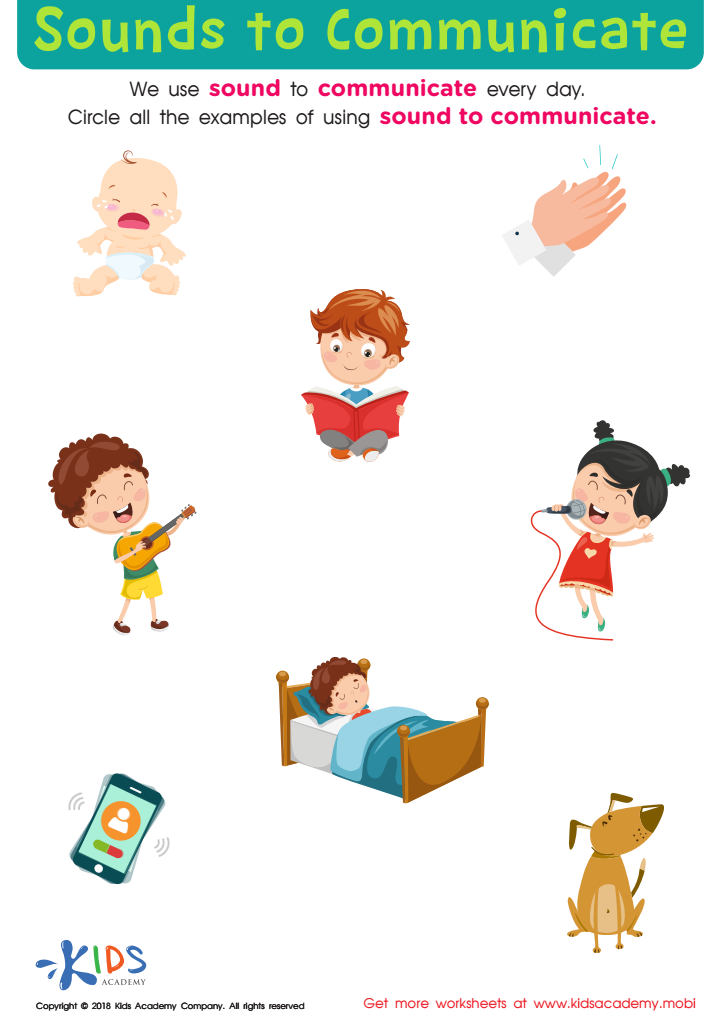
Sounds are important for communication. Ask your students to name sounds people, animals and things make. Then, review this worksheet with them and see if they can identify the activities. Ask them to circle examples of sounds used to communicate.
Sounds to Communicate Worksheet
Worksheet
Will It Make a Shadow? Worksheet

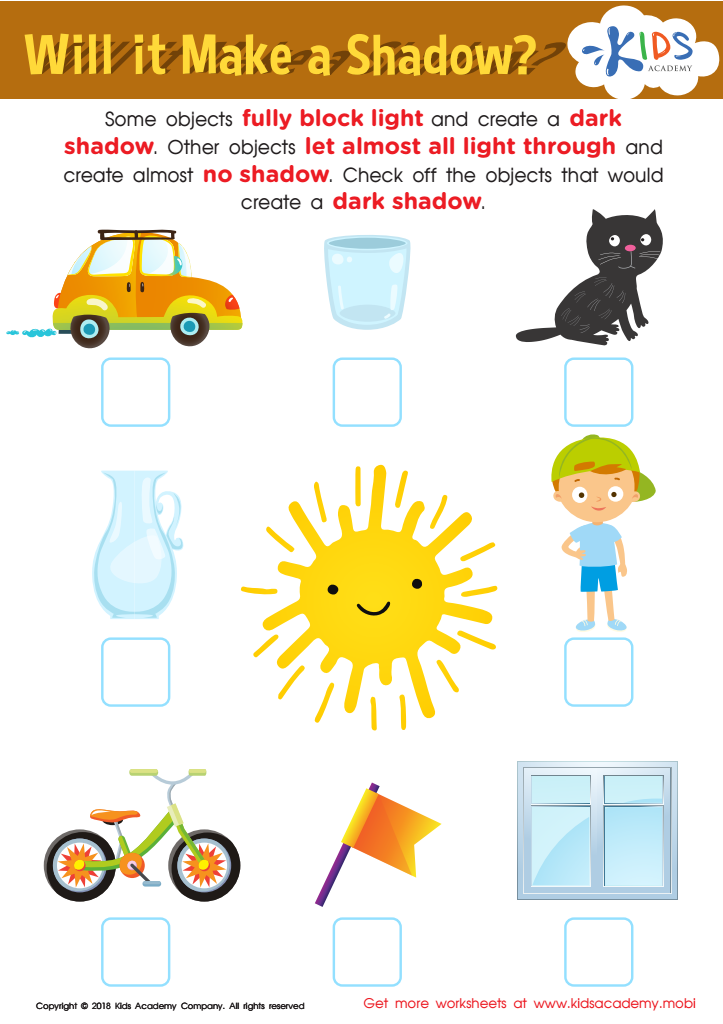
Will It Make a Shadow? Worksheet

Teach your students about shadows with this printout. Ask them to check off the boxes next to the pictures that create a shadow. Explain that some objects block light, forming a shadow, while others don't and thus don't create a shadow. Your students are likely already familiar with their own shadow.
Will It Make a Shadow? Worksheet
Worksheet
Sources of Light Worksheet

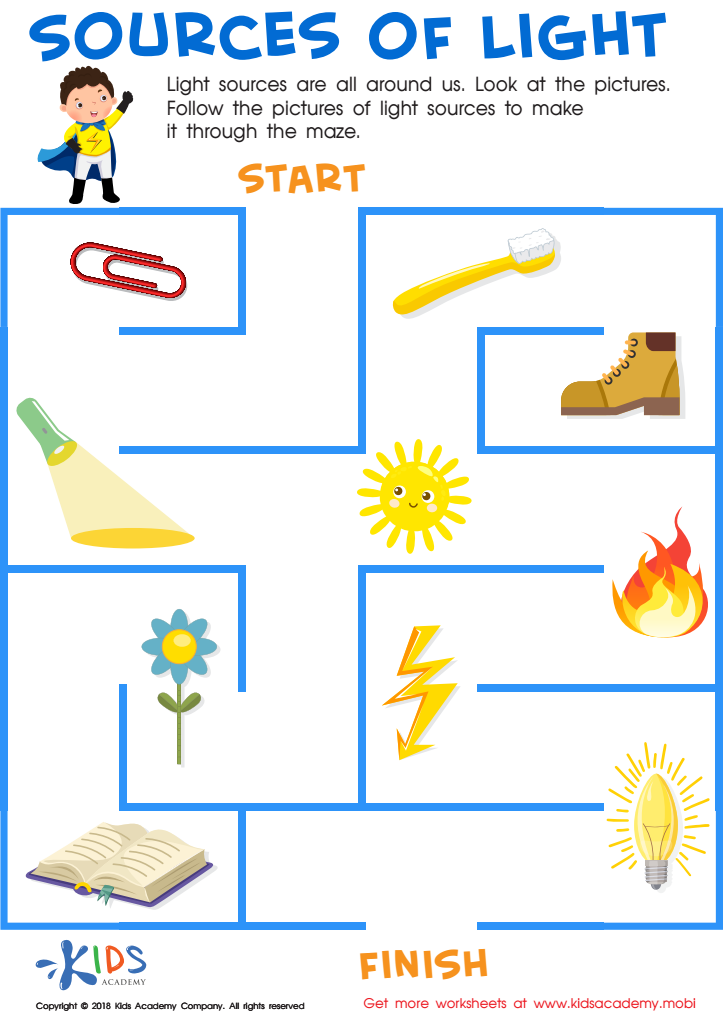
Sources of Light Worksheet

Help your child explore sources of light with this printout exercise. Ask them if they know the sun is the reason for day and night. Then point out other common light sources, then work together to guide them through the maze from start to finish.
Sources of Light Worksheet
Worksheet
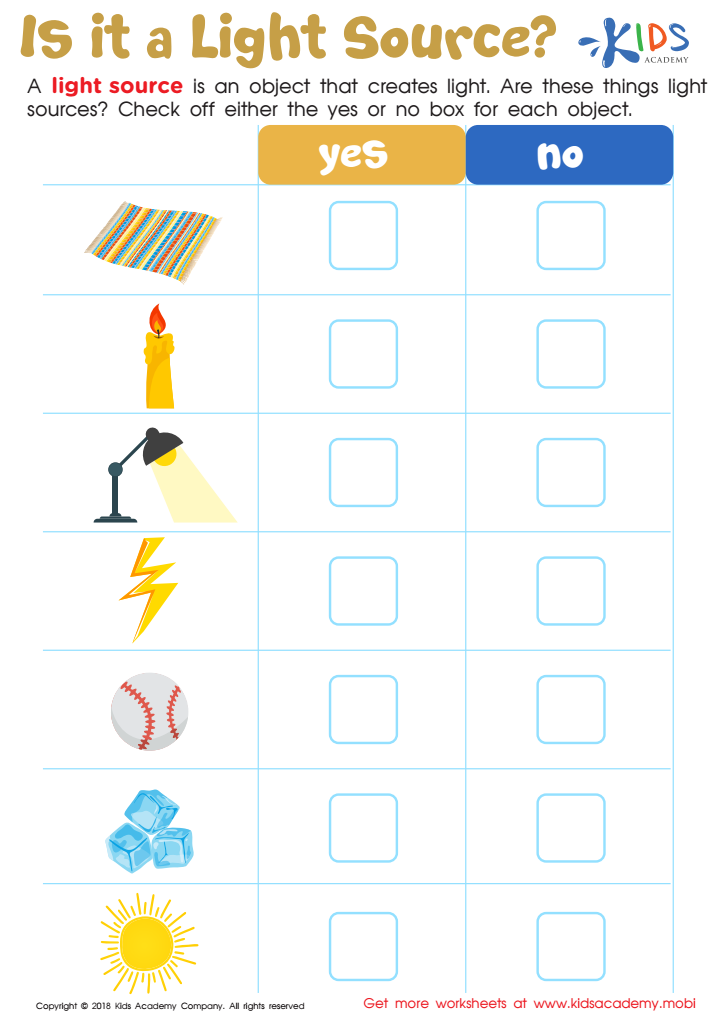
Is It a Light Source? Worksheet

Is It a Light Source? Worksheet

This worksheet is a fun way to teach kids about light sources. Children must identify natural sources like the sun and lightning, and man-made sources such as candles and lamps. Ask them to look at each object and check the box to indicate if it's a light source or not.
Is It a Light Source? Worksheet
Worksheet
Vibrations and Sounds Worksheet

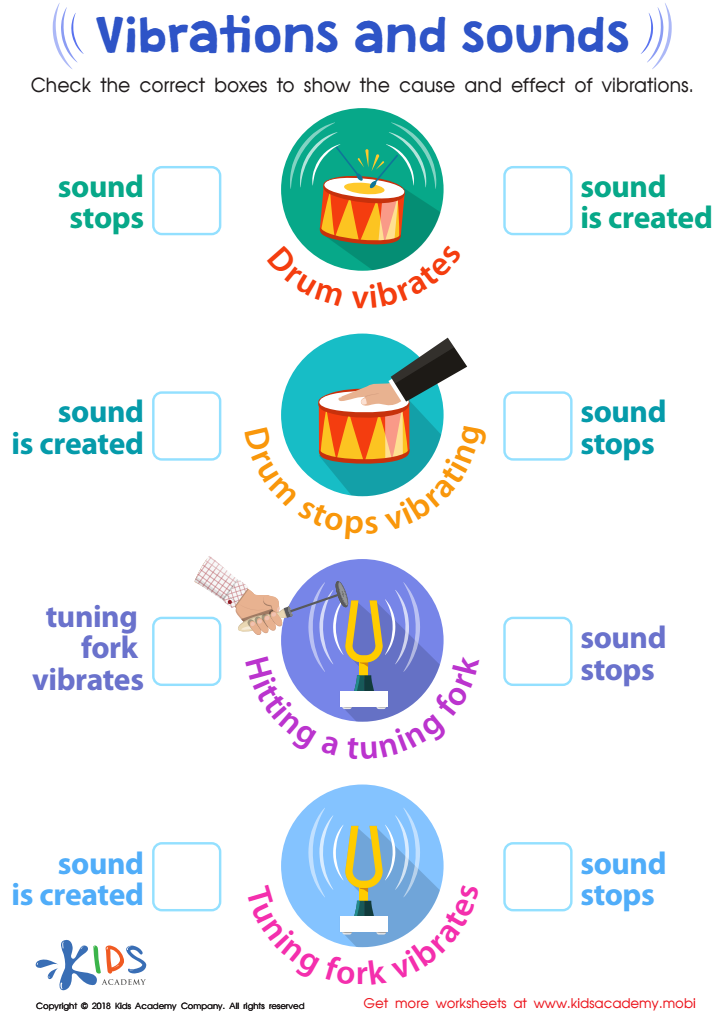
Vibrations and Sounds Worksheet

Many objects, creatures, and things make sounds. People talk, animals bark, hiss or meow, and things make sounds too. Ask your students to name others that produce sounds and why they do, such as when a drum is hit with a stick. Get them to learn about vibrations and cause/effect in this fun worksheet and check the answers.
Vibrations and Sounds Worksheet
Worksheet
Sounds Are Everywhere! Worksheet

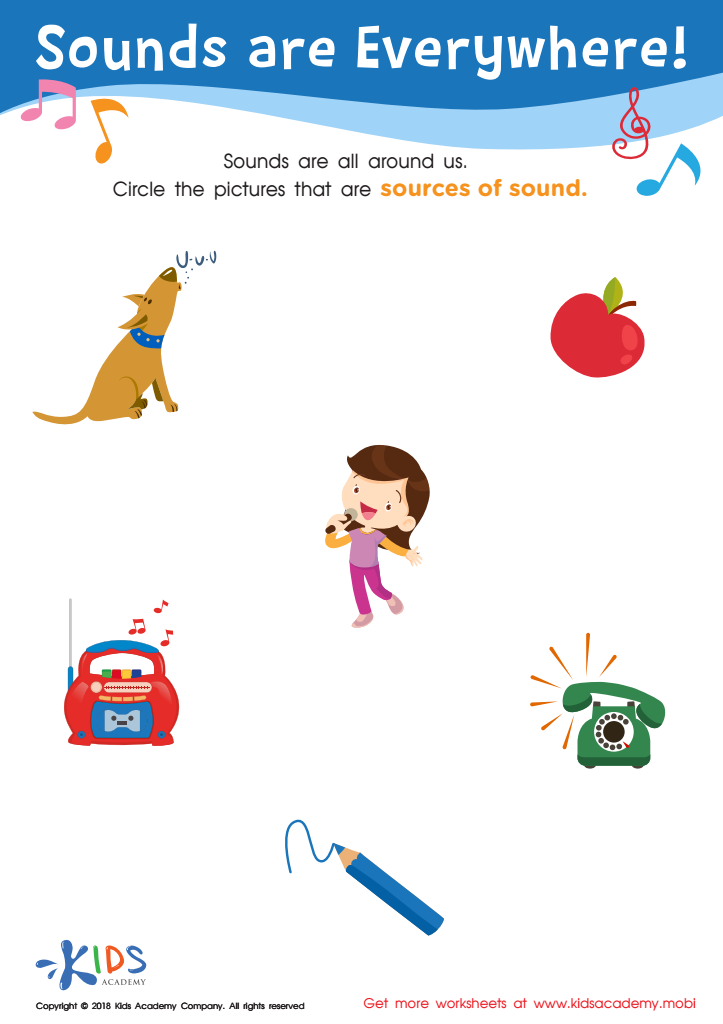
Sounds Are Everywhere! Worksheet

Ask your students to recall objects that make sound. Then, help them identify the sources of sound in the pictures of this worksheet.
Sounds Are Everywhere! Worksheet
Worksheet
The Suffix -Ly Worksheet

The Suffix -Ly Worksheet

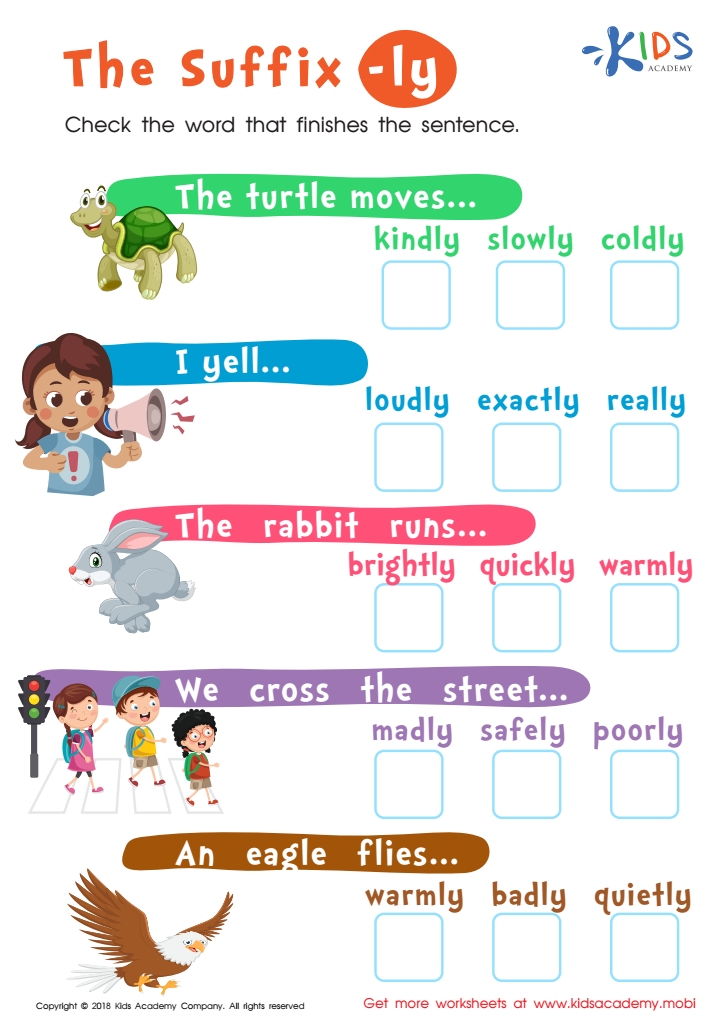
Suffixes change the meaning of words: the -ly suffix usually describes how an action is done (e.g. slowly, quickly, loudly). Help your child understand this and then check out the fun worksheet. Ask them to identify the animals and people in the pictures, then read the sentences out loud and have them check the ones that finish the sentence.
The Suffix -Ly Worksheet
Worksheet
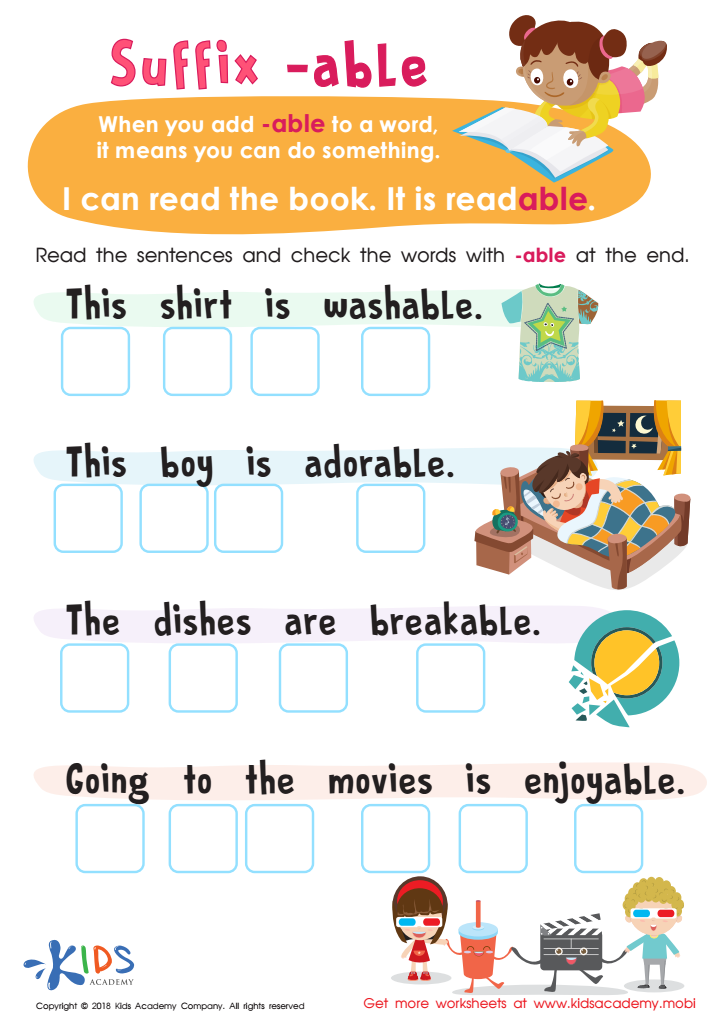
Suffix -Able Worksheet

Suffix -Able Worksheet

Suffix -able means you can do something. Example: readable - means you can read it. Give kids examples then check this worksheet. Read sentences with kids, looking for words with -able at the end.
Suffix -Able Worksheet
Worksheet
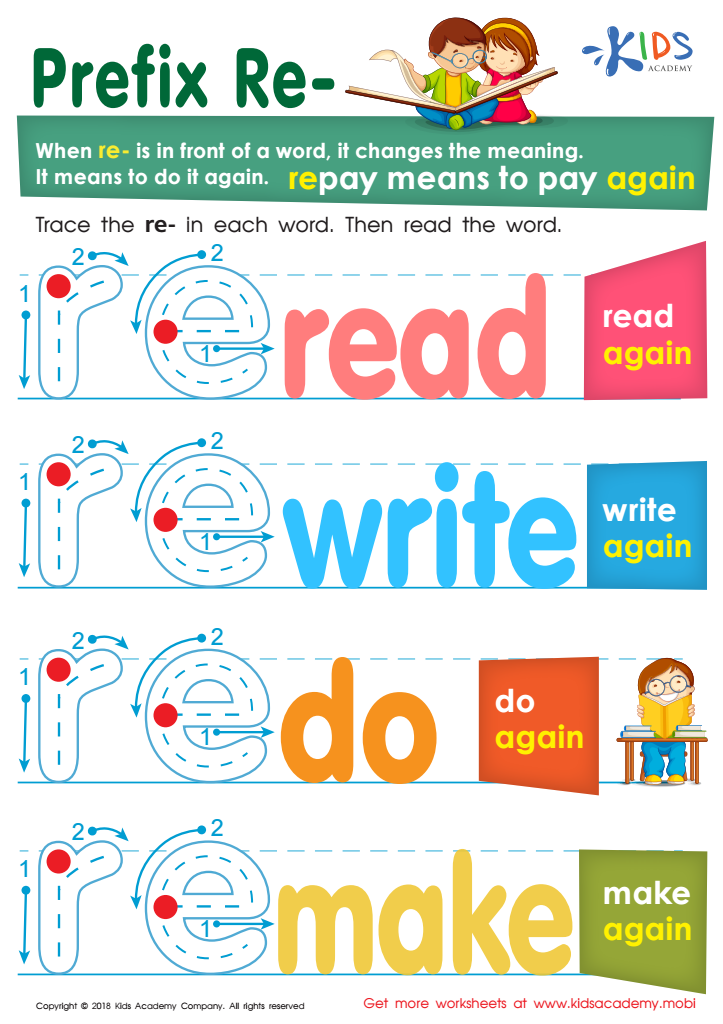
Prefix Re- Worksheet

Prefix Re- Worksheet

Give your child examples of the re- prefix such as repay, restart, et cetera. Hold their hand and trace the re- in each word. Read the word aloud together and explain how it changes the meaning to 'to do again'. This worksheet will help your child see the re- prefix in action.
Prefix Re- Worksheet
Worksheet
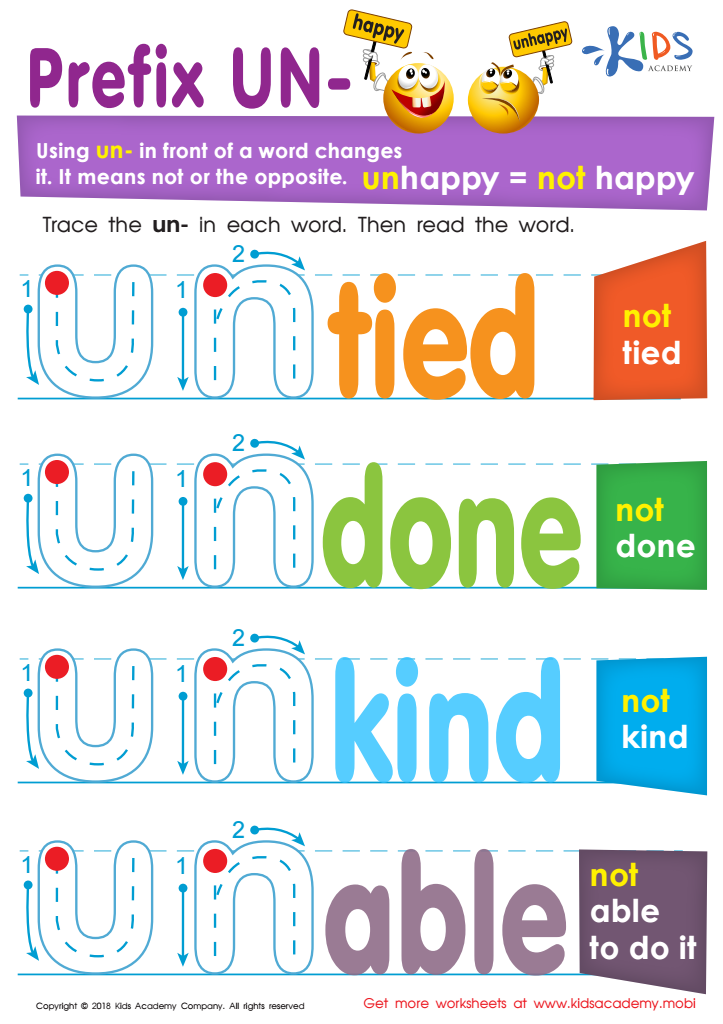
Prefix Un- Worksheet

Prefix Un- Worksheet

Help your child understand the concept of adding "un-" to the front of words by giving examples such as "unhappy" (not happy) and "unserious" (not serious). Guide them in tracing the "un-" in each word and read it aloud together.
Prefix Un- Worksheet
Worksheet
Long or Short Vowel Sound? Worksheet

Long or Short Vowel Sound? Worksheet

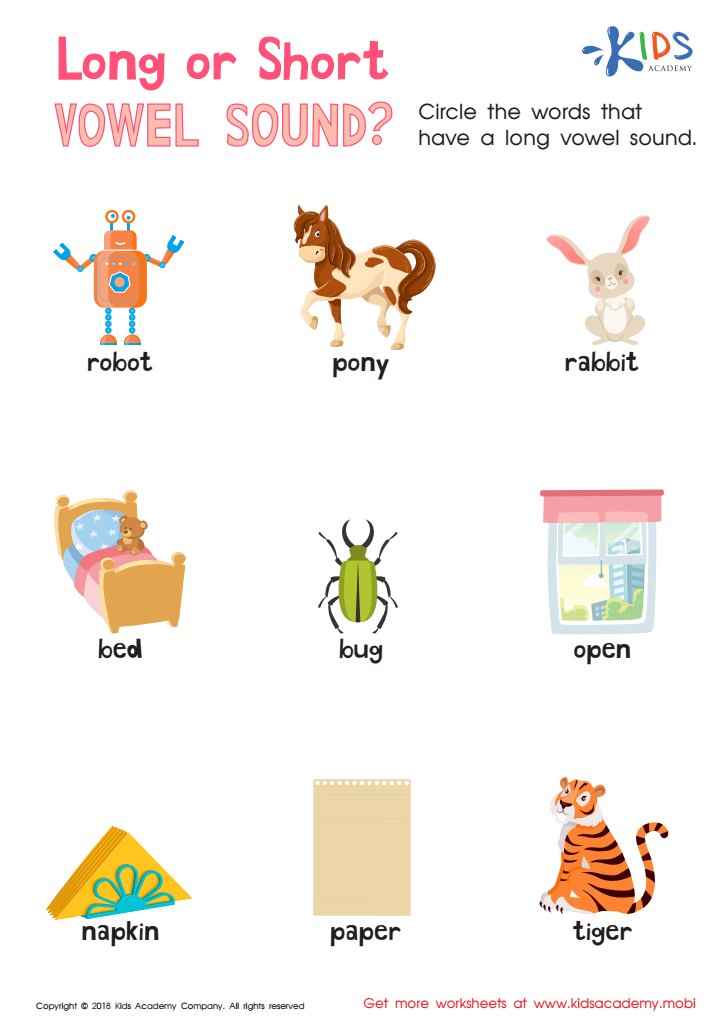
Help your kids learn the difference between long and short vowels with this worksheet. Point at each object and check their pronunciation. Ask them to identify the long and short vowel words and guide them to circle those with long vowels. Give them a thumbs up if they get it right!
Long or Short Vowel Sound? Worksheet
Worksheet
Finding Syllables in Long Vowel Words Worksheet

Finding Syllables in Long Vowel Words Worksheet

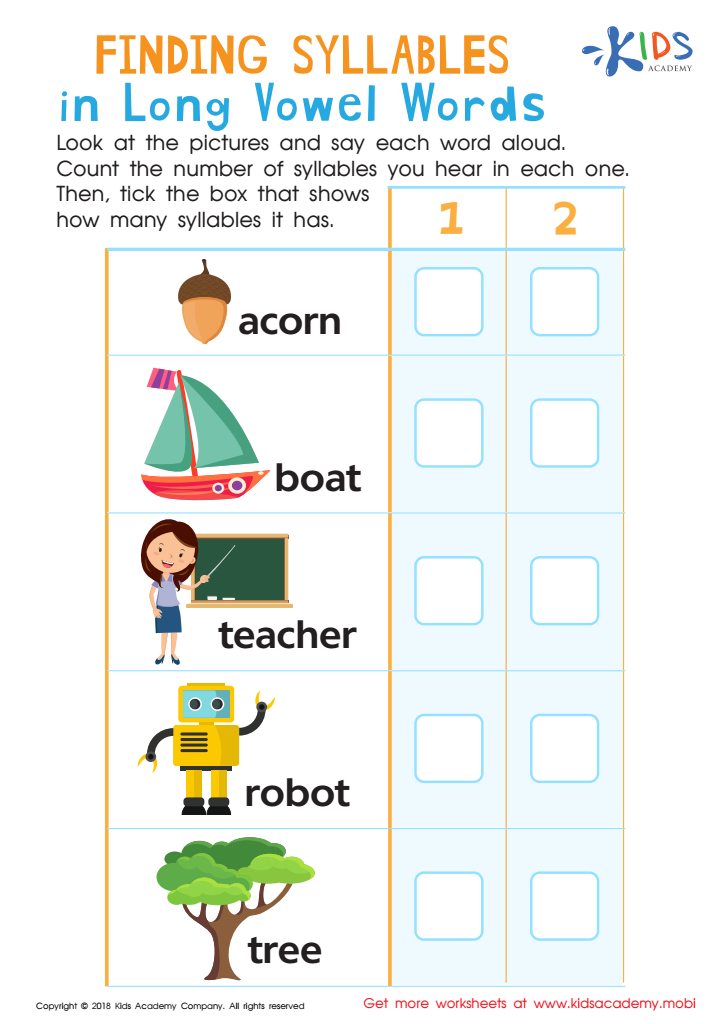
Help your kids identify objects and better count syllables in words. Look at the printout images with them and have them say each word out loud. Ask them to count syllables and tick the box with the correct number. With this worksheet, your kids will become more skilled.
Finding Syllables in Long Vowel Words Worksheet
Worksheet
Short Vowel Detective Worksheet

Short Vowel Detective Worksheet

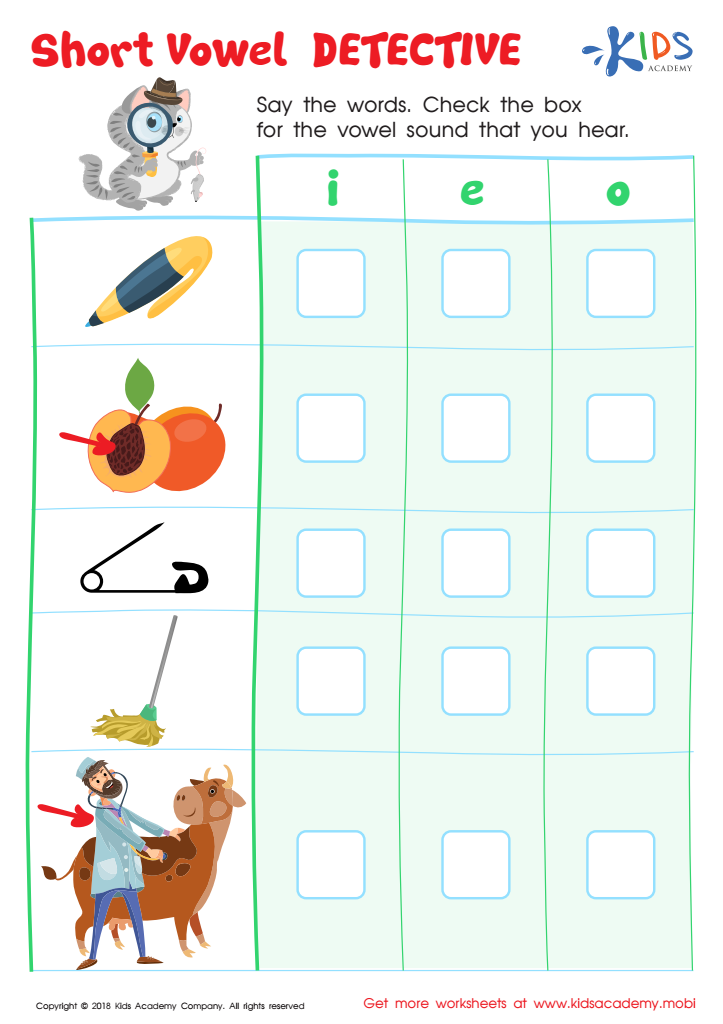
Help your kids become phonetics masters by teaching them how to tell the difference between long and short vowels. As it may be difficult for them, take a look at a worksheet together. Have them pronounce the words and check the box for the vowel sound they hear. This is a great way for them to learn quickly and easily.
Short Vowel Detective Worksheet
Worksheet
Matter: Assessment 2 Worksheet

Matter: Assessment 2 Worksheet

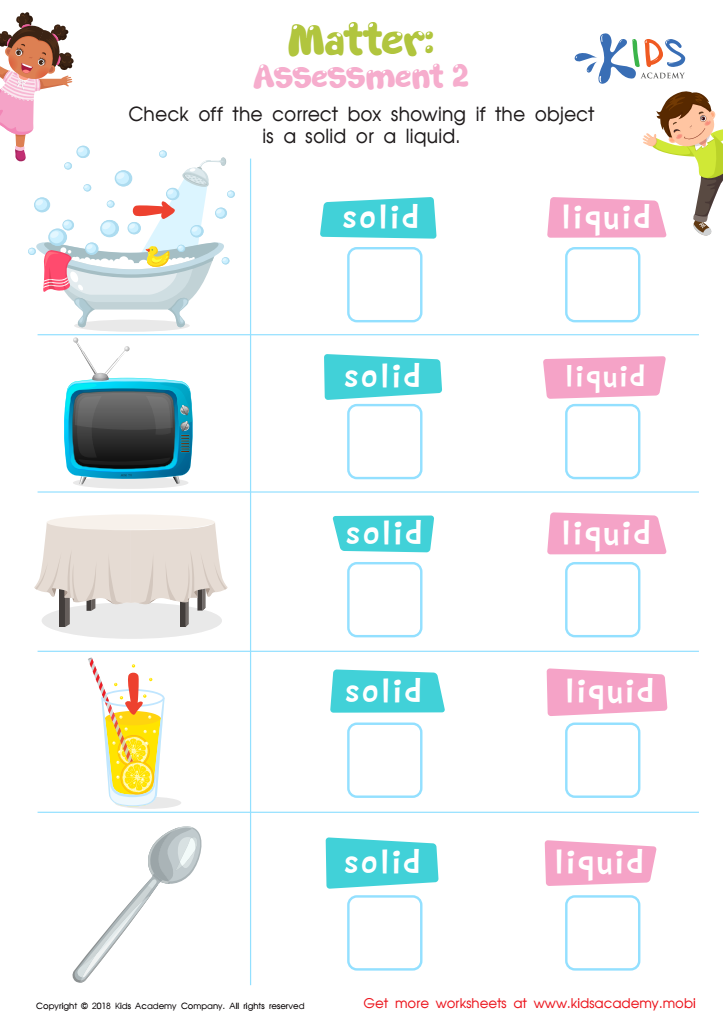
Identify the five objects in this worksheet as either solid or liquid. Ask your kids to check the correct box. Melting changes solids to liquids while freezing transforms liquids to solids.
Matter: Assessment 2 Worksheet
Worksheet
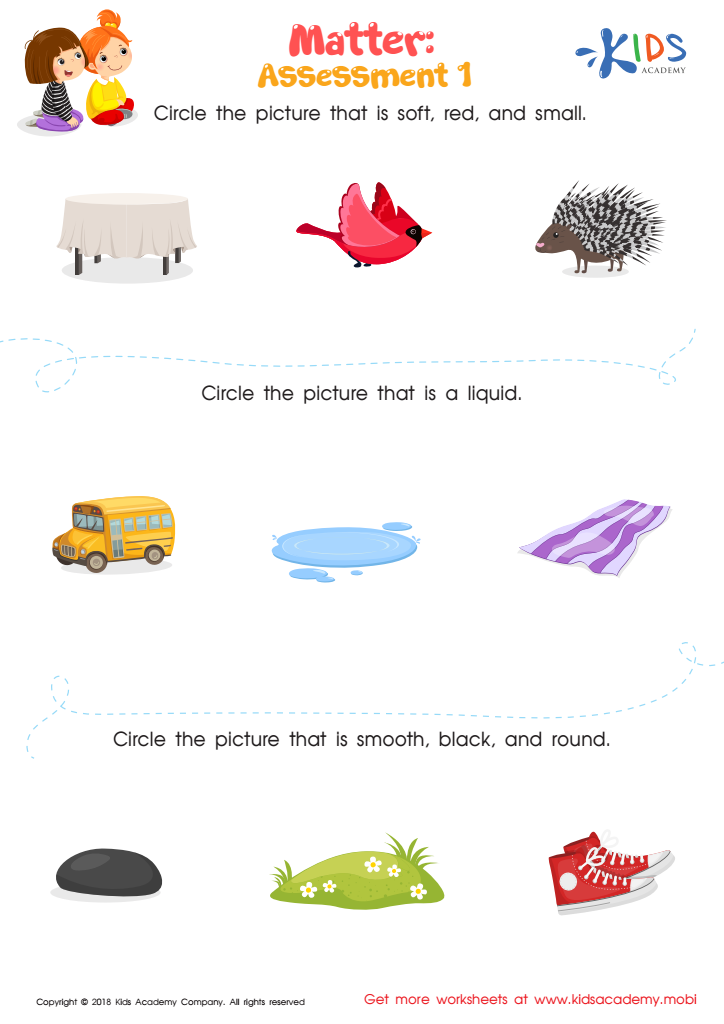
Matter: Assessment 1 Worksheet

Matter: Assessment 1 Worksheet

Have your children learn that anything that has weight and takes up space is matter. Examples include buses, tables, people, animals, and more. Use this worksheet to help them identify the objects and circle the soft, red, and small one; the liquid; and the smooth, black, and round one.
Matter: Assessment 1 Worksheet
Worksheet
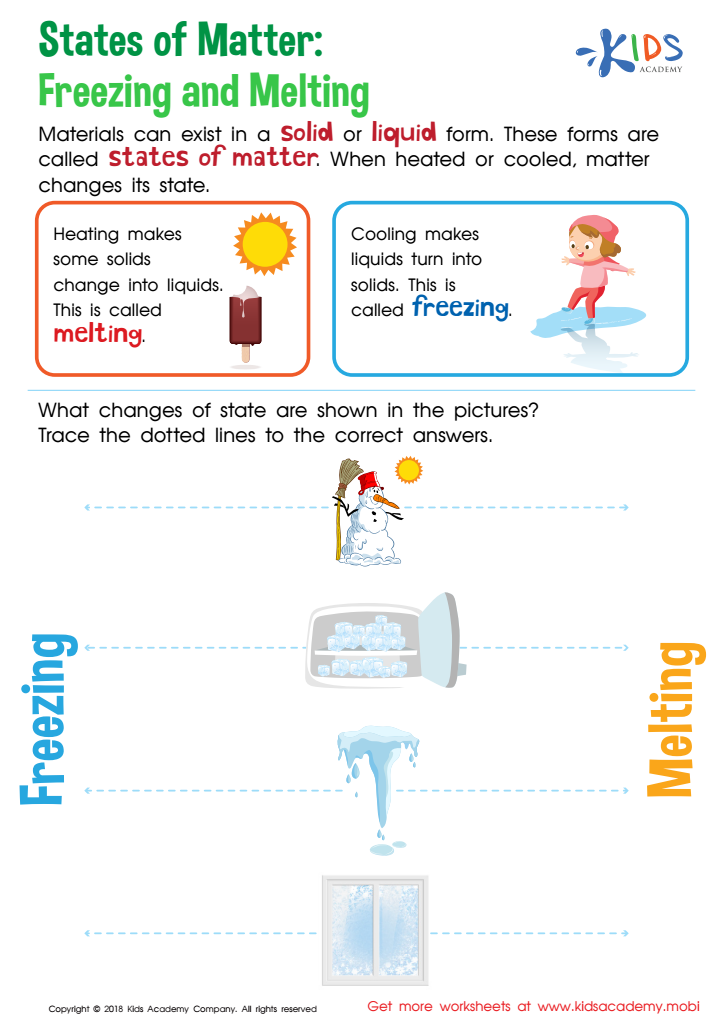
States of Matter: Freezing and Melting Worksheet

States of Matter: Freezing and Melting Worksheet

Have students look through the pics in the worksheet. Ask them what changes of state are shown, then trace the lines to the right answers. Matter can come in liquid or solid form, and changes between the two when heated or cooled (melting/freezing).
States of Matter: Freezing and Melting Worksheet
Worksheet
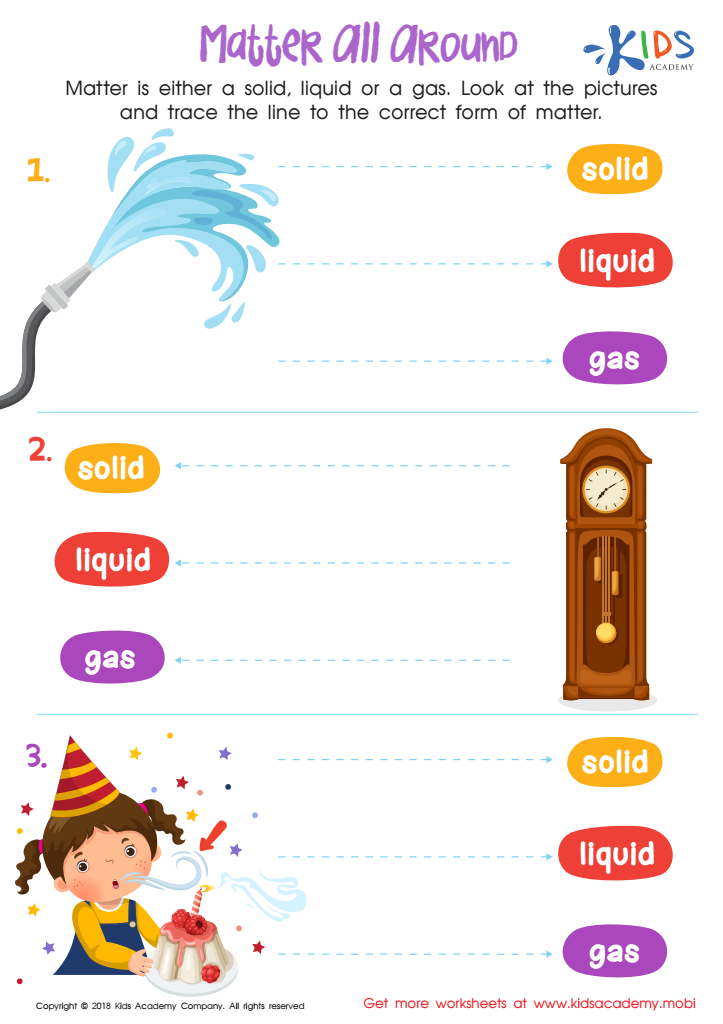
Matter all Around Worksheet

Matter all Around Worksheet

Have you taught your students about matter? Use this worksheet to help them understand that matter is anything that has weight and takes up space, either as a solid, liquid, or gas. Guide them to trace the line to the correct form of matter as they look at the pictures. This will be easy if they already know the topic, but it's also a great opportunity to teach them.
Matter all Around Worksheet
Worksheet
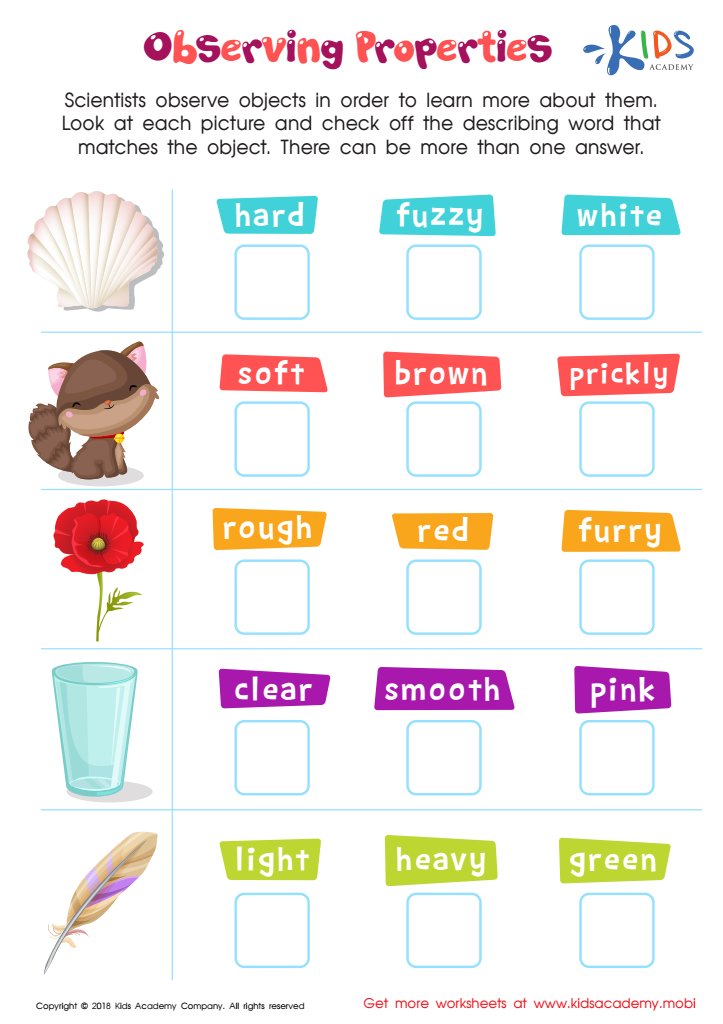
Observing Properties Worksheet

Observing Properties Worksheet

Encourage your kid's interest in science with this fun worksheet! Let them identify the five objects on the left, then choose the most accurate word from the options on the right. There might be more than one answer, so remind them to take their time observing the objects.
Observing Properties Worksheet
Worksheet
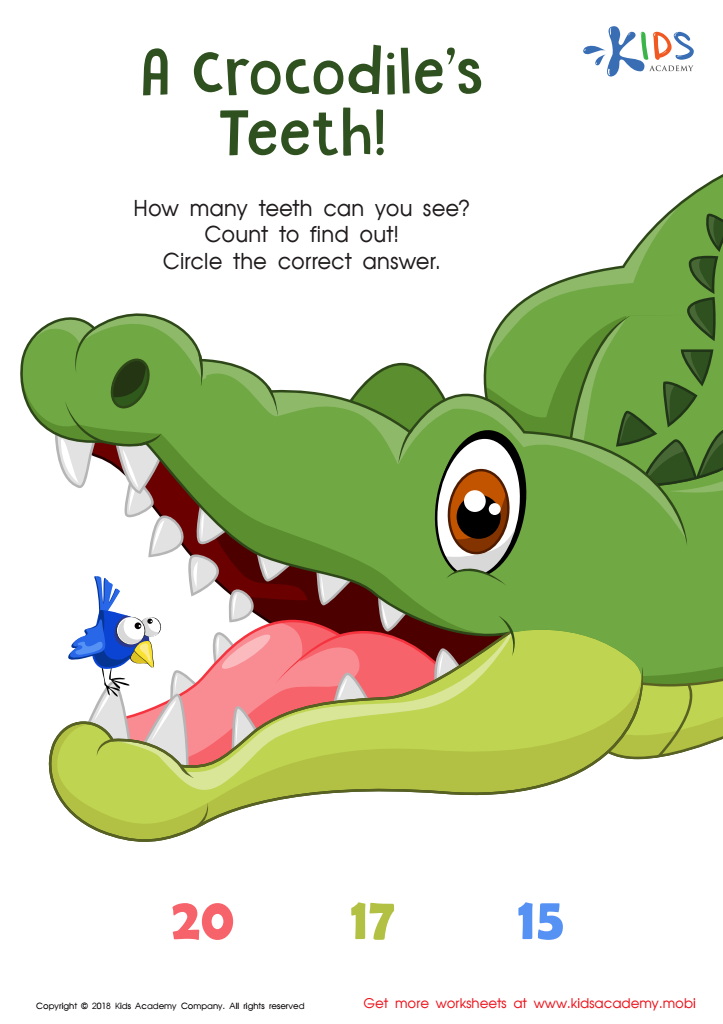
A Crocodile's Teeth Worksheet


A Crocodile's Teeth Worksheet

Show your child the animal image and ask them to identify it. If they watch animal shows, they'll likely be interested. Count the teeth together, then look at the options and help them circle the right one.
A Crocodile's Teeth Worksheet
Worksheet
Parts of the Body: Polar Body Worksheet

Parts of the Body: Polar Body Worksheet

Start by showing your kid a picture of a Polar Bear. Explain that it's a member of the bear family with white fur and a large size. Use this worksheet to teach them more about the animal. Go through the questions together and have them draw a circle around the correct number for each one.
Parts of the Body: Polar Body Worksheet
Worksheet
Light Source Counting Worksheet

Light Source Counting Worksheet

Help your students properly understand and interpret word problems with this worksheet. Read each problem aloud and have them check the correct answers. Pictures are included to aid in problem-solving. If they're still struggling, be sure to provide guidance and support.
Light Source Counting Worksheet
Worksheet


Understanding the concept of "normal" for children aged 3-7 is vital for both parents and teachers as it lays the groundwork for healthy development. At this early stage, children are rapidly developing cognitive, emotional, and social skills. Recognizing what is considered typical behavior and development allows parents and educators to provide appropriate guidance and support.

It helps in identifying milestones—both when children are meeting them and when there may be delays that require attention. Awareness of normal developmental benchmarks fosters a nurturing environment, enabling caregivers to encourage positive growth while also alleviating unnecessary concerns.

Additionally, understanding "normal" promotes empathy and inclusivity in educational settings, encouraging respectful interactions among peers. This knowledge helps educators tailor their teaching methods to meet diverse learning needs, ensuring that children feel valued and understood.

Moreover, focusing on normal development assists in creating age-appropriate educational experiences that Foster curiosity and motivation. Ultimately, being informed about what is normal empowers parents and teachers to cultivate a supportive atmosphere where children can thrive both academically and socially, laying a strong foundation for future learning and development.