Normal Missing Letters Worksheets for Ages 3-7
4 filtered results
-
From - To
Discover our engaging Normal Missing Letters Worksheets designed for children aged 3 to 7! These interactive worksheets promote early literacy skills by helping young learners identify and fill in missing letters in various words. Tailored to different levels, these worksheets support letter recognition, phonics, and spelling through fun activities. Perfect for parents and educators alike, our resources are suitable for classroom settings or at-home learning. Encourage creativity and build confidence in your child's reading abilities as they solve these letter puzzles. Download and print our worksheets today to inspire your little one's love for learning and language!
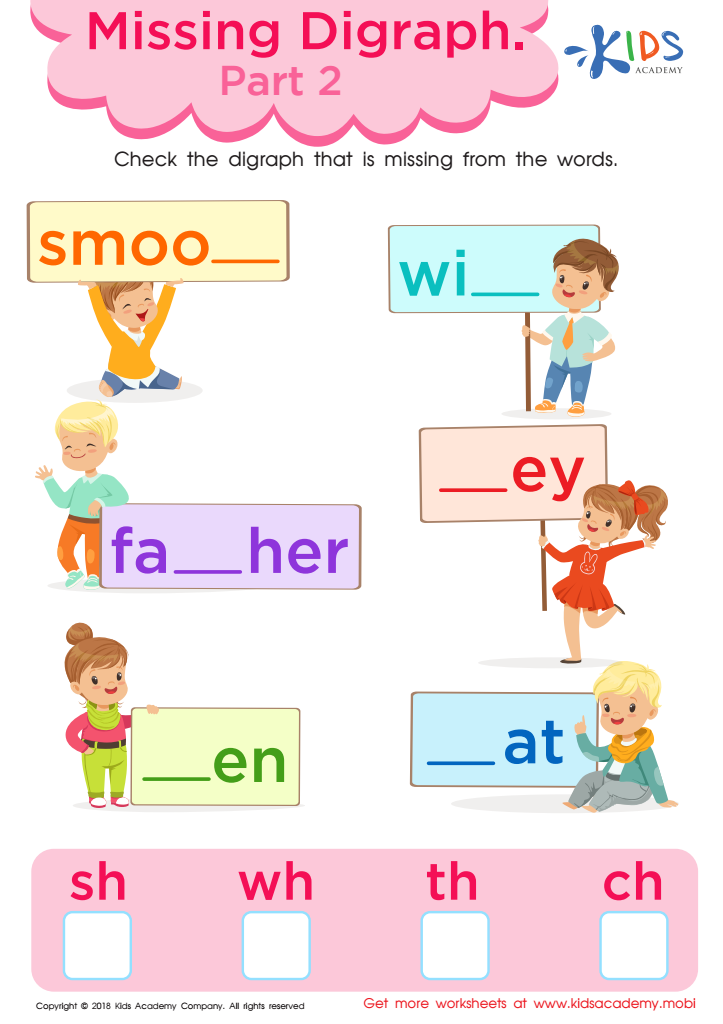
Missing Digraph: Part 2 Worksheet
 Assign to My Students
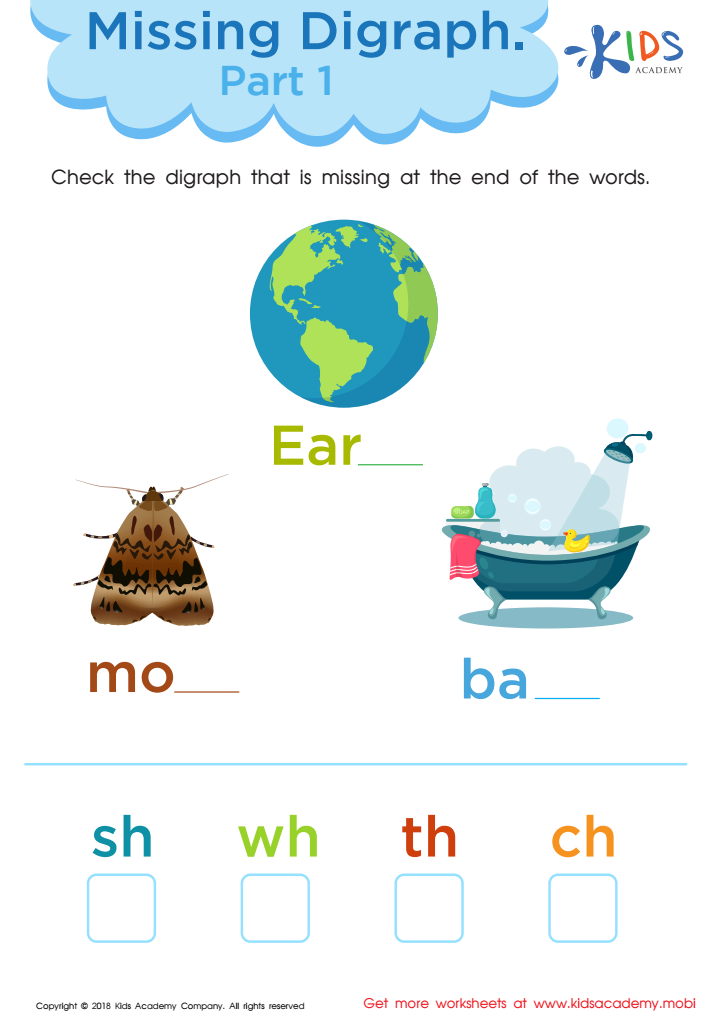
Missing Digraph: Part 1 Worksheet
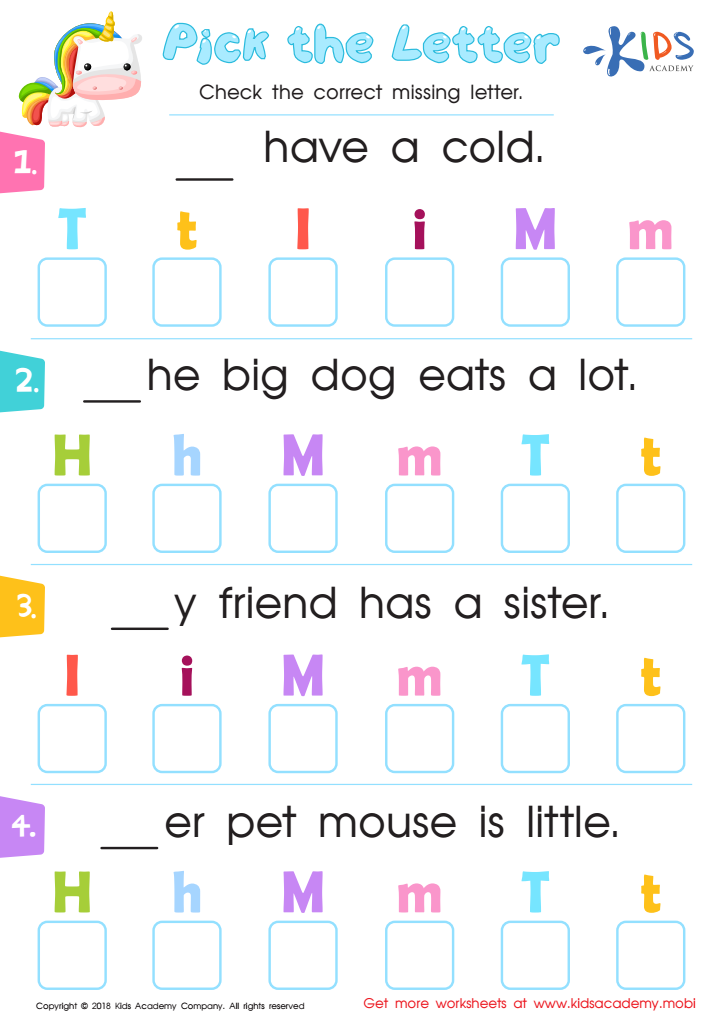
Pick the Letter Worksheet
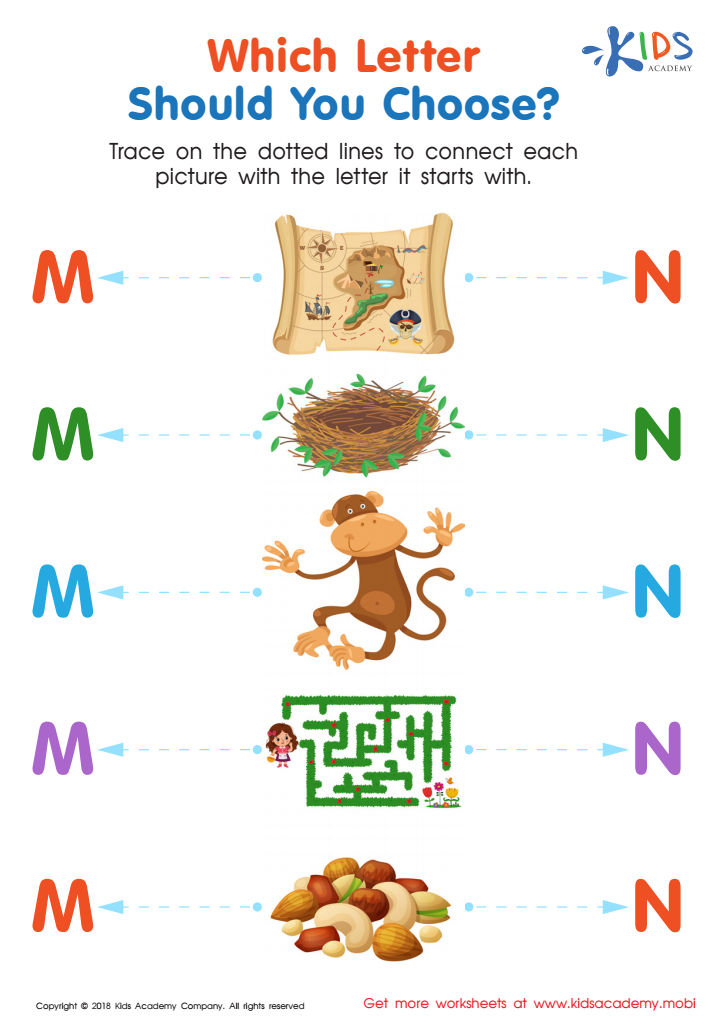
Which Letter Should you Choose? Worksheet



Normal Missing Letters is a crucial developmental activity for children aged 3-7 as it fosters foundational literacy skills. During this age, children are in a critical stage of language acquisition, where early exposure to letters, sounds, and words sets the groundwork for reading and writing. Missing letters exercises engage children in recognizing patterns in language, helping to enhance their phonemic awareness—the ability to hear, identify, and manipulate individual sounds in spoken words.
These activities can motivate young learners by incorporating play into learning. Using visual, auditory, and kinesthetic approaches creates a relaxed environment that encourages experimentation with letters. Furthermore, Missing Letters tasks stimulate cognitive skills, promoting attention to detail as children refine their ability to focus and dissect words.
For parents and teachers, incorporating Normal Missing Letters practice means providing children with the tools they need to become confident readers and writers. Ultimately, this engagement not only supports academic advancement but also nurtures a love for literacy that can last a lifetime. Moreover, early intervention in addressing missing letters can help identify any potential learning difficulties, paving the way for targeted support and achieving literacy milestones. By prioritizing Normal Missing Letters activities, caregivers can significantly influence a child's educational journey.







