Normal Multiplication Worksheets for Ages 3-8 - Page 2
34 filtered results
-
From - To
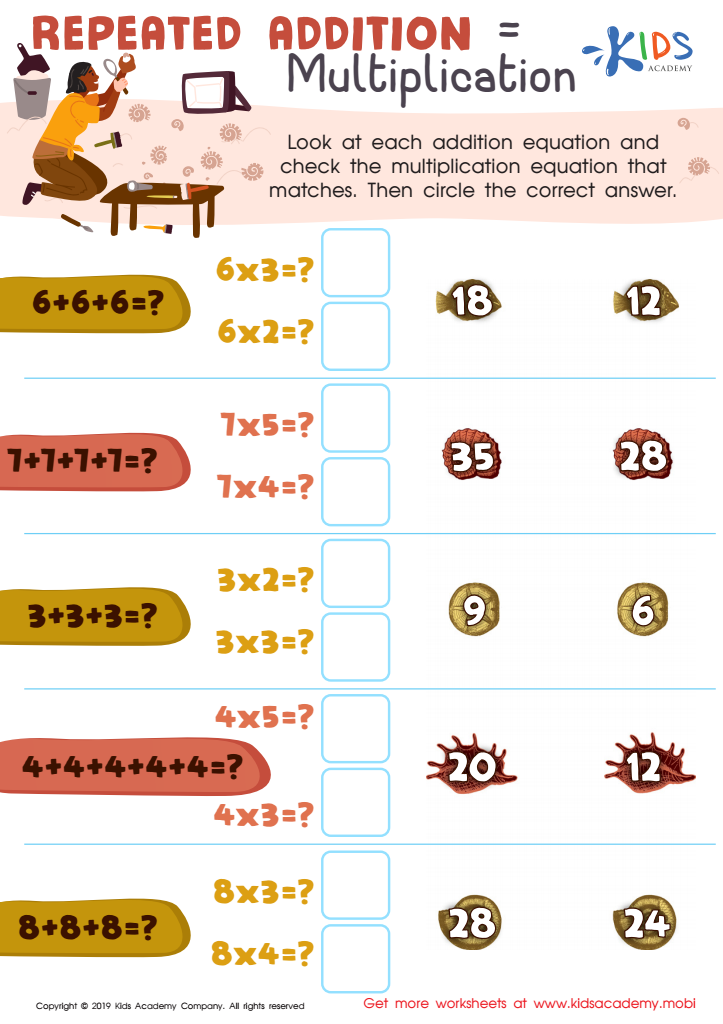
Repeated Addition = Multiplication Worksheet
 Assign to My Students
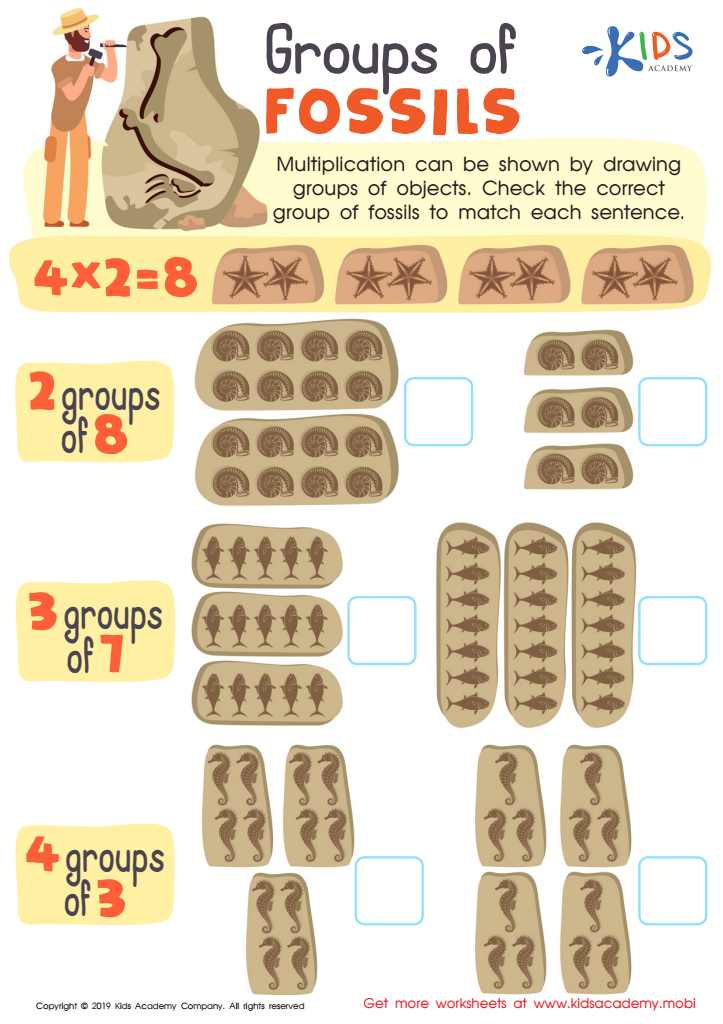
Groups of Fossils Worksheet
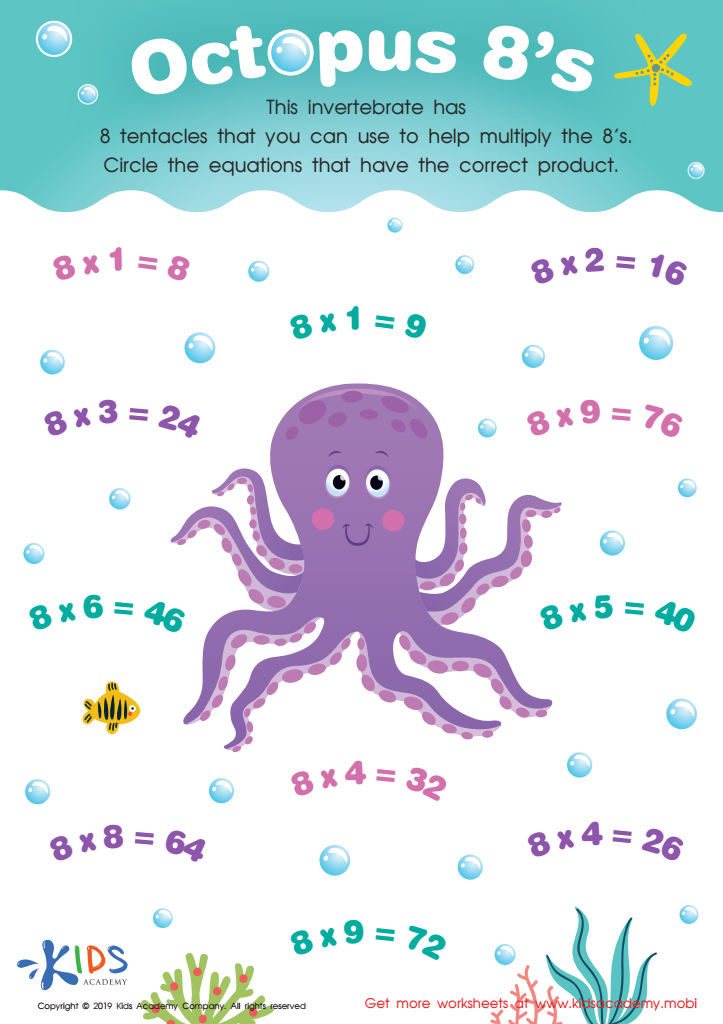
Octopus 8’s Worksheet
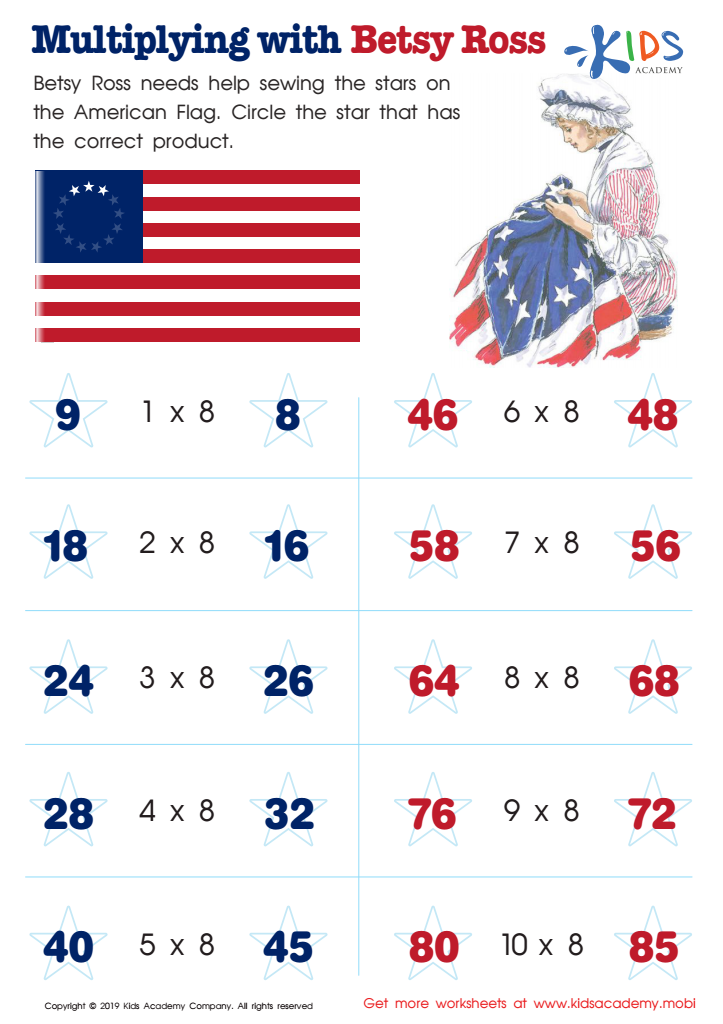
Multiplying with Betsy Ross Worksheet
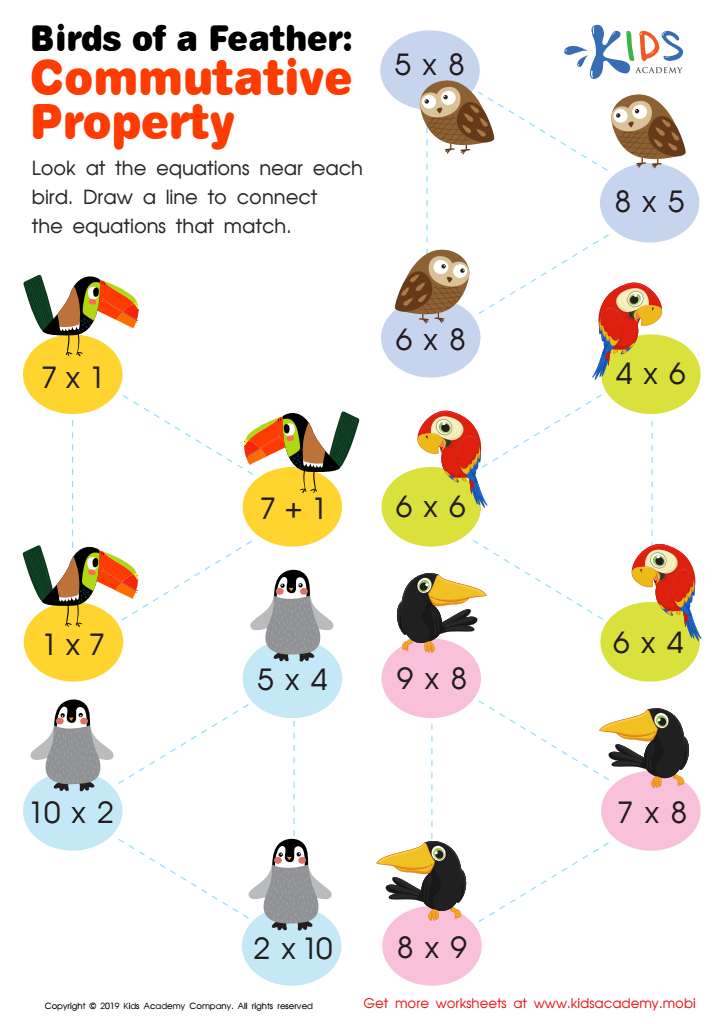
Birds of a Feather: Commutative Property Worksheet
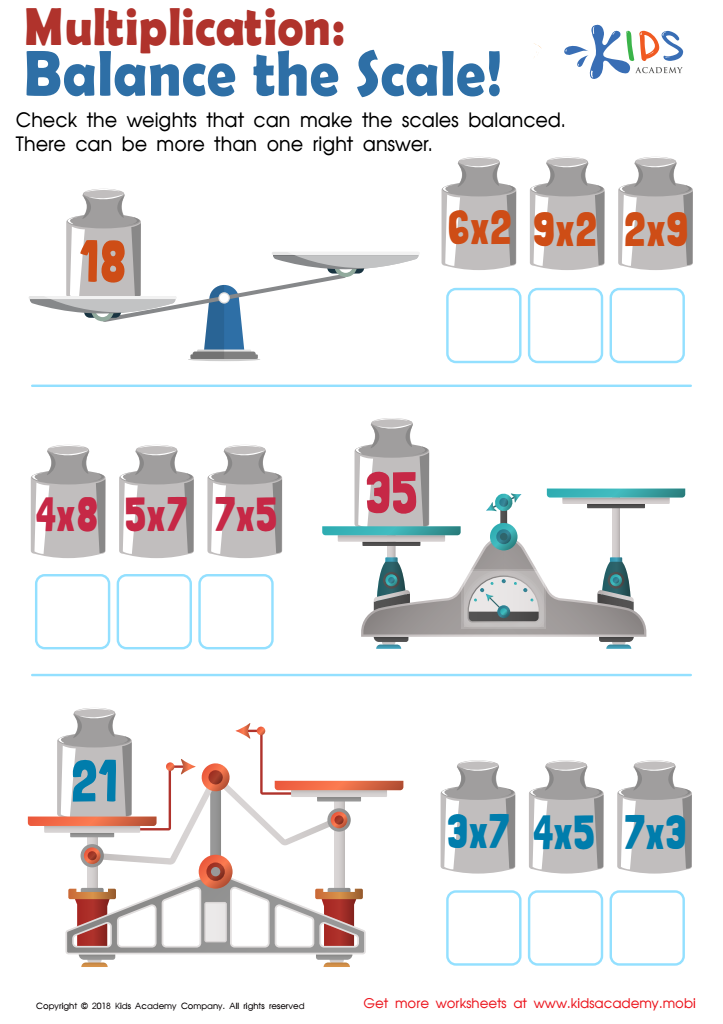
Balance the Scales Multiplication Worksheet
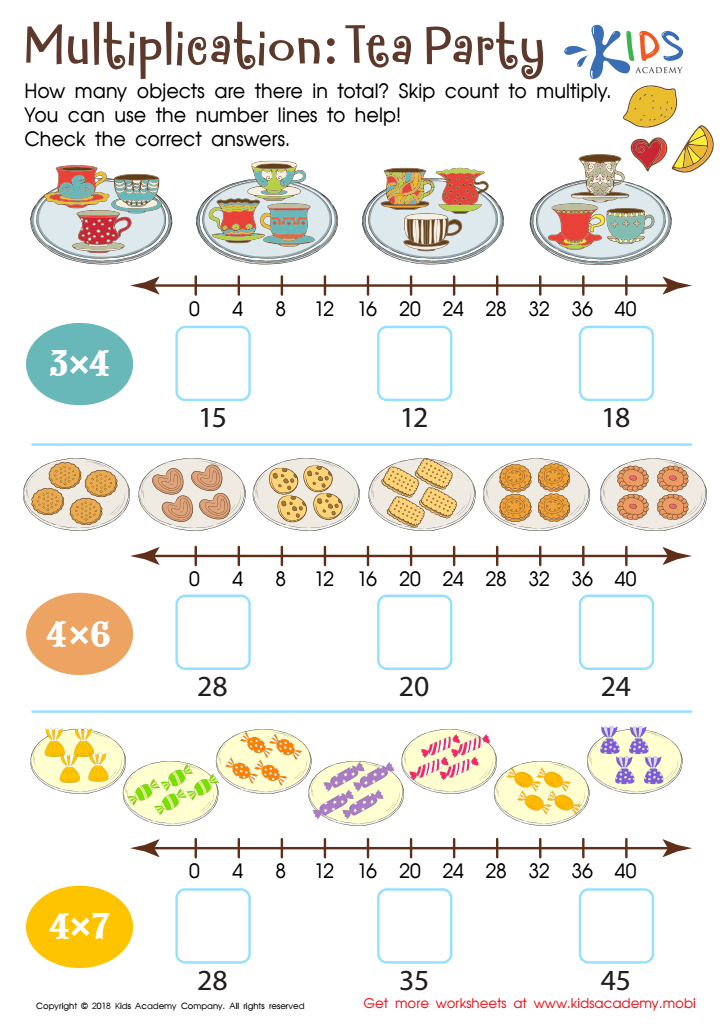
3rd Grade Math Worksheet Multiplication
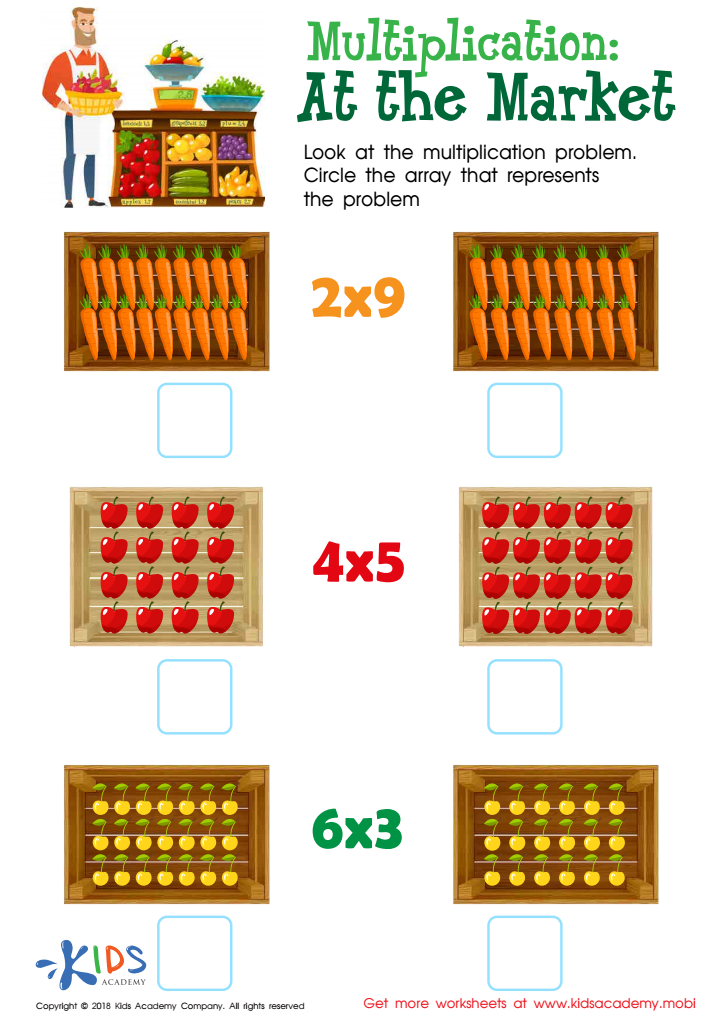
At the Market Worksheet
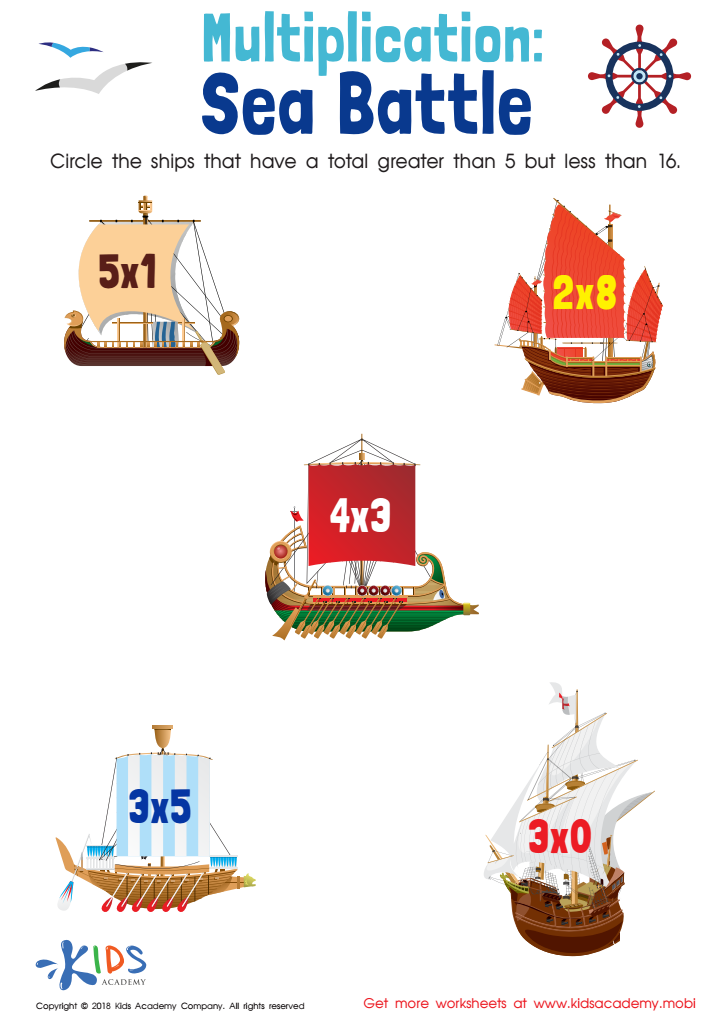
Sea Battle: Multiplication Worksheet
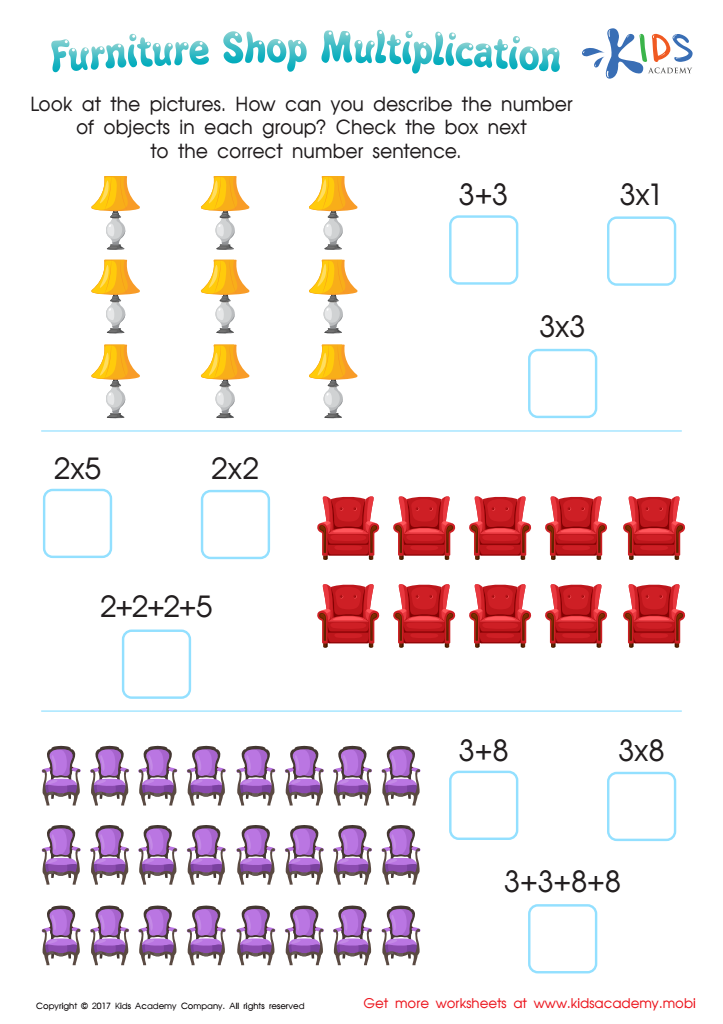
Furniture Shop Worksheet








Normal multiplication is a fundamental mathematical concept that forms the building blocks for advanced arithmetic skills. For children aged 3-8, developing a strong foundation in multiplication fosters confidence in their mathematical abilities, impacting their overall academic performance. Understanding multiplication goes beyond rote learning; it encourages critical thinking, problem-solving, and logical reasoning.
Engaging with multiplication at an early age allows children to grasp the concept of groups and repeated addition, which helps with their comprehension of more advanced math concepts later on, such as division and fractions. Furthermore, early exposure to multiplication cultivates a positive attitude toward mathematics, reducing the anxiety many students feel as they progress in their education.
Parents and teachers play a crucial role in supporting children’s understanding of this concept. By incorporating fun activities, games, and relatable examples into their teaching, adults can make learning multiplication enjoyable and relevant. This not only engages young learners but also ensures they see the practical applications of math in their daily lives. Ultimately, caring about normal multiplication sets the stage for lifelong learning and success in mathematics, shaping capable, confident individuals ready to tackle future academic challenges.








