Normal Tracing Shapes Worksheets for Ages 3-8
10 filtered results
-
From - To
Introducing Normal Tracing Shapes Worksheets for Ages 3-8 – the perfect tools to ignite your child’s mathematical journey. Our expertly designed, age-appropriate worksheets offer a fun, interactive approach to learning shapes, enhancing fine motor skills, and fostering early cognitive development. Each worksheet presents engaging activities that guide children through tracing basic shapes, honing their ability to recognize and draw them with ease. Ideal for both classroom and home use, these printable resources support young learners in building a strong foundation in geometry while boosting their confidence and creativity. Explore our collection today and watch your child’s skills flourish!
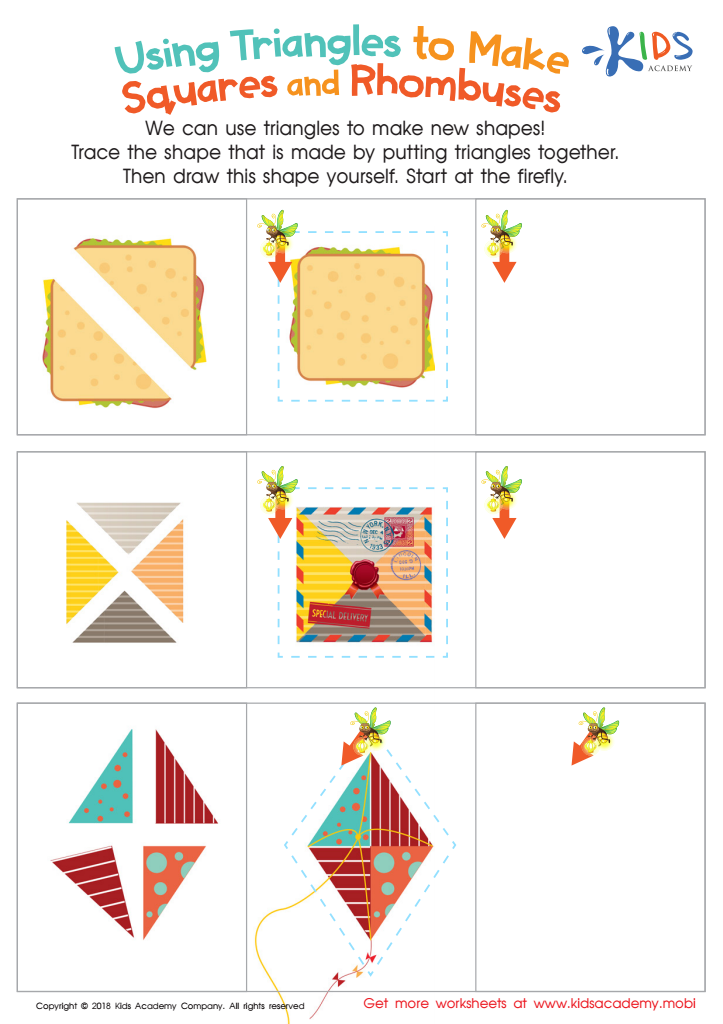
Using Triangles to Make Squares and Rhombuses Worksheet
 Assign to My Students
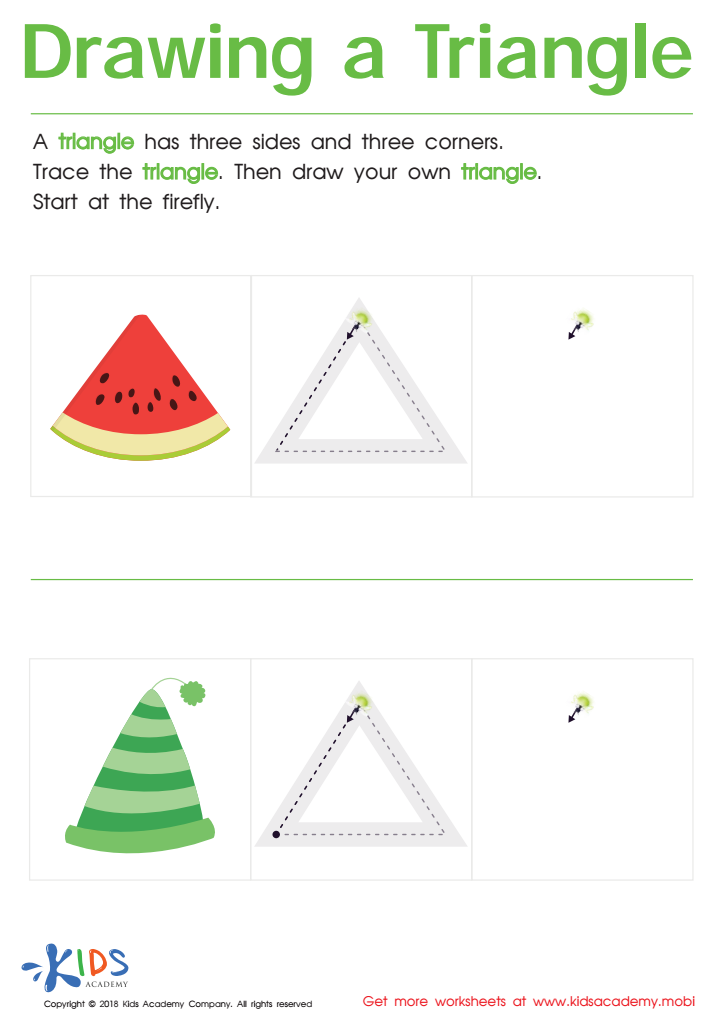
Drawing a Triangle Worksheet
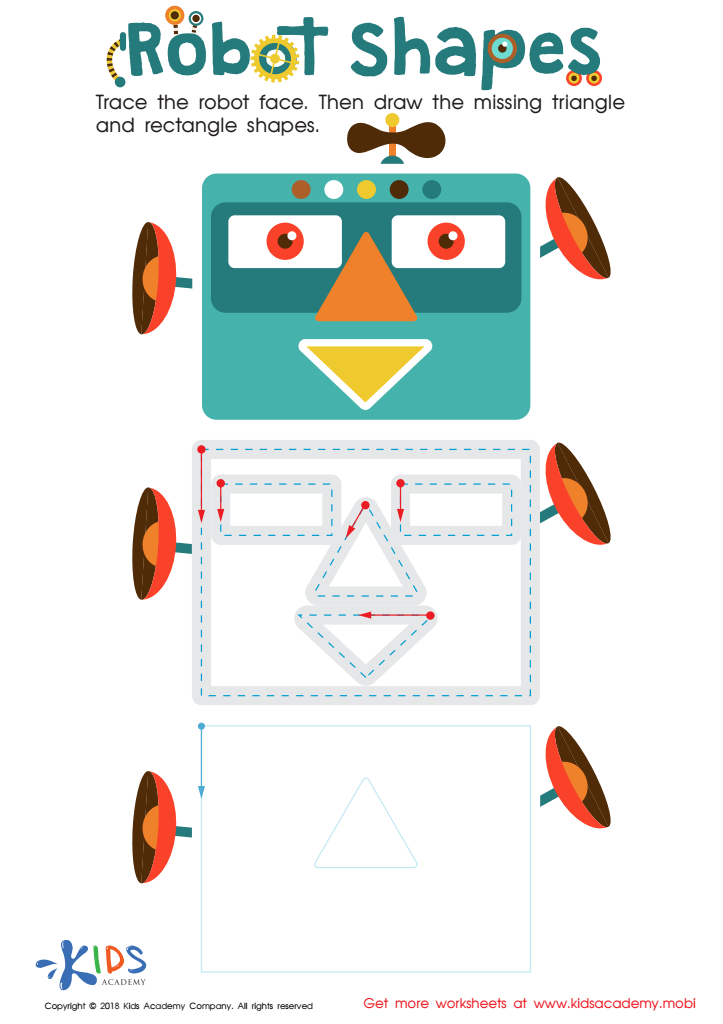
Robot Shapes Worksheet
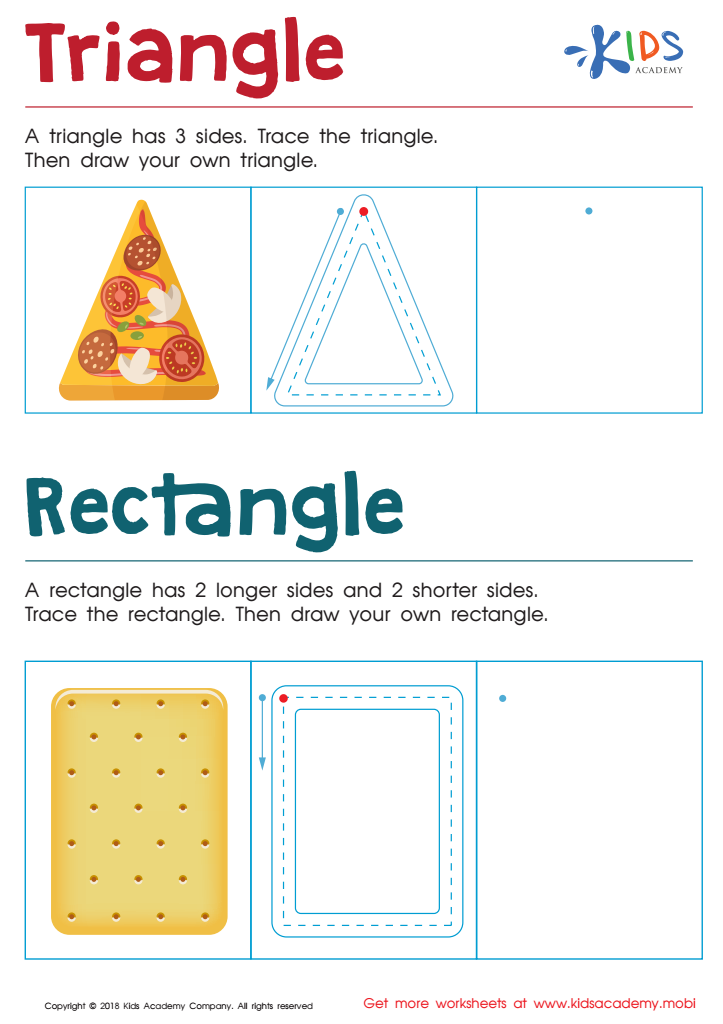
Triangle Rectangle Worksheet
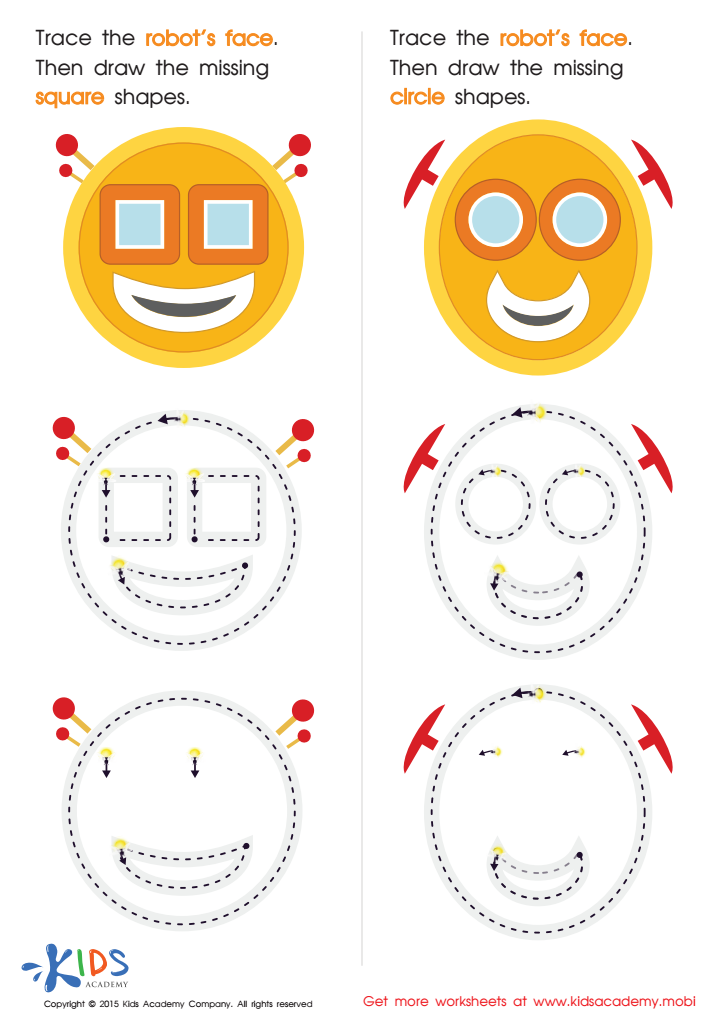
Practicing to Draw Circles And Squares Printable
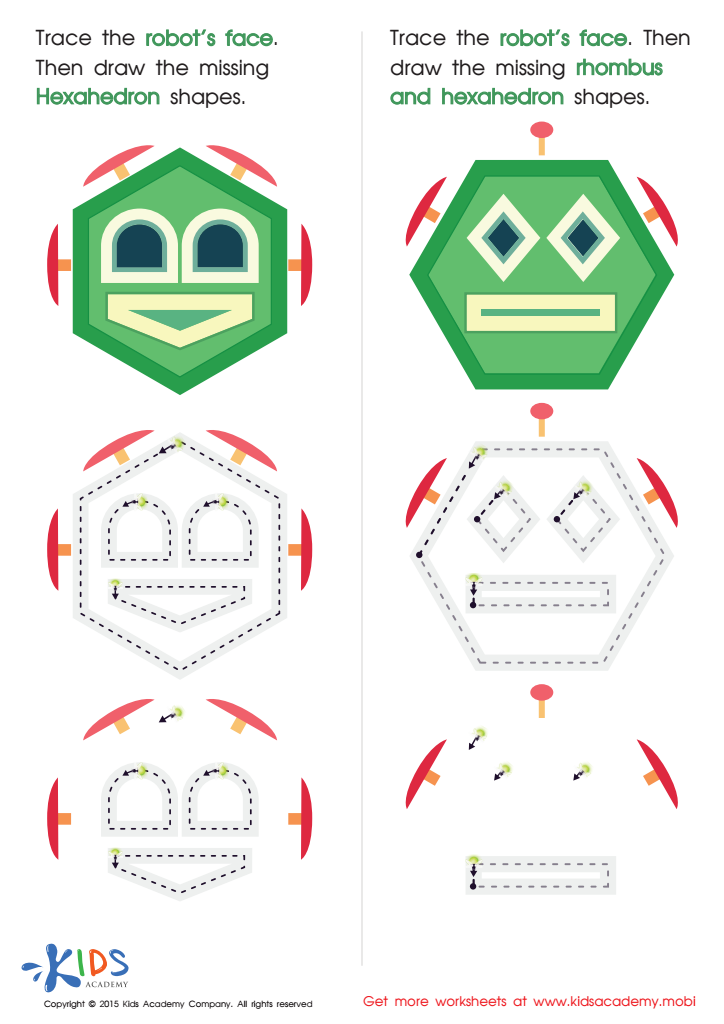
Practice Drawing Hexahedrons And a Rhombus Worksheet
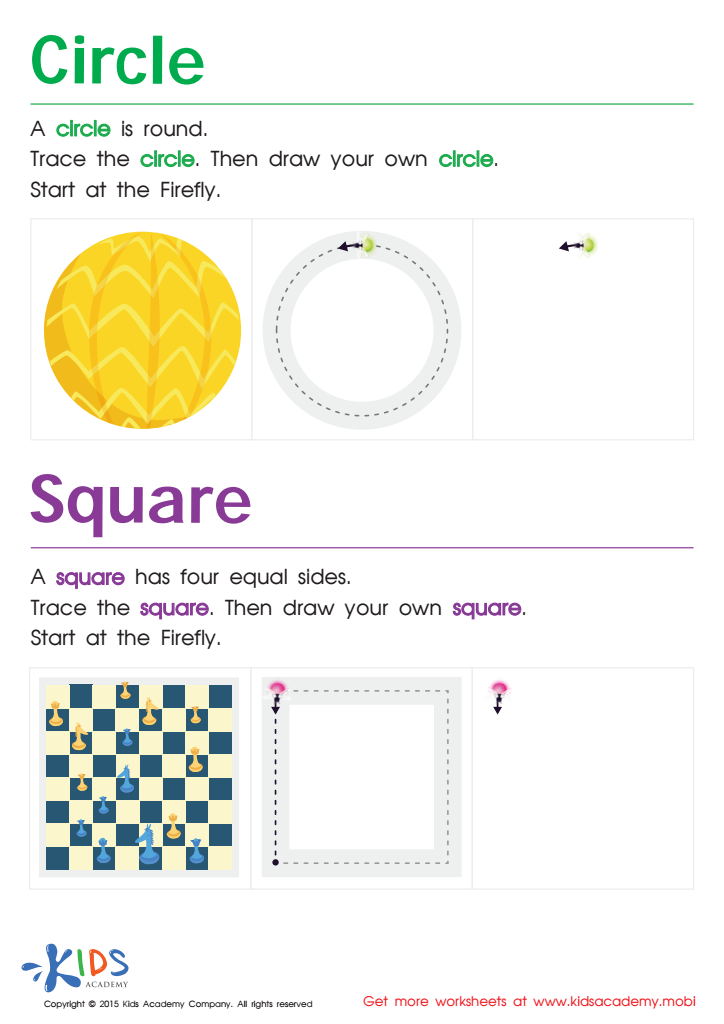
Trace And Draw a Circle And a Square Worksheet
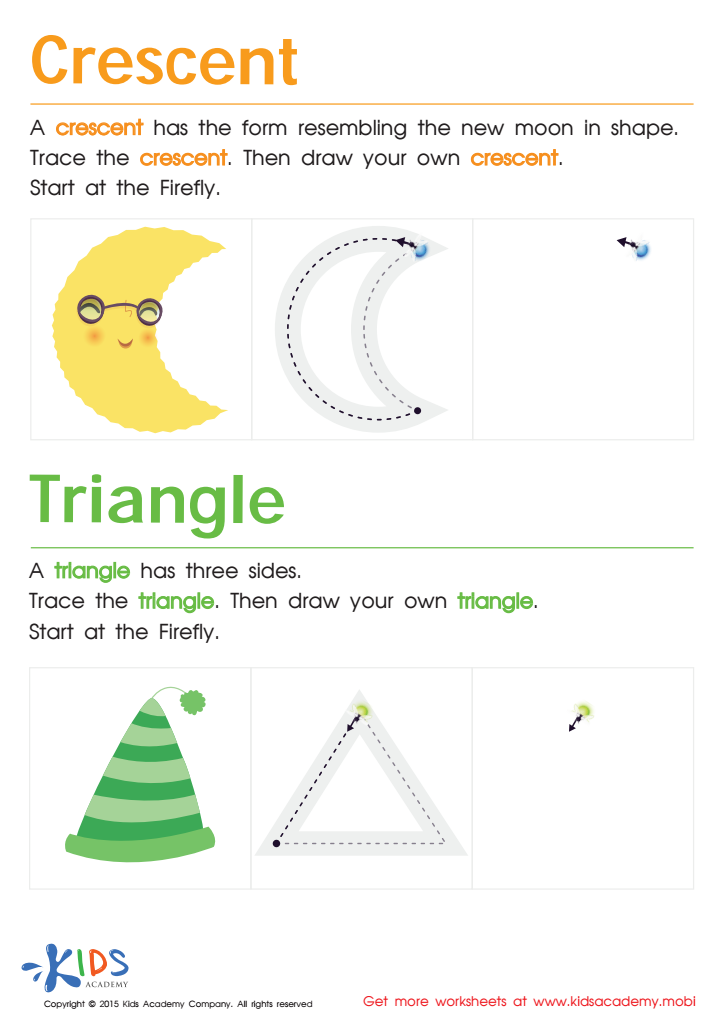
Learning to Draw Crescents And Triangles Worksheet
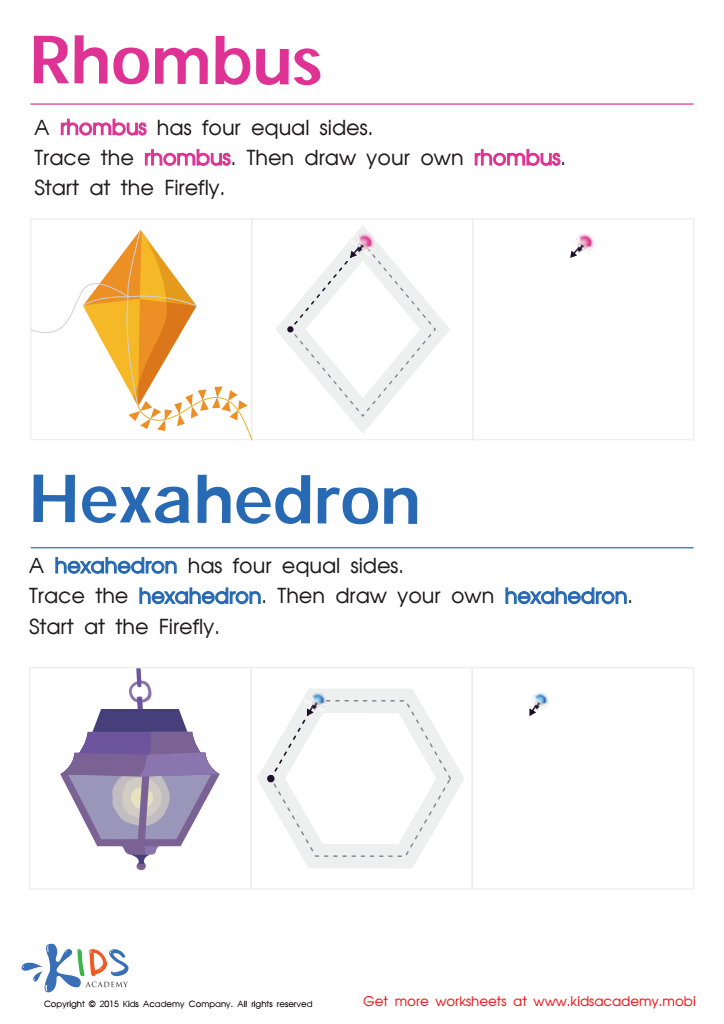
Draw a Rhombus And a Hexahedron Printable








Normal tracing shapes are crucial for the developmental needs of children aged 3-8, residing as pivotal educational tools in both home and classroom settings. Parents and teachers should prioritize these activities due to several compelling reasons:
First, tracing shapes considerably enhances fine motor skills and hand-eye coordination. As children practice tracing, they control finger and hand movements, fostering muscle development essential for future writing tasks. This empowerment leads to a smoother transition into writing alphabets, numbers, and comprehensive sentences later on in their educational journey.
Secondly, tracing shapes assists in cognitive development. Children engage in recognizing, differentiating, and memorizing shapes, forming a foundational understanding of geometry and spatial awareness. This educational process is intrinsically linked to early math concepts which prove essential in problem-solving and logical thinking.
Moreover, shape tracing supports improved focus and concentration. The focused task encourages sustained attention, a beneficial trait as children progress towards complex academic responsibilities. It also creates an avenue for creative expression. Kids often move from tracing basic shapes to transforming these shapes into imaginative artwork, enriching their creativity and boosting self-esteem.
Thus, incorporating regular shape-tracing activities cultivates a myriad of developmental benefits, making it an indispensable tool for nurturing well-rounded, capable, and confident young learners.