Filters

1336 filtered results

Clear all filters
Favorites
With answer key
Interactive

1336 filtered results

Difficulty Level

Grade


Check out this FREE Trial Lesson for age 4-7!

My Family

Favorites
With answer key
Interactive
  • 4-7
  • Interactive
  • Normal
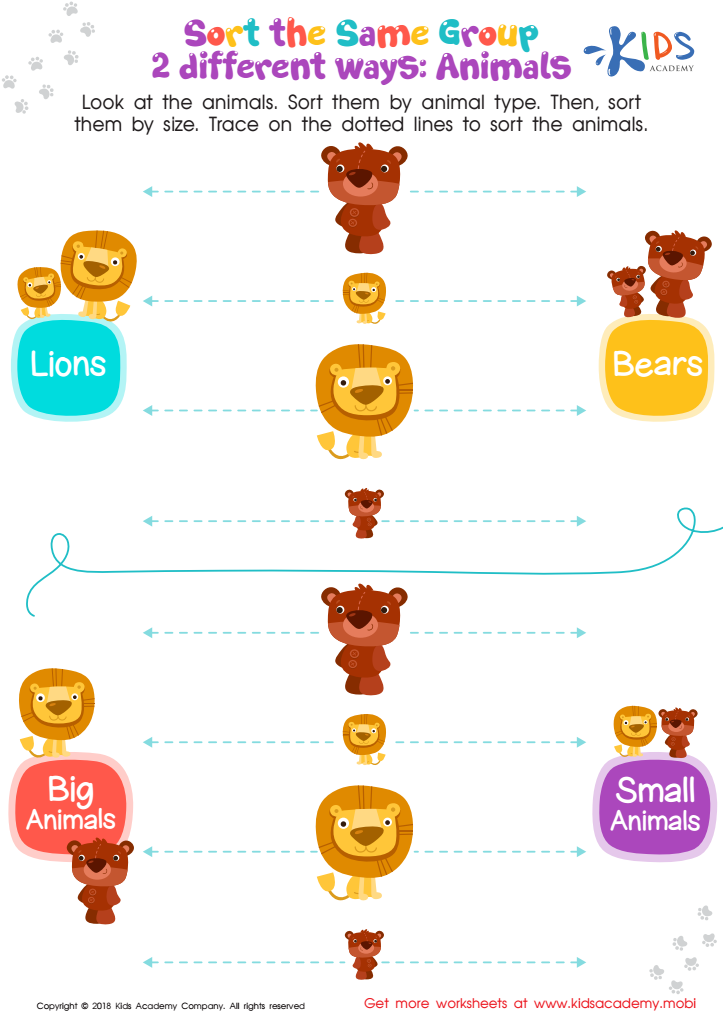
Sort the Same Group 2 Different Ways: Animals Worksheet

Sort the Same Group 2 Different Ways: Animals Worksheet

Look at the animals with your child. Ask them to name them, then sort them by type (e.g. lions and bears). Next, help them sort by size, tracing the dotted lines. This will teach them sorting skills.
Sort the Same Group 2 Different Ways: Animals Worksheet
Worksheet
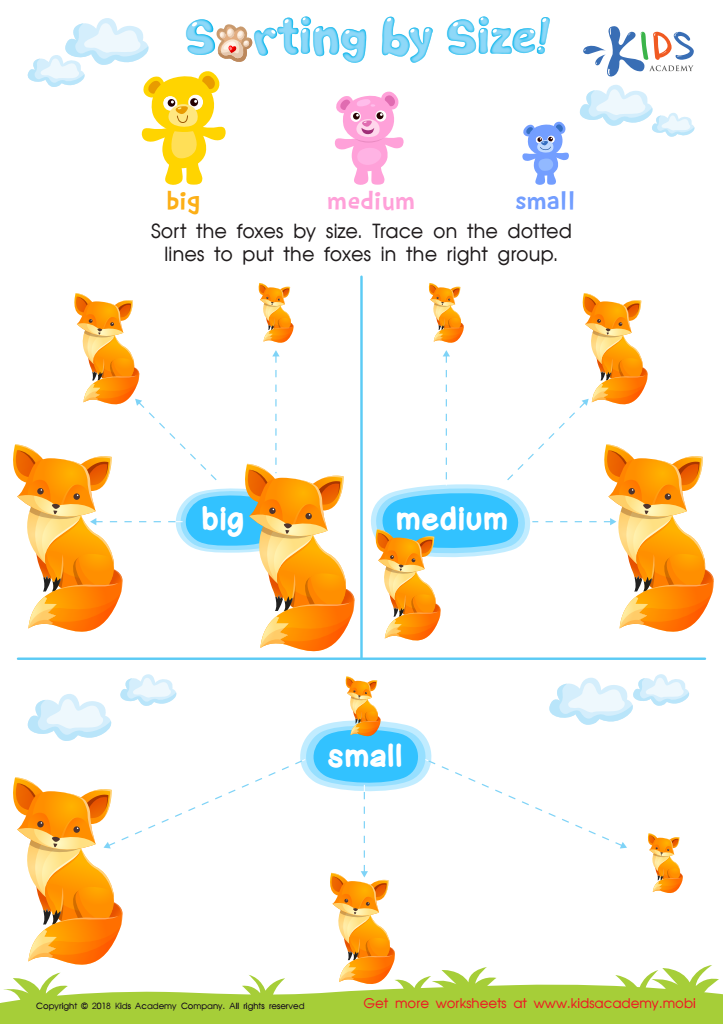
Sorting by Size Worksheet

Sorting by Size Worksheet

This bright printout lets your students sort the foxes by size. Ask them to identify objects, then trace the dotted lines to put the foxes in the right group. Clear and easy instructions make this a fun and colorful exercise for your young ones.
Sorting by Size Worksheet
Worksheet
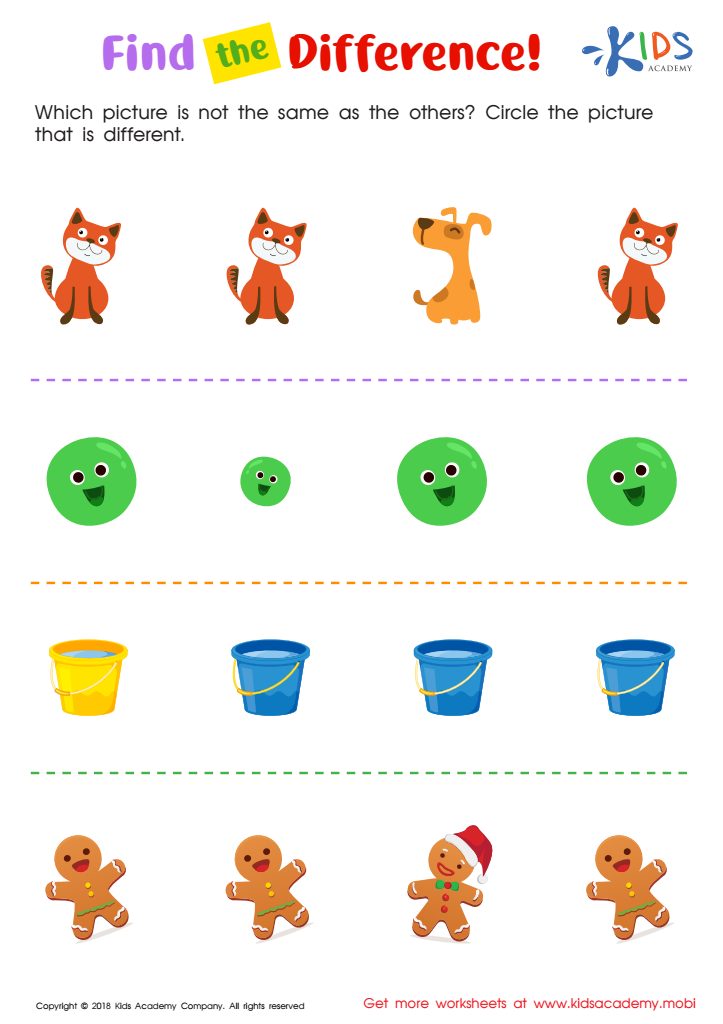
Find the Difference Worksheet

Find the Difference Worksheet

Test your kids' skills with this worksheet! Ask them to look at the pictures in each row and tell you what the objects are. Help them identify the odd item in each row by circling it. See if they can spot the difference!
Find the Difference Worksheet
Worksheet
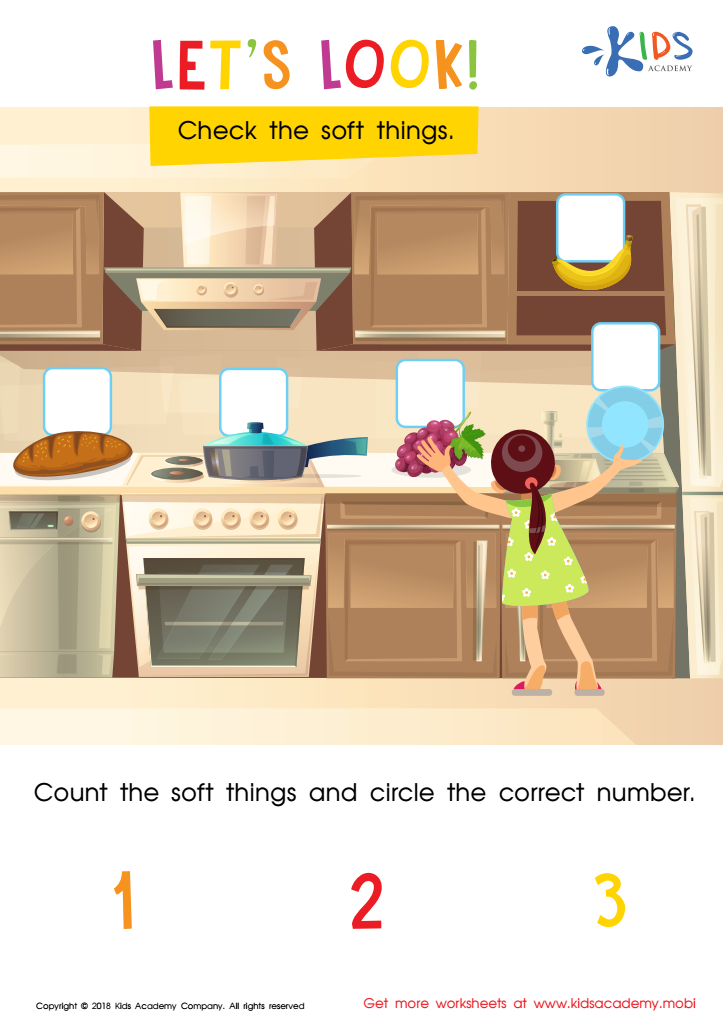
Let's Look! Assessment Worksheet

Let's Look! Assessment Worksheet

Have your child look at the picture in the printout and name the objects. Ask which ones are soft and hard and have them count the soft objects and circle the number. This worksheet will engage your child's thinking and teach them about texture.
Let's Look! Assessment Worksheet
Worksheet
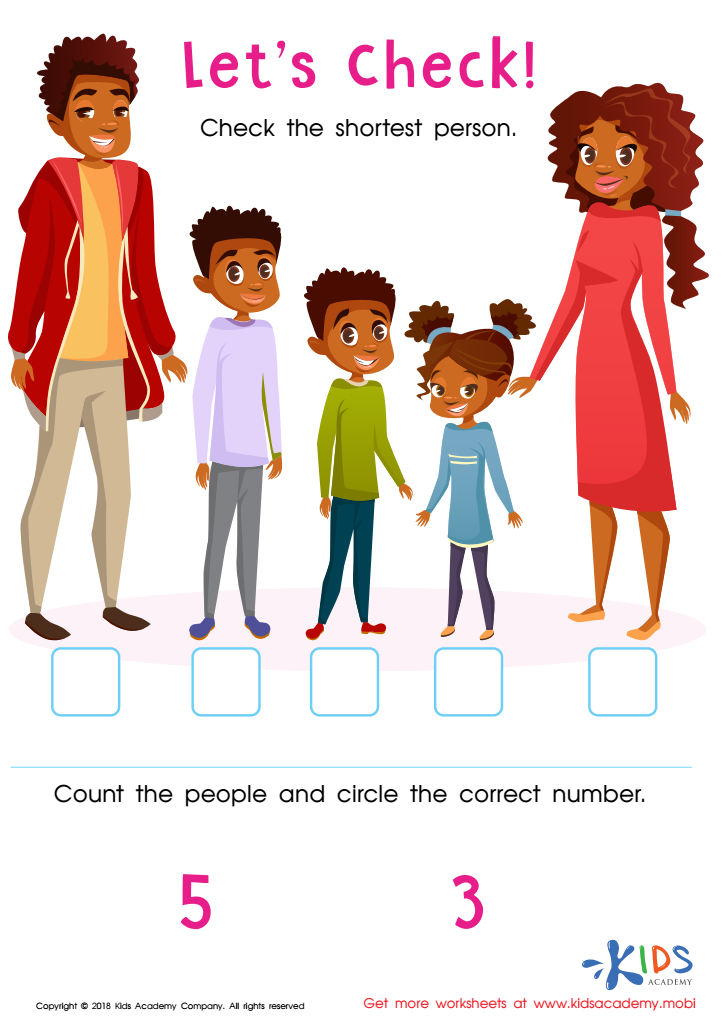
Let's Check! Assessment Worksheet

Let's Check! Assessment Worksheet

Check your child's understanding of height with this worksheet. Ask them to sort the objects in order of size and identify the tallest and shortest member of the family in the picture. See if they can correctly arrange the items from tallest to shortest.
Let's Check! Assessment Worksheet
Worksheet
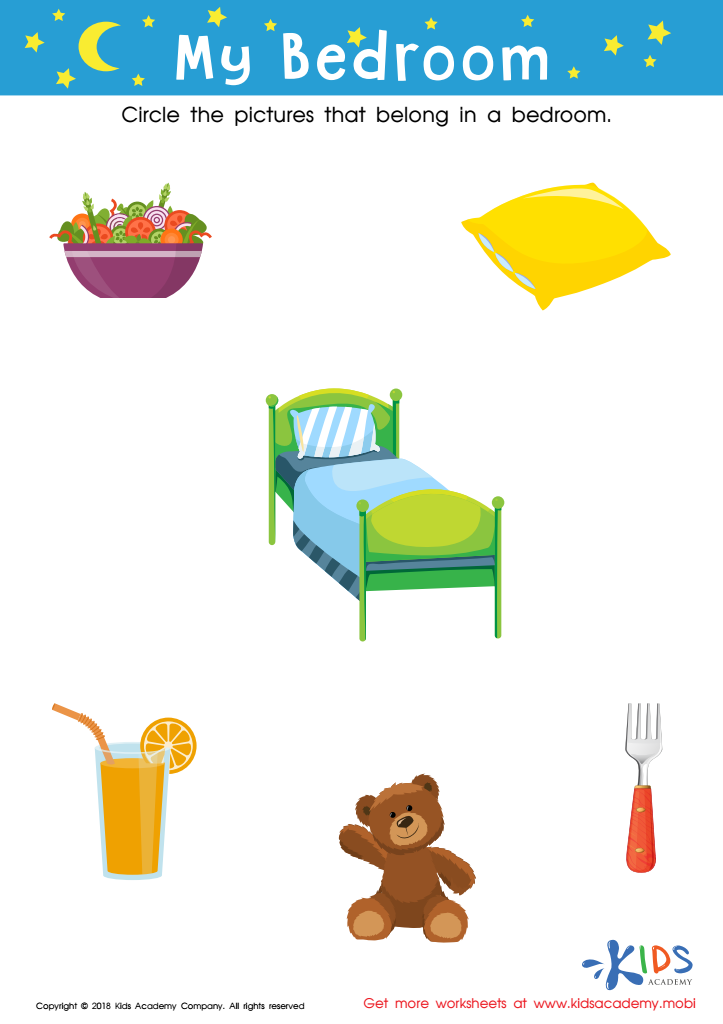
My Bedroom Worksheet

My Bedroom Worksheet

Your child's room is their special space, where only a few are allowed in. You may have let them choose some special decorations, like wall stickers and toys. This exercise will be easy for your child, as they know their bedroom well. Ask them to circle the pictures that belong in a bedroom.
My Bedroom Worksheet
Worksheet
Let's Review! Big Letters Worksheet

Let's Review! Big Letters Worksheet

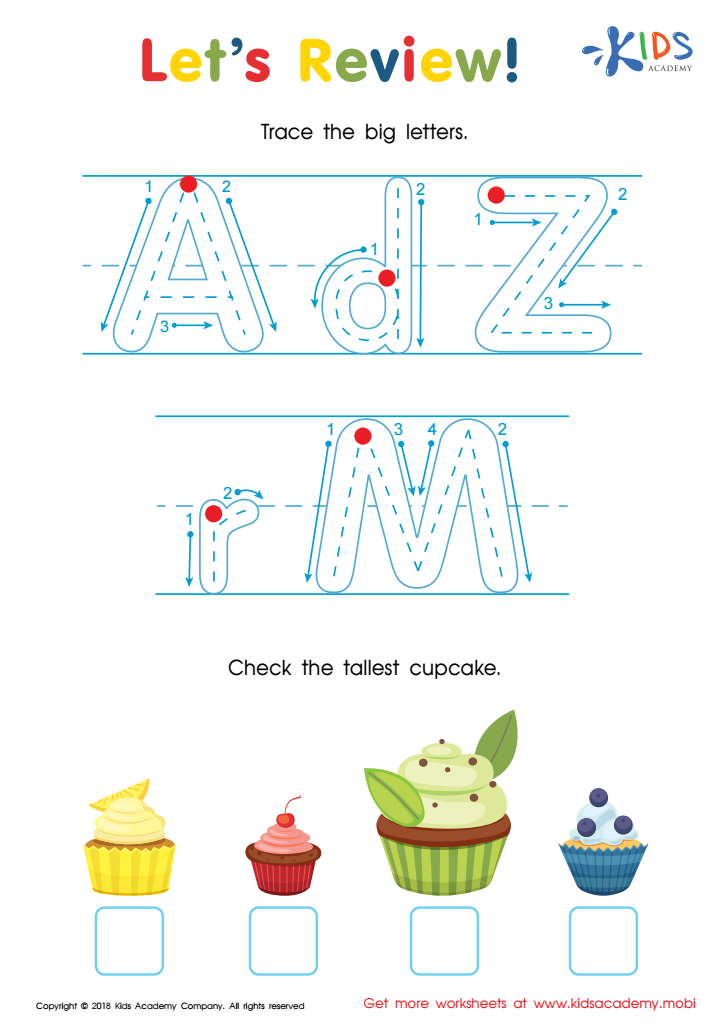
Teach your child to read and write big and small letters with Kids Academy's tracing worksheet. Show them how to guide their pencil with each stroke. Reinforce their understanding with fun cupcake pictures and help them choose the tallest one. It's a great way to help them differentiate between uppercase and lowercase letters.
Let's Review! Big Letters Worksheet
Worksheet
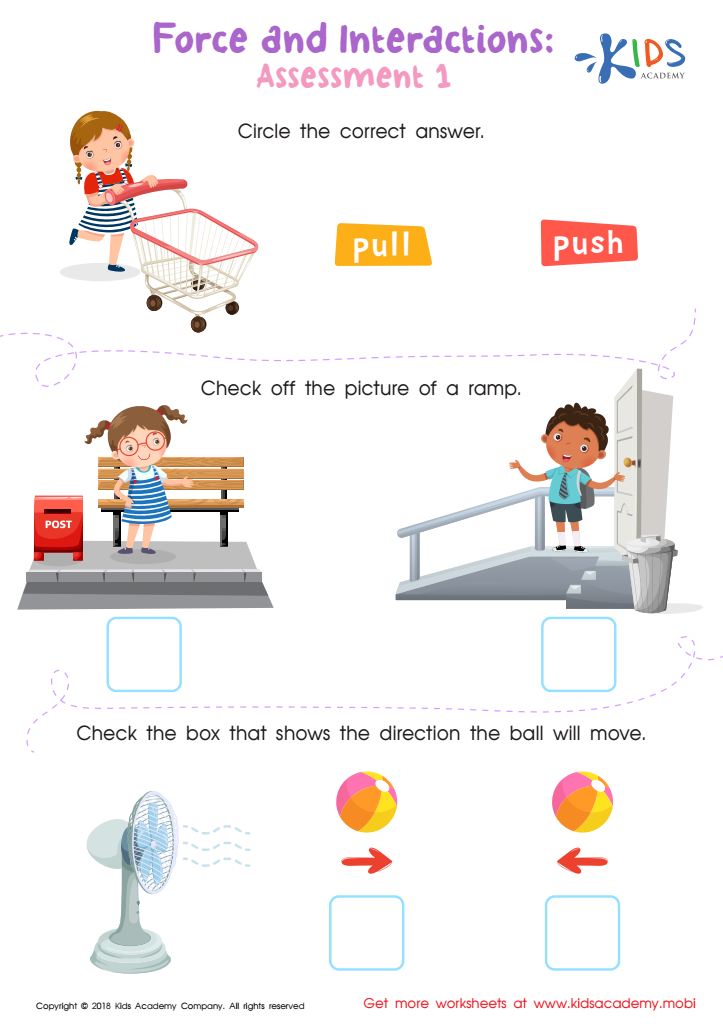
Force and Interactions: Assessment 1 Worksheet

Force and Interactions: Assessment 1 Worksheet

Test your students' knowledge of pushing, pulling, ramps and wind with this worksheet. The first task requires them to identify push or pull pictures. The second asks them to identify a ramp and the third to explain which direction a ball will move when exposed to wind.
Force and Interactions: Assessment 1 Worksheet
Worksheet
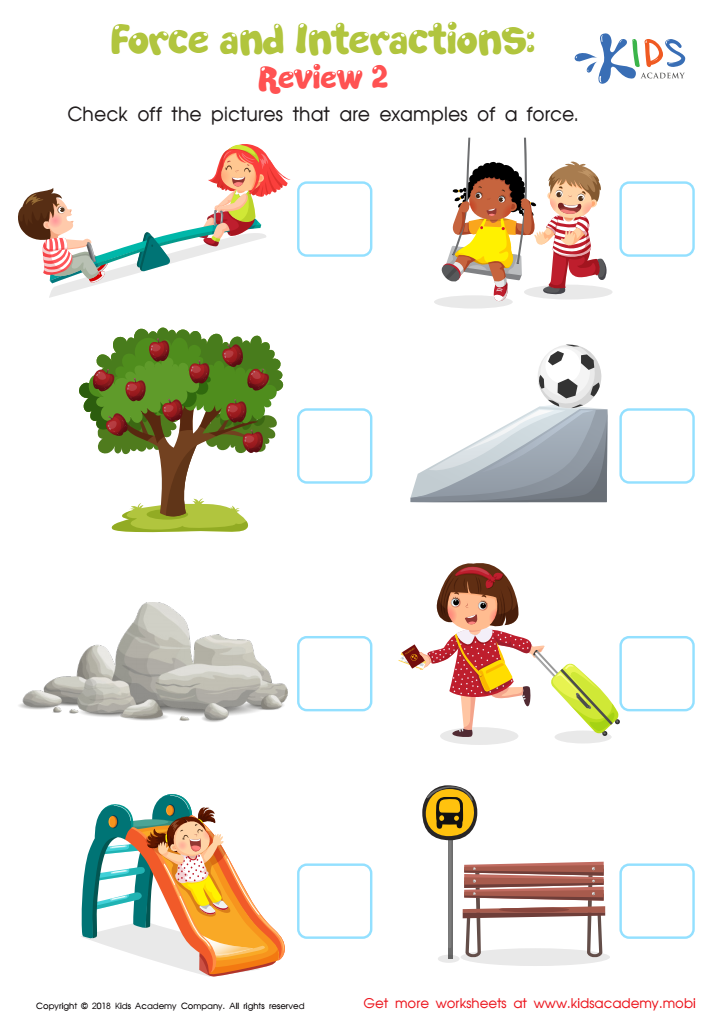
Force and Interactions: Review 2 Worksheet

Force and Interactions: Review 2 Worksheet

Your child can identify force examples by checking the pictures. There are 8 images of kids engaging in activities and objects in motion. Get them to name the activities and objects, or if they know, explain force and interaction.
Force and Interactions: Review 2 Worksheet
Worksheet
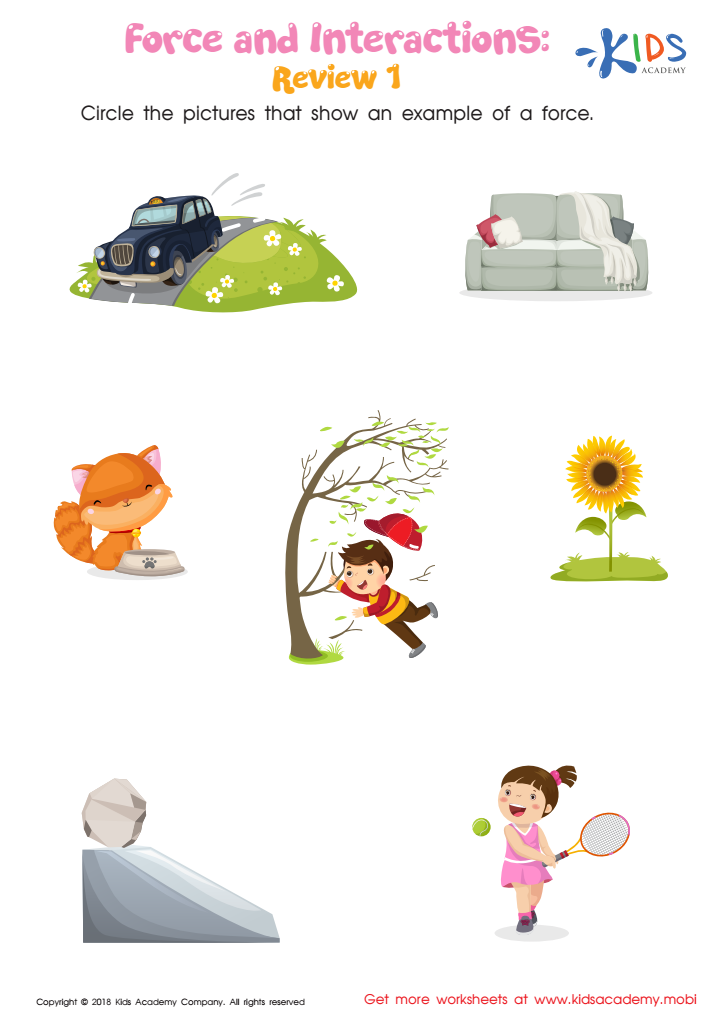
Force and Interactions: Review 1 Worksheet

Force and Interactions: Review 1 Worksheet

See how well your child can identify the different forces. Explain to your child that force is what causes objects to move, such as wind blowing a branch or an object going down a ramp. Ask them to circle images that show a force and assess how well they can identify them.
Force and Interactions: Review 1 Worksheet
Worksheet
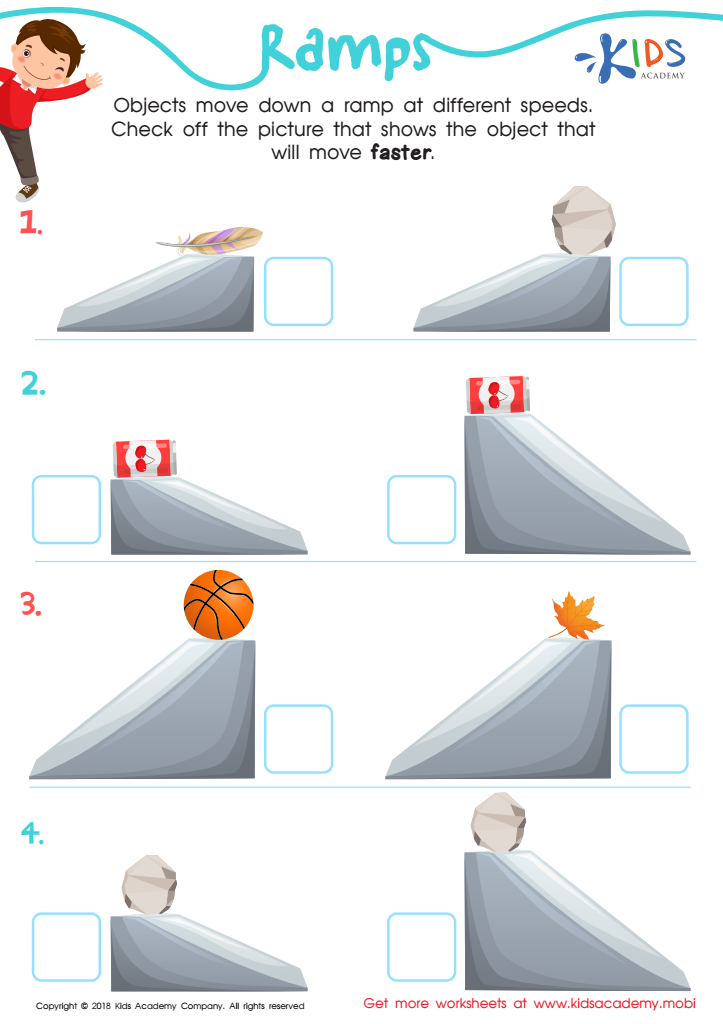
Ramps Worksheet
Ramps Worksheet

Ramps Worksheet

If your child has seen a ramp, they'll find this worksheet easy. A ramp is sloped for objects to move quickly downwards. The printout has images of objects on different ramps. Ask your child to identify which object will move faster.
Ramps Worksheet
Worksheet
Ramps All Around us Worksheet

Ramps All Around us Worksheet

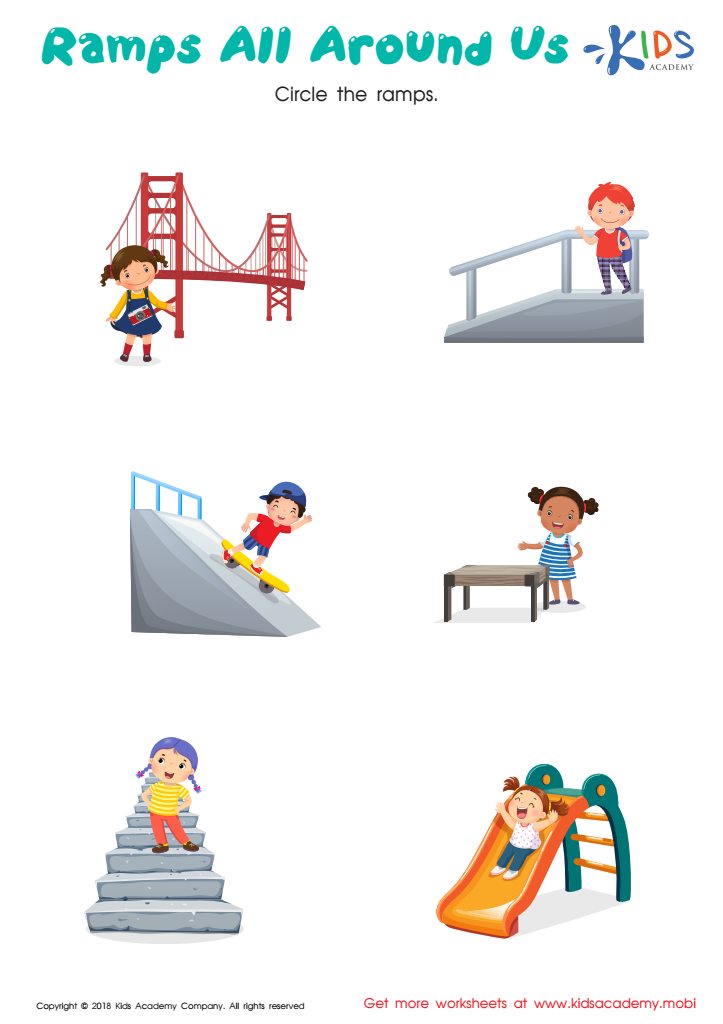
Ask your kids if they know what ramps are, then have them give you examples of places they've seen them. This worksheet has pictures of ramps - have your child identify and circle them.
Ramps All Around us Worksheet
Worksheet
Push or Pull Sorting Worksheet

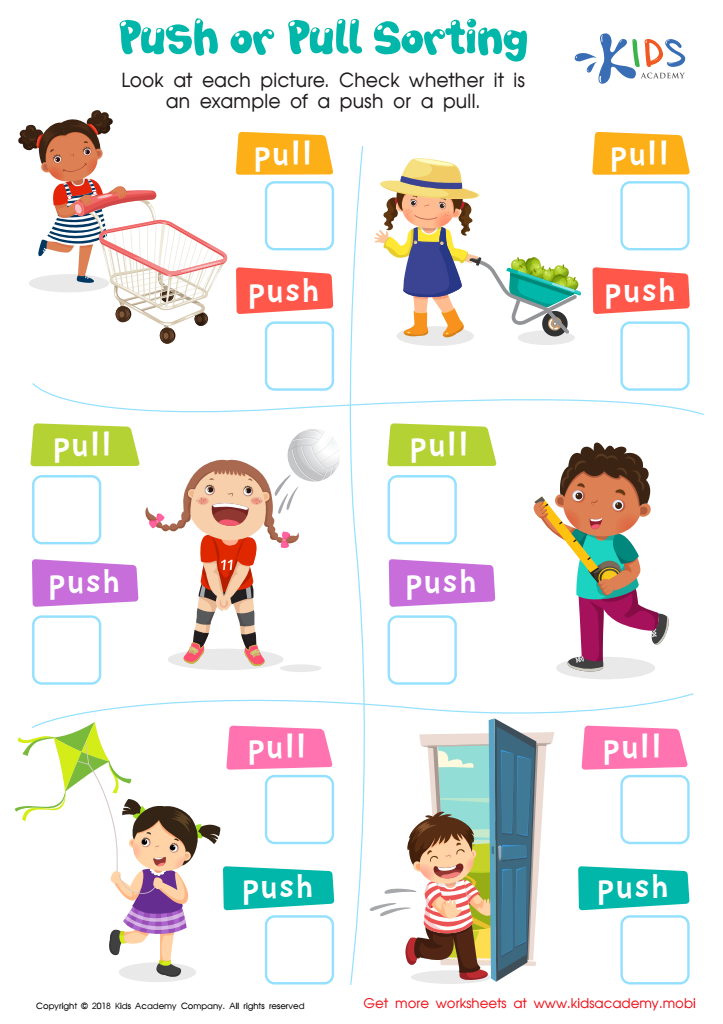
Push or Pull Sorting Worksheet

Show your child the pictures in this worksheet. Ask them to tell you what each child is doing. Then, ask them to identify whether it's an example of pushing or pulling. Ask if they know what these terms mean and if they can provide examples.
Push or Pull Sorting Worksheet
Worksheet
Will it Move? Worksheet

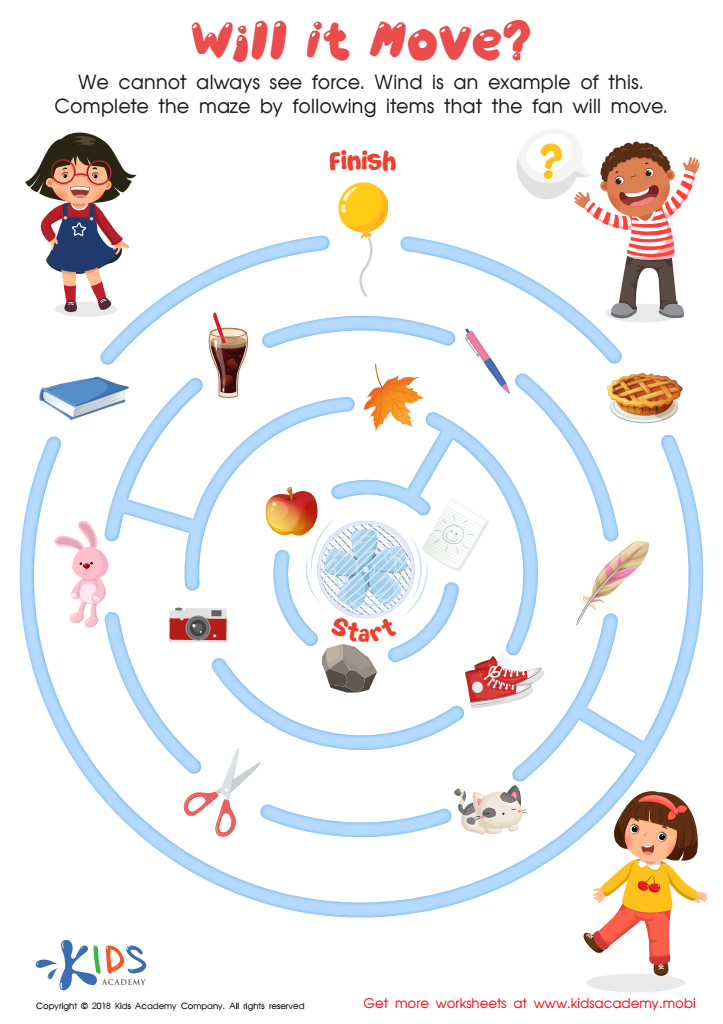
Will it Move? Worksheet

Does your child know about force? If yes/no, this worksheet can help. Force is invisible - like wind - but it moves objects. Ask your child to complete the maze, following the path of items moved by the wind. 80 words.
Will it Move? Worksheet
Worksheet
Which Direction Will it Go? Worksheet

Which Direction Will it Go? Worksheet

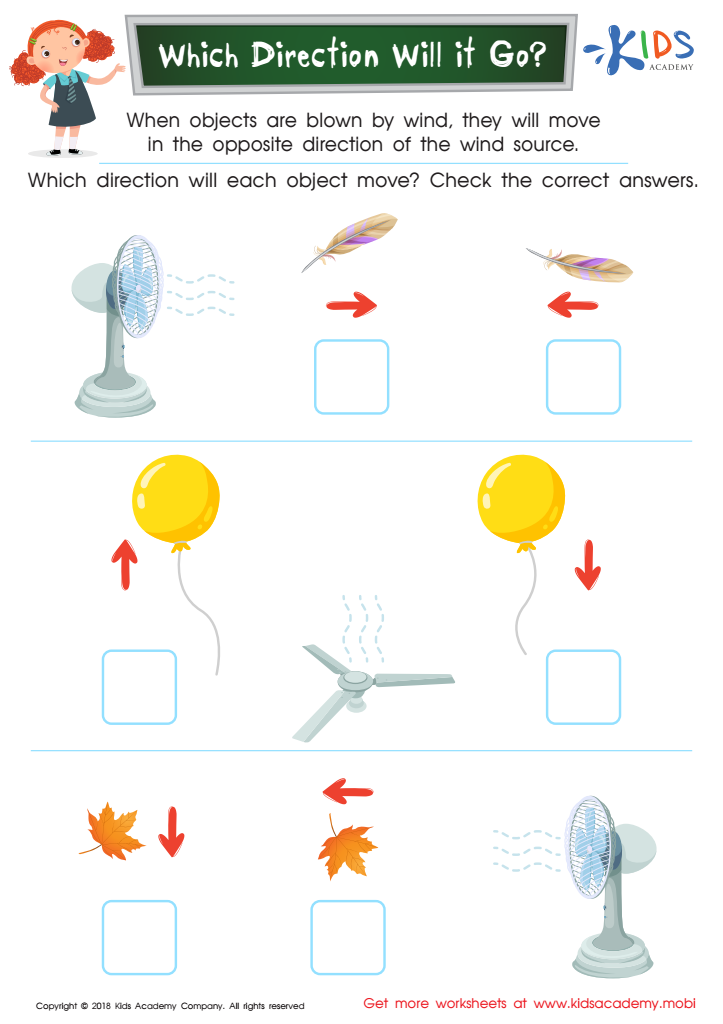
Explain to your students: when objects are blown by wind, they will move in the opposite direction. In the worksheet, there are pictures of wind sources and objects being blown by the wind. Ask your child to identify and check the direction each object will move.
Which Direction Will it Go? Worksheet
Worksheet
Down it Goes Worksheet

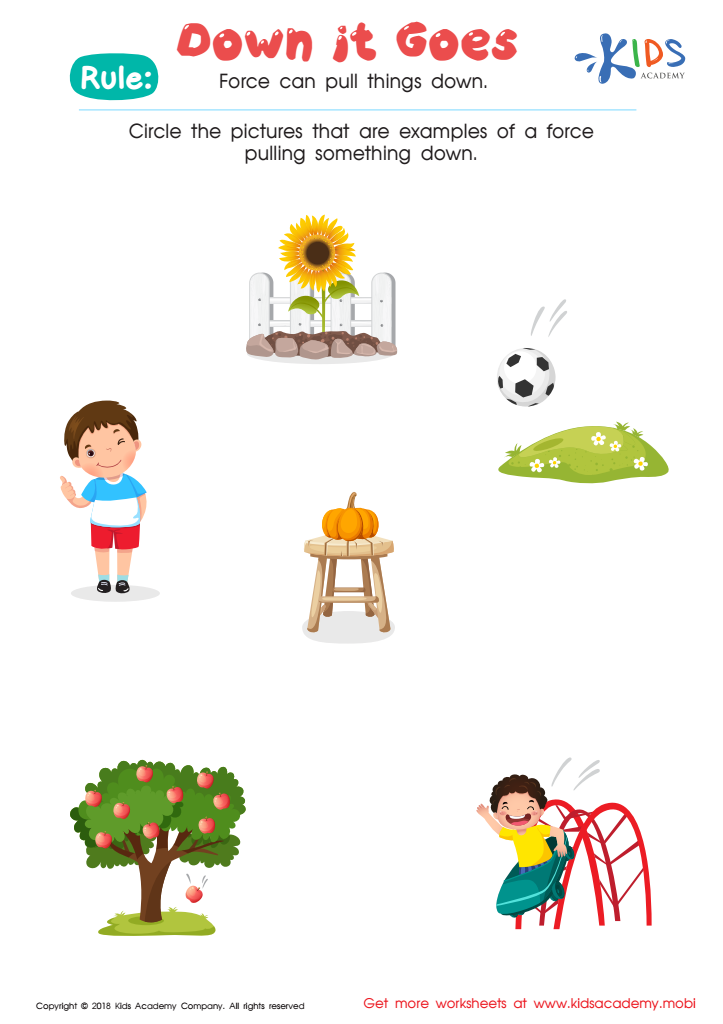
Down it Goes Worksheet

Explain gravity to your child using this fun worksheet. Ask them to give examples of things pulled down with force, then instruct them to circle the pictures that show this. It's a great way to help them understand the concept of gravity.
Down it Goes Worksheet
Worksheet
What's Inside the Building? Worksheet

What's Inside the Building? Worksheet

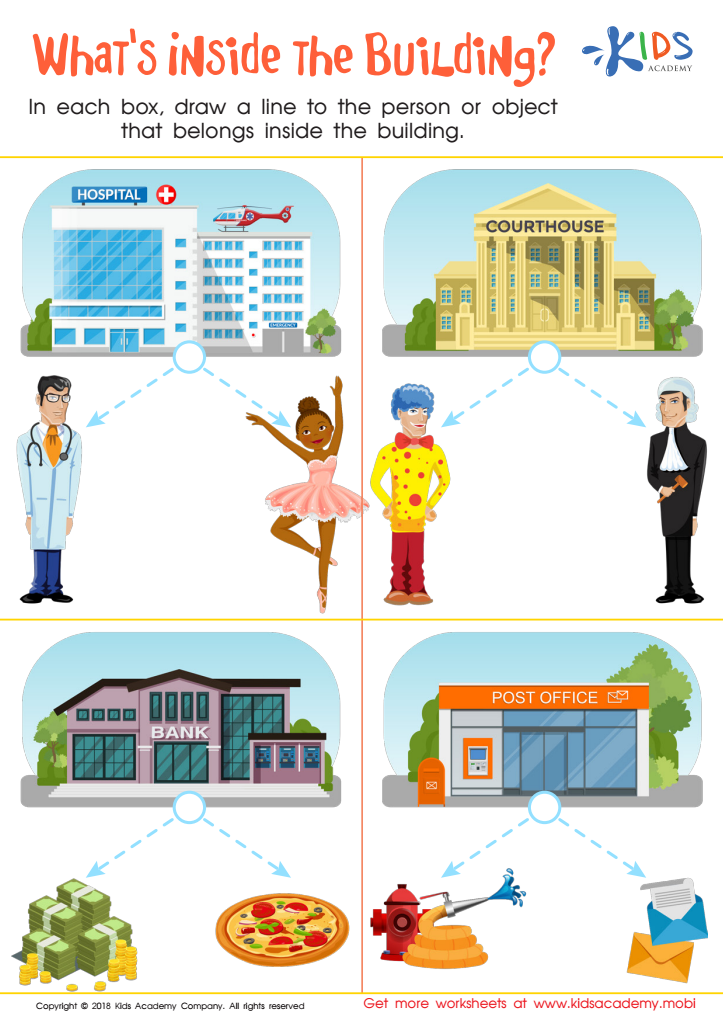
Have your child draw a line from each of the four buildings (printout provided) to the corresponding person or object. This worksheet will help them identify people who work in a hospital, courthouse, bank and others—what they wear and what they're called.
What's Inside the Building? Worksheet
Worksheet
Community Buildings Worksheet

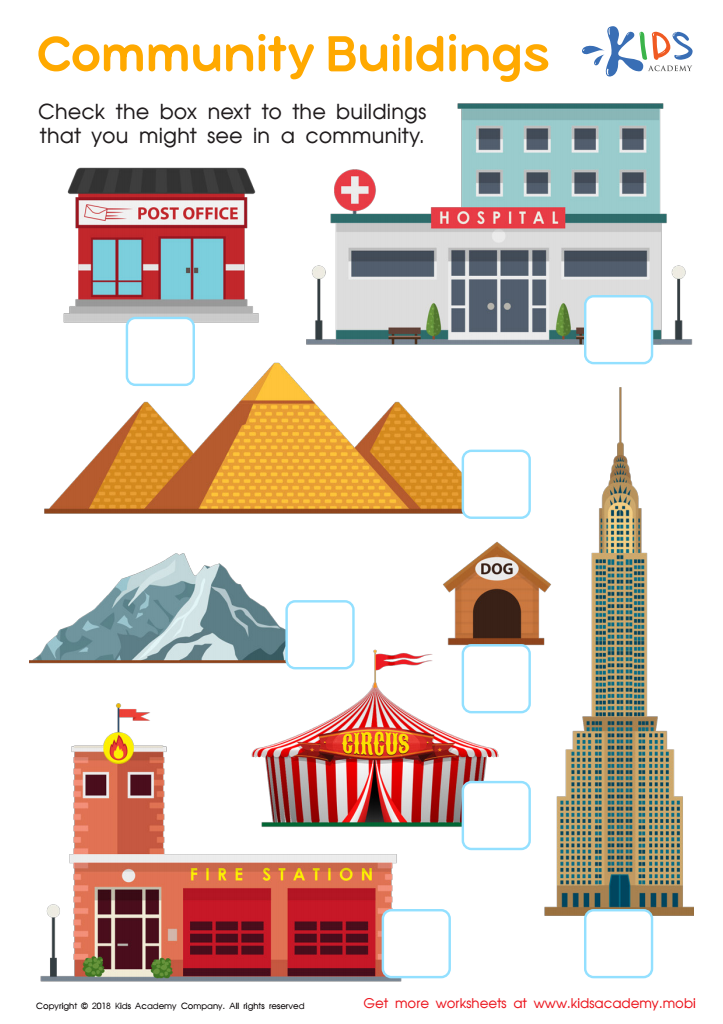
Community Buildings Worksheet

Test your child's knowledge of local buildings with this worksheet. Ask them to name the buildings in the images, then check the boxes next to the ones they might see in a community. It's a great way to explore the places you visit together.
Community Buildings Worksheet
Worksheet
What Do you See at School? Worksheet

What Do you See at School? Worksheet

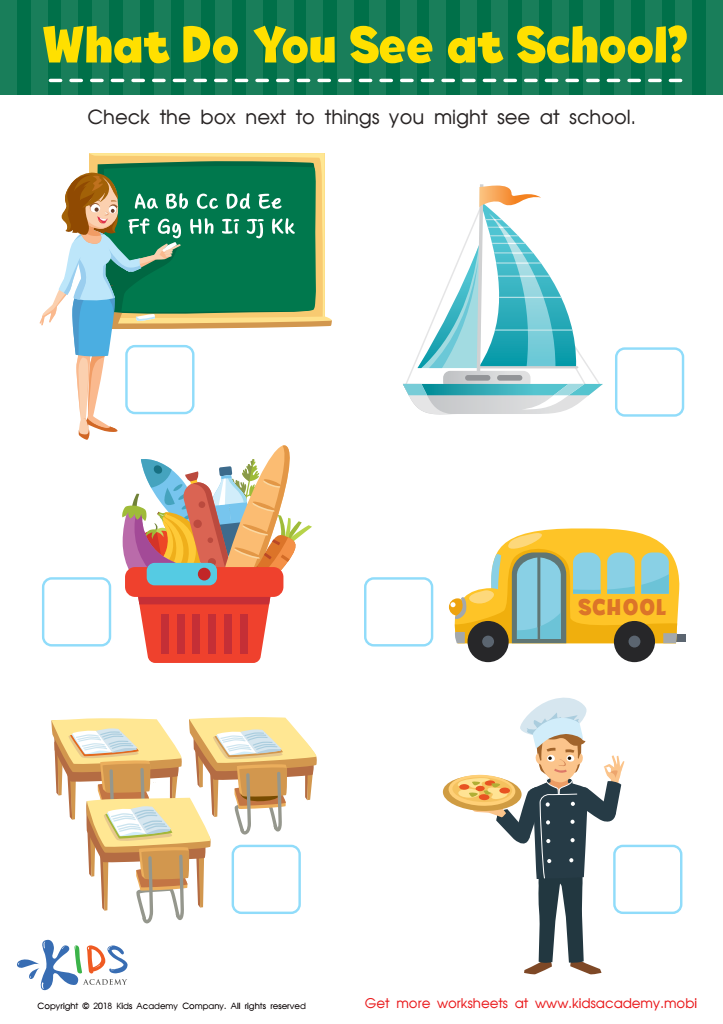
Have your kids give you a list of things they see at school. Then, view the worksheet together. Ask them to check the boxes next to the school items. Look for objects that can be found at school and those that don't belong. This is a great way to check their knowledge of what they see at school daily, except on weekends and holidays.
What Do you See at School? Worksheet
Worksheet
What Do you See at the Library? Worksheet

What Do you See at the Library? Worksheet

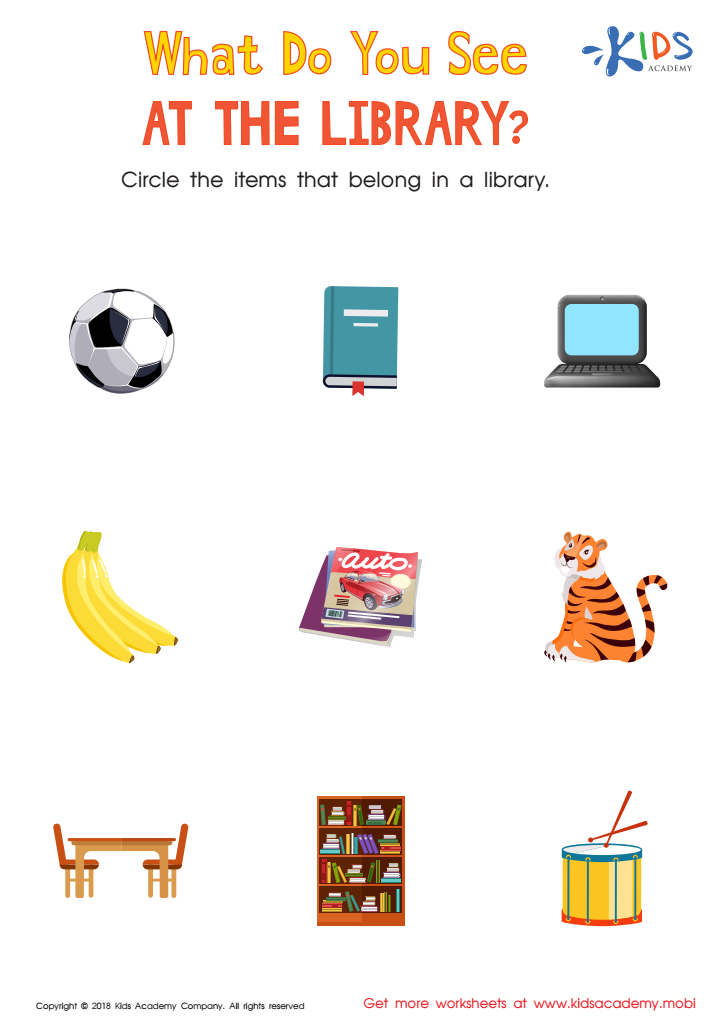
Let your kids look at the worksheet with pictures of objects found in libraries and those that don't. Ask them to list some, then circle the ones that belong in a library. Can they identify them? See if you can spot any they miss!
What Do you See at the Library? Worksheet
Worksheet
Let's Go to the Library! Worksheet

Let's Go to the Library! Worksheet

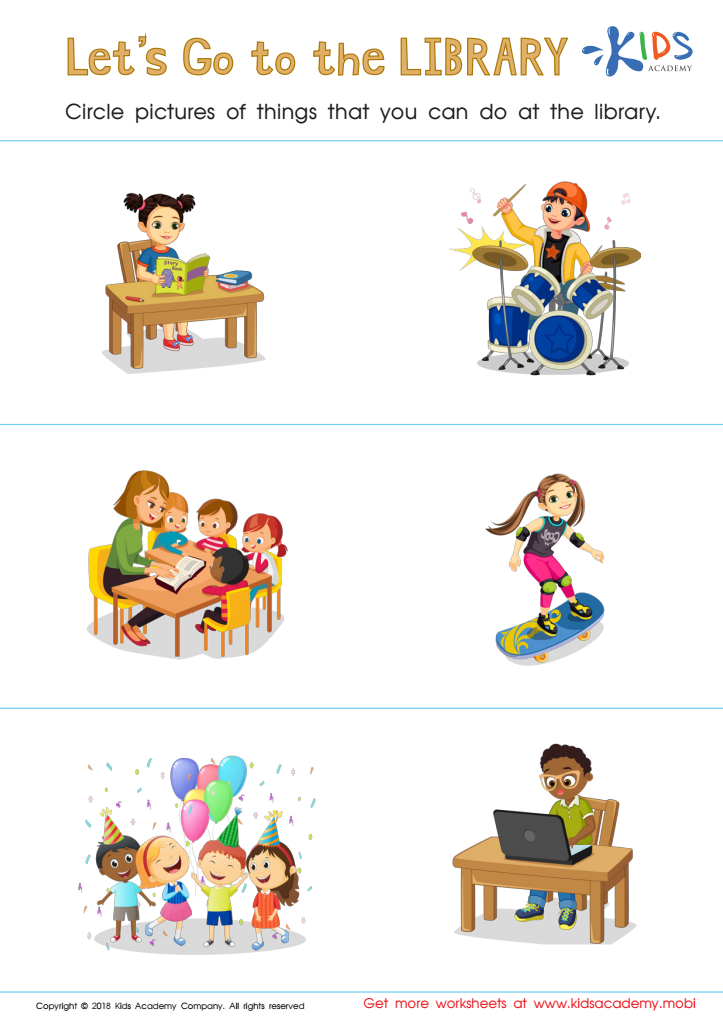
How often does your child visit the library? If they're a frequent visitor, they'll breeze through this worksheet. It requires them to look at pictures that depict activities done in the library and activities not allowed. Ask them to circle the correct picture. It's a fun way to reinforce library knowledge.
Let's Go to the Library! Worksheet
Worksheet
Let's Go to the Store! Worksheet


Let's Go to the Store! Worksheet

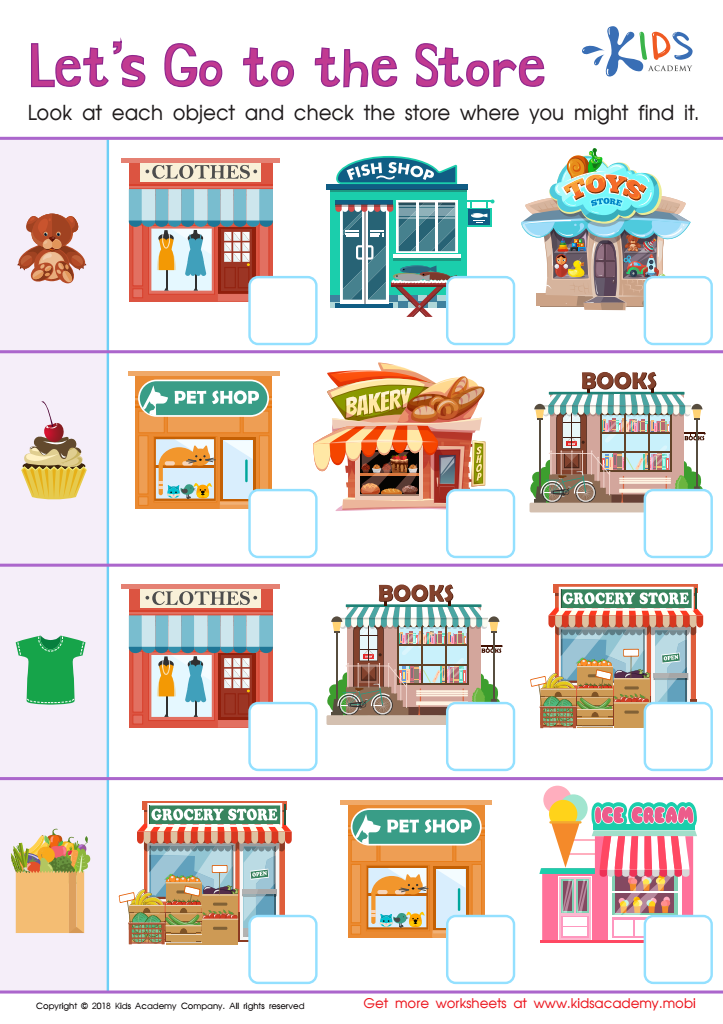
Take your kids along for errands and shopping. Ask them to identify items on this worksheet and the store where you'd buy them. See how much attention they were paying! Have fun and find out with this fun worksheet.
Let's Go to the Store! Worksheet

Worksheet
City Workers: Matching Worksheet

City Workers: Matching Worksheet

Examine the worksheet with your kid. Identify the individuals on the left and their jobs. Have your child circle the correct items on the right that pertain to the city workers. Help your child learn about city workers with this activity.
City Workers: Matching Worksheet
Worksheet
City Workers Community Helpers Worksheet

City Workers Community Helpers Worksheet

City workers help keep our communities clean, safe and well-run. They create and enforce rules and act as leaders. Use this worksheet with your child to learn more about the important roles they play. Check the pictures in the free PDF that accurately depict what they do.
City Workers Community Helpers Worksheet
Worksheet


It’s essential for parents and teachers to care about what’s considered "normal" development for children aged 4-7, as it provides a foundation for understanding and supporting a child's growth. These early years are a critical period of development, encompassing emotional, social, cognitive, and physical aspects. Being aware of developmental milestones can help adults spot potential delays or issues that may need intervention.

For example, by age 4, children typically develop basic social skills, such as making friends and sharing. If a child struggles in these areas, early intervention can foster these skills, preventing future social challenges. Similarly, understanding language development milestones, such as speaking in full sentences or following basic directions, is crucial for supporting literacy and effective communication.

Moreover, knowledge of normal physical development helps to ensure children's safety and proper physical growth. For instance, recognizing age-appropriate motor skills like basic hand-eye coordination or the ability to ride a tricycle can help identify if a child needs guidance in fine or gross motor skills.

In summary, being informed about normal developmental milestones allows parents and teachers to provide the right support and resources, ensuring each child's needs are met, promoting their overall well-being and future success.