Normal Letter E Worksheets for Ages 5-9
3 filtered results
-
From - To
Explore our collection of Normal Letter E Worksheets tailored for ages 5-9, designed specifically to enhance your child’s early literacy skills. These interactive and printable worksheets are perfect for kindergarten to elementary level, focusing on letter recognition, writing practice, and phonetic sounds. With engaging and colorful activities, children can trace, write, and identify words that begin with the letter E, aiding in their language development and fine motor skills. Our expertly crafted resources aim to make learning enjoyable, fostering confidence and a love for reading and writing in young learners. Start building foundational literacy skills today!
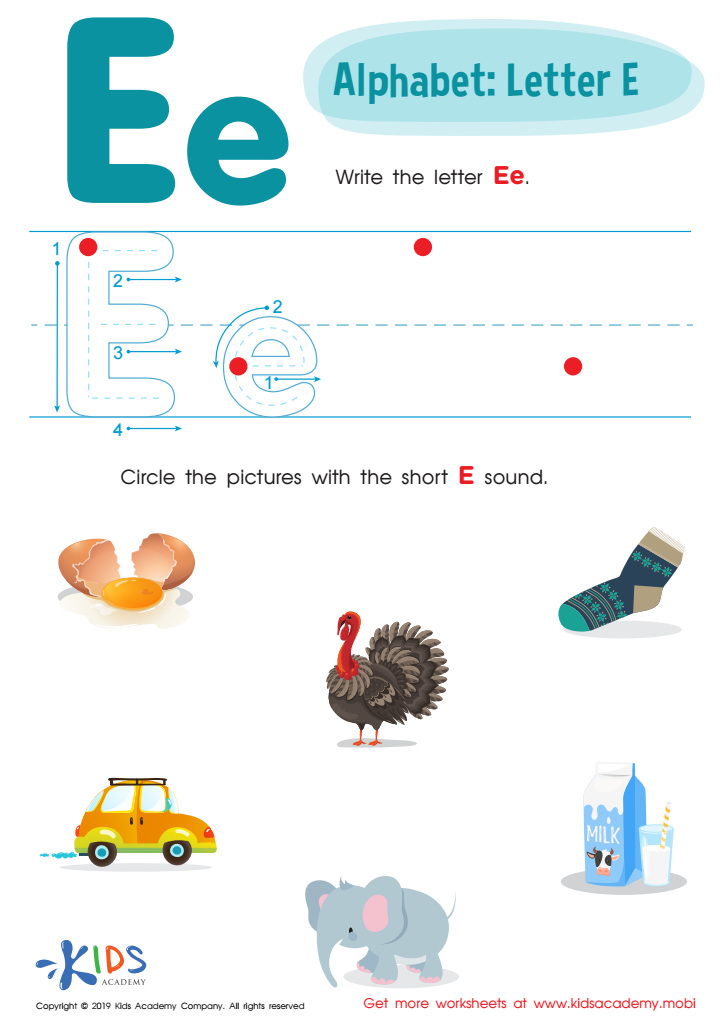
Letter E Tracing Worksheet
 Assign to My Students
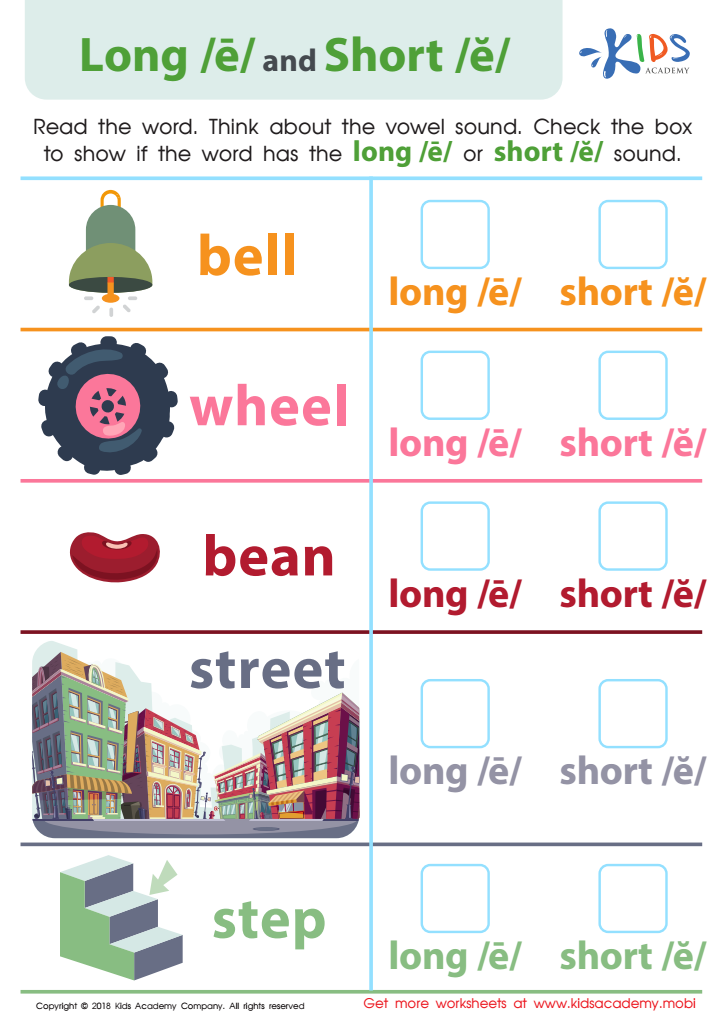
Reading: Long E and Short E Worksheet
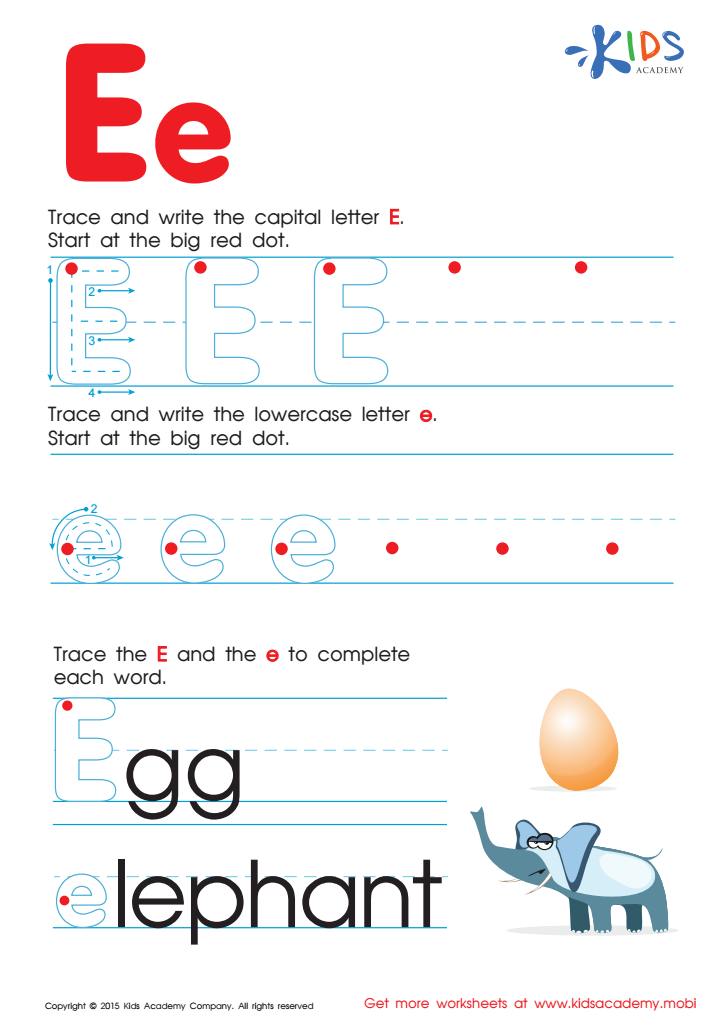
Letter E Tracing Page






Parents and teachers play a critical role in early childhood development, and one key aspect is ensuring that children ages 5-9 develop proper handwriting skills, including mastering letters like the "Normal Letter E." Focusing on correct letter formation, particularly with commonly used letters such as "E," is crucial for several reasons.
First, proficient handwriting skills contribute significantly to a child's overall literacy development. When children learn to write letters correctly, they gain confidence in their abilities, which can enhance their motivation to learn more complex writing tasks. This foundational skill also supports the cognitive process of linking spoken and written language, which is essential for reading and comprehension.
Second, poor handwriting can lead to frustrations and negative attitudes towards school activities. If a child struggles with forming letters correctly, they may find it challenging to keep up in classes or complete assignments, which could affect their academic performance and self-esteem.
Finally, proper handwriting skills are linked to fine motor development. Learning to write the "E" correctly involves coordination and control of hand muscles, improving overall motor skills that are essential in various daily tasks.
Emphasizing the correct formation of letters like the "Normal Letter E" helps set the stage for successful communication, fosters a positive attitude towards learning, and supports critical motor skill development—all essential for the growth and success of young children.