Normal Subtraction Worksheets for Ages 5-9 - Page 2
29 filtered results
-
From - To
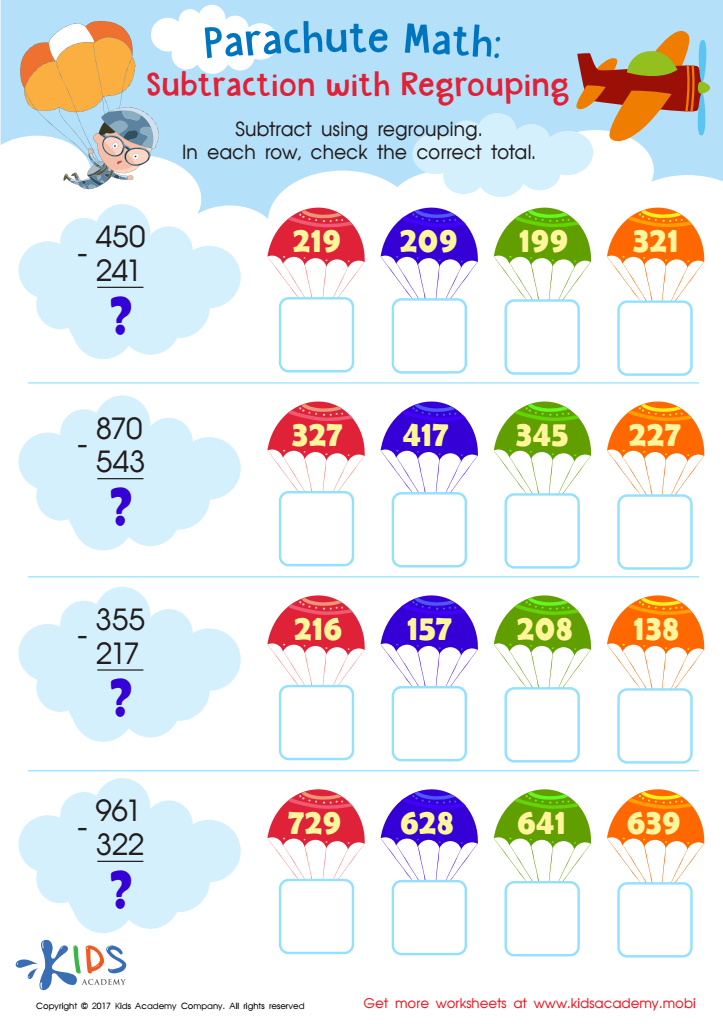
Subtraction with Regrouping for 3rd Grade Worksheet
 Assign to My Students
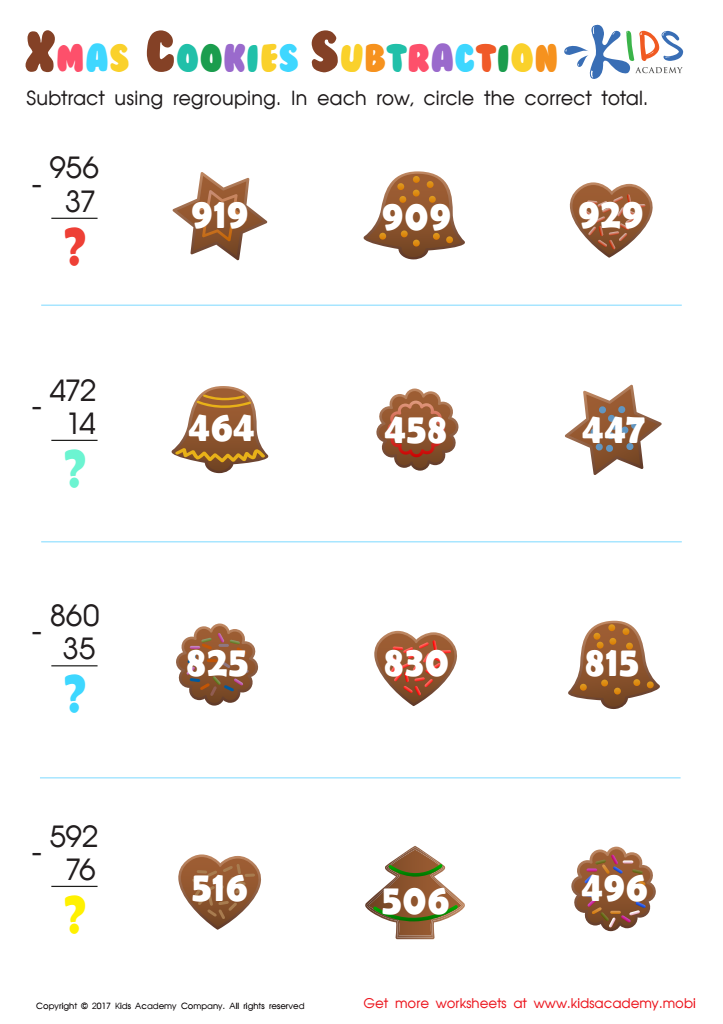
Three Digits Addition with Regrouping Worksheet
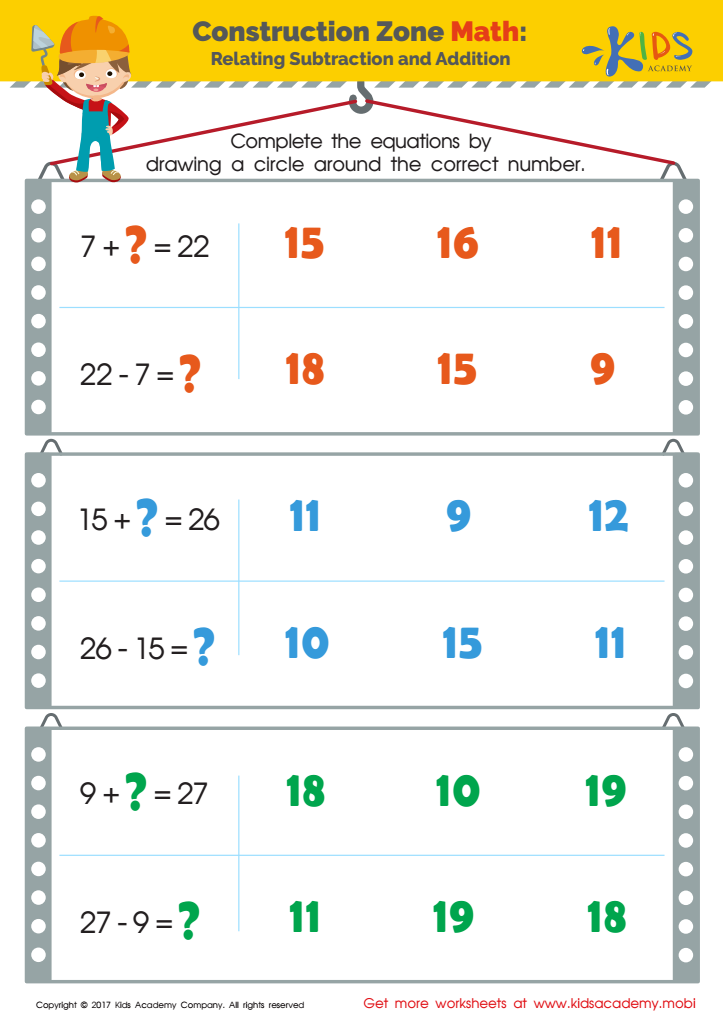
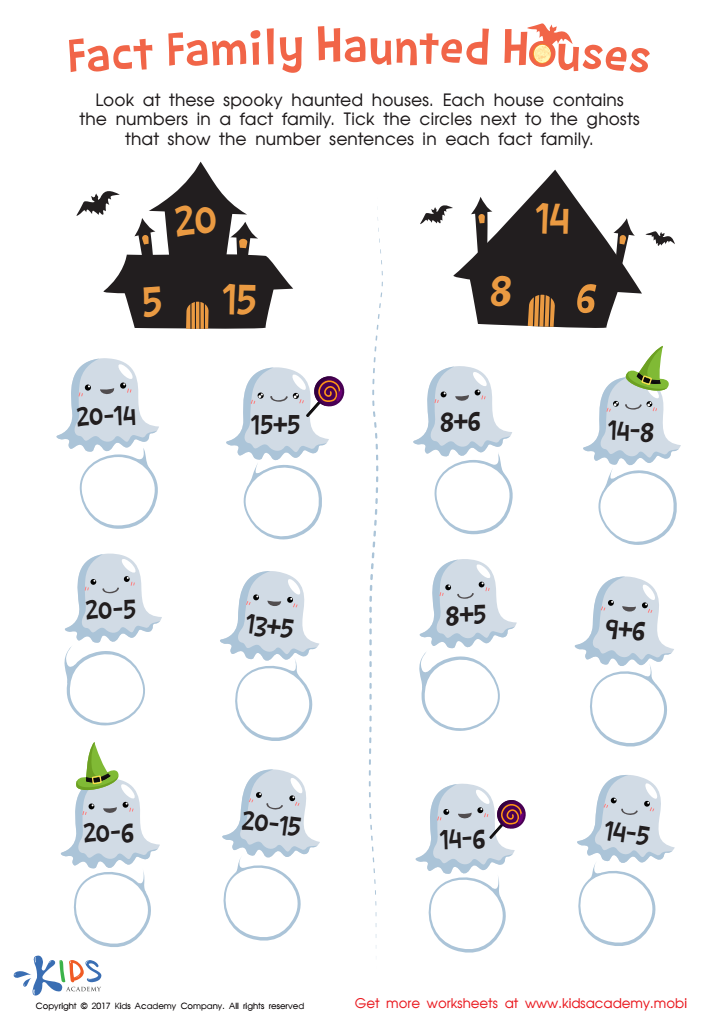
Related Addition and Subtraction Facts Worksheet
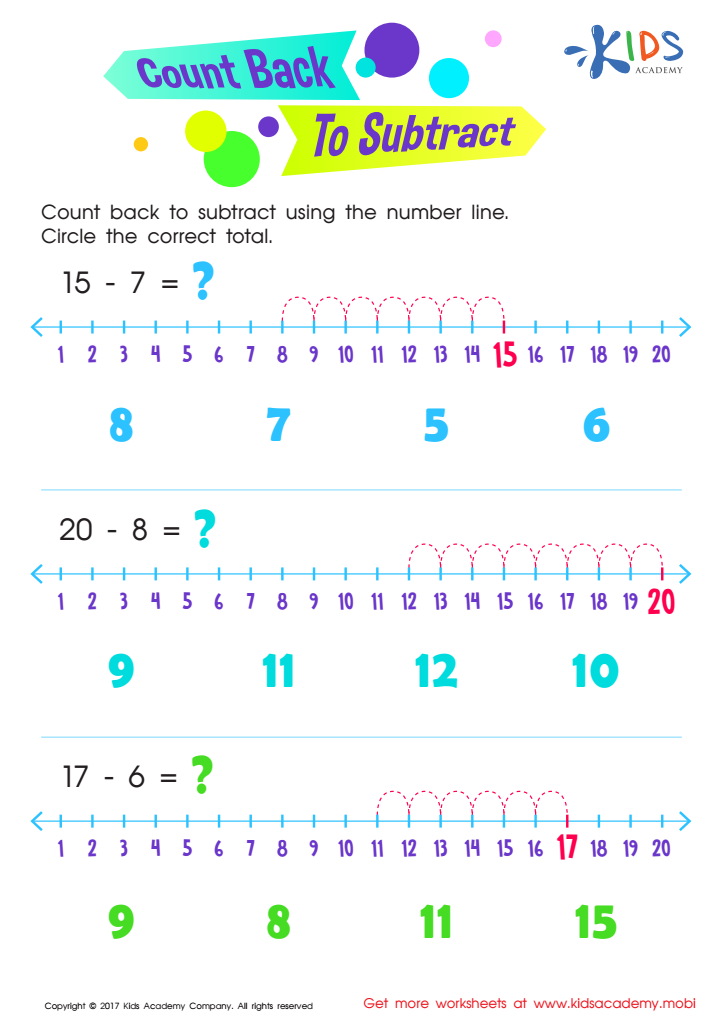
Count Back to Subtract Substraction Worksheet








Parents and teachers should prioritize normal subtraction for children ages 5-9 as it's a fundamental math skill that forms the foundation for more advanced mathematical concepts. During early childhood, understanding subtraction enhances cognitive development, fostering automaticity in problem-solving. This basic arithmetic skill is pivotal, benefiting kids in everyday contexts, like determining how many apples remain if some are taken away.
Subtraction also cultivates logical thinking. Children learn to break problems into simpler parts and develop persistence by tackling multi-step processes, which builds resilience. Moreover, fluency in subtraction aids in the grasp and retention of broader math practices, such as addition, multiplication, and division.
Parents and teachers play a crucial role not just in introducing subtraction, but in making it engaging and relevant. The presence of subtraction in games, interactive activities, and daily routines makes learning enjoyable and practical. Additionally, early mastery in subtraction is linked to improved confidence and attitude toward math, reducing anxiety in later grades when mathematical concepts become more complex and abstract.
Ultimately, nurturing subtraction skills equips children with essential tools for academic success and everyday functionality, fostering a lifelong appreciation and competence in mathematics. Thus, the emphasis on normal subtraction during these formative years is a vital investment in a child's all-around development.