Normal Consonants Worksheets for Ages 6-8 - Page 2
26 filtered results
-
From - To
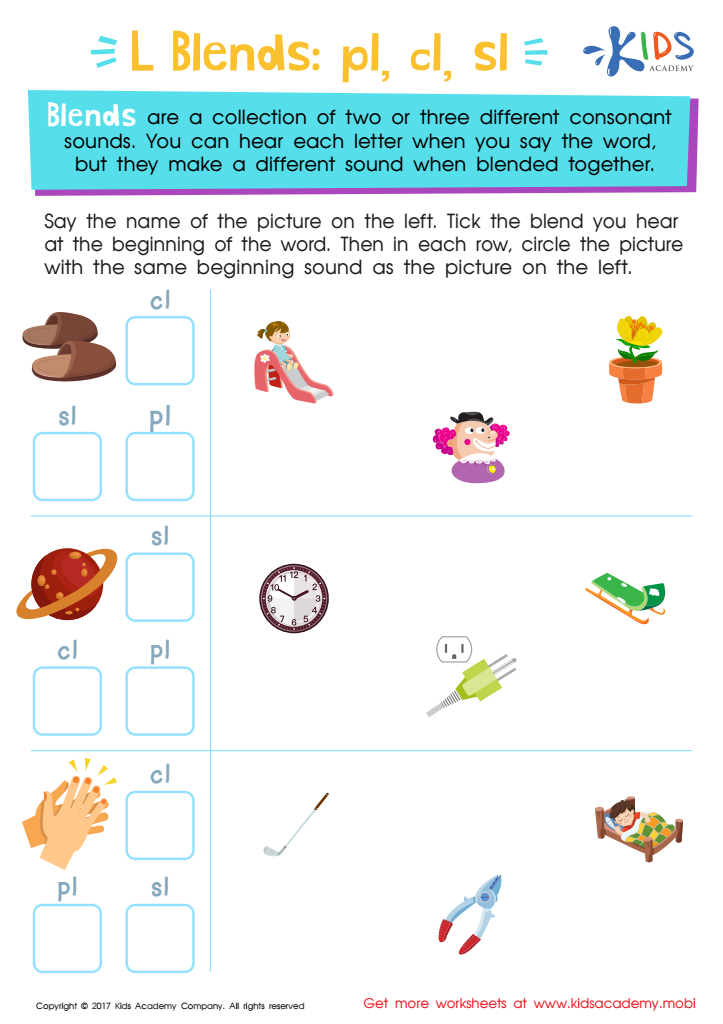
L Blends: "Pl", "Cl" and "Sl" Printable
 Assign to My Students
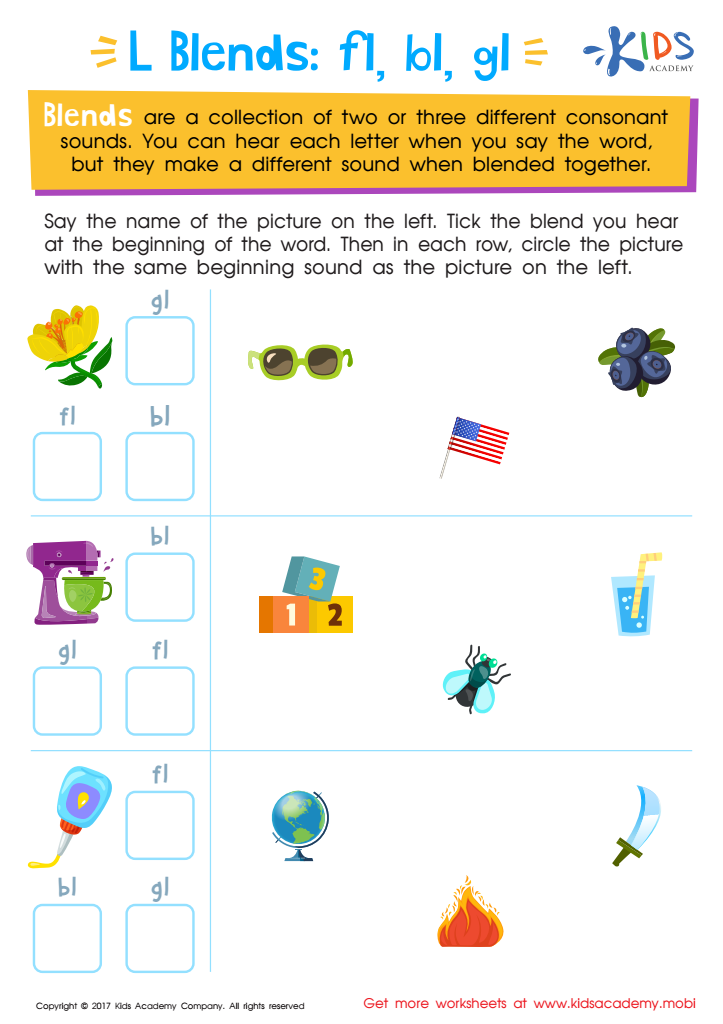
Blending Consonants: "Fl", "Bl" and "Gl" Printable



Normal consonants are crucial for children aged 6-8, as they form the building blocks of language and literacy development. At this age, students are transitioning from early reading skills to more fluent reading and writing. Understanding normal consonants enhances their phonemic awareness, which is essential for decoding words.
Parents and teachers should prioritize consonant knowledge because it directly impacts a child’s ability to read and spell. Mastery of consonant sounds allows children to break down words into manageable parts, making it easier for them to recognize and produce new vocabulary. Engaging with normal consonants also fosters confidence in communication, as children begin to express themselves through writing with greater accuracy.
Furthermore, incorporating activities that focus on consonants, such as phonics games or storytelling, can make learning enjoyable and interactive. This engagement not only strengthens their grasp of language but also promotes a love for reading—a vital habit for lifelong learning.
In summary, emphasizing normal consonants in early education enriches children's literacy skills, supports their academic growth, and lays a strong foundation for future learning, making it essential for parents and teachers to focus on this aspect of language development.