Normal Seasons Worksheets for Ages 6-8
5 filtered results
-
From - To
Discover our engaging Normal Seasons Worksheets designed specifically for children aged 6-8! These worksheets provide an interactive way to learn about the four seasons: spring, summer, fall, and winter. Each activity encourages kids to explore the unique characteristics, weather patterns, and changes in nature that define each season. With fun illustrations and simple exercises, young learners can enhance their understanding and retention of seasonal concepts. Perfect for classroom or home use, these worksheets foster a love of learning through creativity and discovery. Start your child’s seasonal adventure today and watch them blossom into nature enthusiasts!
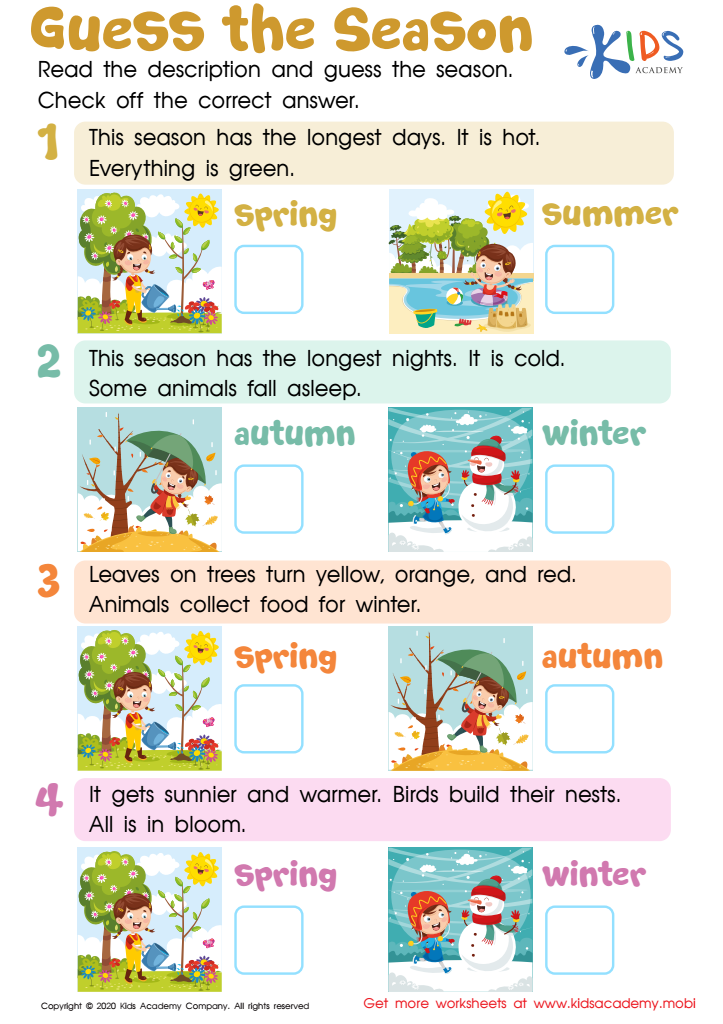
Guess the Season Worksheet
 Assign to My Students
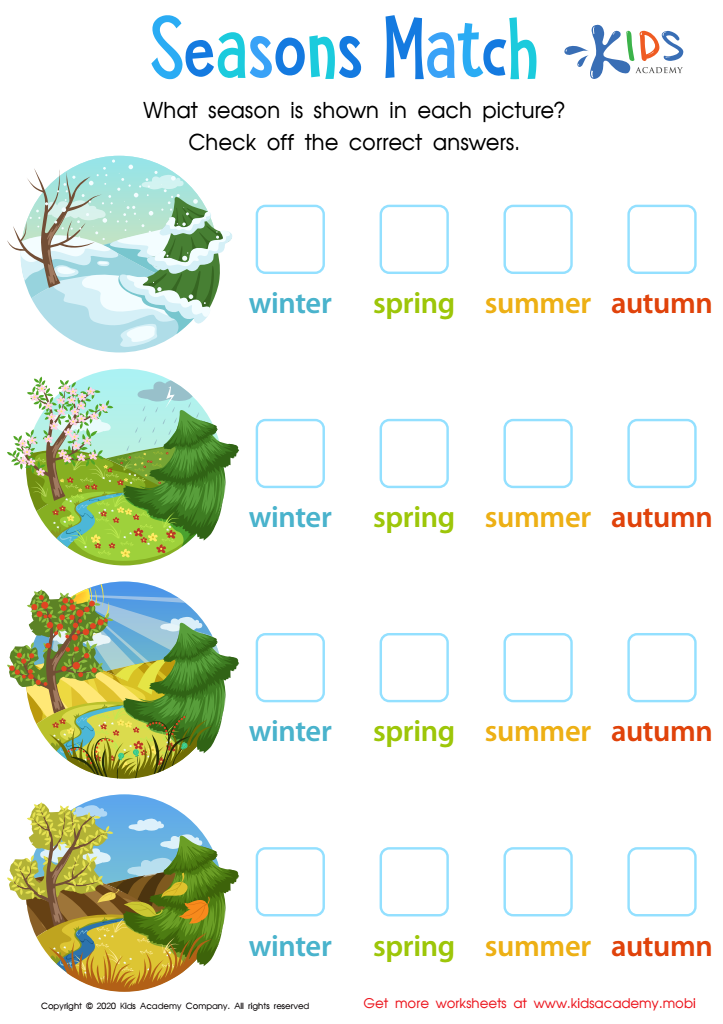
Seasons Match Worksheet
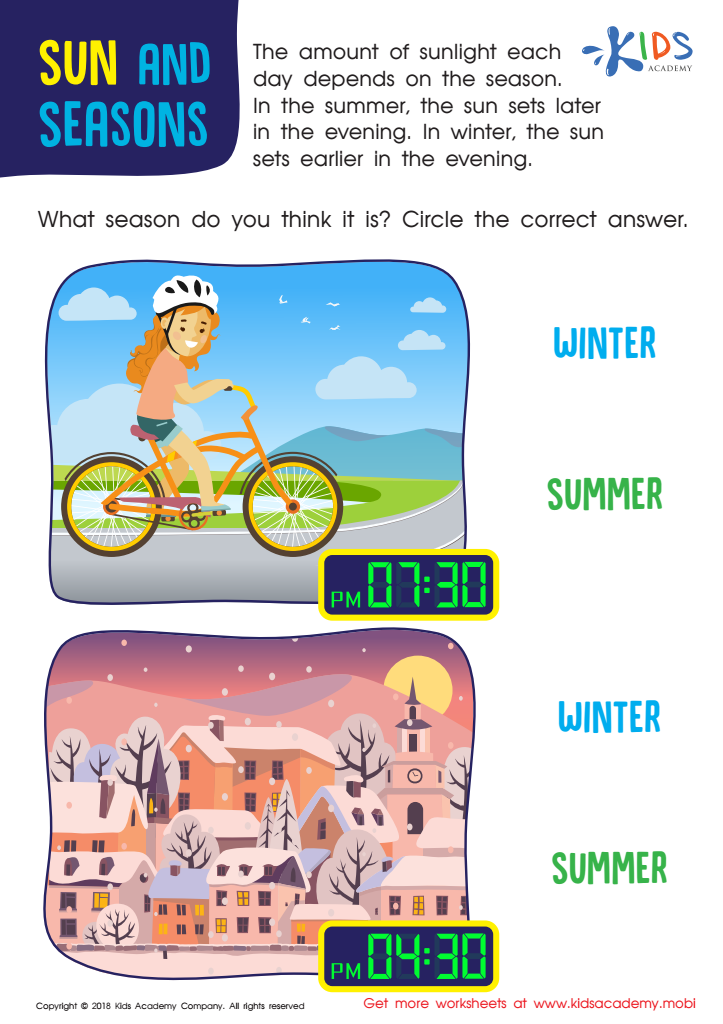
Sun and Seasons Worksheet
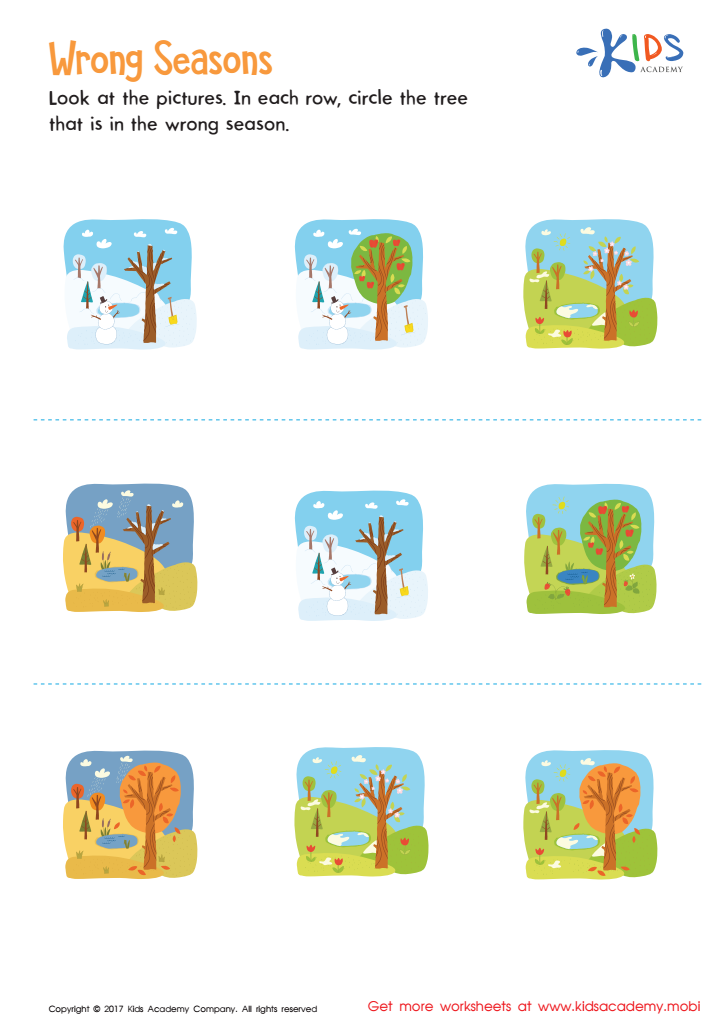
Wrong Seasons Worksheet
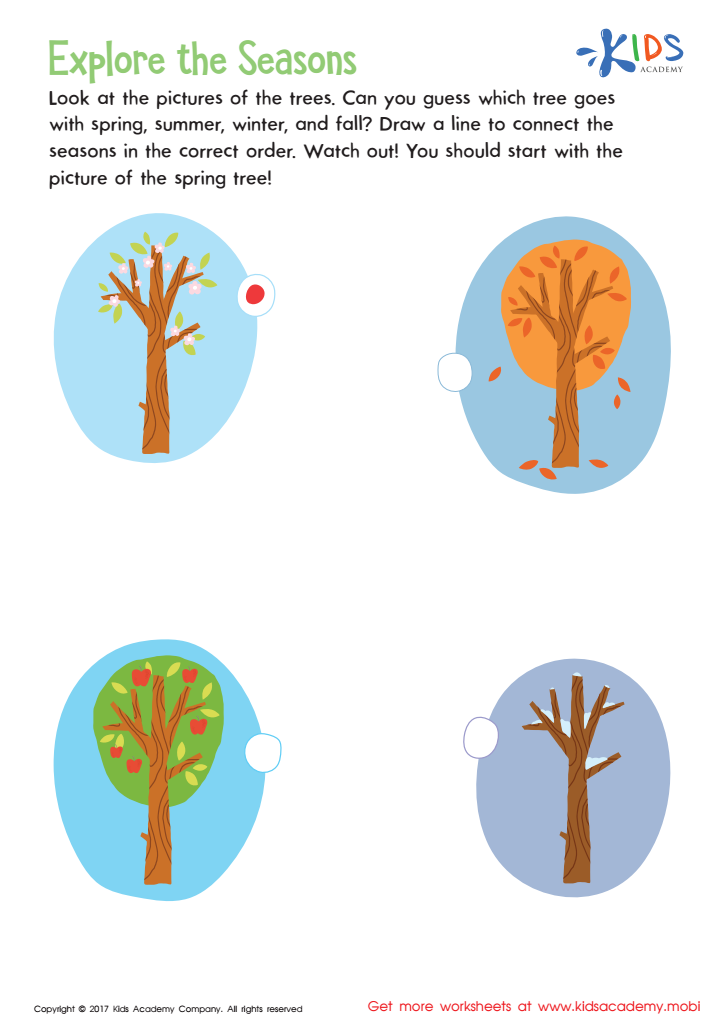
Explore the Seasons Worksheet



%20(1).jpg)
Understanding normal seasons is crucial for children aged 6-8 as it helps develop their awareness and connection with the natural environment. At this age, children are naturally curious and absorb information about their surroundings quickly. Knowing the characteristics of each season—spring, summer, fall, and winter—enables them to recognize patterns in nature, weather changes, and the behaviors of plants and animals.
Parents and teachers should prioritize this learning as it fosters a sense of belonging to the world. Seasonal knowledge encourages outdoor exploration and play, which is vital for physical and emotional development. Through activities related to seasons, children develop critical skills, such as observation, classification, and description.
Furthermore, lessons about seasons provide rich opportunities for interdisciplinary learning, integrating science, art, and literature. For instance, reading books about seasonal changes or engaging in seasonal crafts enhances literacy and creativity. Promoting understanding of seasons also nurtures environmental consciousness, teaching young learners the importance of ecology and sustainability.
Ultimately, when children grasp the dynamics of seasonal change, they build scientific literacy, grow appreciation for the environment, and acquire skills necessary for critical thinking and problem-solving, which are valuable throughout their educational journey.







