Filters

1537 filtered results

Clear all filters
Favorites
With answer key
Interactive

1537 filtered results

Difficulty Level

Grade


Check out this FREE Trial Lesson for age 6-9!

Identify Categories with a Given Count

Favorites
With answer key
Interactive
  • 6-9
  • Interactive
  • Normal
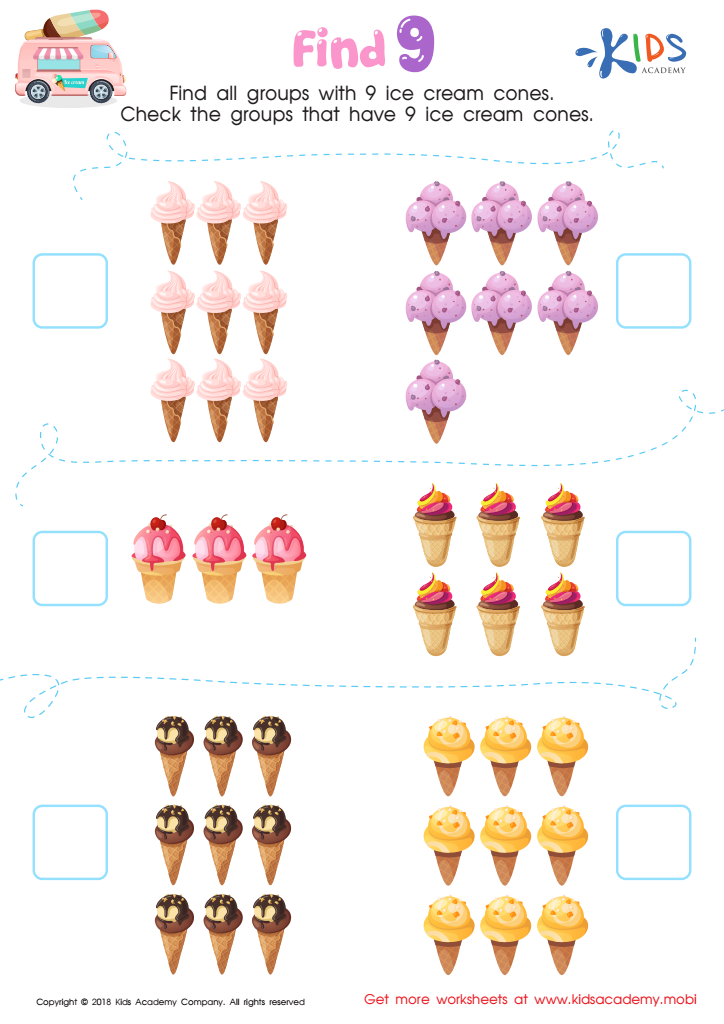
Find 9 Worksheet
Find 9 Worksheet

Find 9 Worksheet

Let your kids practice grouping numbers with this fun downloadable worksheet! It's full of ice cream colors and will help them improve their accuracy in addition and multiplication. Tracing the lines will also boost their fine motor skills.
Find 9 Worksheet
Worksheet
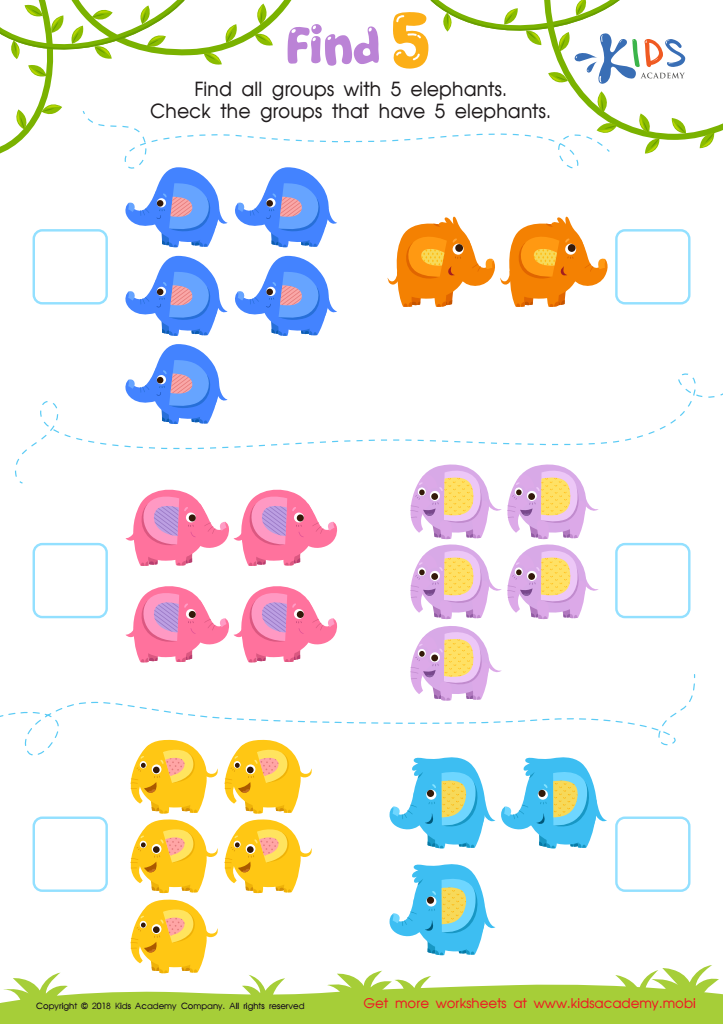
Find 5 Worksheet
Find 5 Worksheet

Find 5 Worksheet

Kids will love these cheery elephants that help them discover grouping and counting by fives. It's a great way to start learning addition and multiplication, while also developing fine motor skills. Download the free PDF and let the fun begin.
Find 5 Worksheet
Worksheet
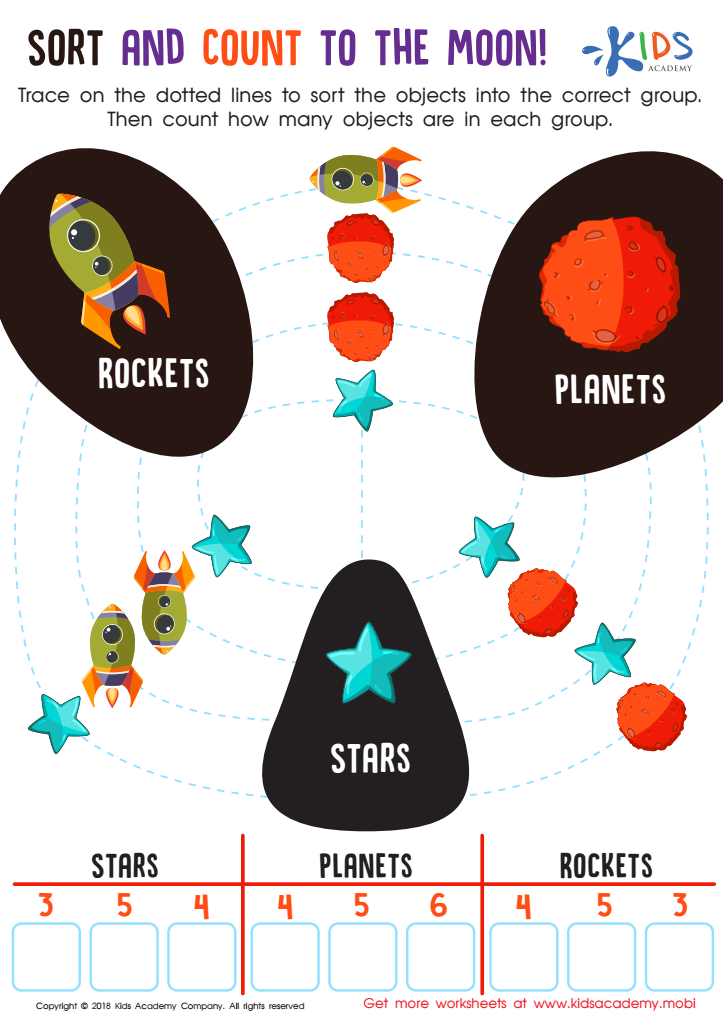
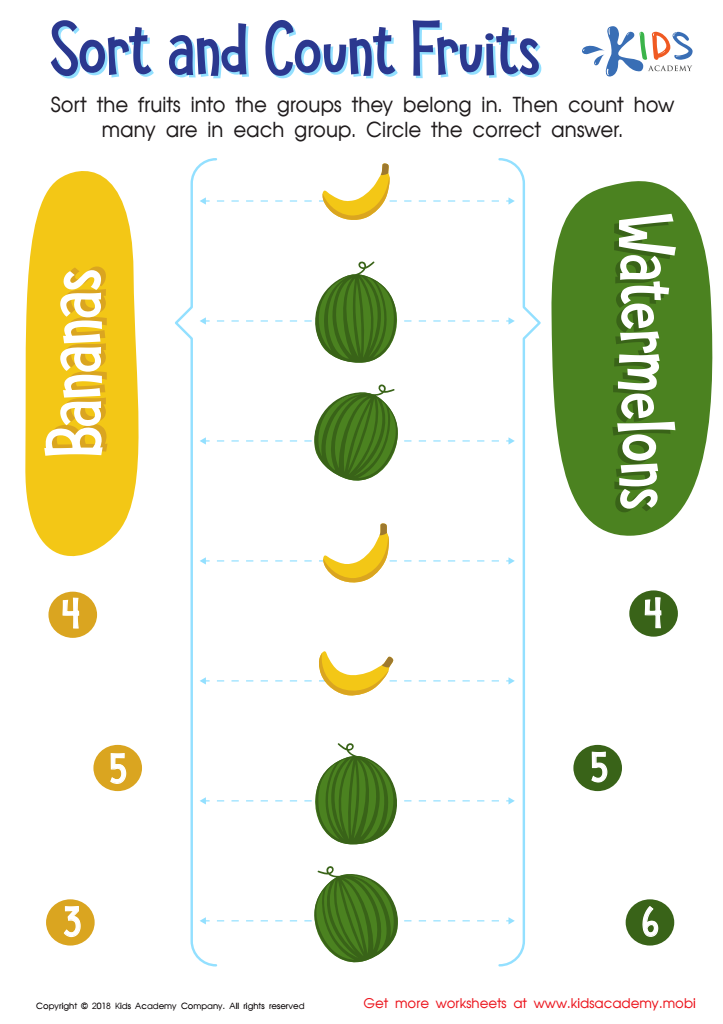
Sort and Count Fruits Worksheet

Sort and Count Fruits Worksheet

Allow your children to hone their critical thinking and number reasoning skills with this free worksheet. They'll sort, count, and trace fruits while learning basic number sense. A fun, delicious learning experience with familiar pictures they'll love.
Sort and Count Fruits Worksheet
Worksheet
Sort and Count Candy Worksheet
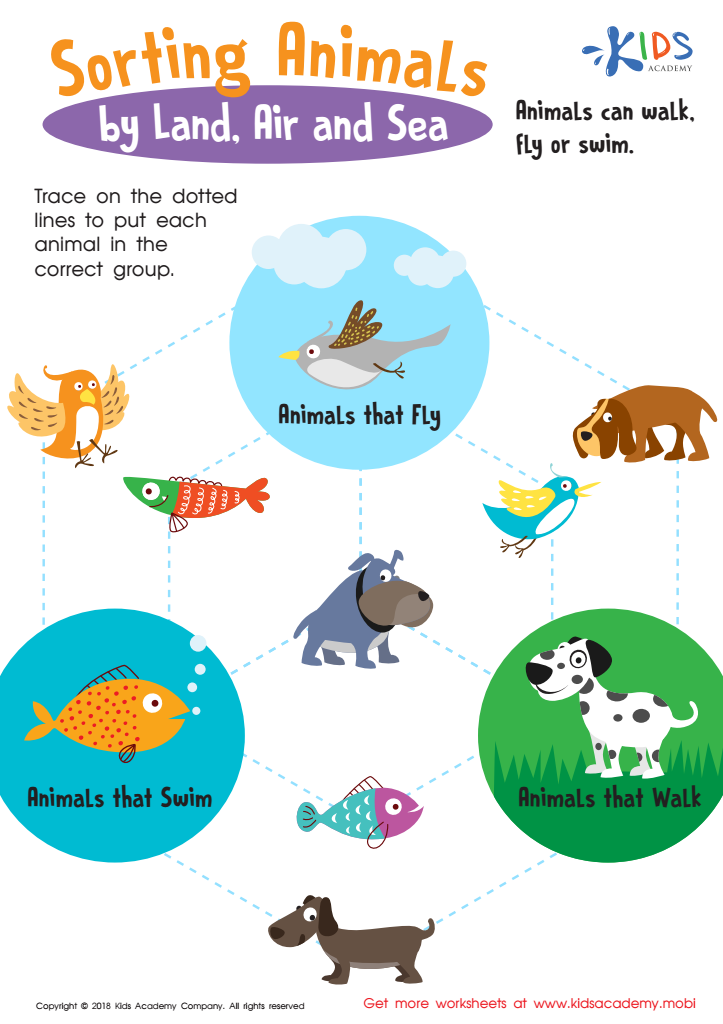

Sort and Count Candy Worksheet

Sort chocolate and candy with your kids! Help them use recognizable items and pictures to sort, practice counting with one-to-one representation, and develop their fine motor skills with the traceable lines. Download this free worksheet to get started. Yum!
Sort and Count Candy Worksheet
Worksheet
Sorting Animals by Land, Air and Sea Worksheet

Sorting Animals by Land, Air and Sea Worksheet

Kids will use critical thinking and fine motor skills with this worksheet! They'll analyze animal traits and draw lines to sort them into groups of those that fly, swim, or walk. It's a fun way to hone skills and have a great time!
Sorting Animals by Land, Air and Sea Worksheet
Worksheet
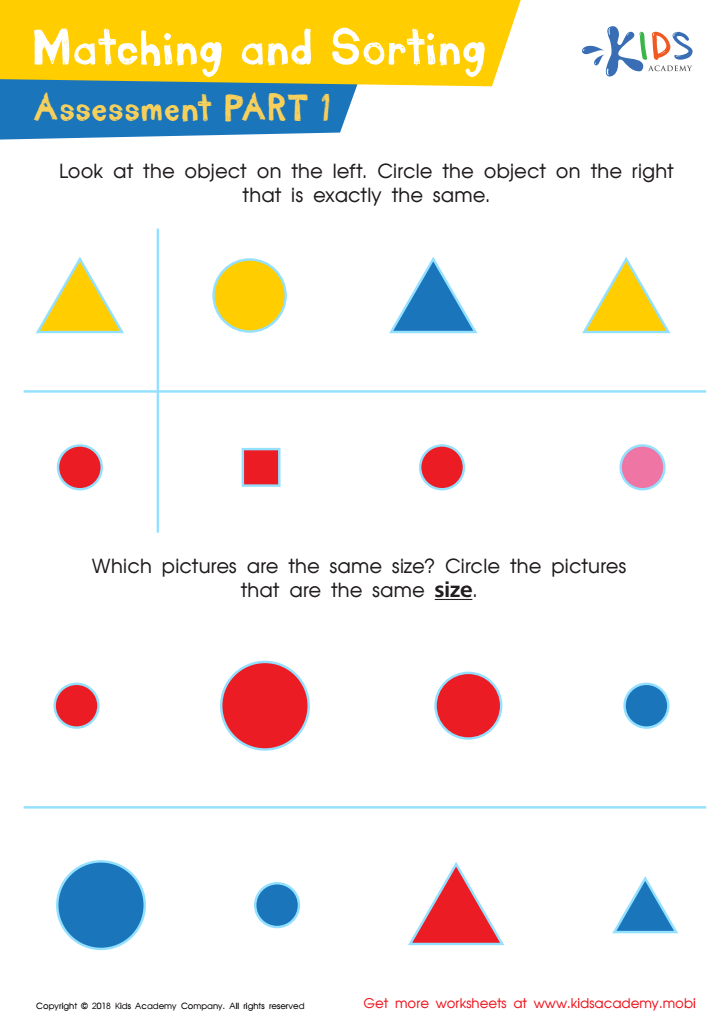
Sorting Shapes - Part 3 Worksheet

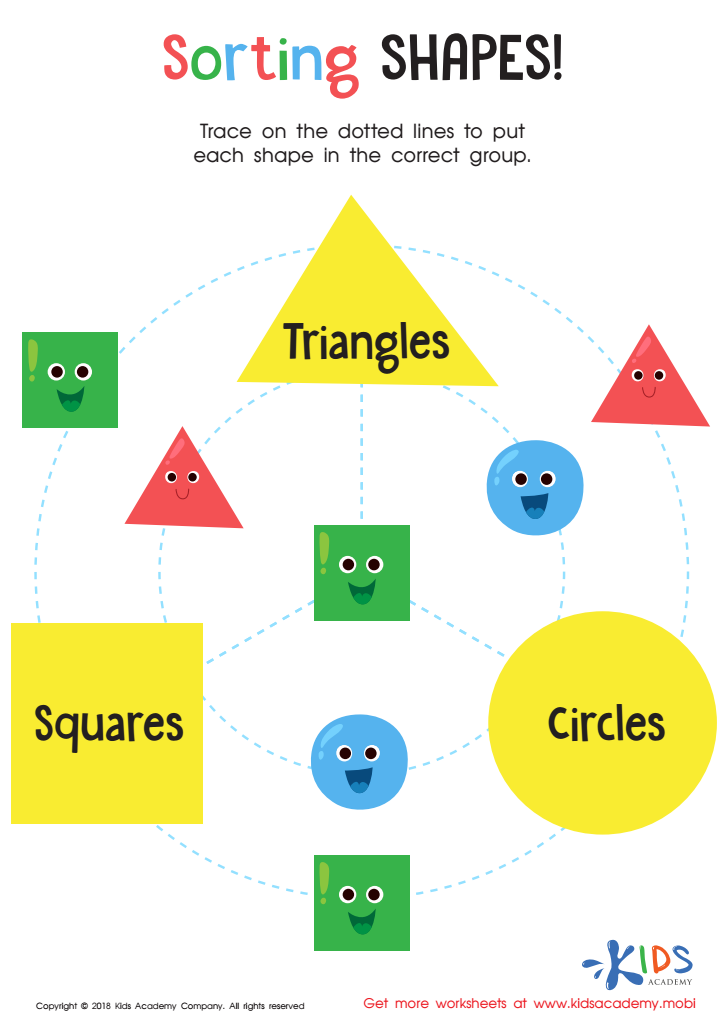
Sorting Shapes - Part 3 Worksheet

Download this fun PDF to help your kiddos recognize basic shapes like circles, squares, and triangles. It'll sharpen their fine motor skills as they trace and sort shapes by color, size, and sides. Your kids won't even realize they're learning with these cheery shapes!
Sorting Shapes - Part 3 Worksheet
Worksheet
Sorting Animals in 3 Groups Worksheet

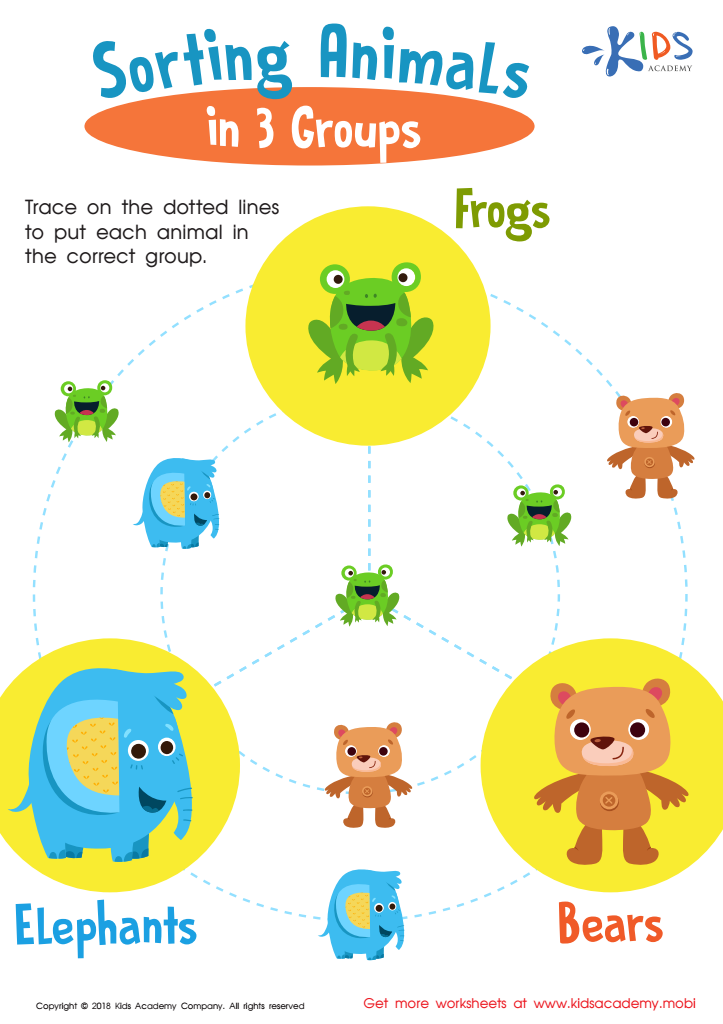
Sorting Animals in 3 Groups Worksheet

Let your kids practice and build skills for future Venn Diagrams with this PDF worksheet. They'll trace lines to match and group animals, and learn the differences and similarities of animals by categorizing with pictures and words. Plus, it's a great way to develop fine motor skills.
Sorting Animals in 3 Groups Worksheet
Worksheet
Recycle Sort Worksheet

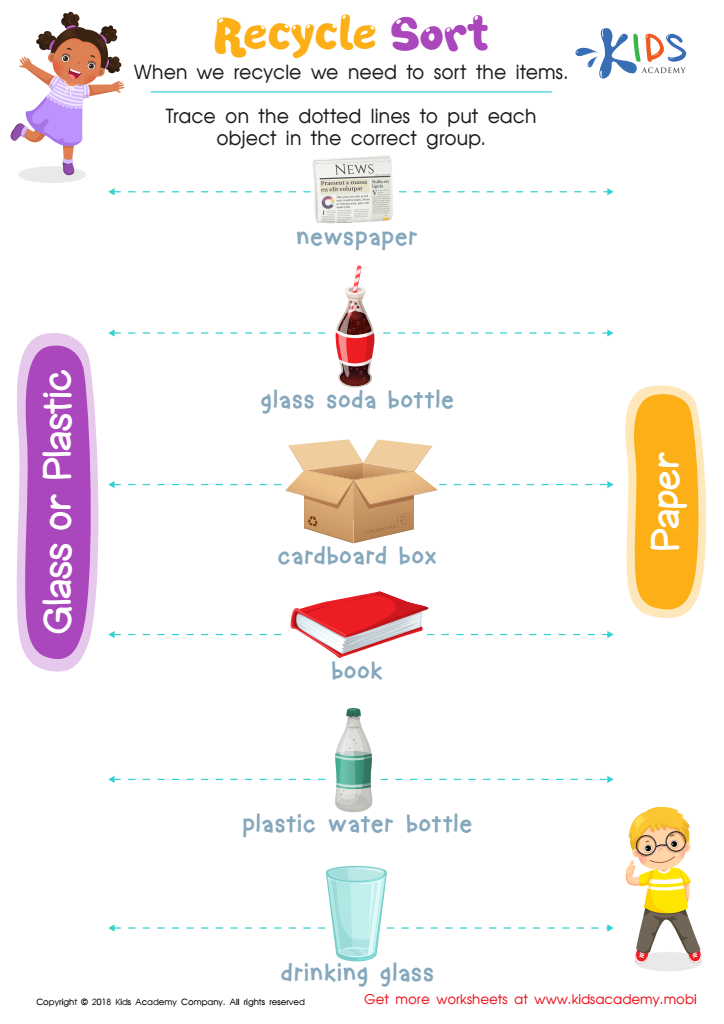
Recycle Sort Worksheet

Help your children become eco-warriors while they develop critical thinking and fine motor skills with this free downloadable worksheet! Engaging pictures and matching words, plus fun and bright colors, will have kids analyzing and sorting recyclables into paper or glass/plastic groups using traceable lines.
Recycle Sort Worksheet
Worksheet
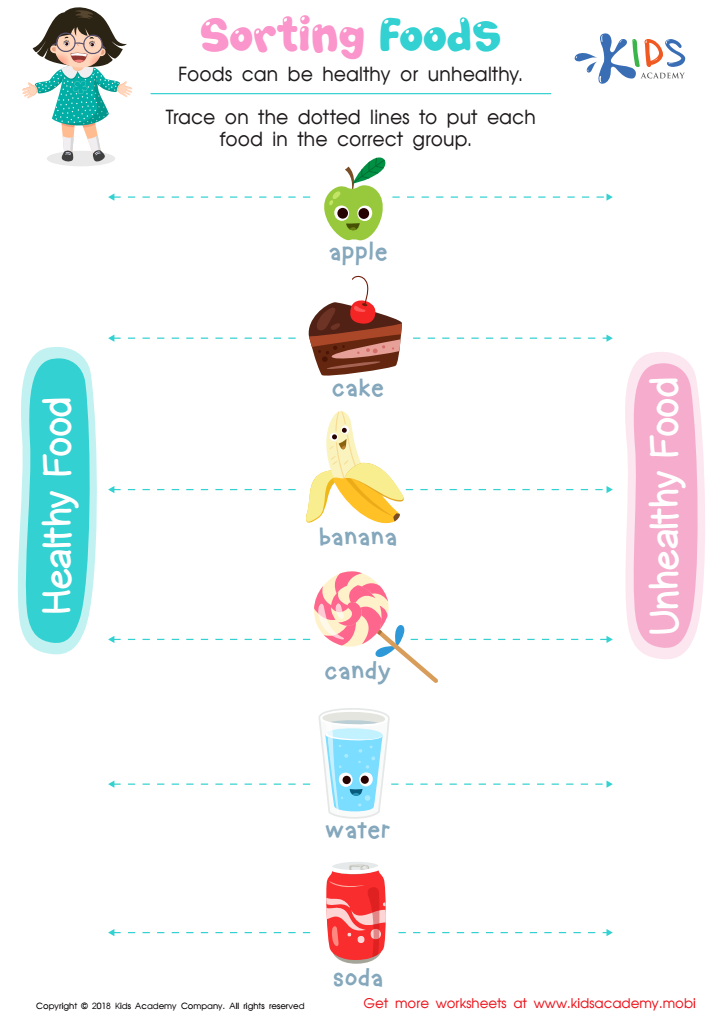
Sorting Food Worksheet

Sorting Food Worksheet

This delightful worksheet boosts critical thinking and fine motor skills. Kids use prior knowledge and pictures to sort foods into healthy and unhealthy groups. Tracing lines support accurate sorting and matching. Enjoy fun and free learning!
Sorting Food Worksheet
Worksheet
Sorting Animals Worksheet

Sorting Animals Worksheet

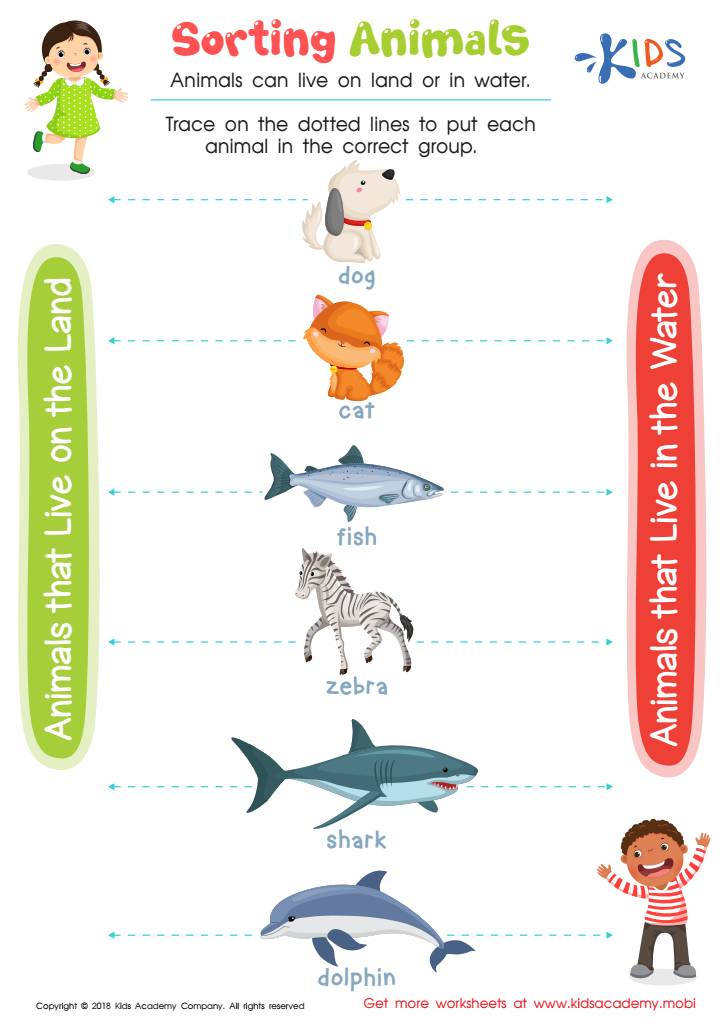
Your kids will love this free, interactive worksheet! With image clues, they can read and trace the animal names, and then sort them into groups of land or water animals. It's an enjoyable way to boost their critical thinking, fine motor and prior knowledge skills.
Sorting Animals Worksheet
Worksheet
Replacing nouns with pronouns worksheet

Replacing Nouns with Pronouns Worksheet
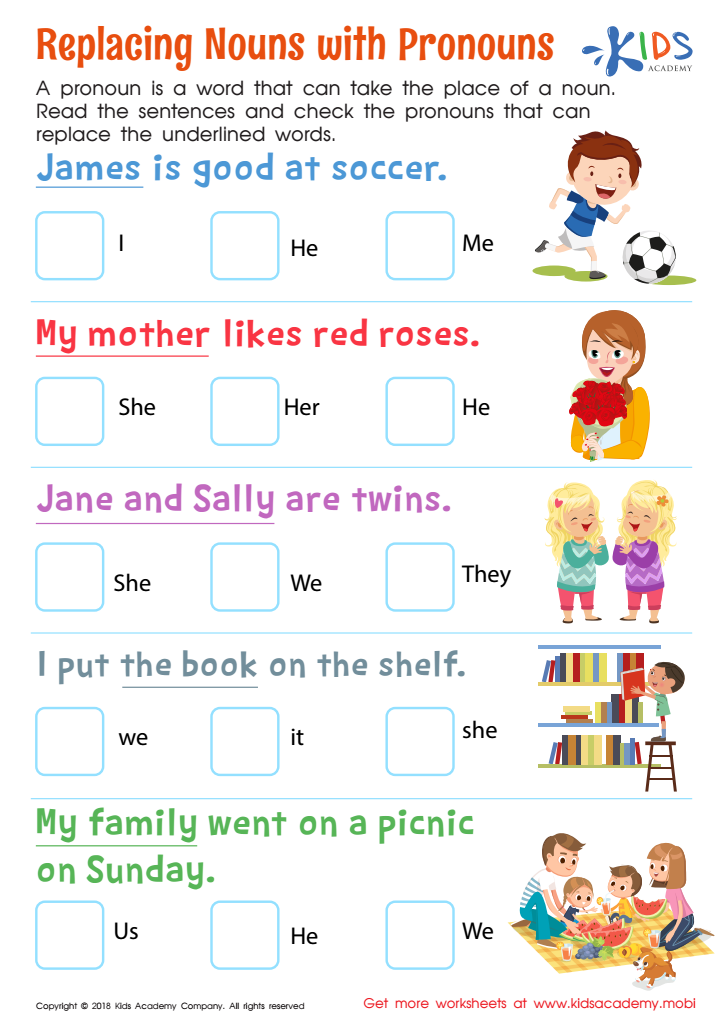
This colorful worksheet helps kids grow their writing skills by replacing nouns with pronouns. Read each sentence and select a pronoun for the underlined phrase. Then read the sentence again with the new pronoun.
Replacing Nouns with Pronouns Worksheet
Worksheet
Parts of speech printable worksheet

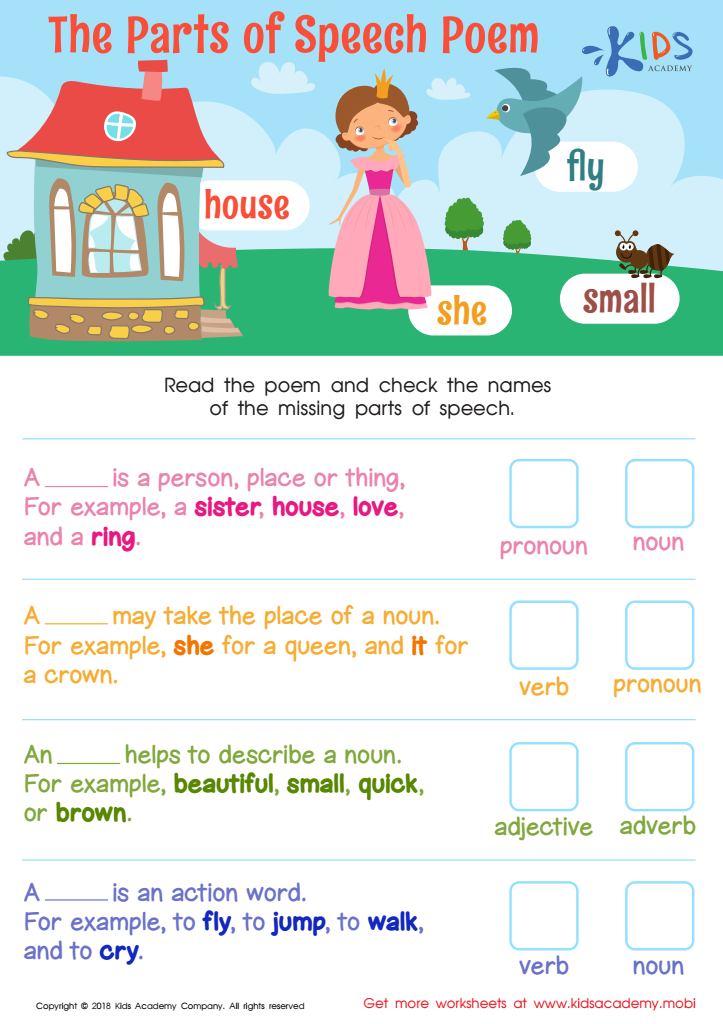
Parts of Speech Printable Worksheet
This worksheet will help your child review grammar basics. Read the poem, check boxes, and fill in the blanks with the correct part of speech. Vibrant images and words will make it an enjoyable experience for your learner!
Parts of Speech Printable Worksheet
Worksheet
5 U.S. Regions Worksheet

5 U.S. Regions Worksheet

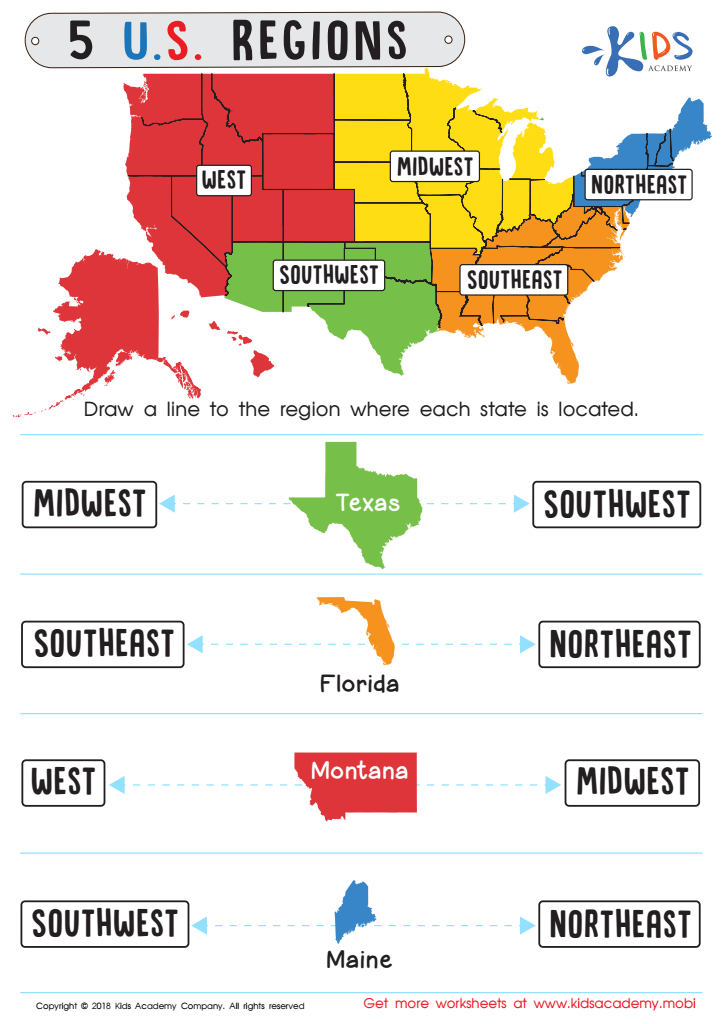
Familiarize students with states & capitals in your country before starting. Look at the map and ask kids to name some states. Then have them draw a line to the region each state is located in. This'll help them recognize the different places and make the exercise easier.
5 U.S. Regions Worksheet
Worksheet
Cities and States: Matching Worksheet

Cities and States: Matching Worksheet

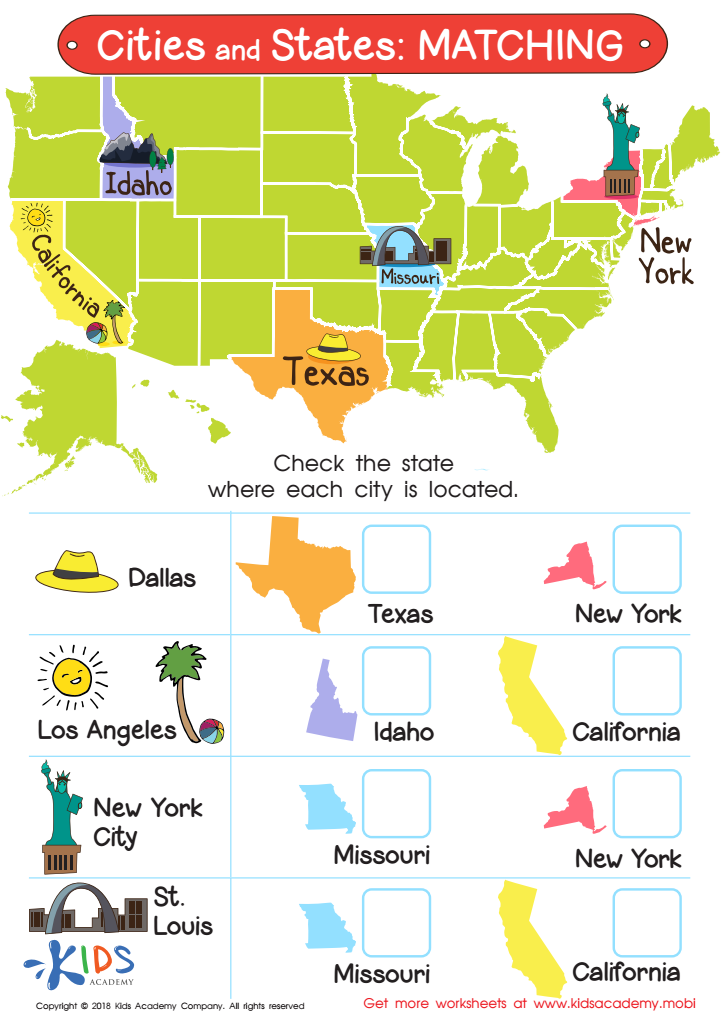
Ask your child if they can name some of the states in your country. If they can, great! If not, use this worksheet to have them learn some states. Show them the map and ask them to observe the shape and color of each state. Then, have them answer the questions by checking the state where each city is located.
Cities and States: Matching Worksheet
Worksheet
Force and Interactions: Assessment 1 Worksheet

Force and Interactions: Assessment 1 Worksheet

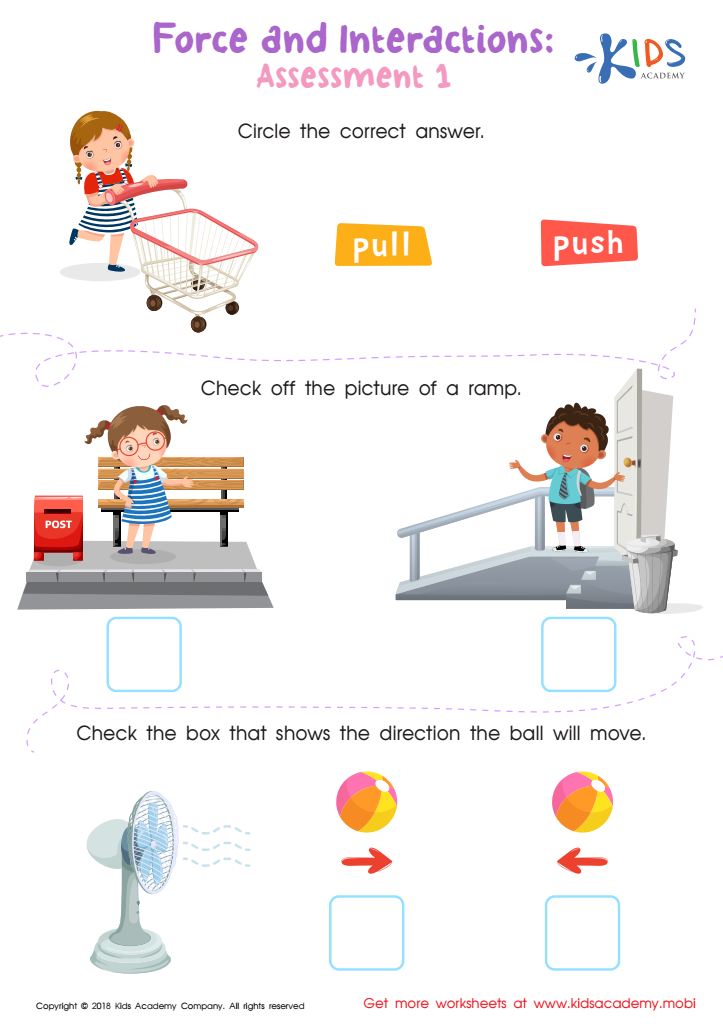
Test your students' knowledge of pushing, pulling, ramps and wind with this worksheet. The first task requires them to identify push or pull pictures. The second asks them to identify a ramp and the third to explain which direction a ball will move when exposed to wind.
Force and Interactions: Assessment 1 Worksheet
Worksheet
Force and Interactions: Review 2 Worksheet

Force and Interactions: Review 2 Worksheet

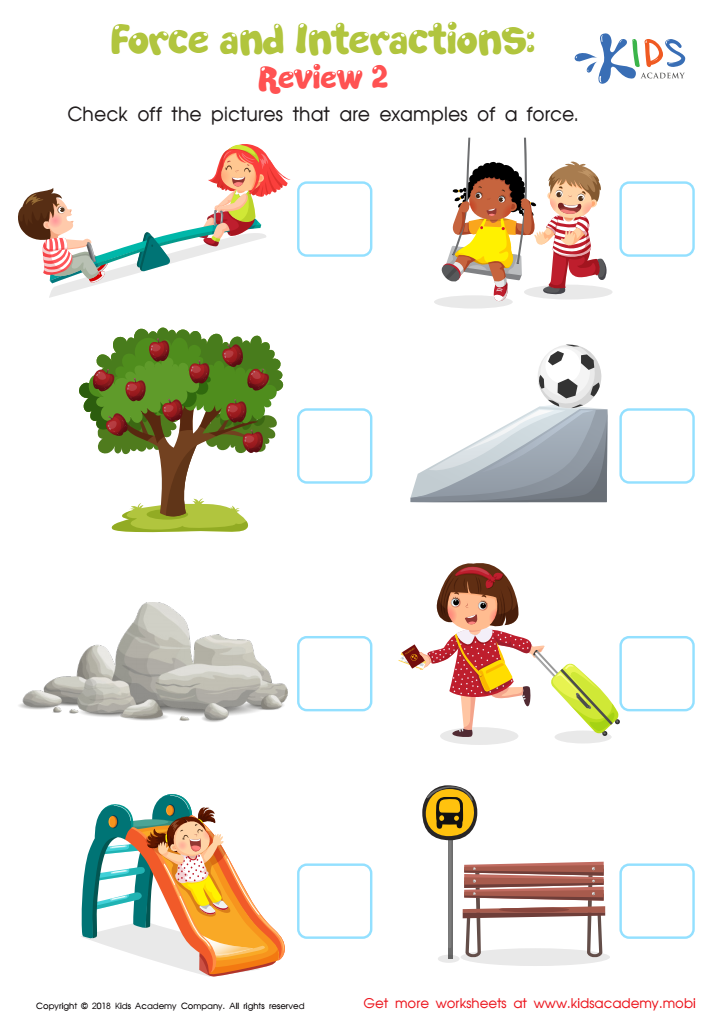
Your child can identify force examples by checking the pictures. There are 8 images of kids engaging in activities and objects in motion. Get them to name the activities and objects, or if they know, explain force and interaction.
Force and Interactions: Review 2 Worksheet
Worksheet
Force and Interactions: Review 1 Worksheet

Force and Interactions: Review 1 Worksheet

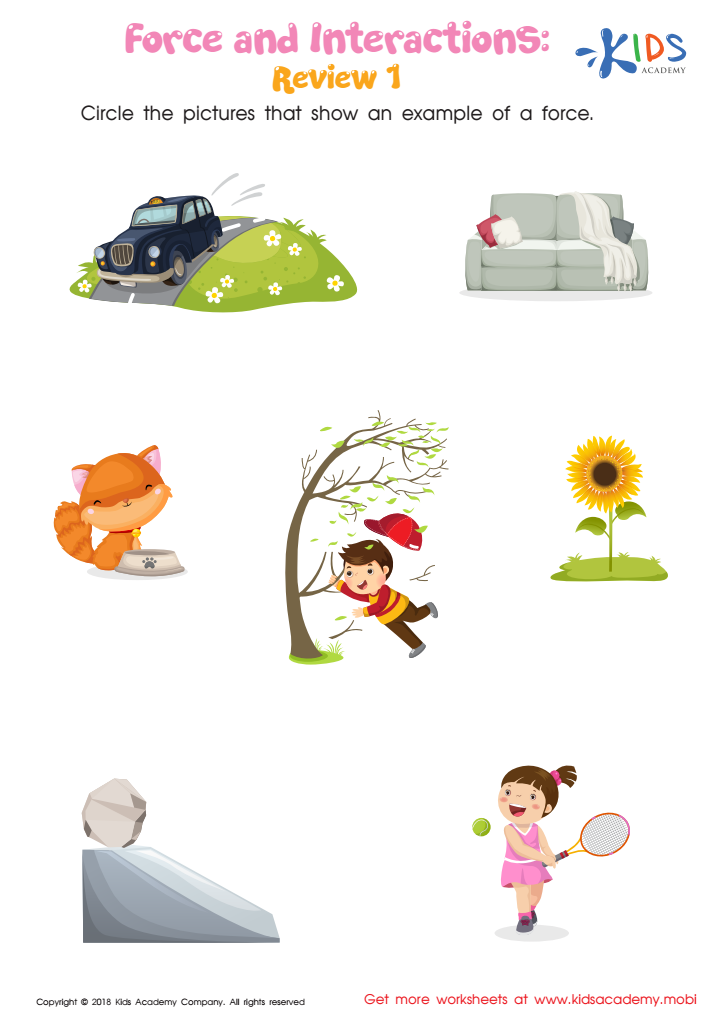
See how well your child can identify the different forces. Explain to your child that force is what causes objects to move, such as wind blowing a branch or an object going down a ramp. Ask them to circle images that show a force and assess how well they can identify them.
Force and Interactions: Review 1 Worksheet
Worksheet
Ramps Worksheet
Ramps Worksheet

Ramps Worksheet

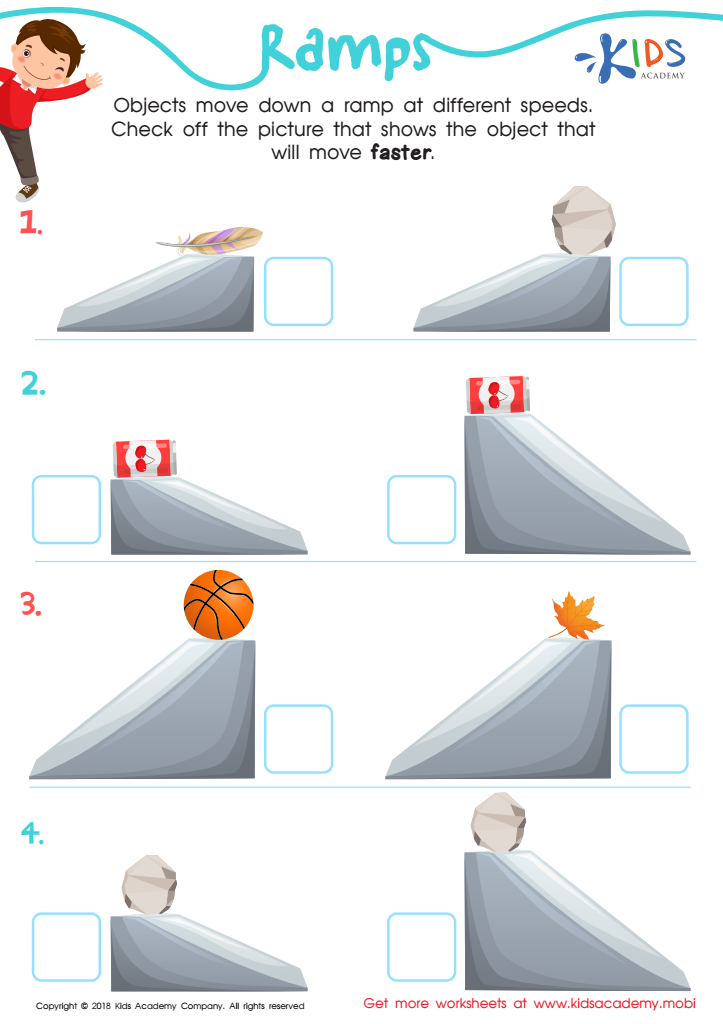
If your child has seen a ramp, they'll find this worksheet easy. A ramp is sloped for objects to move quickly downwards. The printout has images of objects on different ramps. Ask your child to identify which object will move faster.
Ramps Worksheet
Worksheet
Ramps All Around us Worksheet

Ramps All Around us Worksheet

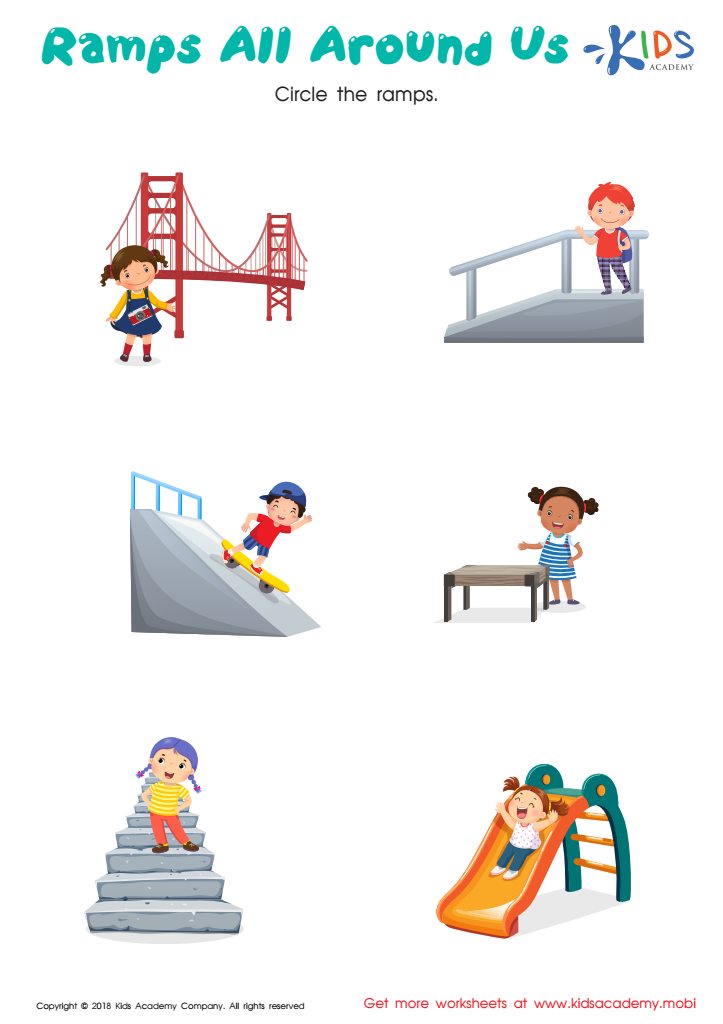
Ask your kids if they know what ramps are, then have them give you examples of places they've seen them. This worksheet has pictures of ramps - have your child identify and circle them.
Ramps All Around us Worksheet
Worksheet
Push or Pull Sorting Worksheet


Push or Pull Sorting Worksheet

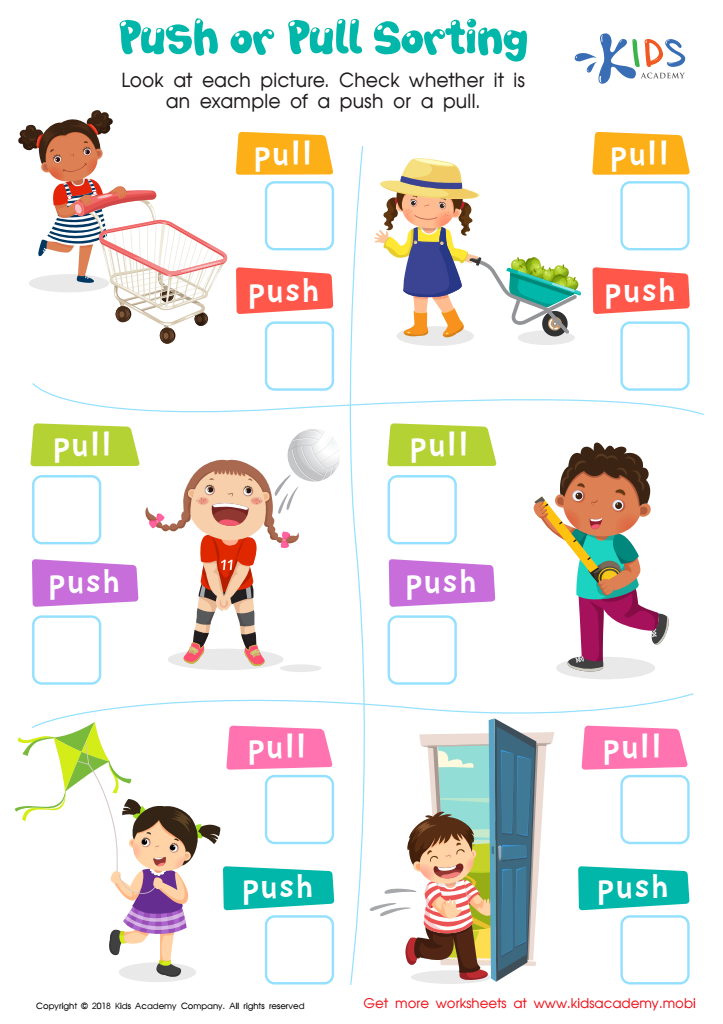
Show your child the pictures in this worksheet. Ask them to tell you what each child is doing. Then, ask them to identify whether it's an example of pushing or pulling. Ask if they know what these terms mean and if they can provide examples.
Push or Pull Sorting Worksheet
Worksheet
Will it Move? Worksheet

Will it Move? Worksheet

Does your child know about force? If yes/no, this worksheet can help. Force is invisible - like wind - but it moves objects. Ask your child to complete the maze, following the path of items moved by the wind. 80 words.
Will it Move? Worksheet
Worksheet
Which Direction Will it Go? Worksheet

Which Direction Will it Go? Worksheet

Explain to your students: when objects are blown by wind, they will move in the opposite direction. In the worksheet, there are pictures of wind sources and objects being blown by the wind. Ask your child to identify and check the direction each object will move.
Which Direction Will it Go? Worksheet
Worksheet
Down it Goes Worksheet

Down it Goes Worksheet

Explain gravity to your child using this fun worksheet. Ask them to give examples of things pulled down with force, then instruct them to circle the pictures that show this. It's a great way to help them understand the concept of gravity.
Down it Goes Worksheet
Worksheet
What's Inside the Building? Worksheet

What's Inside the Building? Worksheet

Have your child draw a line from each of the four buildings (printout provided) to the corresponding person or object. This worksheet will help them identify people who work in a hospital, courthouse, bank and others—what they wear and what they're called.
What's Inside the Building? Worksheet
Worksheet


Parents and teachers should care about the concept of "normal" for ages 6-9 because it plays a crucial role in a child's development and emotional well-being. During this stage, children are rapidly developing their social, cognitive, and emotional skills. Understanding what is considered typical behavior for this age group helps adults recognize milestones and identify any concerns early on.

Children in this age range often compare themselves to peers, shaping their self-esteem and sense of belonging. By fostering a supportive environment that celebrates individual differences, adults can help children develop resilience and healthy perspectives on normality. This can prevent issues like bullying, anxiety, and low self-esteem, which can have lasting effects on their development.

Moreover, recognizing normal behavior aids in creating appropriate learning experiences. Teachers can better tailor their teaching methods and curricula to meet the varied needs of their students. In school settings, this creates inclusive and engaging environments where every child can thrive.

In summary, understanding and caring about what is considered normal for children aged 6-9 helps guide adults in supporting their growth, teaching empathy, fostering self-acceptance, and creating more effective learning experiences.