Normal Consonants Worksheets for Ages 6-9 - Page 2
26 filtered results
-
From - To
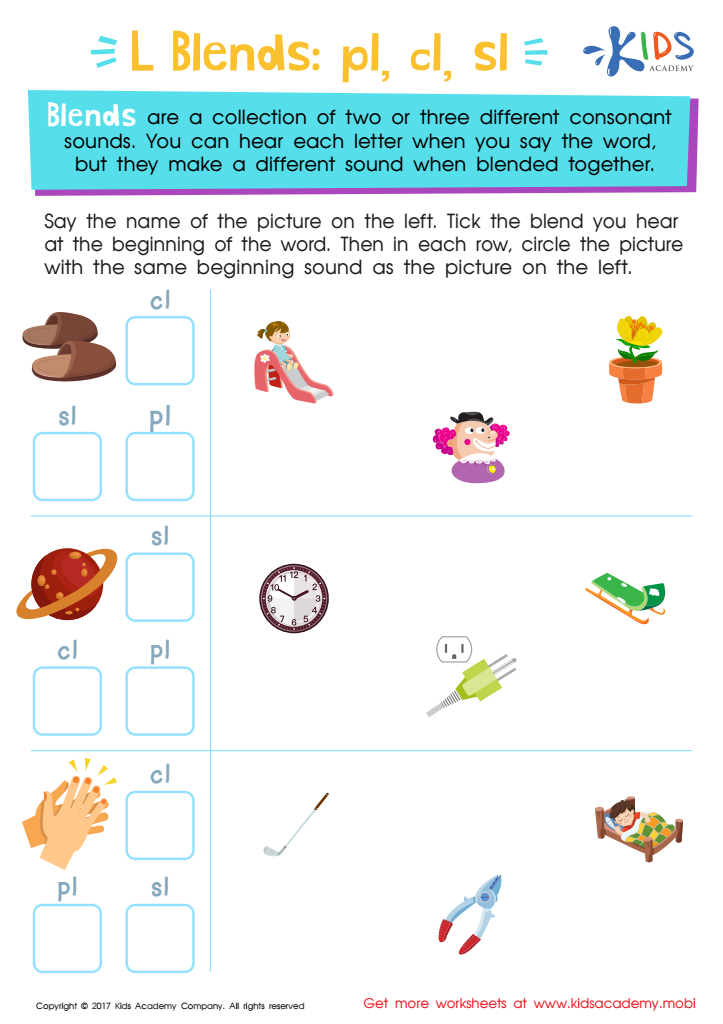
L Blends: "Pl", "Cl" and "Sl" Printable
 Assign to My Students
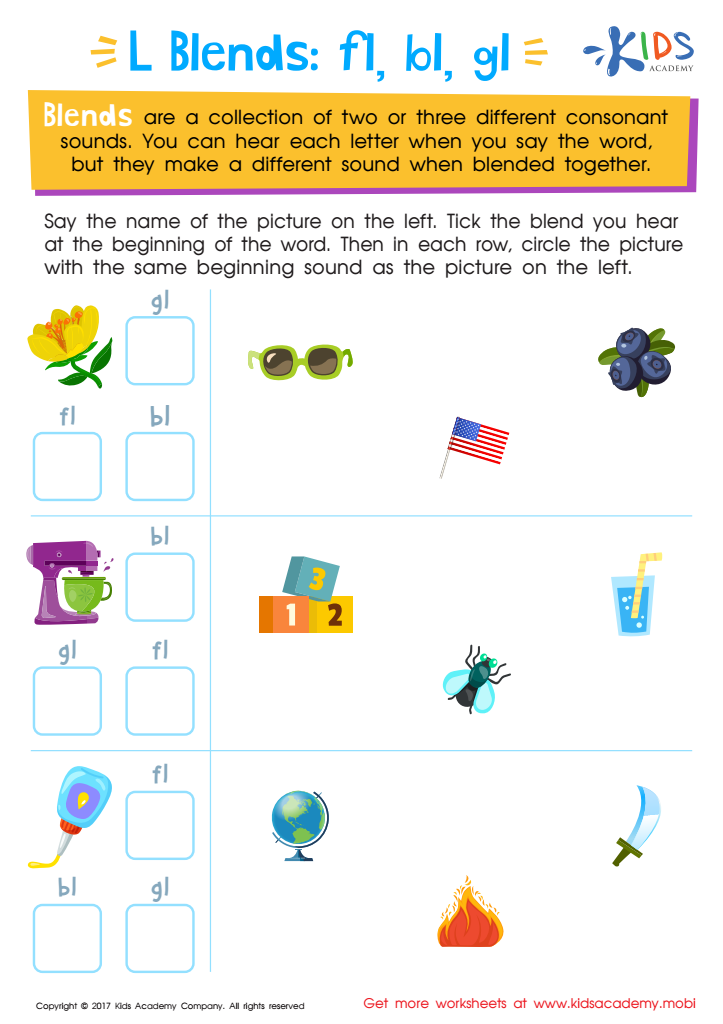
Blending Consonants: "Fl", "Bl" and "Gl" Printable



Understanding normal consonants is crucial for children aged 6-9, as this stage marks a key period in their language development. During these formative years, children begin to refine their speech and reading skills, greatly impacting their overall communication abilities. Parents and teachers should care about normal consonants because they serve as the building blocks of clarity in speech and writing.
First, mastering consonants helps children improve their pronunciation and auditory discrimination, which are essential for effective communication. Clear articulation fosters confidence and encourages participation in discussions, boosting their social skills. Moreover, developing a strong foundation in consonant sounds aids reading fluency and comprehension. This is particularly important as children transition from learning to read to reading to learn.
Additionally, awareness of consonant sounds enables teachers and parents to identify and address potential speech and language disorders early on, ensuring timely intervention. Encouraging activities that focus on consonants, such as playing games or singing songs, can make learning engaging and effective. Ultimately, by prioritizing consonant knowledge, caregivers can support children’s linguistic development, paving the way for future academic success and enhanced interpersonal communication skills.






