Normal Difficulty Online Worksheets for Grade 1 - Page 9
613 filtered results
Difficulty Level
Grade
Age
-
From - To
Subject
Activity
Standards
Favorites
With answer key
Interactive
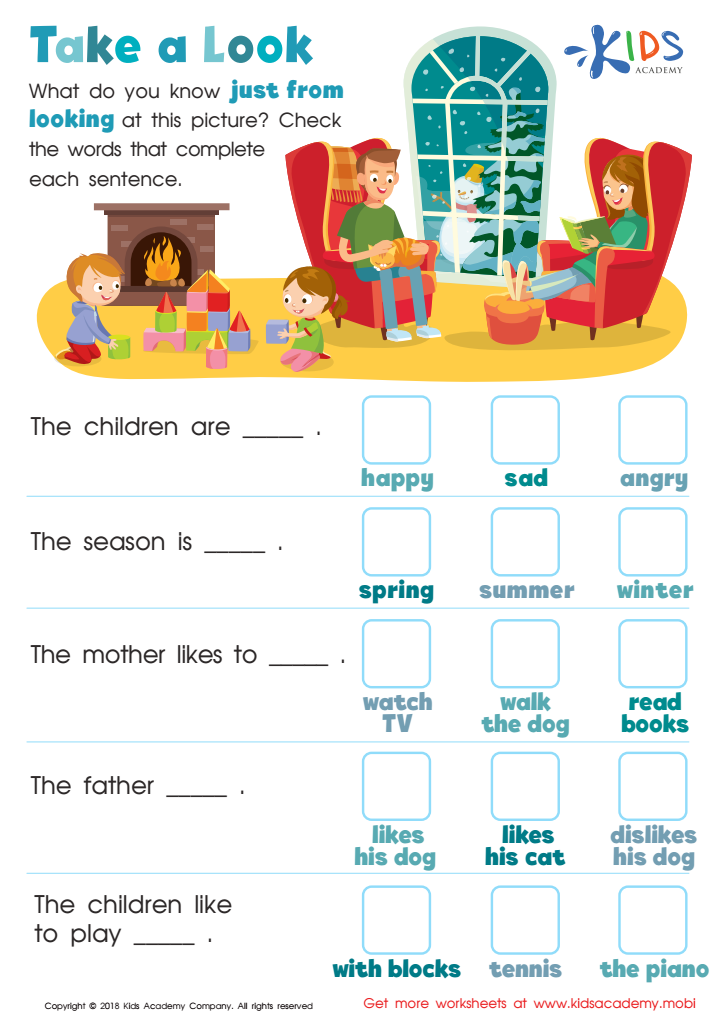
Take a Look - Part 1 Worksheet
Young learners gain understanding when using picture clues when reading. Looking at illustrations can help students learn the meaning of key vocabulary when reading fiction or informational text. Ask your students to look at the worksheet and observe what they can learn from the picture. It's a great comprehension strategy for early readers.
 Assign to My Students
Take a Look - Part 1 Worksheet
Worksheet
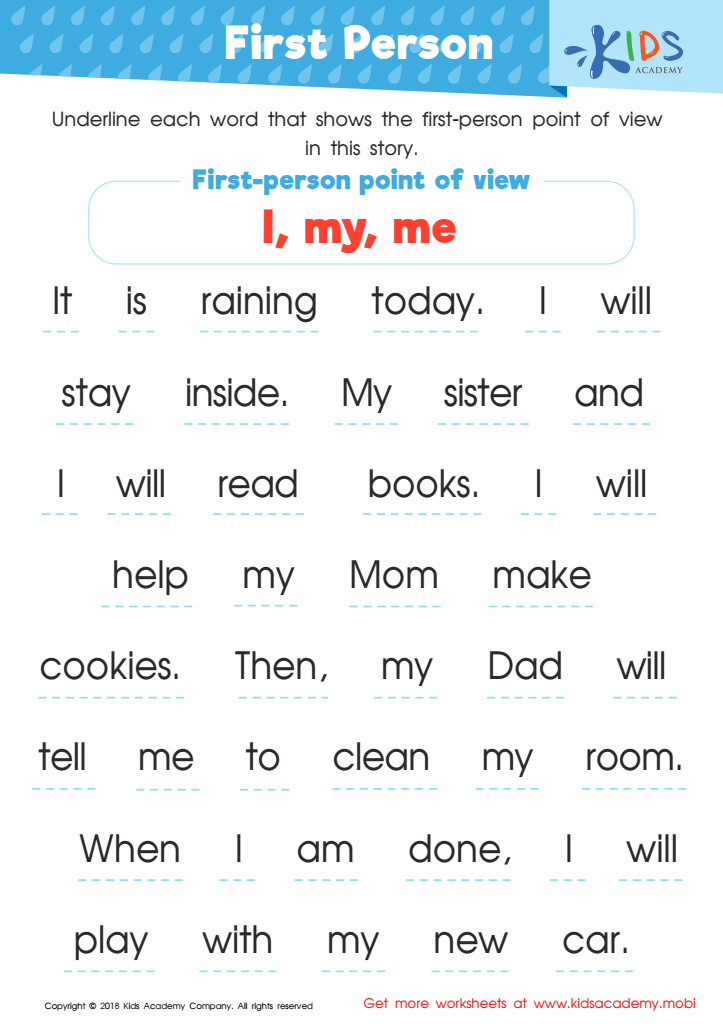
First Person Worksheet
Teachers help students understand and recognize why authors choose different points of view. This worksheet focuses on first person point of view and its pronouns (I, me and my). Students will read a story, then circle each first-person pronoun. Through this activity, they'll practice identifying the POV in a text.
First Person Worksheet
Worksheet
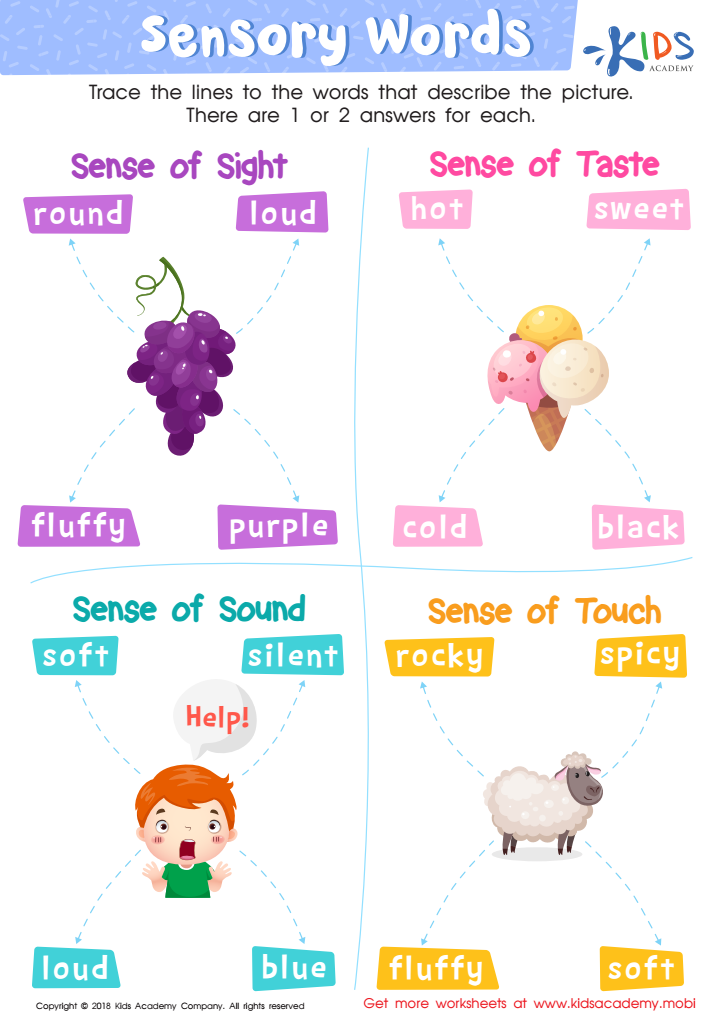
Sensory Words Worksheet
This worksheet helps students explore sensory words by looking at pictures and selecting one or two words to describe how it looks, feels, tastes, smells or sounds. Adding sensory words to texts makes them more interesting and helps students comprehend stories and articles better.
Sensory Words Worksheet
Worksheet
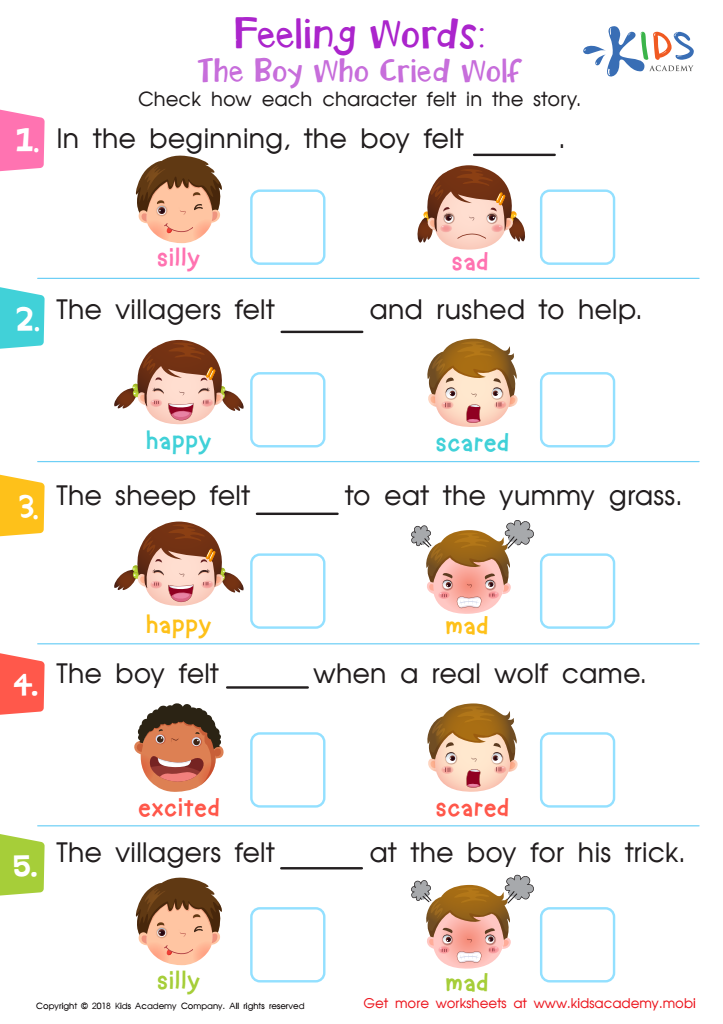
Feeling Words: The Boy Who Cried Wolf Worksheet
This worksheet helps students infer characters' traits and feelings by reading The Boy Who Cried Wolf. They choose the correct emotion for each character to improve their story comprehension. A great resource for the reading classroom, it teaches an essential comprehension skill.
Feeling Words: The Boy Who Cried Wolf Worksheet
Worksheet
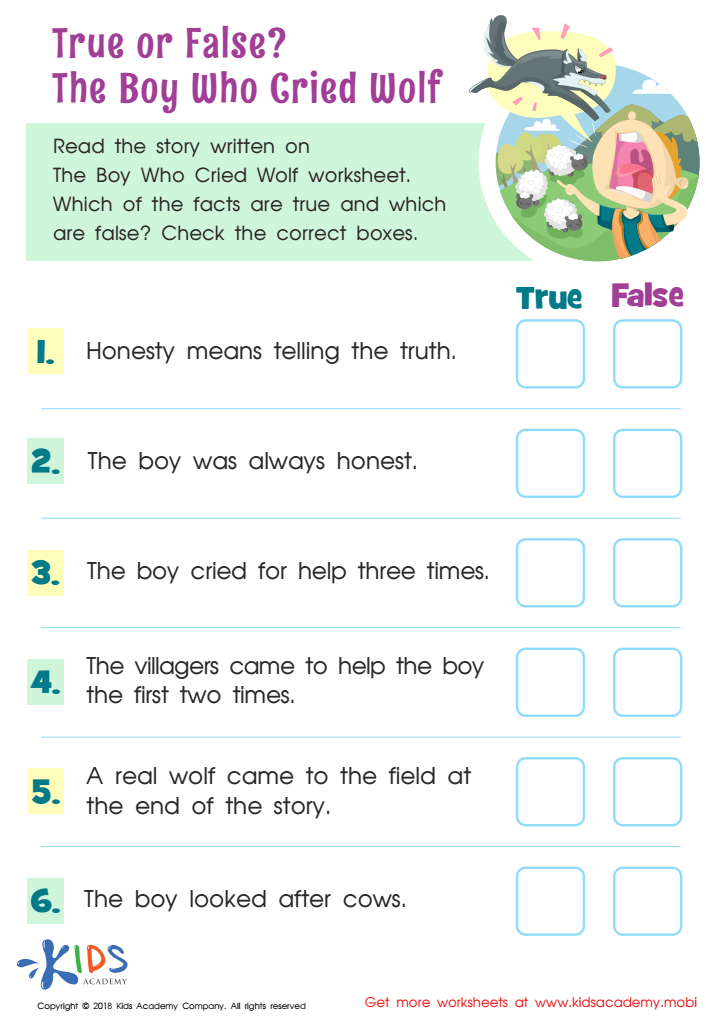
True or False? The Boy Who Cried Wolf Worksheet
Test students' understanding of The Boy Who Cried Wolf with this free downloadable worksheet. It contains true/false questions to assess comprehension of key events. Easy to complete, it checks students can recall facts from the story. Try it and see!
True or False? The Boy Who Cried Wolf Worksheet
Worksheet
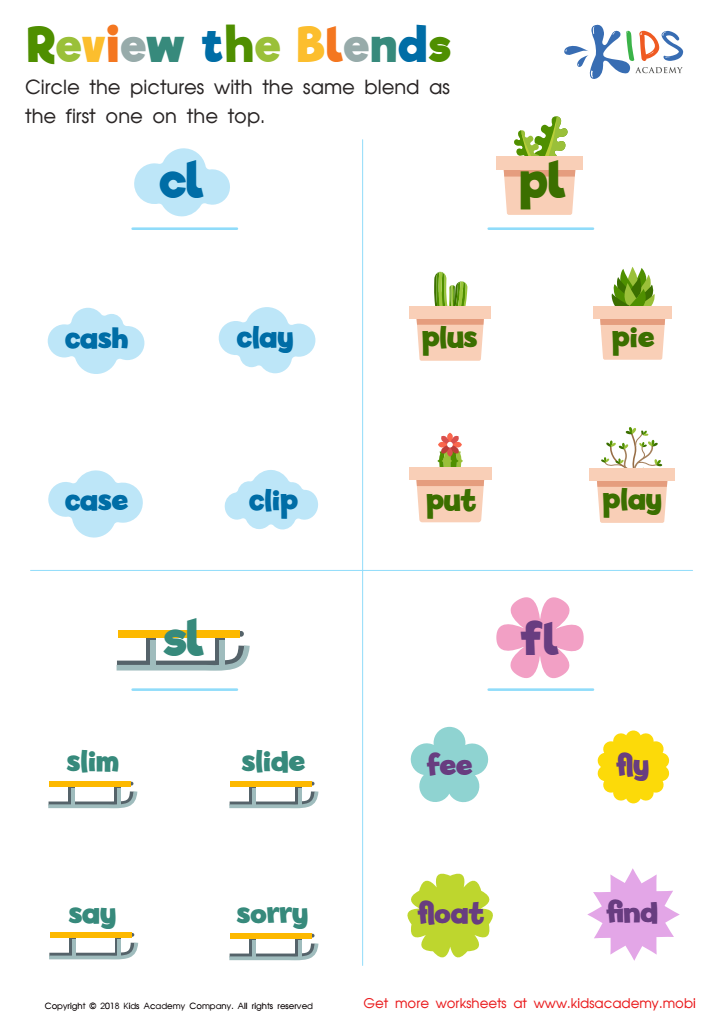
Review the Blends Worksheet
Consonant blends are two or three consonants that make a sound when pronounced together. L-blends like cl, bl, sl, fl and 3-letter blends like str, slp are common. This phonics worksheet helps early readers identify words containing two letter L-blends. Students must circle the words then read them aloud.
Review the Blends Worksheet
Worksheet
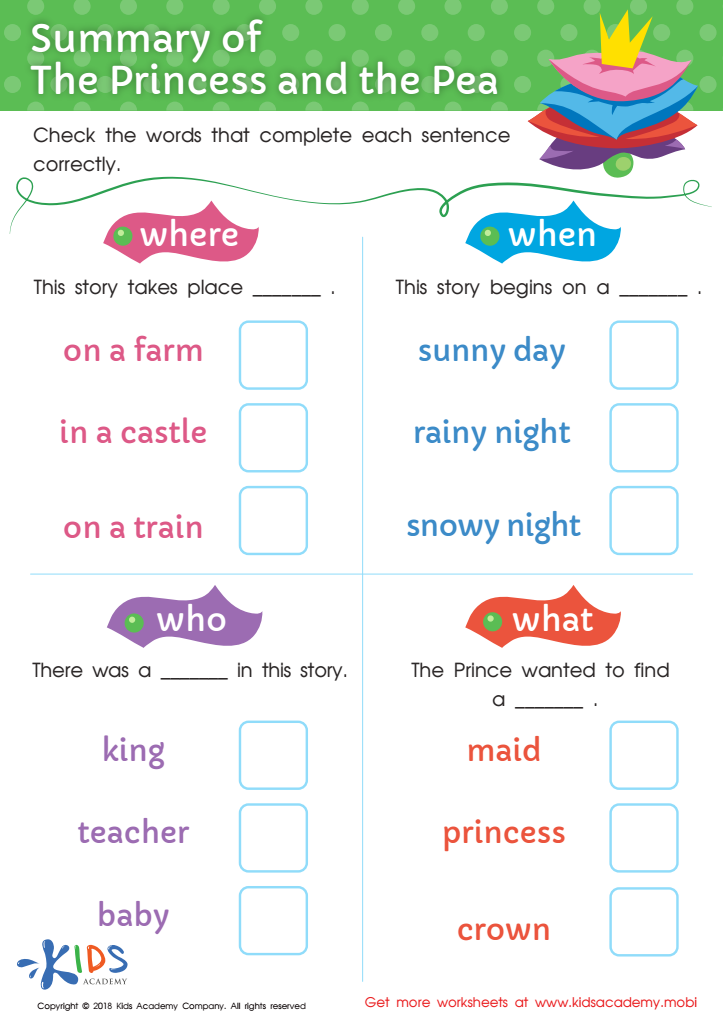
The Summary of the Princess and the Pea Worksheet
Test your student’s knowledge of the story The Princess and the Pea with this quick worksheet. With who, what, when and where questions, it's a great way to assess comprehension skills. It's a perfect resource for school or home classrooms. Download it now and start improving comprehension skills!
The Summary of the Princess and the Pea Worksheet
Worksheet
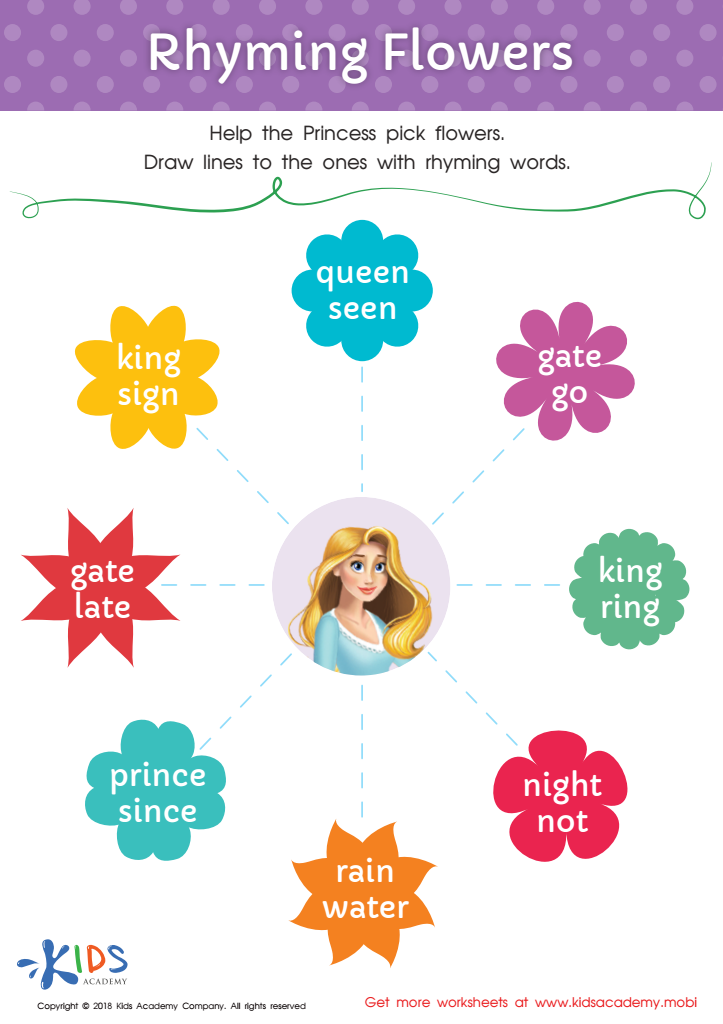
Rhyming Flowers Worksheet
Recognizing rhyming words boosts phonological awareness. With this skill, students can identify similar sounds in words and predict new words more accurately. This worksheet provides practice and is ideal for the reading classroom. Download and find the rhyming words! (80 words)
Rhyming Flowers Worksheet
Worksheet
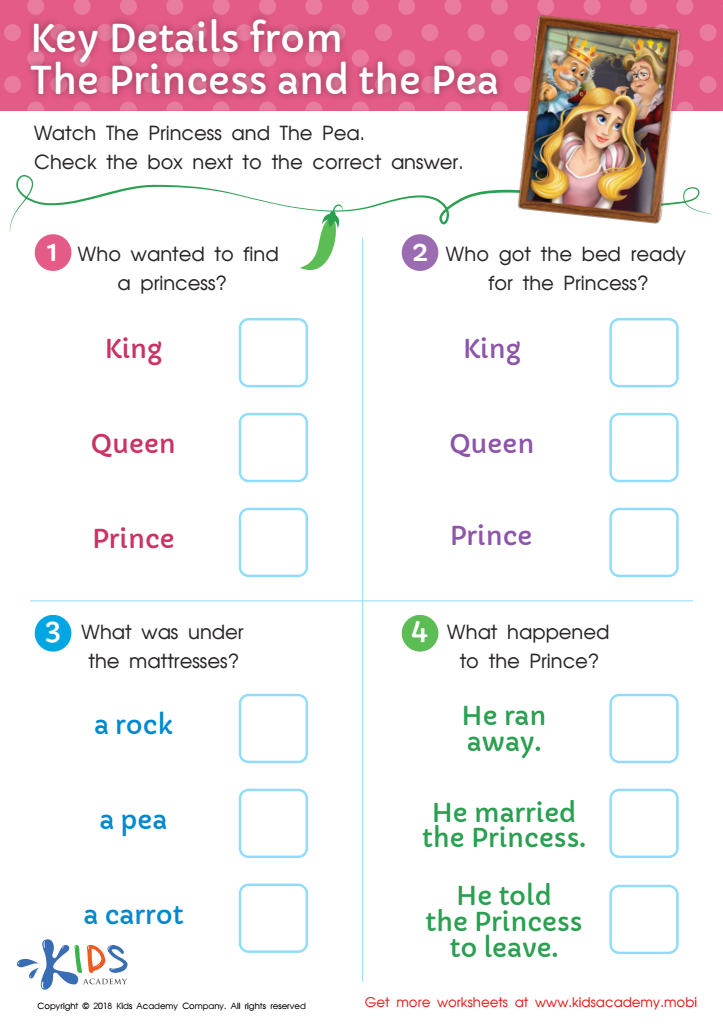
Key Details from the Princess and the Pea Worksheet
After reading The Princess and the Pea, ask your students questions to assess their comprehension of the story. Check their knowledge of key details. This printable can be used to help evaluate their understanding. Encouraging the recall of story events helps build important reading skills.
Key Details from the Princess and the Pea Worksheet
Worksheet
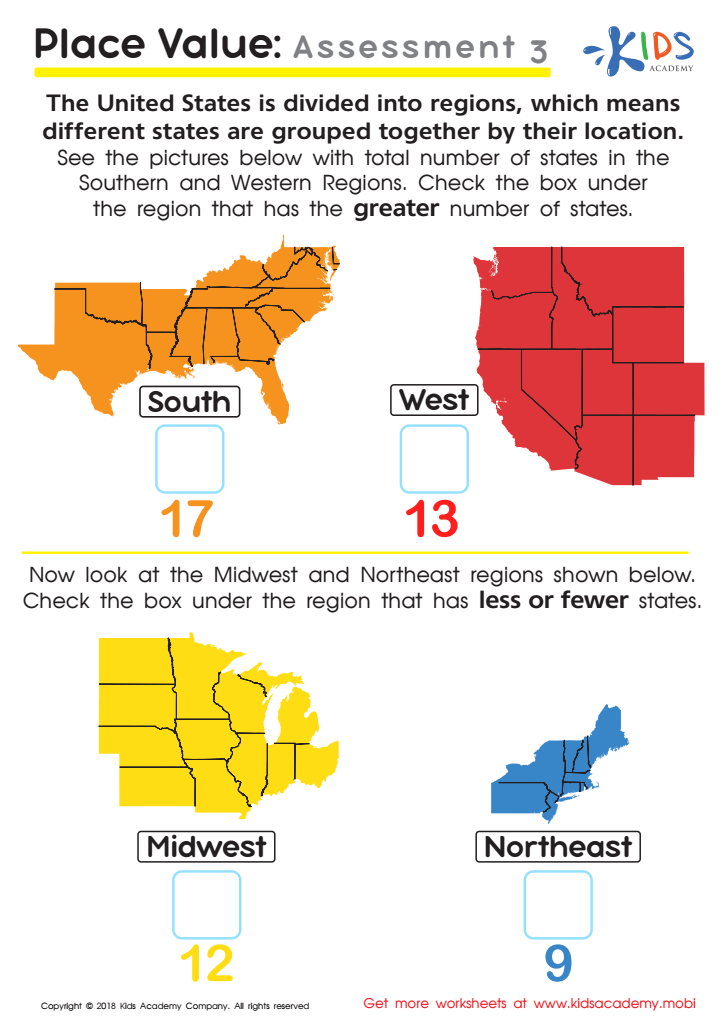
Place Value: Assessment 3 Worksheet
Test your child's math skills without them realizing it! This fun worksheet looks at the states and regions of the U.S. and your child can compare numbers greater or lesser than the other. It's the perfect way to assess your child's number sense without them knowing.
Place Value: Assessment 3 Worksheet
Worksheet
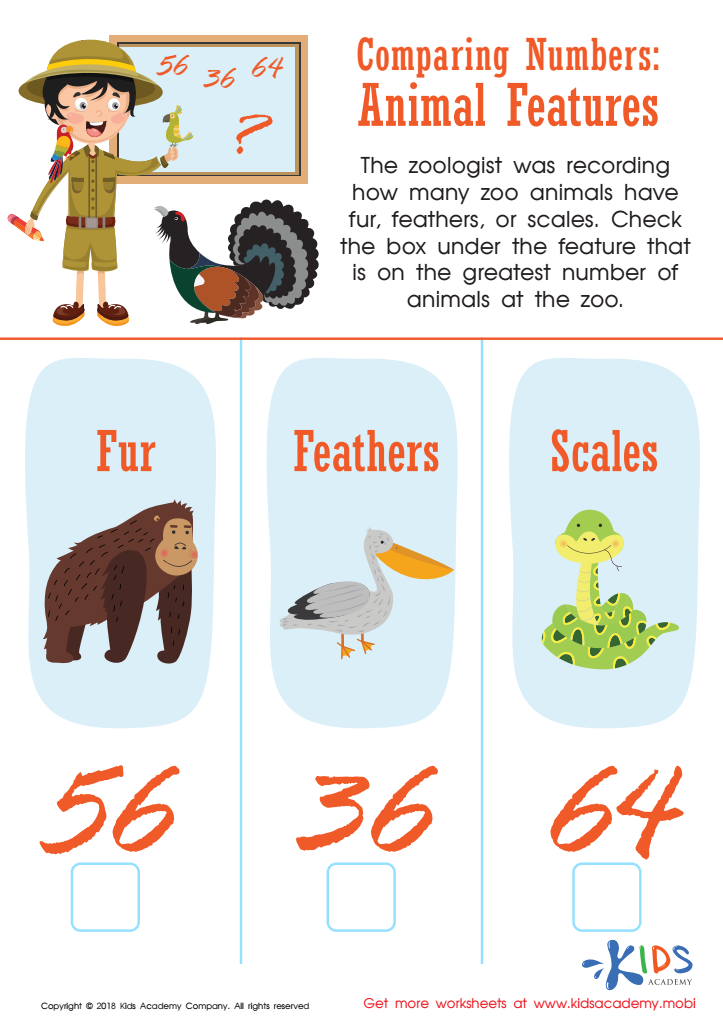
Animal Features Worksheet
Let your kids join a budding zoologist! They can count zoo animals' fur, feathers or scales, then use numbers and comparison to check the box with the most friends. The PDF will captivate them and help them understand how the value of '6' changes based on its position.
Animal Features Worksheet
Worksheet
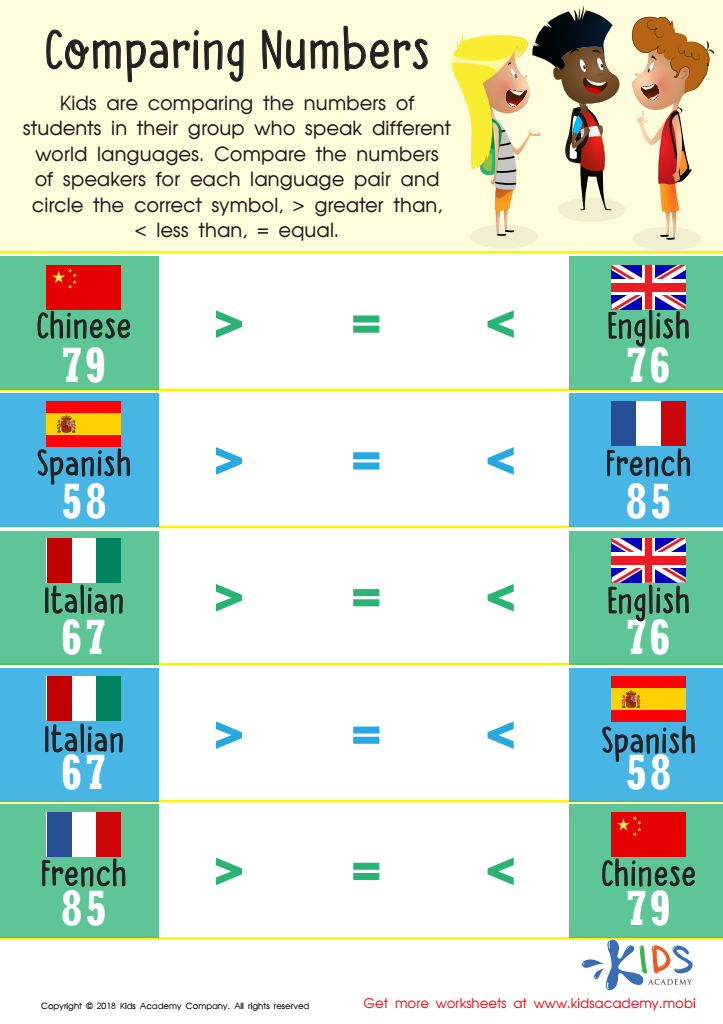
Comparing Numbers Worksheet for 1st Grade
Children can build number sense by exploring the relationship between numbers. This worksheet uses bright international flags to compare numerical groups. Kids will love the cheerful colors and flags from different countries. It encourages them to compare numbers and reinforces their number sense with tens and ones place values.
Comparing Numbers Worksheet for 1st Grade
Worksheet
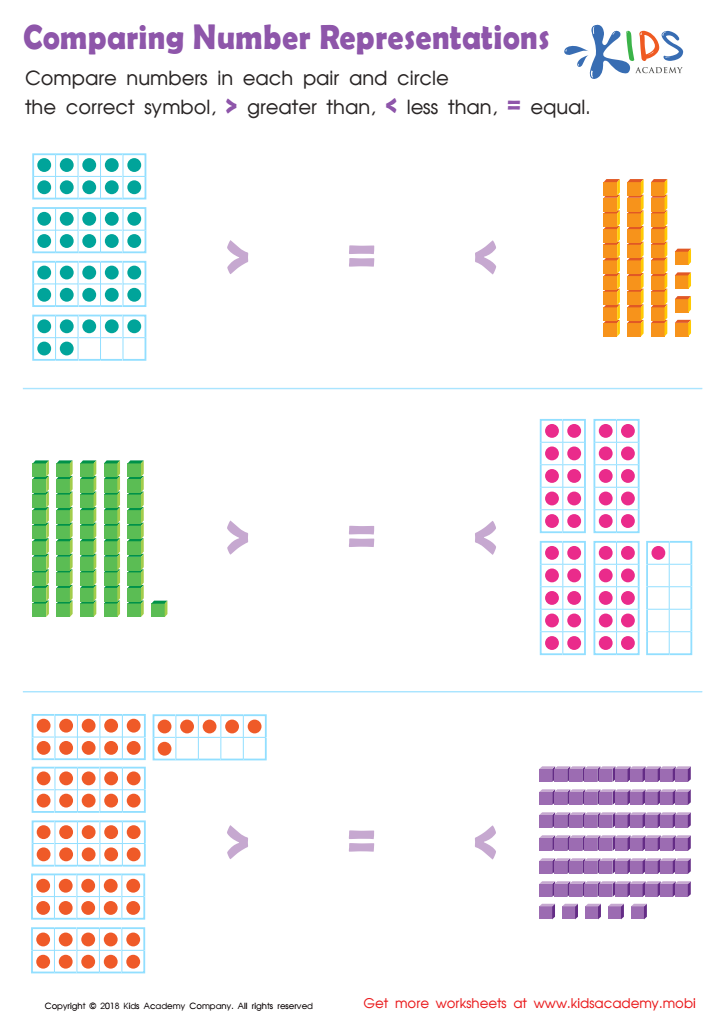
Comparing Number Representations Worksheet
Children need number representation skills to develop efficient computation and number sense. This free worksheet gives them practice with ten frames and place value blocks. They compare numbers and select the right comparative symbol: <, > or =. This helps them build a solid foundation for math.
Comparing Number Representations Worksheet
Worksheet
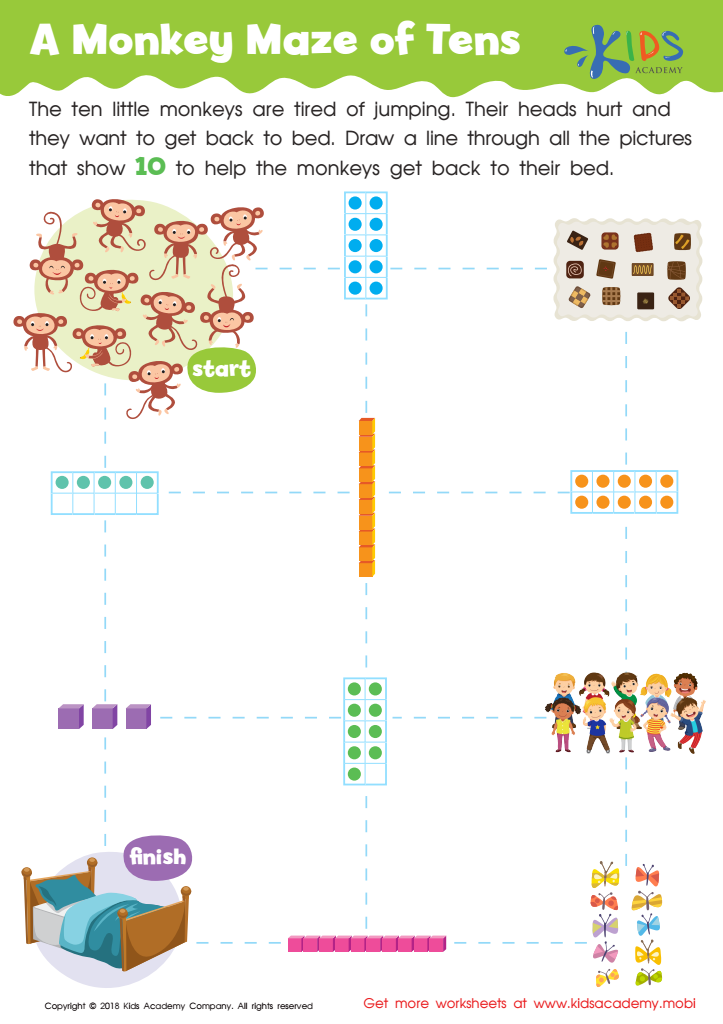
A Monkey Maze of Tens Worksheet
Kids can enjoy helping 10 little monkeys get to bed in this fun worksheet! They'll draw a line through all the pictures that show 10 to help the monkeys get back to their bed. Monkeys are an animal loved by many, from pet monkeys to zoo visits, and kids will adore this worksheet.
A Monkey Maze of Tens Worksheet
Worksheet
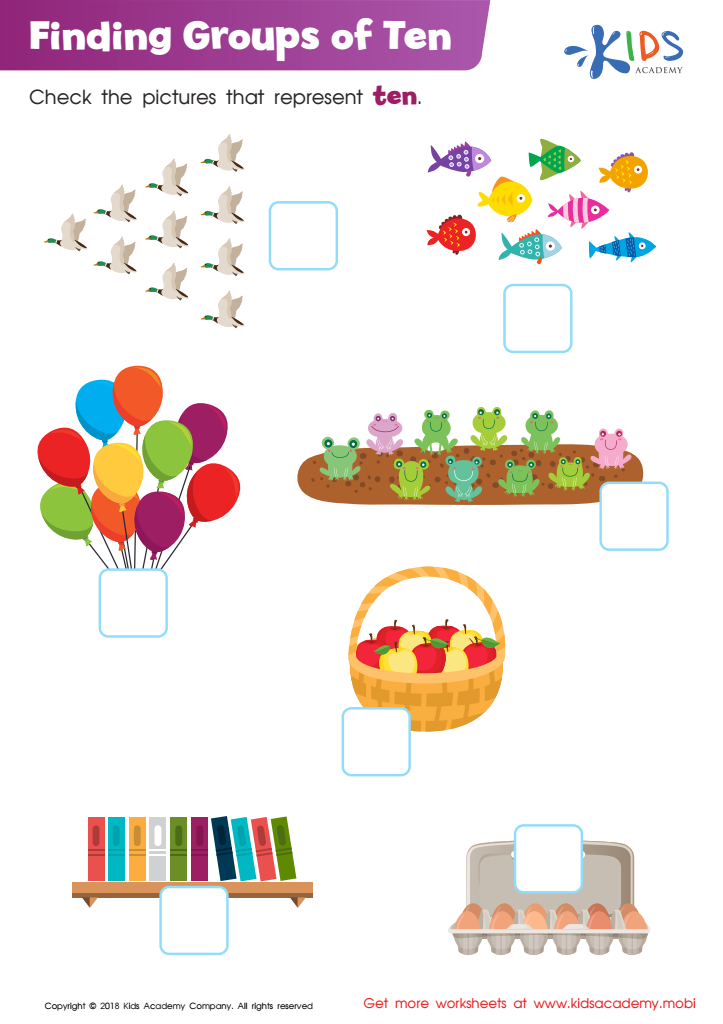
Finding Groups of Ten Worksheet
Can your kids count? If they can't go higher than tens, introduce them to this worksheet. Counting can be fun and easy with this exercise. Ask if they can identify the pictures, then help them count each group. Help them check the pictures that represent ten.
Finding Groups of Ten Worksheet
Worksheet
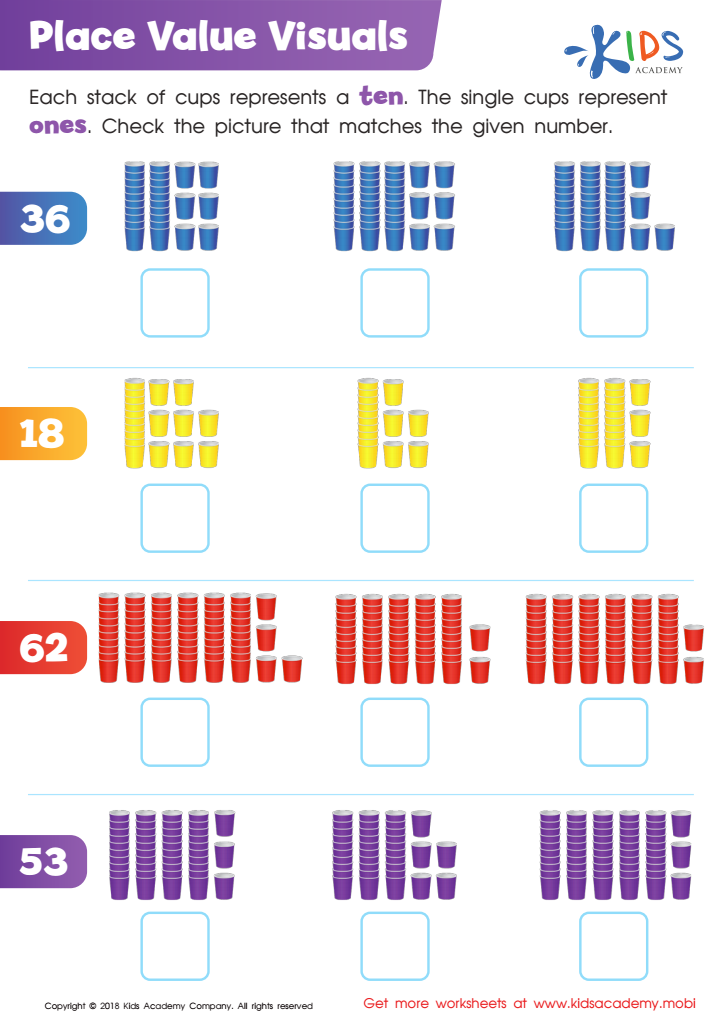
Place Value Visuals Worksheet
Help your child count the cups in each picture, using the simple rule that each stack is 10 and each single cup is 1. Ask them to match the number on the left to the picture on the right. No need to count each cup individually; since each stack is 10, 3 stacks is 30 and so on.
Place Value Visuals Worksheet
Worksheet
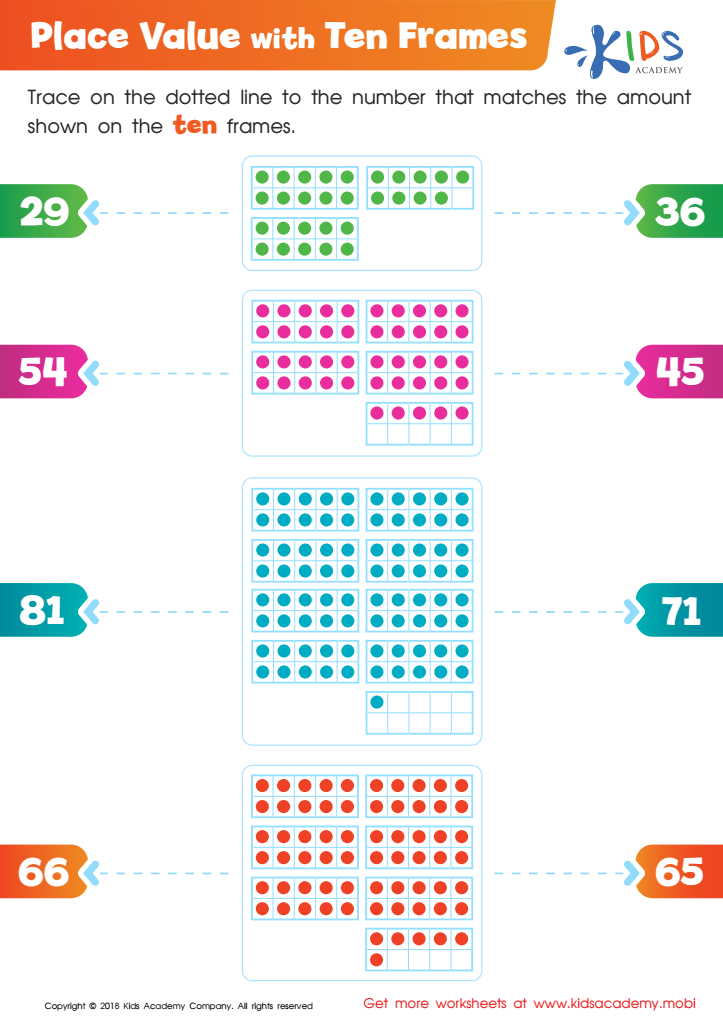
Place Values with Ten Frames Worksheet
Assist your child in counting the dots in each of the framed numbers. Then, guide them as they trace the dotted lines to the number that matches the amount shown. This worksheet will help them learn more about mathematics, as well as how to count numbers.
Place Values with Ten Frames Worksheet
Worksheet
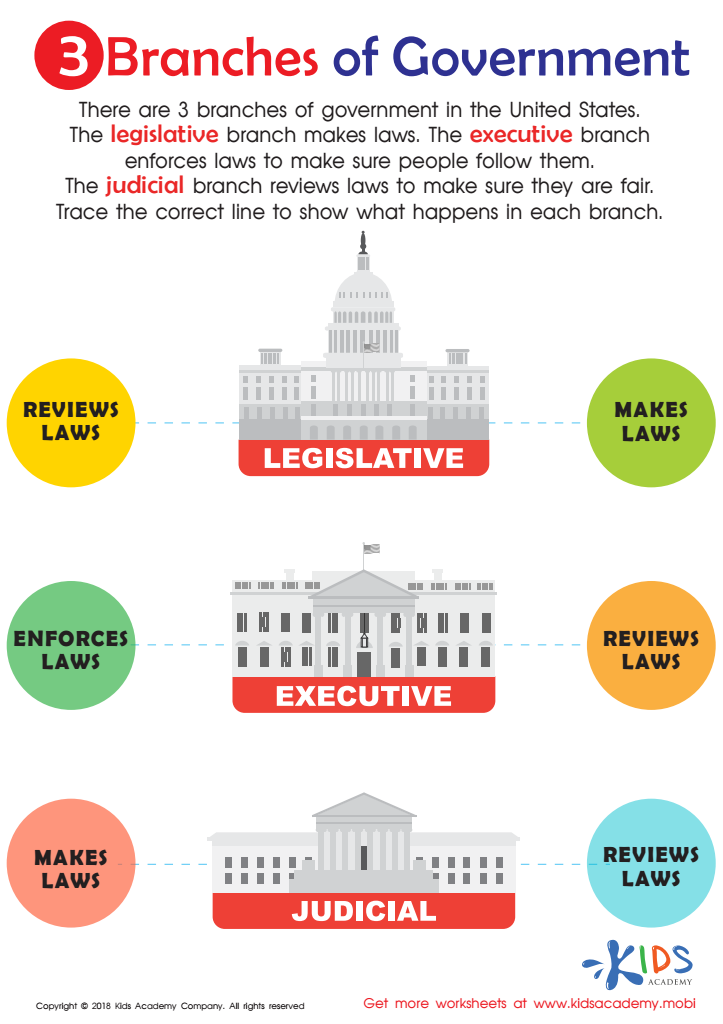
3 Branches of Government Worksheet
In the U.S., there are three tiers of government: legislative (makes laws), executive (enforces laws), and judicial (reviews laws). Have your child use the worksheet to connect each branch with its role.
3 Branches of Government Worksheet
Worksheet
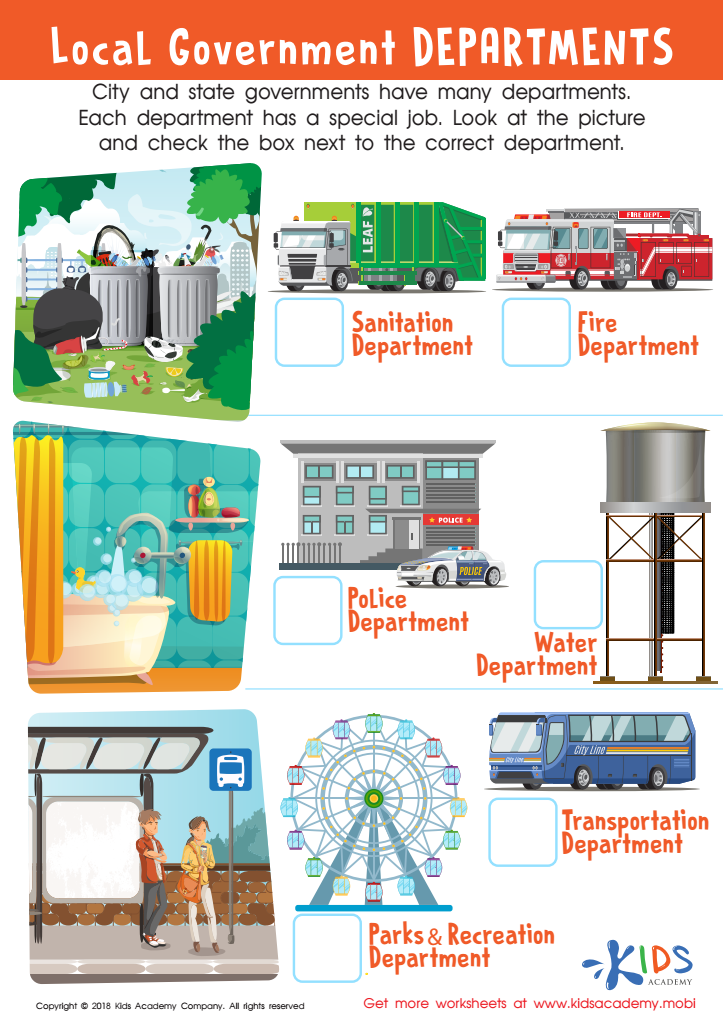
Local Government Departments Worksheet
State and city governments have departments that each have special tasks. Ask your kids what local departments do and look at the picture with them to check the correct department box.
Local Government Departments Worksheet
Worksheet
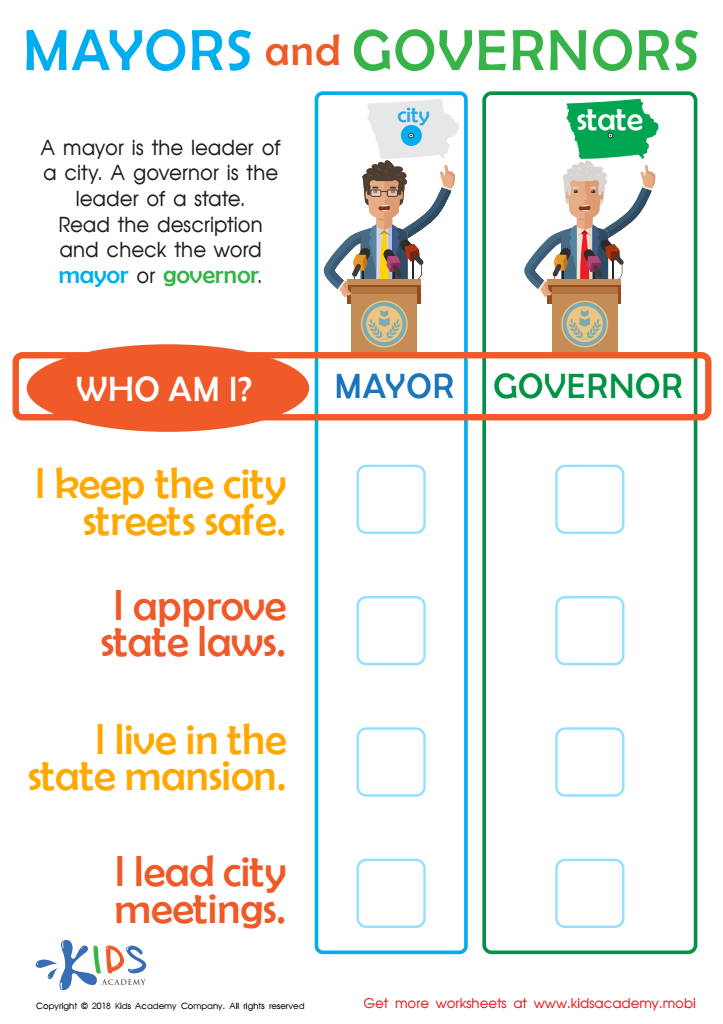
Mayors and Governors Worksheet
Encourage your children to learn more about your country's leaders. Ask them if they can name your mayor or state's governor. Explain that mayors lead cities, while governors lead states. Read the descriptions out loud to them, and help them identify if it's a mayor or a governor.
Mayors and Governors Worksheet
Worksheet
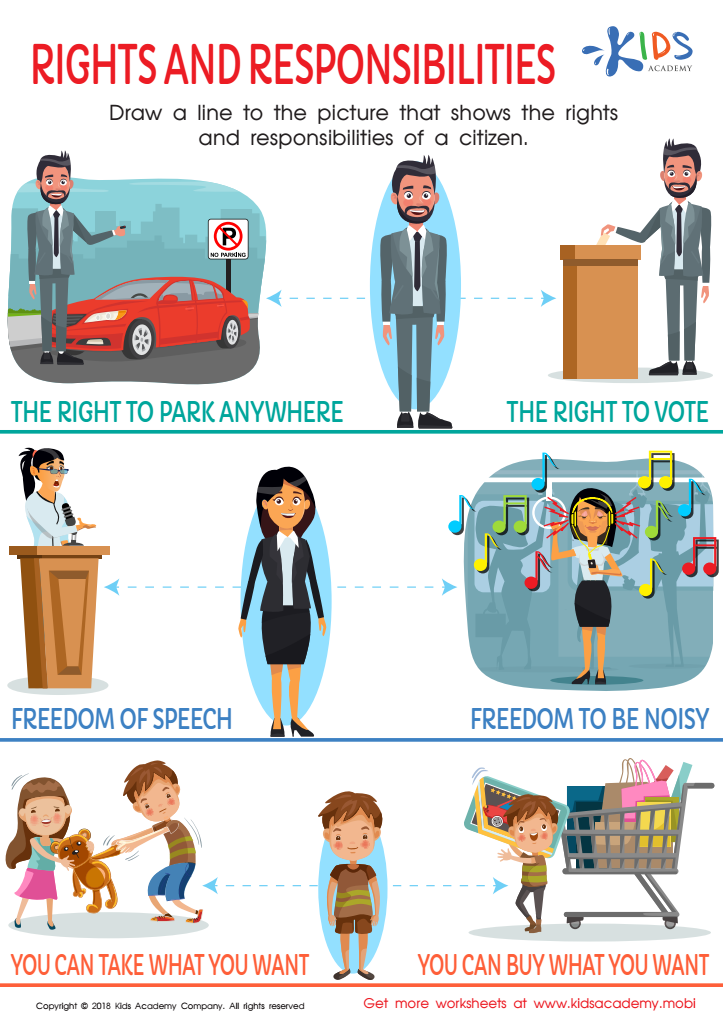
Rights and Responsibilities Worksheet
Encourage your kids to discuss their rights as citizens. Help them recognize fundamental human rights they're entitled to. Review the worksheet: ask them to read aloud and draw a line to the right picture. Invite them back to the discussion to explain their choices. Each step will help them understand and exercise their rights.
Rights and Responsibilities Worksheet
Worksheet
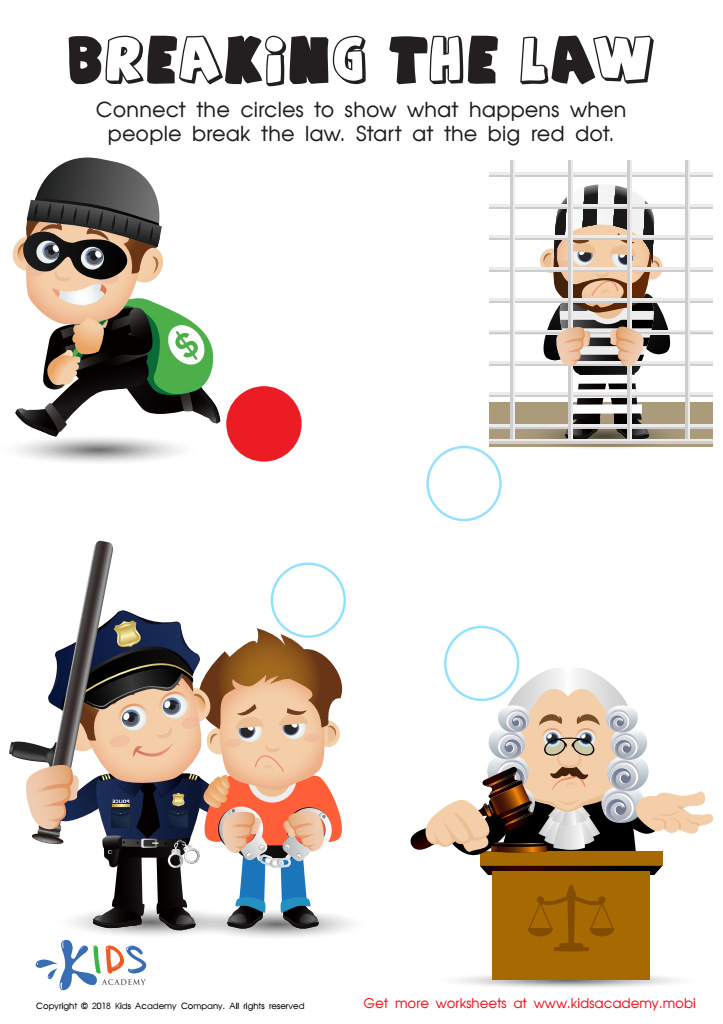
Breaking the Law Worksheet
Explain to your child why people go to jail. Show them this worksheet; it illustrates the stages a criminal goes through from breaking the law to receiving their punishment. Guide them in connecting the circles from the big red dot. Finish with a discussion on why it's important to follow the law.
Breaking the Law Worksheet
Worksheet
Natural Resources: Conservation Worksheet
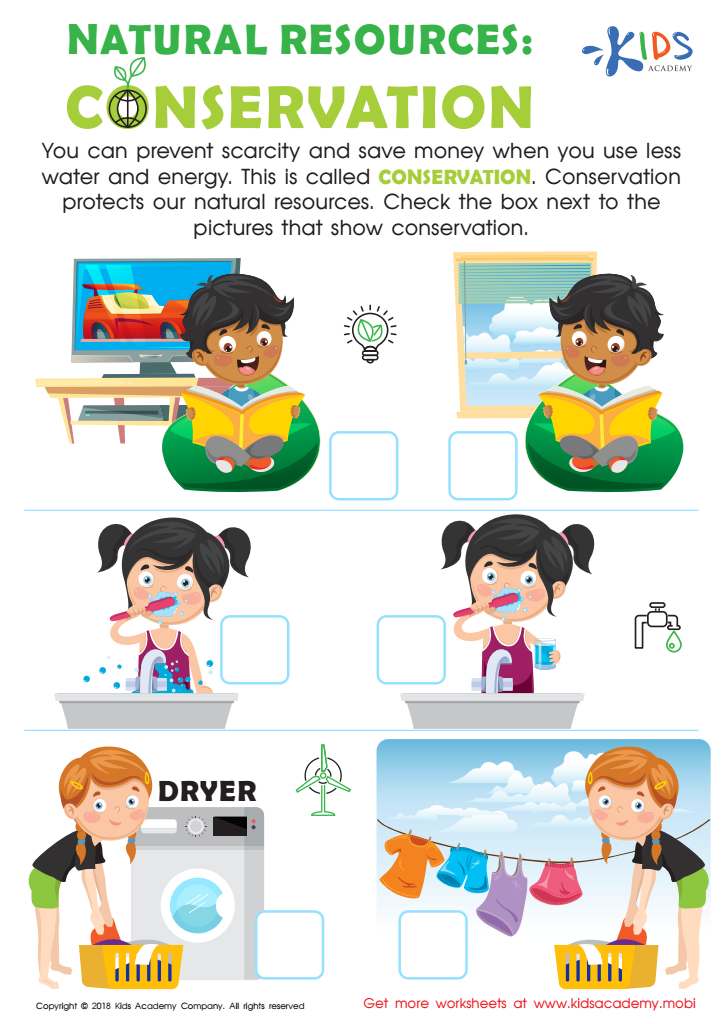
Water scarcity is a challenge. When people don't have enough water, they can't do certain things. We can prevent this with conservation: using less energy and water. This helps protect our natural resources and saves money. Talk to your child about conservation and have them check the box next to the pictures that show it.
Natural Resources: Conservation Worksheet
Worksheet
Water Scarcity Worksheet
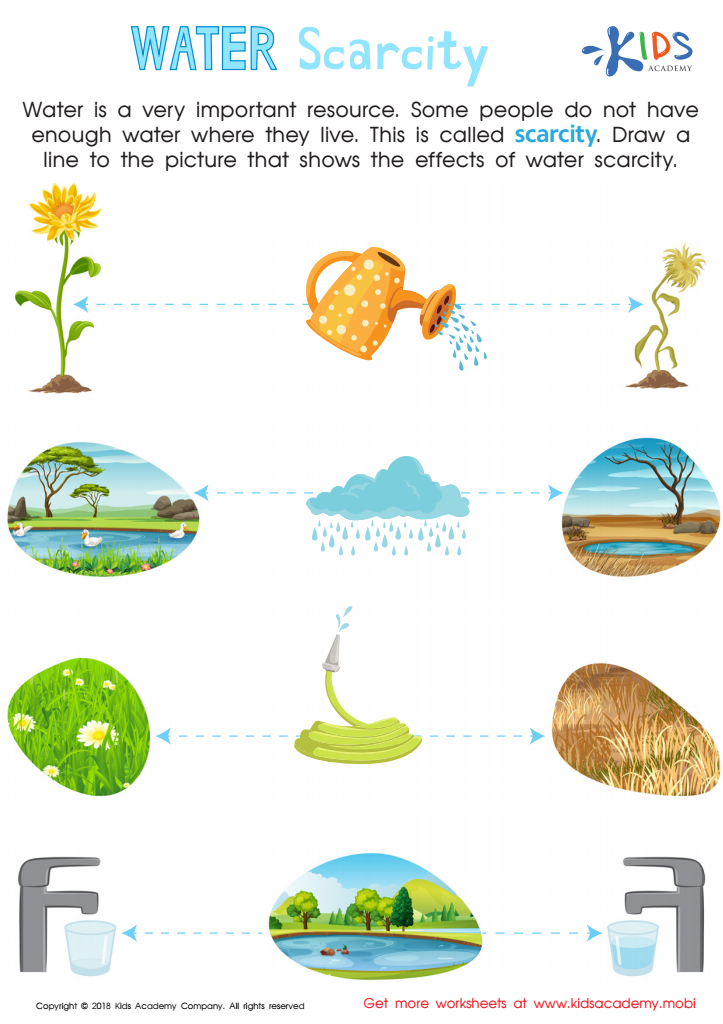
Water is an essential part of our lives. Ask your students to list five everyday activities which require water. Use this worksheet to explain why water is important and how privileged we are to have access to it. Many people are not as lucky and face water scarcity. Explain this concept with a fun pdf, showing the effects of water scarcity.
Water Scarcity Worksheet
Worksheet
Join Kids Academy for Free
Who is primarily going to use this learning content?