Normal Difficulty Online Social StudiesWorksheets for Kids - Page 4
223 filtered results
Difficulty Level
Grade
Age
-
From - To
Subject
Activity
Standards
Favorites
With answer key
Interactive
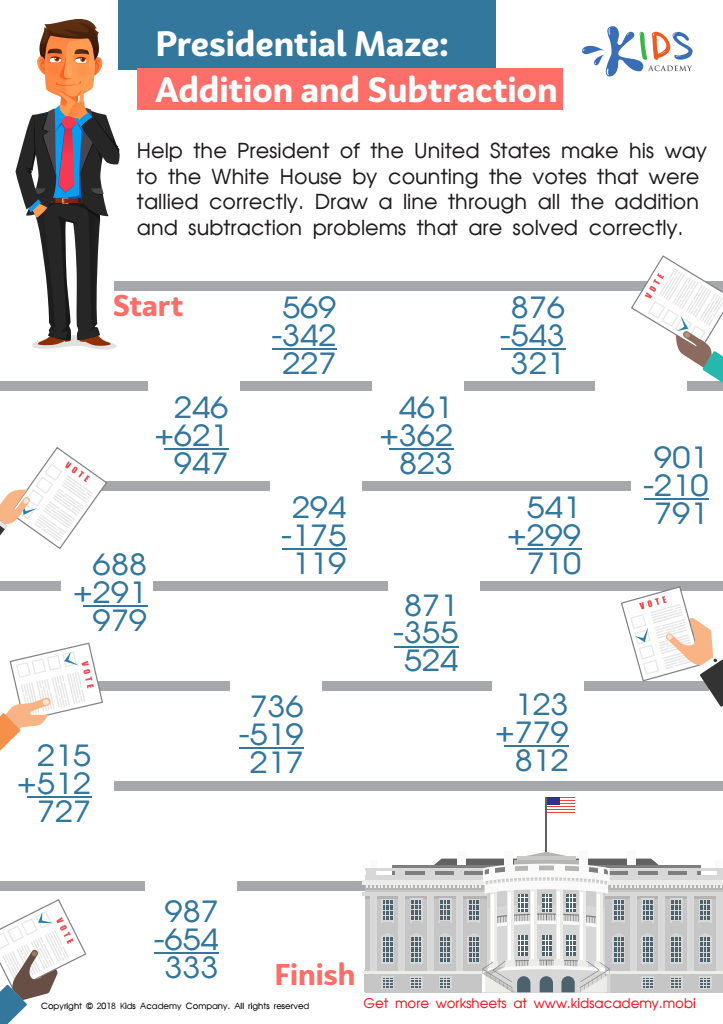
Presidential Maze: Addition and Subtraction Worksheet
Help the President get elected by counting the votes on this fun addition and subtraction worksheet from Kids Academy! Guide learners to go through each problem, drawing a line through any that are completed correctly and leaving incorrect answers alone. Get voting and have a blast!
 Assign to My Students
Presidential Maze: Addition and Subtraction Worksheet
Worksheet
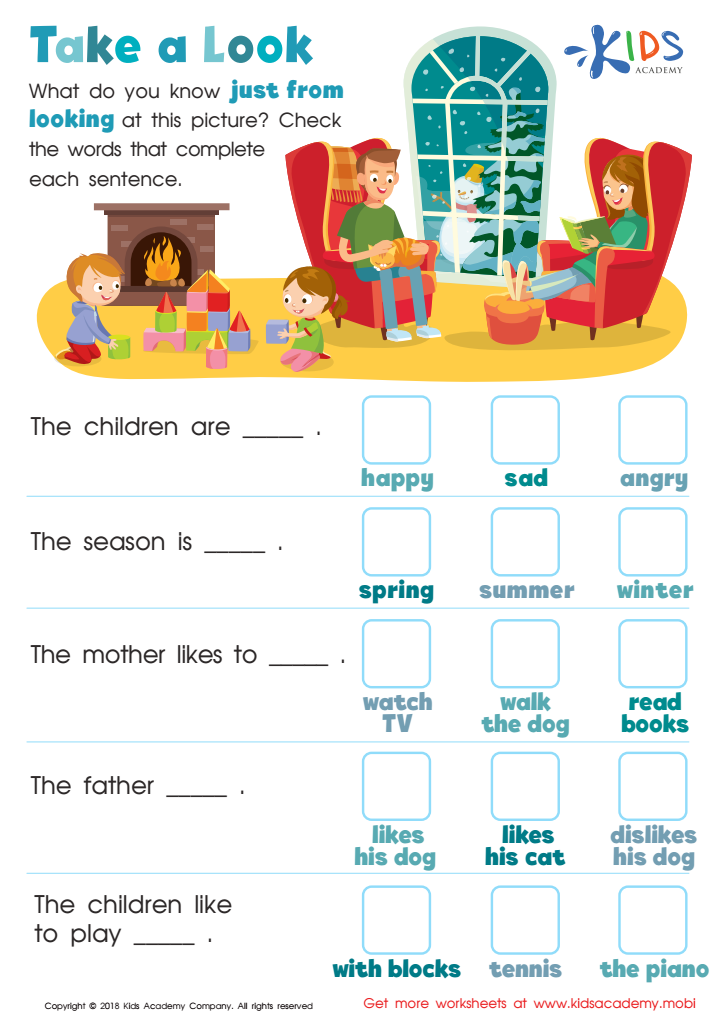
Take a Look - Part 1 Worksheet
Young learners gain understanding when using picture clues when reading. Looking at illustrations can help students learn the meaning of key vocabulary when reading fiction or informational text. Ask your students to look at the worksheet and observe what they can learn from the picture. It's a great comprehension strategy for early readers.
Take a Look - Part 1 Worksheet
Worksheet
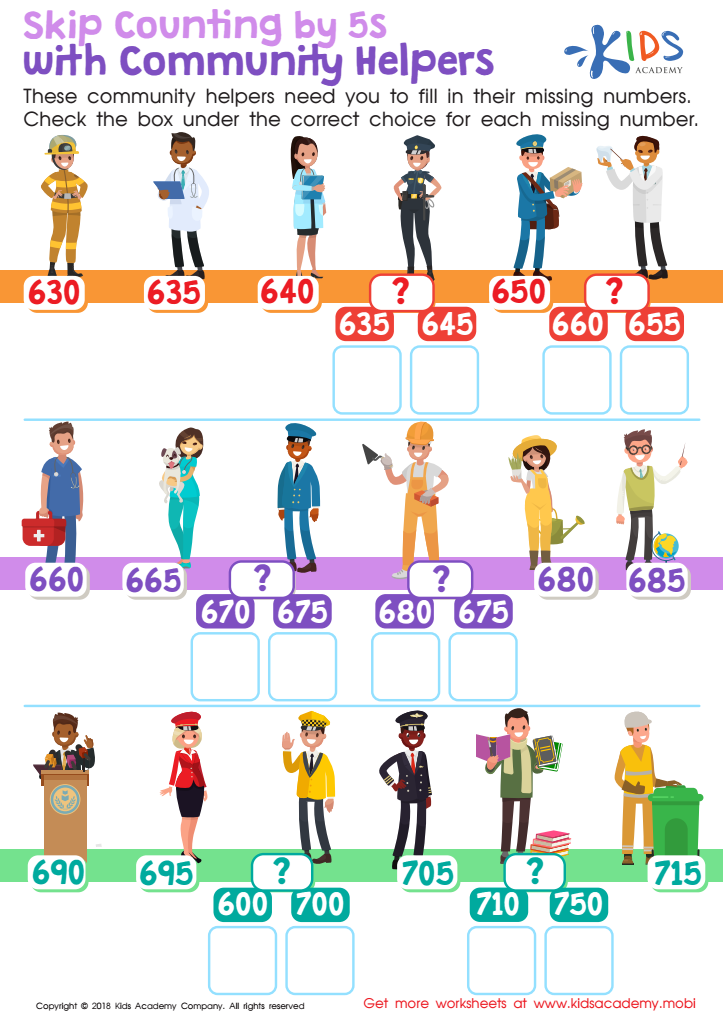
Skip Counting by 5s With Community Helpers Worksheet
This free worksheet combines social studies with math! Kids will practice counting by 5s, rounding numbers and honing their computation skills while also familiarizing themselves with community helpers. Develop your child's number sense and strengthen their math skills - all through a fun and interactive activity.
Skip Counting by 5s With Community Helpers Worksheet
Worksheet
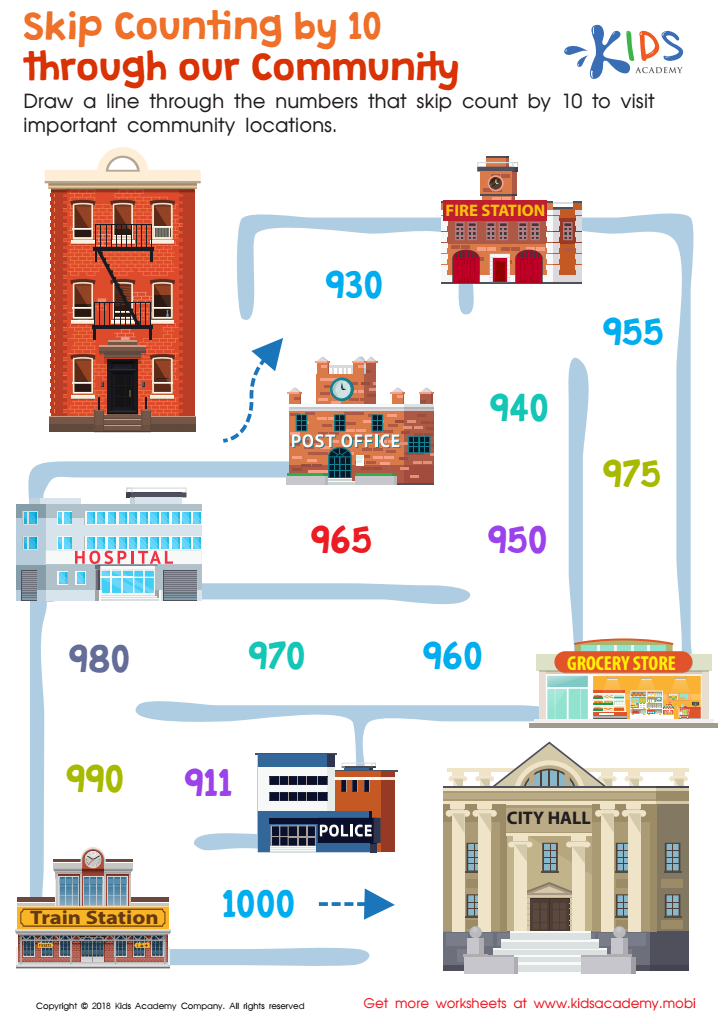
Skip Counting by 10 Through Our Community Worksheet
Our kids need to 'make a ten' and skip count by tens to boost their speed and accuracy in math. This cool, free worksheet takes them on a journey through their local community to practice counting by tens. They'll work on social studies and fine motor skills while having fun with the maze they get to count by tens in!
Skip Counting by 10 Through Our Community Worksheet
Worksheet
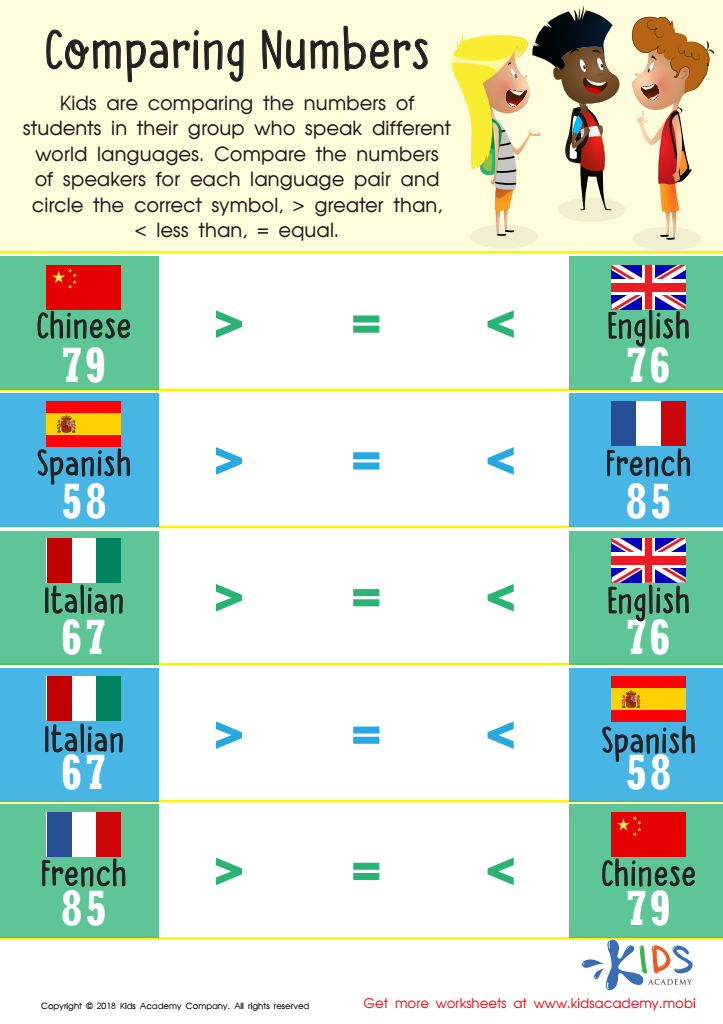
Comparing Numbers Worksheet for 1st Grade
Children can build number sense by exploring the relationship between numbers. This worksheet uses bright international flags to compare numerical groups. Kids will love the cheerful colors and flags from different countries. It encourages them to compare numbers and reinforces their number sense with tens and ones place values.
Comparing Numbers Worksheet for 1st Grade
Worksheet
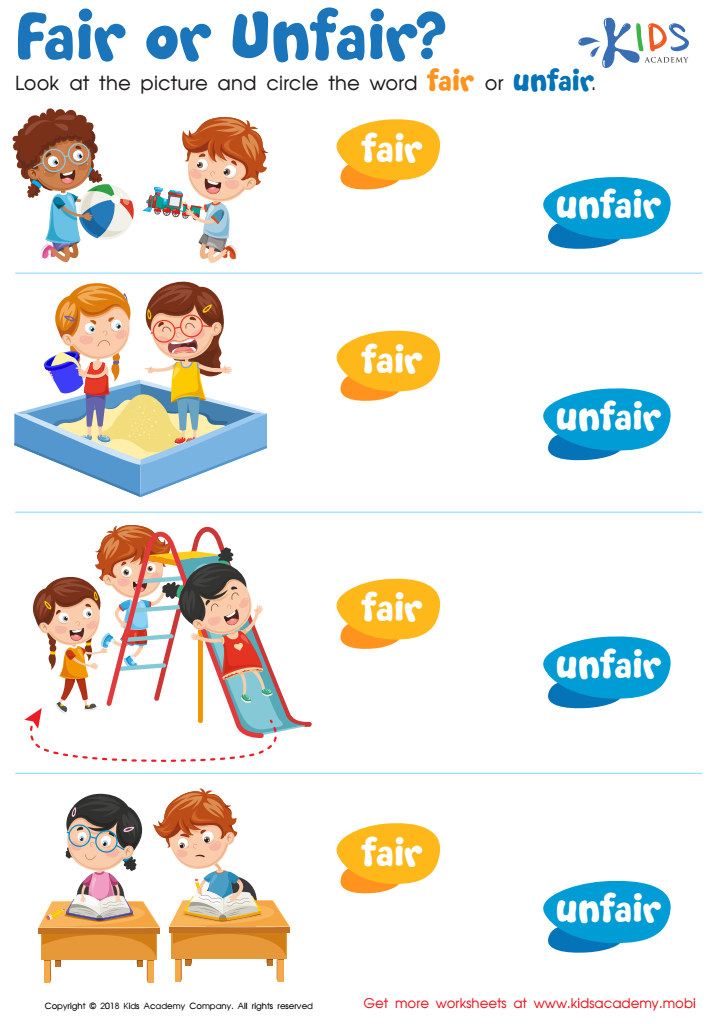
Fair or Unfair Worksheet
Look at the pictures in this worksheet with kids. Can they tell if the actions are fair or unfair? Help them decide and circle the appropriate option. When something causes harm to one person, it is unfair; when all parties benefit, it is fair.
Fair or Unfair Worksheet
Worksheet
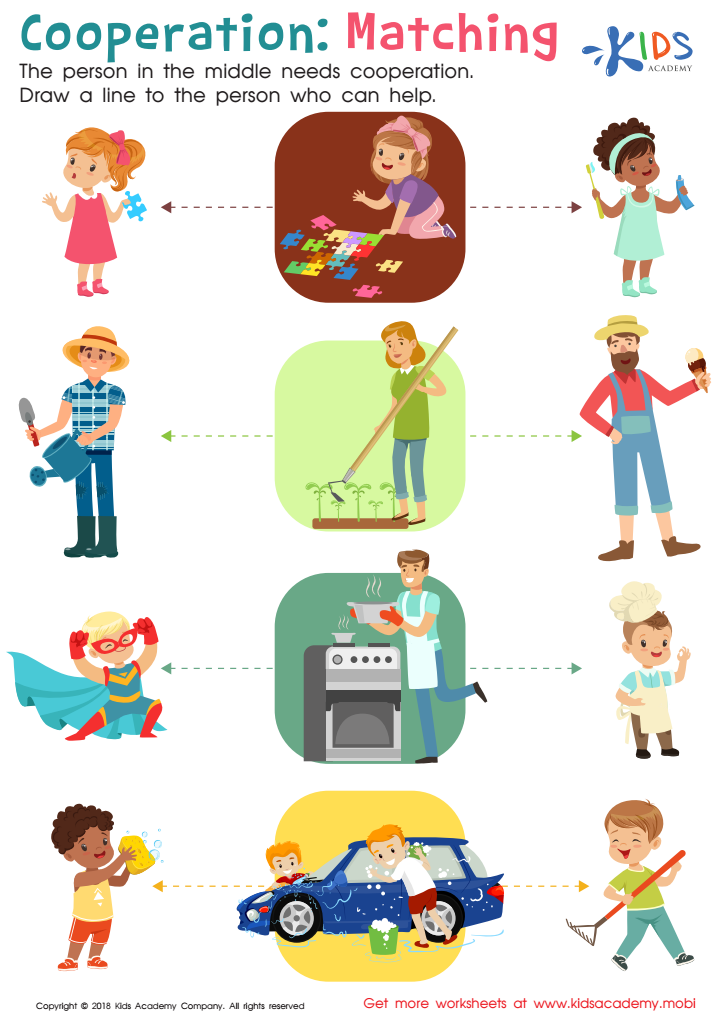
Cooperation: Matching Worksheet
Show your kid the pictures in this worksheet. Ask them to tell you what they see and who needs help with the task. Then, have them draw a line between the person and the one who can help. Explain to them that cooperation is very important to complete tasks quickly and easily. Ask what they do to cooperate in different places.
Cooperation: Matching Worksheet
Worksheet
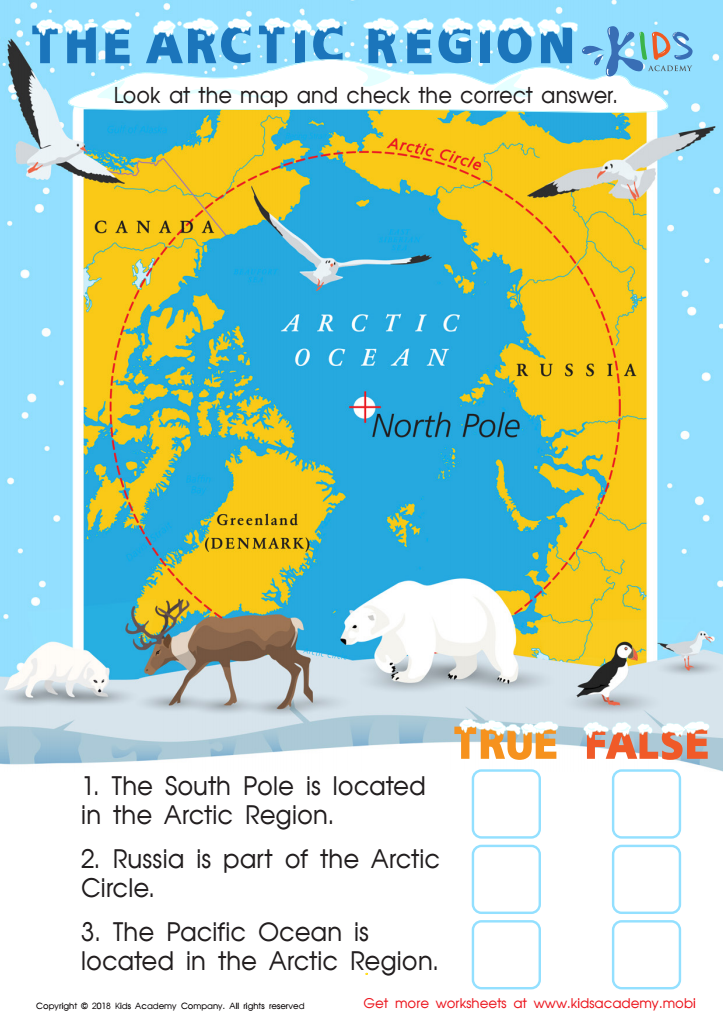
The Arctic Region Worksheet
Kids who love geography will enjoy this worksheet. On the printout there's a map. Show your child the landmarks and read them aloud. Have them take note of the locations. Then, ask them to answer the questions at the bottom using the map; check the answers.
The Arctic Region Worksheet
Worksheet
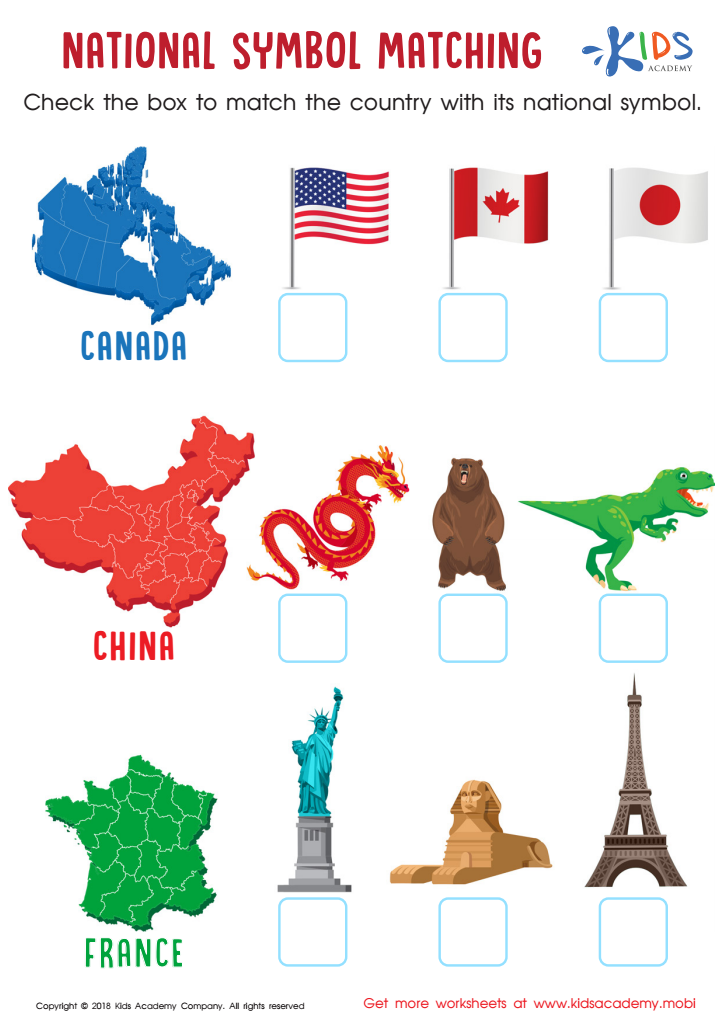
National Symbol Matching Worksheet
Test your child's knowledge of flags and symbols with this worksheet. Learning which symbol belongs to which country can be tricky. Make it simpler for your kids by having them start with a few at a time. Download the pdf and ask them to name the countries on the left; then help them check the box to match the country and its symbol.
National Symbol Matching Worksheet
Worksheet
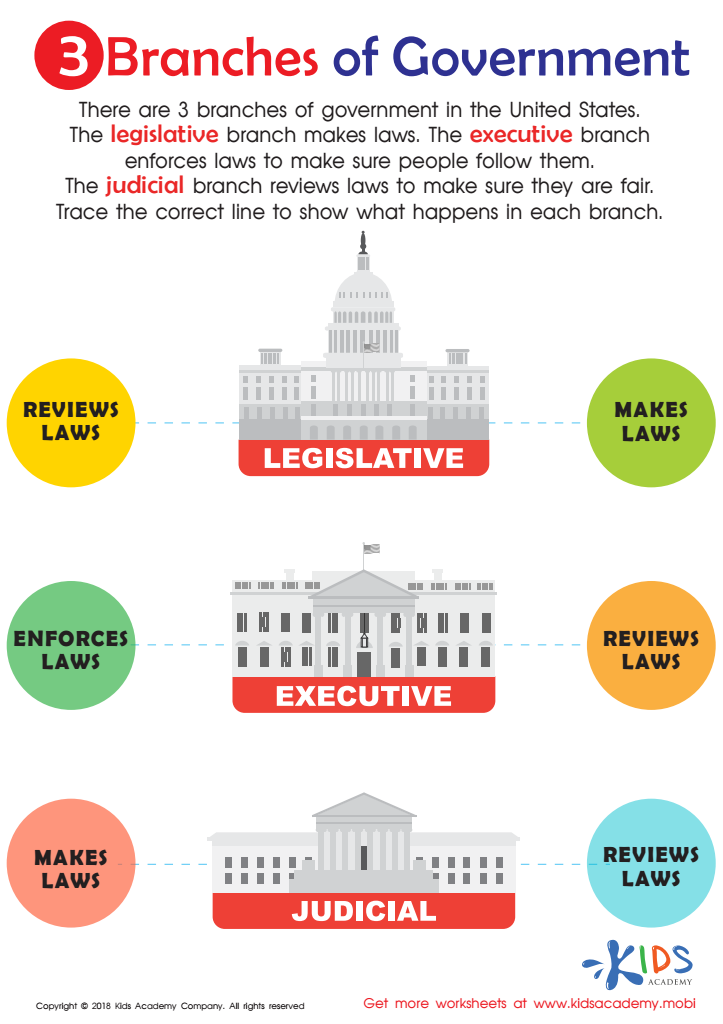
3 Branches of Government Worksheet
In the U.S., there are three tiers of government: legislative (makes laws), executive (enforces laws), and judicial (reviews laws). Have your child use the worksheet to connect each branch with its role.
3 Branches of Government Worksheet
Worksheet
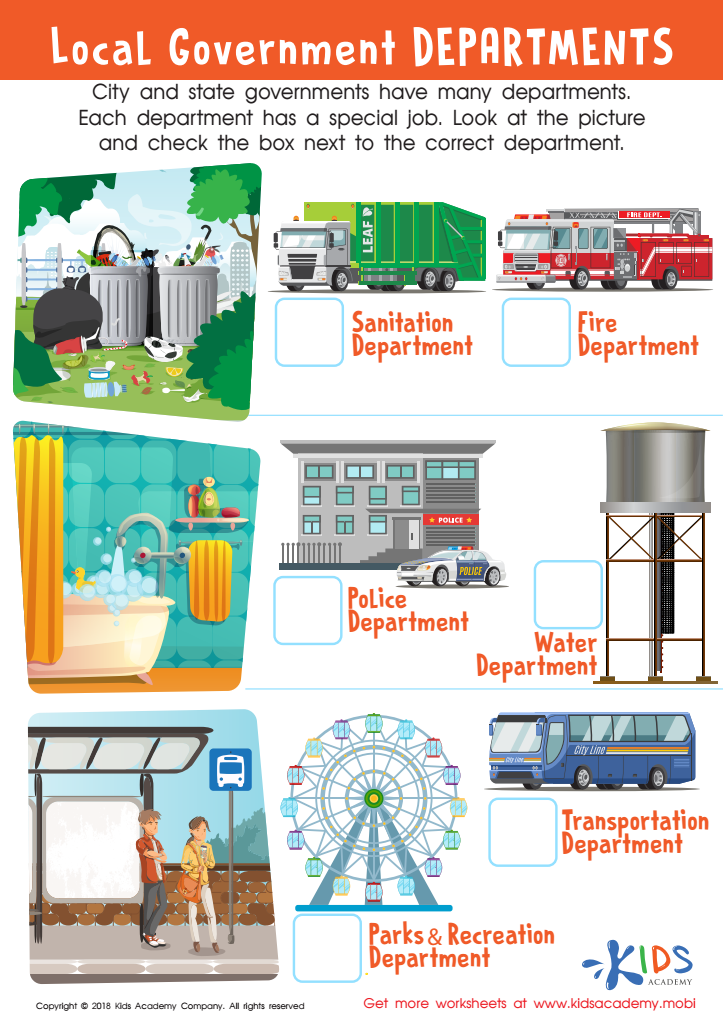
Local Government Departments Worksheet
State and city governments have departments that each have special tasks. Ask your kids what local departments do and look at the picture with them to check the correct department box.
Local Government Departments Worksheet
Worksheet
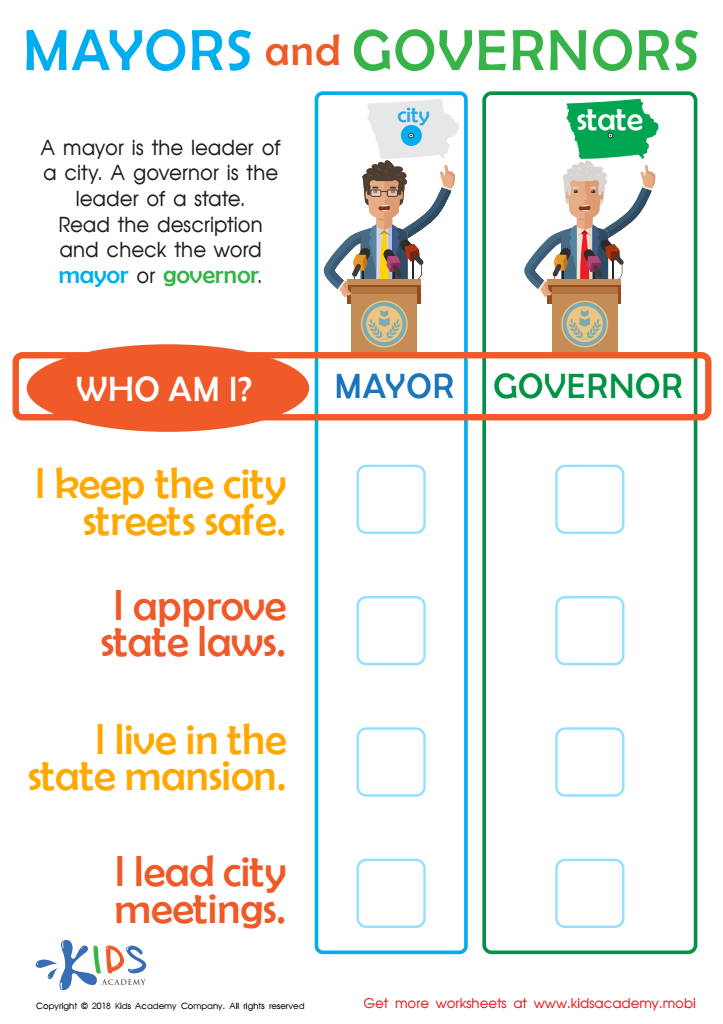
Mayors and Governors Worksheet
Encourage your children to learn more about your country's leaders. Ask them if they can name your mayor or state's governor. Explain that mayors lead cities, while governors lead states. Read the descriptions out loud to them, and help them identify if it's a mayor or a governor.
Mayors and Governors Worksheet
Worksheet
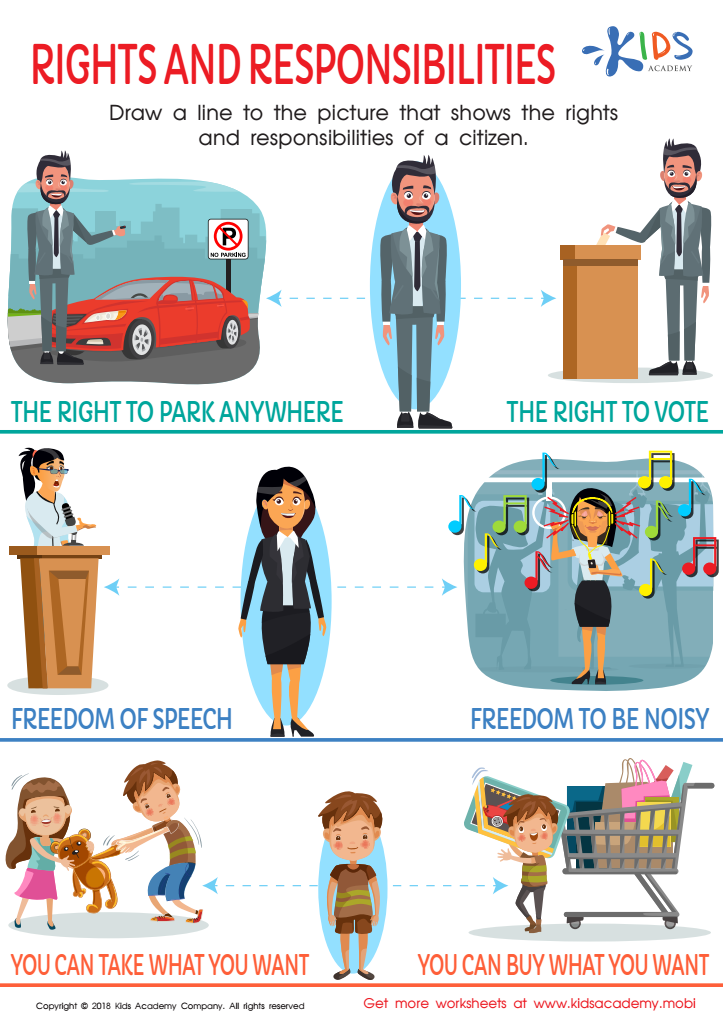
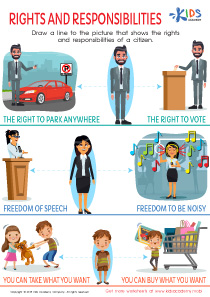
Rights and Responsibilities Worksheet
Encourage your kids to discuss their rights as citizens. Help them recognize fundamental human rights they're entitled to. Review the worksheet: ask them to read aloud and draw a line to the right picture. Invite them back to the discussion to explain their choices. Each step will help them understand and exercise their rights.
Rights and Responsibilities Worksheet
Worksheet
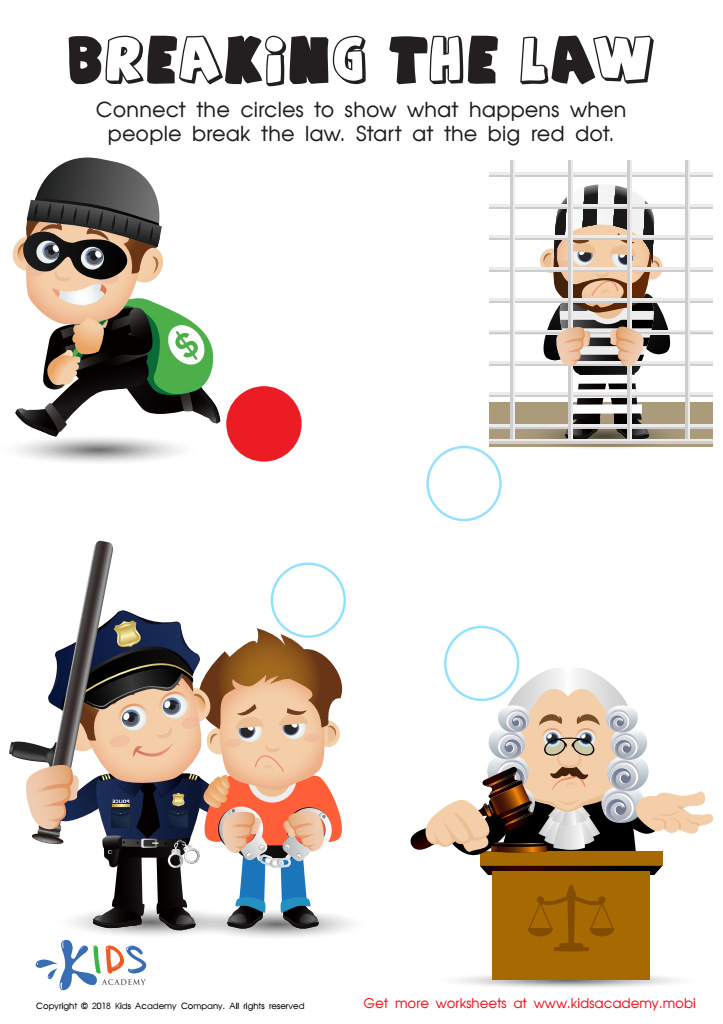
Breaking the Law Worksheet
Explain to your child why people go to jail. Show them this worksheet; it illustrates the stages a criminal goes through from breaking the law to receiving their punishment. Guide them in connecting the circles from the big red dot. Finish with a discussion on why it's important to follow the law.
Breaking the Law Worksheet
Worksheet
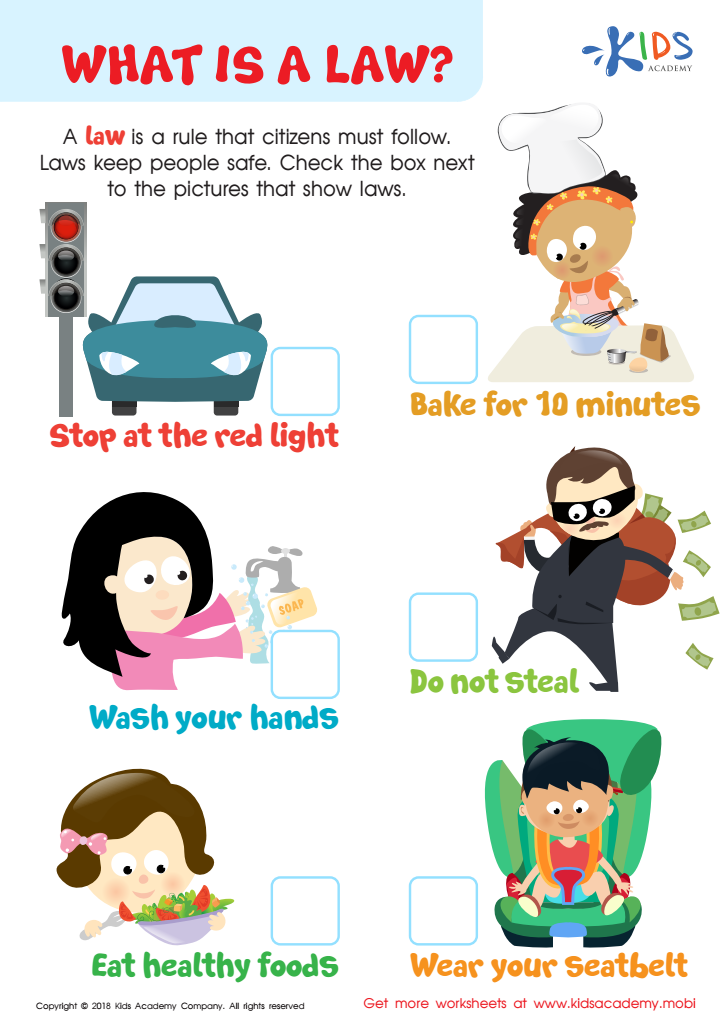
What is a Law? Worksheet
Encourage your students to think about the laws they abide by - at home, school, and the playground. Explain the importance of laws in keeping us safe, then ask them to check the box next to the pictures depicting different laws in a worksheet.
What is a Law? Worksheet
Worksheet
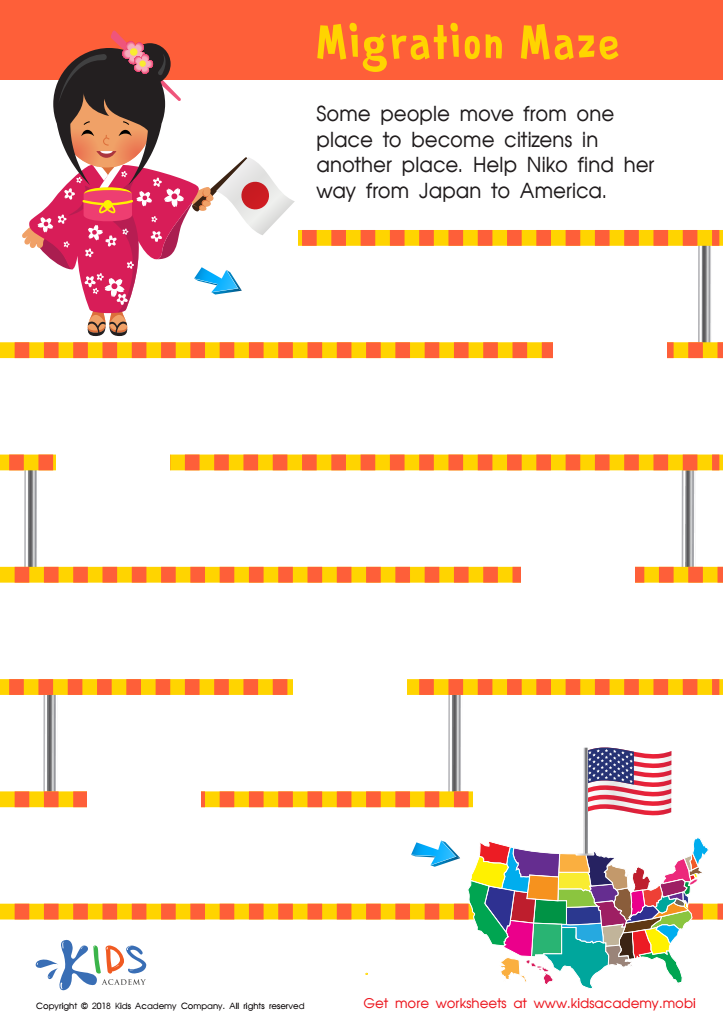
Migration Maze Worksheet
You are a citizen of your school, city and country. Many people migrate to become citizens of another place, like Niko in this worksheet. Ask your students to help her find her way from Japan to America.
Migration Maze Worksheet
Worksheet
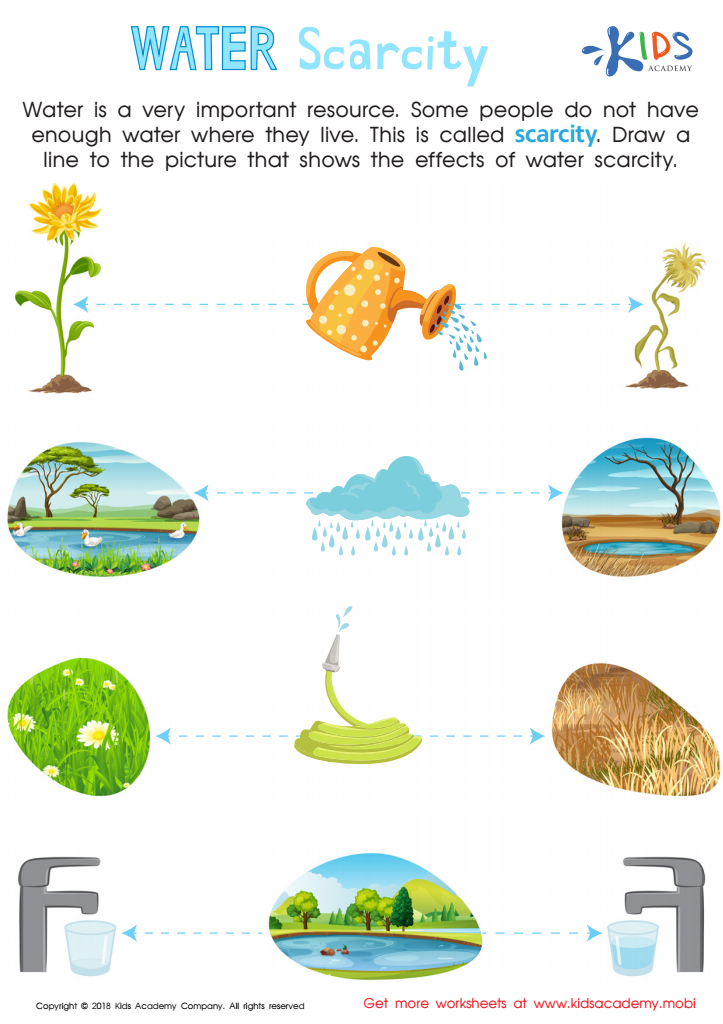
Water Scarcity Worksheet
Water is an essential part of our lives. Ask your students to list five everyday activities which require water. Use this worksheet to explain why water is important and how privileged we are to have access to it. Many people are not as lucky and face water scarcity. Explain this concept with a fun pdf, showing the effects of water scarcity.
Water Scarcity Worksheet
Worksheet
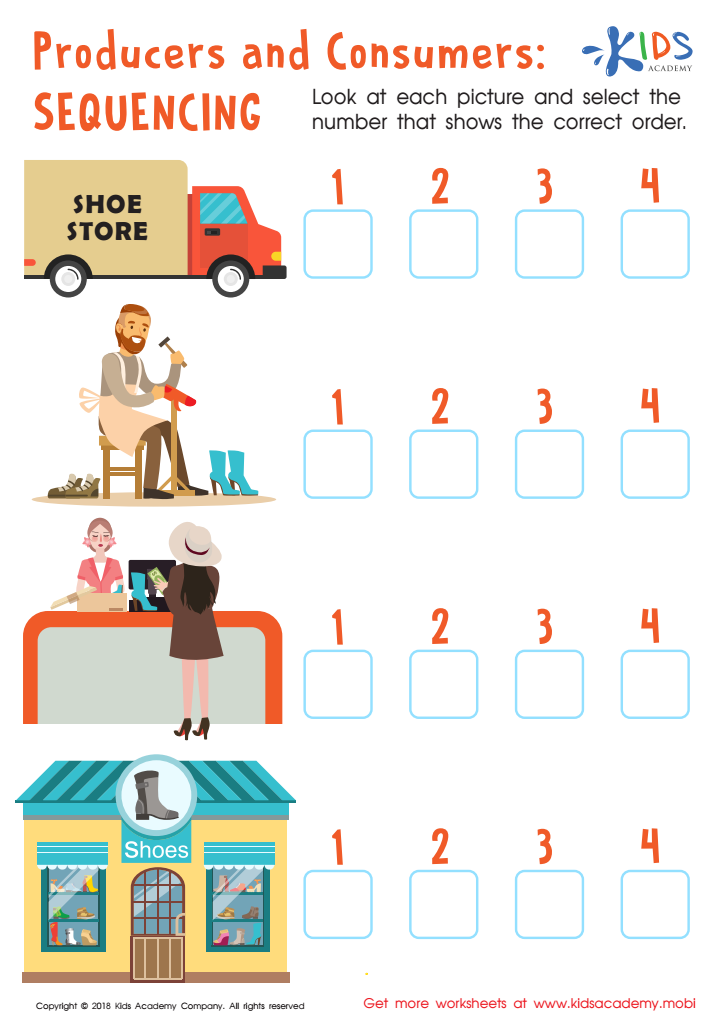
Producers and Consumers: Sequencing Worksheet
Ask your child: Who are producers? Can you give an example? Here's one: a shoe maker. What's happening in each picture? Can you arrange them in the right order? Select the number that shows the correct answer.
Producers and Consumers: Sequencing Worksheet
Worksheet
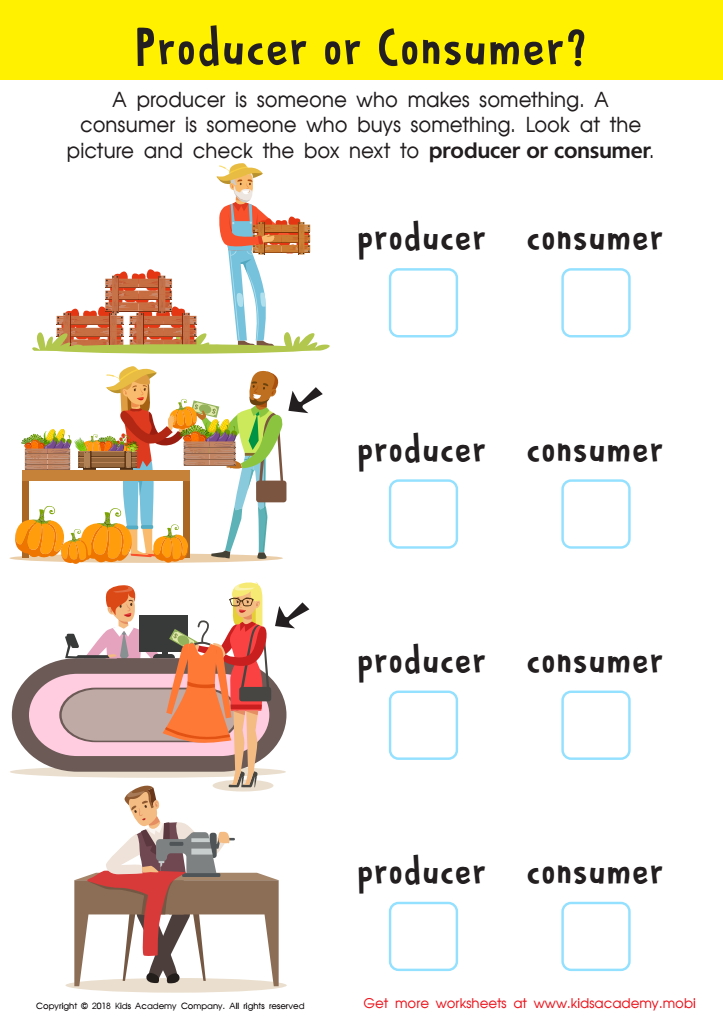
Producer or Consumer? Worksheet
Test your child's knowledge by asking who's a producer and consumer. Explain producer makes things and consumer buys them. Use a snack example. Look at the picture with your kids and help them check the box next to producer or consumer.
Producer or Consumer? Worksheet
Worksheet
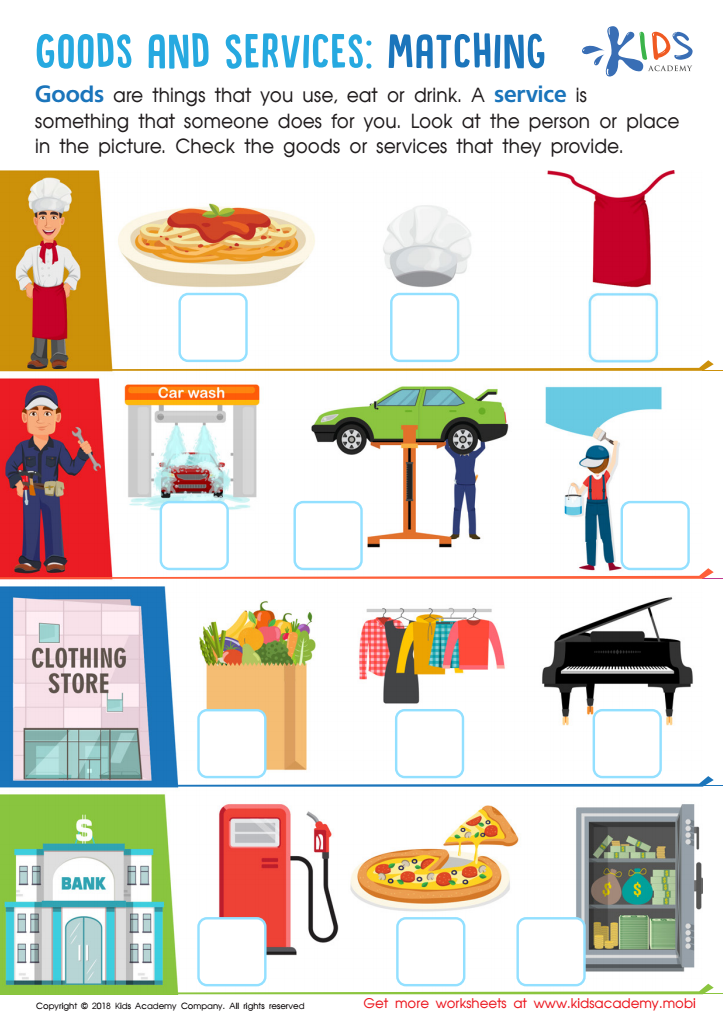
Goods and Services: Matching Worksheet
Goods are things that you use, eat or drink. Ask your kids to give examples of goods and services. Challenge them to identify the people and places in the worksheet, and check the goods or services they provide from the options on the right side.
Goods and Services: Matching Worksheet
Worksheet
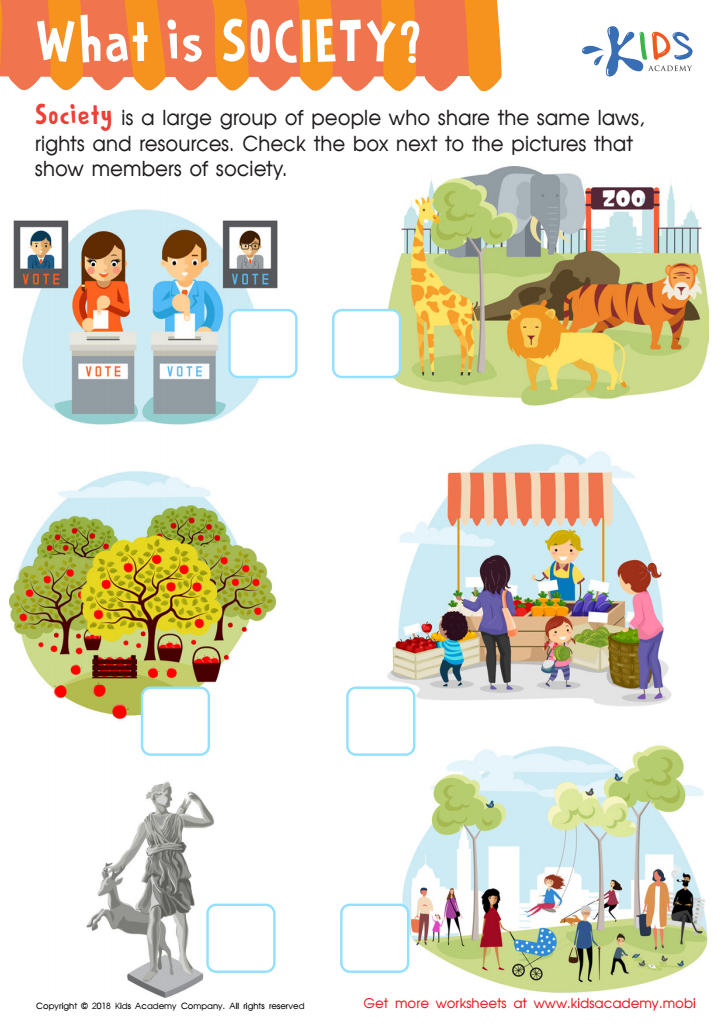
What Is Society? Worksheet
Ask your students to define 'society'. Then, have them name some of the people and buildings that make up a society. To clarify, explain that societies are made of large groups of people who share laws, rights and resources. Finally, have them check the box next to the pictures that depict members of society.
What Is Society? Worksheet
Worksheet
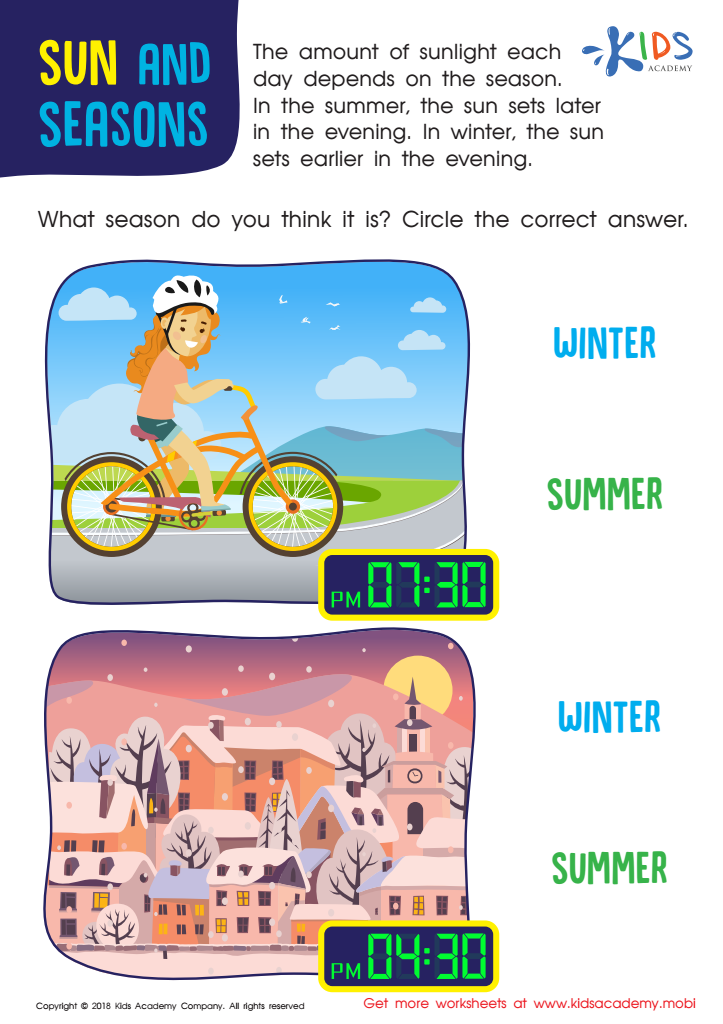
Sun and Seasons Worksheet
Help your child understand science and seasons with this Kids Academy worksheet! Discuss how the daylight varies in summer and winter with them. Guide them to note the digital clock on each page then circle the correct answers. With this sheet, your child will gain a better understanding of why days are longer in summer and shorter in winter!
Sun and Seasons Worksheet
Worksheet
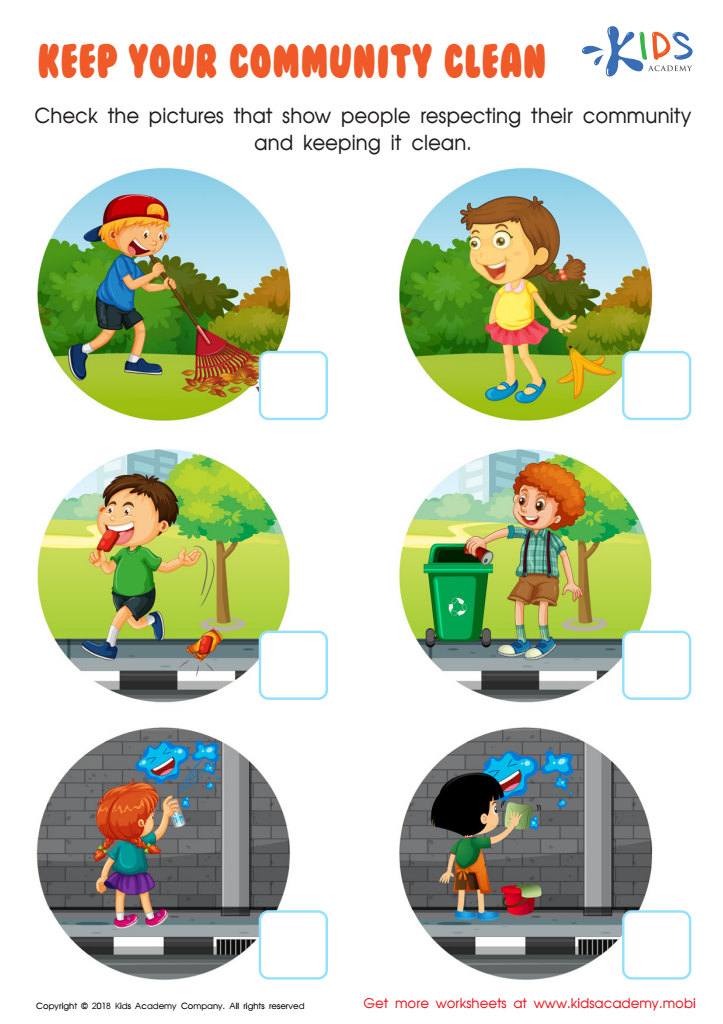
Keep Your Community Clean Worksheet
Teach your kids the importance of cleanliness. Even if they resist, show them that it affects the whole community. Use this worksheet to help them understand - it has six pictures of community members doing different things. Ask them what the kids are doing, and help them tick the pictures that show respect for the community and cleanliness.
Keep Your Community Clean Worksheet
Worksheet
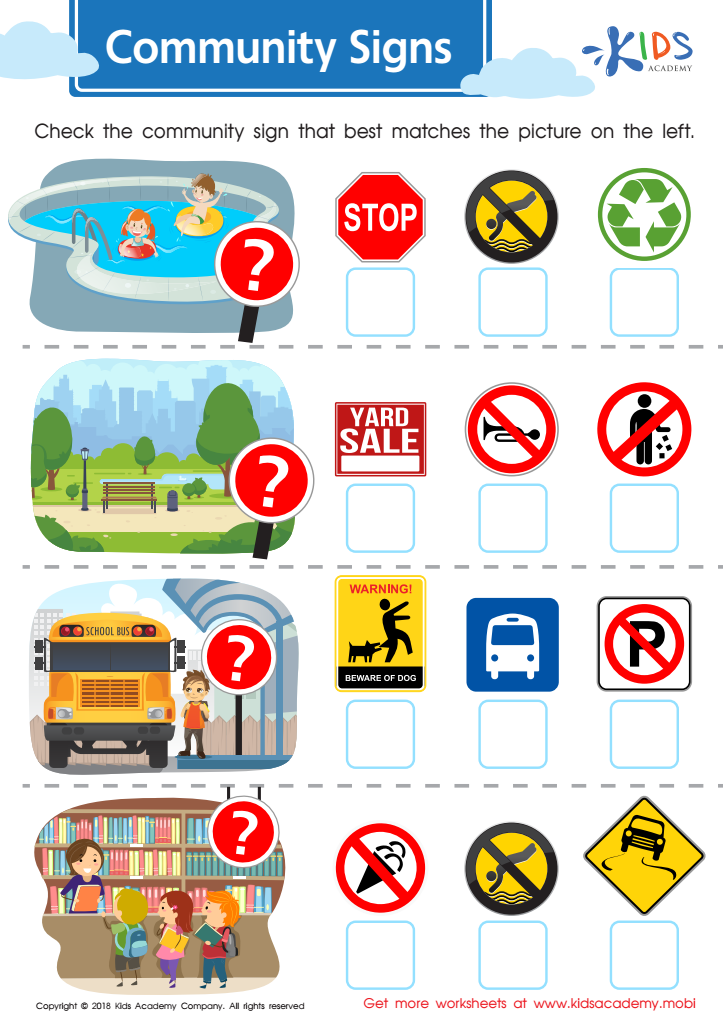
Community Signs Worksheet
To stay safe, our kids need to know community signs. Ask them to name signs at the pool, park, etc. Then, have them check the worksheet for the picture that matches the community signs.
Community Signs Worksheet
Worksheet
Join Kids Academy for Free
Who is primarily going to use this learning content?