Online Reading Worksheets for Kids - Page 12
509 filtered results
Difficulty Level
Grade
Age
-
From - To
Subject
Activity
Standards
Favorites
With answer key
Interactive
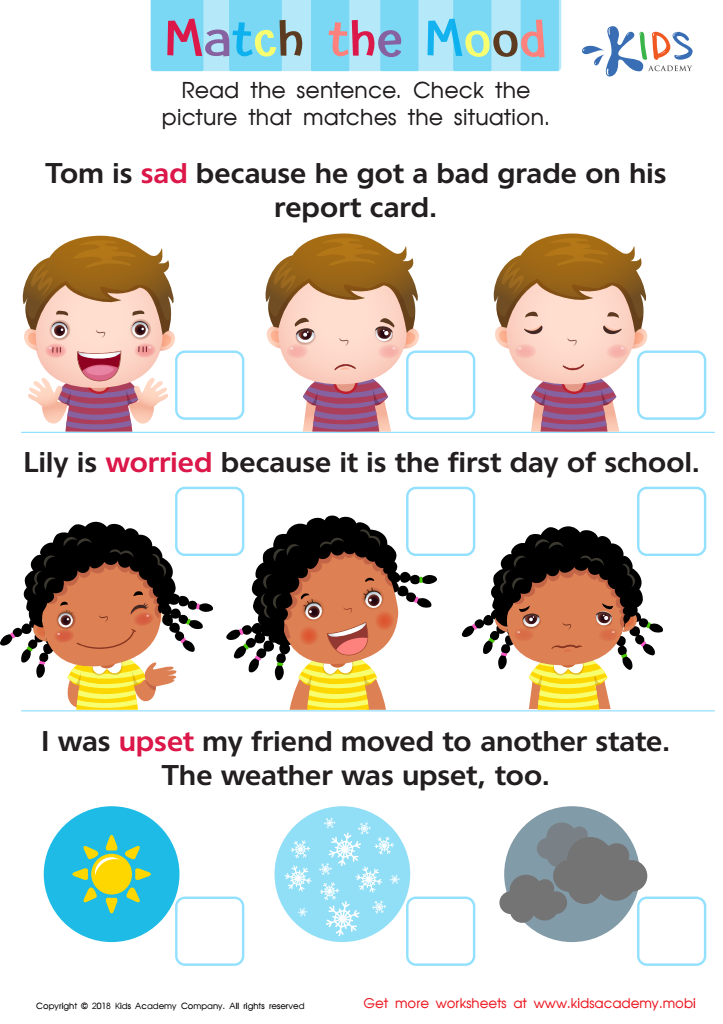
Match The Mood Worksheet
Ask your kid what kind of moods they usually experience; e.g. sad, happy, hurt or worried. Read aloud the sentences in the worksheet and help them match the situation to the picture. Max 80 words.
 Assign to My Students
Match The Mood Worksheet
Worksheet
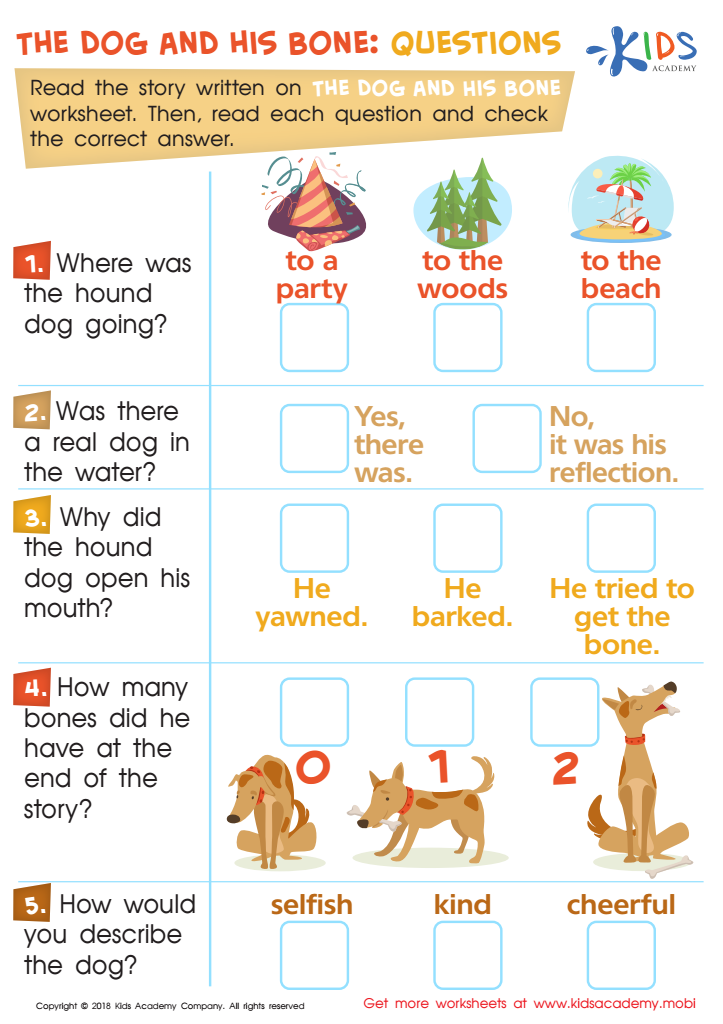
The Dog and His Bone: Questions Worksheet
Read the story of The Dog and His Bone to your child and help them understand it. Have them read it aloud if possible. Then, read the five questions on the worksheet and guide them to select the correct answers.
The Dog and His Bone: Questions Worksheet
Worksheet
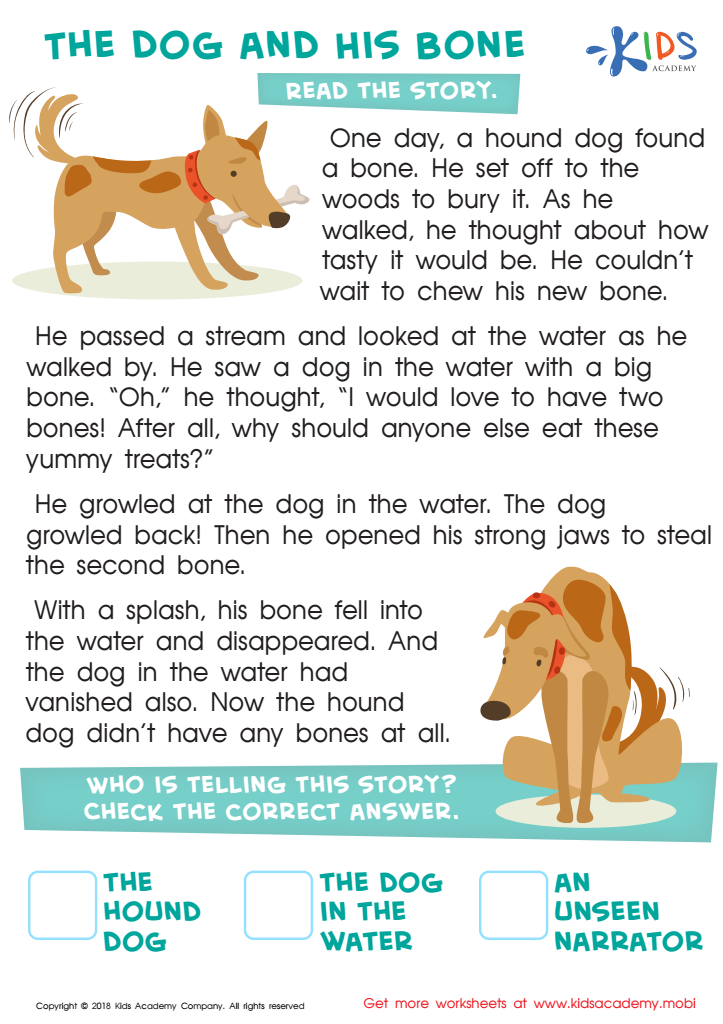
The Dog and His Bone Worksheet
Read the story of The Dog and His Bone to your kids, making sure they take in the details. Ask them the questions in this worksheet and help them check the answers. Encourage them to think carefully.
The Dog and His Bone Worksheet
Worksheet
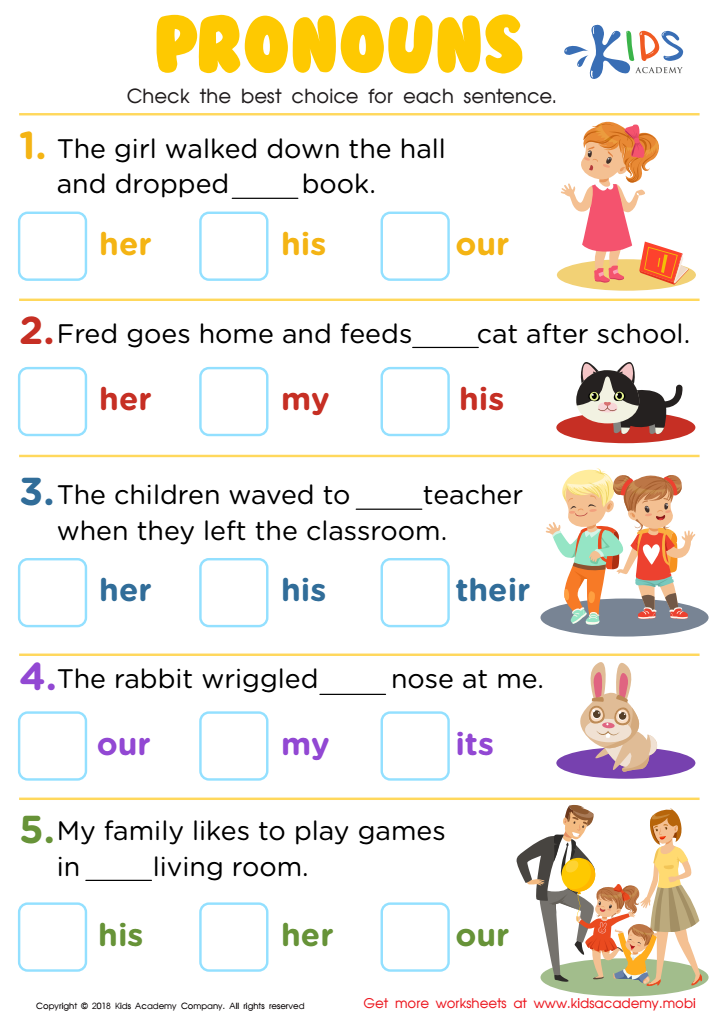
Pronouns Worksheet
Help your child explore pronouns with this worksheet: start by asking them which pronouns they know. Then, read the sentences and their options aloud together, and ask your child to choose the best pronoun for each sentence. This worksheet should be easy for them if they can already read short sentences.
Pronouns Worksheet
Worksheet
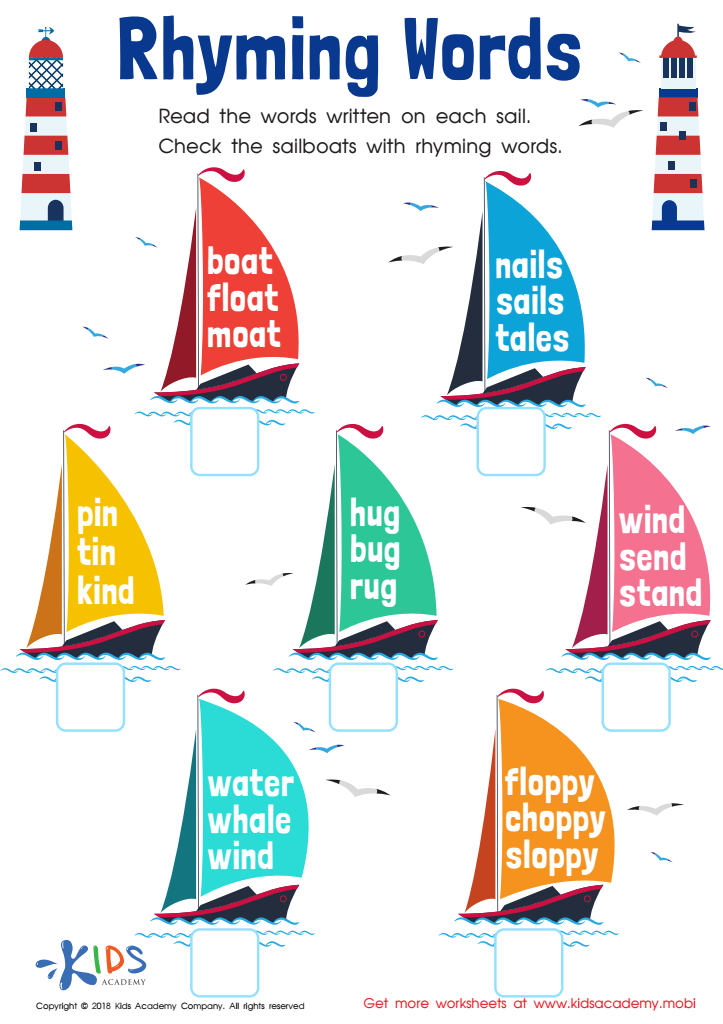
Rhyming Words Worksheet
Does your child know about rhyming words? Get them interested in poetry and explain that these words have similar sounds when pronounced. Read the words on each sailboat to your child and ask them to identify the rhyming pairs. Guide them to check the sailboats.
Rhyming Words Worksheet
Worksheet
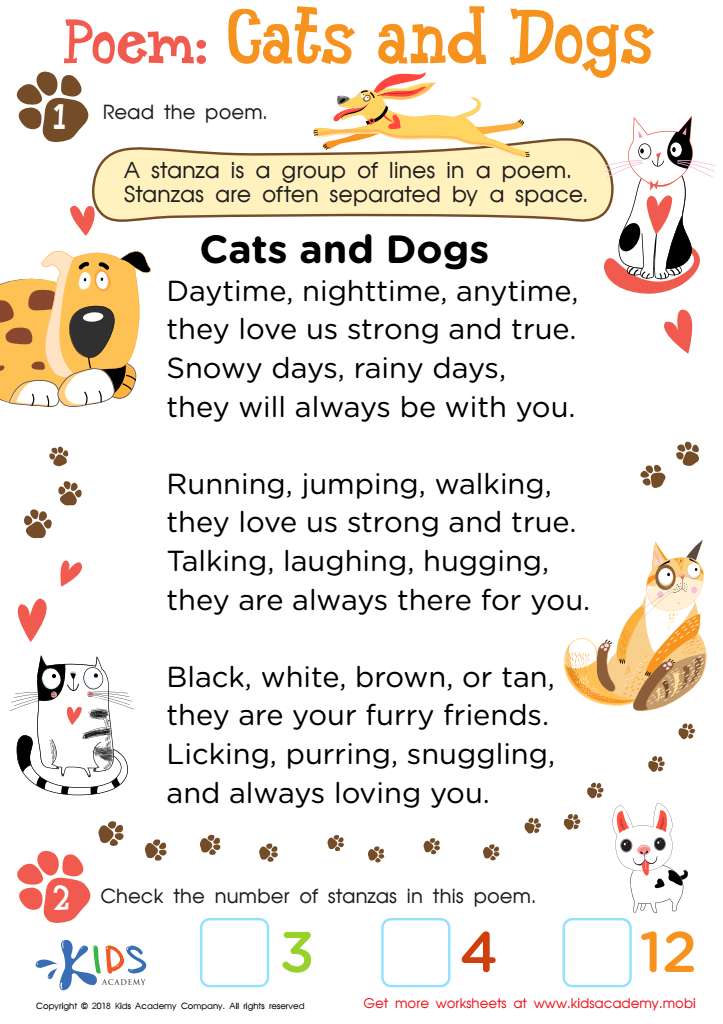
Poem: Cats and Dogs Worksheet
Read the poem to your child and point out where each stanza ends. Ask if they know what a stanza is (if not, explain it's a group of lines in a poem). Help them answer the question at the bottom of the printout. This simple, sweet poem about cats is easy for your child to relate to.
Poem: Cats and Dogs Worksheet
Worksheet
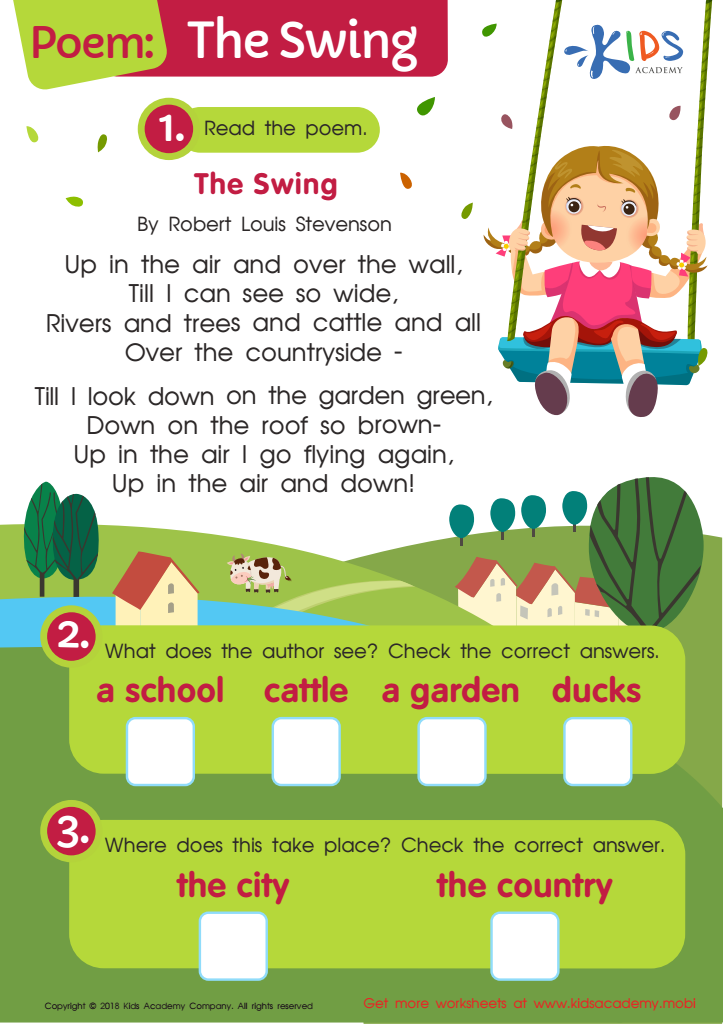
Poem: The Swing Worksheet
Encourage your child's love of writing by displaying their poems on the fridge or walls. This worksheet focuses on a swing, something your child enjoys, and contains questions to help your child think more deeply about the poem. Read it together, then answer the questions and watch as your child's creativity and writing skills blossom!
Poem: The Swing Worksheet
Worksheet
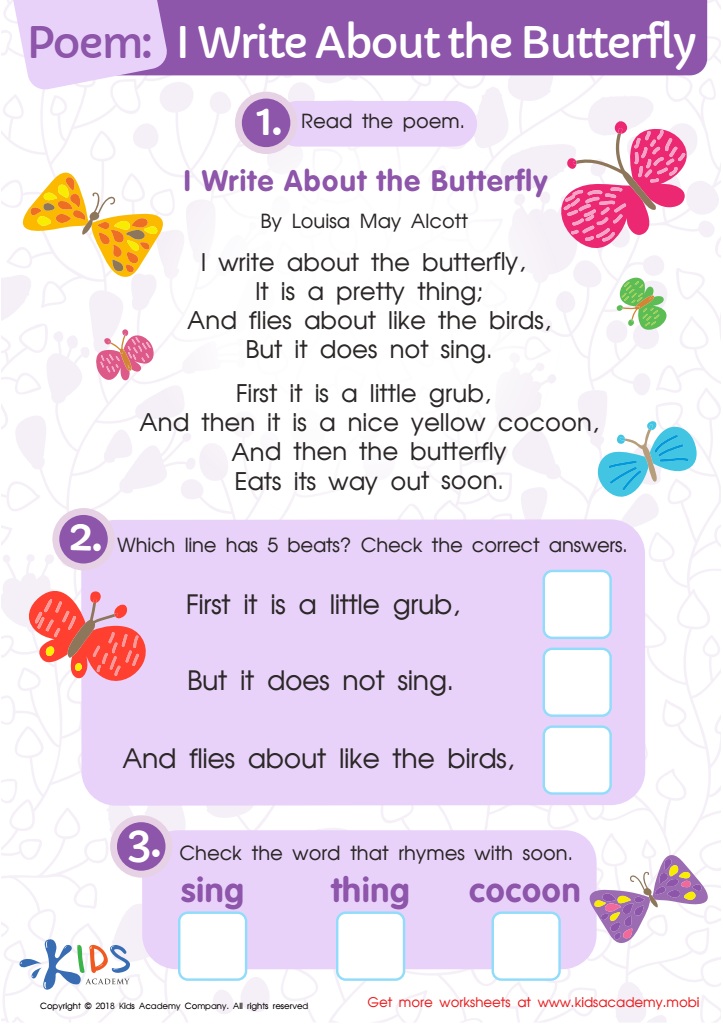
Poem: I Write About The Butterfly Worksheet
Do your kids like poetry? Encourage them to explore and connect with their poetic side! Read the butterfly poem from this worksheet aloud, then help them answer the questions. It's a great way to grow their appreciation of poetry and of the natural world.
Poem: I Write About The Butterfly Worksheet
Worksheet
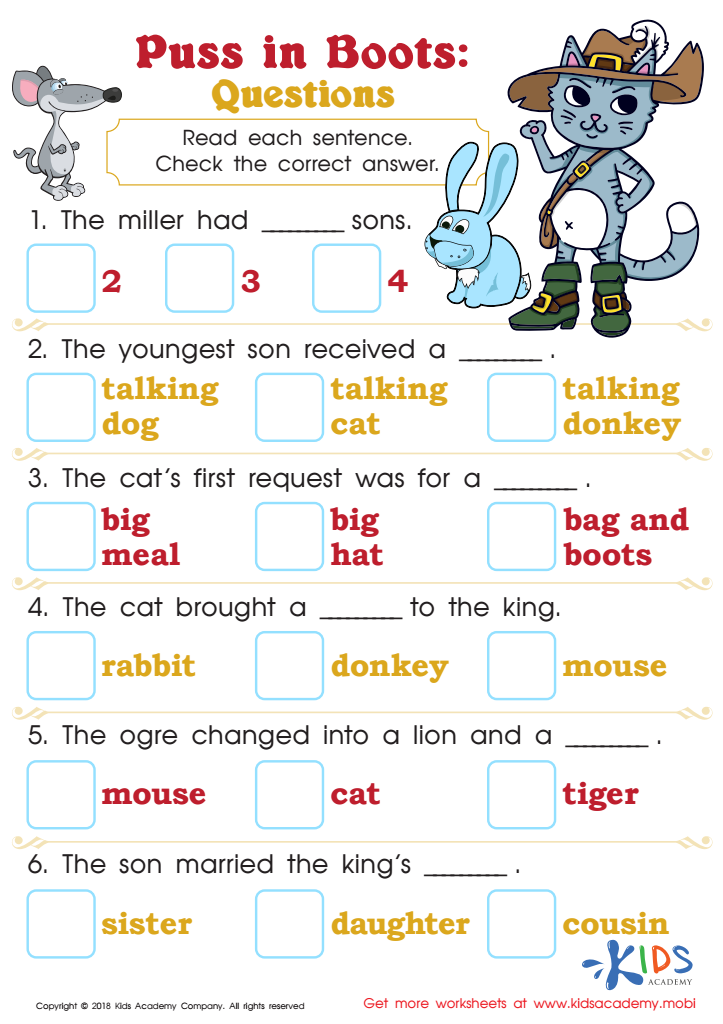
Puss in Boots: Questions Worksheet
This worksheet contains questions to be checked with boxes for the correct answers. It also has pictures of animals; ask kids to identify them, noting the objects with them. Read the questions and have kids provide the answers. Help them check the boxes for the right answer.
Puss in Boots: Questions Worksheet
Worksheet
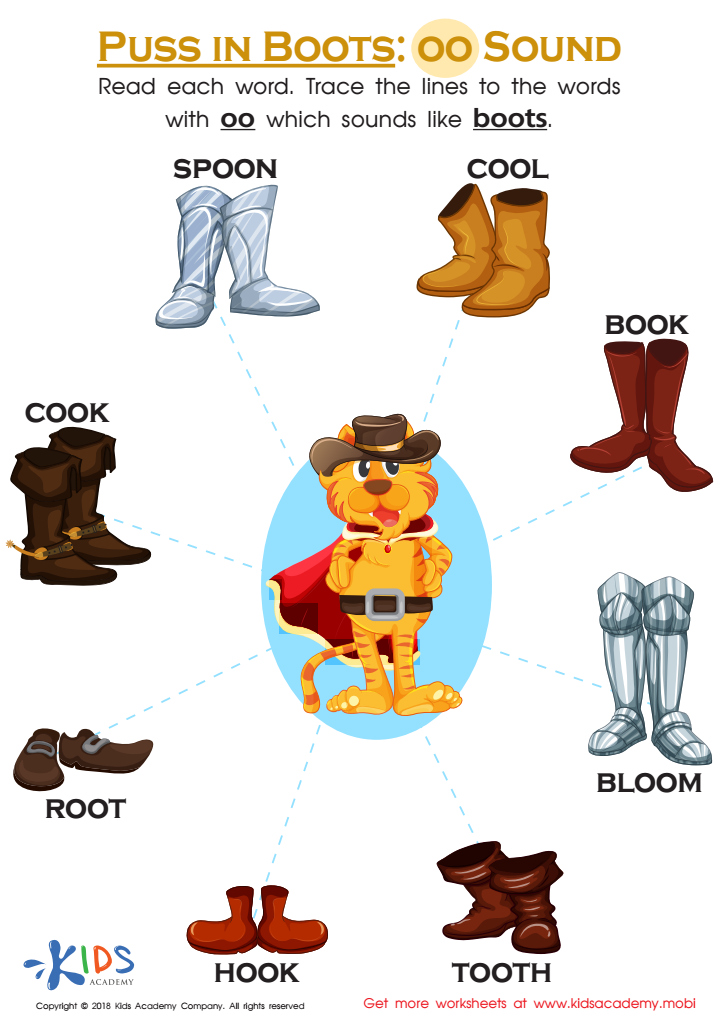
Puss in Boots: OO Sound Worksheet
Read out the words in this printout with the correct pronunciation. Have your child repeat each word after you. Then have them read the words and identify the ones with the "oo" sound. Guide their hands as they trace the lines to the right words.
Puss in Boots: OO Sound Worksheet
Worksheet
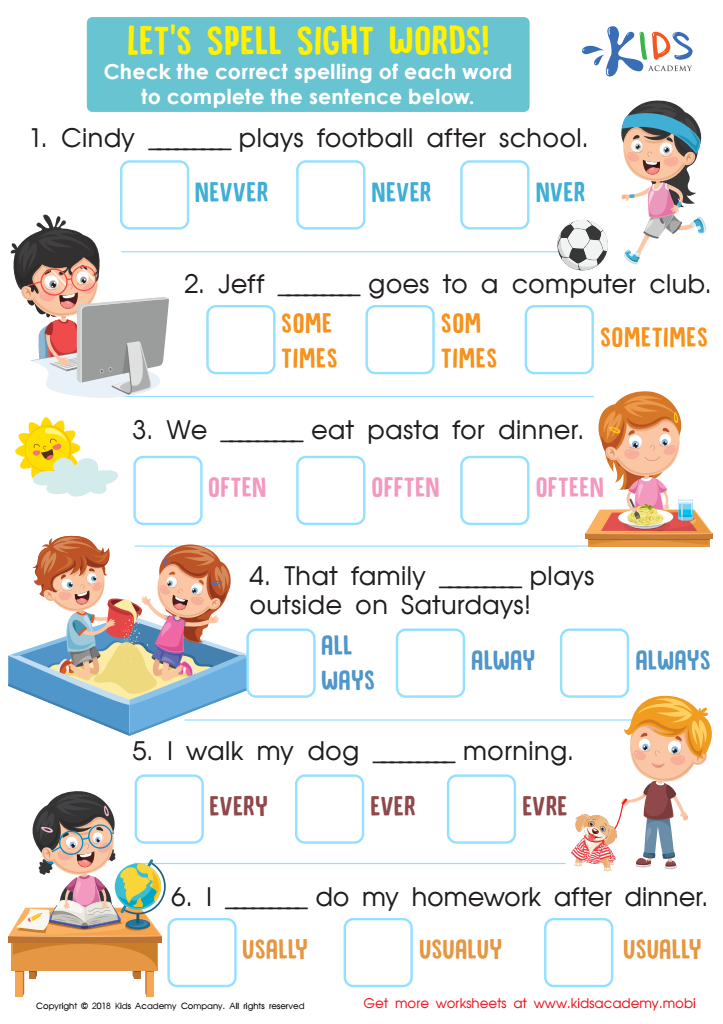
Let's Spell Sight Words Worksheet
Help your kids spell tricky sight words by asking them to spot differences in the sentences of activities they do regularly. This worksheet contains incomplete sentences, with the correct spelling of the word in the options for them to fill in. Get them to look out for words with the wrong spellings.
Let's Spell Sight Words Worksheet
Worksheet
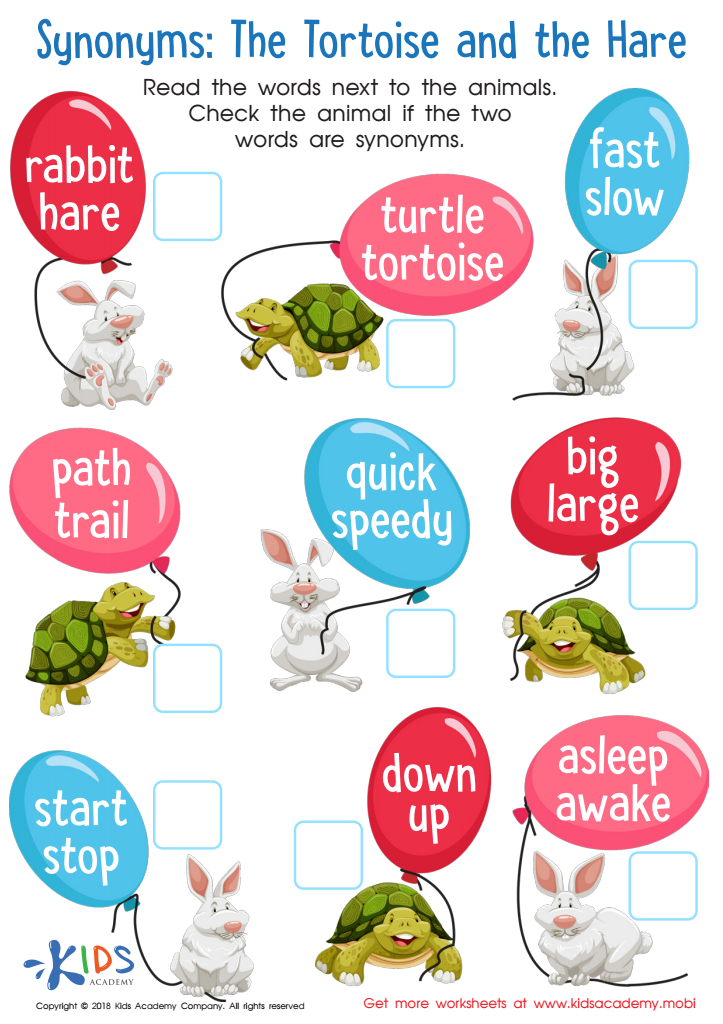
Synonyms: The Tortoise and Hare Worksheet
Help your kids identify words with similar meanings with this worksheet featuring a colourful picture of the Tortoise and the Hare. Show them how to check the boxes of animals with words that have similar meaning, then let them find more on their own. They'll love the challenge and you'll appreciate the educational value.
Synonyms: The Tortoise and Hare Worksheet
Worksheet
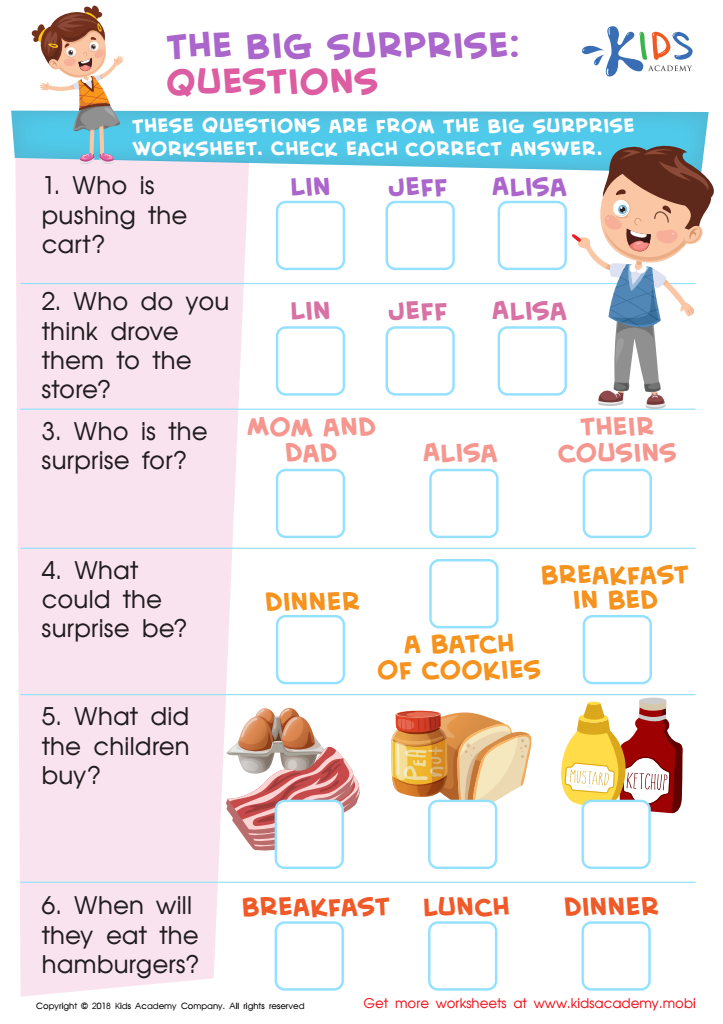
The Big Surprise: Questions Worksheet
Have your child read or listen to The Big Surprise. Ask them the questions in the printable, help check the answers and discuss the story. Keep it to 80 words.
Have your child read or listen to The Big Surprise, then ask them the questions in the printable. Discuss the story and help them check the answers.
The Big Surprise: Questions Worksheet
Worksheet
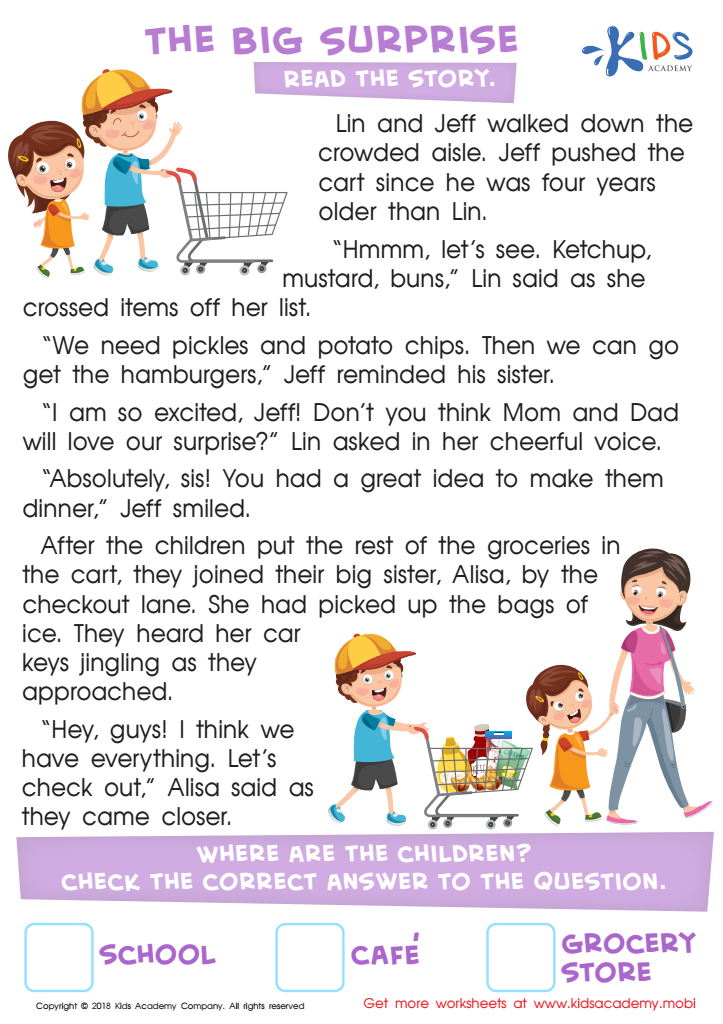
The Big Surprise Worksheet
Read this story to your kids: Lin and Jeff are in the supermarket with their big sister Alisa. They're excited to buy groceries. Listen closely to the details and ask the questions at the end to check your understanding. Read it twice to ensure full comprehension.
The Big Surprise Worksheet
Worksheet
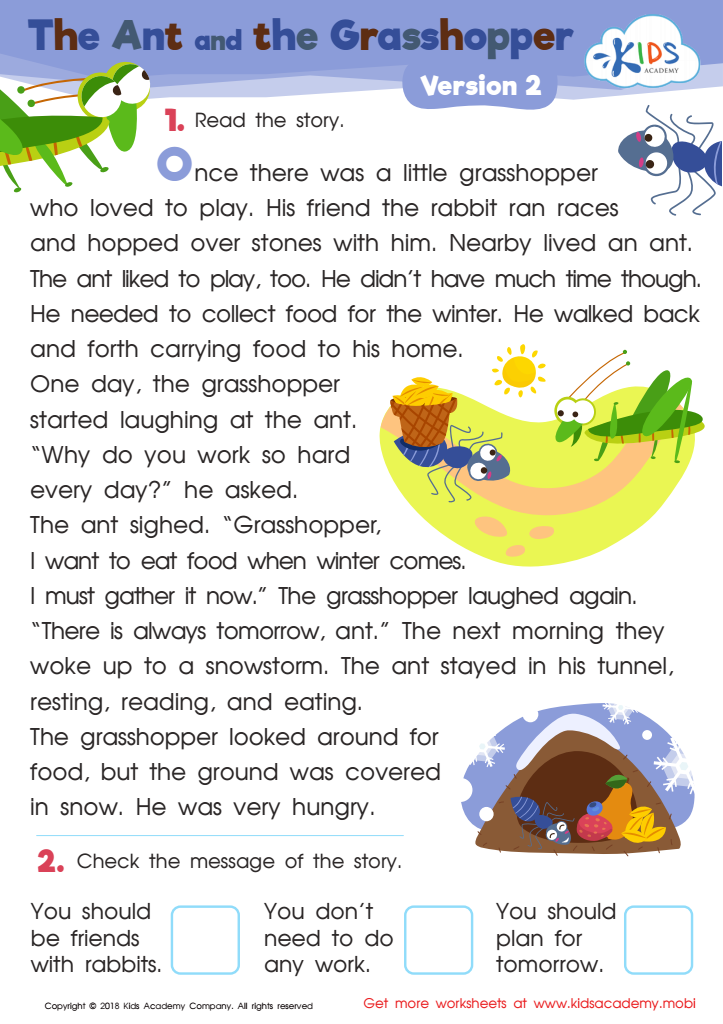
The Ant and The Grasshopper Version 2 Worksheet
Story time is a great way to bond with kids and share a fun story. The Ant and the Grasshopper is a classic with a lesson for everyone. Listen together and then ask your students what the message of the story was. Prompt them with choices from the worksheet and see which one they select. It's a great way to increase their vocabulary and help them learn important lessons.
The Ant and The Grasshopper Version 2 Worksheet
Worksheet
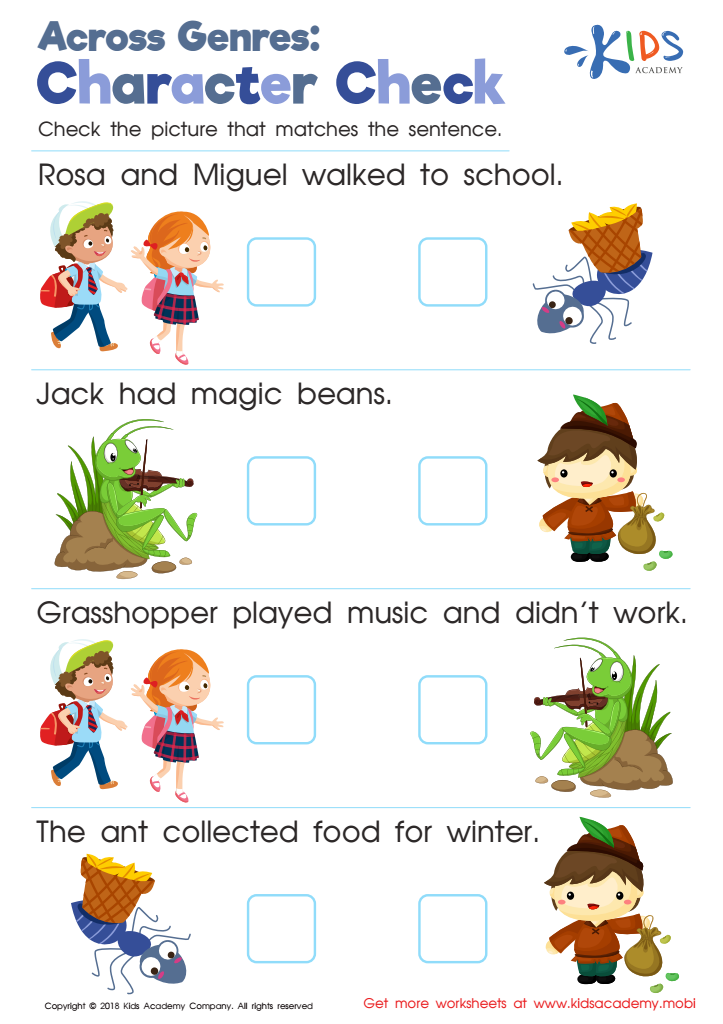
Across Genres: Character Check Worksheet
Read the sentences to your kids, then have them match the pictures to them. Ask them to look at the pictures and help them check which one goes with the sentence. The aim is to see how well they can do this exercise. (80 words)
Across Genres: Character Check Worksheet
Worksheet
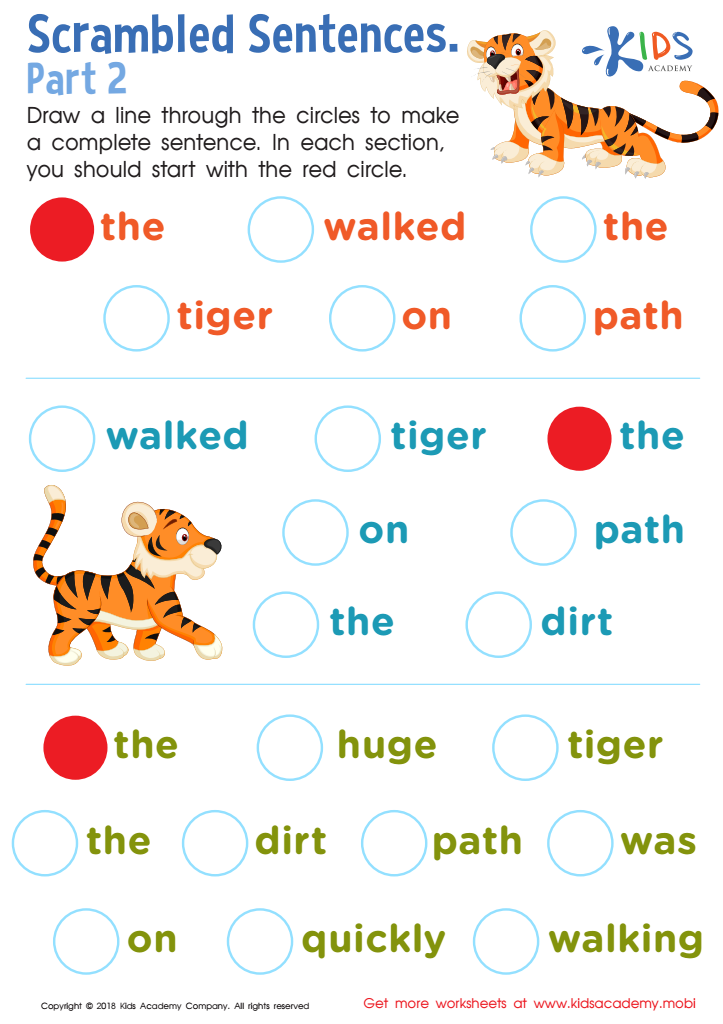
Scrambled Sentences Part 2 Worksheet
This printable worksheet helps kids construct simple, correct sentences. Introduce them to making sentences if they're new to it. Have them draw a line through the circles to form a sentence, starting with the red circle. After completing this exercise, they'll be able to craft short sentences with confidence.
Scrambled Sentences Part 2 Worksheet
Worksheet
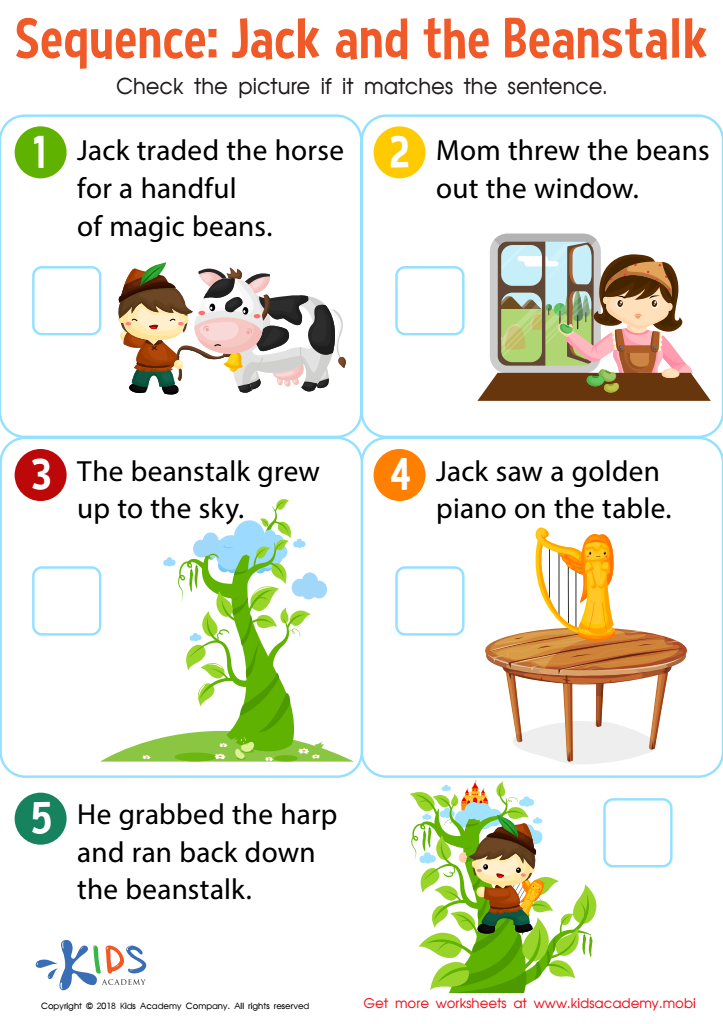
Sequence: Jack and The Beanstalk Worksheet
Ensure your kids are familiar with Jack and the Beanstalk before starting this worksheet. If not, read them the story. In the pdf, there are five pictures with sentences. Read the sentences, ask your kid if it matches the picture, then help them check if it does.
Sequence: Jack and The Beanstalk Worksheet
Worksheet
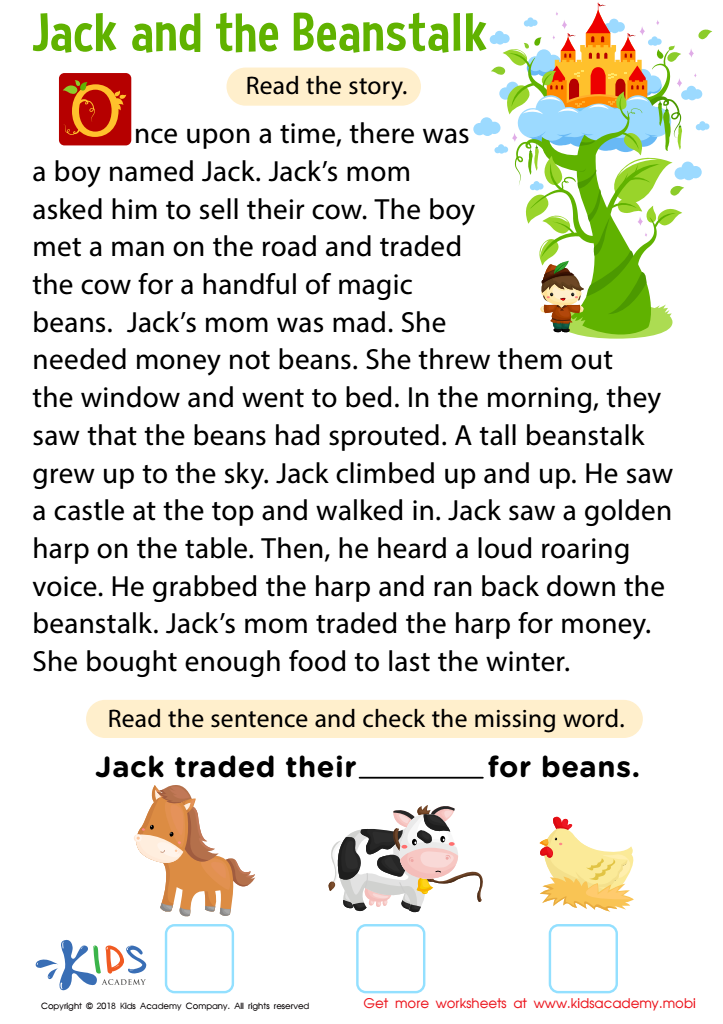
Jack and Beanstalk Worksheet
Story time can be a fun and educational experience for your kids. Read them the classic Jack and the Beanstalk - and even read it twice to help them pay attention. Afterwards, help them fill in the blank on the worksheet to expand their vocabulary and learn more from the story.
Jack and Beanstalk Worksheet
Worksheet
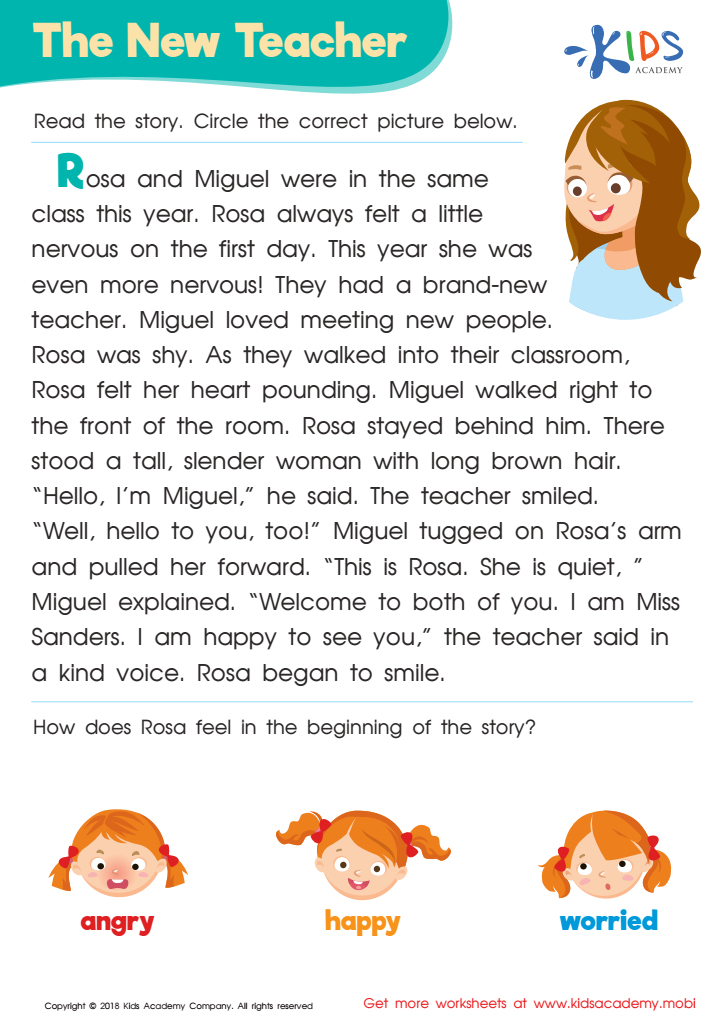
The New Teacher Worksheet
Encourage your kids to write their own short story before doing this exercise. It's about Rosa and Miguel on their first day of school, meeting their teacher. Read the story aloud and ask them to focus on Rosa's feelings. Then, help them circle the correct picture for the question.
The New Teacher Worksheet
Worksheet
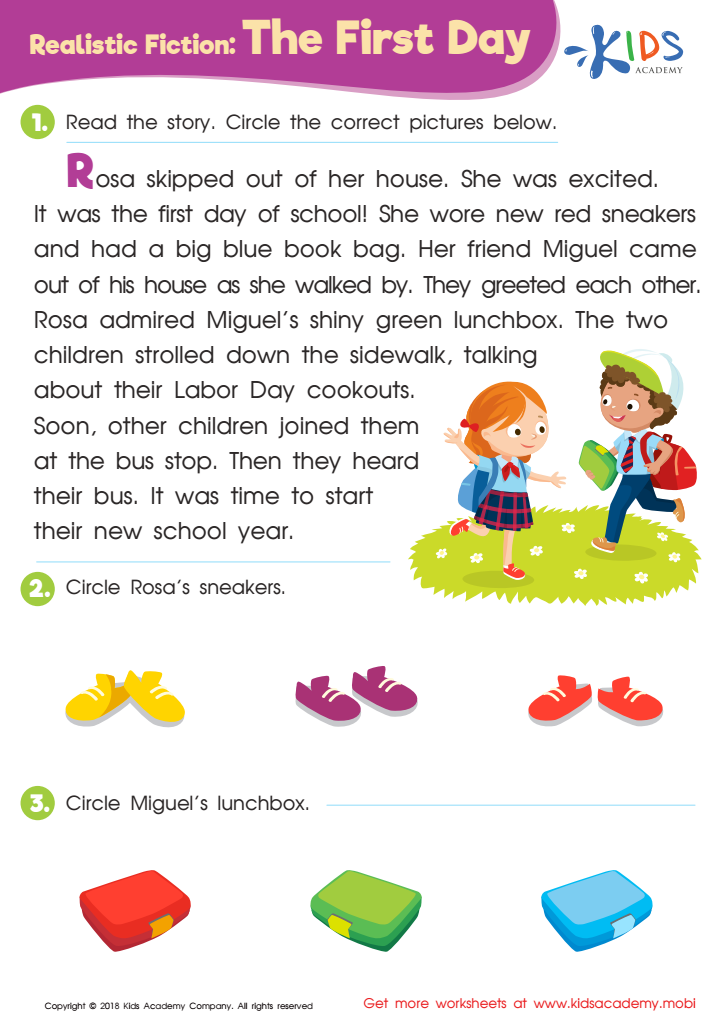
Realistic Fiction: The First Day Worksheet
Fiction is made-up events, so story-writing is fiction writing. In this worksheet, there's a short story about Rosa, her friend Miguel, and their first day back at school. Read the story aloud to your kids and help them circle the right pictures to the questions. Repeat if needed.
Realistic Fiction: The First Day Worksheet
Worksheet
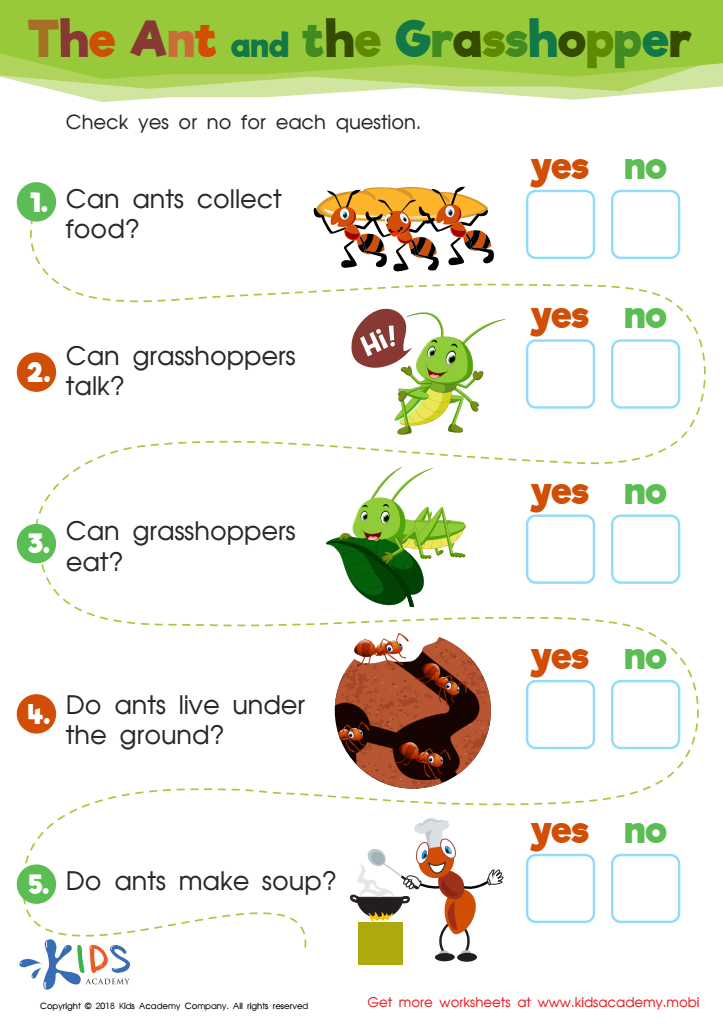
The Ant and The Grasshopper Worksheet
Does your child know about insects? If they're a nature lover or scared of them, use this worksheet to learn more. Read each of the questions and help them fill in the yes or no boxes. This may help them become less scared of insects.
The Ant and The Grasshopper Worksheet
Worksheet
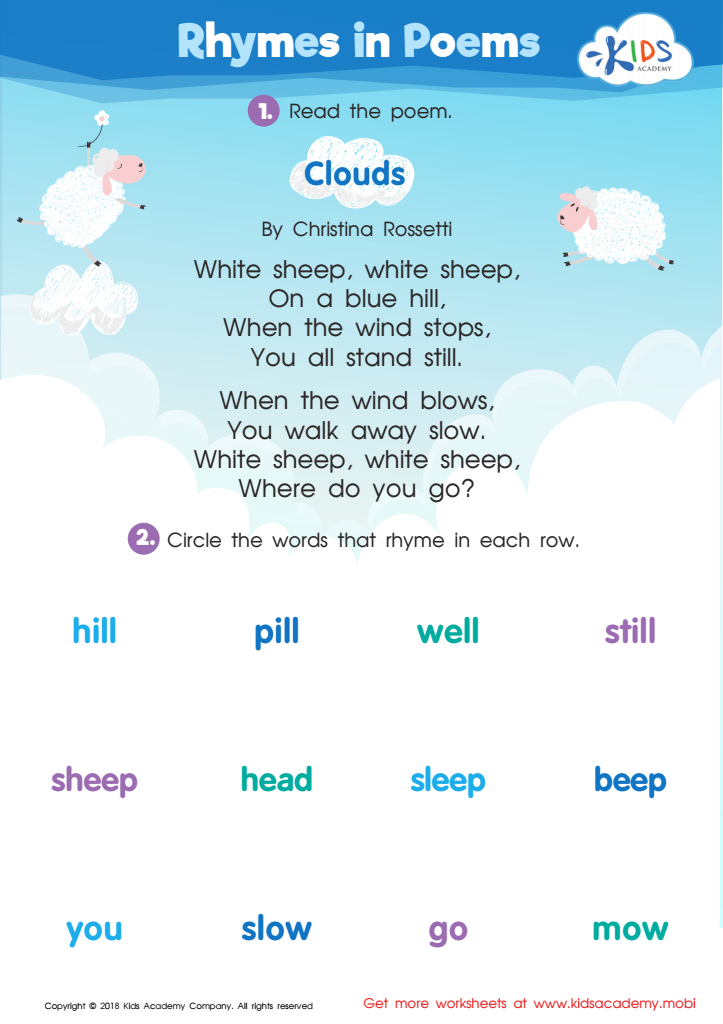
Rhymes in Poems Worksheet
Poems are lovely works of literature; some with rhymes, and some without. This poem for kids is full of rhymes and tells the tale of a sheep. Read it aloud to your kids, then help them circle the rhyming words.
Rhymes in Poems Worksheet
Worksheet
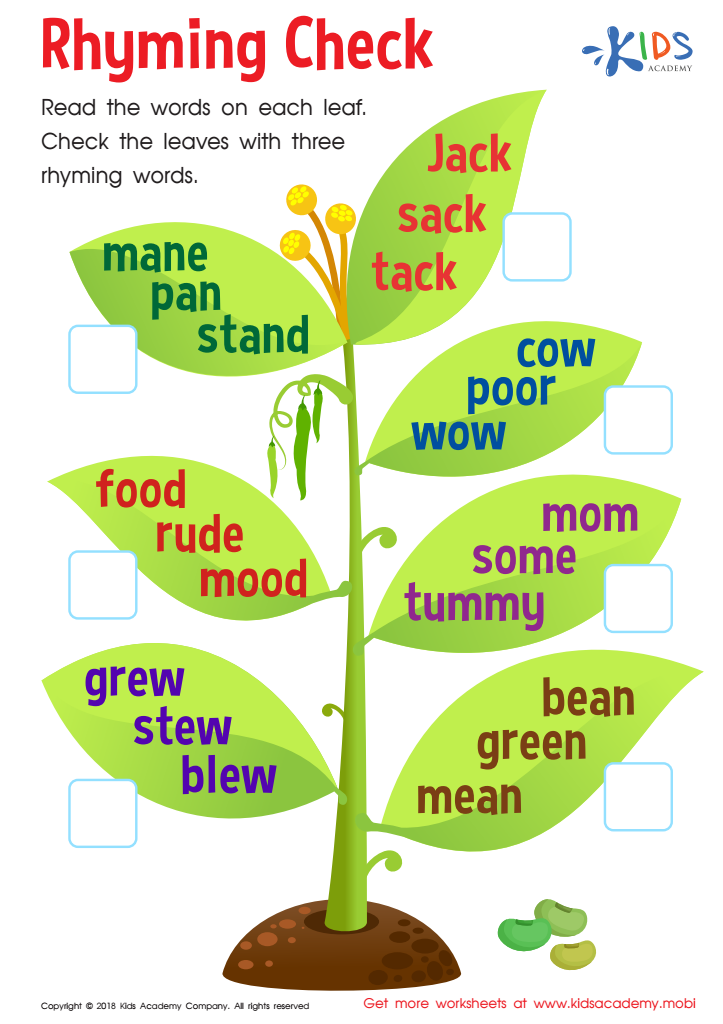
Rhyming Check Worksheet
Help your child read the words on each leaf of a worksheet. Make sure they know that spellings can be misleading and tricky. When finished, ask them to identify the leaves with three rhyming words. This exercise helps their pronunciation skills and encourages critical thinking.
Rhyming Check Worksheet
Worksheet
Join Kids Academy for Free
Who is primarily going to use this learning content?





.jpg)