Online Building Vocabulary Worksheets for Kids - Page 7
254 filtered results
Difficulty Level
Grade
Age
-
From - To
Subject
Activity
Standards
Favorites
With answer key
Interactive
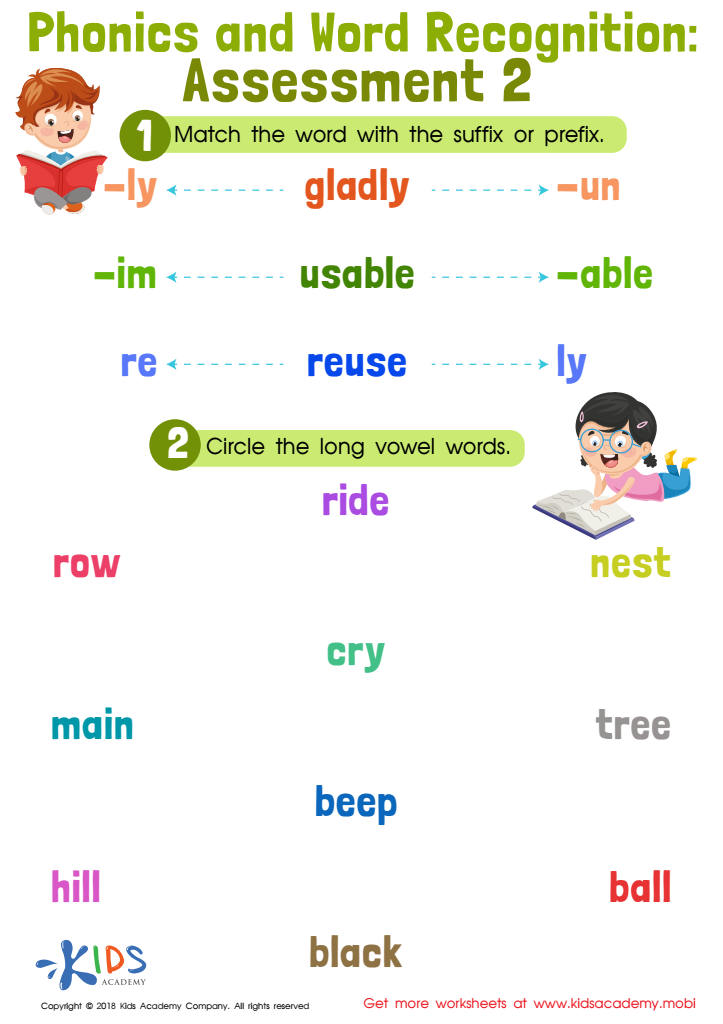
Phonics and Word Recognition: Assessment 2
Give kids common examples of suffixes and prefixes, such as "un-," "unhappy," "ness," "happyness." Ask them to match each word in the word recognition exercise to the correct suffix or prefix. Test phonetic understanding by having them circle the long vowel sounds.
 Assign to My Students
Phonics and Word Recognition: Assessment 2
Worksheet











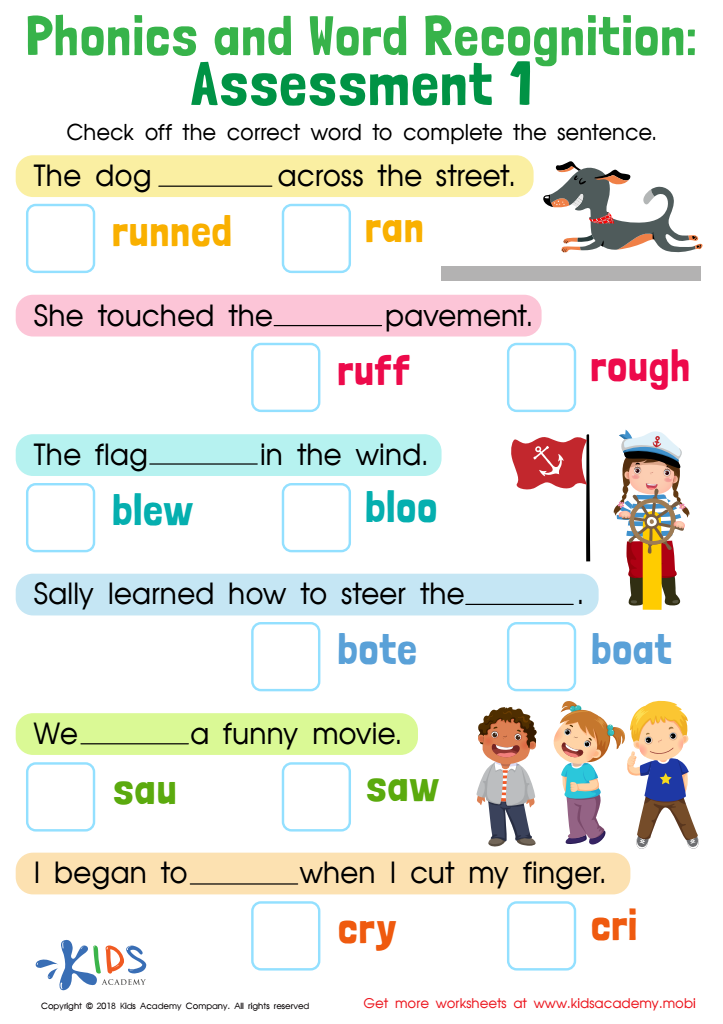
Phonics and Word Recognition: Assessment 1 Worksheet
This worksheet tests phonetics and word recognition. Students should be familiar with past tense verbs. Read incomplete sentences, then read multiple options and help students select the correct one.
Phonics and Word Recognition: Assessment 1 Worksheet
Worksheet
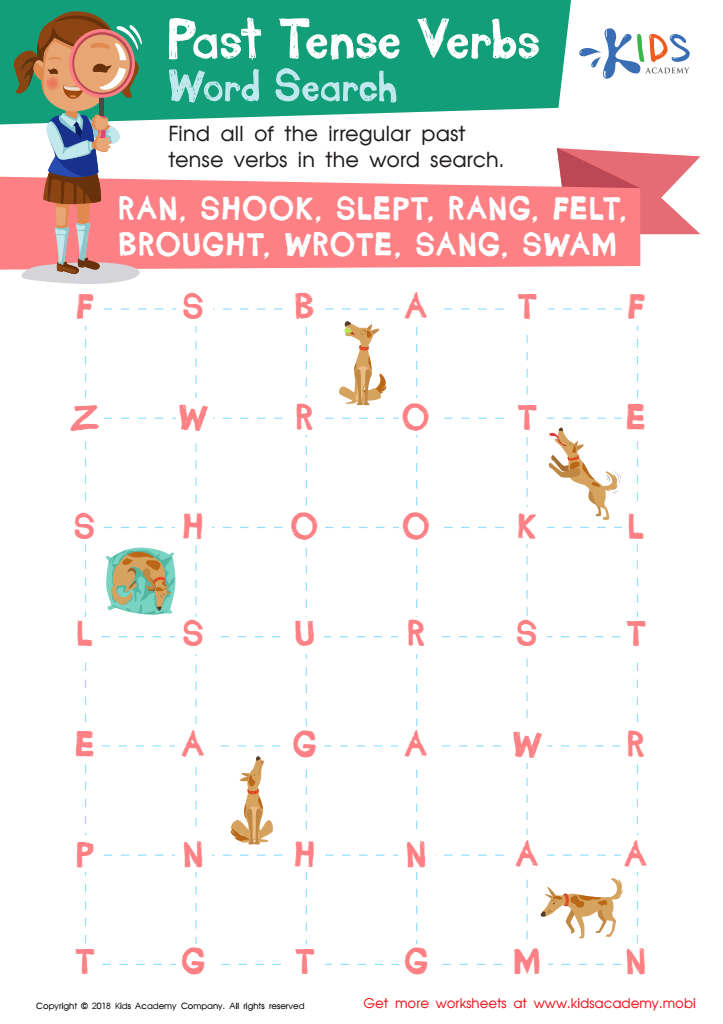
Past Tense Verbs Word Search Worksheet
Kids must learn the rules of past tenses to speak English correctly. This worksheet helps them understand irregular past tense verbs. As they search for them, ask them to read the words aloud; this reinforces the learning.
Past Tense Verbs Word Search Worksheet
Worksheet
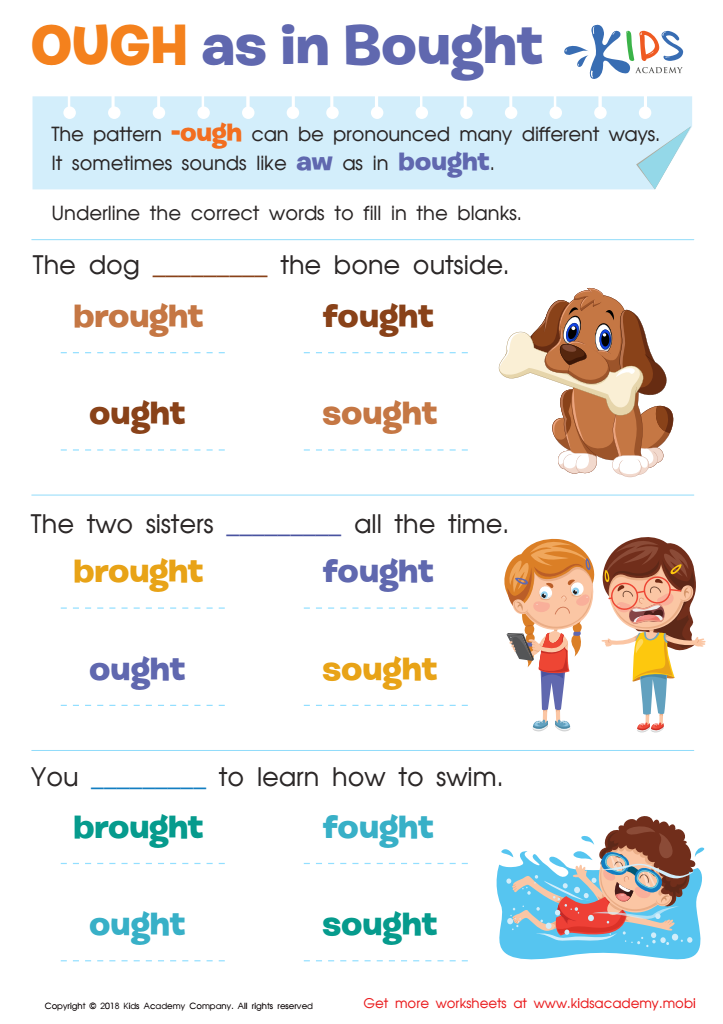
OUGH as in Bought Worksheet
Use this worksheet to teach your child the different pronunciations of -ough. For example, -ough can sound like ‘aw’ in ‘bought’. Ask your child to give more examples and help them underline the correct answers to fill in the blanks.
OUGH as in Bought Worksheet
Worksheet
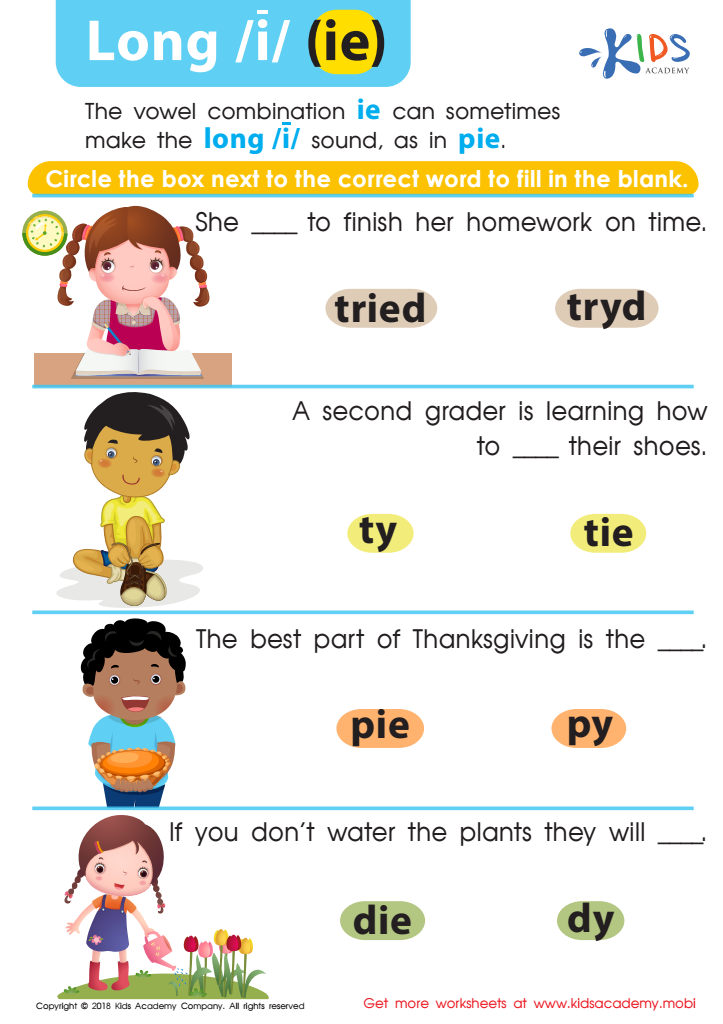
Reading: Long I and IE Worksheet
Have your child list words with the long /i/ sound (eg. 'pie'), and if needed, help them out with some examples. Read each word in the worksheet together and check their answer by having them circle the correct word.
Reading: Long I and IE Worksheet
Worksheet
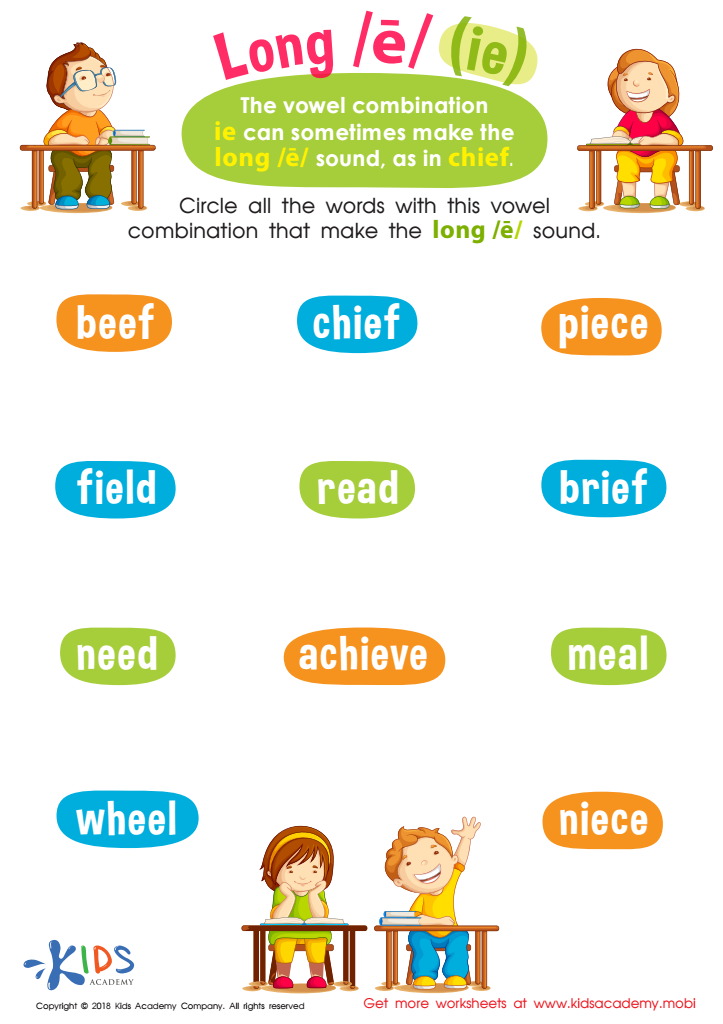
Reading: Long E and IE Worksheet
Ask your child to name some words with the long /e/ sound they hear every day. Then, read aloud all the words in the worksheet with them. Ask them to circle the words containing ie that make this sound.
Reading: Long E and IE Worksheet
Worksheet
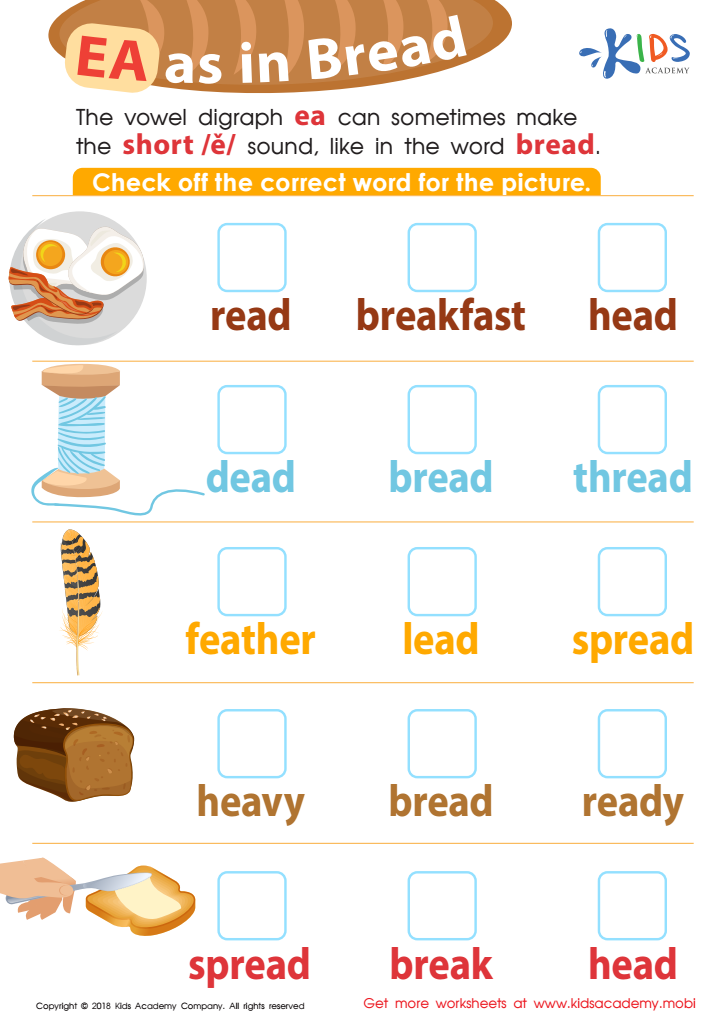
Reading: EA as in Bread Worksheet
The vowel digraph ea can be read in two ways. Examples of the long sound are "read" and "lead"; examples of the short sound are "bread" and "head". Ask your kids to give you more examples and then have them check off the correct word for the pictures on this worksheet. This will help them understand the ea sound.
Reading: EA as in Bread Worksheet
Worksheet
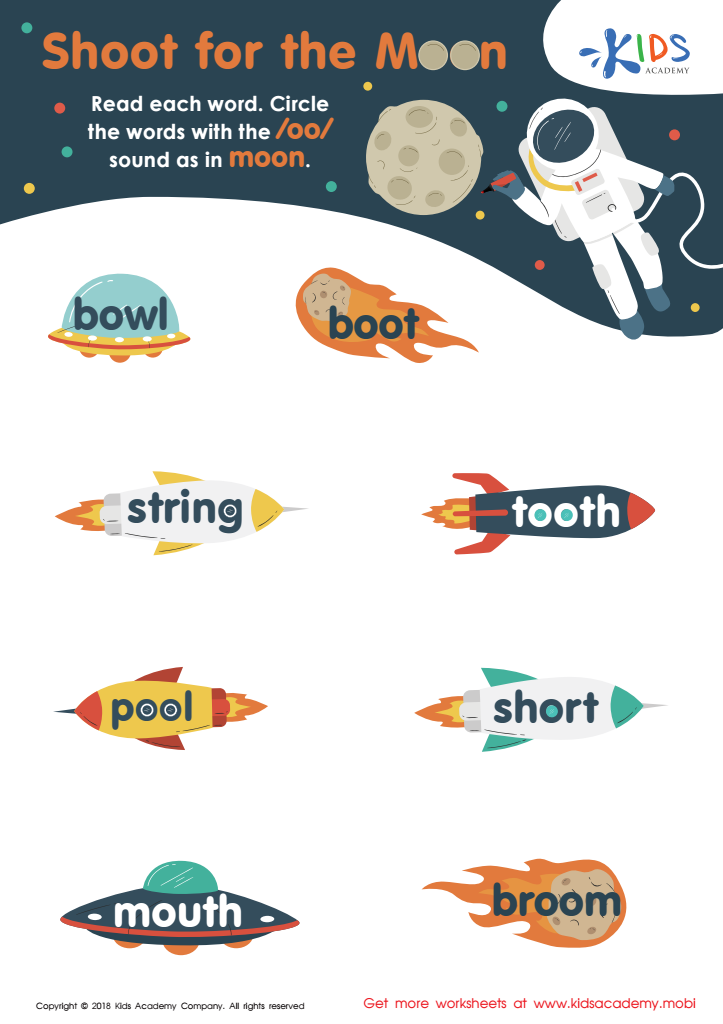
Reading: Shoot for the Moon Worksheet
Ask your kids if they can name any common words with the /oo/ sound. Read each word with them and help them pronounce it. Then, have them circle the words that have the /oo/ sound as in moon.
Reading: Shoot for the Moon Worksheet
Worksheet
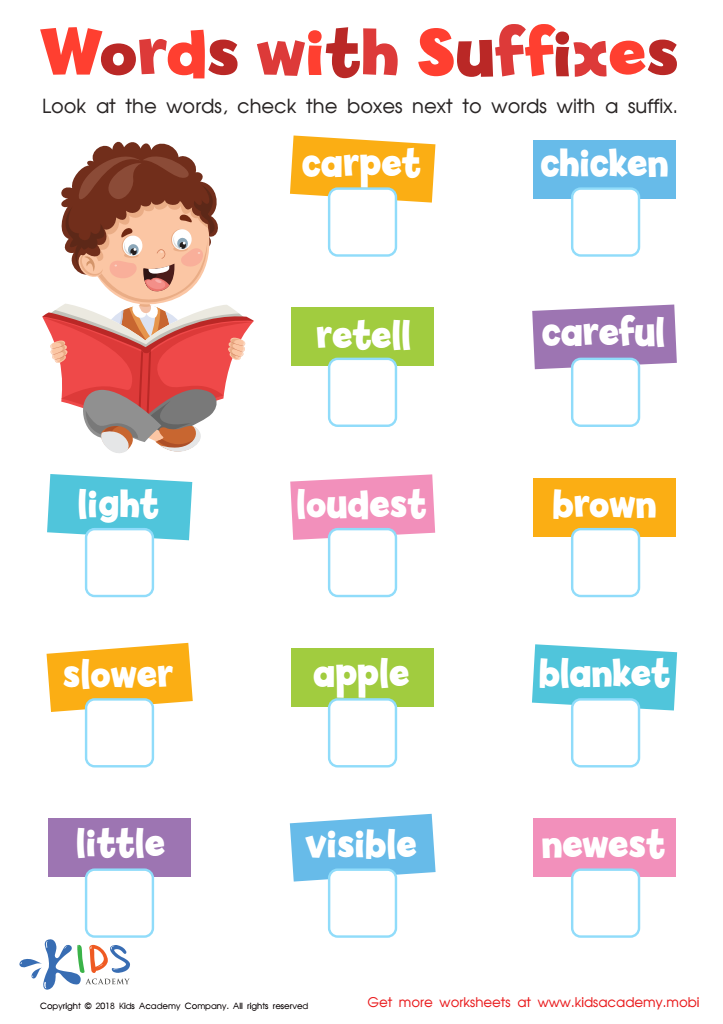
Reading: Words With Suffixes Worksheet
Help your students understand suffixes and build reading fluency with this worksheet. Have them read each word, then choose the ones with a suffix. Practicing this will lead to better comprehension and more confident reading. Save it for future use in language and reading classes.
Reading: Words With Suffixes Worksheet
Worksheet
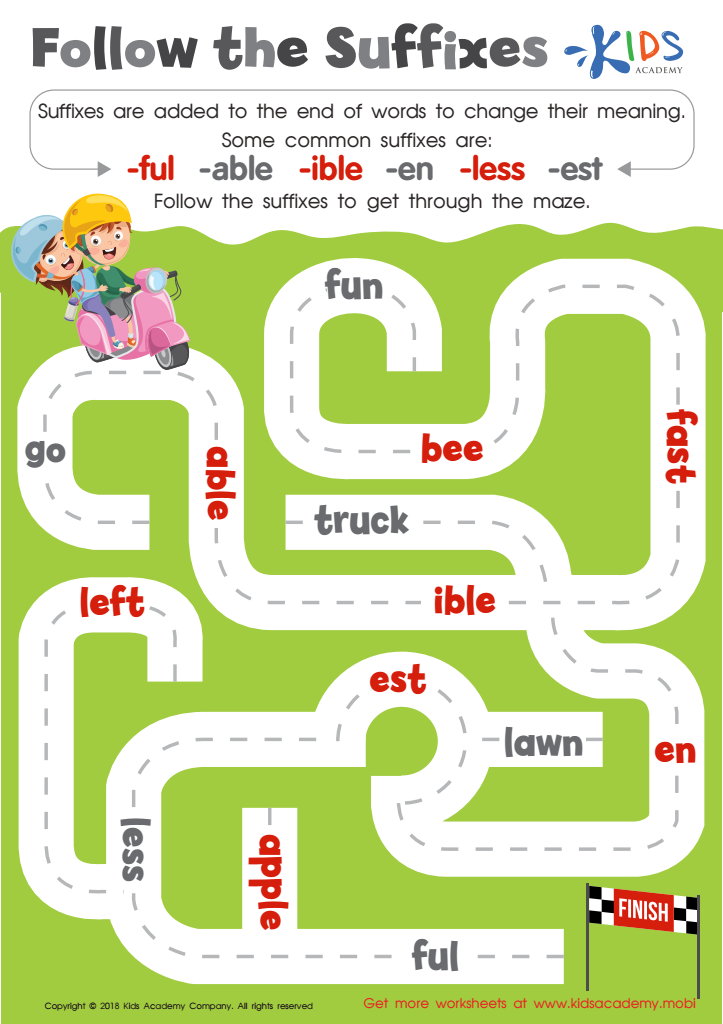
Reading: Follow the Suffixes Worksheet
Students use suffixes to find the right way through a maze in this enjoyable activity! Understanding suffixes helps kids decode and comprehend more words, leading to better reading fluency. A great addition to your reading classes, keep this printable close!
Reading: Follow the Suffixes Worksheet
Worksheet
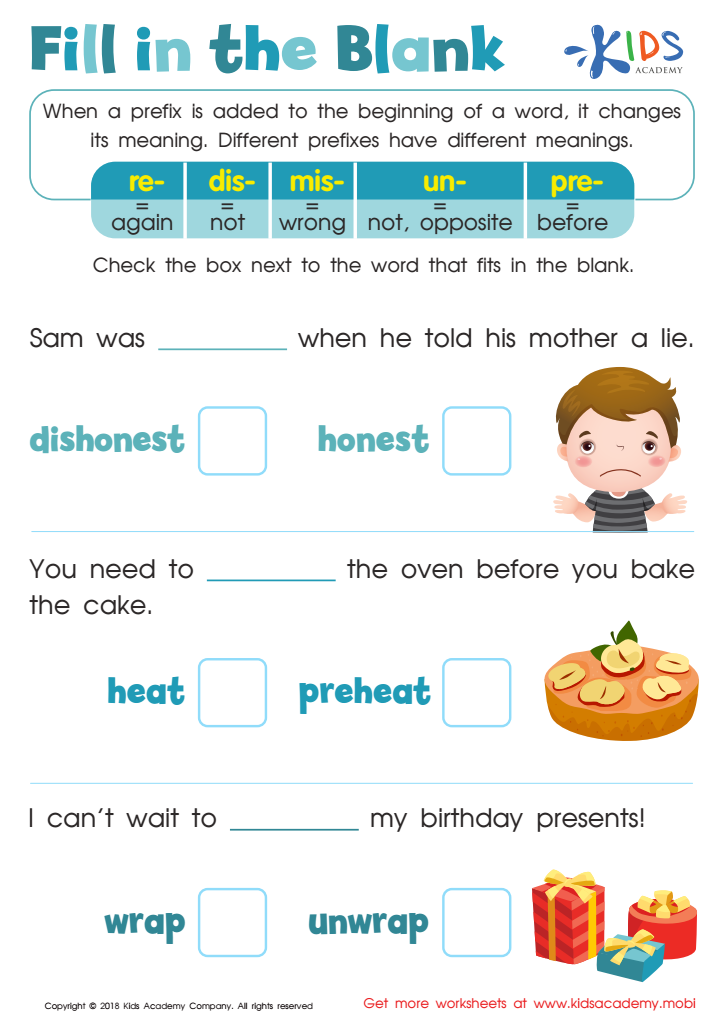
Reading: Fill in the Blank Worksheet
Students can practice understanding the meaning of common prefixes with this worksheet. They read sentences and pick the correct word with the appropriate prefix to complete it. Downloadable and a great addition to reading and vocabulary resources, this helps improve comprehension with mastery of the skill!
Reading: Fill in the Blank Worksheet
Worksheet
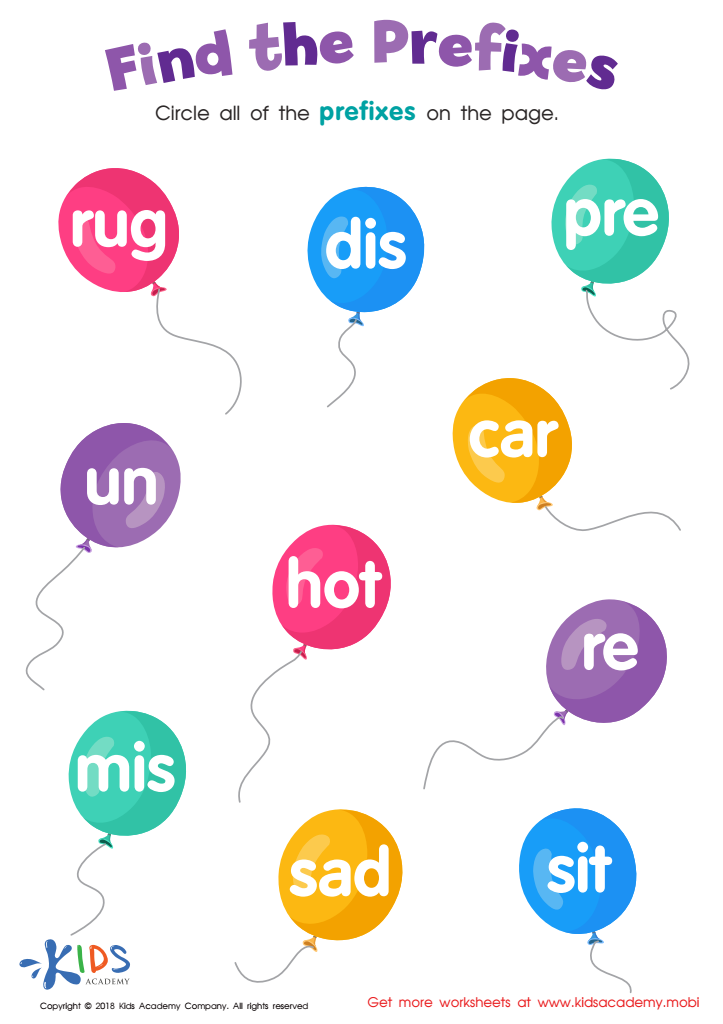
Reading: Find the Prefixes Worksheet
Students are asked to circle all prefixes on this worksheet and brainstorm a list of words that have them. It's a great tool for teaching vocabulary and helps students understand new and unfamiliar words by recognizing how prefixes change meaning.
Reading: Find the Prefixes Worksheet
Worksheet
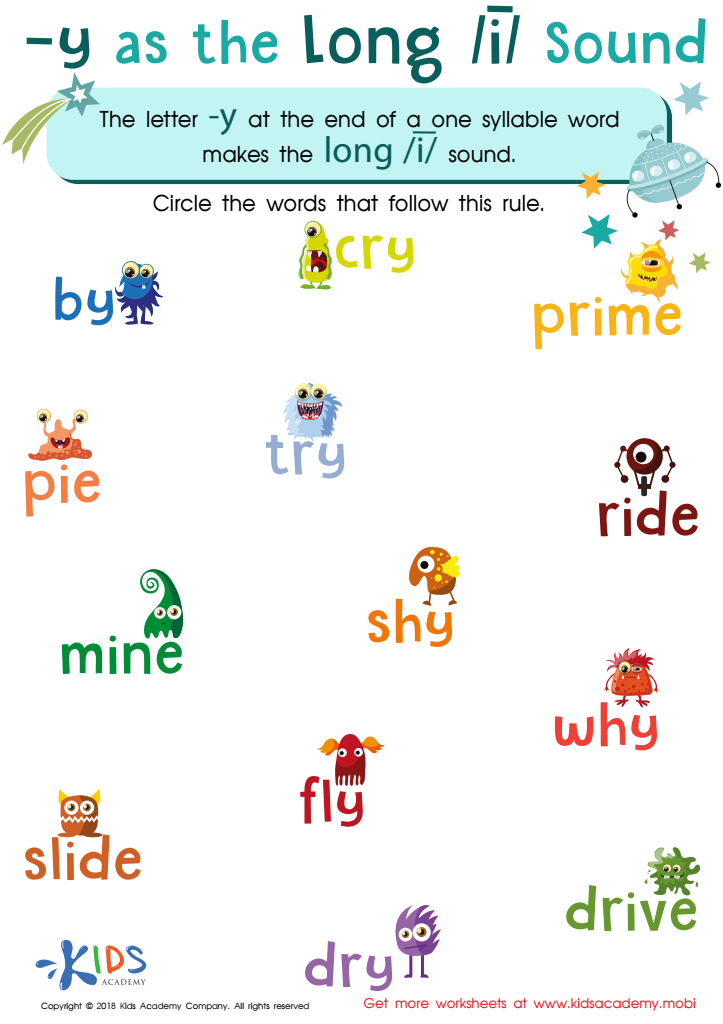
Reading: Y as Long I Worksheet
Students need practice and exposure to letters that make different sounds for decoding and reading success. This printable is a great resource for language arts classes: it explains that words ending with Y and having only one syllable make the long I sound. Students will circle all words with Y that have this sound.
Reading: Y as Long I Worksheet
Worksheet
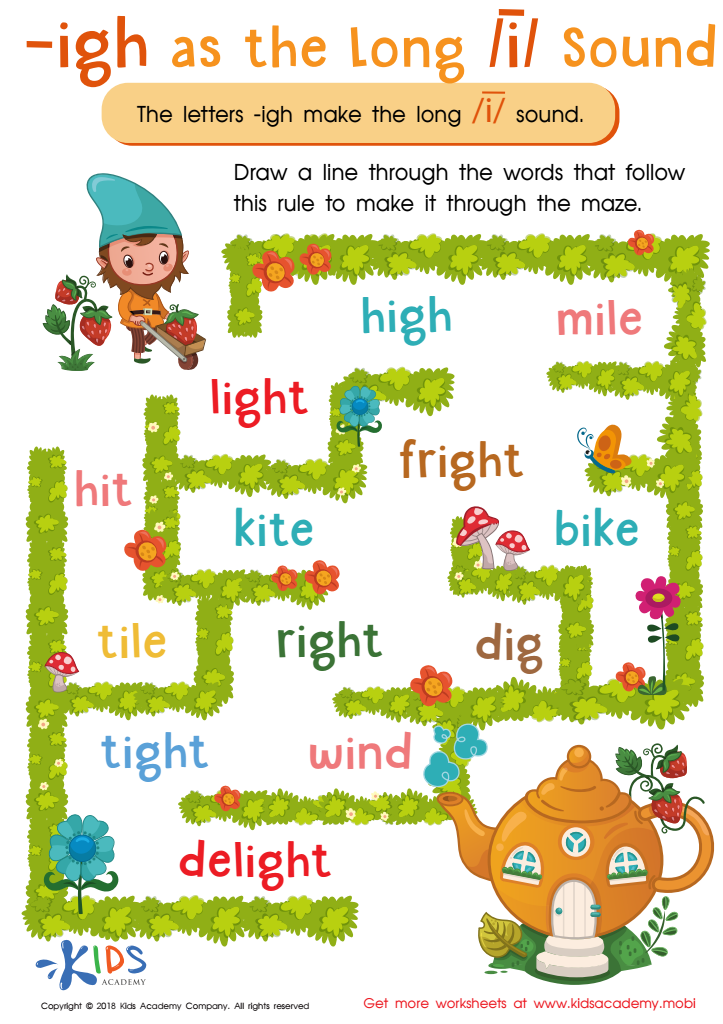
Reading: IGH as Long I Worksheet
Kids can have fun and learn with this maze! They'll look for and read words with the 'long I' sound spelled 'igh'. Most words ending with 'T' have this spelling. Decode words while learning about long vowel sounds and their spellings.
Reading: IGH as Long I Worksheet
Worksheet
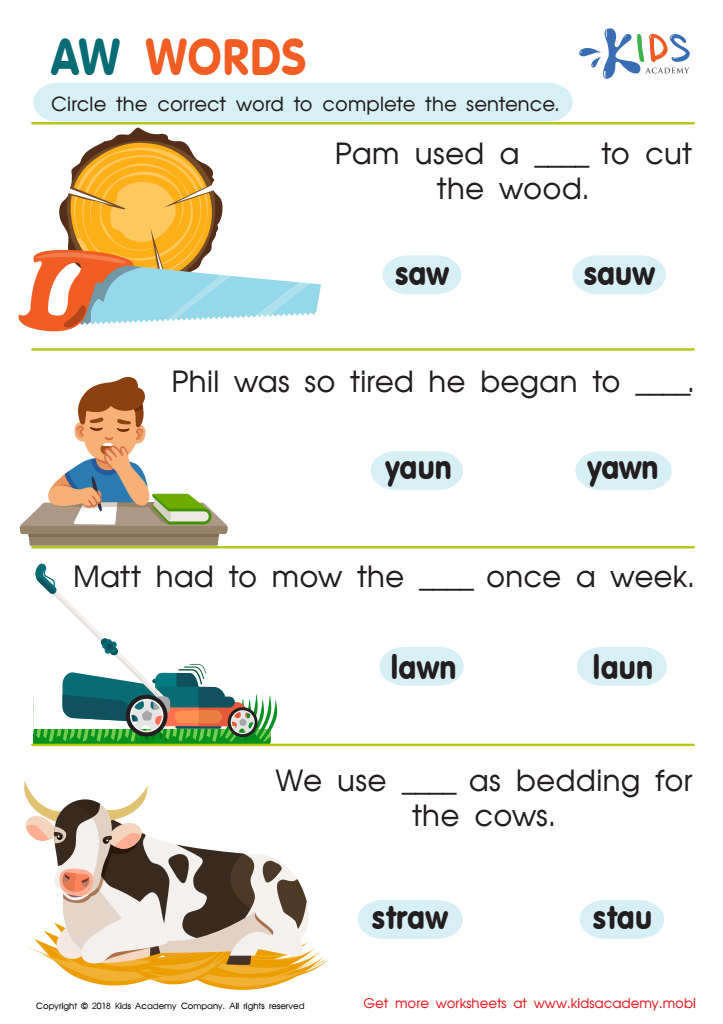
Reading: AW Words Worksheet
Practice decoding the /aw/ digraph with this printable. Students read sentences and select the word with the correct spelling to complete each one. Note, /aw/ is sometimes spelled /au/, so this worksheet helps prevent confusion. Have fun, and practice hard!
Reading: AW Words Worksheet
Worksheet
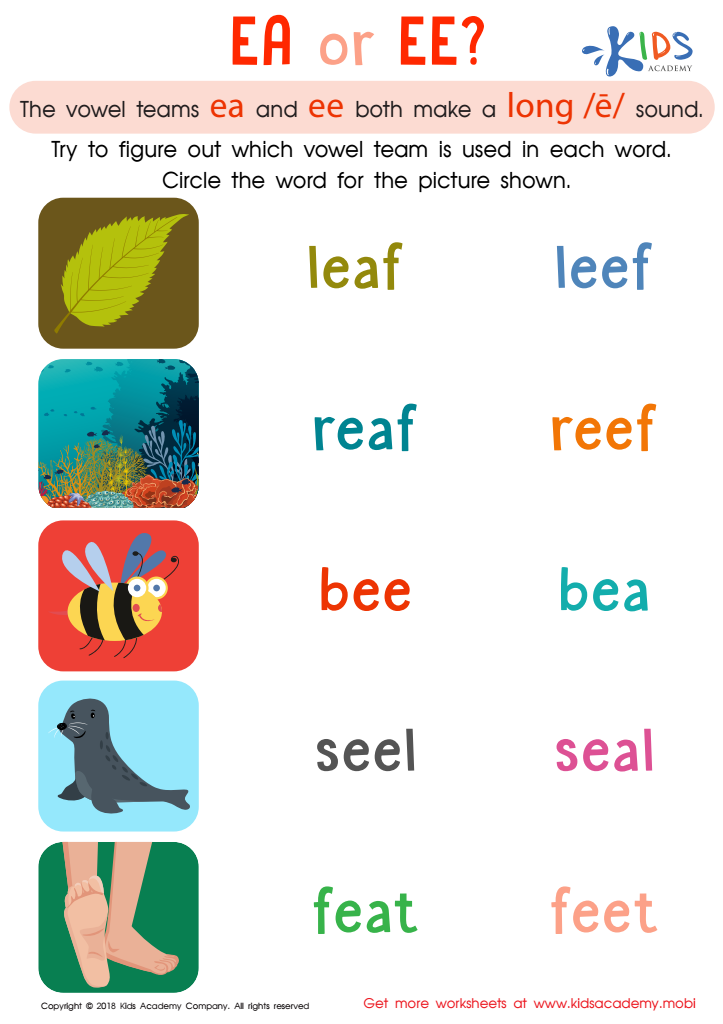
Reading: EA and EE Worksheet
Confused by the long E sound's varying spellings? Give students practice with this printable. It will improve their reading and spelling skills by helping them identify the correct spellings for words with the /ee/ and /ea/ vowel teams. Clear up the confusion and sharpen their skills.
Reading: EA and EE Worksheet
Worksheet
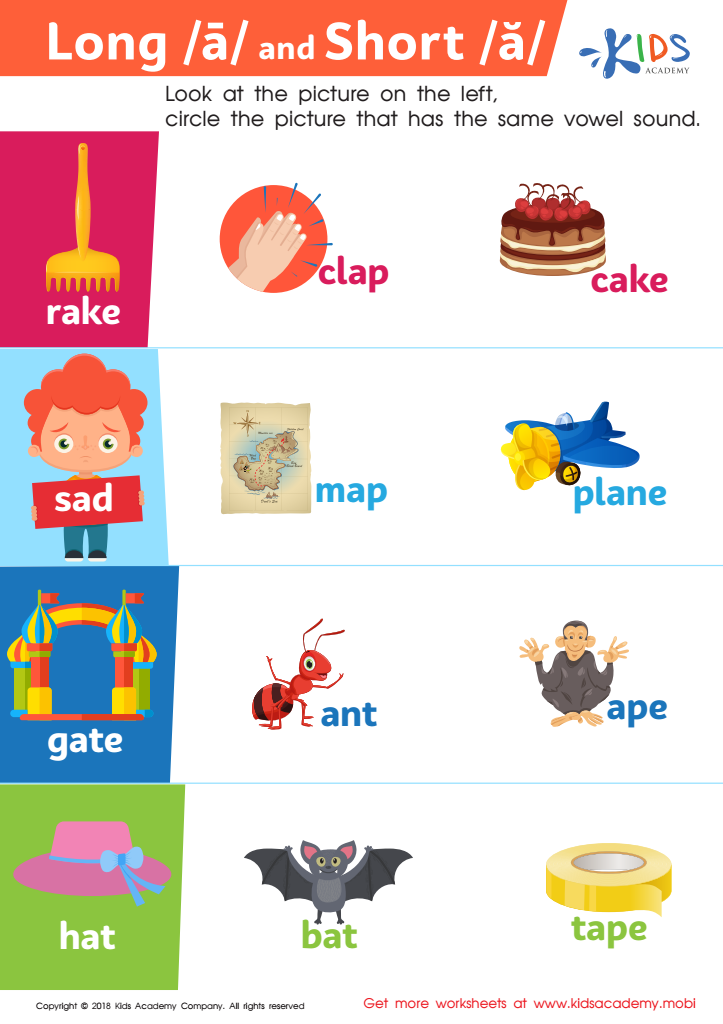
Reading: Long a and Short a Worksheet
This printable helps students practice distinguishing the long and short A sound. Pictures provide clues to read each word and students identify if it has a short or long sound. By completing this worksheet, children gain mastery of the phonics skill.
Reading: Long a and Short a Worksheet
Worksheet
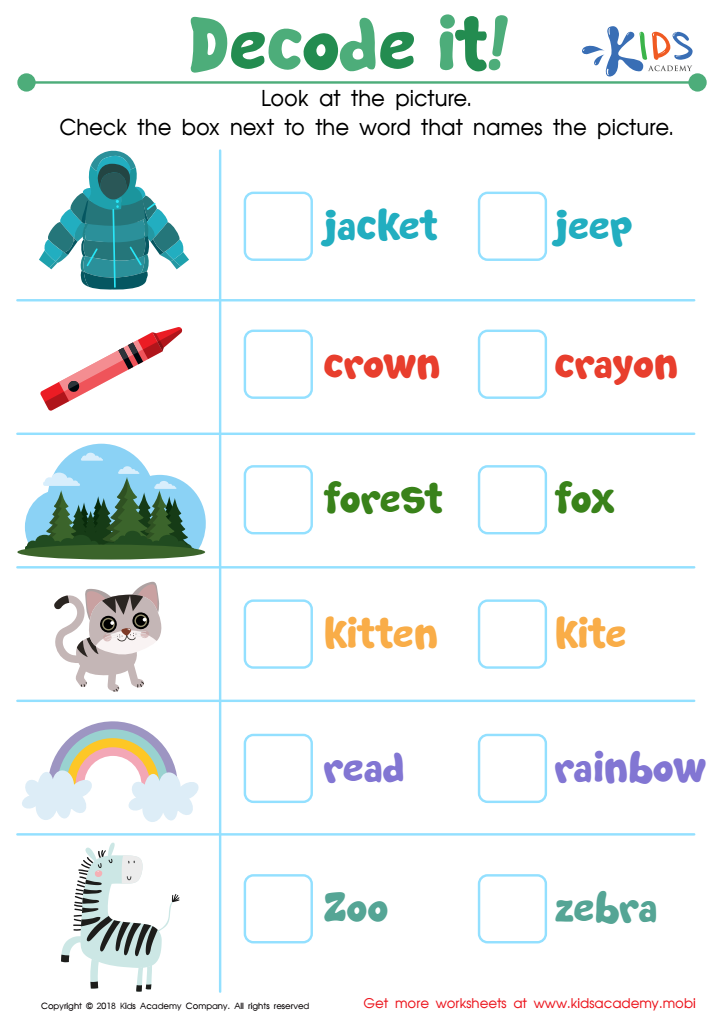
Reading: Decode It Worksheet
Look at the picture and circle the word that names it. This exercise helps kids practice picture cues and decoding words, with the same beginning sound. It builds their fluency and comprehension, giving them the skills to read unfamiliar words.
Reading: Decode It Worksheet
Worksheet
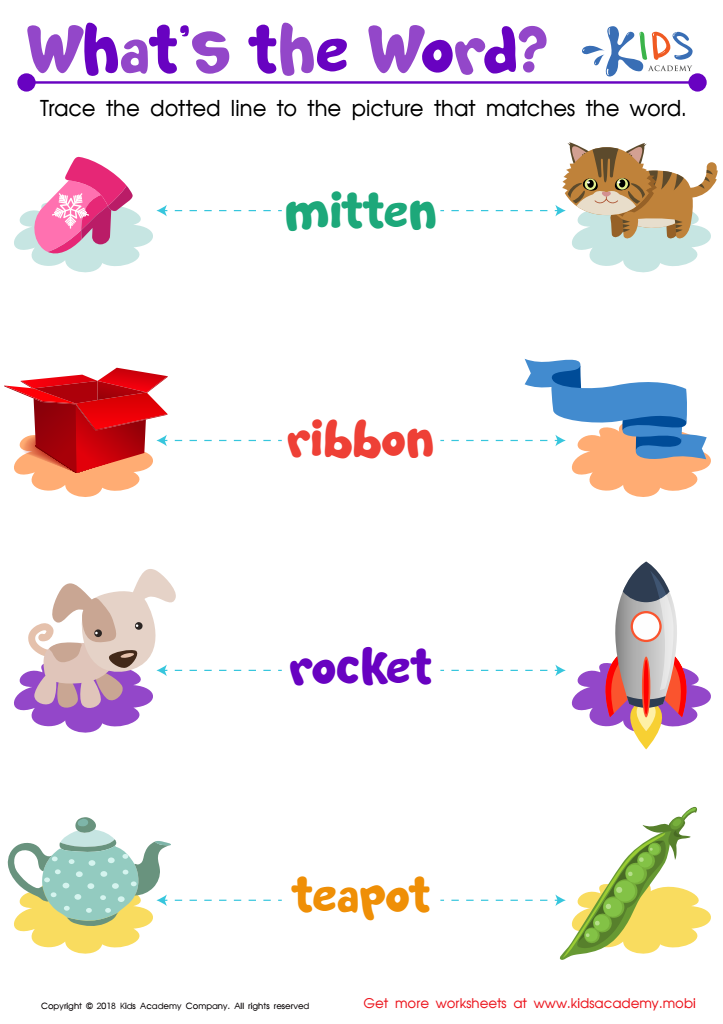
Reading: What's Word Worksheet
Teaching reading? This worksheet can help! Students read the word and draw a line to the picture for clues if needed. This will boost their vocabulary and fluency, increasing confidence and reading skills. Watch their progress as new words are added!
Reading: What's Word Worksheet
Worksheet
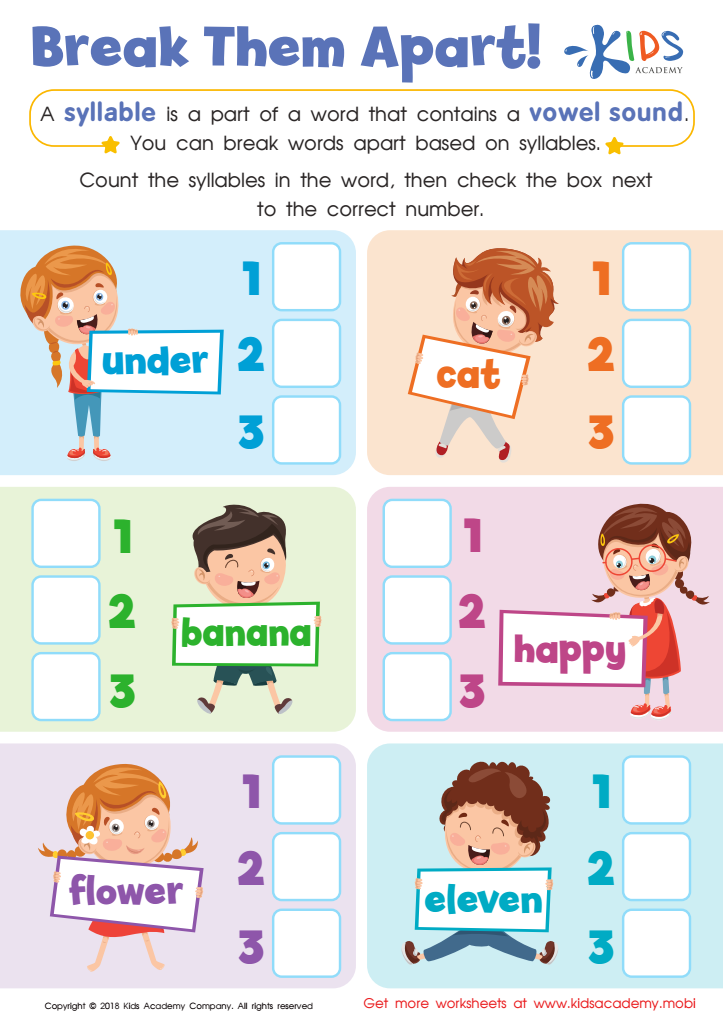
Reading: Break Them Apart Worksheet
See if students understand syllables with this fun worksheet. It teaches them that a syllable is a word part with a vowel sound. Kids read each word and choose how many parts it has. Doing this often helps them decode new words and gain confidence.
Reading: Break Them Apart Worksheet
Worksheet
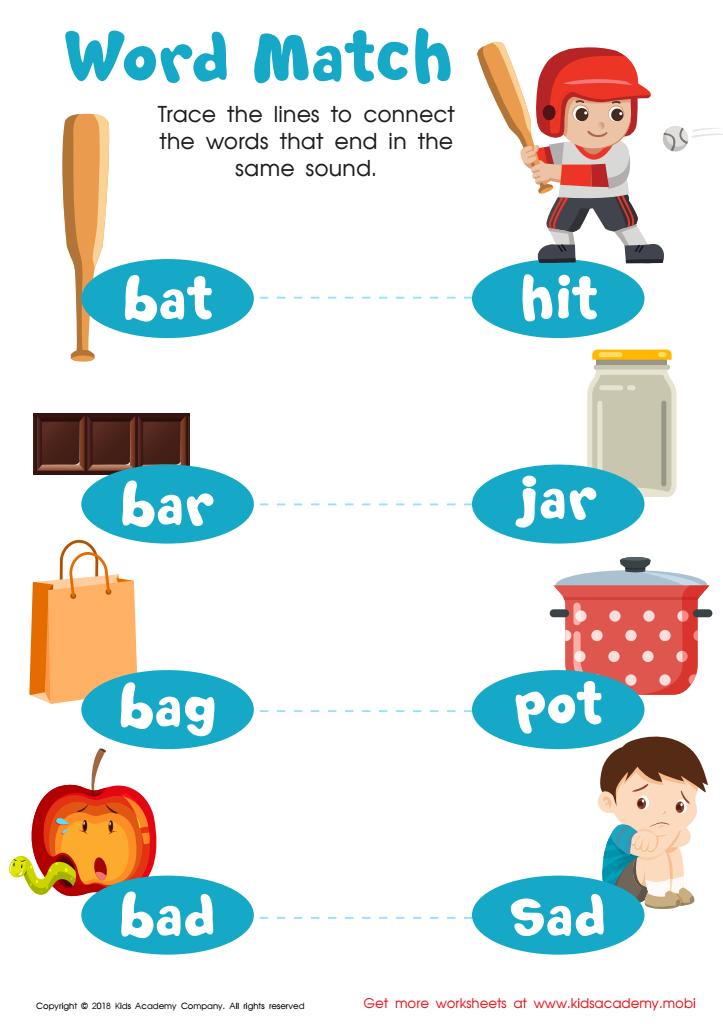
Word Match Reading Worksheet
This printout helps children learn to read fluently by connecting words with the same sound. Colorful pictures aid understanding and context for kindergarten-level students. Tracing lines, they learn to identify the sounds made by letters of the alphabet and deepen their knowledge of phonics.
Word Match Reading Worksheet
Worksheet
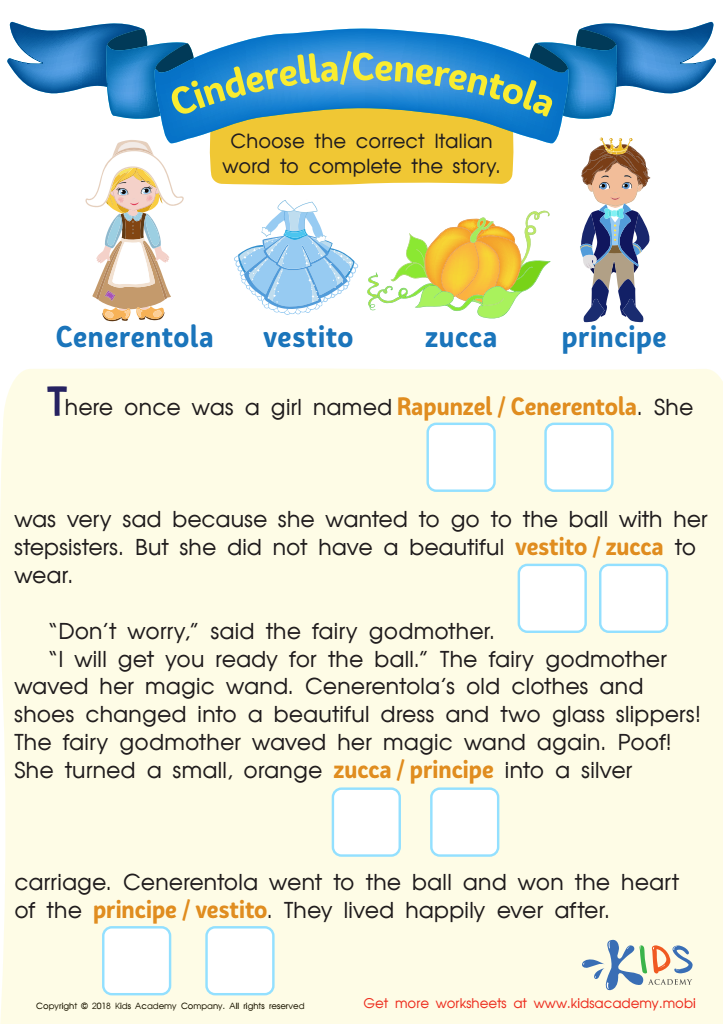
Cinderella / Cenerentola Worksheet
Children will love this fairytale about a princess trying to get to the royal ball. With colorful images and context clues, they'll learn Italian words without even realizing it. They'll fill in the correct boxes and help Cenerentola get to her happily-ever after. This free worksheet will delight and teach at once!
Cinderella / Cenerentola Worksheet
Worksheet
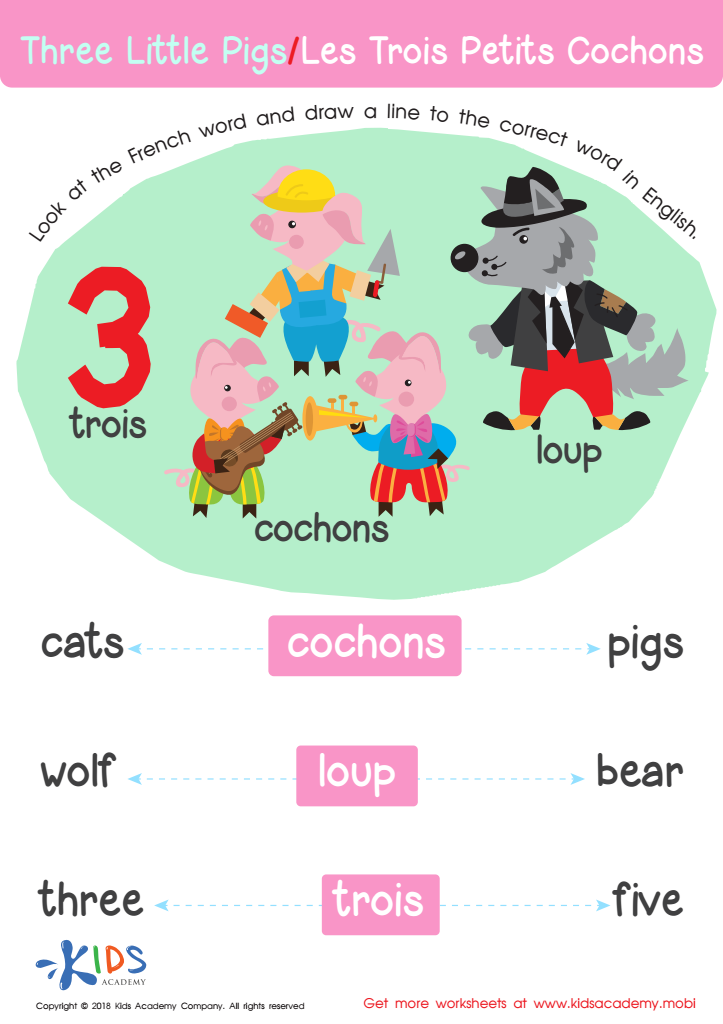
Three Little Pigs / Les Trois Petits Cochons Worksheet
Teaching kids words in foreign tongues? Use picture clues to help them build connections for deeper learning! This PDF worksheet uses the three little pigs story to teach French words for three, pigs and wolf. Kids can make picture-word associations and follow traceable lines to match the French and English words.
Three Little Pigs / Les Trois Petits Cochons Worksheet
Worksheet
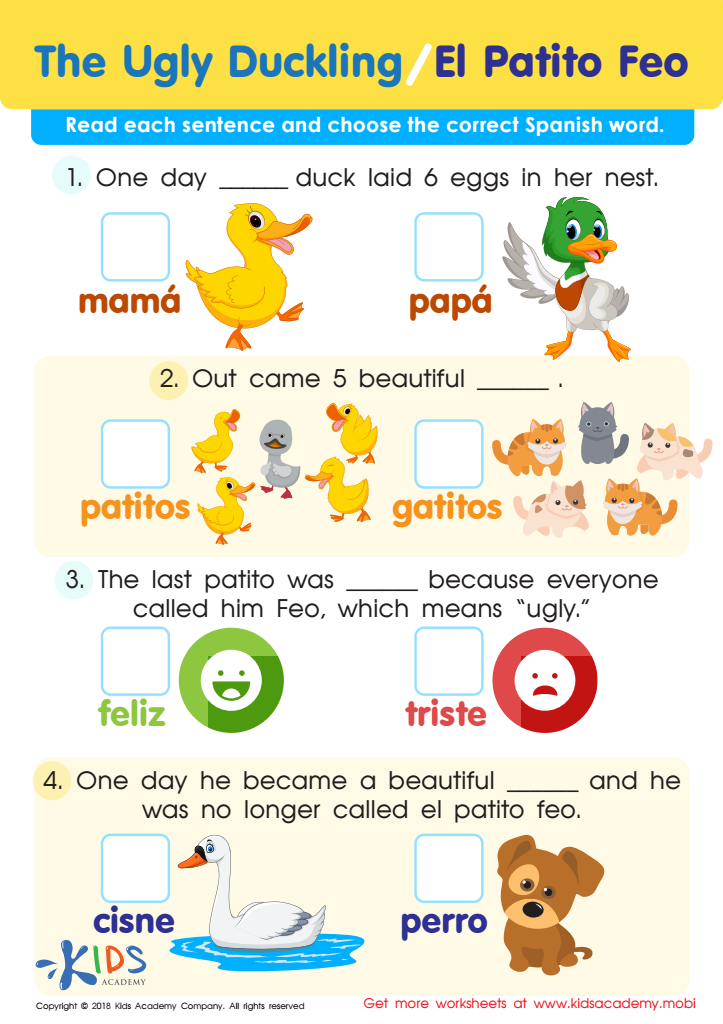
The Ugly Duckling / El Patito Feo Worksheet
This cute worksheet uses the story of The Ugly Duckling to help students learn Spanish. Fun pictures help make picture-word associations, while they check off the correct words to create the swan. Students won't realize they're learning - they'll just think the ducks are cute!
The Ugly Duckling / El Patito Feo Worksheet
Worksheet
Join Kids Academy for Free
Who is primarily going to use this learning content?





.jpg)









