Online Building Vocabulary Worksheets for Kids - Page 8
254 filtered results
Difficulty Level
Grade
Age
-
From - To
Subject
Activity
Standards
Favorites
With answer key
Interactive
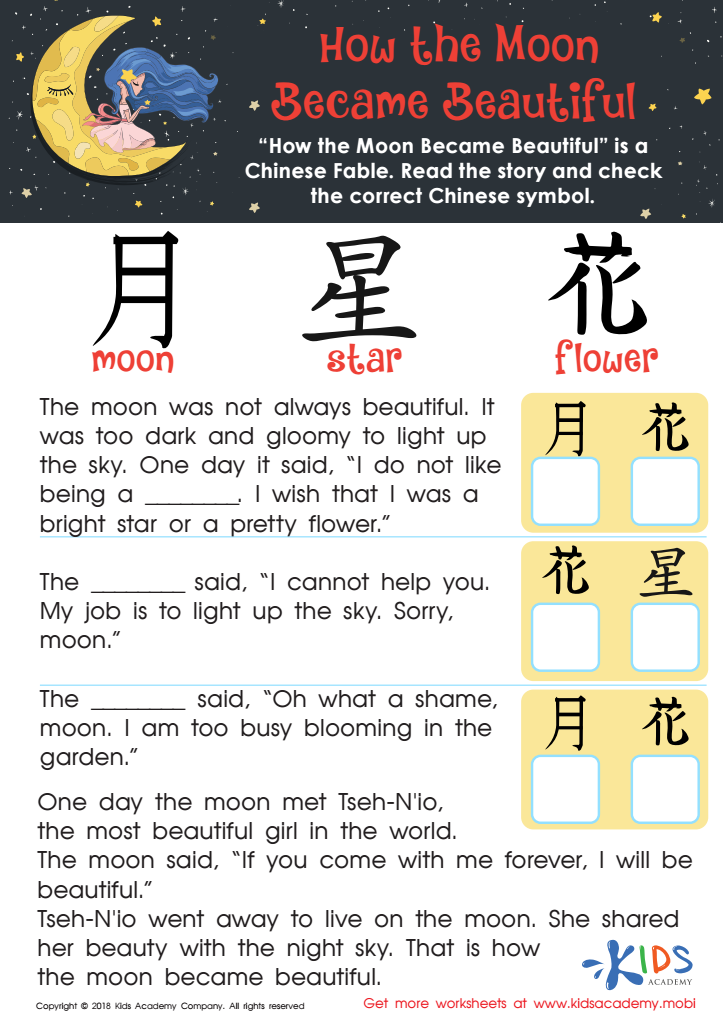
How the Moon Became Beautiful Worksheet
Fables are a great way for kids to learn! This Chinese fable about the moon's beauty is educational and entertaining. The PDF worksheet provides the English translations and symbols associated with the story. Kids can fill in the blanks with the correct symbols and have fun learning a new language!
 Assign to My Students
How the Moon Became Beautiful Worksheet
Worksheet











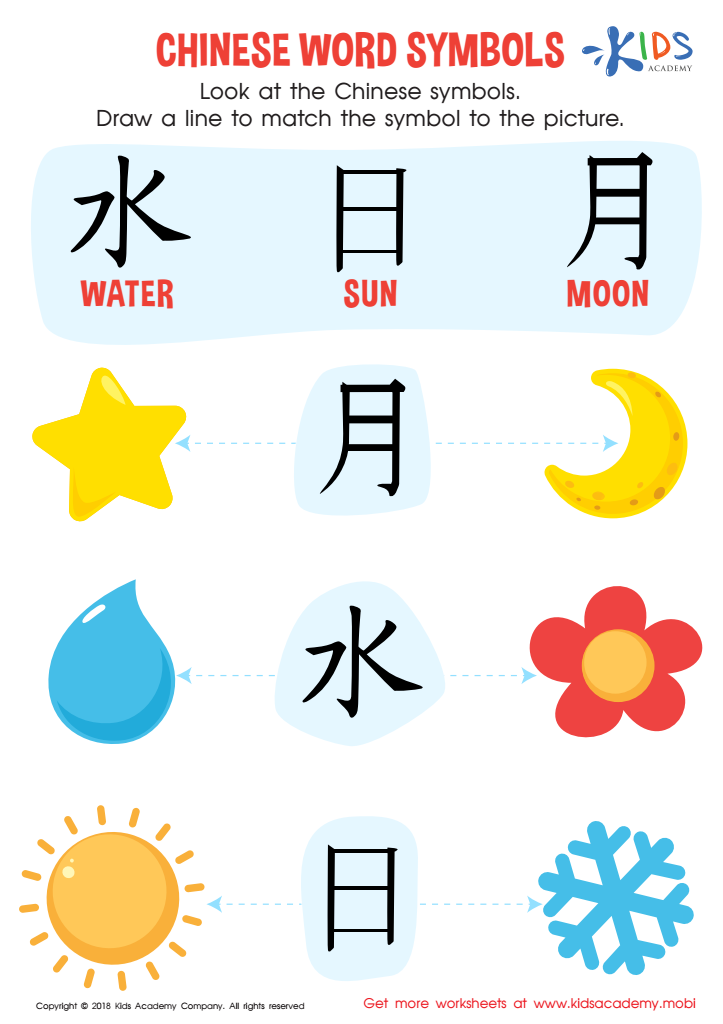
Chinese Word Symbols Worksheet
This fun worksheet helps kids learn Chinese symbols for words like water, sun, and moon. Paired with colorful pictures, tracing lines encourages fine motor skills and builds success. Kids will learn without realizing it, having fun in the process.
Chinese Word Symbols Worksheet
Worksheet
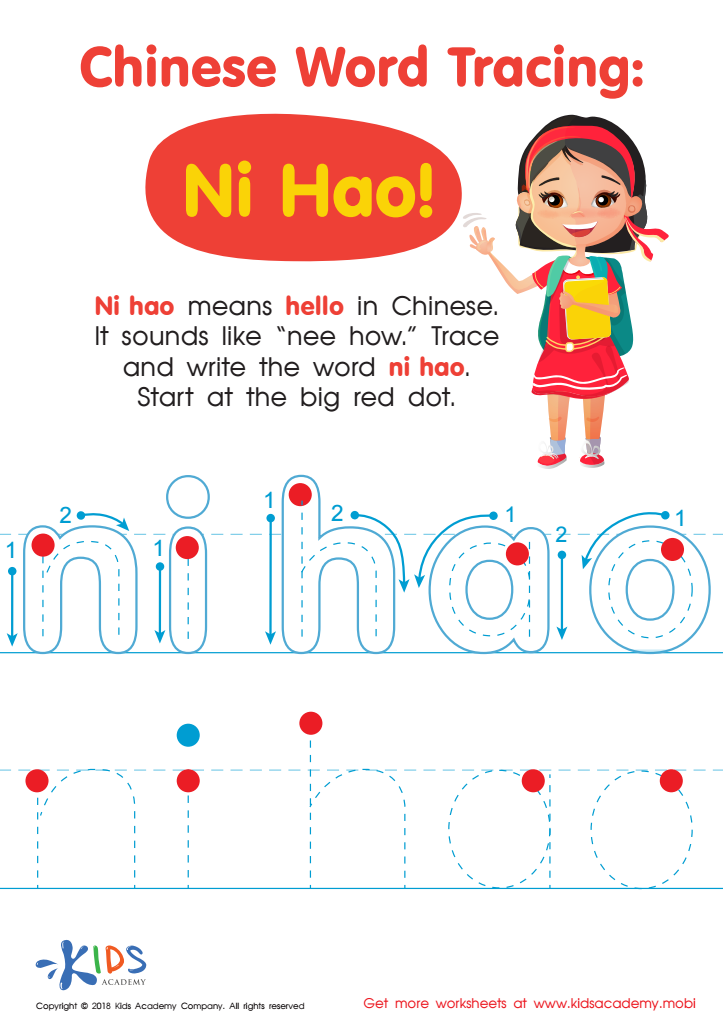
Chinese Word Tracing: Ni Hao Worksheet
Kids can learn to say "Ni hao" with this fun tracing worksheet. The free PDF helps kids write and say the Chinese greeting while also developing fine-motor, handwriting and reading skills. With red guide dots and traceable lines, kids will learn top-to-bottom and left-to-right patterning for fluent reading.
Chinese Word Tracing: Ni Hao Worksheet
Worksheet
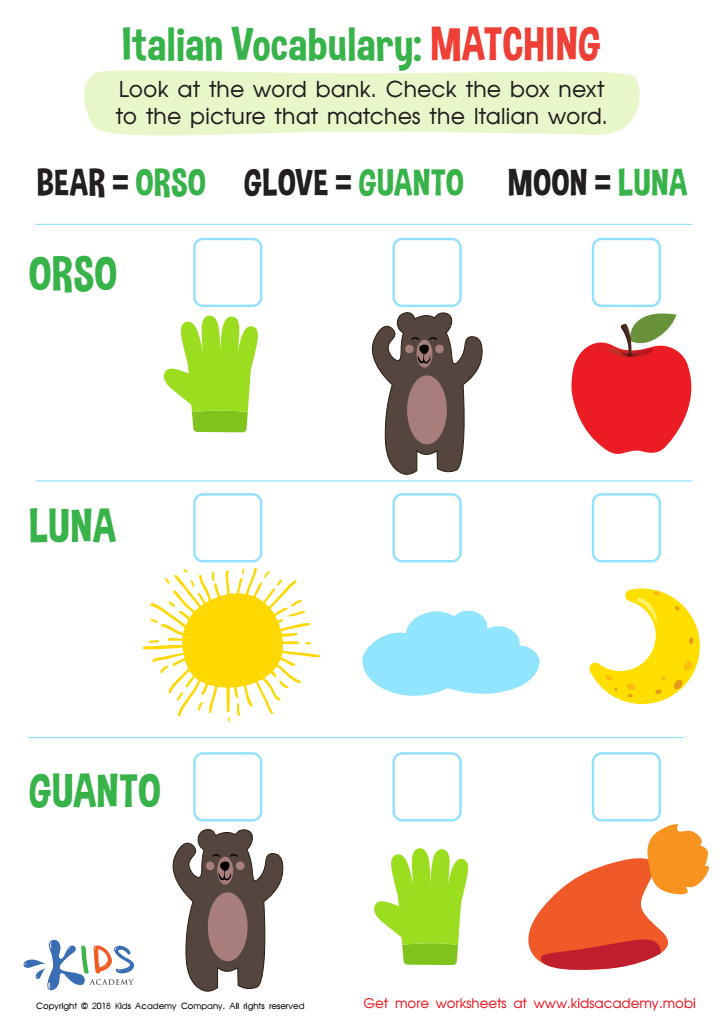
Italian Vocabulary Matching Worksheet
Start your kids young on their global journey with this free Italian worksheet. They'll easily match the pictures to the words and learn familiar, everyday phrases in a fun and colorful way. Give them this perfect foundation for exploring the languages of the world!
Italian Vocabulary Matching Worksheet
Worksheet
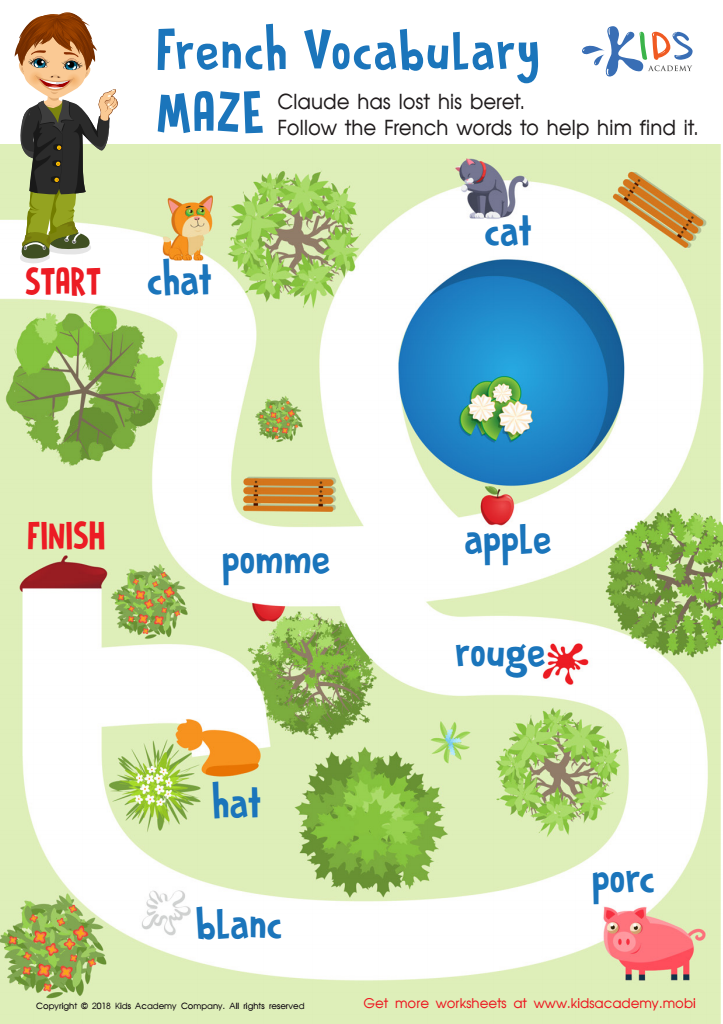
French Vocabulary Maze Worksheet
Kids can learn they're part of a global community with this fun maze worksheet. Claude needs help finding his beret, and by using the pictures children will develop their fine-motor skills. They don't even know they're learning new language words, they're just helping a friend!
French Vocabulary Maze Worksheet
Worksheet
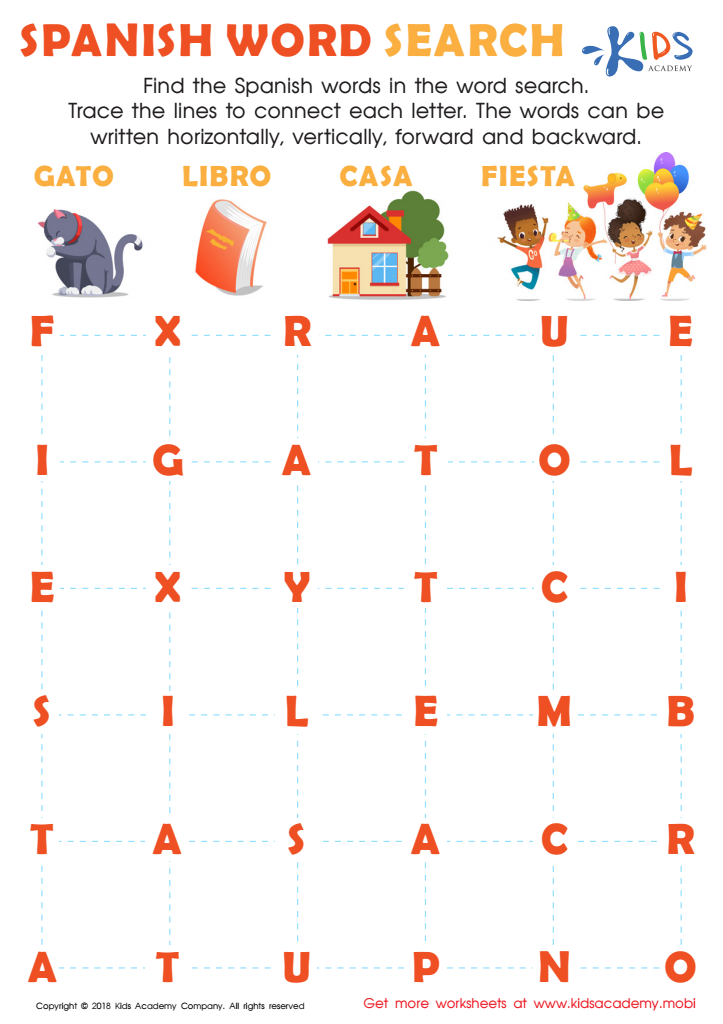
Spanish Word Search Worksheet
This free worksheet encourages students to learn Spanish words while developing visual, fine motor, and hand-eye coordination skills. Through colorful pictures and traceable lines, the task of finding words such as gato, libro, casa, and fiesta is disguised as a fun and engaging way to explore new cultures.
Spanish Word Search Worksheet
Worksheet
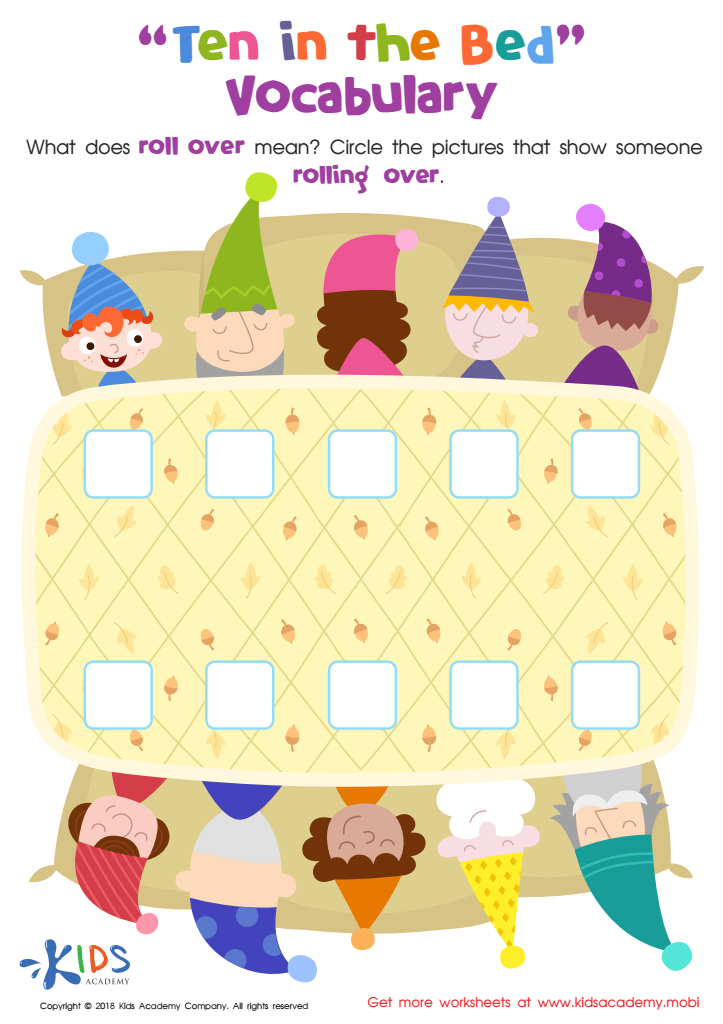
Ten in the Bed: Vocabulary Worksheet
It's essential for emerging readers to be proficient in positional and directional words. This worksheet uses cheerful faces to help students identify who has "rolled over". Knowing these words is an essential part of reading and writing for pre-K and Kindergarteners. It also helps them to follow directions and use precise language.
Ten in the Bed: Vocabulary Worksheet
Worksheet
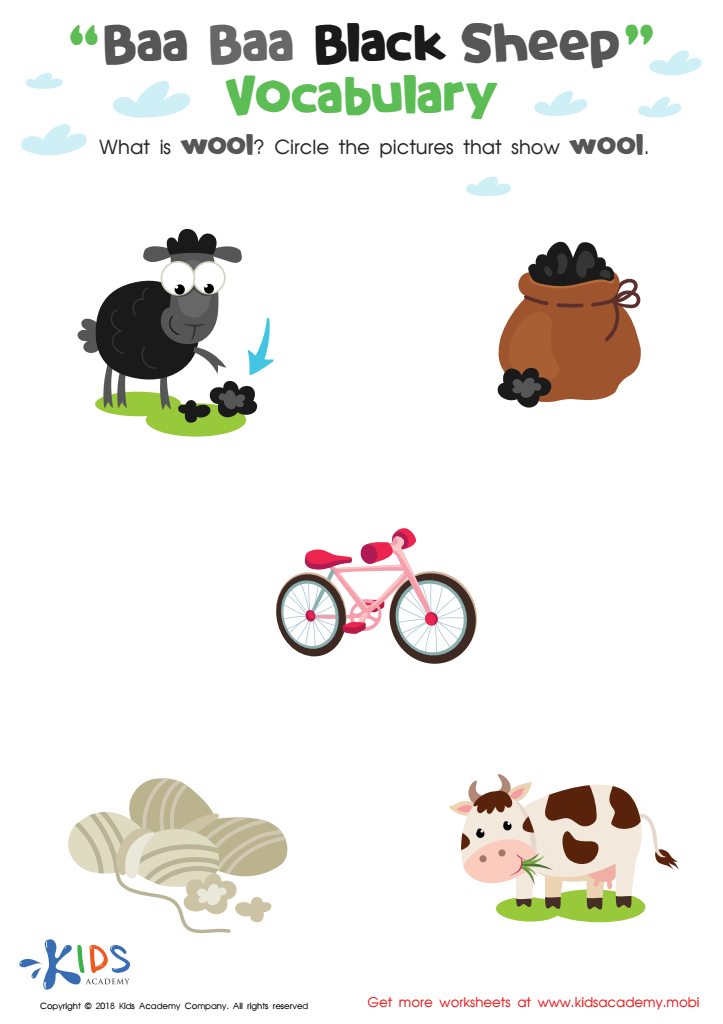
Baa Baa Black Sheep: Vocabulary Worksheet
Exposing readers to various vocab helps their reading abilities grow. This cheery worksheet uses pictures to show what wool is and isn't, helping readers with visual discrimination. Having concrete images for new words is essential for emerging readers, and this is an enjoyable way to strengthen the skill.
Baa Baa Black Sheep: Vocabulary Worksheet
Worksheet
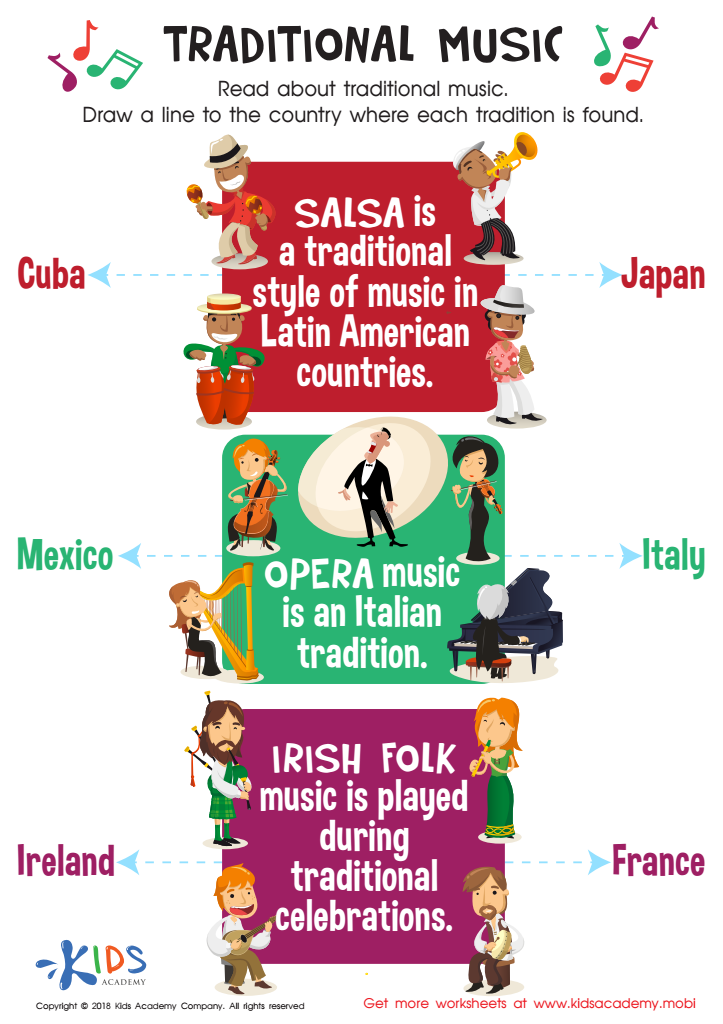
Traditional Music Worksheet
Exploring different countries' music is a great way for global learners to appreciate their place in the world. This worksheet helps them match music - like Salsa and Irish Folk - to various geographic regions with colorful visuals. It boosts reading comprehension while supporting their cultural understanding.
Traditional Music Worksheet
Worksheet
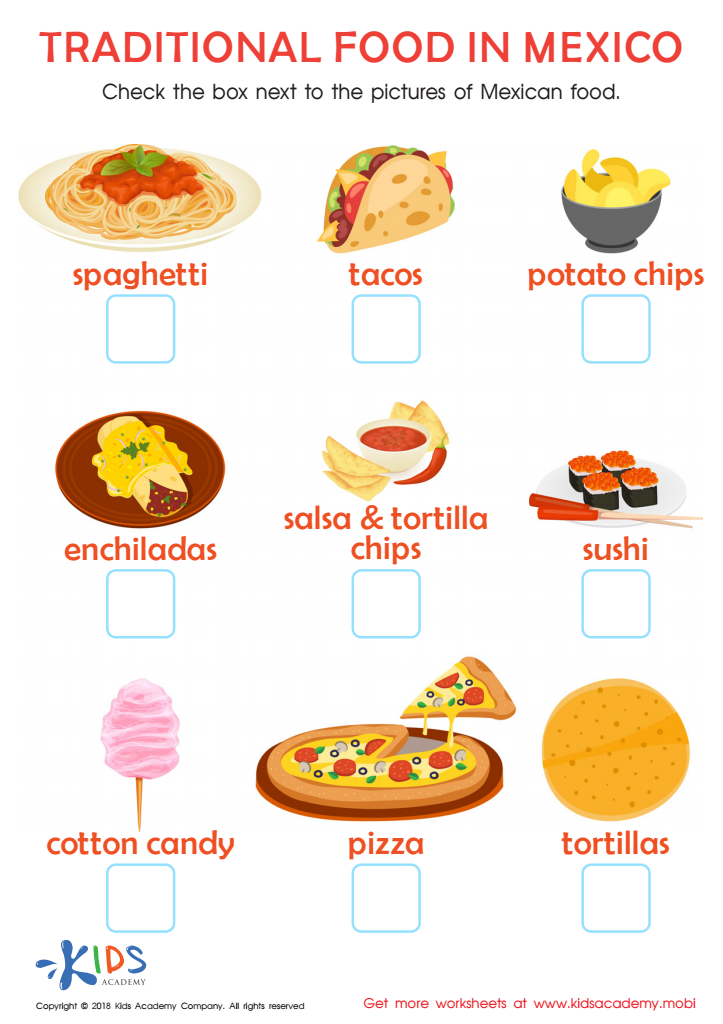
Traditional Food in Mexico Worksheet
This colorful worksheet offers a great opportunity to learn about traditional Mexican foods, build vocabulary and practice visual discrimination. As many of the words are not phonetic, this practice can help improve fluency, vocabulary and comprehension when encountered in reading. Culturally diverse, it's great for readers looking to expand their knowledge.
Traditional Food in Mexico Worksheet
Worksheet
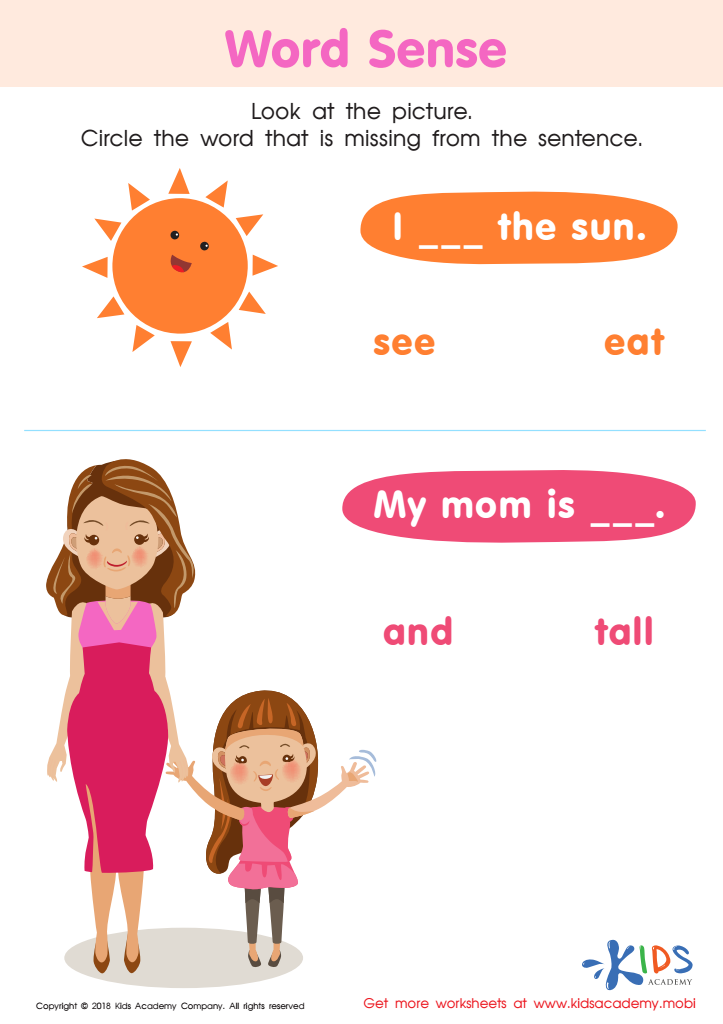
Word Sense Worksheet
Expose your child to common high-frequency words with this free and colorful worksheet. It will help them use picture clues to choose the correct word for each phrase. The more they're exposed, the stronger their fluency will become when reading. This process is an important part of the emerging reader's learning-to-read journey.
Word Sense Worksheet
Worksheet
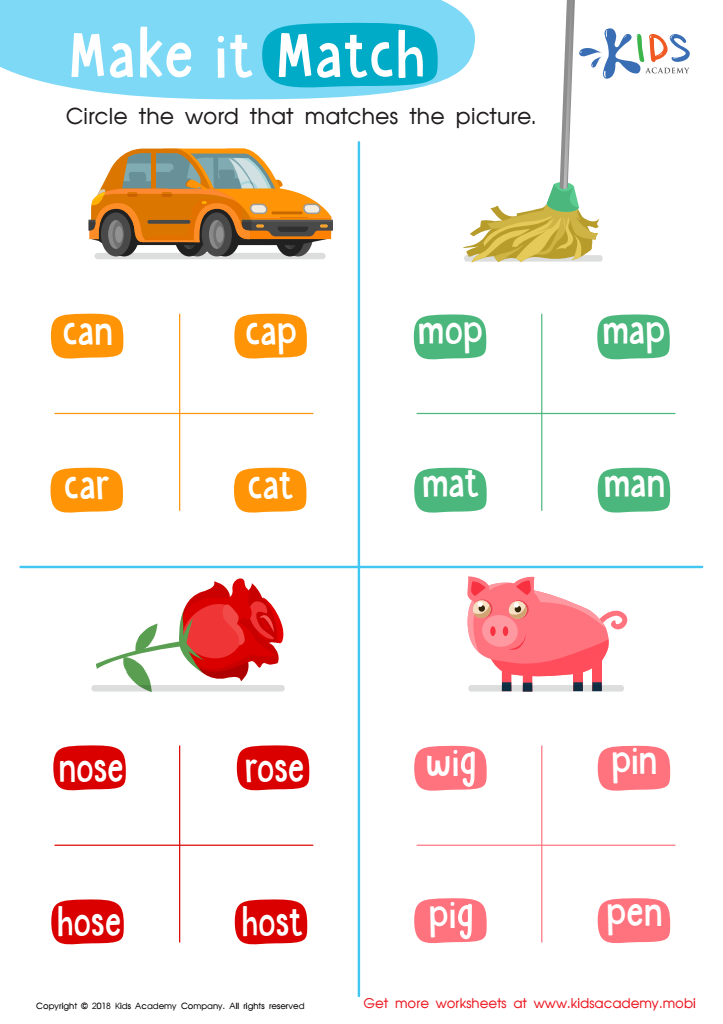
Make It Match Worksheet
This bright, cheery worksheet helps students practice discerning between mono-syllabic words with similar short vowel sounds. With familiar pictures and bold colors, they'll circle the word that matches each given picture, honing both reading and visual discrimination skills. A great tool for emerging readers!
Make It Match Worksheet
Worksheet
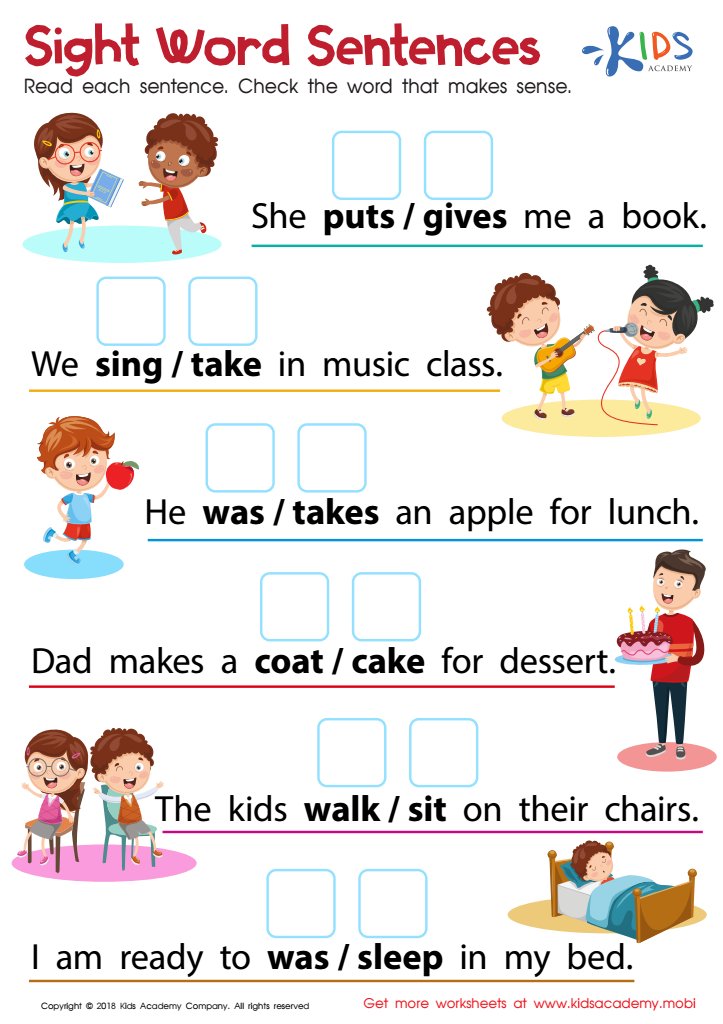
Sight Words Sentences Worksheet
It's important for kids to practice recognizing sight words in print. This PDF provides fun practice with sentences and engaging picture clues. As they work with sight words, they'll become more familiar and automatic. Help your kids build literacy skills!
Sight Words Sentences Worksheet
Worksheet
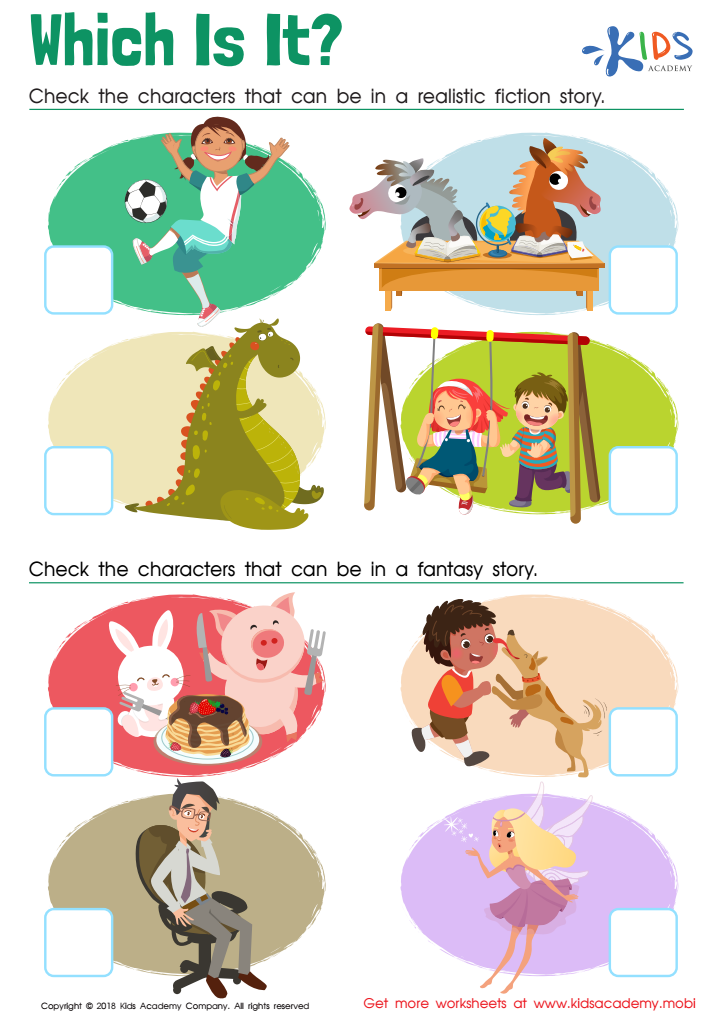
Which Is It? Worksheet
This colorful worksheet helps young readers identify elements of fact and fiction using fun picture clues. They can check off characters who exist in realistic fiction stories, which makes learning the difference between the two genres fun and engaging.
Which Is It? Worksheet
Worksheet
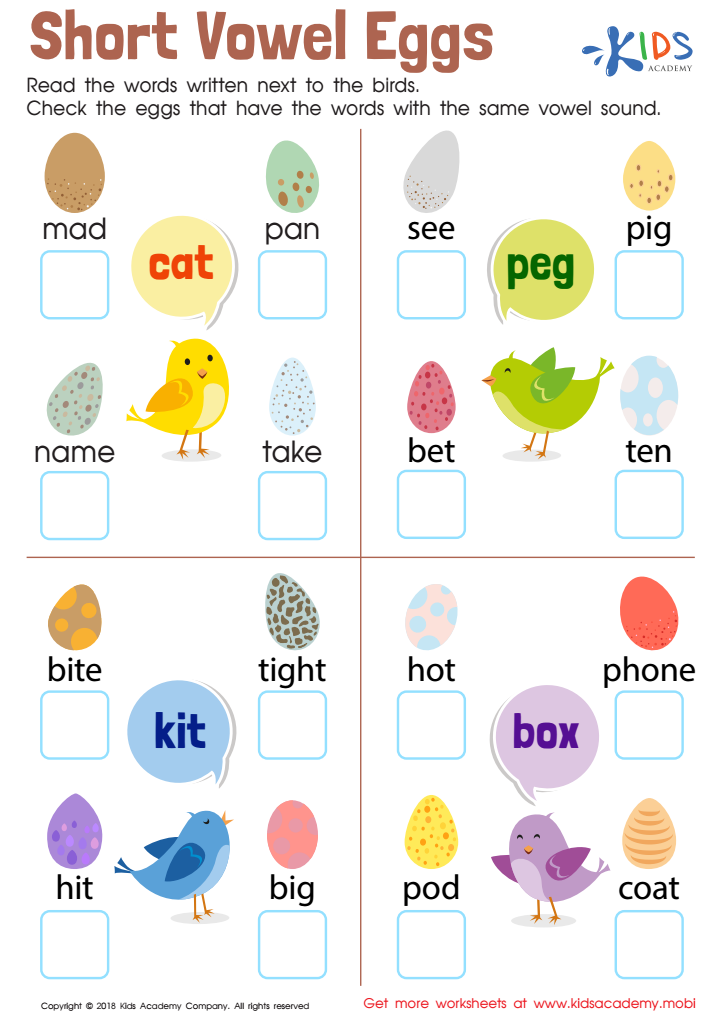
Short Vowel Eggs Worksheet
Your students will love helping these birdies pick the short vowel eggs! Have them read the words in the thought bubbles, then check off the boxes with the same short vowel sounds. The bright colors of this free Worksheet will draw them in and get them practicing their vowels!
Short Vowel Eggs Worksheet
Worksheet
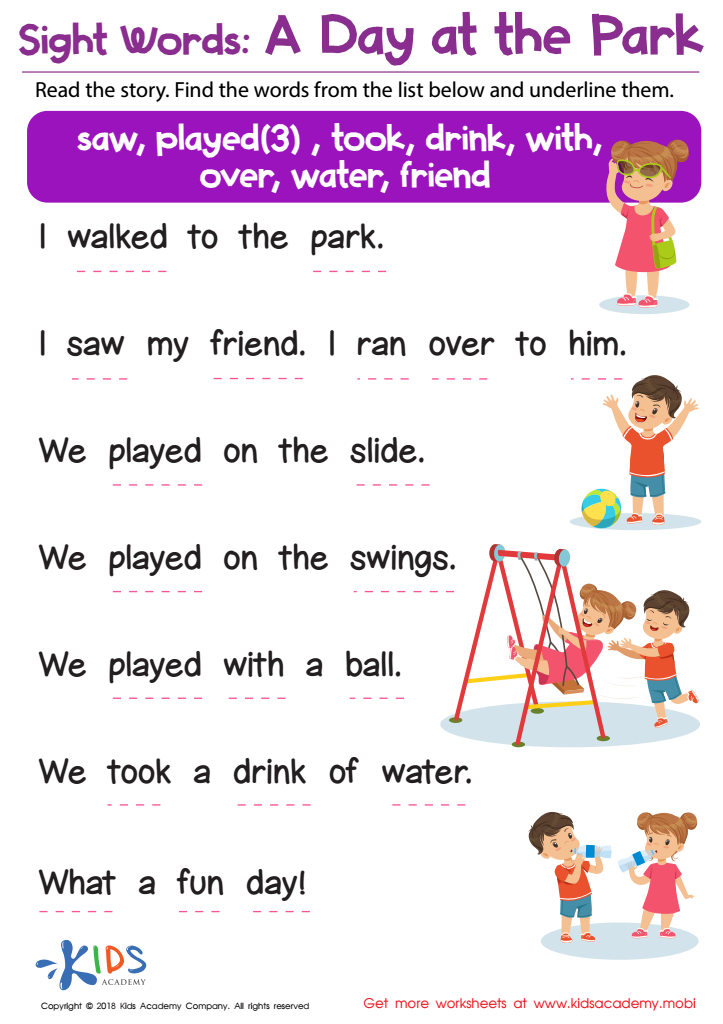
Sight Words: A Day at the Park Worksheet
This worksheet offers kids practice reading sight words in a story. With picture clues and repetitive wording, they'll work with words that can't be sounded out to reinforce their learning. This is an important step in the reading process that helps kids become more confident readers.
Sight Words: A Day at the Park Worksheet
Worksheet
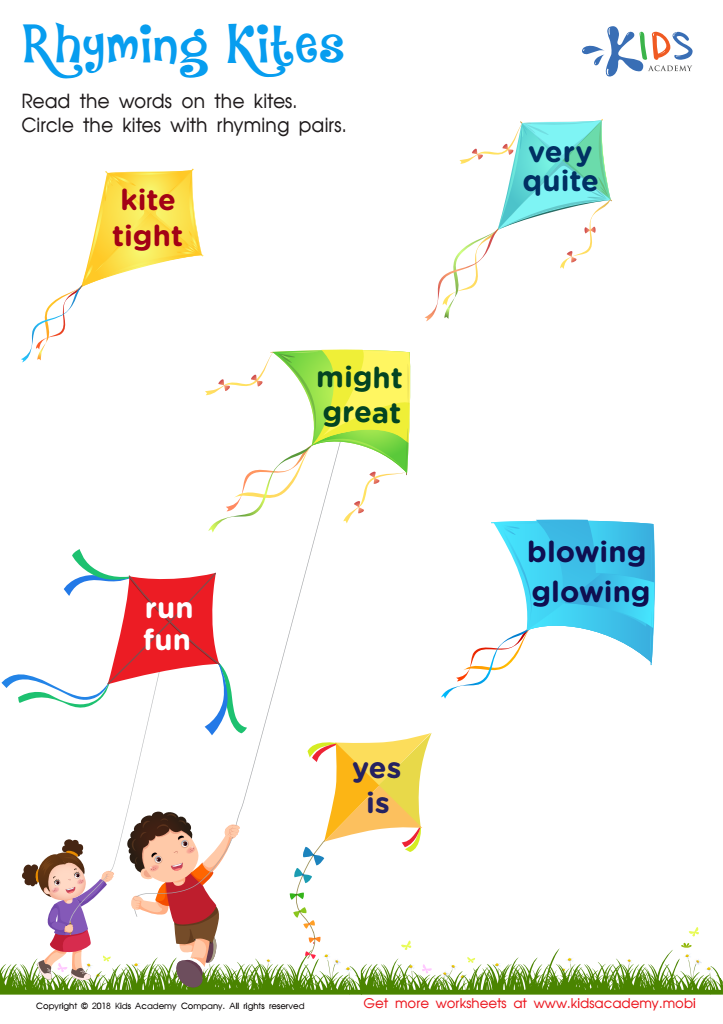
Rhyming Kites Worksheet
On a spring day, fly a kite! Kids Academy has a rhyming worksheet to boost your child's skills. Read the pairs of words aloud. Circle the kites if they rhyme, leave them blank if they don't. Listen carefully and find all the rhyming word pairs to complete this sheet!
Rhyming Kites Worksheet
Worksheet
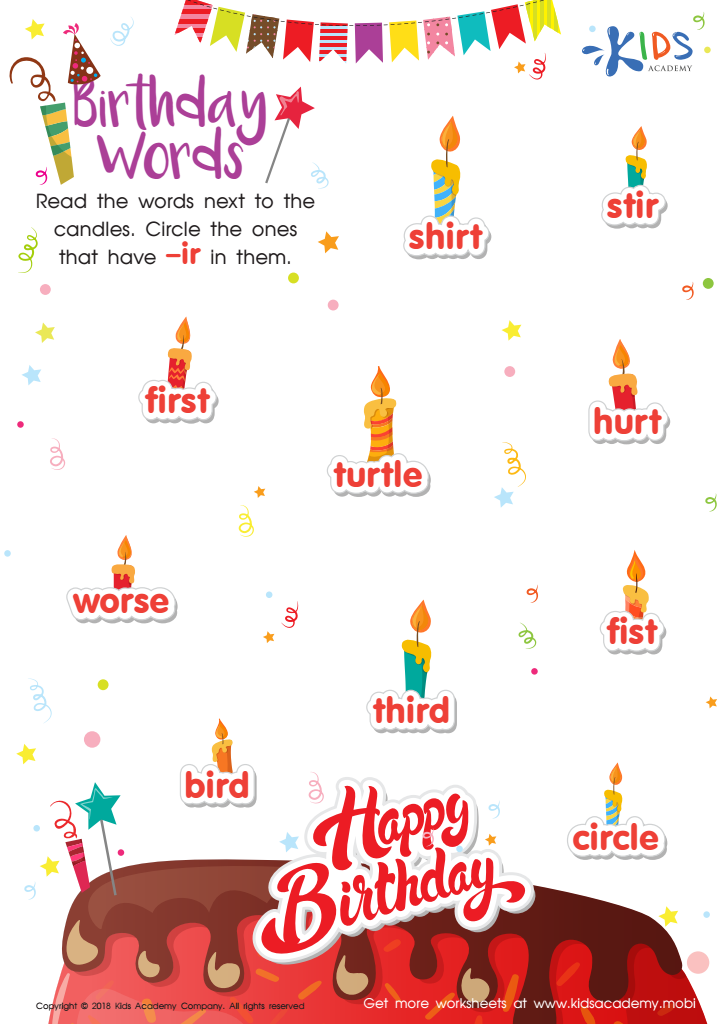
Birthday Words Worksheet
Kids adore birthday parties! Whether it's theirs or a friend's, the event is a huge draw for kids. This fun birthday-themed worksheet teaches kids to identify the letter combination -ir. Get them to scan and circle the colorful words that contain -ir. It's an exciting PDF page they won't want to miss!
Birthday Words Worksheet
Worksheet
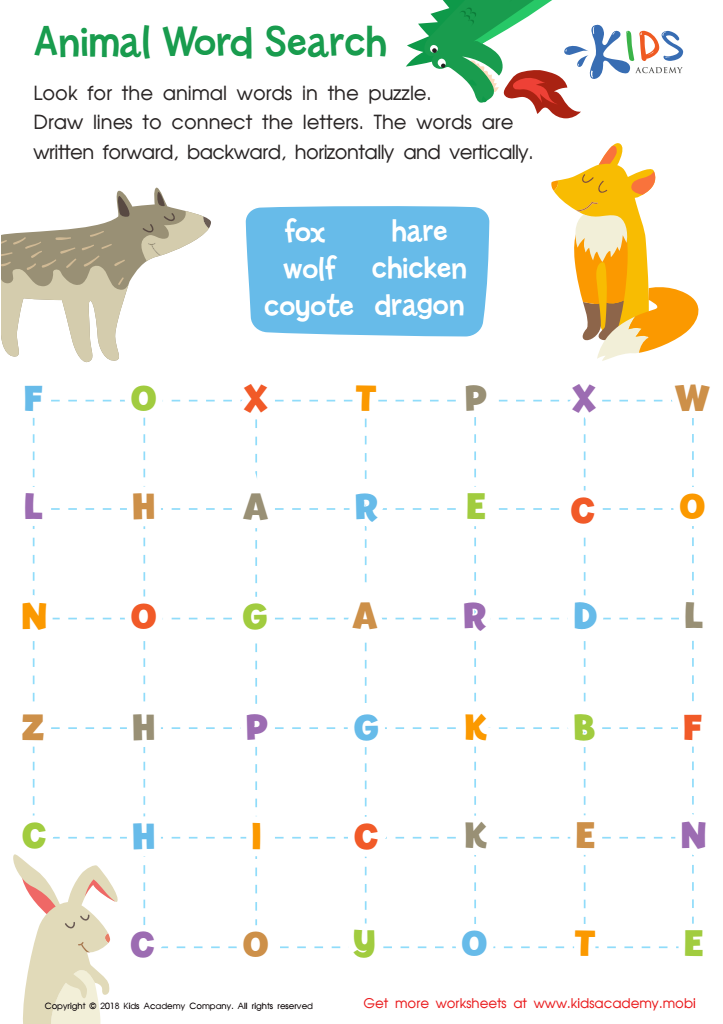
Animal Word Search Worksheet
Students can have fun and strengthen spelling and vocabulary skills with this word search worksheet. Search for animal words and circle the letters in the puzzle. Words can be found forwards, backwards, horizontally or vertically, providing a great challenge to foster critical thinking skills. An enriching activity for all ages!
Animal Word Search Worksheet
Worksheet
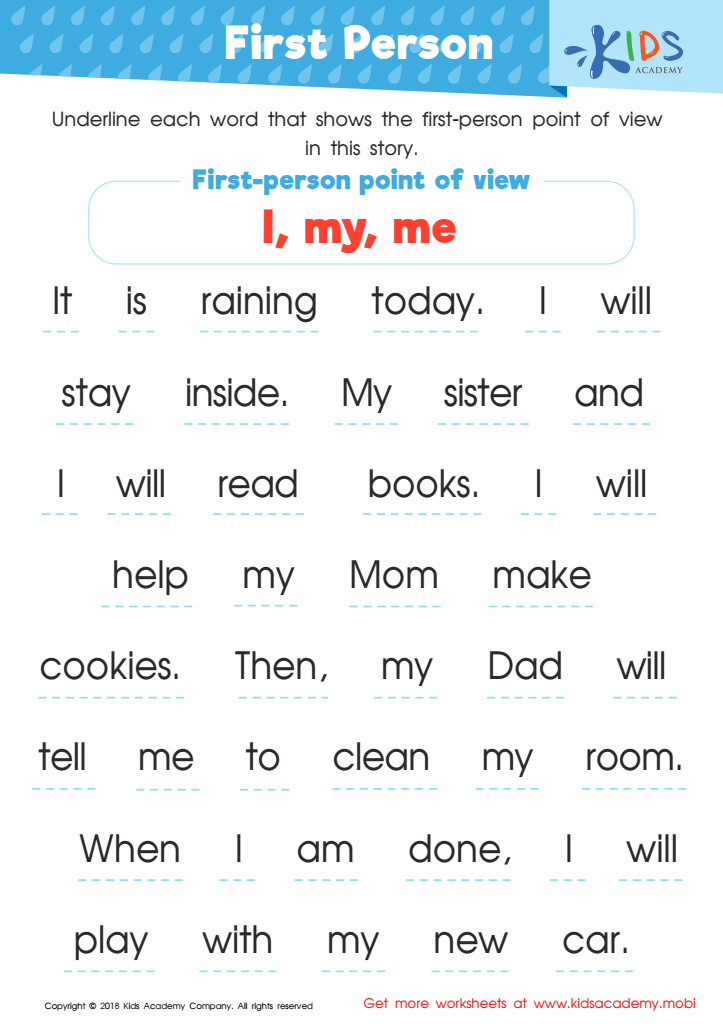
First Person Worksheet
Teachers help students understand and recognize why authors choose different points of view. This worksheet focuses on first person point of view and its pronouns (I, me and my). Students will read a story, then circle each first-person pronoun. Through this activity, they'll practice identifying the POV in a text.
First Person Worksheet
Worksheet
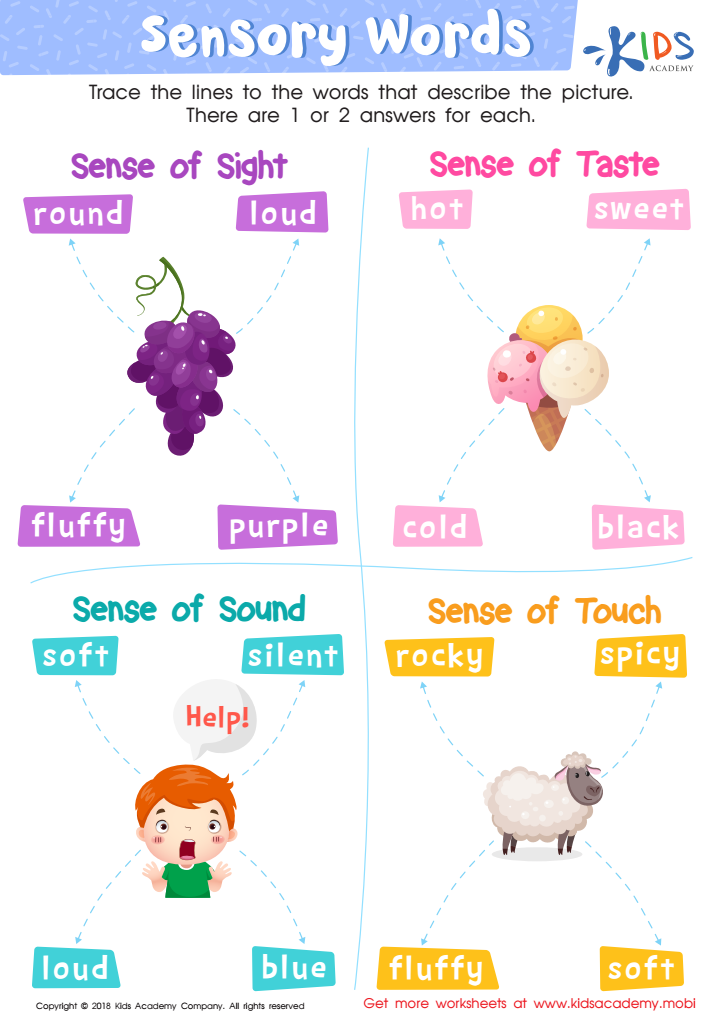
Sensory Words Worksheet
This worksheet helps students explore sensory words by looking at pictures and selecting one or two words to describe how it looks, feels, tastes, smells or sounds. Adding sensory words to texts makes them more interesting and helps students comprehend stories and articles better.
Sensory Words Worksheet
Worksheet
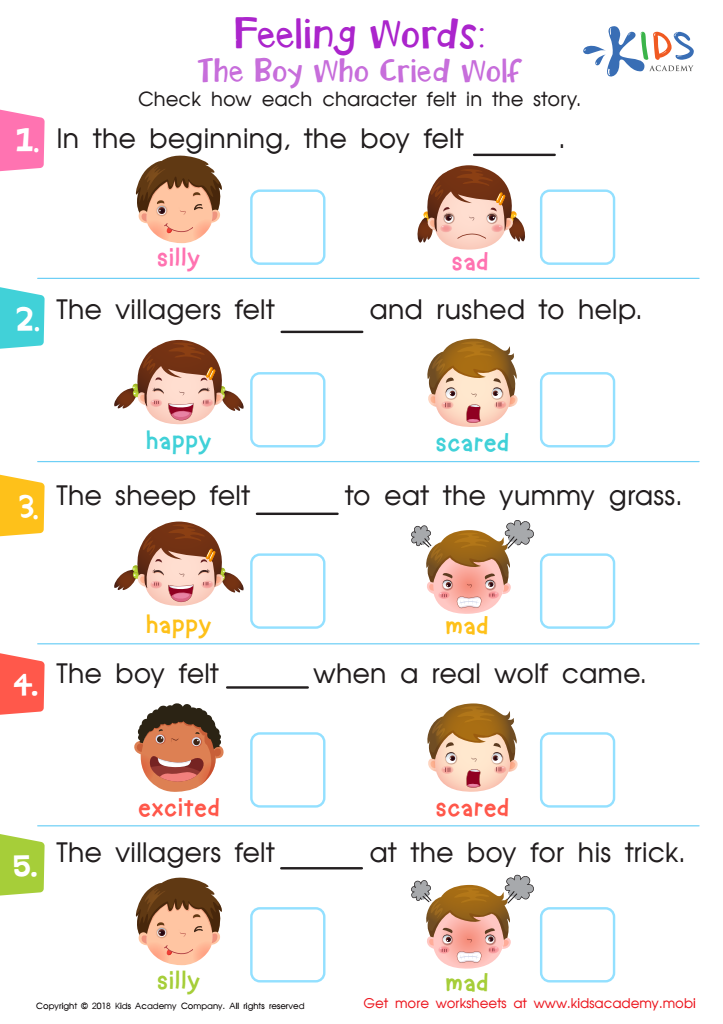
Feeling Words: The Boy Who Cried Wolf Worksheet
This worksheet helps students infer characters' traits and feelings by reading The Boy Who Cried Wolf. They choose the correct emotion for each character to improve their story comprehension. A great resource for the reading classroom, it teaches an essential comprehension skill.
Feeling Words: The Boy Who Cried Wolf Worksheet
Worksheet
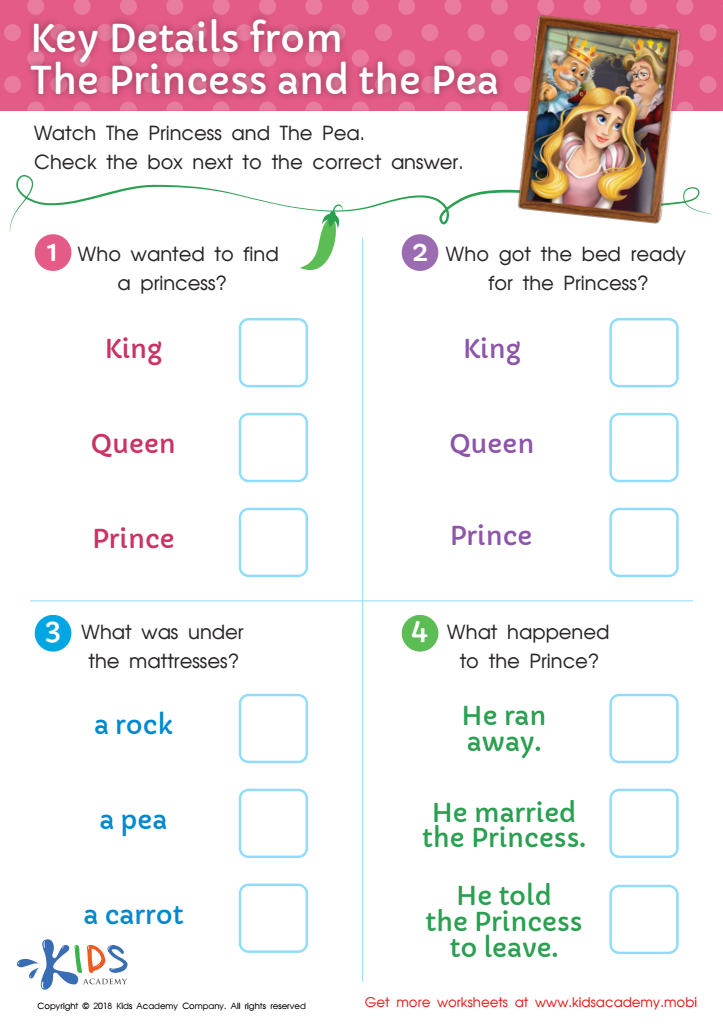
Key Details from the Princess and the Pea Worksheet
After reading The Princess and the Pea, ask your students questions to assess their comprehension of the story. Check their knowledge of key details. This printable can be used to help evaluate their understanding. Encouraging the recall of story events helps build important reading skills.
Key Details from the Princess and the Pea Worksheet
Worksheet
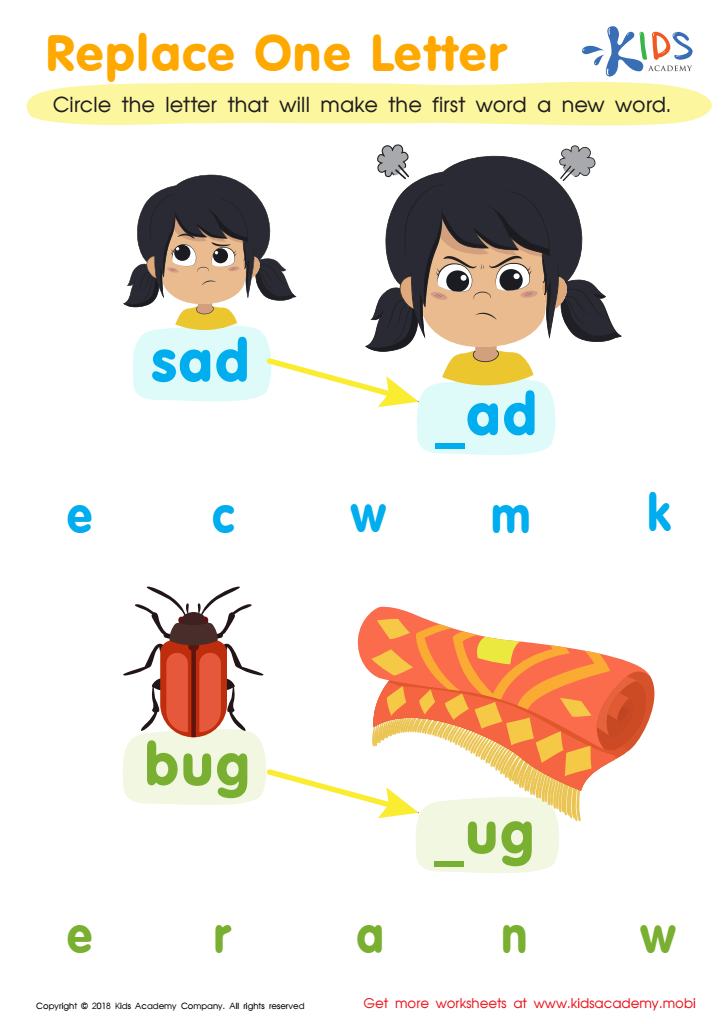
Replace One Letter Worksheet
Emerging readers will practice switching initial consonants to create new words with this fun PDF worksheet. They'll use picture clues, learn about onset letters and work on their fine motor skills as they circle the right letter for each "ad" and "ug" word family.
Replace One Letter Worksheet
Worksheet
Join Kids Academy for Free
Who is primarily going to use this learning content?