Online Physical Science Worksheets for Kids - Page 3
85 filtered results
Difficulty Level
Grade
Age
-
From - To
Subject
Activity
Standards
Favorites
With answer key
Interactive
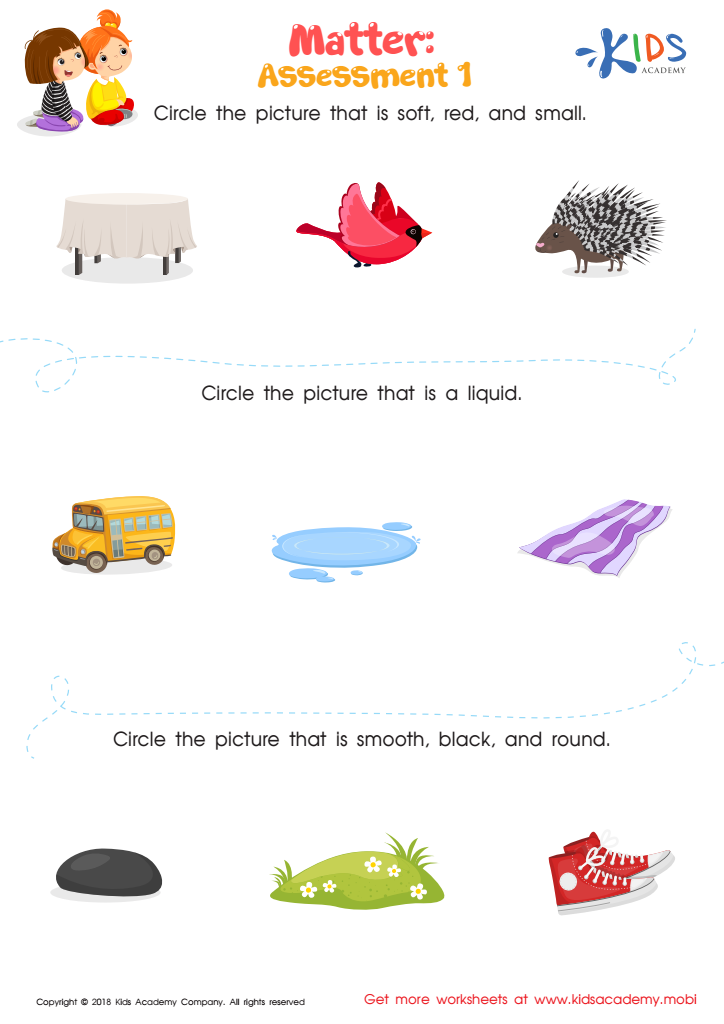
Matter: Assessment 1 Worksheet
Have your children learn that anything that has weight and takes up space is matter. Examples include buses, tables, people, animals, and more. Use this worksheet to help them identify the objects and circle the soft, red, and small one; the liquid; and the smooth, black, and round one.
 Assign to My Students
Matter: Assessment 1 Worksheet
Worksheet
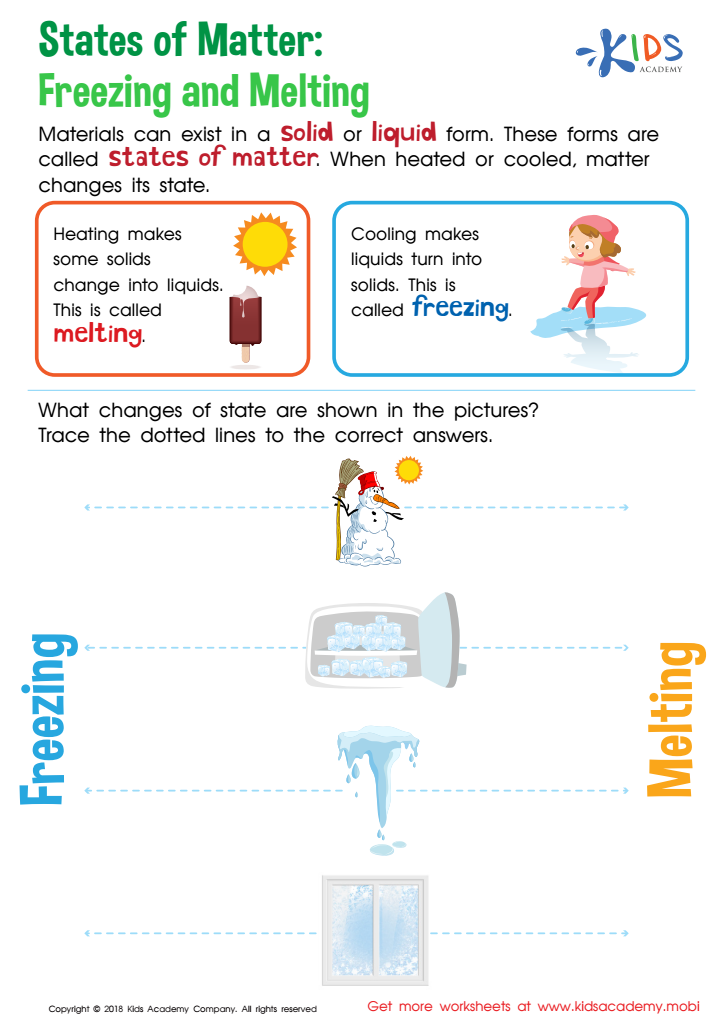
States of Matter: Freezing and Melting Worksheet
Have students look through the pics in the worksheet. Ask them what changes of state are shown, then trace the lines to the right answers. Matter can come in liquid or solid form, and changes between the two when heated or cooled (melting/freezing).
States of Matter: Freezing and Melting Worksheet
Worksheet
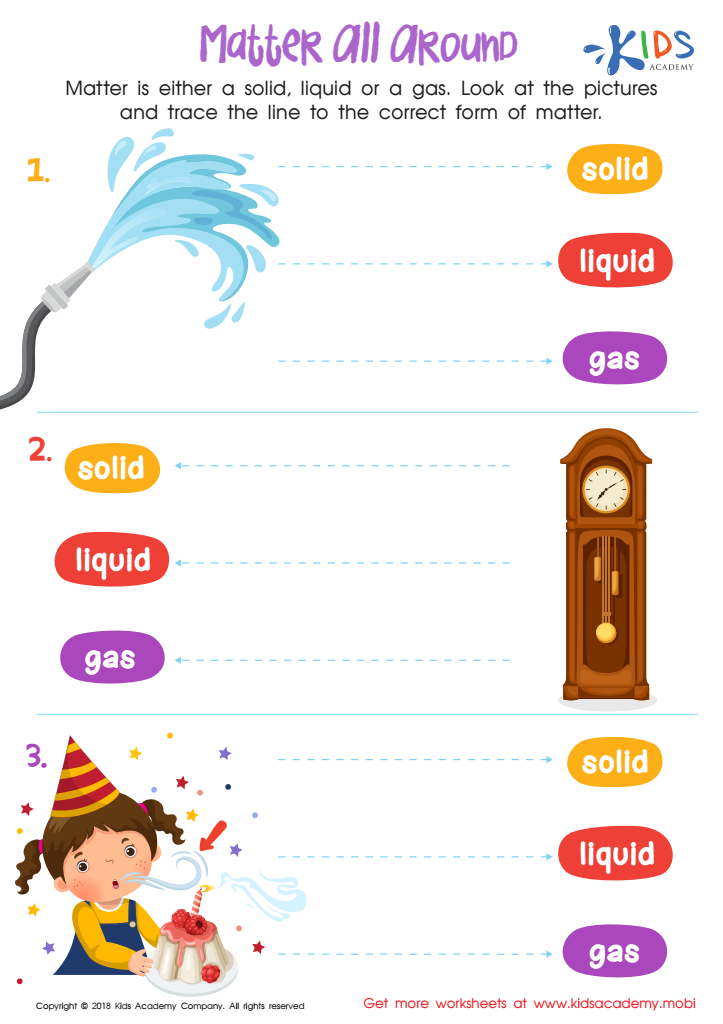
Matter all Around Worksheet
Have you taught your students about matter? Use this worksheet to help them understand that matter is anything that has weight and takes up space, either as a solid, liquid, or gas. Guide them to trace the line to the correct form of matter as they look at the pictures. This will be easy if they already know the topic, but it's also a great opportunity to teach them.
Matter all Around Worksheet
Worksheet
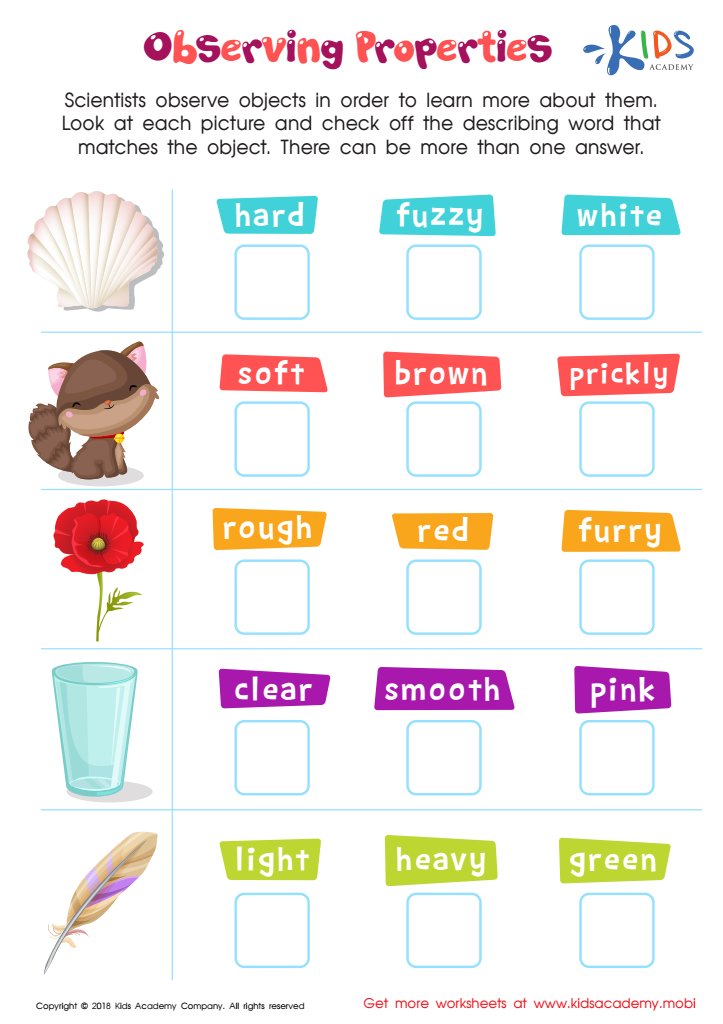
Observing Properties Worksheet
Encourage your kid's interest in science with this fun worksheet! Let them identify the five objects on the left, then choose the most accurate word from the options on the right. There might be more than one answer, so remind them to take their time observing the objects.
Observing Properties Worksheet
Worksheet
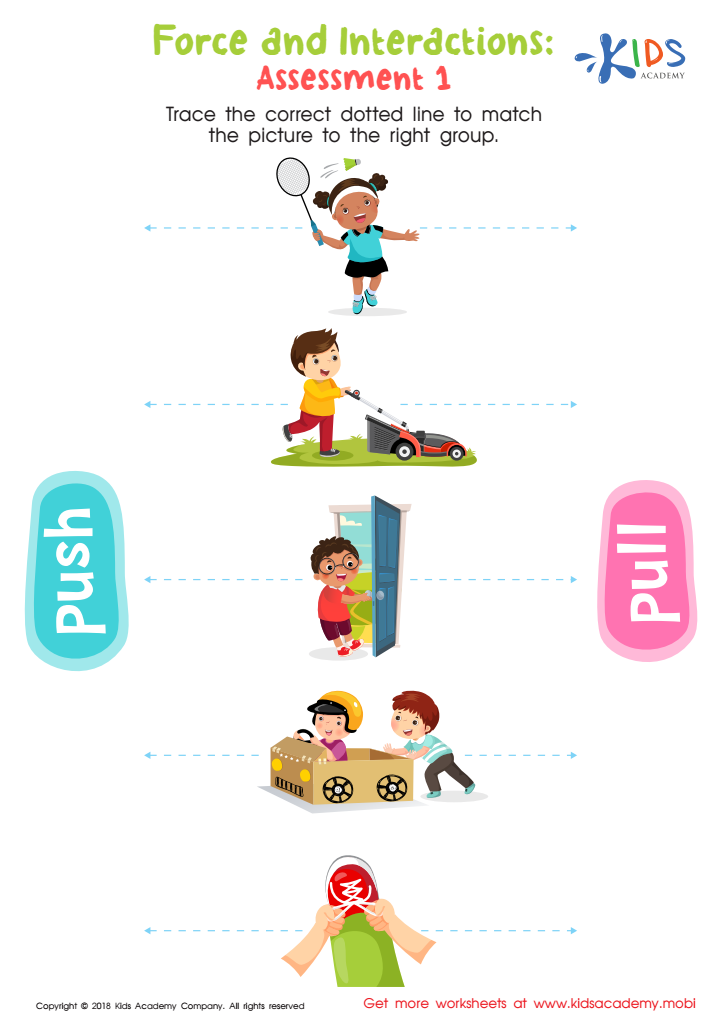
Force and Interactions: Assessment 2 Worksheet
Help your child see the difference between push and pull with this fun worksheet. Ask them to match each picture to the right group. The "push" is on the left and the "pull" is on the right. Assist them in tracing the activities and explain what it is the people are doing.
Force and Interactions: Assessment 2 Worksheet
Worksheet
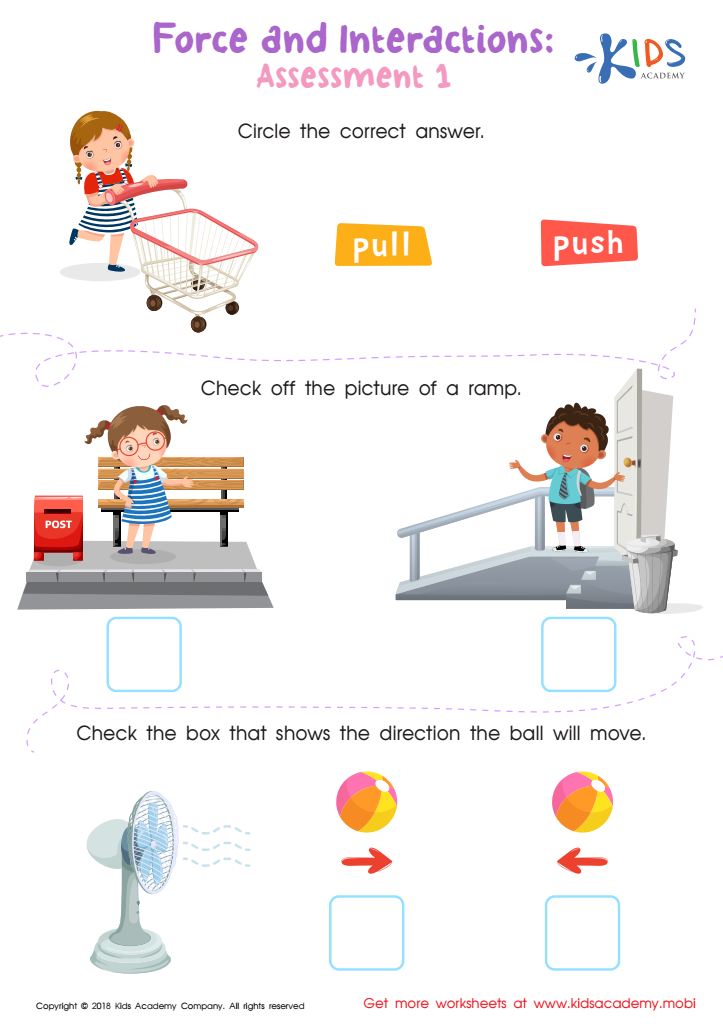
Force and Interactions: Assessment 1 Worksheet
Test your students' knowledge of pushing, pulling, ramps and wind with this worksheet. The first task requires them to identify push or pull pictures. The second asks them to identify a ramp and the third to explain which direction a ball will move when exposed to wind.
Force and Interactions: Assessment 1 Worksheet
Worksheet
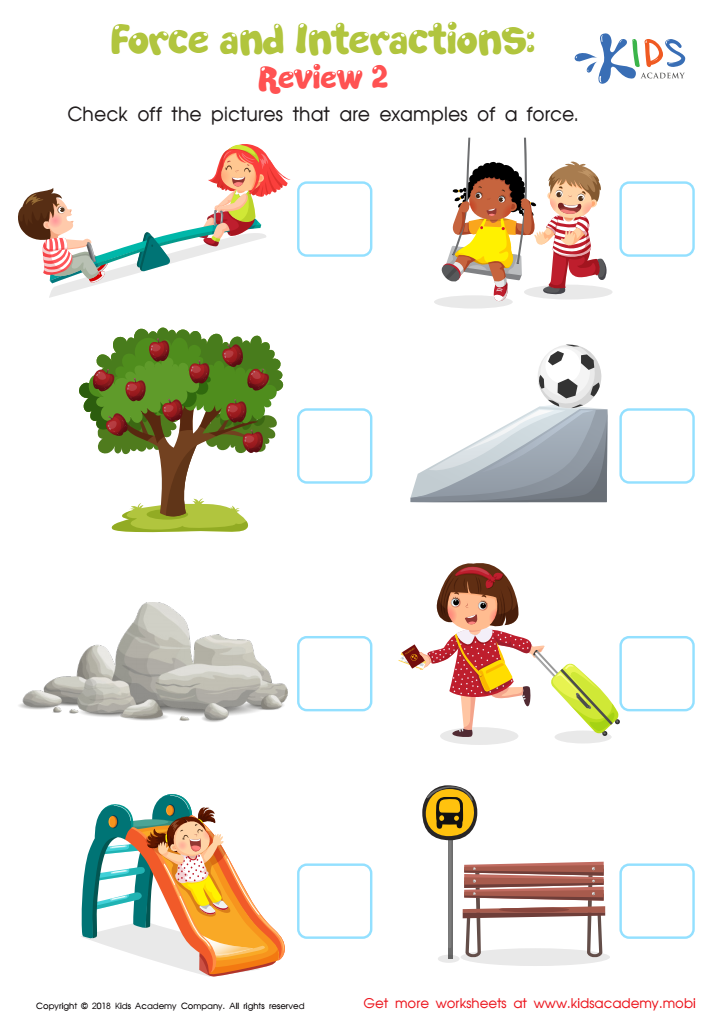
Force and Interactions: Review 2 Worksheet
Your child can identify force examples by checking the pictures. There are 8 images of kids engaging in activities and objects in motion. Get them to name the activities and objects, or if they know, explain force and interaction.
Force and Interactions: Review 2 Worksheet
Worksheet
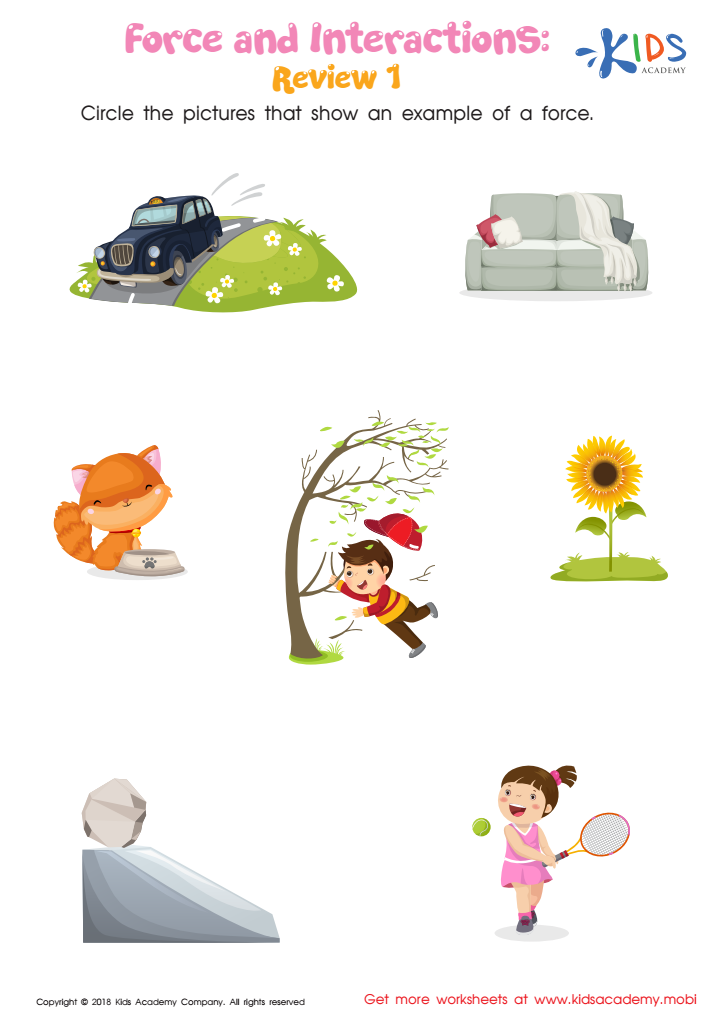
Force and Interactions: Review 1 Worksheet
See how well your child can identify the different forces.
Explain to your child that force is what causes objects to move, such as wind blowing a branch or an object going down a ramp. Ask them to circle images that show a force and assess how well they can identify them.
Force and Interactions: Review 1 Worksheet
Worksheet
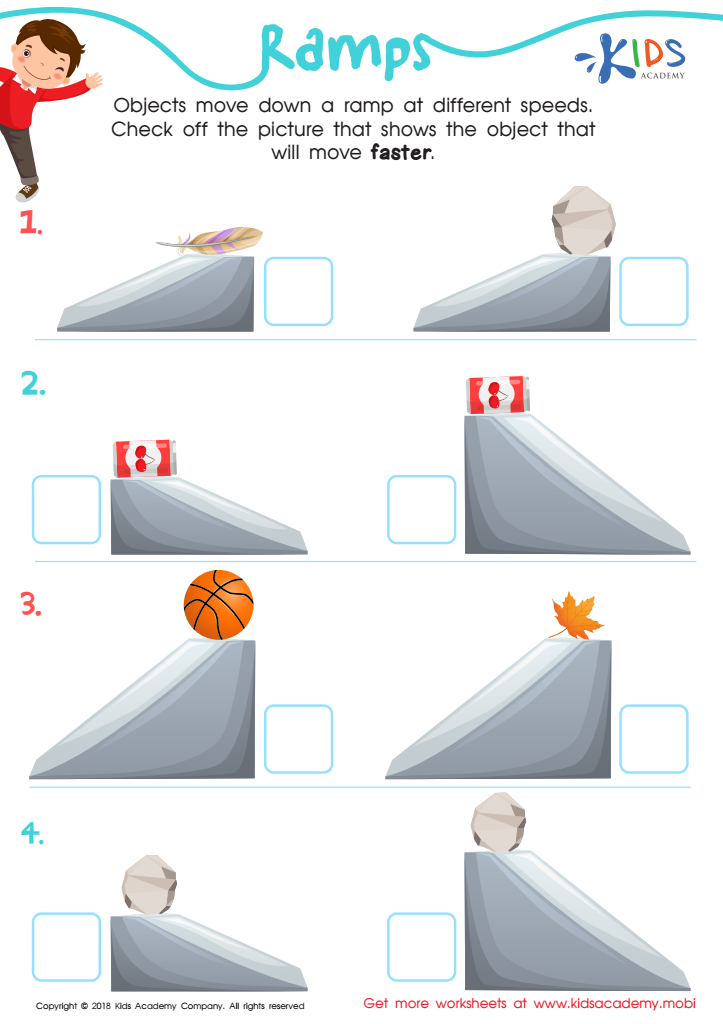
Ramps Worksheet
If your child has seen a ramp, they'll find this worksheet easy. A ramp is sloped for objects to move quickly downwards. The printout has images of objects on different ramps. Ask your child to identify which object will move faster.
Ramps Worksheet
Worksheet
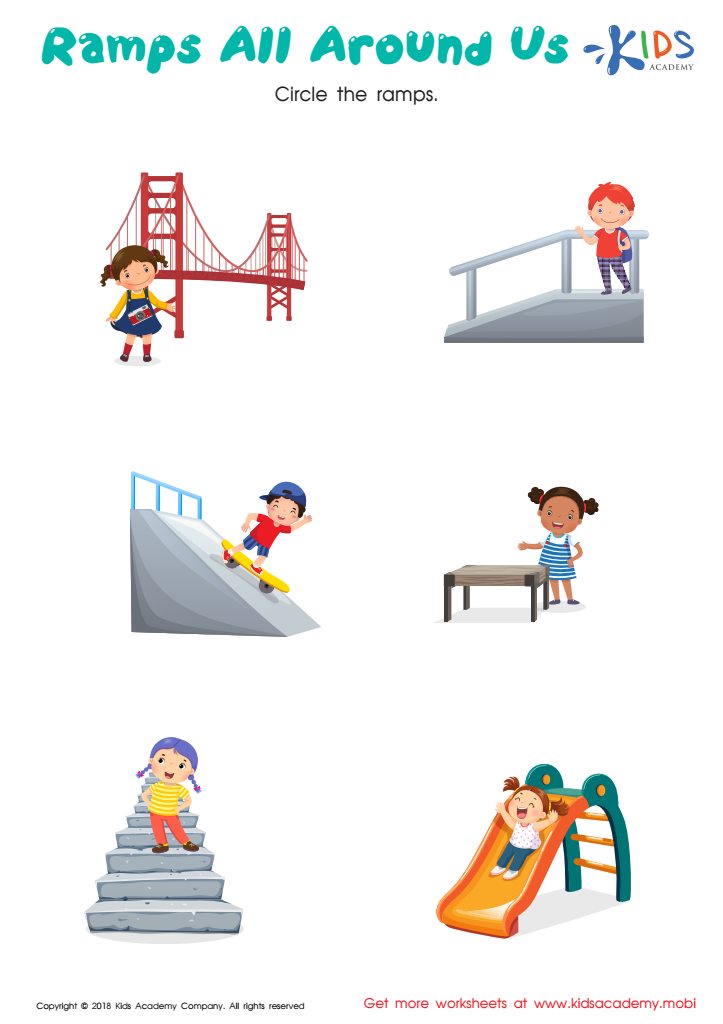
Ramps All Around us Worksheet
Ask your kids if they know what ramps are, then have them give you examples of places they've seen them. This worksheet has pictures of ramps - have your child identify and circle them.
Ramps All Around us Worksheet
Worksheet
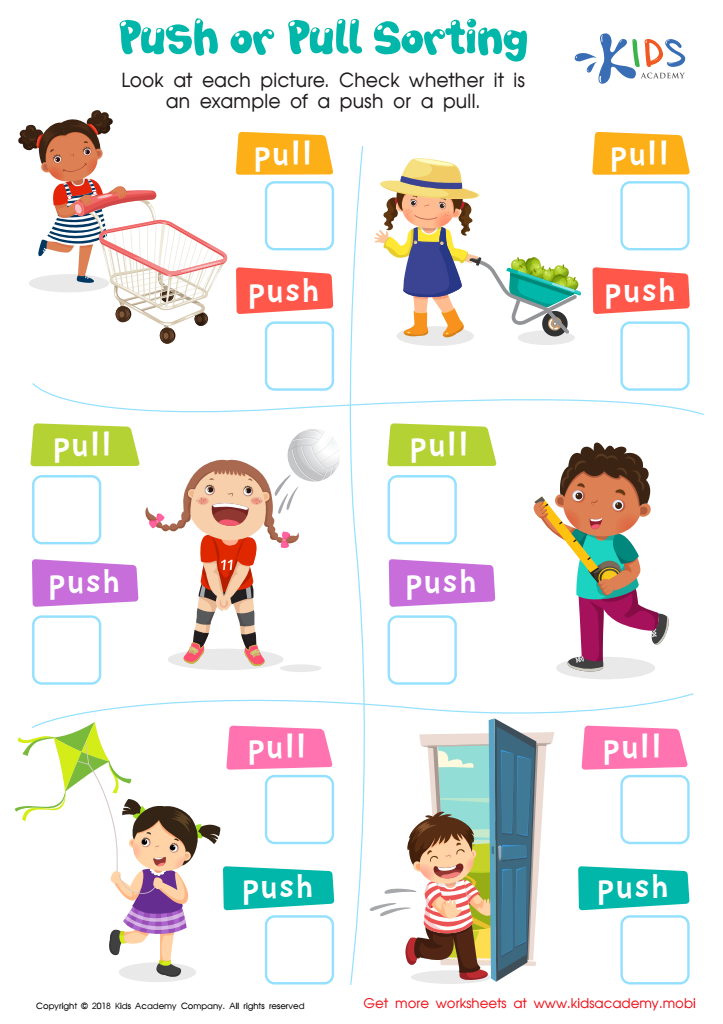
Push or Pull Sorting Worksheet
Show your child the pictures in this worksheet. Ask them to tell you what each child is doing. Then, ask them to identify whether it's an example of pushing or pulling. Ask if they know what these terms mean and if they can provide examples.
Push or Pull Sorting Worksheet
Worksheet
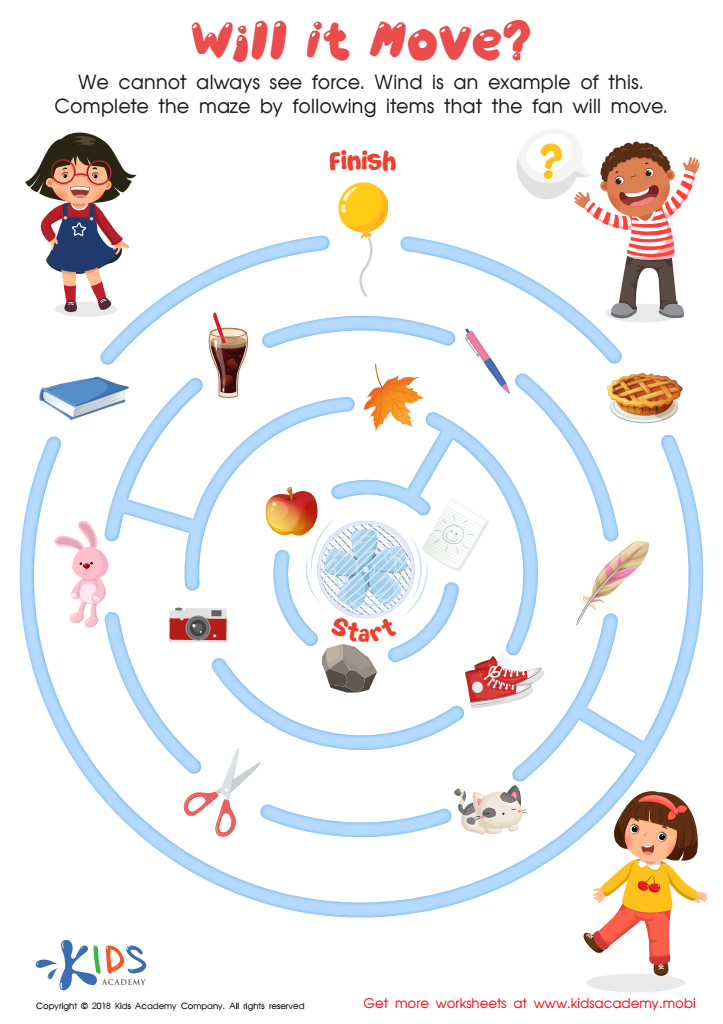
Will it Move? Worksheet
Does your child know about force? If yes/no, this worksheet can help. Force is invisible - like wind - but it moves objects. Ask your child to complete the maze, following the path of items moved by the wind. 80 words.
Will it Move? Worksheet
Worksheet
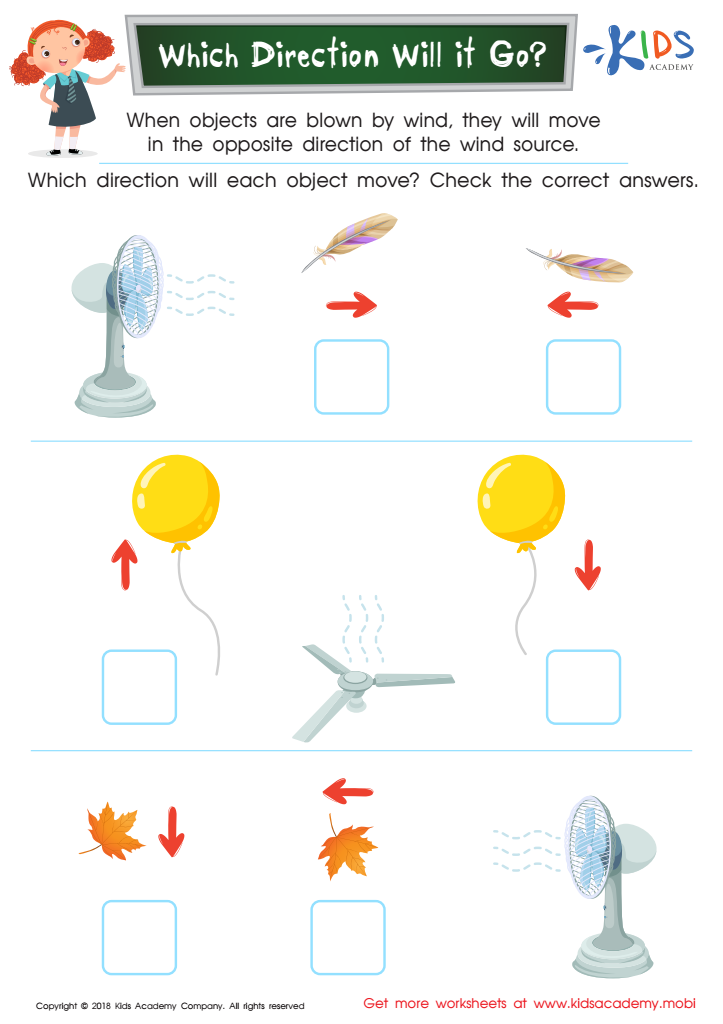
Which Direction Will it Go? Worksheet
Explain to your students: when objects are blown by wind, they will move in the opposite direction. In the worksheet, there are pictures of wind sources and objects being blown by the wind. Ask your child to identify and check the direction each object will move.
Which Direction Will it Go? Worksheet
Worksheet
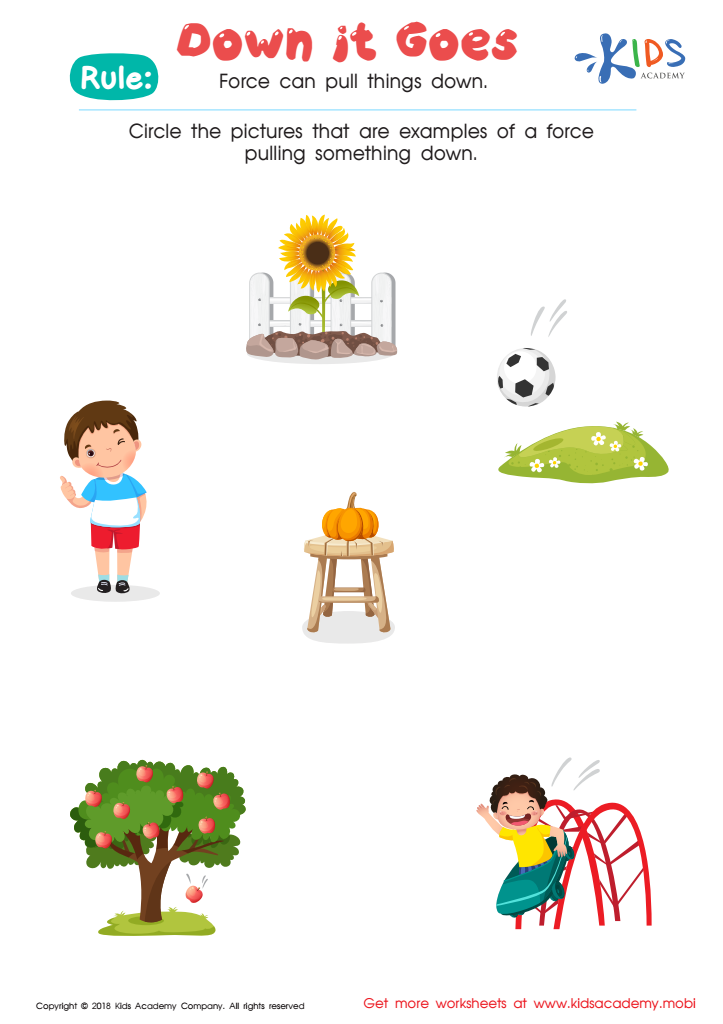
Down it Goes Worksheet
Explain gravity to your child using this fun worksheet. Ask them to give examples of things pulled down with force, then instruct them to circle the pictures that show this. It's a great way to help them understand the concept of gravity.
Down it Goes Worksheet
Worksheet
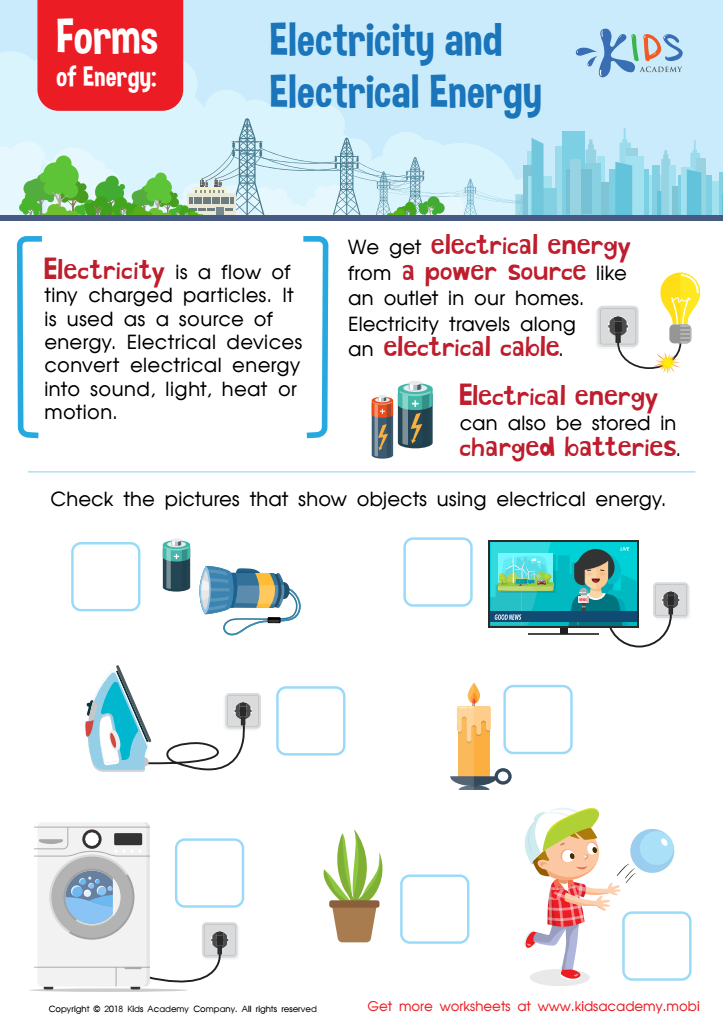
Forms of Energy Worksheet
This fun worksheet will help kids understand electricity. Kids identify objects powered by batteries or outlets. Perfect for 3rd Grade, this worksheet will fascinate them as they learn about this form of energy.
Forms of Energy Worksheet
Worksheet
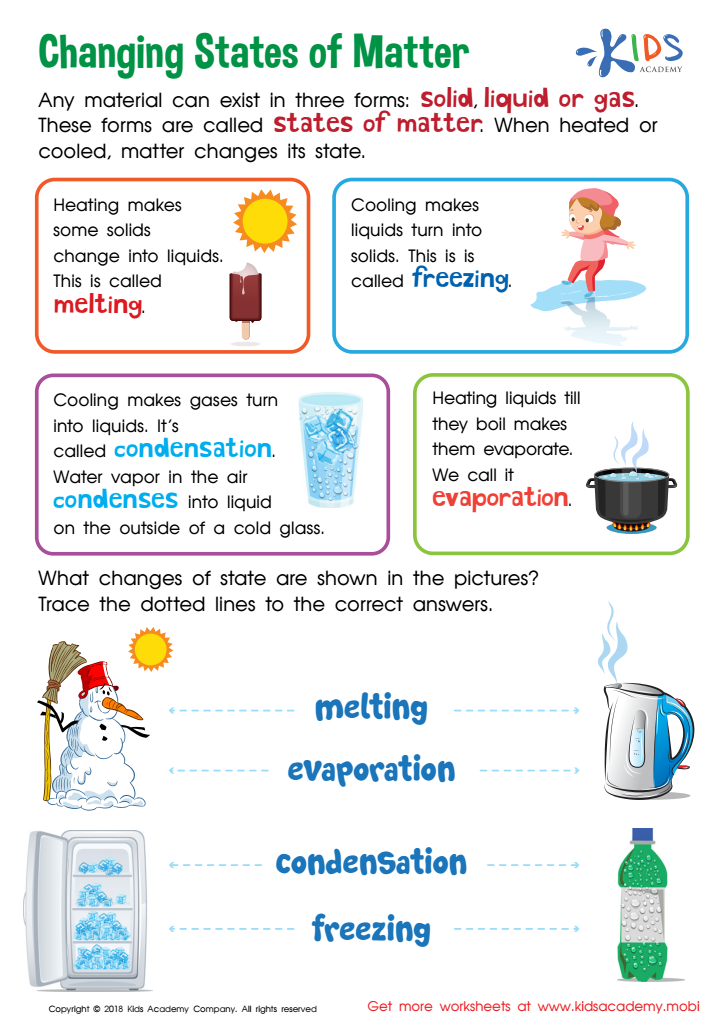
States of Matter Worksheet
Physics is endlessly fun! Teach kids about how matter changes with this states of matter worksheet for grade 3. Kids can explore the transformation of ice to water and then to gas. It's a blast!
States of Matter Worksheet
Worksheet
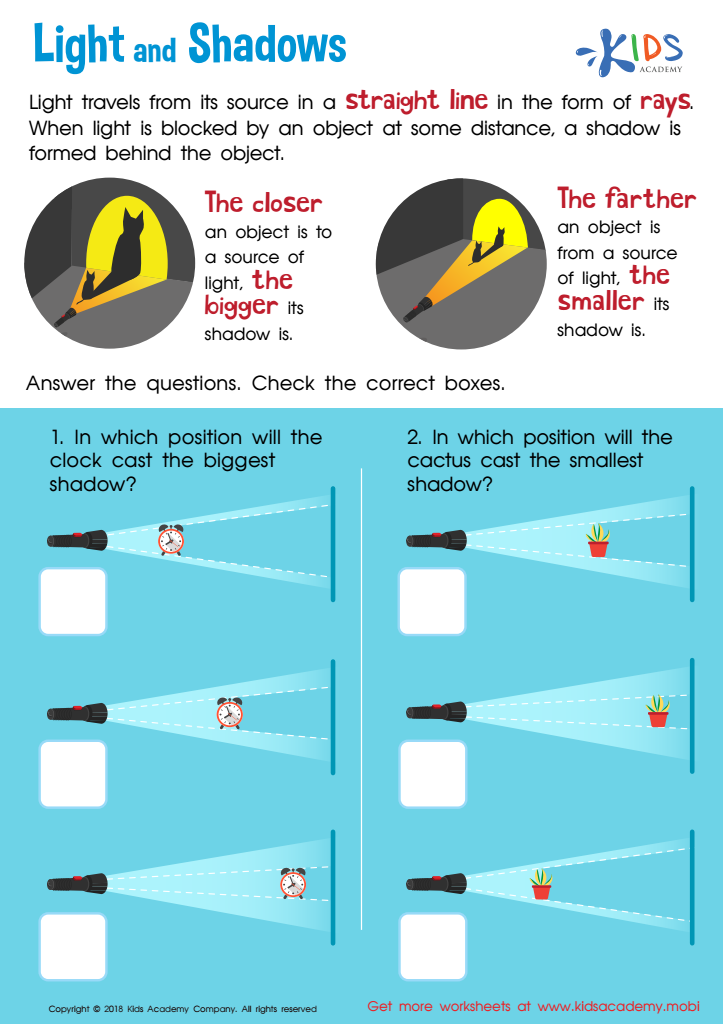
Light and Shadow Worksheet for Grade 3
Kids are often scared of shadows, but they can learn that they're not so scary! This worksheet helps grade 3 kids understand how light rays and objects create shadows, and how they can be large or small. Teach your child with this interesting worksheet!
Light and Shadow Worksheet for Grade 3
Worksheet
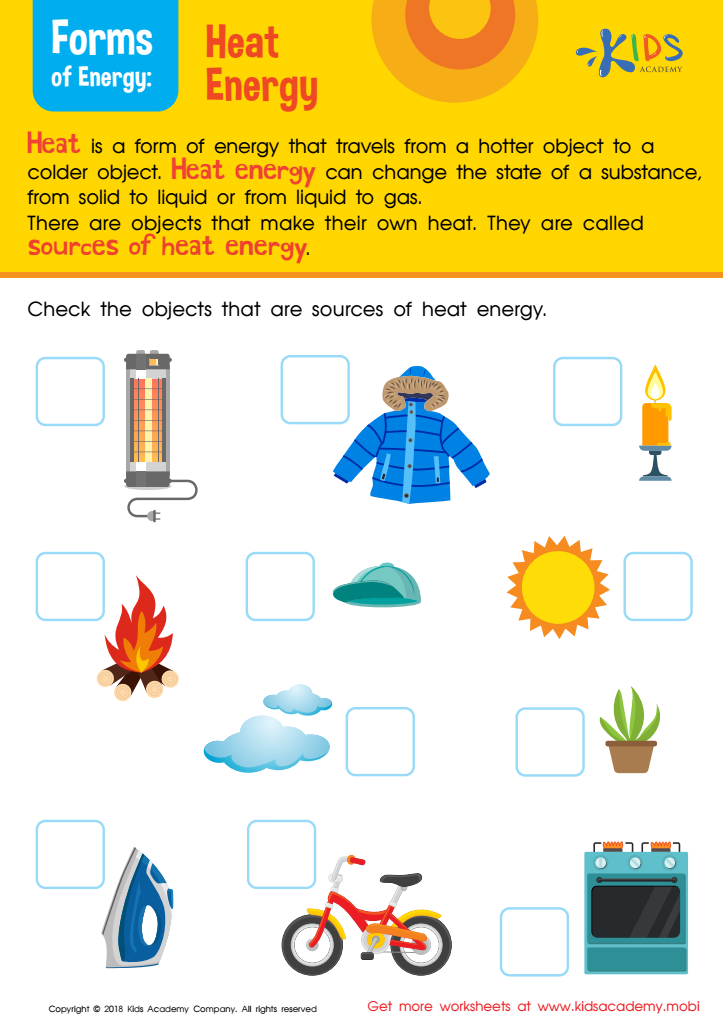
Sources of Heat Energy Worksheet
Heat energy is everywhere - from inside our homes to outside in the sun. Natural sources include the sun, geothermal energy, and volcanic activity. This worksheet helps kids identify and learn about these sources and more!
Sources of Heat Energy Worksheet
Worksheet
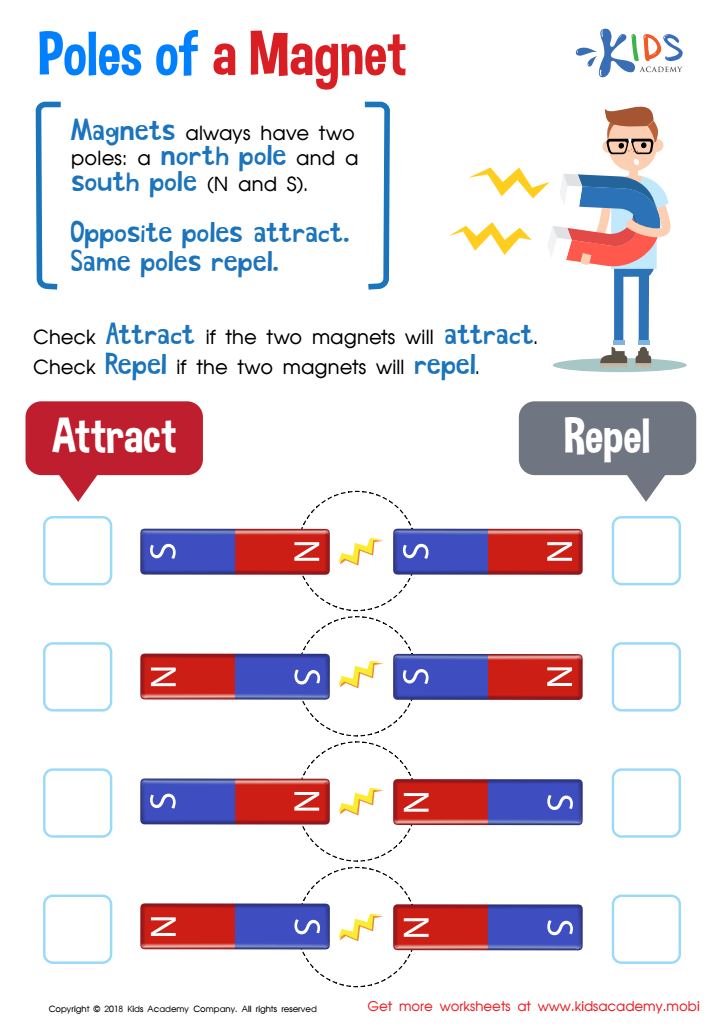
Magnet Poles Attract or Repel Worksheet
Kids can learn about magnets using this fun worksheet! They'll identify the polarities of magnets and see if they attract or repel. Pictures of magnets will help them understand the concept and get them excited about scientific exploration!
Magnet Poles Attract or Repel Worksheet
Worksheet
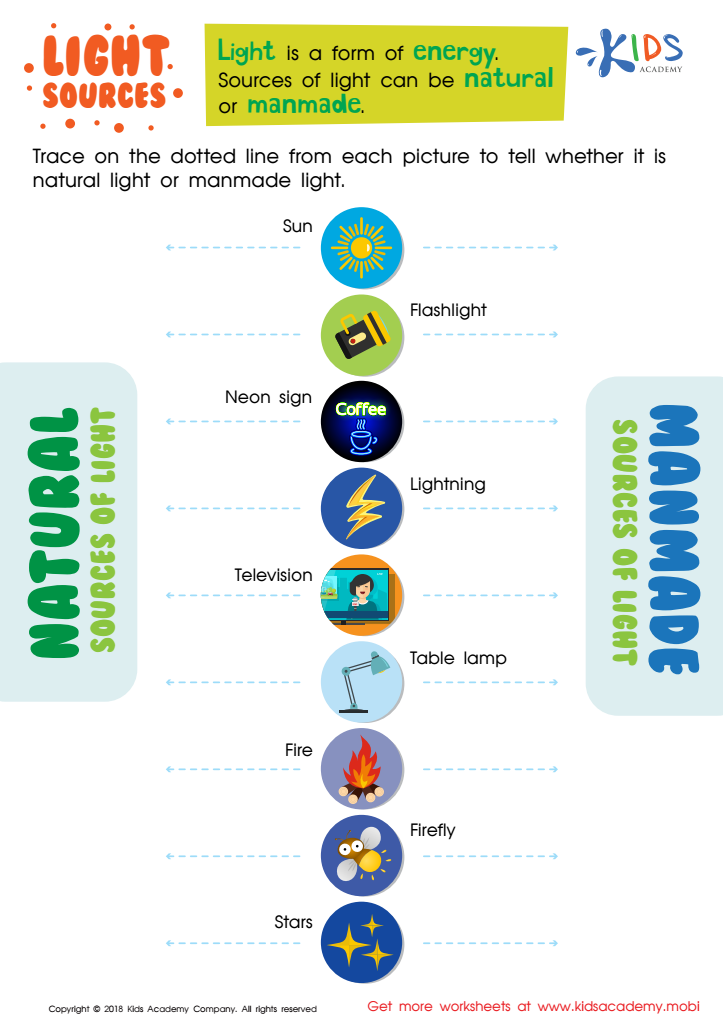
Natural and Manmade Light Sources Worksheet
Have your child learn about natural and manmade light sources with this fun worksheet! They'll distinguish the sun, fireflies and more as either natural or artificial sources. Brighten up their knowledge with this engaging activity!
Natural and Manmade Light Sources Worksheet
Worksheet
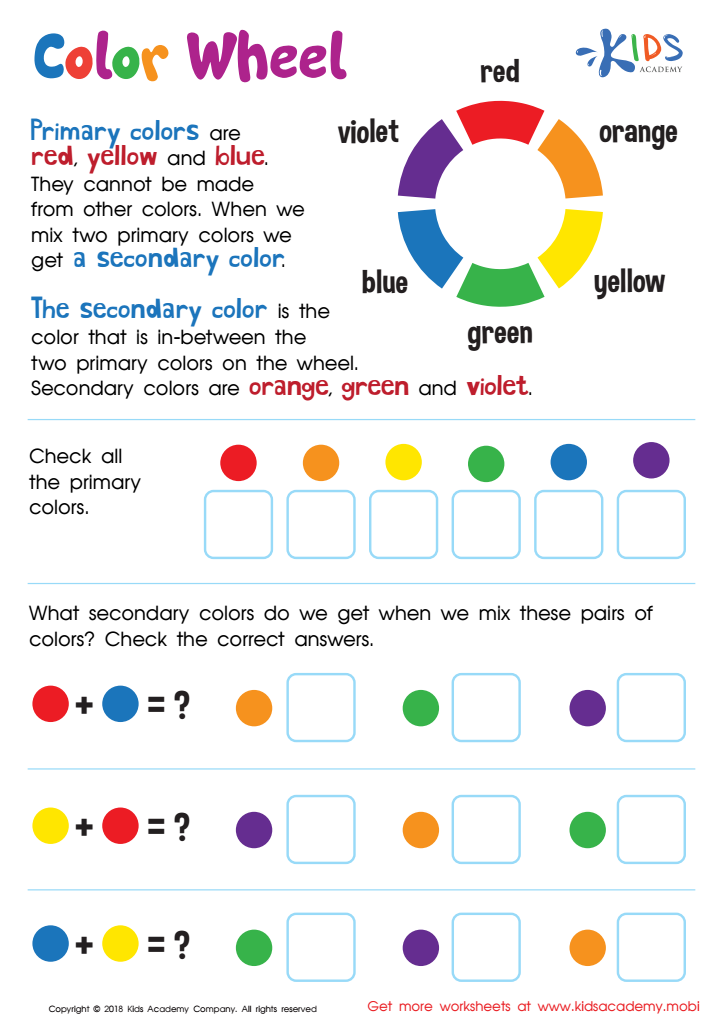
Primary and Secondary Colors Worksheet
Explore the color wheel with it.
Print the worksheet and use it to discover all the colors the wheel has to offer! Learn the basics of color mixing while having fun.
Primary and Secondary Colors Worksheet
Worksheet
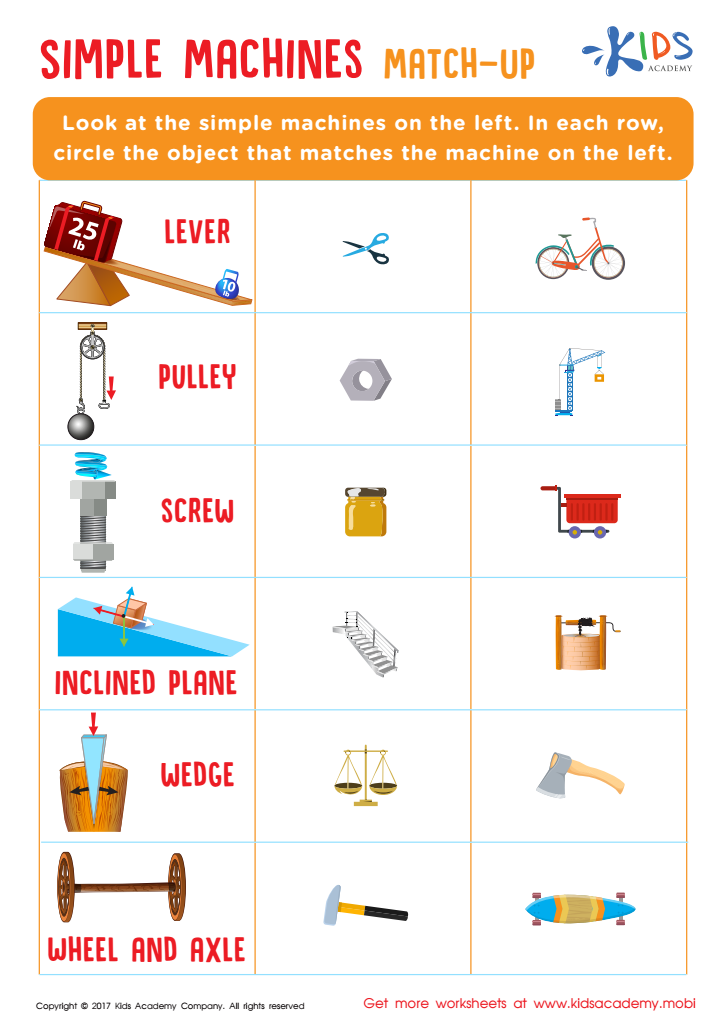
Simple Machines Worksheet
Let this colorfully illustrated PDF introduce your child to the physical science behind everyday tools and objects. Learn about simple machines like levers, pulleys, and screws – helping make our daily lives easier!
Simple Machines Worksheet
Worksheet
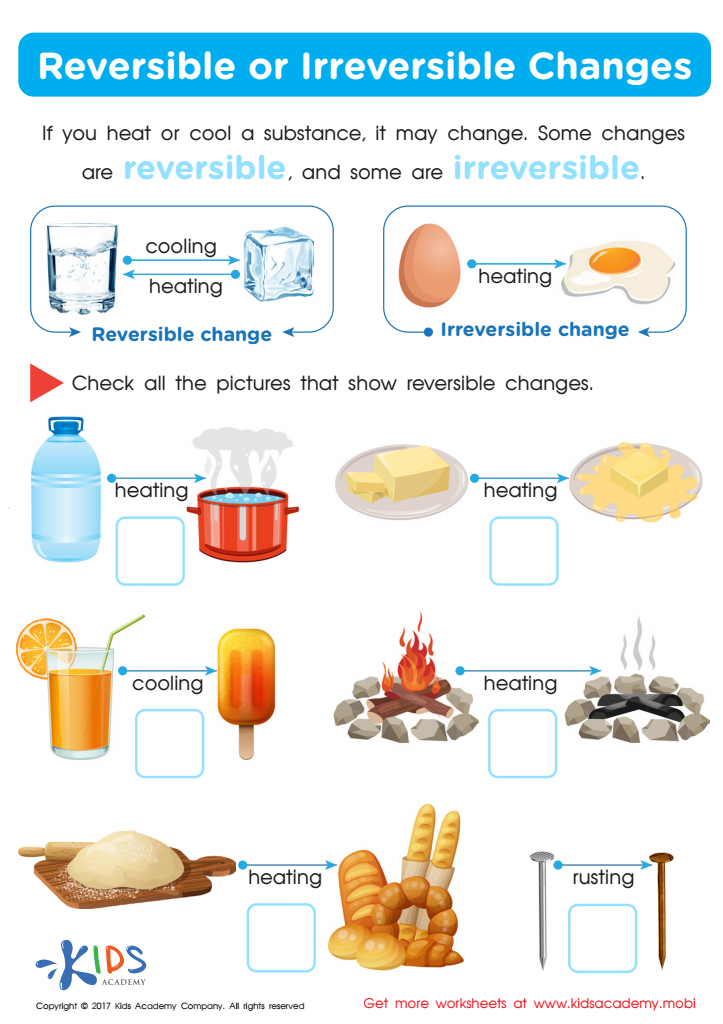
Reversible Irreversible Changes Worksheet
Crack an egg and cook it – once it's done, there's no return to its original state.
Reversible Irreversible Changes Worksheet
Worksheet
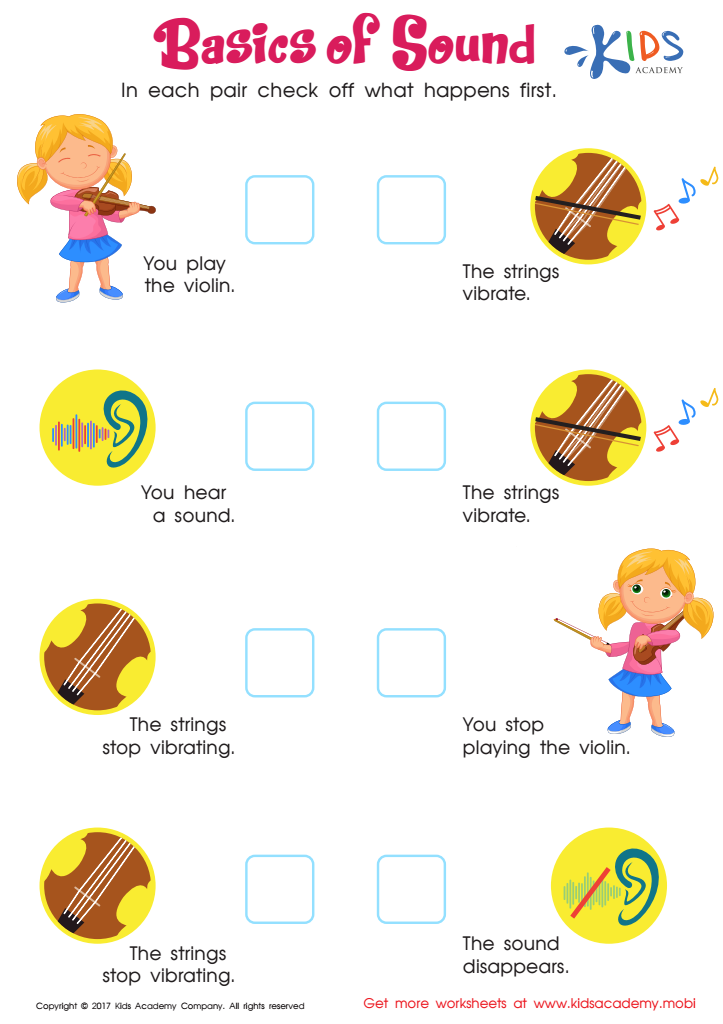
Basics Of Sound Worksheet
Sound is the result of vibrations. As a violinist creates music on her instrument, we can observe how the vibrations start and stop, producing a pleasing sound. This worksheet helps kids understand the basics of physical science behind sound.
Basics Of Sound Worksheet
Worksheet
Join Kids Academy for Free
Who is primarily going to use this learning content?