Text analysis Reading Fiction Worksheets
3 filtered results
-
From - To
Enhance your students’ comprehension with our Text Analysis Reading Fiction Worksheets! Designed to help early grade learners dive deeper into stories, these engaging worksheets encourage critical thinking and analytical skills. Through carefully crafted questions and activities, students will explore themes, characters, and plot development, fostering a richer understanding of literature. Our resources are perfect for classroom use or independent study, making reading both fun and educational. Suitable for various reading levels, these worksheets promote interaction with text and help young readers make connections to their own experiences. Start boosting your classroom's literary skills today with our thoughtfully designed text analysis materials!
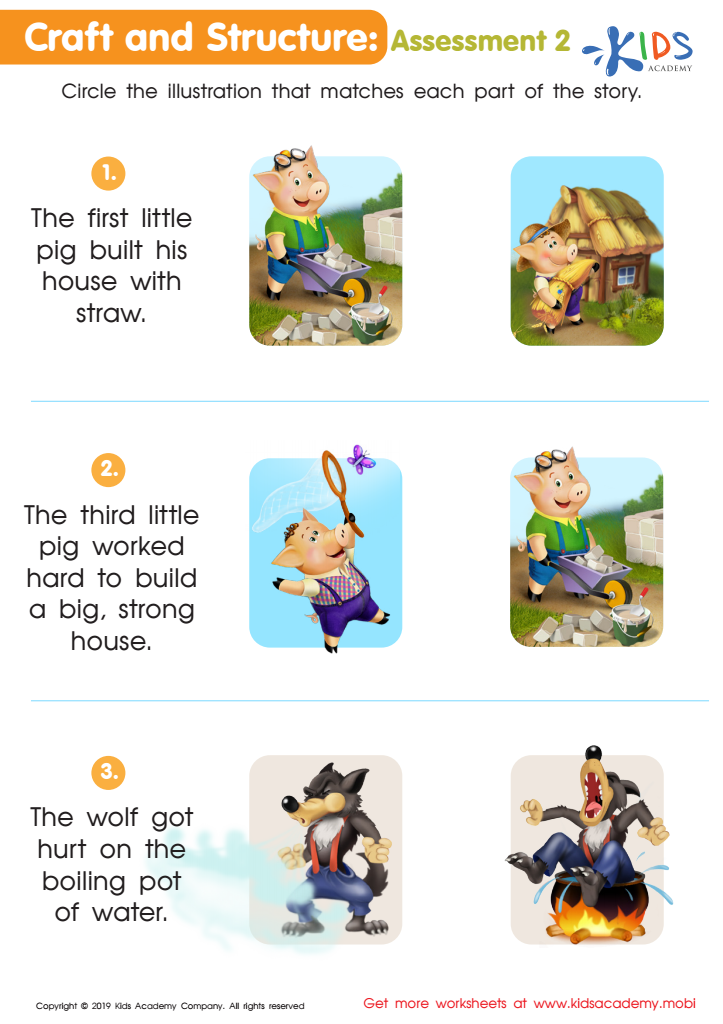
Craft and Structure: Assessment 2 Worksheet 2
 Assign to My Students
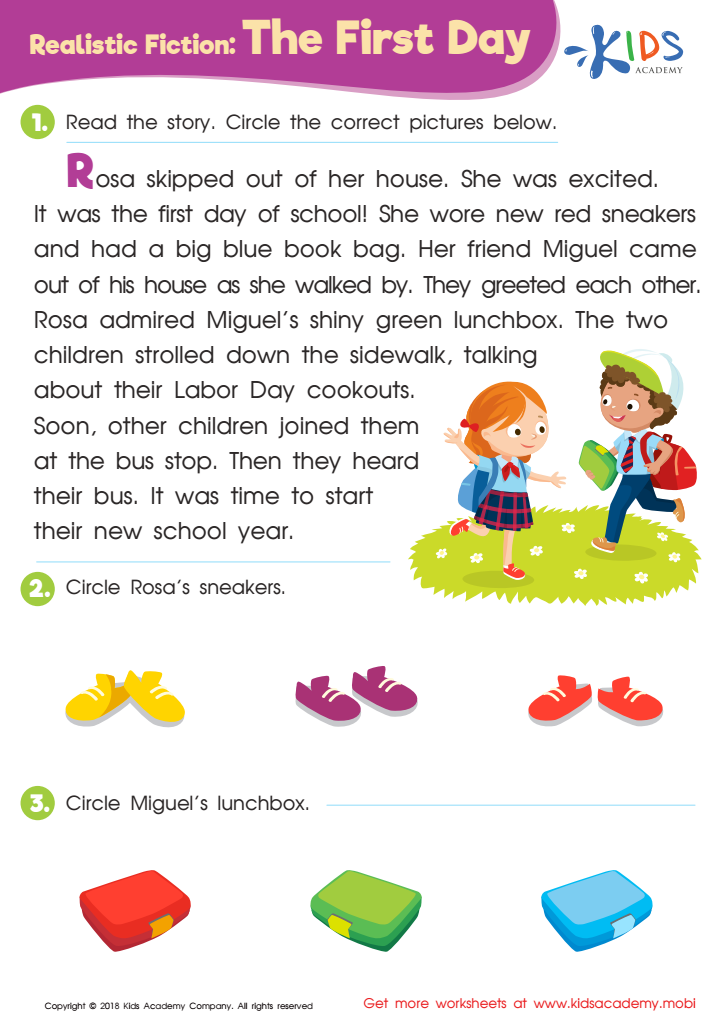
Realistic Fiction: The First Day Worksheet
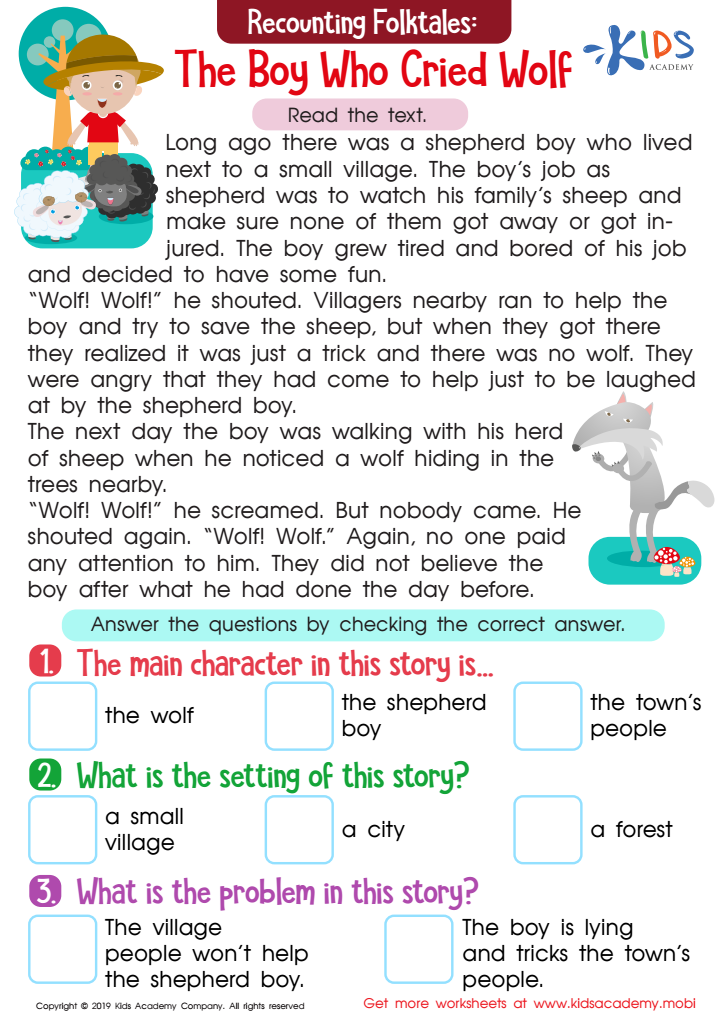
The Boy Who Cried Wolf Part 1 Worksheet








Text analysis in reading fiction is a vital skill for both parents and teachers, as it opens the door to deeper comprehension and critical thinking in children. Engaging with fiction goes beyond mere storytelling; it allows young readers to explore various perspectives, emotions, and moral dilemmas. When children analyze texts, they learn to identify themes, character motivations, and narrative structures, which cultivates their analytical abilities.
For parents, encouraging text analysis helps foster a love for reading and aids in the development of empathy, as kids learn to relate to characters and their experiences. This makes literature a powerful tool for social and emotional learning.
Teachers benefit from promoting text analysis by enhancing students' literacy skills, preparing them for more complex texts in the future. It encourages discussions, questions, and interpretations, which are essential for a thriving classroom environment.
Overall, when parents and teachers prioritize text analysis in reading fiction, they equip children with lifelong skills, nurturing their ability to think critically and communicate effectively. Understanding different narratives prepares them for diverse situations in life, fostering curiosity and creativity that extend well beyond the classroom.








