Reading thermometers Science Worksheets
3 filtered results
-
From - To
Explore our engaging Reading Thermometers Science Worksheets designed for young learners! These worksheets provide a fun and interactive way for students to understand temperature readings using different types of thermometers. With a variety of activities, your child will practice interpreting thermometer scales, distinguishing between Celsius and Fahrenheit, and applying their knowledge to real-life scenarios. Perfect for reinforcing essential science skills in a classroom or at home, these worksheets encourage critical thinking and hands-on learning. Download and print our Reading Thermometers worksheets today to make science exciting and accessible for your students! Instill a love for learning with fun, educational resources!
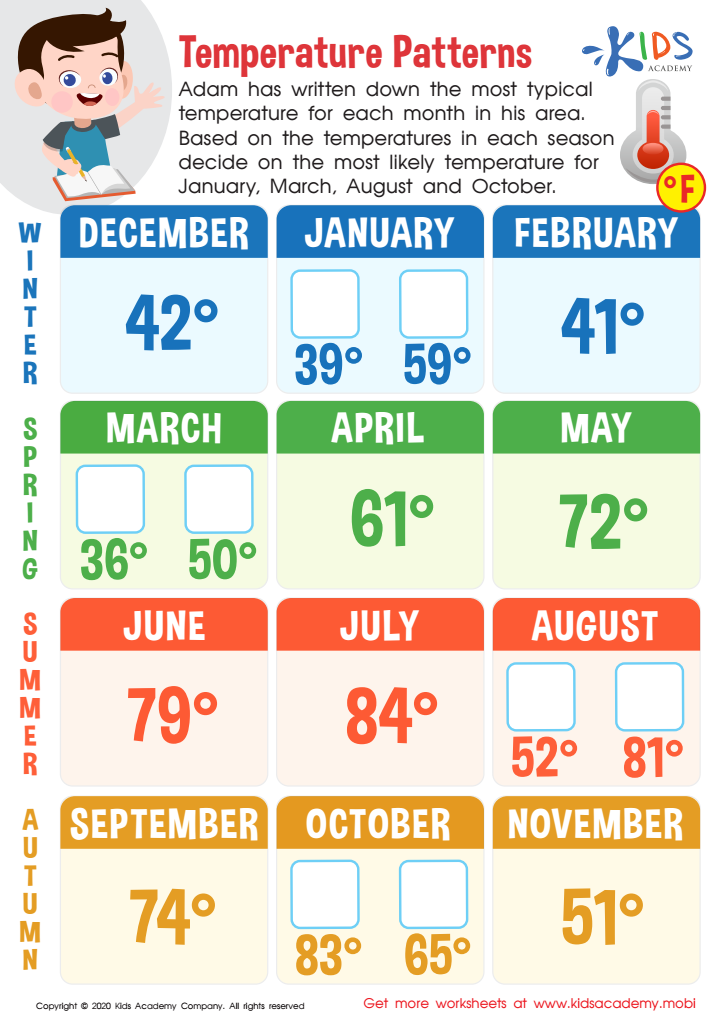
Temperature Patterns Worksheet
 Assign to My Students
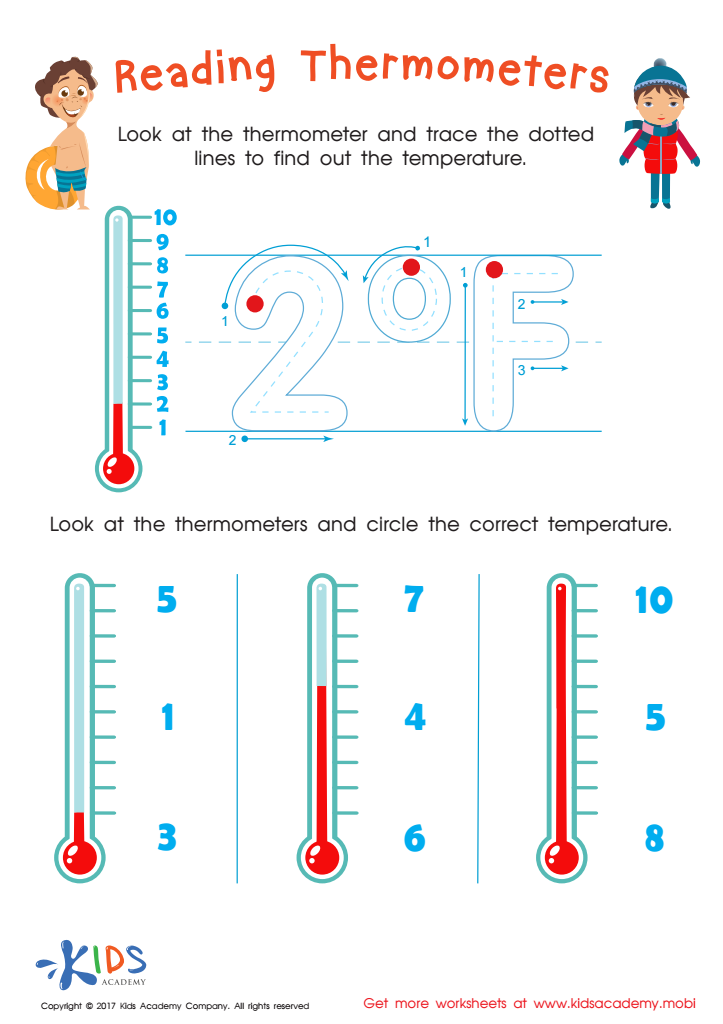
Reading Thermometers Printable
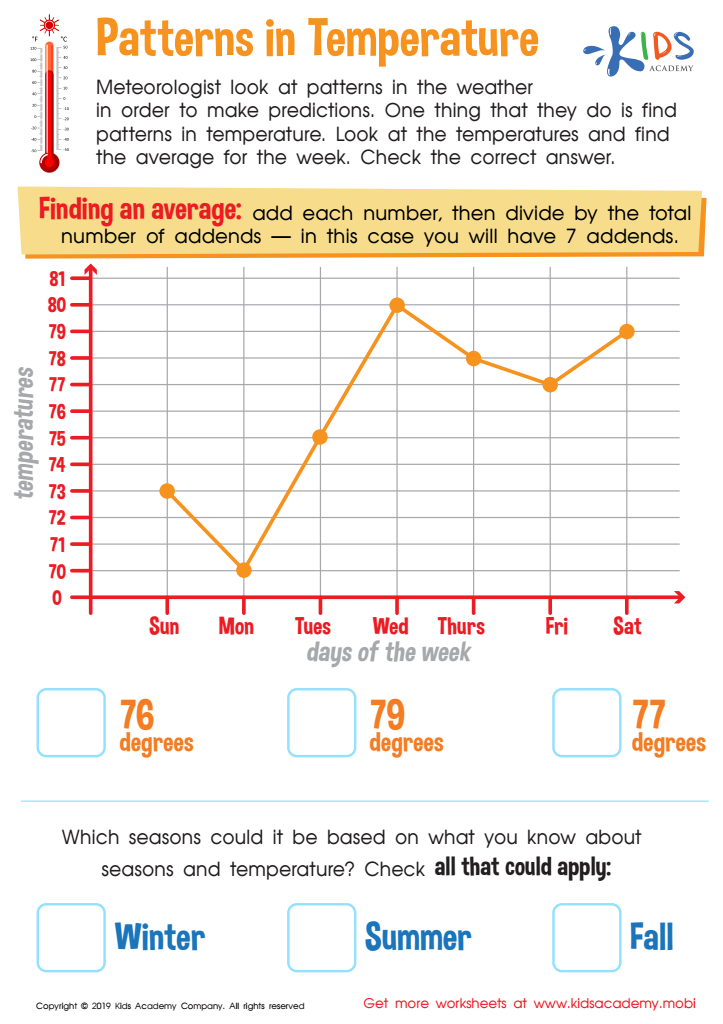
Patterns in Temperature Worksheet



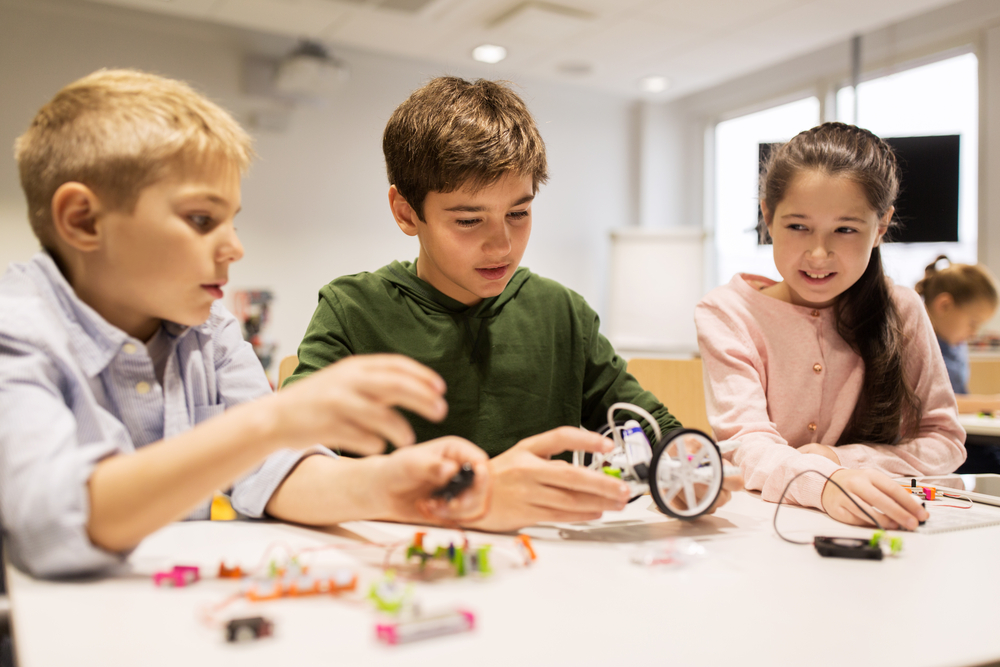




Reading thermometers is an essential scientific skill that can significantly benefit both parents and teachers in nurturing children's understanding of the world around them. By fostering the ability to read thermometers, children develop critical thinking and observational skills, foundational components of scientific literacy.
Understanding temperature measurement is applicable in various contexts, from daily weather forecasts to health assessments—an essential skill for emergencies. Moreover, reading thermometers introduces students to concepts in physics and chemistry, such as heat transfer, states of matter, and the scientific method, laying the groundwork for future scientific exploration.
For parents, engaging children in activities that involve thermometers, such as cooking or outdoor play, encourages curiosity and hands-on learning. When teachers incorporate thermometer reading into the curriculum, they facilitate interactive learning experiences that cater to various learning styles.
Consistent exposure to scientific concepts through practical applications nurtures a child's innate curiosity and excitement about learning. By prioritizing reading thermometers, parents and teachers contribute to building a generation of informed, critical thinkers who appreciate the role of science in everyday life. This early foundation in scientific literacy ultimately prepares children for academic success and makes them informed citizens.







