Science vocabulary enhancement Science Worksheets
3 filtered results
-
From - To
Unlock your child’s potential with our Science Vocabulary Enhancement Worksheets at Kids Academy! Tailored for young learners, these worksheets expertly blend engaging activities with fundamental science concepts, helping to expand their vocabulary while sparking curiosity. Each printable sheet is designed to improve essential learning skills, offering diverse exercises that explain terms and ideas in a fun and accessible way. Perfect for boosting comprehension and fostering a love of science, our worksheets are an ideal resource for both classroom and home use—empowering children to confidently explore and understand the world around them. Join us and make science vocabulary fun!
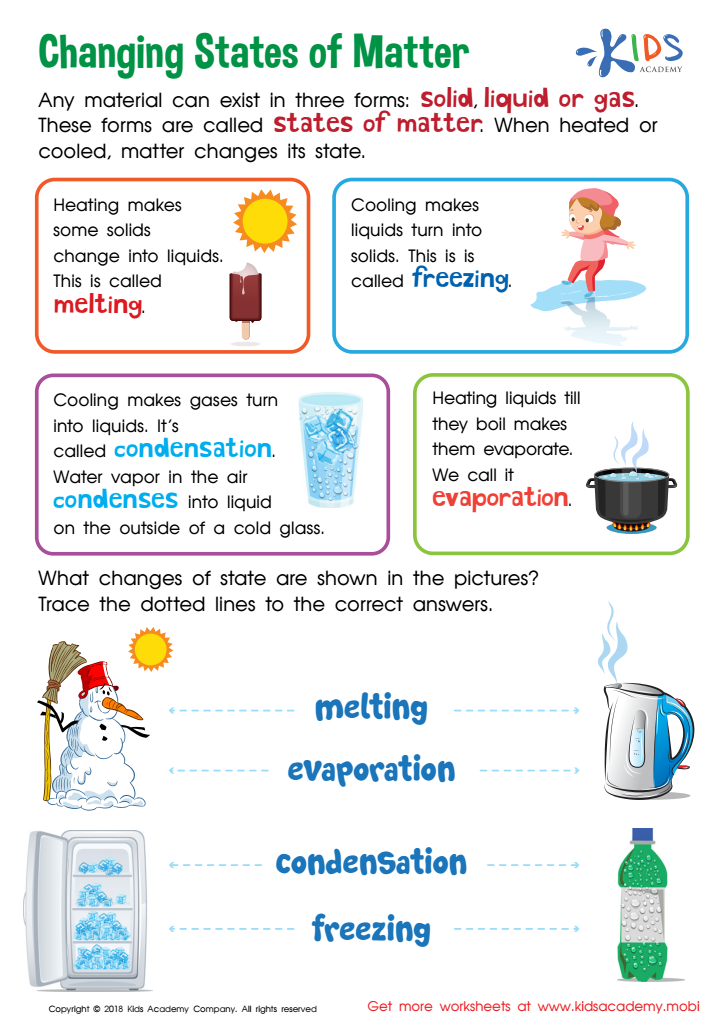
States of Matter Worksheet
 Assign to My Students
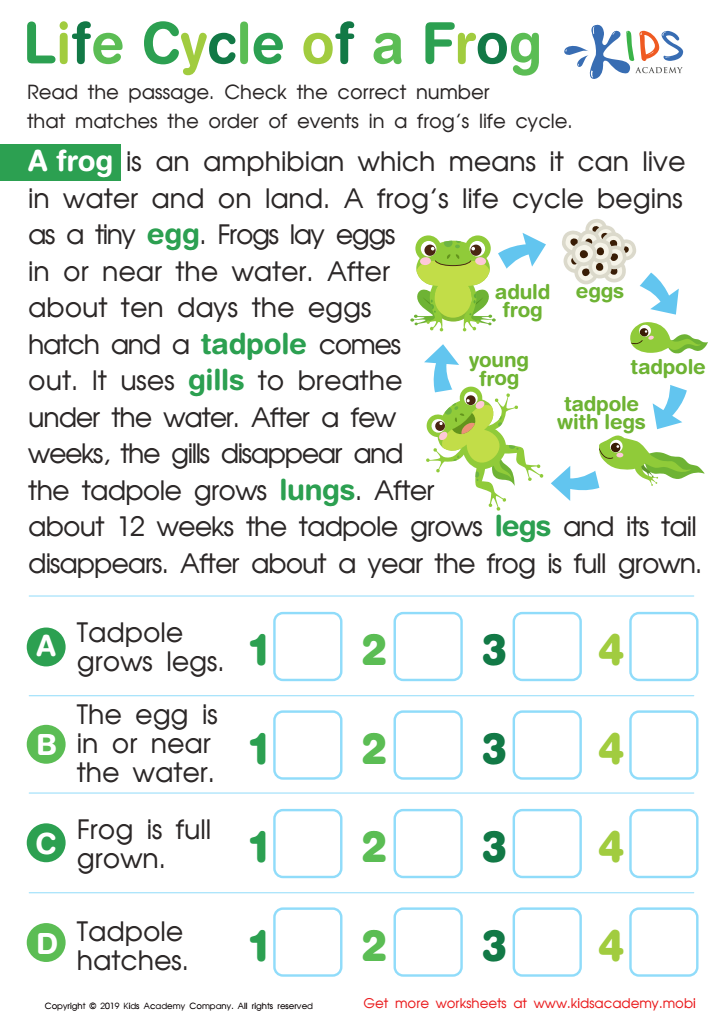
Life Cycle of a Frog Worksheet
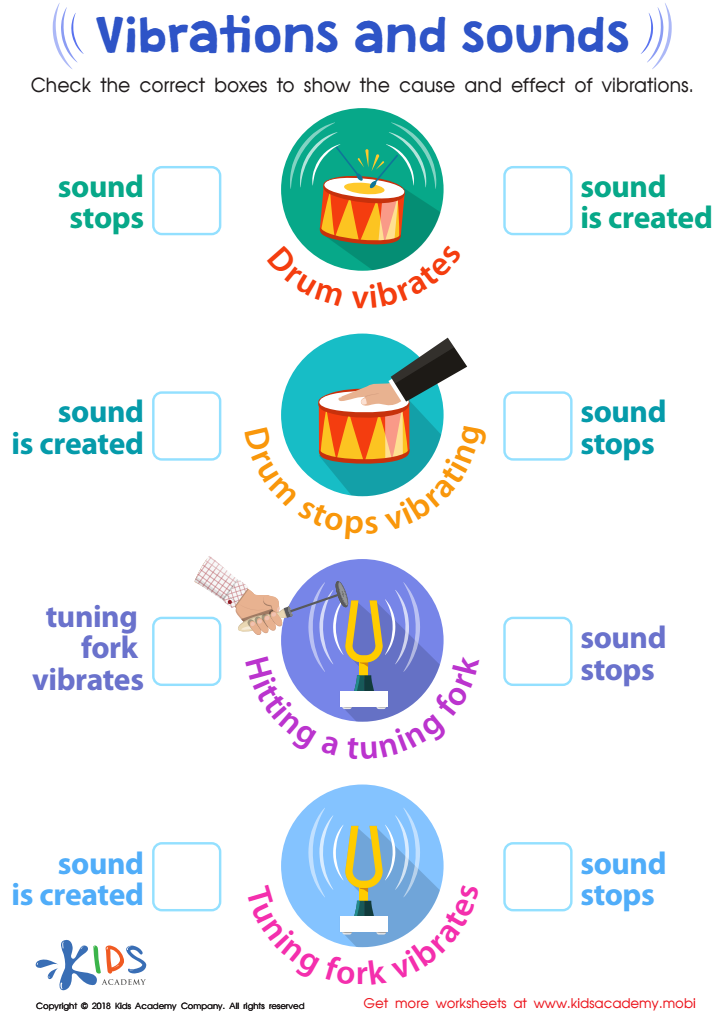
Vibrations and Sounds Worksheet








Parents and teachers should prioritize enhancing science vocabulary for young students because it forms the foundation of effective science learning and communication. A robust science vocabulary helps children understand and engage with scientific concepts more deeply. When students grasp specific terms, they can more easily comprehend complex ideas, perform scientific inquiries, and articulate their observations and reasoning clearly.
Improving science vocabulary also boosts overall literacy. Many scientific terms are derived from Latin and Greek roots, which are building blocks for English vocabulary. This knowledge spills over, strengthening general reading and comprehension skills. Furthermore, bridging language and science amplifies cognitive development such as critical thinking, problem-solving, and innovation.
Strong science vocabulary fosters curiosity and a passion for lifelong learning. By engaging with scientific language early, students are more likely to develop an interest in science and even pursue careers in STEM fields, which are vital for future job markets and addressing global challenges, like climate change and medical advancements.
Lastly, nurturing science vocabulary proficiency can also promote equity by equipping all children, regardless of background, with the tools to succeed academically. This ensures they are better prepared for advanced education and can thrive in a digital, scientific literate society. Therefore, the enhancement of science vocabulary is fundamental to both personal and societal progress.







