Sequencing skills improvement Science Worksheets
3 filtered results
-
From - To
Enhance your child's learning journey with our Sequencing Skills Improvement Science Worksheets! Designed for early grade students, these engaging worksheets focus on developing essential sequencing skills critical for understanding scientific concepts. Through fun and interactive activities, children will learn to organize events and processes in a logical order, fostering their critical thinking and comprehension skills. Each worksheet provides a balanced mix of colorful illustrations and thought-provoking questions that keep young learners motivated. Perfect for at-home practice or classroom use, our resources help build a strong foundation in science while promoting essential literacy and analytical skills. Explore our collection today!
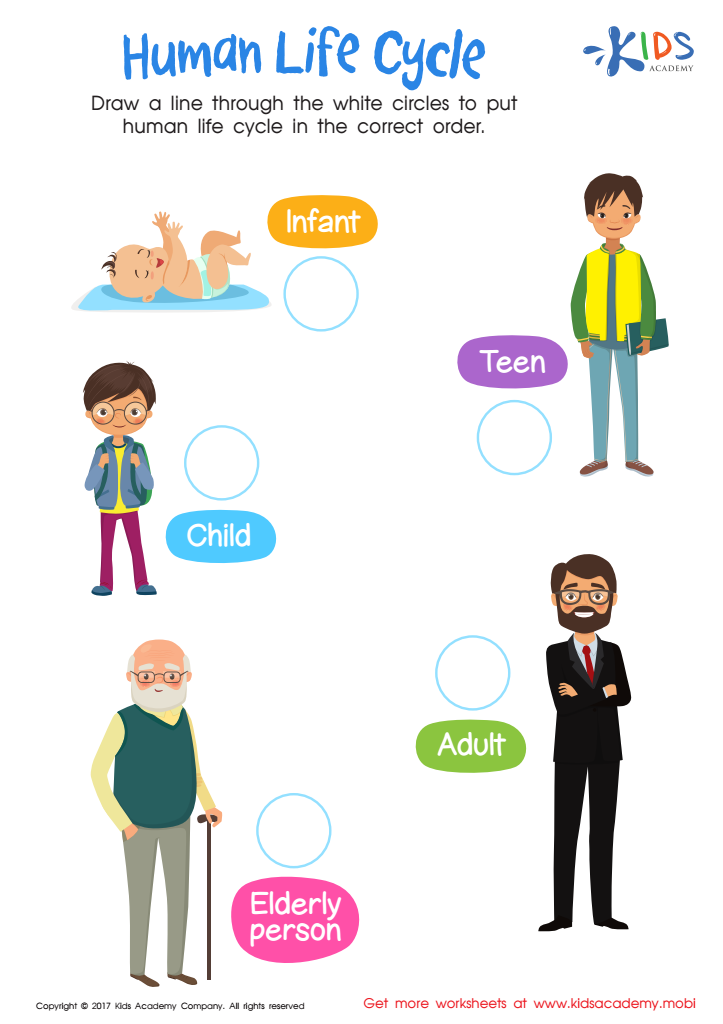
Human Life Cycle Worksheet
 Assign to My Students
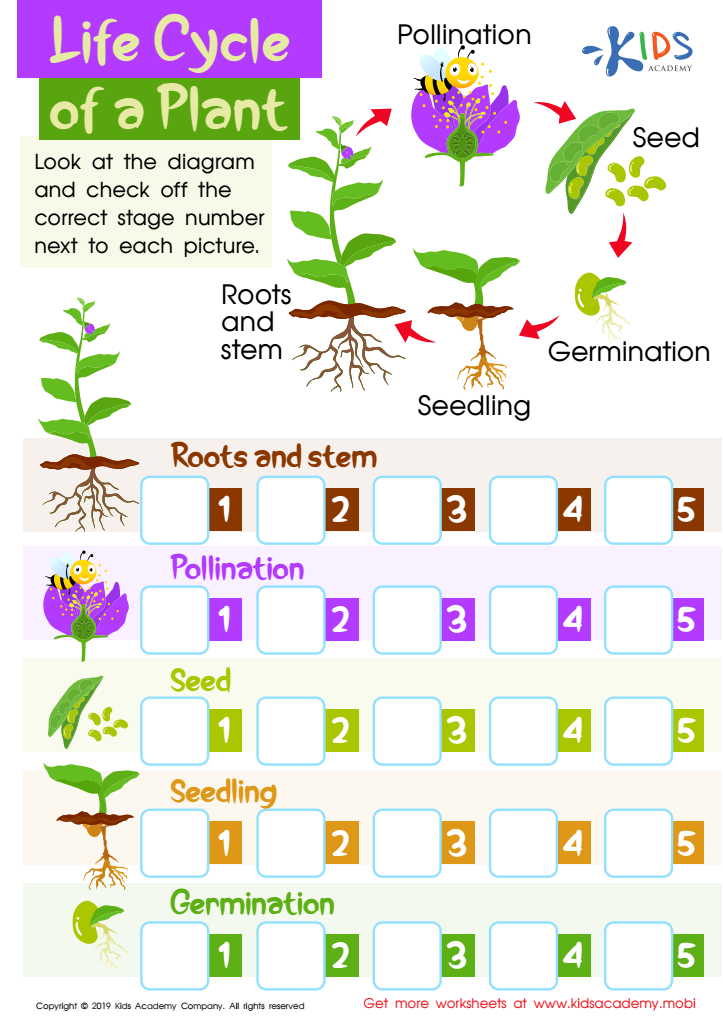
Life Cycle of a Plant Worksheet
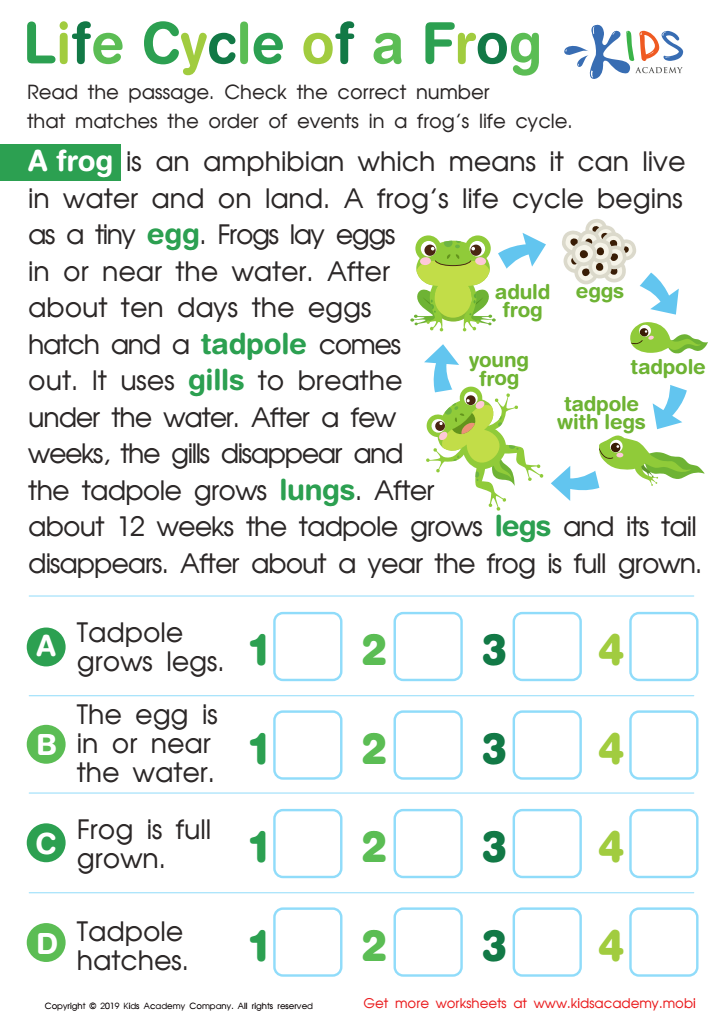
Life Cycle of a Frog Worksheet








Sequencing skills are crucial in early childhood education, especially in science, as they help children understand the order in which events occur and how processes unfold. These skills enable students to grasp the concepts of cause and effect, allowing them to construct logical narratives about scientific phenomena. For instance, when teaching the life cycle of a plant, students who can sequence the stages from seed germination to flowering will better comprehend the biology involved.
Moreover, strong sequencing abilities foster critical thinking and problem-solving skills, as children learn to connect ideas and draw conclusions based on the order of information. Improved sequencing skills also enhance reading comprehension. When children can organize the sequence of a story, they can summarize and predict outcomes, deepening their engagement with texts.
Parents and teachers should care about improving these skills because they lay the foundation for academic success in numerous subjects. By integrating sequencing activities—like storytelling, experiments, and guided discussions—into science lessons, educators can cultivate a more engaging and effective learning environment, nurturing students' curiosity and desire to explore scientific concepts rationally and coherently. Ultimately, enhancing students' sequencing skills prepares them for more complex learning as they progress academically.







