
Shape Recognition Science Worksheets
5 filtered results
Difficulty Level
Grade
Age
-
From - To
Subject
Activity
Standards
Discover the exciting world of shapes with our Shape Recognition Science Worksheets at Kids Academy! Crafted for young learners, these engaging and educational worksheets help children identify and differentiate various shapes through fun, hands-on activities. Perfect for enhancing visual-spatial skills and reinforcing early geometry concepts, our worksheets come in a variety of themes and difficulty levels to keep your little ones curious and motivated. Whether in class or at home, these printable resources are an ideal addition to any early learning curriculum. Equip your child with the skills they need to succeed with Kids Academy!
Favorites
With answer key
Interactive
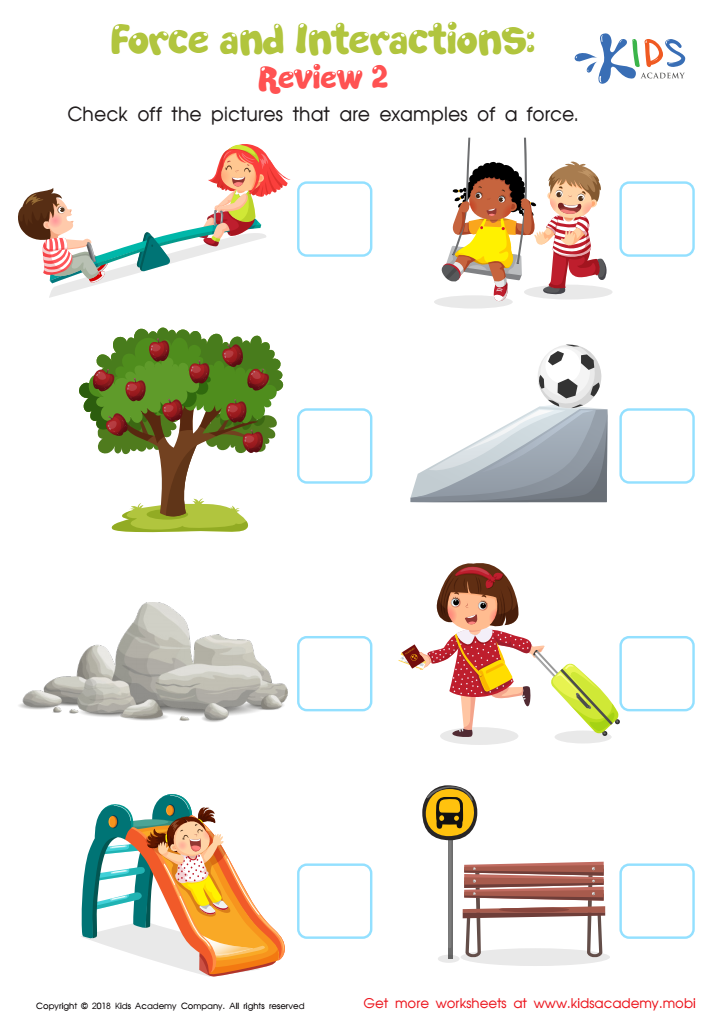
Force and Interactions: Review 2 Worksheet
Your child can identify force examples by checking the pictures. There are 8 images of kids engaging in activities and objects in motion. Get them to name the activities and objects, or if they know, explain force and interaction.
 Assign to My Students
Force and Interactions: Review 2 Worksheet
Worksheet
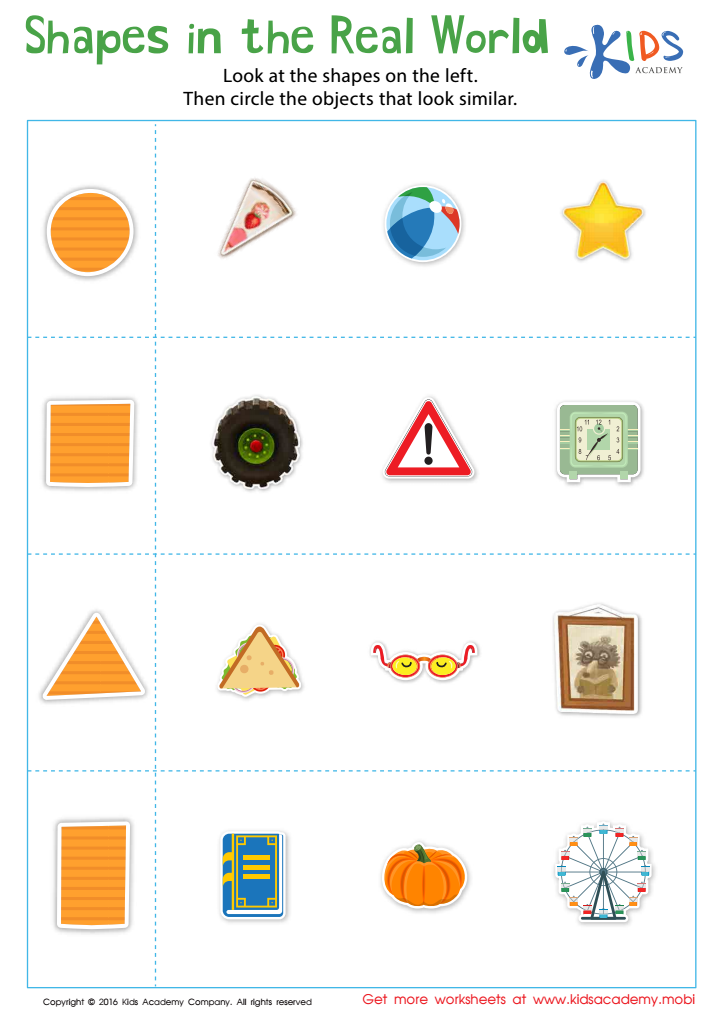
Shapes in the Real World Worksheet
Teach kids math in real-world context with this fun and inviting PDF. Let them explore geometric shapes and match them with everyday objects, giving them practice with fine motor skills and reinforcing basic shapes. Help them understand that math is everywhere in their lives!
Shapes in the Real World Worksheet
Worksheet
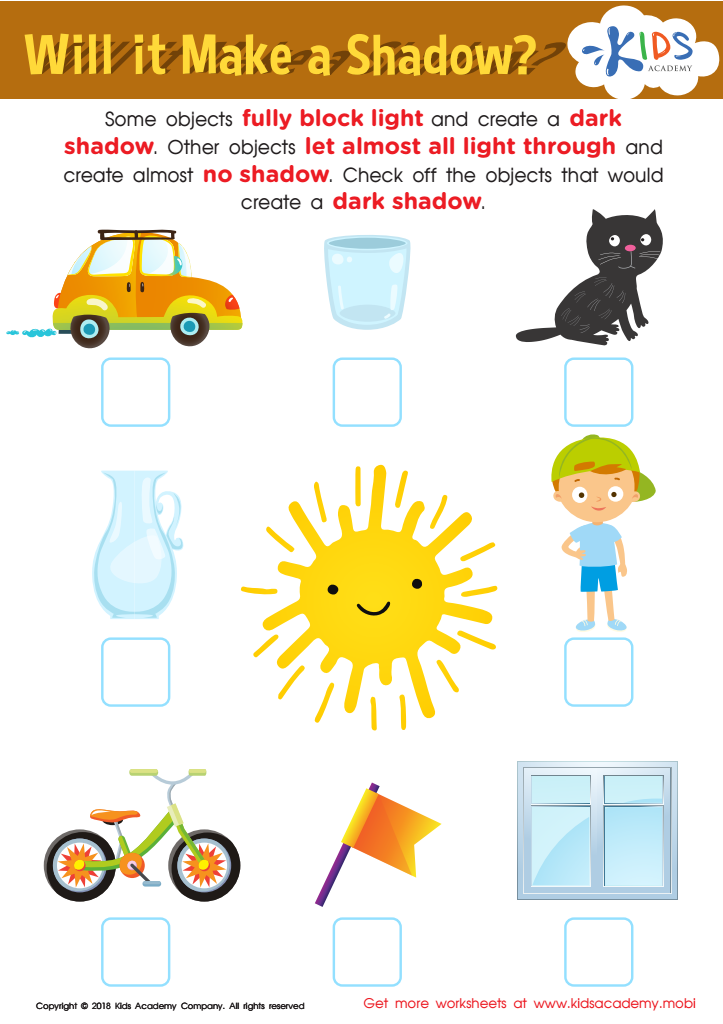
Will It Make a Shadow? Worksheet
Teach your students about shadows with this printout. Ask them to check off the boxes next to the pictures that create a shadow. Explain that some objects block light, forming a shadow, while others don't and thus don't create a shadow. Your students are likely already familiar with their own shadow.
Will It Make a Shadow? Worksheet
Worksheet
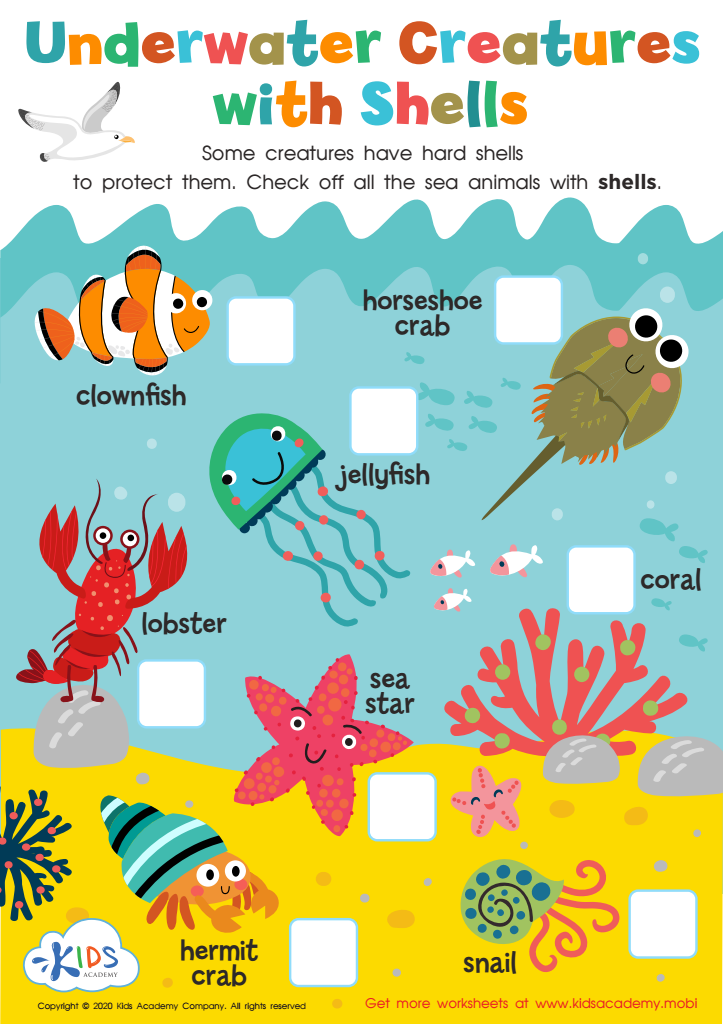
Underwater Creatures with Shells Worksheet
Teach your child about sea creatures with this vibrant PDF science worksheet! Comb through the colorful image to identify animals with shells; compare them to others and check them off. Let them know shells don't just wash up on beach, they serve as protection for sea creatures!
Underwater Creatures with Shells Worksheet
Worksheet
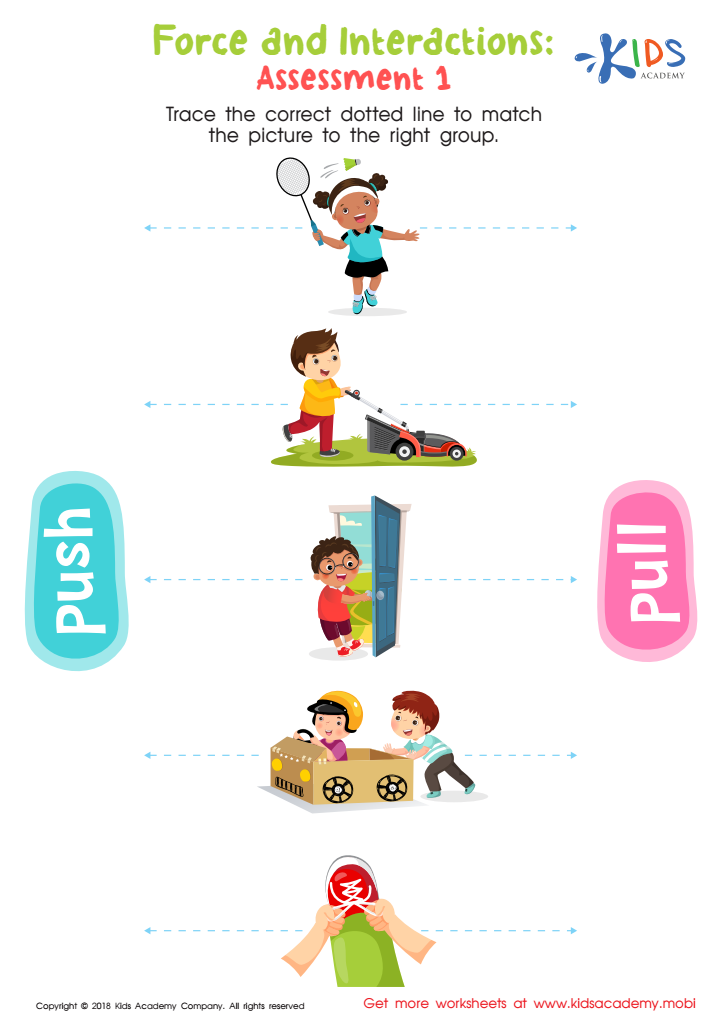
Force and Interactions: Assessment 2 Worksheet
Help your child see the difference between push and pull with this fun worksheet. Ask them to match each picture to the right group. The "push" is on the left and the "pull" is on the right. Assist them in tracing the activities and explain what it is the people are doing.
Force and Interactions: Assessment 2 Worksheet
Worksheet
Join Kids Academy for Free
Who is primarily going to use this learning content?



.jpg)

Shape Recognition Science is crucial for early childhood development as it lays the foundation for a wide range of cognitive skills. First and foremost, understanding shapes helps young children categorize and compare objects in their environment, fostering critical thinking skills. For instance, recognizing a circle or square becomes a gateway to more complex problem-solving tasks.
Furthermore, shape recognition directly influences a child's ability to grasp more advanced mathematical concepts. Geometry, measurement, and spatial reasoning are built upon an early understanding of simple shapes. This early math proficiency can predict success in later academic pursuits, making early shape recognition an essential stepping stone.
It's also worth noting that shape recognition enhances fine motor skills through drawing and identifying various shapes. This is particularly beneficial when children encounter letters and numbers, as these too are combinations of shapes. For example, understanding that an 'A' is a triangle with a line across can aid in quicker literacy acquisition.
Social and emotional development also reaps the benefits; engaging in activities that involve shapes helps children follow instructions, work collaboratively, and boosts their confidence in learning new skills.
In essence, prioritizing shape recognition from a young age prepares children not only for academic success but also for a lifetime of effective problem-solving and analytical thinking.







