
Understanding landforms Our Planet and Environment Worksheets
3 filtered results
Difficulty Level
Grade
Age
-
From - To
Subject
Activity
Standards
Discover the dynamic world of landforms with our "Understanding Landforms" worksheets! Designed for young learners, these engaging educational resources provide fun activities that explore various landforms such as mountains, valleys, and lakes. Each worksheet encourages critical thinking and enhances geographical knowledge through interactive exercises, illustrations, and challenges. Ideal for early grade classrooms or at-home learning, our materials foster an appreciation for our planet's diverse environments. Help your students develop essential skills in identifying and categorizing landforms, all while connecting their learning to the natural world. Download our worksheets and embark on an exciting journey to understand the Earth's landscapes today!
Favorites
With answer key
Interactive
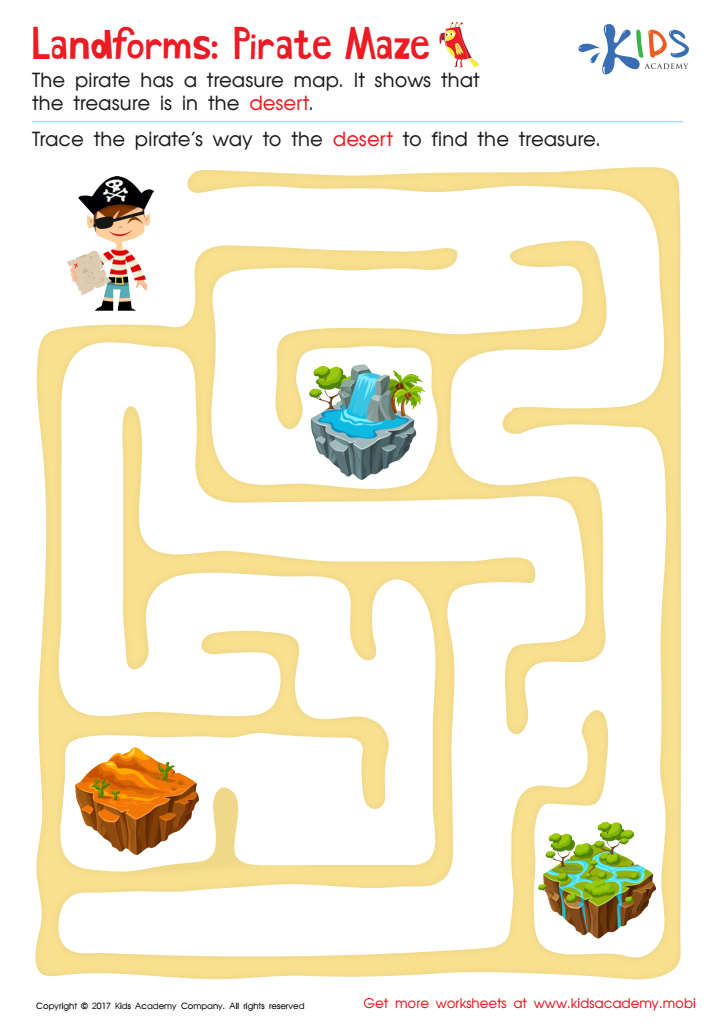
Landforms: Pirate Maze Printable
Help your pirate reach the hidden treasure. Worksheet included.
Join the swashbuckling pirate's quest for hidden treasure! Your child will identify desert landforms in this tricky maze, learning about different types of landforms in the process. Worksheet included. Let's get that treasure!
 Assign to My Students
Landforms: Pirate Maze Printable
Worksheet
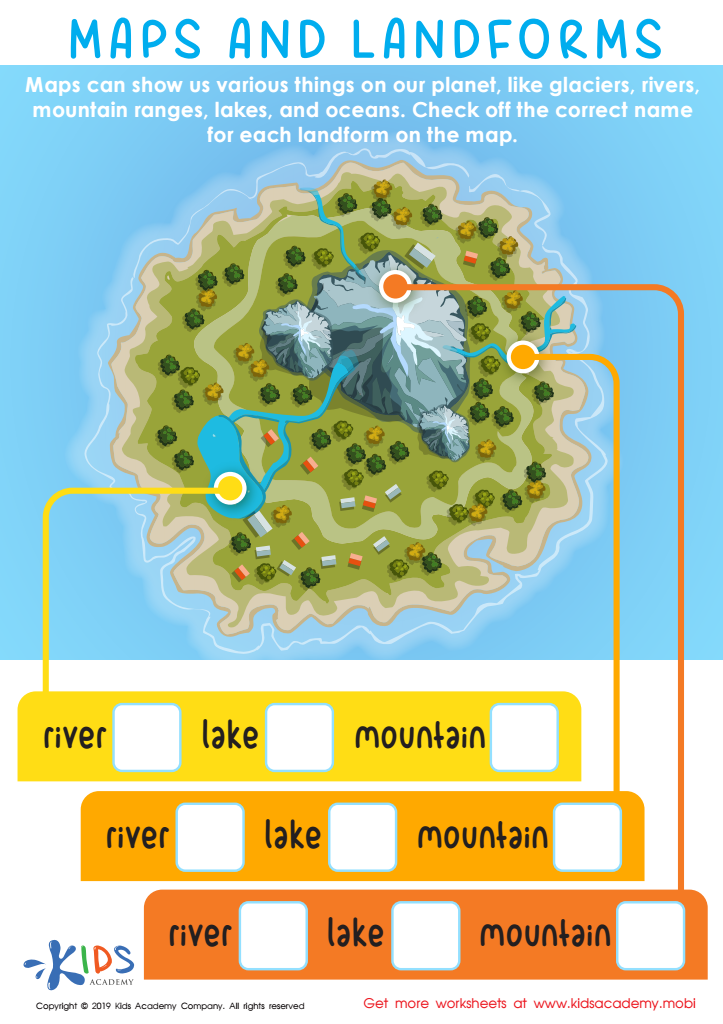
Maps and Landforms Worksheet
We can educate our kids on the world and its landforms by showing them a map. Point out mountains, rivers, and oceans, and help them identify each correctly. With this knowledge, they will better understand our planet.
Maps and Landforms Worksheet
Worksheet
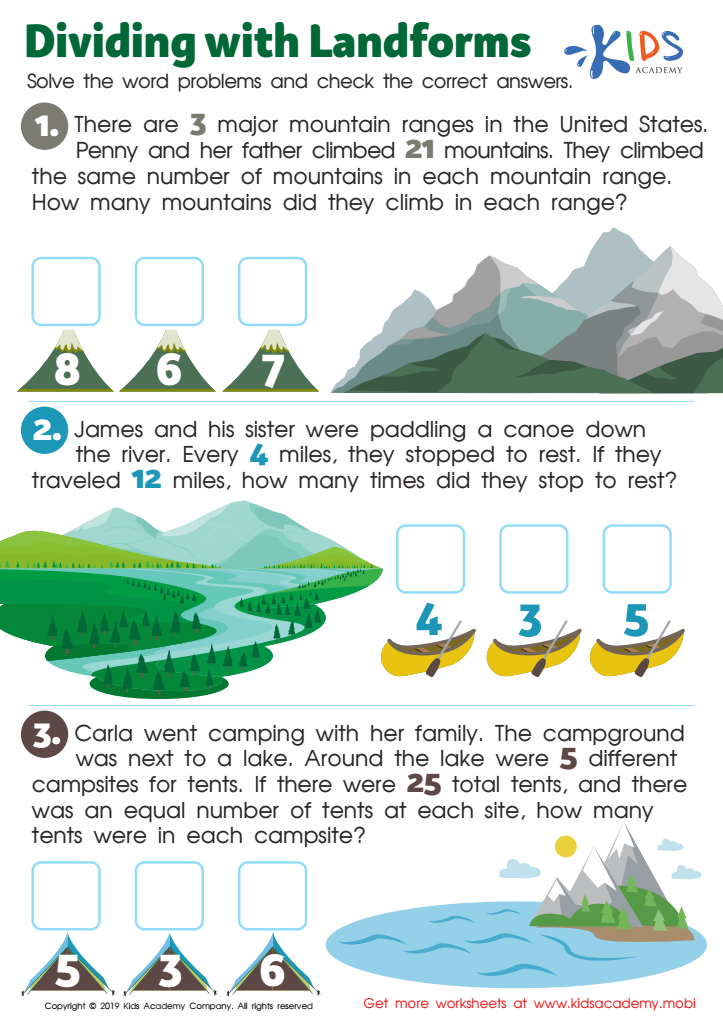
Dividing with Landforms
Mixing subjects to help your child learn is always nice. This worksheet combines landforms, problem-solving and division. The PDF highlights numbers, uses bold colors and provides pictures to help your child understand the questions and answer choices, making them feel empowered, not intimidated.
Dividing with Landforms
Worksheet
Join Kids Academy for Free
Who is primarily going to use this learning content?





Understanding landforms is crucial for both parents and teachers as it enhances children's awareness of our planet and environment. Landforms—such as mountains, valleys, rivers, and plateaus—play a significant role in shaping ecosystems, climate, and human activity. By learning about these natural features, students develop a greater appreciation for the Earth's diversity and complexity, fostering a sense of responsibility toward environmental conservation.
Furthermore, landforms are tied to cultural identities and histories, enriching students' knowledge of geography and social studies. Recognizing how landforms influence settlement patterns, agriculture, and economic activities helps students make real-world connections. For parents, engaging in discussions about landforms promotes curiosity and critical thinking in their children, encouraging exploration and discovery beyond the classroom.
Additionally, teaching landforms can inspire students to consider careers in environmental science, geology, or conservation. It equips them with problem-solving skills crucial for addressing global issues like climate change and sustainable development. Overall, by prioritizing an understanding of landforms, parents and teachers nurture informed, engaged citizens who can contribute positively to society and advocate for a healthier planet. Emphasizing this knowledge is vital for developing environmentally conscious future leaders.







