Understanding life cycles Plants and Animals Worksheets
6 filtered results
-
From - To
Explore the fascinating world of life cycles with our "Understanding Life Cycles: Plants and Animals Worksheets." Designed for early learners, these engaging worksheets provide a fun and interactive way to discover how plants and animals grow, reproduce, and change over time. Cover essential concepts such as germination, metamorphosis, and life stages through various activities, including diagrams, matching exercises, and coloring pages. Perfect for home or classroom use, these resources foster critical thinking and a deeper appreciation for nature’s processes. Help your students thrive with hands-on learning and ignite their curiosity about the beautiful cycles of life around them!
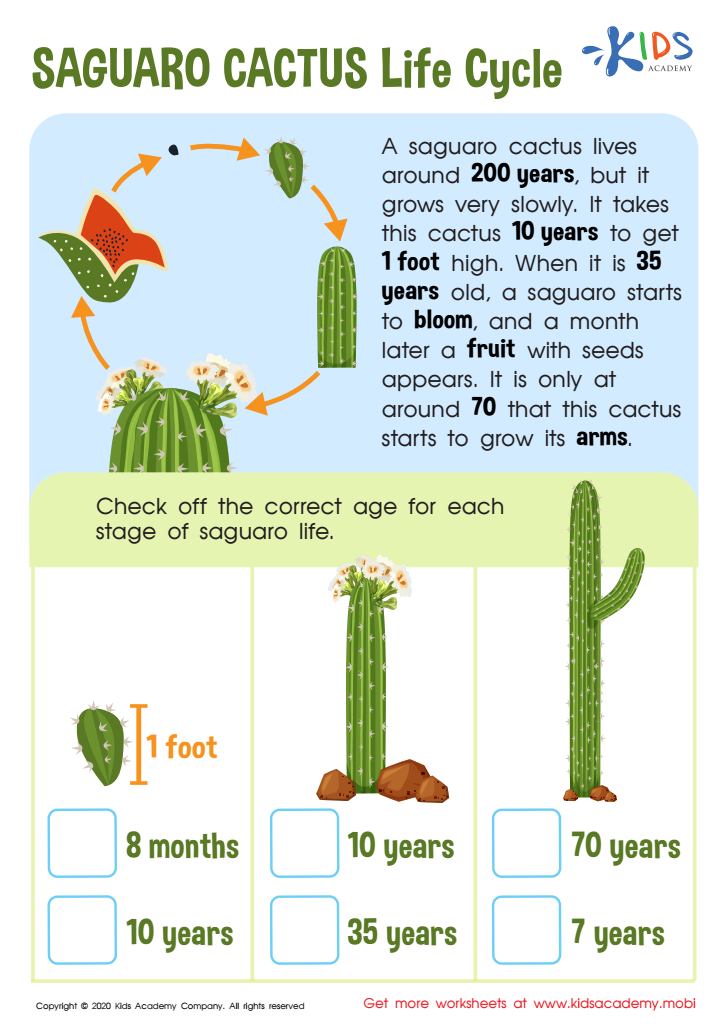
Saguaro Cactus Life Cycle Worksheet
 Assign to My Students











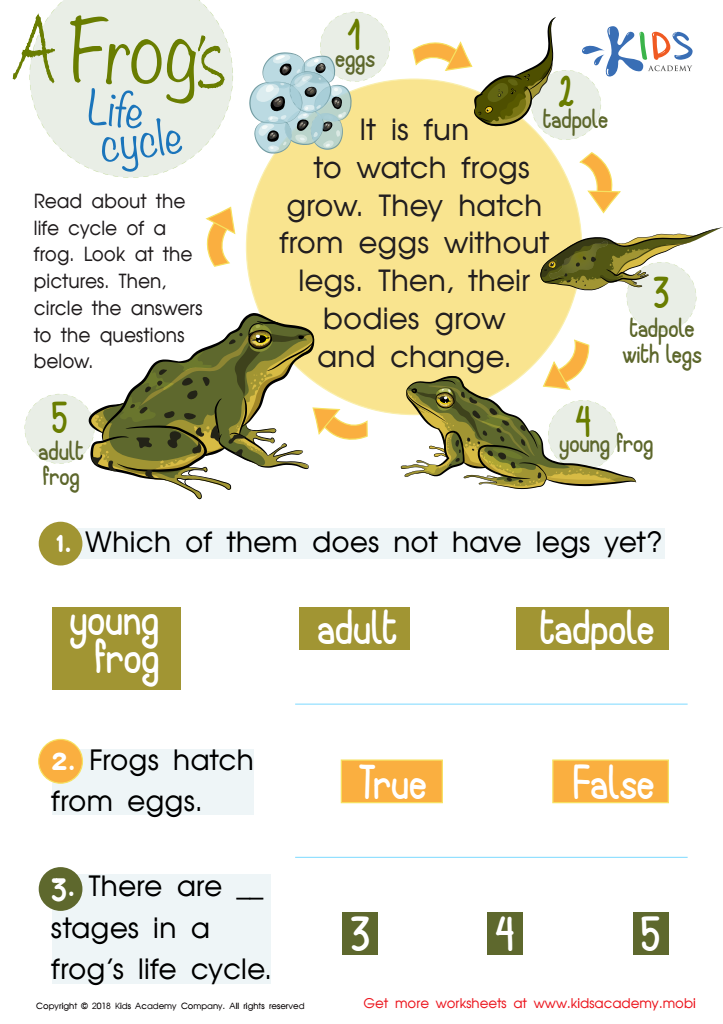
A Frog’s Life Cycle Worksheet
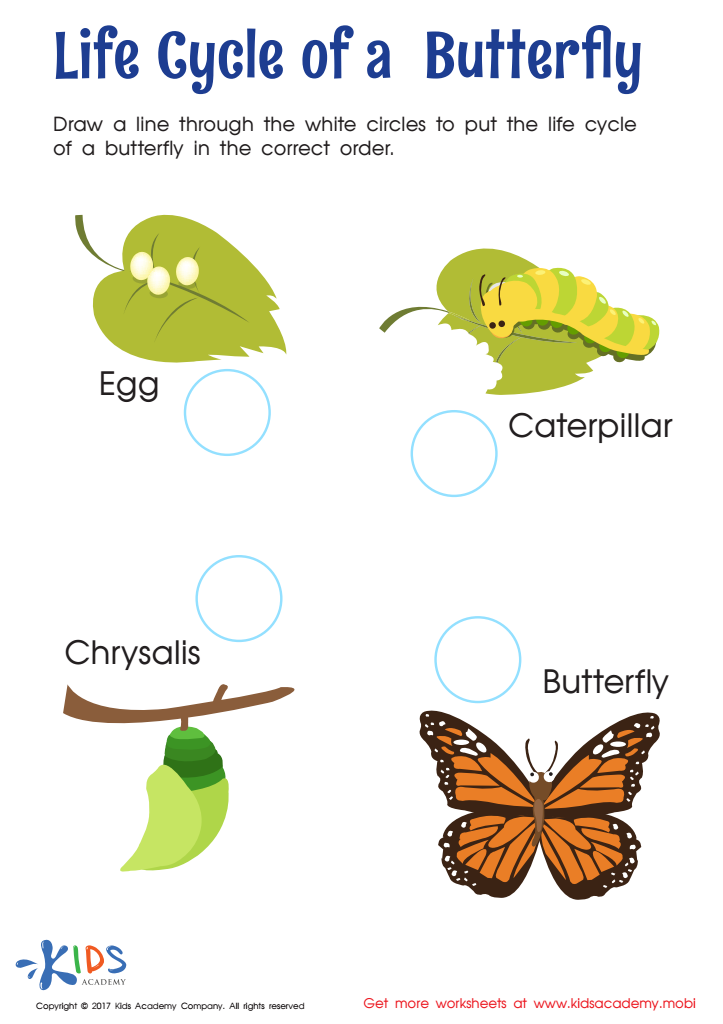
Life Cycle of Butterfly Worksheet
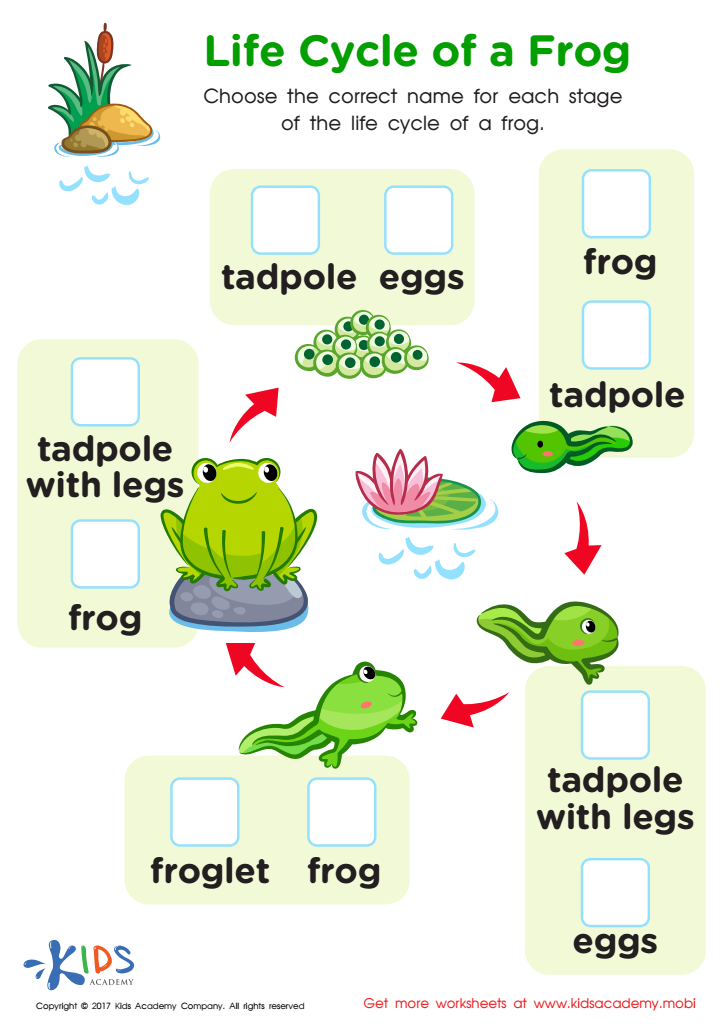
Life Cycle Frog Printable
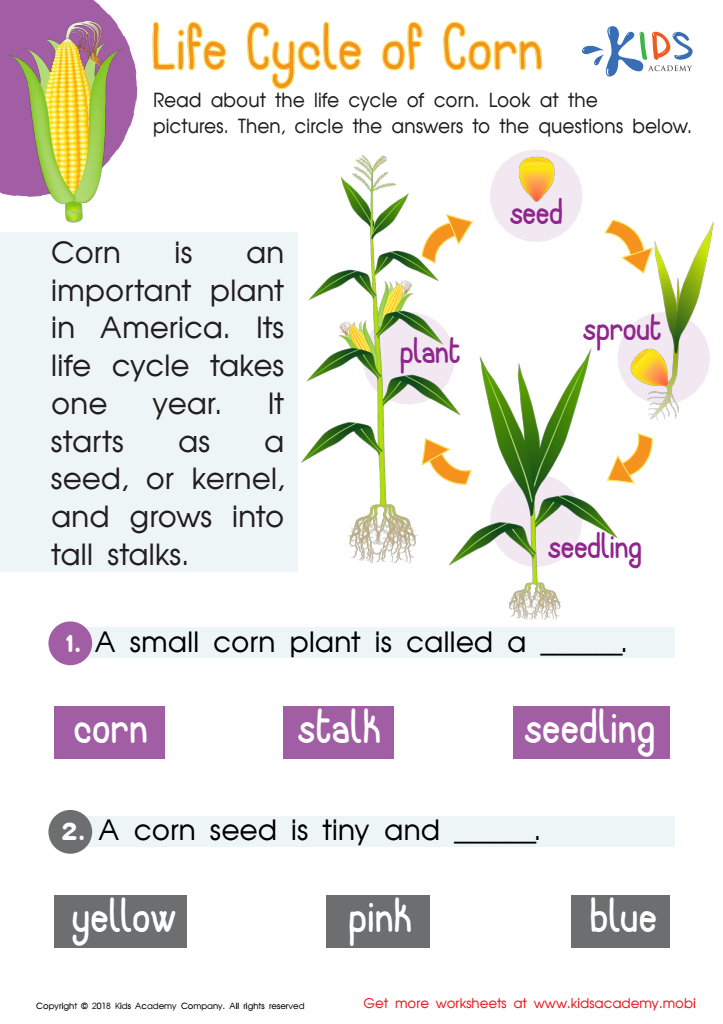
Life Cycle of Corn Worksheet
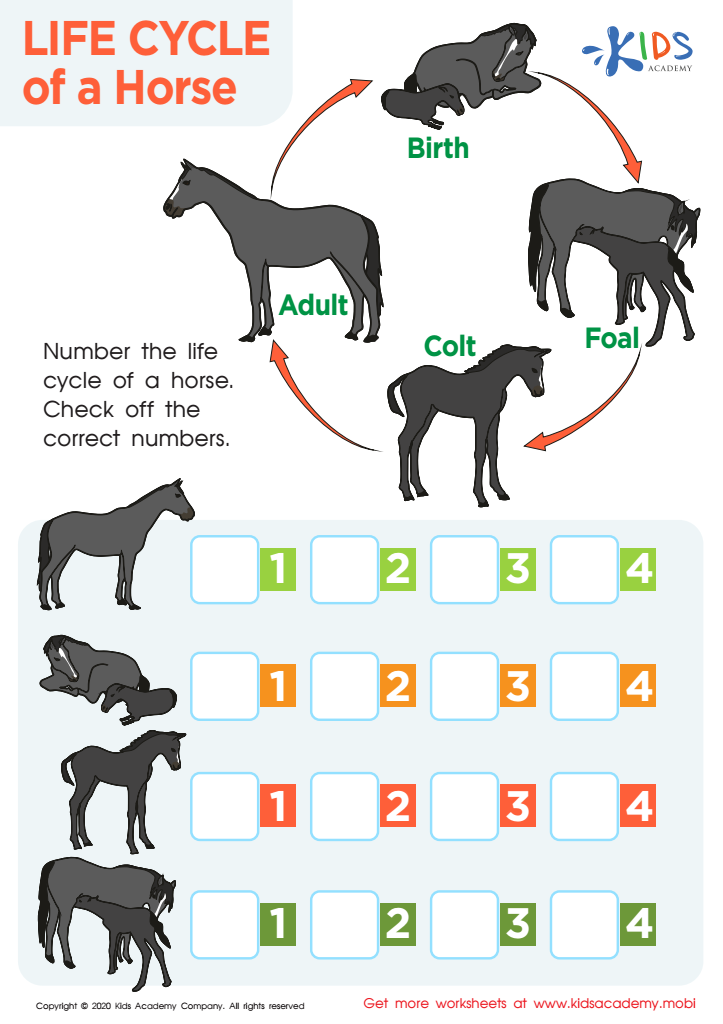
Life Cycle of a Horse Worksheet







Understanding the life cycles of plants and animals is crucial for both parents and teachers as it fosters a deeper appreciation for nature and encourages a sense of responsibility in children. Knowledge of life cycles helps children grasp fundamental concepts about growth, change, and biodiversity. This understanding lays the foundation for empathy towards living organisms and awareness of their interconnectedness within ecosystems.
Moreover, teaching children about life cycles aligns with essential scientific principles such as observation, inquiry, and critical thinking. Engaging in activities that illustrate these processes—like observing caterpillars transform into butterflies or planting seeds and watching them grow—not only reinforces these concepts but also enhances learning through experiential and hands-on opportunities.
Additionally, as environmental issues arise globally, understanding life cycles emphasizes the importance of conservation and sustainability. Children learn how their actions can impact ecosystems and the vital role each species plays in the environment.
By integrating lessons about life cycles in education, or at home, parents and teachers promote lifelong learning and curiosity, equipping children with knowledge and skills for responsible citizenship in a diverse world. Ultimately, books, discussions, and direct experiences related to life cycles cultivate thoughtful stewards of our planet for future generations.








