Understanding pollination Plants and Animals Worksheets
3 filtered results
-
From - To
Explore our "Understanding Pollination: Plants and Animals Worksheets," designed to engage young learners in the fascinating world of pollination. These worksheets provide a comprehensive overview of how plants and animals interact through this vital process. Students will enjoy hands-on activities, coloring exercises, and informative illustrations that deepen their understanding of pollinators like bees, butterflies, and birds. With adaptable difficulty levels, these printable resources cater to various learning styles, making them perfect for classrooms or home study. Foster your students’ appreciation for nature and the environment while enhancing their scientific skills with our interactive pollination worksheets today!
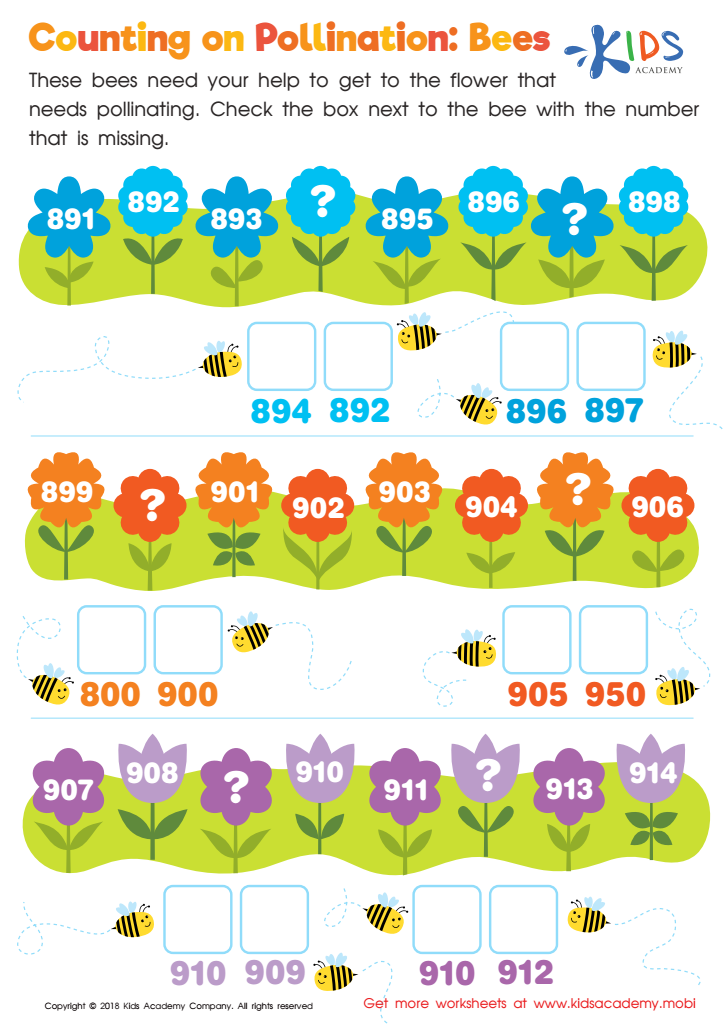
Counting on Pollination: Bees Worksheet
 Assign to My Students











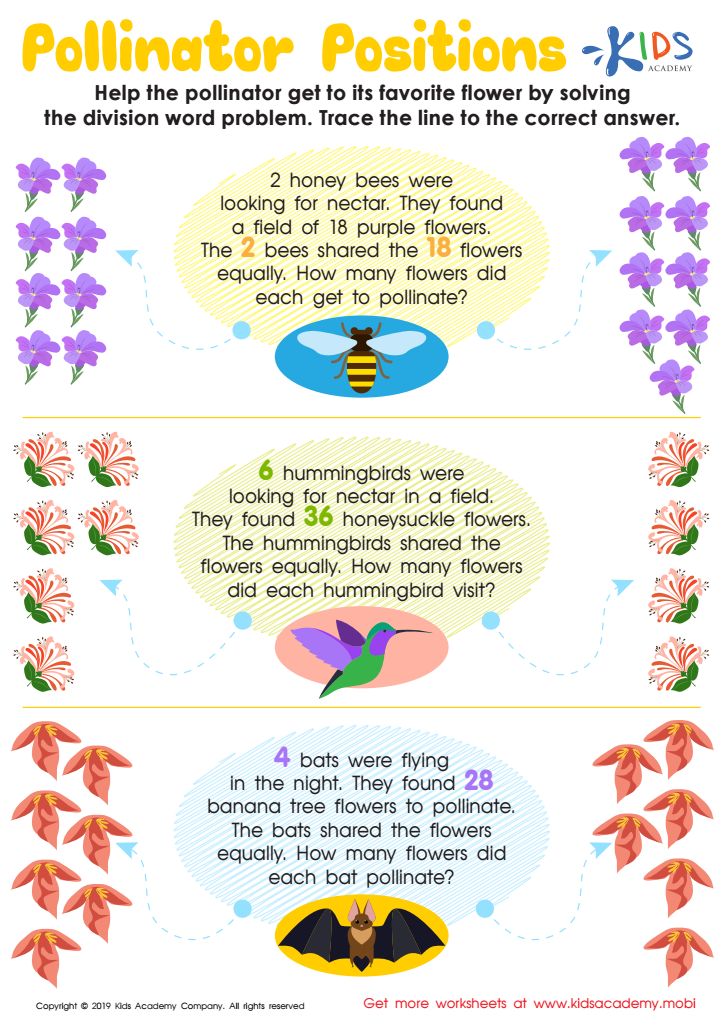
Pollinator Positions Worksheet
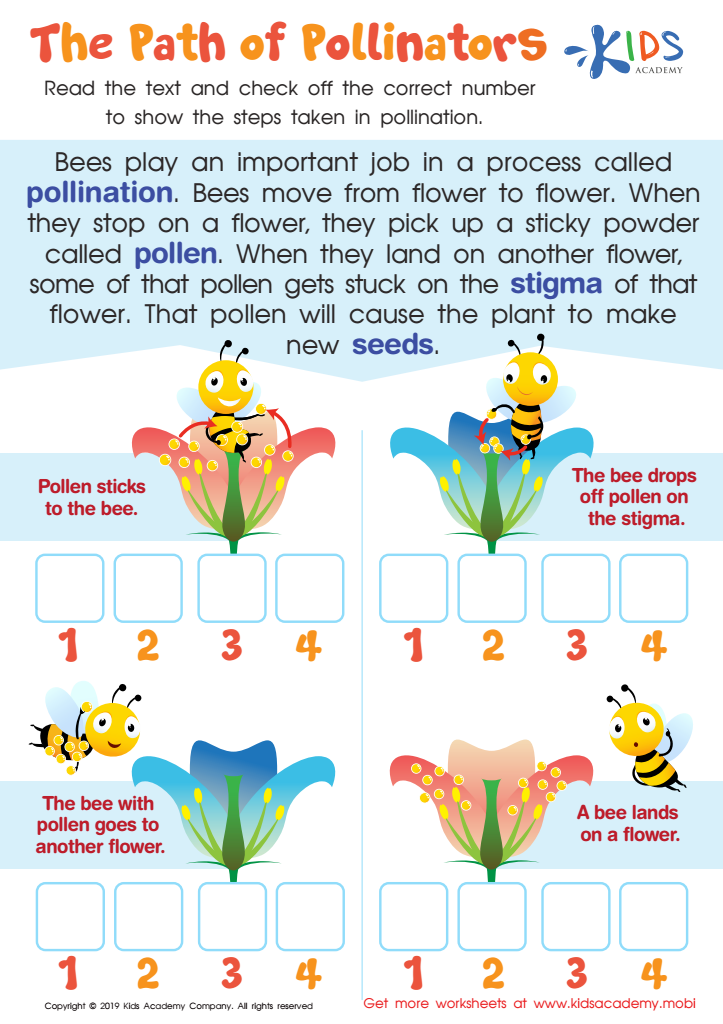
The Path of Pollinators Worksheet







Understanding pollination is crucial for both parents and teachers because it instills appreciation of the interconnectedness of nature and the essential role that plants and animals play in our ecosystem. Pollination, the process by which pollen is transferred between flowers, is vital for the reproduction of over 75% of flowering plants, including many fruits and vegetables we depend on for food.
Educating children about this process fosters environmental stewardship and awareness of biodiversity. When young learners grasp how pollinators like bees, butterflies, and even birds affect food production and plant life, they become more informed about the importance of protecting these creatures and their habitats.
Additionally, understanding pollination offers opportunities for hands-on learning, promoting curiosity, critical thinking, and responsibility in children. It encourages discussions about sustainability, agriculture, and the challenges that pollinators face, such as pesticides, habitat loss, and climate change.
By embedding this knowledge into education, parents and teachers support the development of a new generation equipped to advocate for the planet. Ultimately, recognizing the significance of pollination can inspire both children and adults to engage in practices that promote ecological balance and enhance their connection to the environment.








