Filters

187 filtered results

Clear all filters
Favorites
With answer key
Interactive

187 filtered results

Difficulty Level

Grade


Check out this FREE Grade 2 "Problem-Solving Skills" Trial Lesson!

What Is Stalemate?

Favorites
With answer key
Interactive
  • Grade 2
  • Problem-Solving Skills
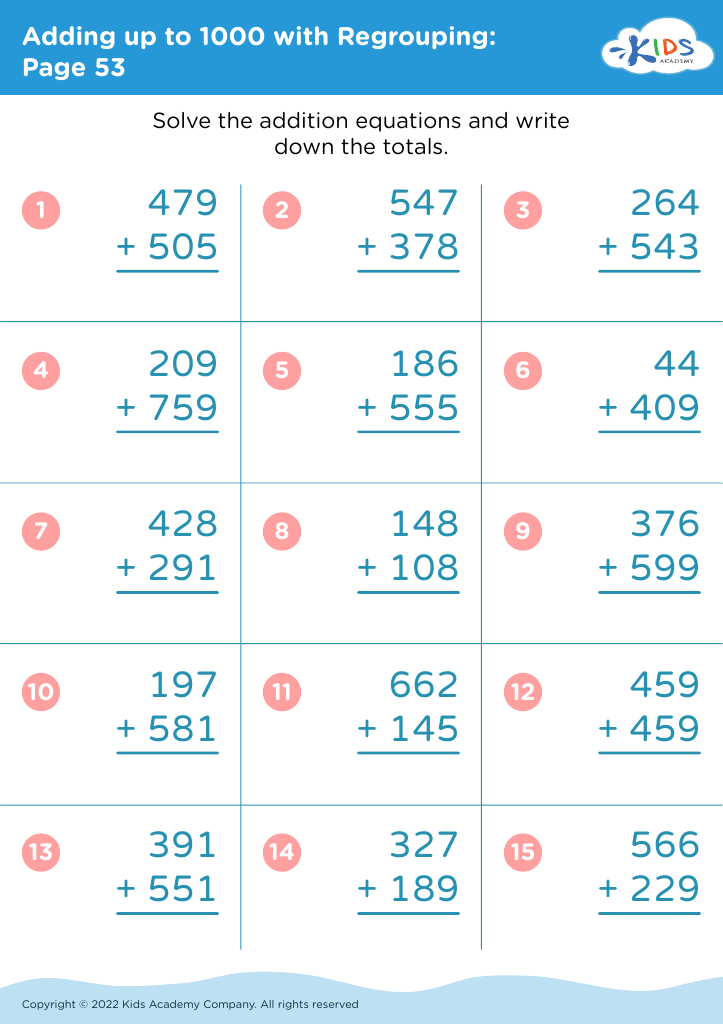
Adding up to 1000 with Regrouping: Page 53
Worksheet
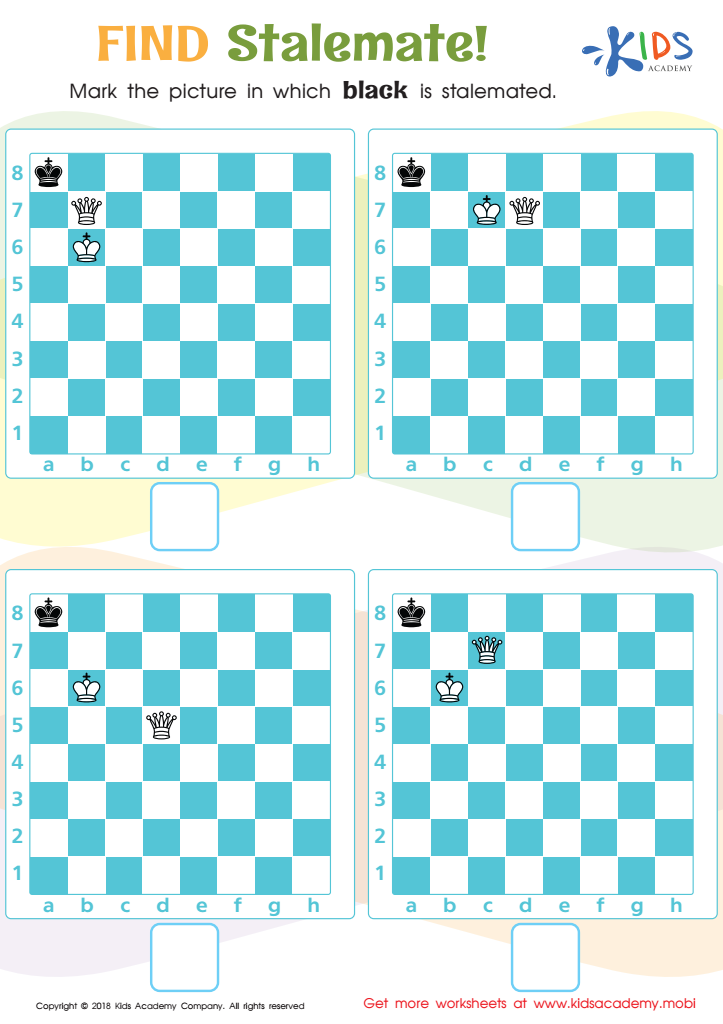
Find Stalemate! Worksheet

Find Stalemate! Worksheet

Teach your kids Chess and give them more than a hobby - equip them with critical thinking, rationale and problem-solving skills! This free worksheet helps them understand stalemates by examining various sample boards. By providing visual discernment and the joy of the game, your child's logical skills will soar!
Find Stalemate! Worksheet
Worksheet
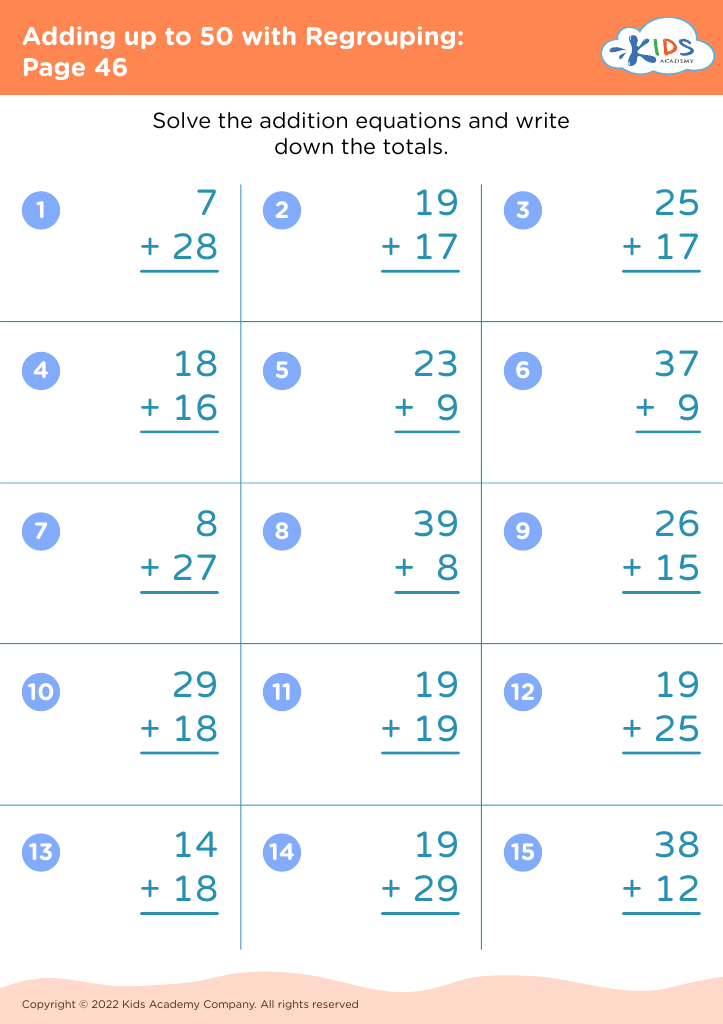
Adding up to 50 with Regrouping: Page 46
Worksheet
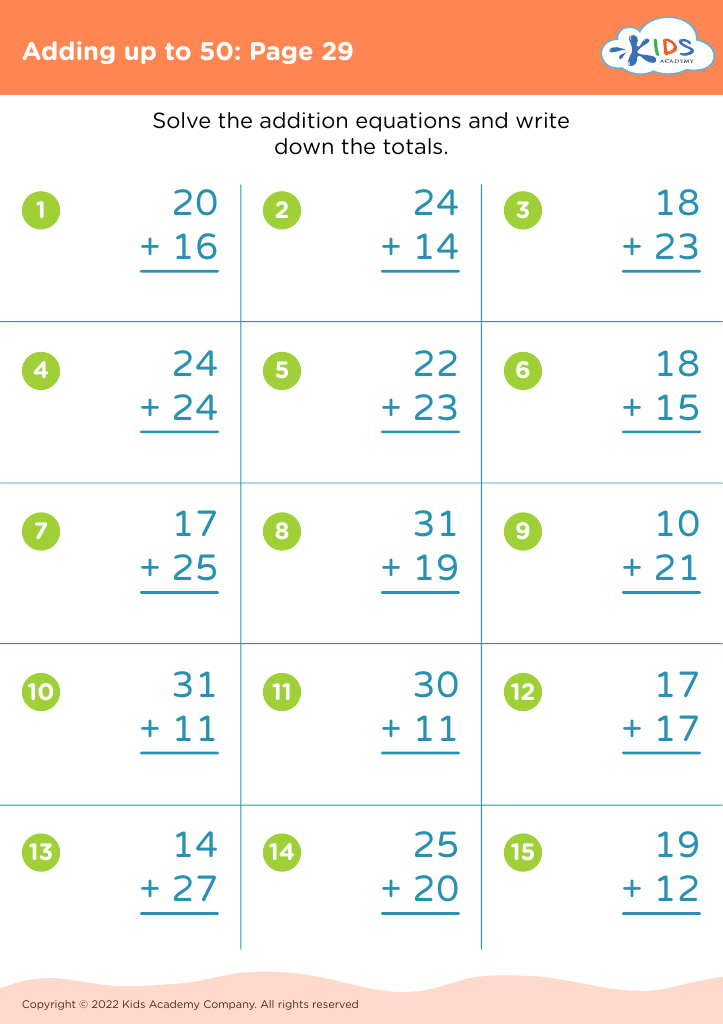
Adding up to 50: Page 29

Adding up to 50: Page 29

Adding up to 50: Page 29
Worksheet
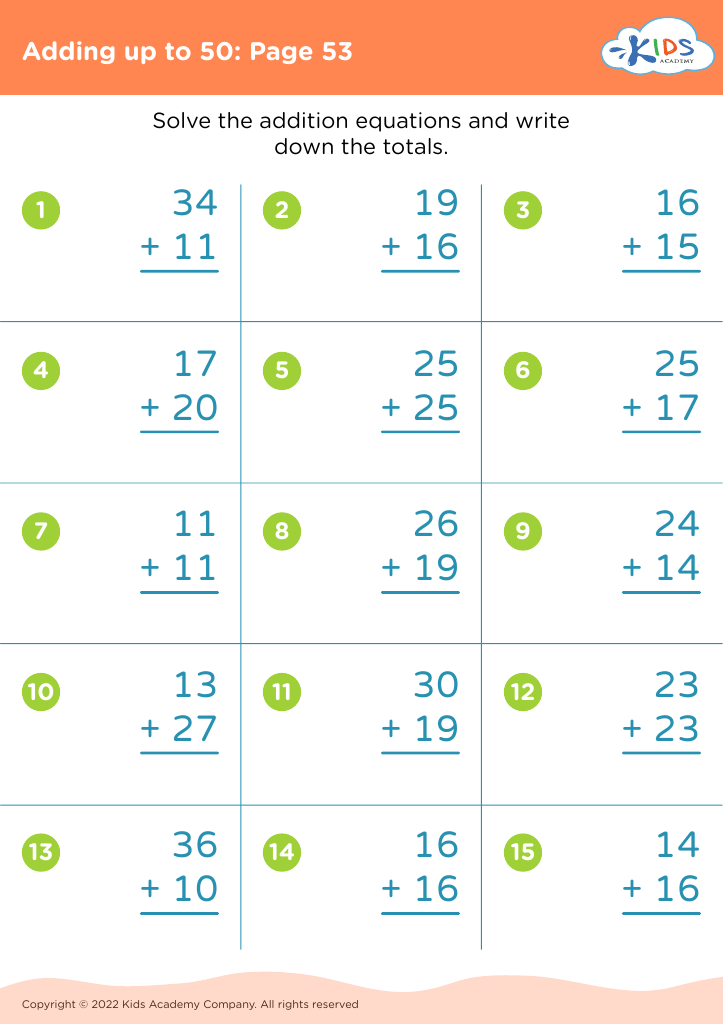
Adding up to 50: Page 53

Adding up to 50: Page 53

Adding up to 50: Page 53
Worksheet
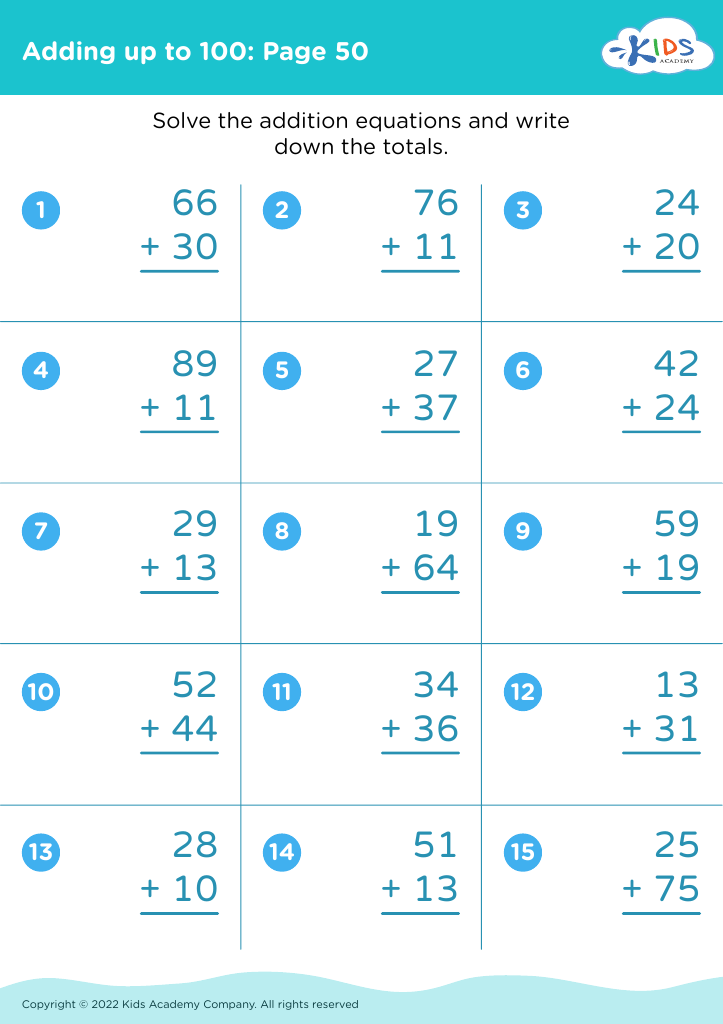
Adding up to 100: Page 50

Adding up to 100: Page 50

Adding up to 100: Page 50
Worksheet
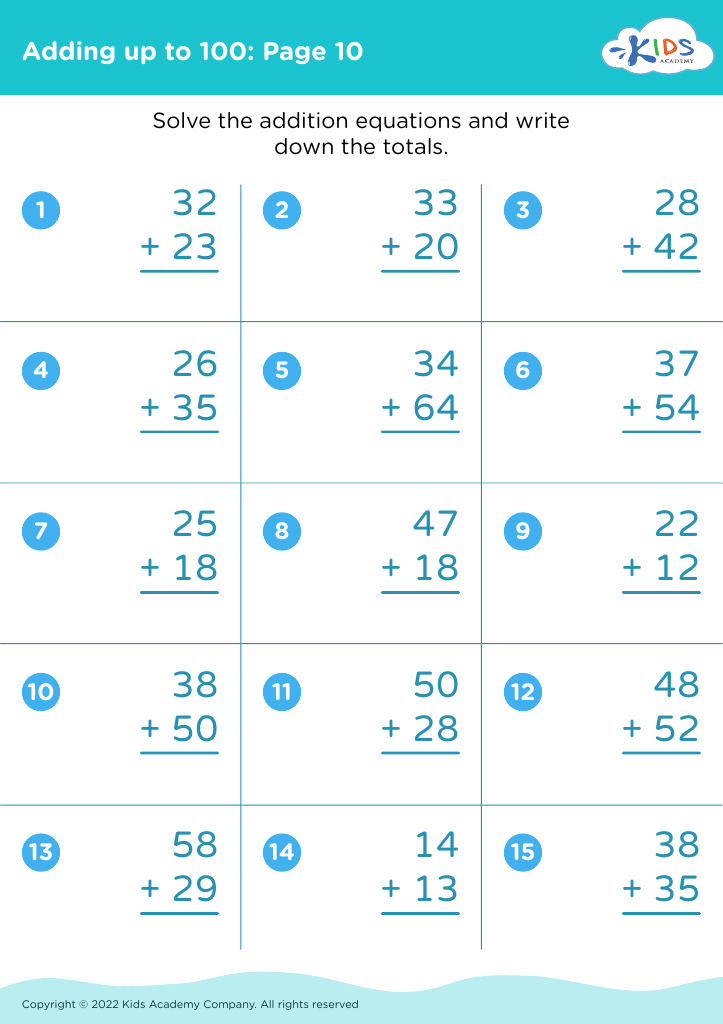
Adding up to 100: Page 10

Adding up to 100: Page 10

Adding up to 100: Page 10
Worksheet
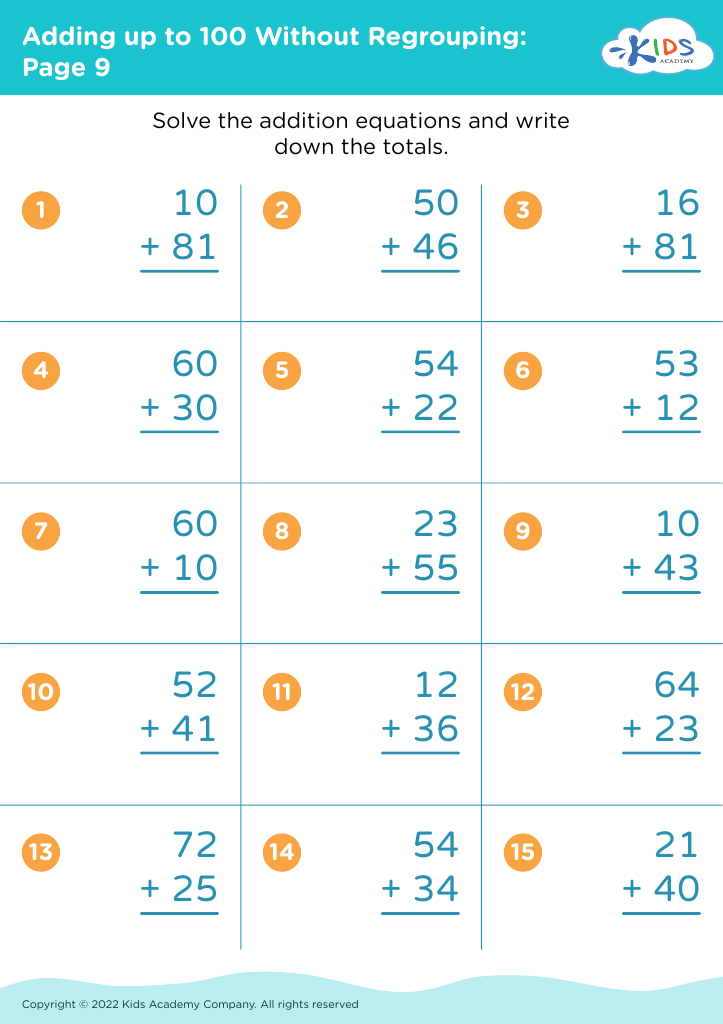
Adding up to 100 Without Regrouping: Page 9
Worksheet
Worksheet: subtraction word problems

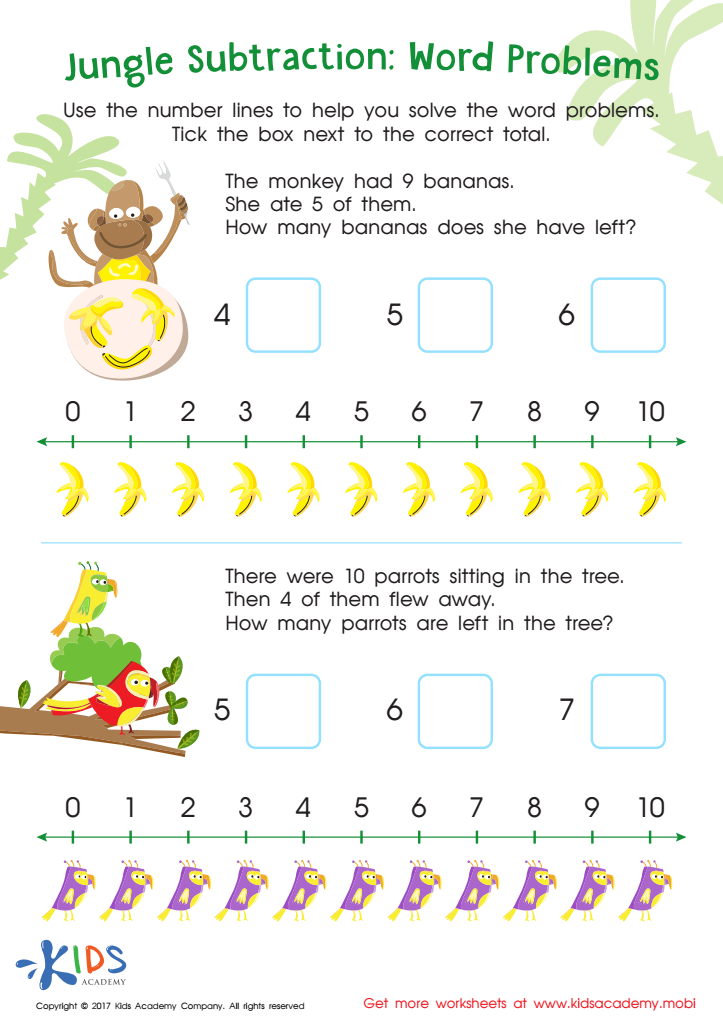
Jungle Subtraction Word Problems Substraction Worksheet
Kids will love this jungle-themed worksheet: subtraction word problems! Help the monkey work out how many bananas he has, using the number line. Encourage your child to use colorful parrots to subtract with ease and make calculations fun!
Jungle Subtraction Word Problems Substraction Worksheet
Worksheet
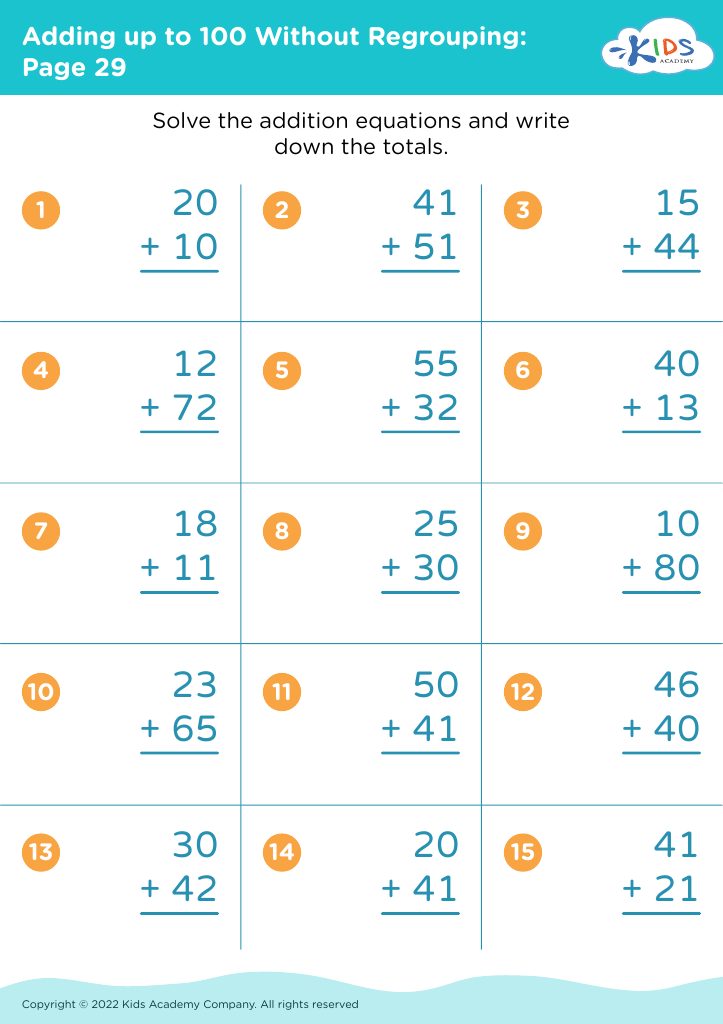
Adding up to 100 Without Regrouping: Page 29
Worksheet
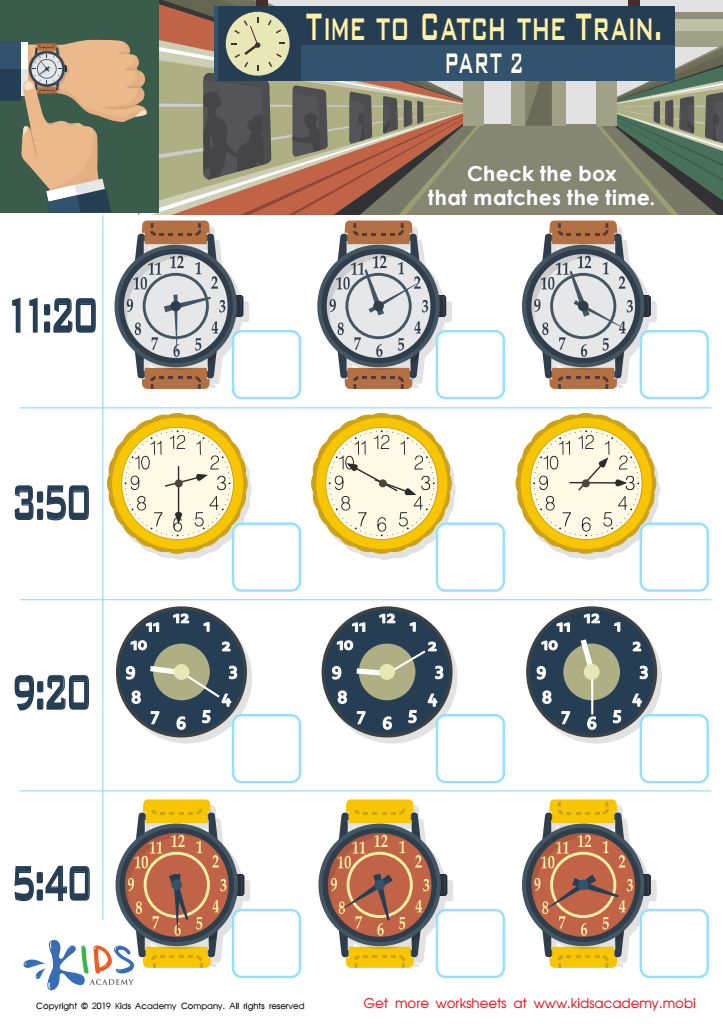
Time to Catch the Train Part 2 Worksheet
Time to Catch the Train Part 2 Worksheet
Teach your kids the importance of telling time and how to do it. Explain that there are multiple ways to show the time, such as written on the left side or watches in the picture. Guide them to check the box that matches the time. Knowing the time is essential to get things done and create order. Ensure your kids understand this and they will reap the benefits.
Time to Catch the Train Part 2 Worksheet
Worksheet
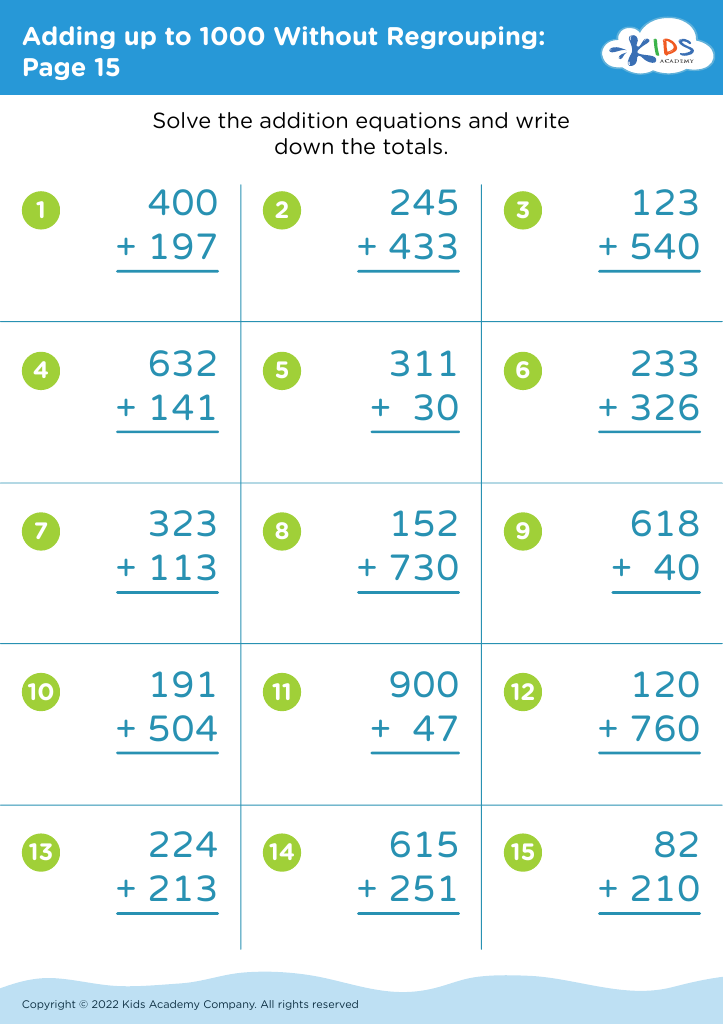
Adding up to 1000 Without Regrouping: Page 15
Worksheet
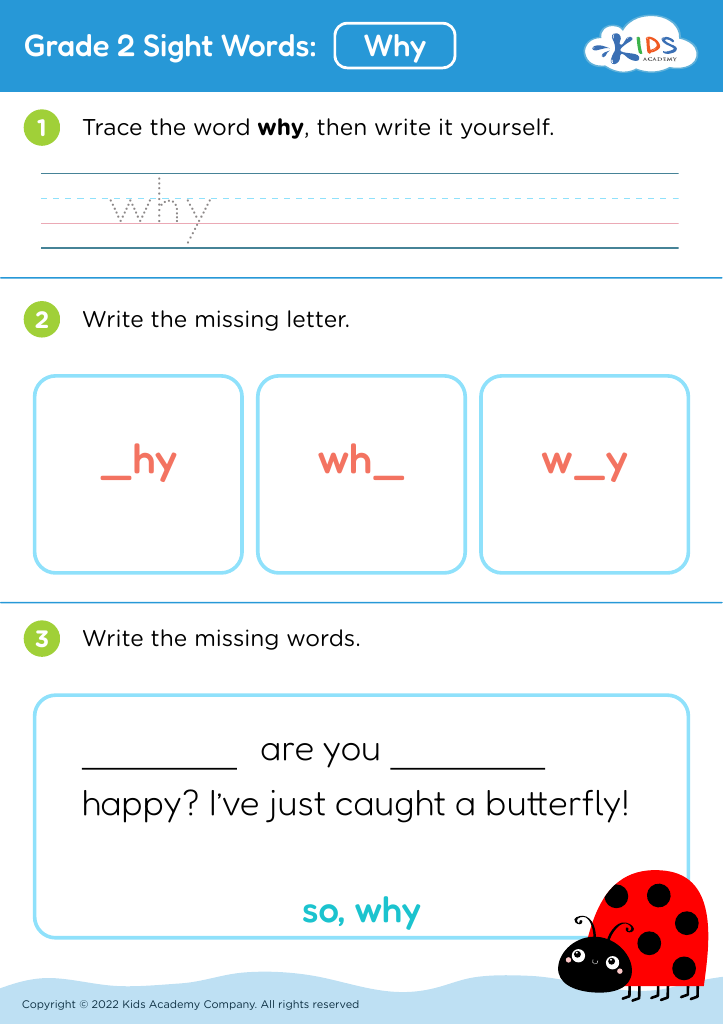
Grade 2 Sight Words: Why

Grade 2 Sight Words: Why

Grade 2 Sight Words: Why
Worksheet
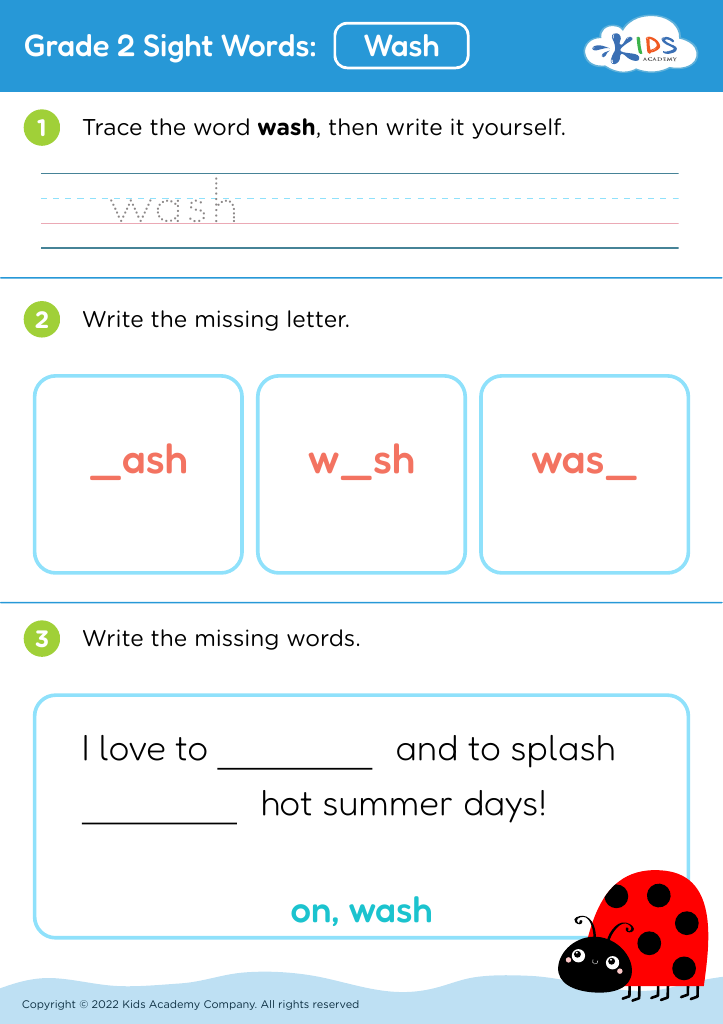
Grade 2 Sight Words: Wash

Grade 2 Sight Words: Wash

Grade 2 Sight Words: Wash
Worksheet
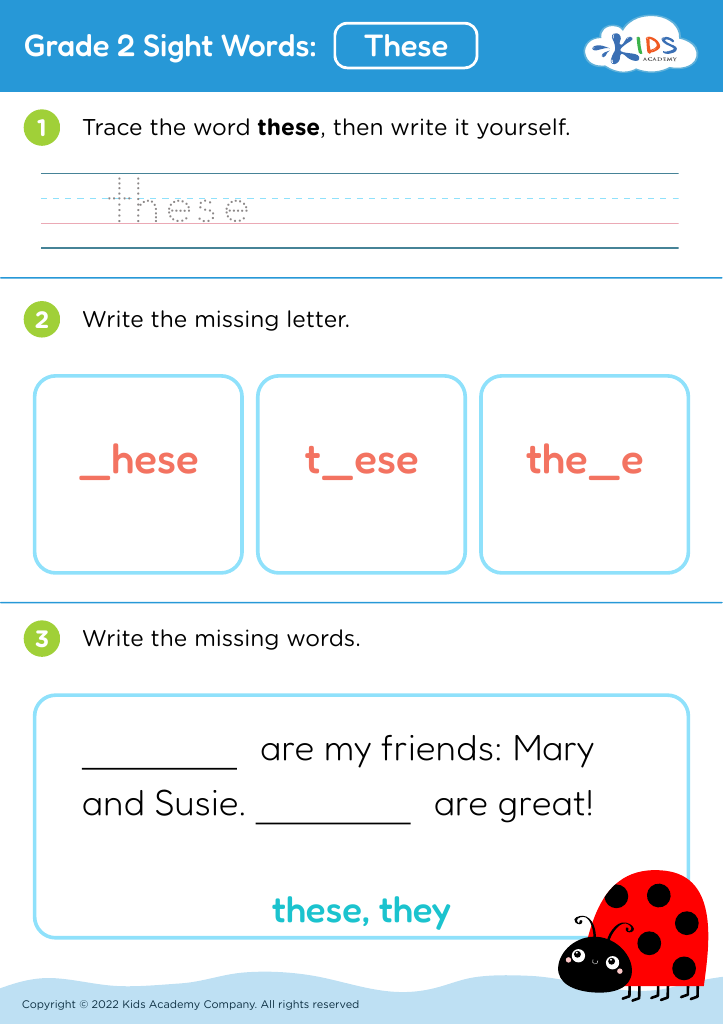
Grade 2 Sight Words: These

Grade 2 Sight Words: These

Grade 2 Sight Words: These
Worksheet
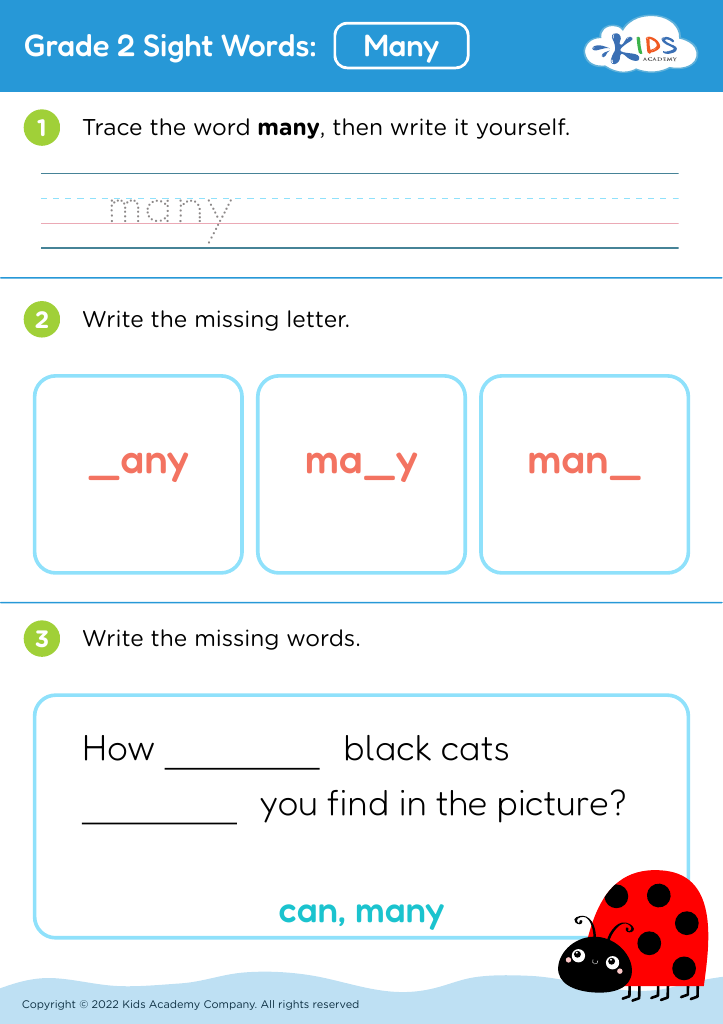
Grade 2 Sight Words: Many

Grade 2 Sight Words: Many

Grade 2 Sight Words: Many
Worksheet
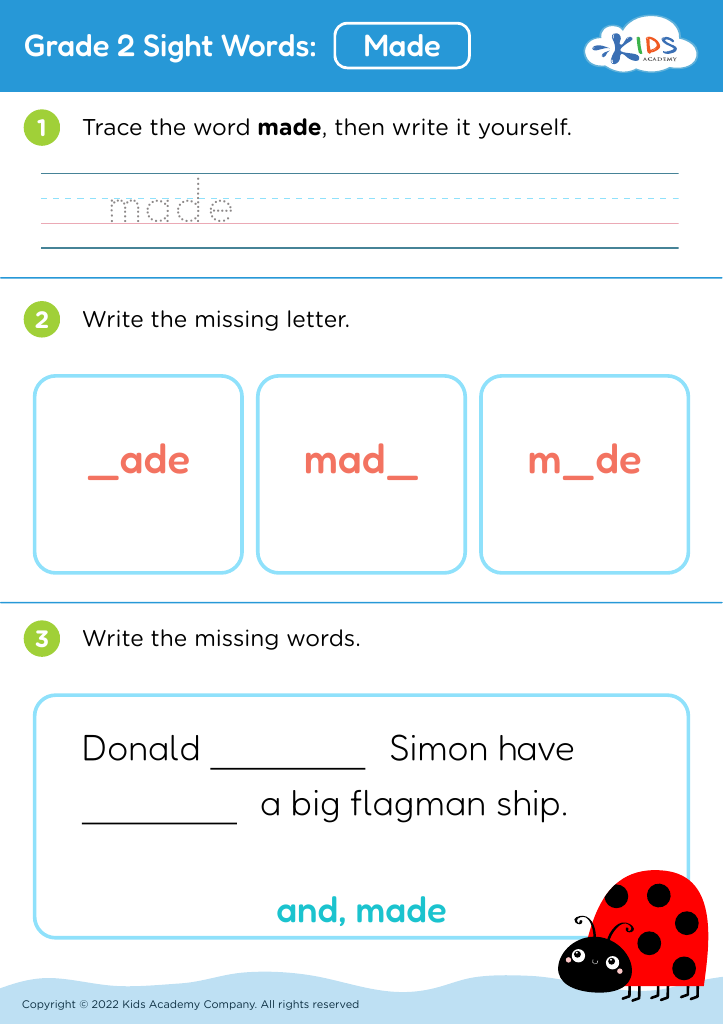
Grade 2 Sight Words: Made

Grade 2 Sight Words: Made

Grade 2 Sight Words: Made
Worksheet
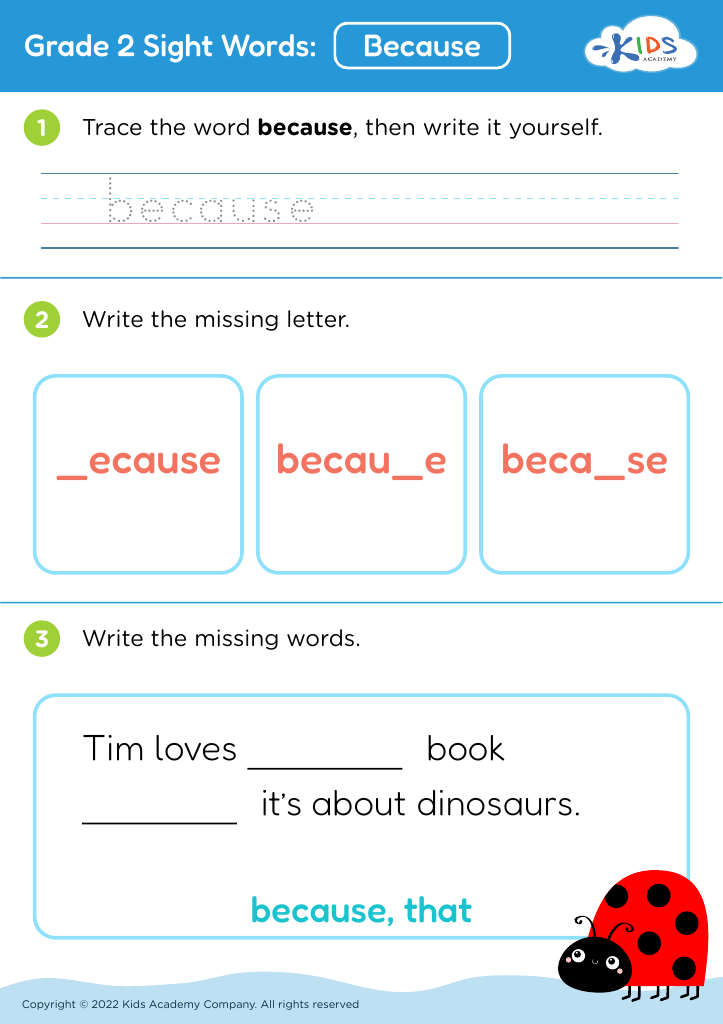
Grade 2 Sight Words: Because

Grade 2 Sight Words: Because

Grade 2 Sight Words: Because
Worksheet
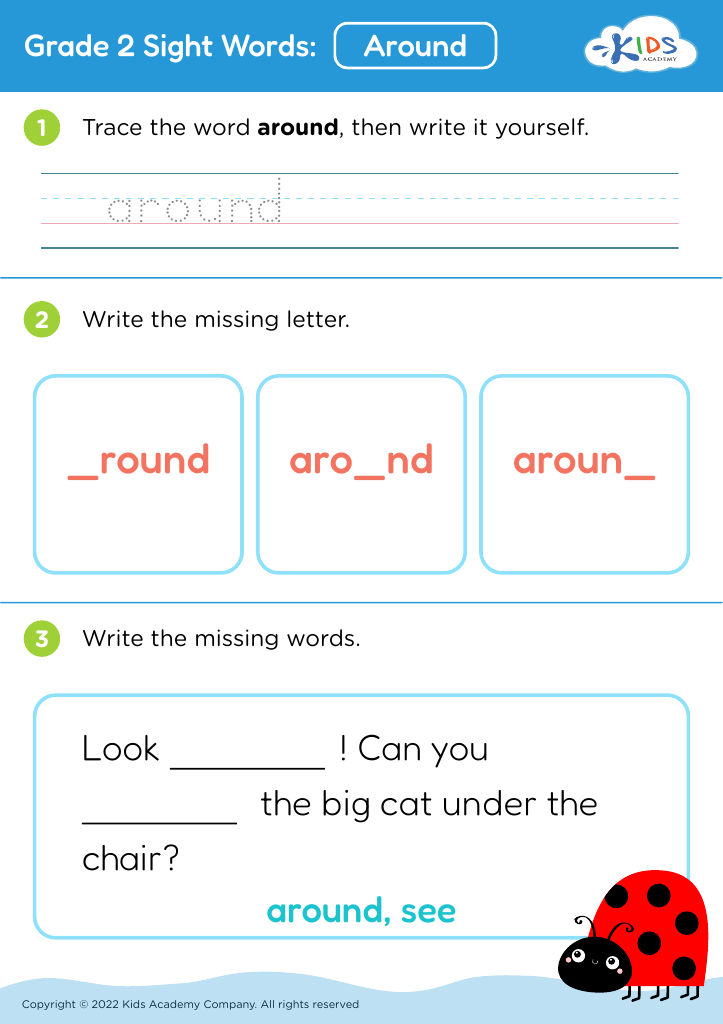
Grade 2 Sight Words: Around

Grade 2 Sight Words: Around

Grade 2 Sight Words: Around
Worksheet


... 7 8

Parents and teachers should deeply care about developing problem-solving skills in Grade 2 students because these skills form a crucial foundation for future academic and life success. At this formative age, children are naturally curious and open to learning new concepts. Problem-solving skills promote critical thinking, allowing children to approach challenges methodically and creatively. By enhancing their ability to assess situations, make decisions, and implement solutions, youngsters become more independent and resilient learners.

Integrating problem-solving into early education also supports cognitive development by encouraging logical reasoning and improving concentration. These skills are transferable across subjects, enriching a child’s abilities in math, science, reading, and social situations. For example, a second grader who is adept at solving puzzles will be better equipped to tackle complex math problems or understand a narrative’s structure.

Moreover, problem-solving skills contribute to emotional growth by teaching children how to handle frustration and setbacks effectively. They learn persistence and resilience, which are essential qualities for both academic and personal success. As children develop these skills, they gain confidence, aiding in their overall development and well-being. Therefore, by focusing on problem-solving skills in Grade 2, parents and teachers help lay a solid foundation for lifelong learning and adaptability.