Understanding multiplication Grade 2 Worksheets
25 filtered results
Difficulty Level
Grade
Age
-
From - To
Subject
Activity
Standards
Explore our "Understanding Multiplication Grade 2 Worksheets" to help your child master this essential math skill! Designed specifically for second graders, these engaging worksheets introduce multiplication concepts in a fun and interactive way. Your child will work through various exercises that enhance their understanding of repeated addition, arrays, and equal groups, setting a strong foundation for future math success. With colorful visuals and easy-to-follow instructions, our worksheets make learning multiplication enjoyable and effective. Perfect for classroom use or home practice, these resources encourage independent learning while building confidence in math abilities. Start your child’s multiplication journey today!
Favorites
With answer key
Interactive
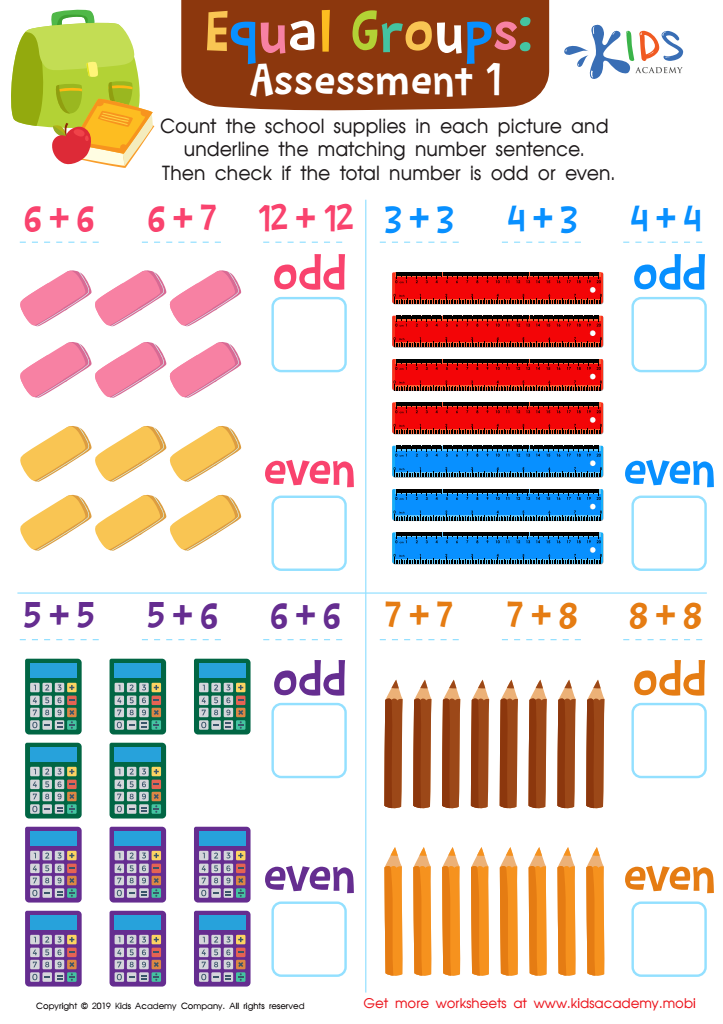
Equal Groups: Assessment 1 Worksheet
Have your students count the school supplies in each picture. Underline the number sentence that matches. Ask them if the total number is odd or even. Help your eager little preschoolers explore their classroom, which is full of pencils, chairs, desks, a blackboard and the teacher's desk.
 Assign to My Students
Equal Groups: Assessment 1 Worksheet
Worksheet
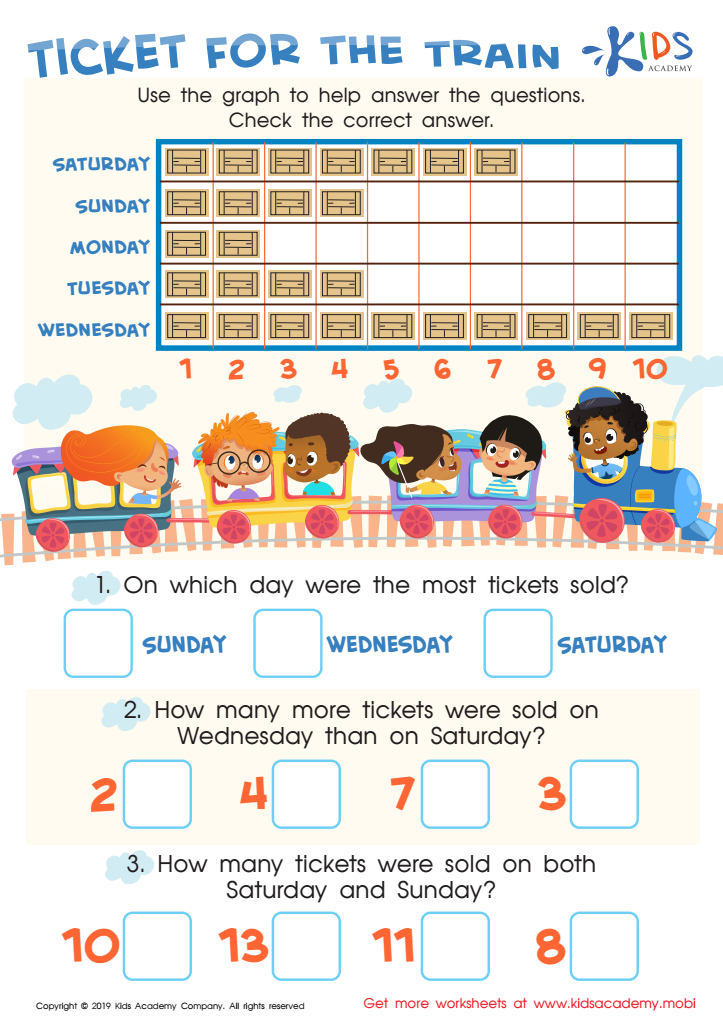
Ticket for the Train Worksheet
It's important to use fun scenarios with familiar objects when teaching kids. Try discussing train rides and the accompanying picture graph. Ask questions about it, then help kids check the correct answers. Let them enjoy the learning process!
Ticket for the Train Worksheet
Worksheet
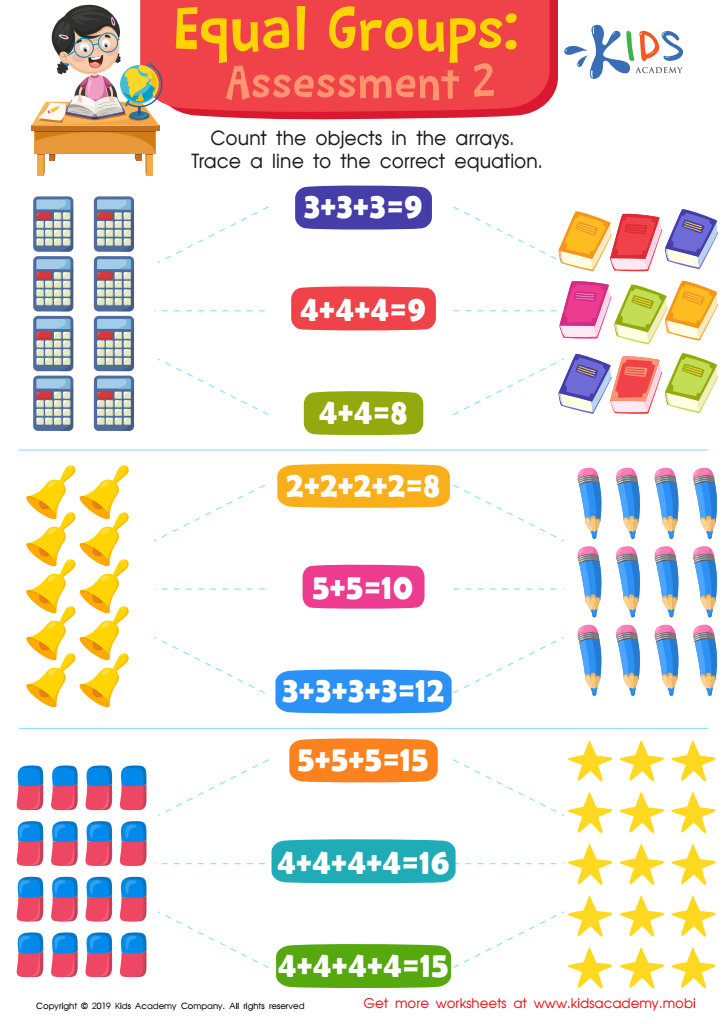
Equal Groups: Assessment 2 Worksheet
Get your kids to pay attention to learning with familiar objects, bright colors, and this worksheet. It has six arrays - ask kids to identify them and count the objects. Then, help them trace a line to the correct equation.
Equal Groups: Assessment 2 Worksheet
Worksheet
Join Kids Academy for Free
Who is primarily going to use this learning content?






Understanding multiplication in Grade 2 is crucial for young learners as it lays the foundation for their future mathematical skills. At this stage, children transition from simple addition and grouping concepts to more complex mathematical operations. Grasping multiplication helps students relate these concepts to real-life situations, such as sharing items equally or calculating quantities in daily activities.
Moreover, multiplication is a gateway skill that significantly impacts a child's ability to tackle fractions, division, and higher-level math in subsequent grades. It enhances critical thinking and problem-solving abilities, which are essential not just in mathematics but across all subjects.
For parents and teachers, fostering a solid understanding of multiplication can boost children's confidence and motivation. Engaging them through interactive activities and contextual examples makes learning enjoyable and relatable. Early mastery of multiplication also aids in reducing math anxiety as students progress, as they will be better equipped to face more complex challenges in later grades.
Ultimately, emphasizing multiplication in a supportive and engaging environment encourages a lifelong appreciation of math, empowering children to become confident learners and capable problem solvers in their academic journeys and beyond.