
Event sequencing Social Studies Worksheets
3 filtered results
Difficulty Level
Grade
Age
-
From - To
Subject
Activity
Standards
Discover our engaging Event Sequencing Social Studies Worksheets designed to help young learners master the essential skill of organizing events chronologically. These worksheets offer a fun and interactive way for students to develop their understanding of timelines and the order of historical events. Ideal for early grades, our resources include visually appealing activities that facilitate learning through drawing, matching, and arranging events. By using these worksheets, children will enhance their critical thinking and sequential reasoning abilities, preparing them for more complex historical concepts. Explore our collection today and enrich your teaching toolkit with effective, skill-building materials!
Favorites
With answer key
Interactive
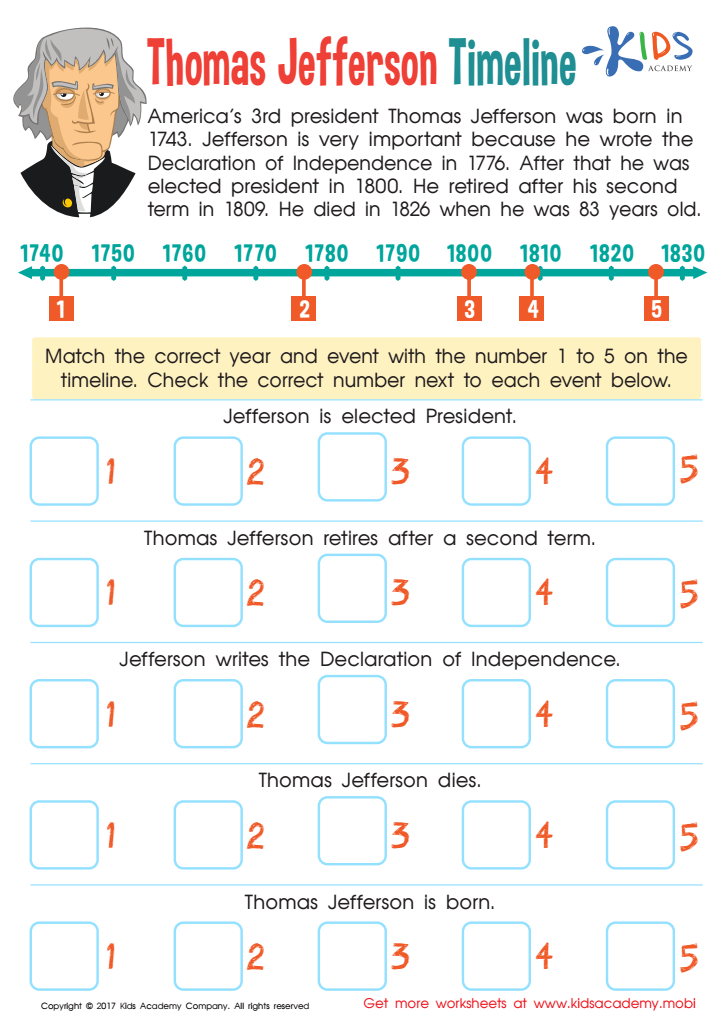
Thomas Jefferson Timeline Worksheet
Check your child's reading comprehension and knowledge of US history with this Thomas Jefferson timeline worksheet! Have them read the paragraph to learn about him, then use what they've read to fill in the timeline.
 Assign to My Students
Thomas Jefferson Timeline Worksheet
Worksheet
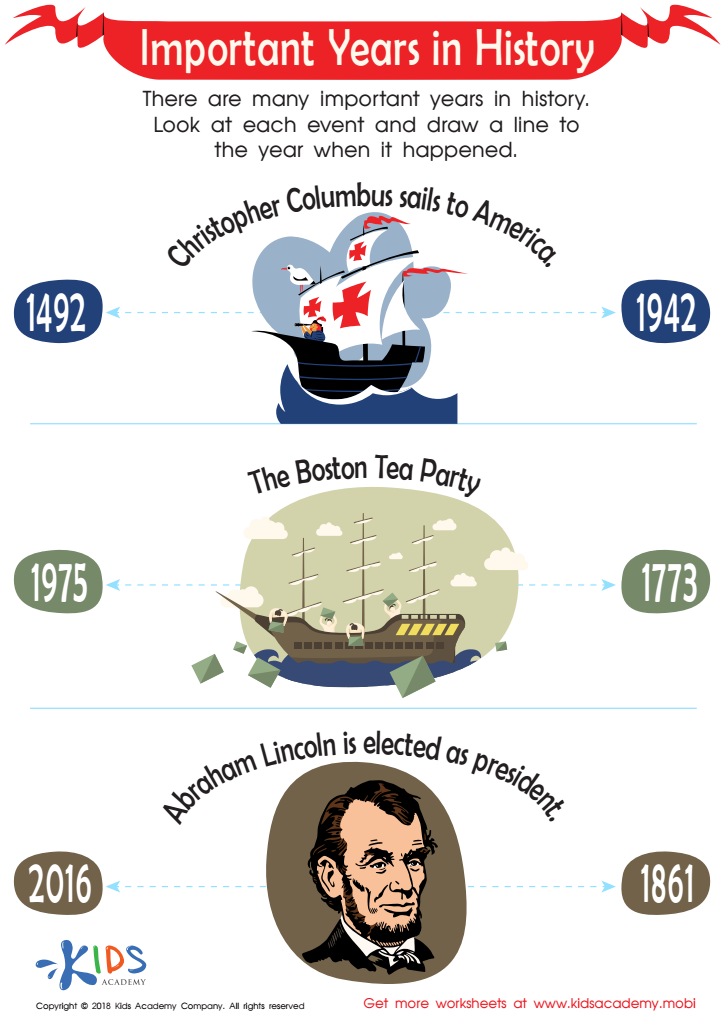
Important Years in History Worksheet
Ask your students if they can name any important dates in history. Then, look at the images in the worksheet with them. Read the sentences above each one to them and have them trace a line to the year when the event occurred.
Important Years in History Worksheet
Worksheet
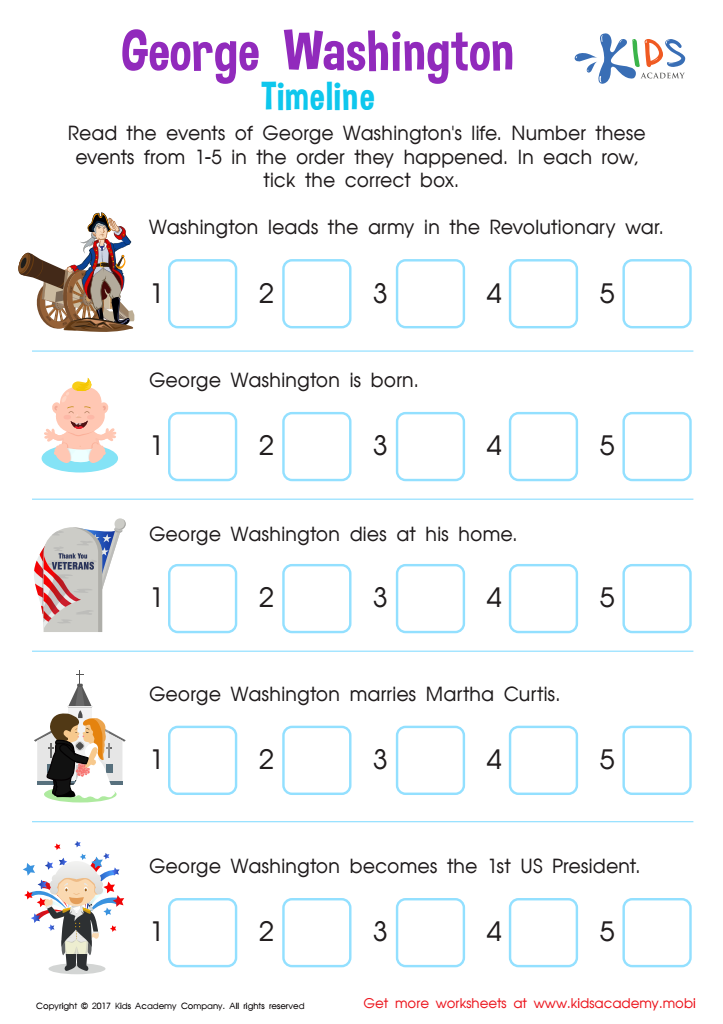
George Washington Timeline Worksheet
Help your child learn about George Washington and practice sequencing events! This printable worksheet will boost their reading and comprehension skills while they review historical facts. It's a great challenge to keep them engaged and learning.
George Washington Timeline Worksheet
Worksheet
Join Kids Academy for Free
Who is primarily going to use this learning content?






Event sequencing in Social Studies is crucial for young learners as it helps them understand the timeline and the connections between historical events, concepts, and their impacts on society today. When parents and teachers prioritize this skill, they equip children with the ability to analyze cause-and-effect relationships. This understanding fosters critical thinking and helps students grasp the complexity of historical narratives.
With strong sequencing skills, children can better comprehend stories, appreciate diverse perspectives, and learn to identify significant events in history, such as civil rights movements or significant scientific discoveries. This not only promotes a sense of identity and community but also instills values of empathy and respect for others' experiences.
Moreover, mastering event sequencing aids in the development of organizational skills, which are beneficial across all subjects. It enhances their reading comprehension as students learn to organize information logically, making sense of timelines in texts and visual aids. By engaging in event sequencing activities, children develop a greater appreciation for the past, learn from it, and are empowered to recognize their role in shaping the future. Ultimately, both parents and teachers play a vital role in fostering this skill, ensuring students become informed, engaged citizens.








