Problem-Solving Skills Grade 3 Division Worksheets
9 filtered results
-
From - To
Explore our engaging "Problem-Solving Skills Grade 3 Division Worksheets" designed to develop your child's mathematical reasoning and division proficiency. These worksheets provide a variety of real-world scenarios where students can apply their division knowledge to solve problems effectively. Each worksheet focuses on enhancing critical thinking skills while promoting a solid understanding of dividing numbers, ensuring that learning is both fun and educational. Perfect for classroom activities or at-home practice, these resources aim to boost confidence in young learners. Help your third grader master division with our expertly crafted problem-solving worksheets, making math a rewarding experience!
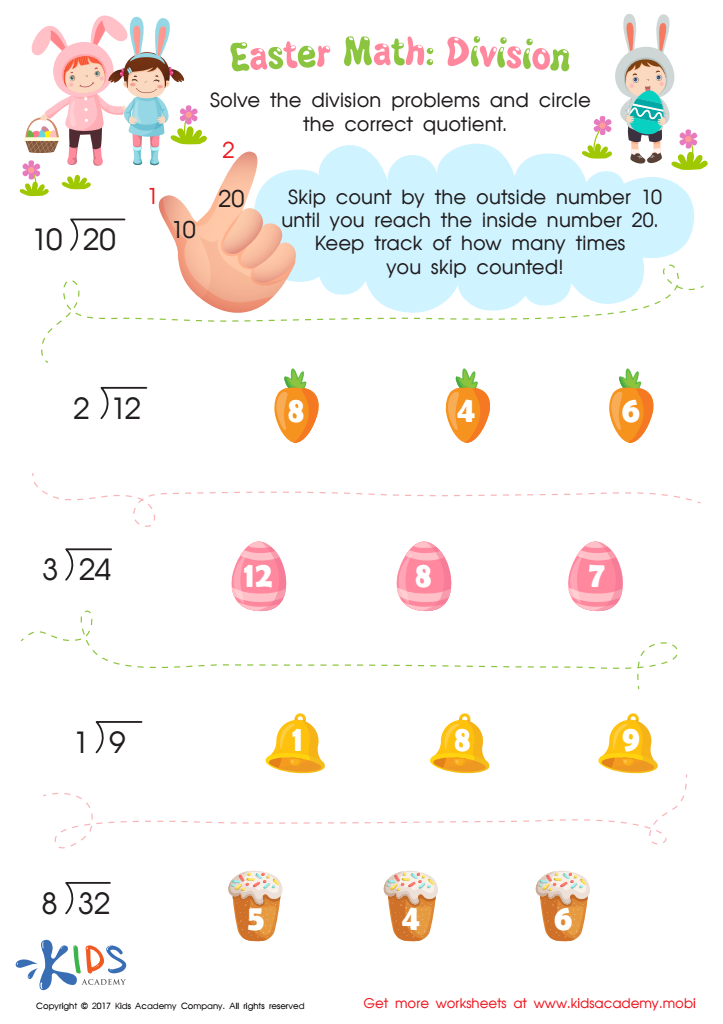
Division Worksheet
 Assign to My Students
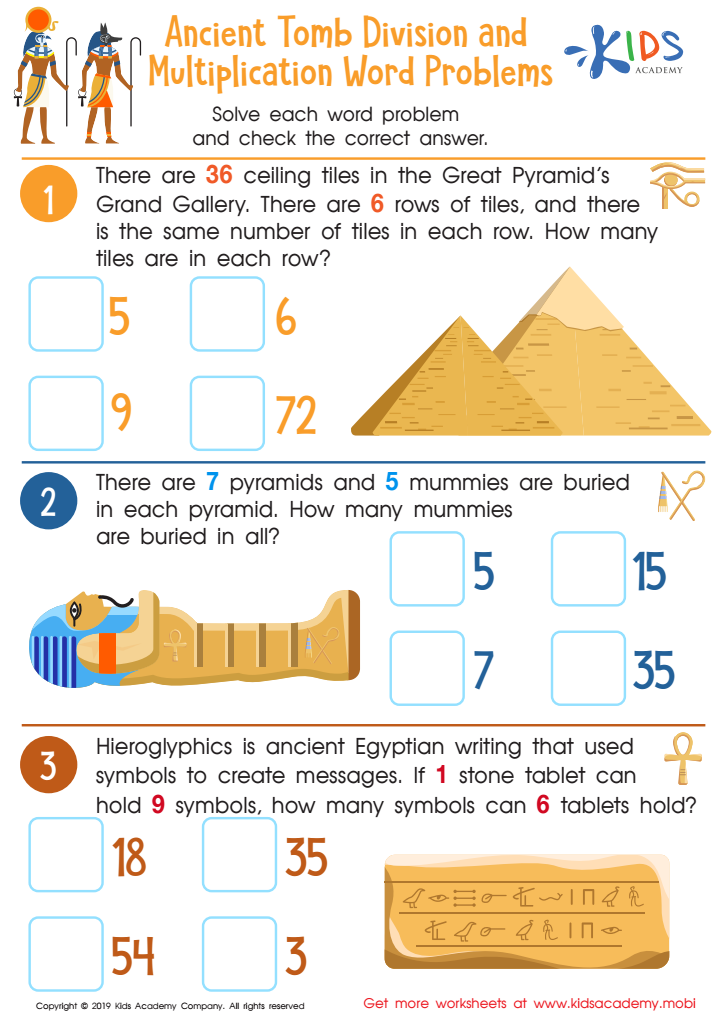
Ancient Tomb Division and Multiplication Word Problems Worksheet
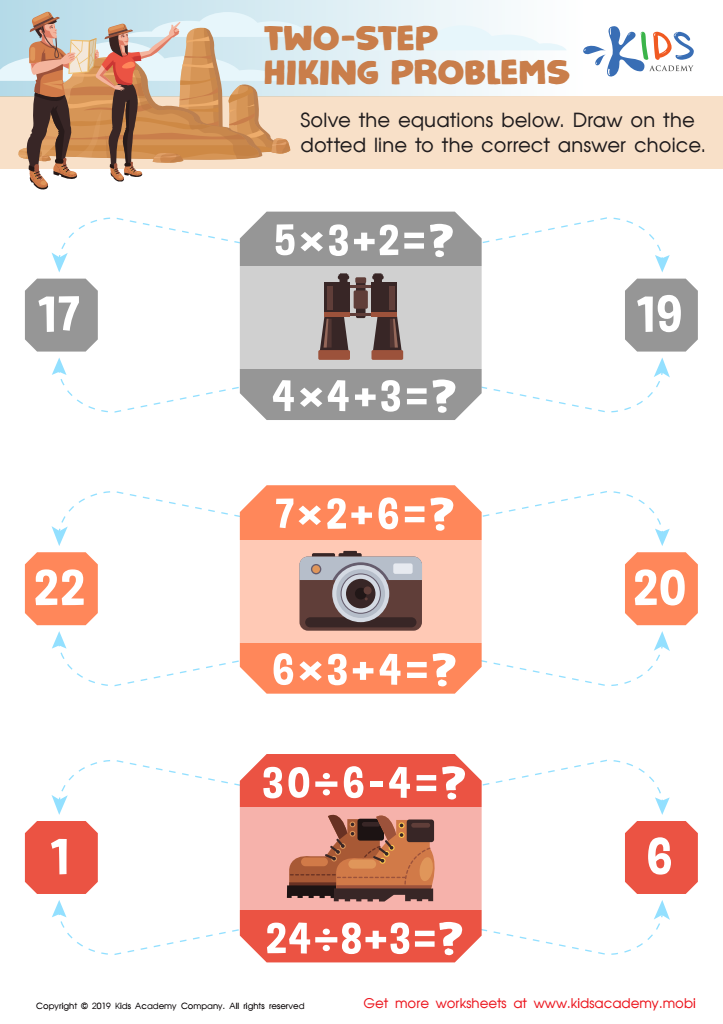
Two-Step Hiking Problems Worksheet
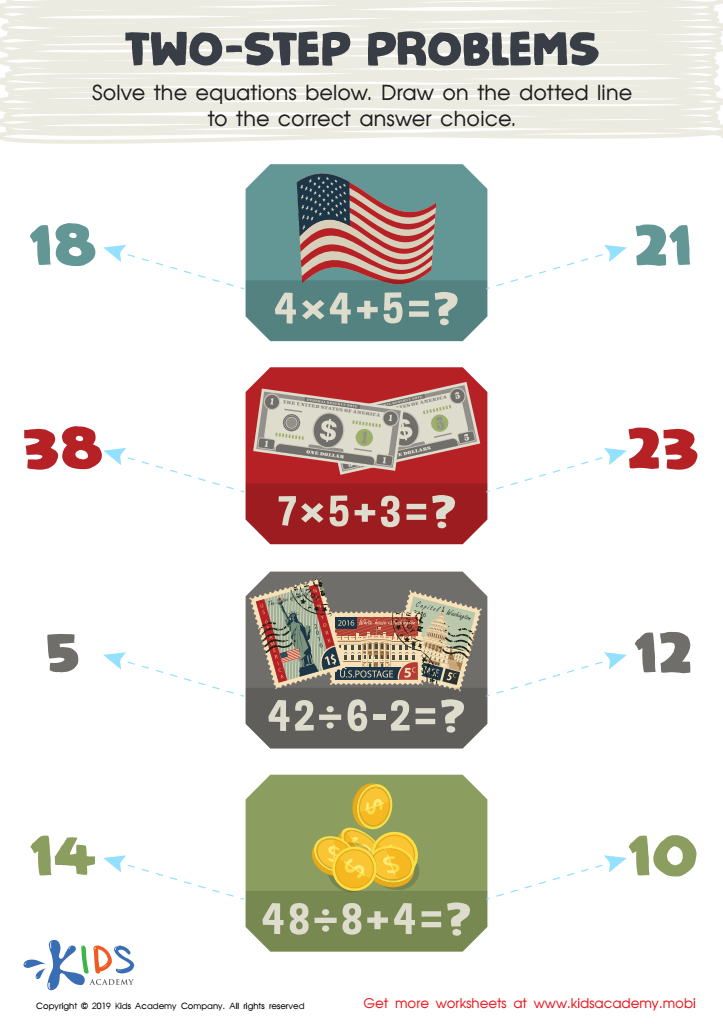
Two-Step Problems Worksheet
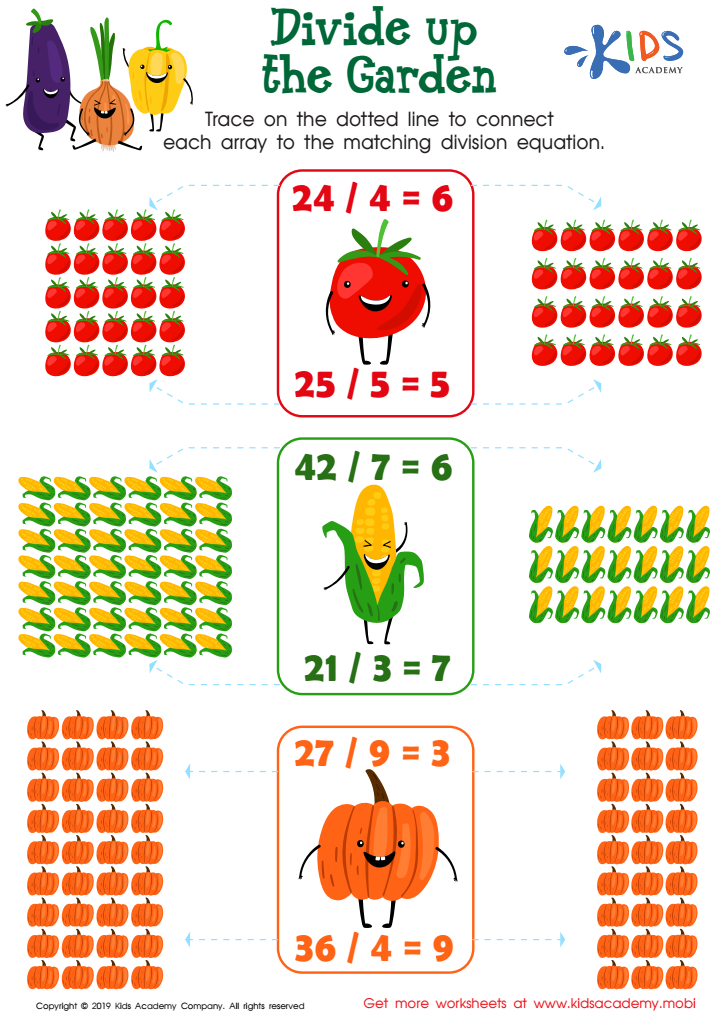
Divide up the Garden Worksheet
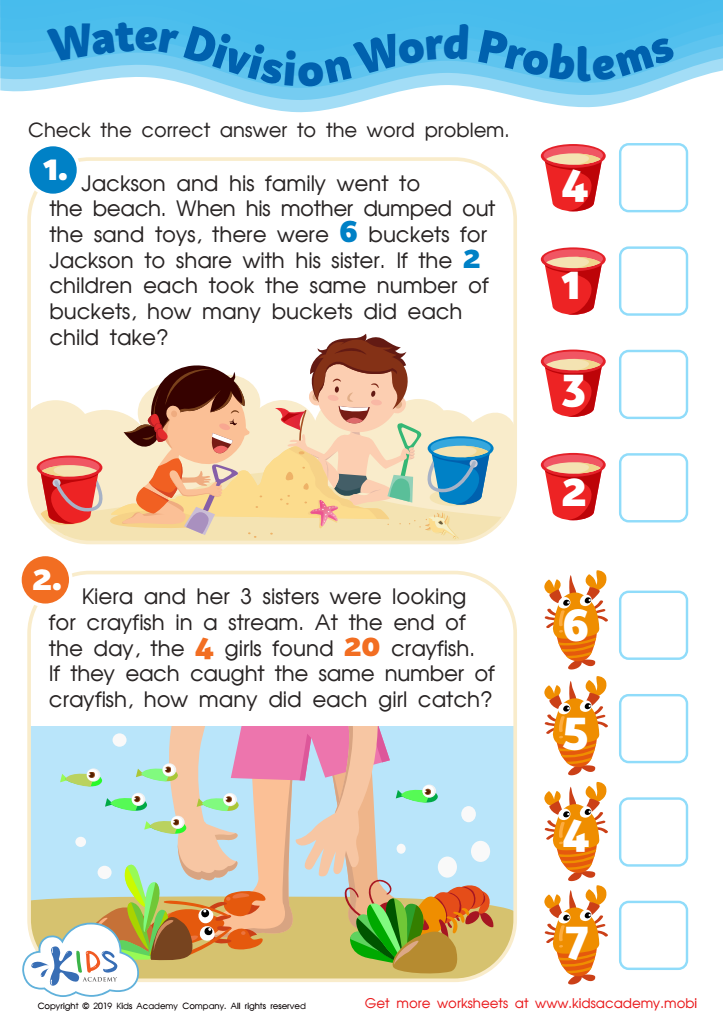
Water Division Word Problems Worksheet
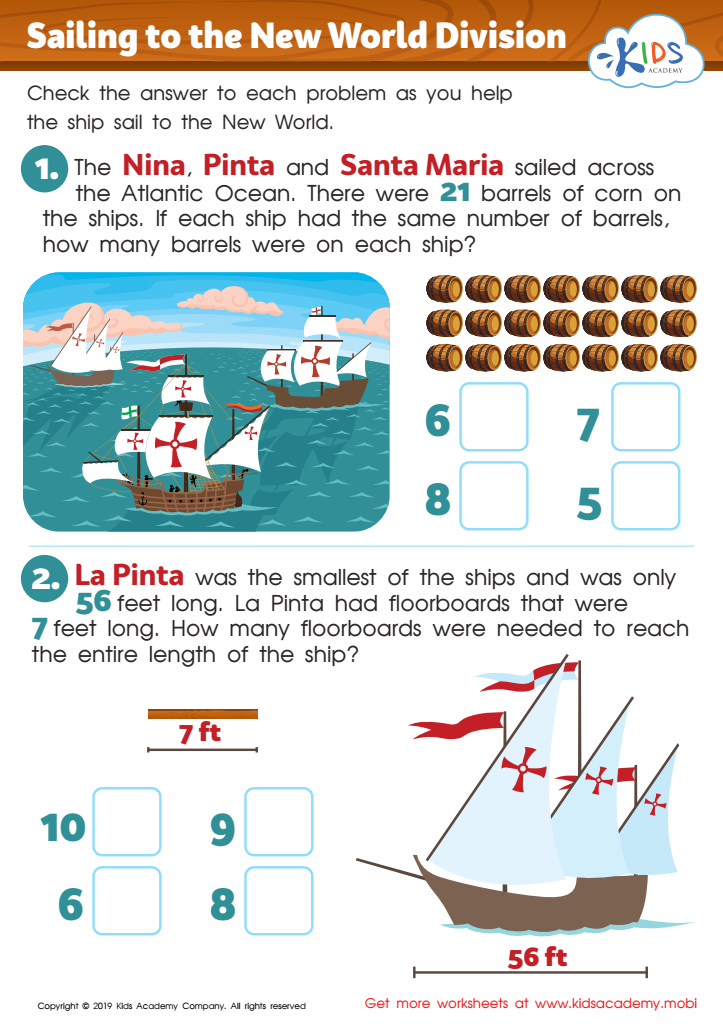
Sailing to the New World Division Worksheet
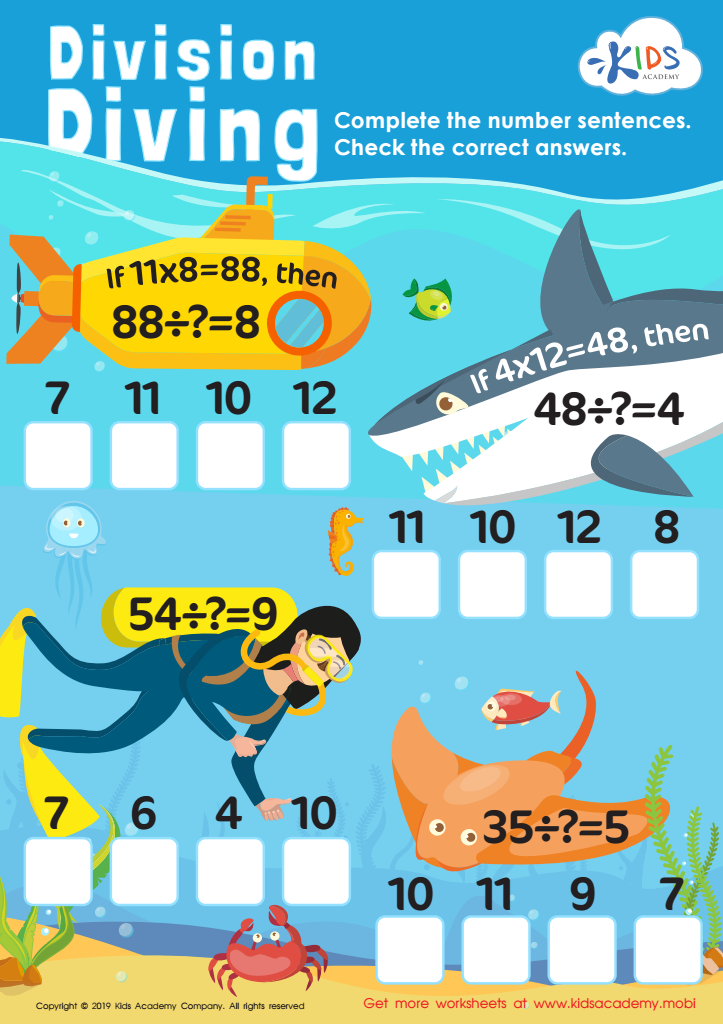
Division Diving Worksheet
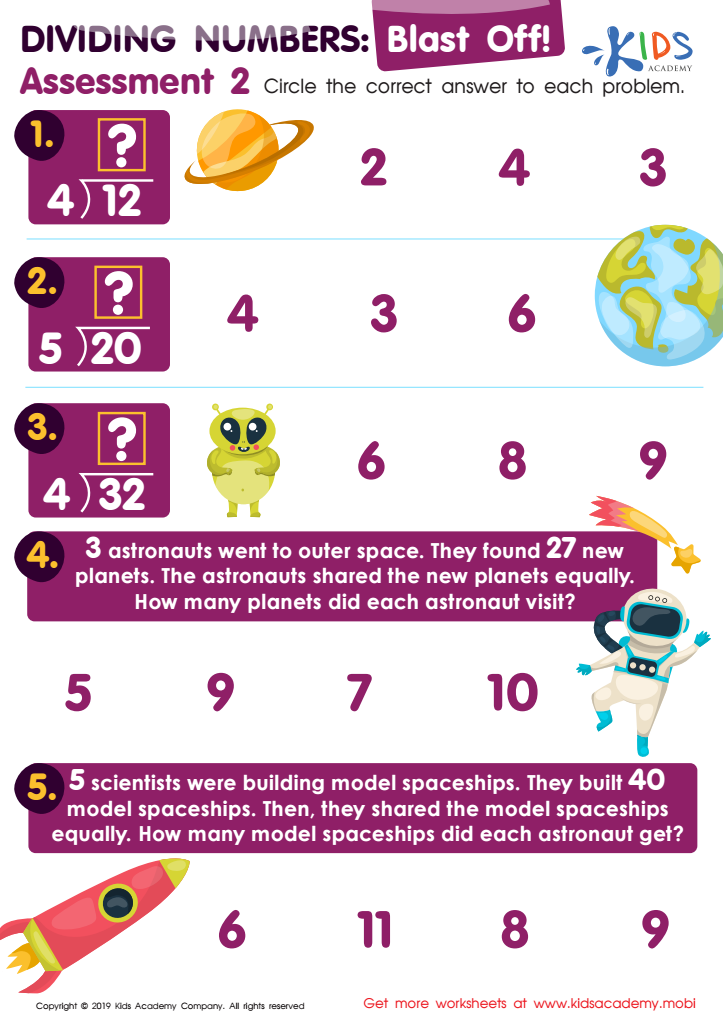
Dividing Numbers Assessment 2 Worksheet






Problem-solving skills are essential for Grade 3 students, particularly in mastering division. At this stage, children transition from concrete to more abstract thinking, and understanding division paves the way for mathematical literacy. Parents and teachers play a critical role in this developmental phase, as strong problem-solving abilities ultimately enhance not just mathematical skills, but also critical thinking and decision-making.
First, division is a foundational concept that resonates across various subjects and real-life scenarios. Supporting students in mastering division encourages a positive attitude toward math, boosting their confidence and curiosity in problem-solving. Parents and teachers can engage students through practical applications, such as sharing equally among friends or dividing items for activities.
Moreover, fostering a problem-solving mindset encourages resilience. Challenges in division can teach students how to approach problems from different angles, making mistakes a valuable part of their learning journey. This growth mindset extends beyond math and is applicable in daily life.
Ultimately, acknowledging and nurturing these problem-solving skills cultivates independent learners who can critically evaluate situations. By concentrating on division in Grade 3, parents and teachers contribute significantly to students' overall success, setting them up for lifelong learning and adaptability in a rapidly evolving world.