Improving spelling skills Writing Worksheets
6 filtered results
-
From - To
Enhance your child's spelling abilities with our comprehensive "Improving Spelling Skills" writing worksheets. Designed for early learners, these engaging resources provide a variety of fun activities that make practicing spelling enjoyable. From fill-in-the-blank exercises to word searches, our worksheets cater to different learning styles and skill levels. They focus on key vocabulary words, helping children to build their spelling confidence and fluency. As students complete these worksheets, they will develop essential writing and language skills while fostering a love for learning. Perfect for classrooms or home use, our worksheets are a valuable tool for any aspiring young writer!
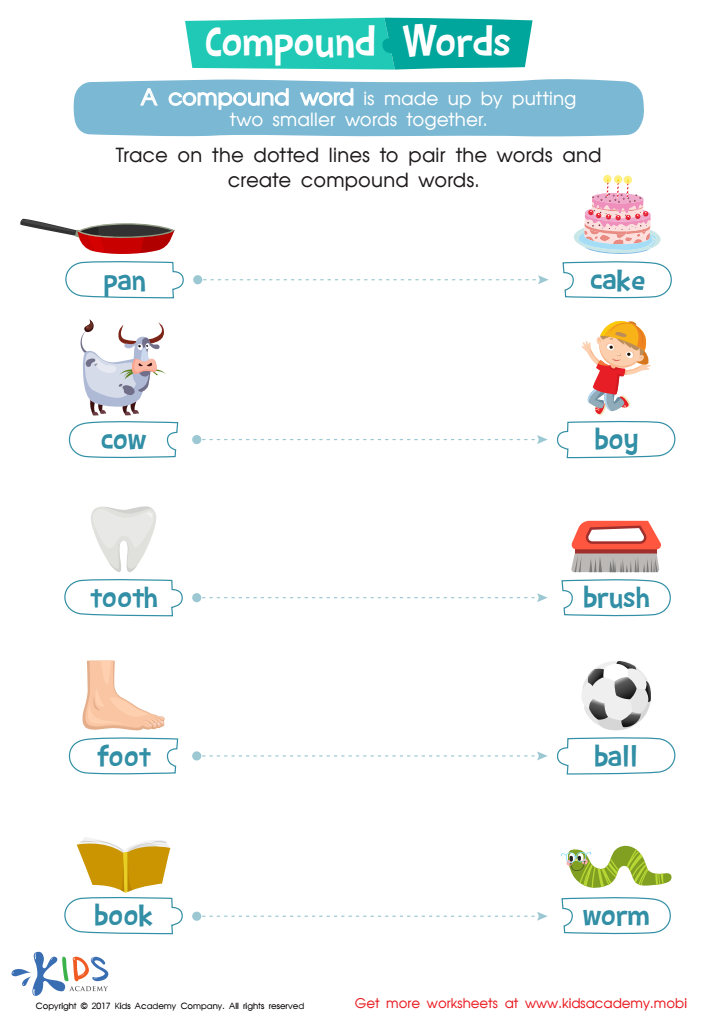
Compound Words Word Structure Worksheet
 Assign to My Students
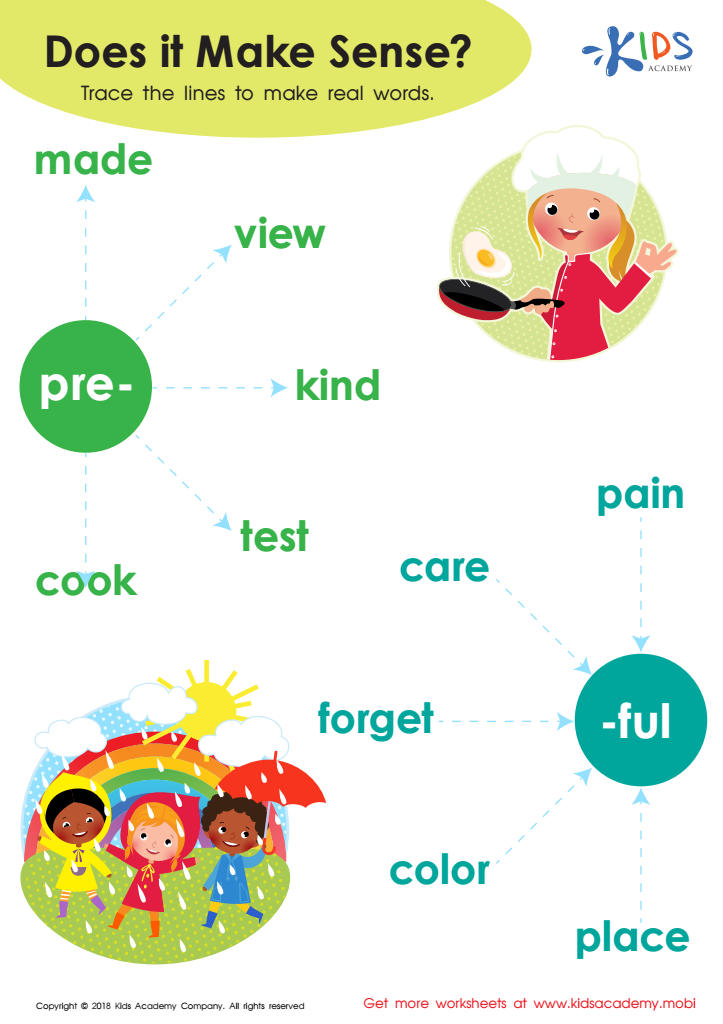
Prefix pre– and Suffix ful– Worksheet
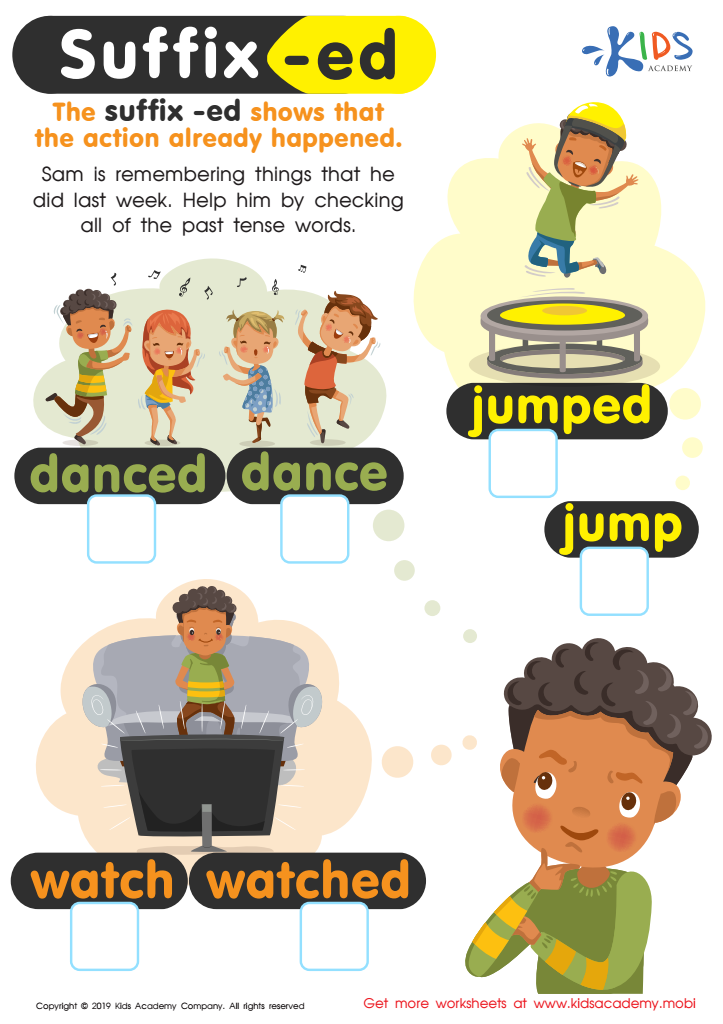
Suffix-ed Worksheet
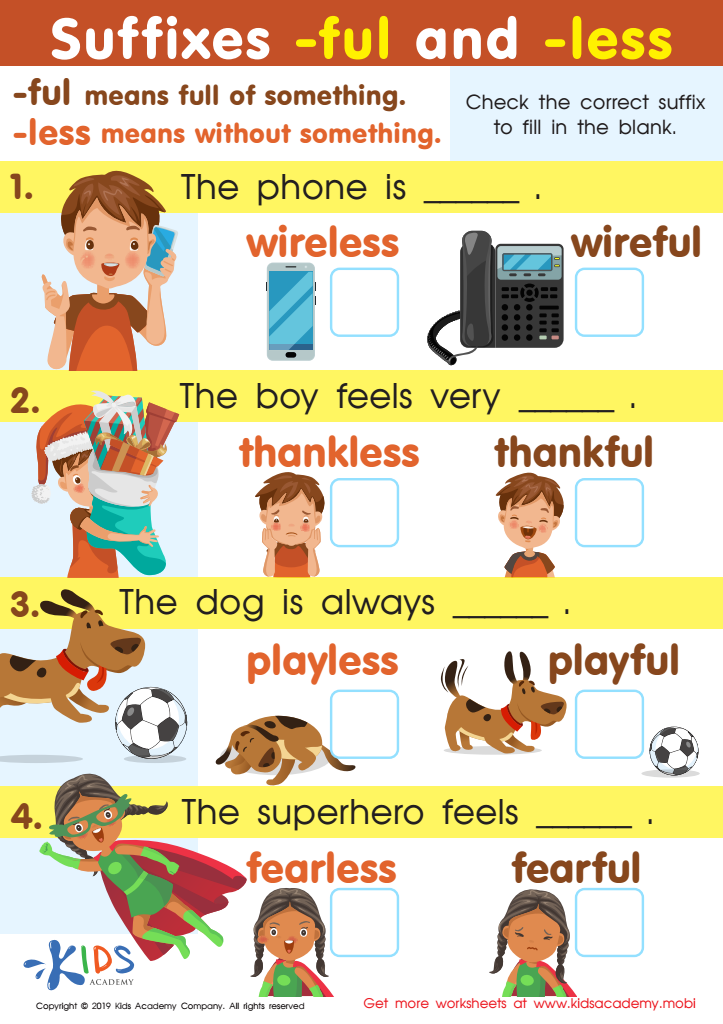
Suffixes –ful and –less Worksheet
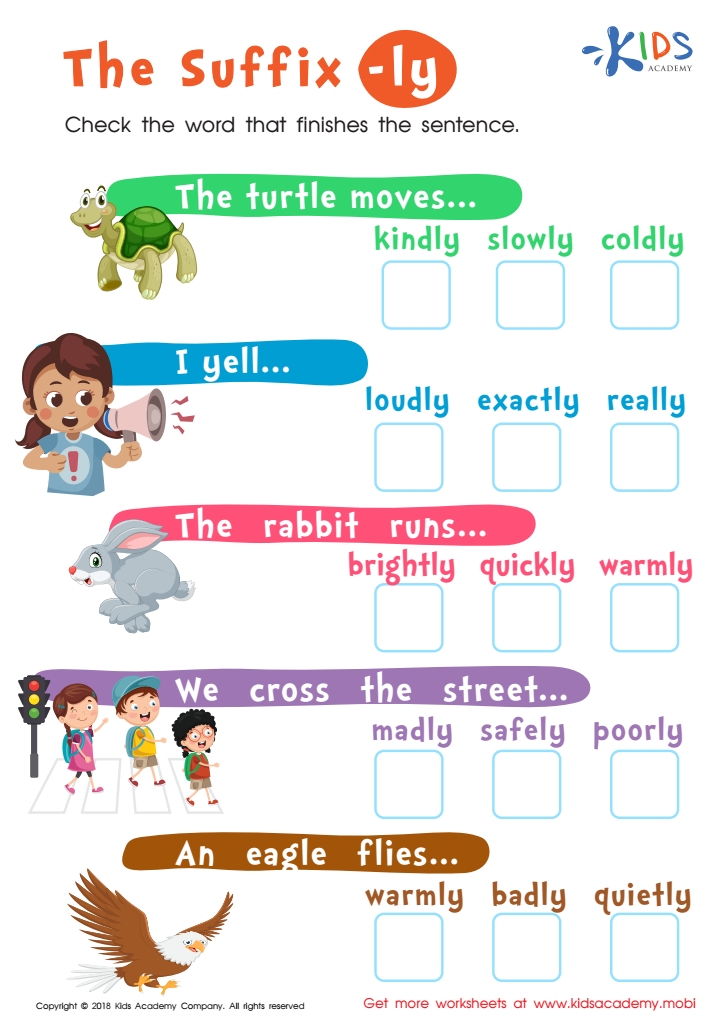
The Suffix -Ly Worksheet
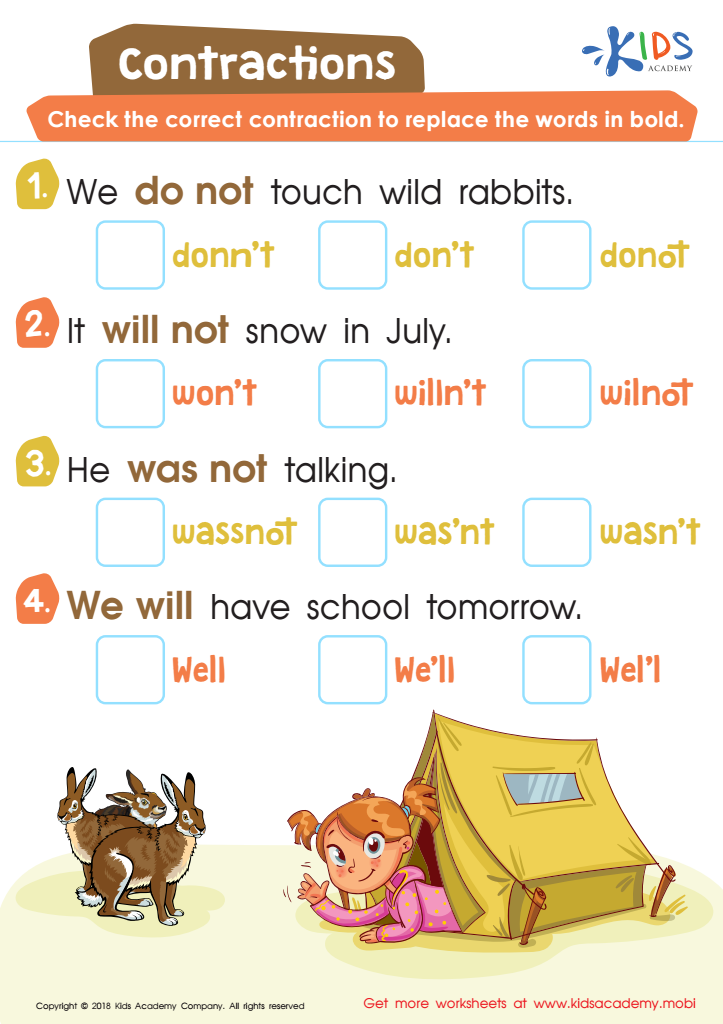
Contractions Worksheet








Improving spelling skills is crucial for both parents and teachers as it directly affects a child's overall literacy development. Strong spelling abilities enhance reading proficiency, allowing children to decode words more effectively. This understanding promotes fluency, which is essential for comprehension and enjoying literature. Moreover, good spelling bolsters students' confidence in writing; when children feel secure in their ability to spell, they are more likely to express their ideas freely.
Additionally, the digital age relies heavily on written communication, be it through emails, social media, or text messages. Ensuring children possess solid spelling skills prepares them for future academic and professional success; poor spelling can lead to misunderstandings and impact their credibility.
For parents, fostering effective spelling at home supports the collaboration with teachers, reinforcing learning through activities such as word games and spelling quizzes. For teachers, a focused approach to spelling can facilitate tailored instruction, helping students overcome individual challenges and thrive academically.
Ultimately, prioritizing spelling skills nurtures better communication, enhances critical thinking, and lays the groundwork for lifelong learning, making it a vital area of focus for both parents and educators.








