Alphabet worksheets activities for Ages 3-7 - Page 2
25 filtered results
-
From - To
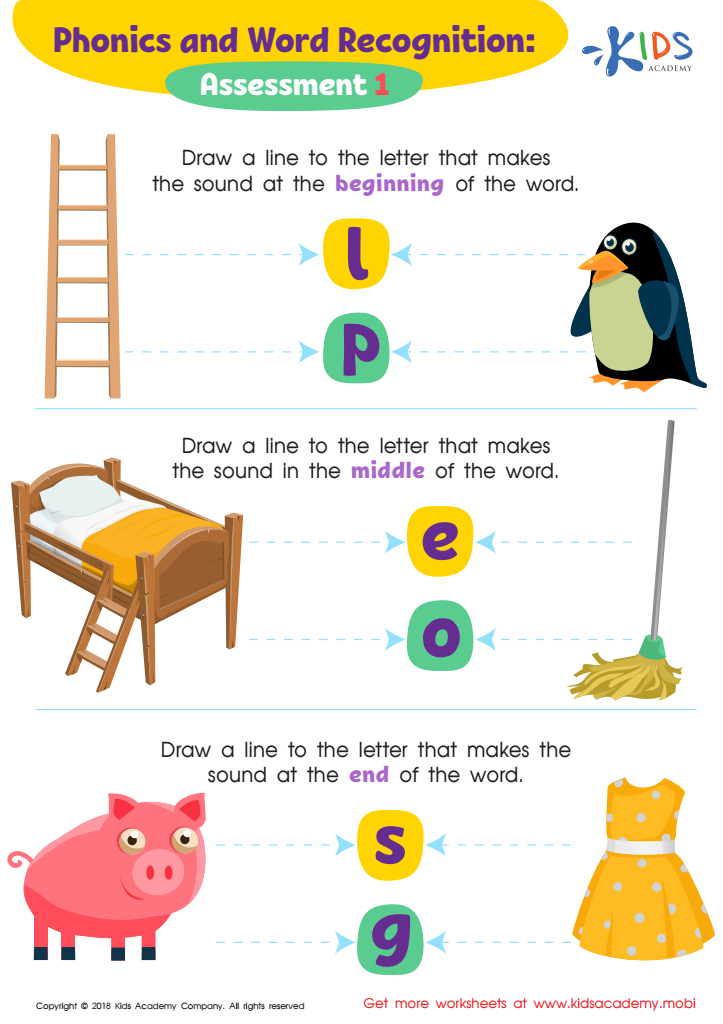
Phonics and Word Recognition: Assessment 1 ELA Worksheet
 Assign to My Students








Parents and teachers should prioritize alphabet activities for children aged 3-7 because these foundational experiences are crucial for early literacy development. During these formative years, children are like sponges, eagerly absorbing information that lays the groundwork for reading and writing skills. Alphabet activities help kids recognize letters, understand their sounds, and promote phonemic awareness, all of which are essential for smooth reading progression.
Engaging in fun, age-appropriate alphabet activities fosters a love for learning, as children explore language through play-based methods. These activities can include singing alphabet songs, letter-themed crafts, and interactive games, making the learning process enjoyable and memorable. Furthermore, repeated exposure to letters helps solidify their understanding, paving the way for future academic success.
Additionally, preschool and early elementary years represent a crucial time for social interaction. Alphabet activities often encourage teamwork and communication skills among peers, enhancing social development while reinforcing literacy. By nurturing these skills and fostering an enthusiasm for reading, parents and teachers play a pivotal role in setting children on a path to lifelong learning and academic achievement. Investing time in alphabet activities now will yield significant benefits in literacy and cognitive development down the line.








