Building Vocabulary worksheets activities for Ages 3-7
13 filtered results
-
From - To
Welcome to our Building Vocabulary Worksheets for Ages 3-7! These engaging activities are designed to nurture young learners' language skills through fun and interactive exercises. Tailored for preschool and early grade levels, our worksheets focus on essential vocabulary building techniques, including word recognition, picture association, and context usage. Each worksheet promotes comprehension and encourages children to express themselves while expanding their word bank. Perfect for both classroom settings and at-home learning, our resources aim to make learning vocabulary enjoyable and effective. Explore our diverse range of activities today to empower your child’s linguistic journey and enhance their communication skills effortlessly!
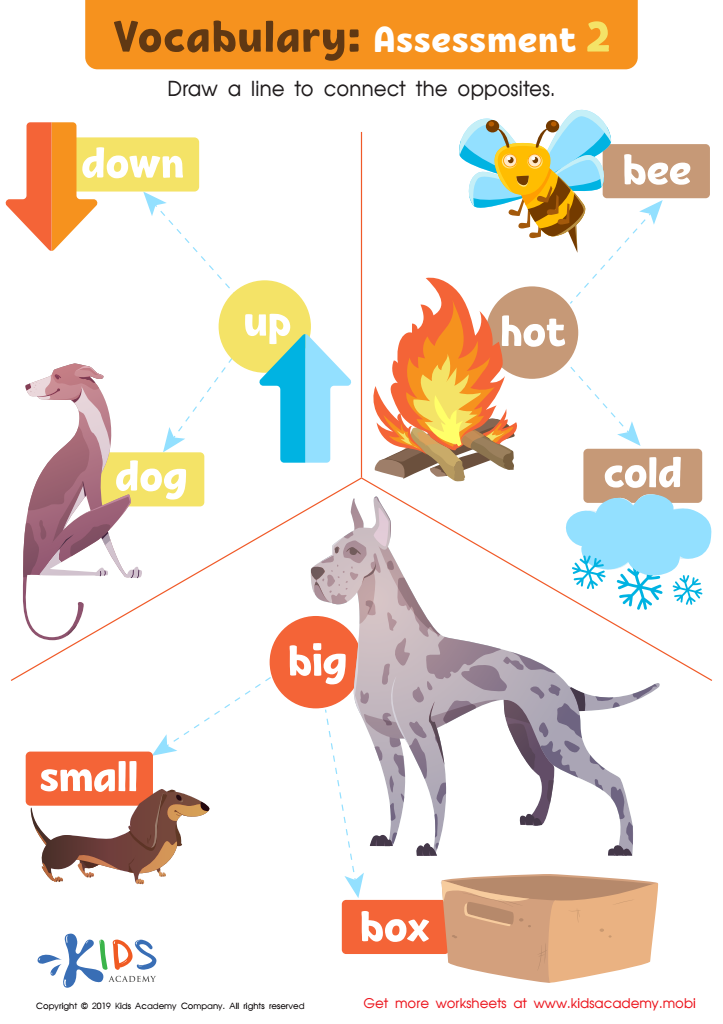
Vocabulary: Assessment 2 Worksheet
 Assign to My Students
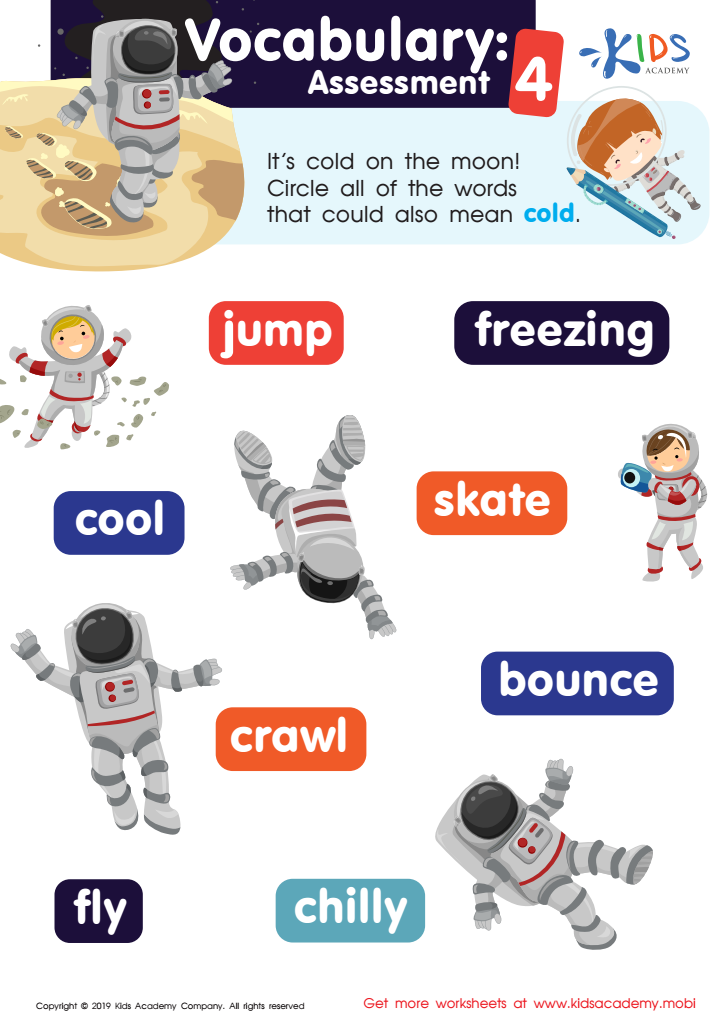
Vocabulary: Assessment 4 Worksheet
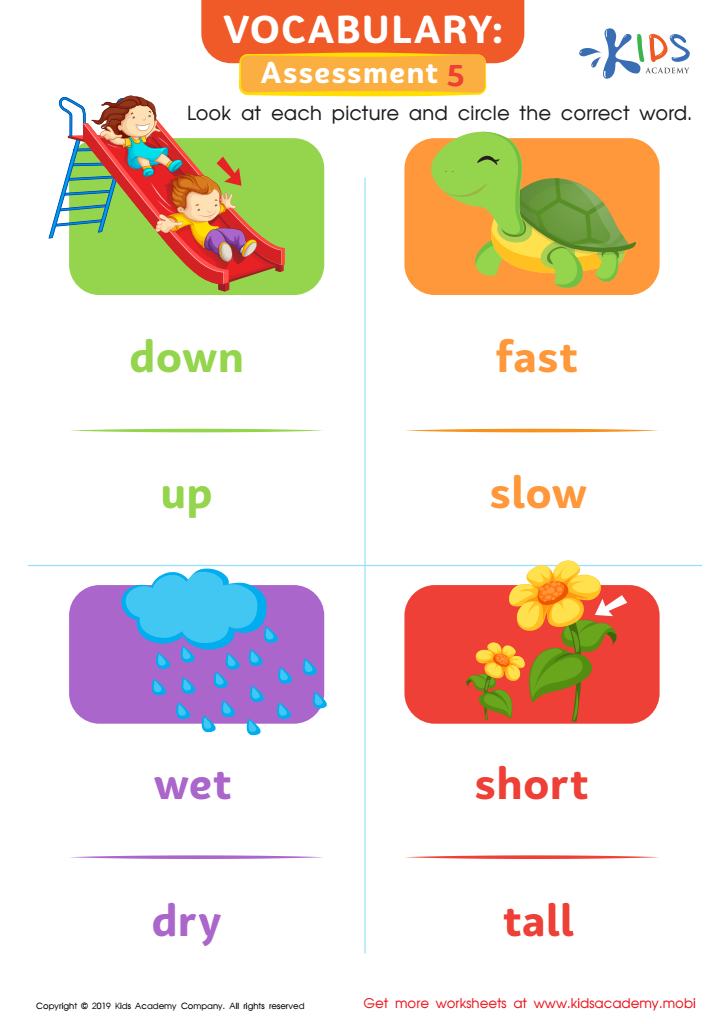
Vocabulary: Assessment 5 Worksheet
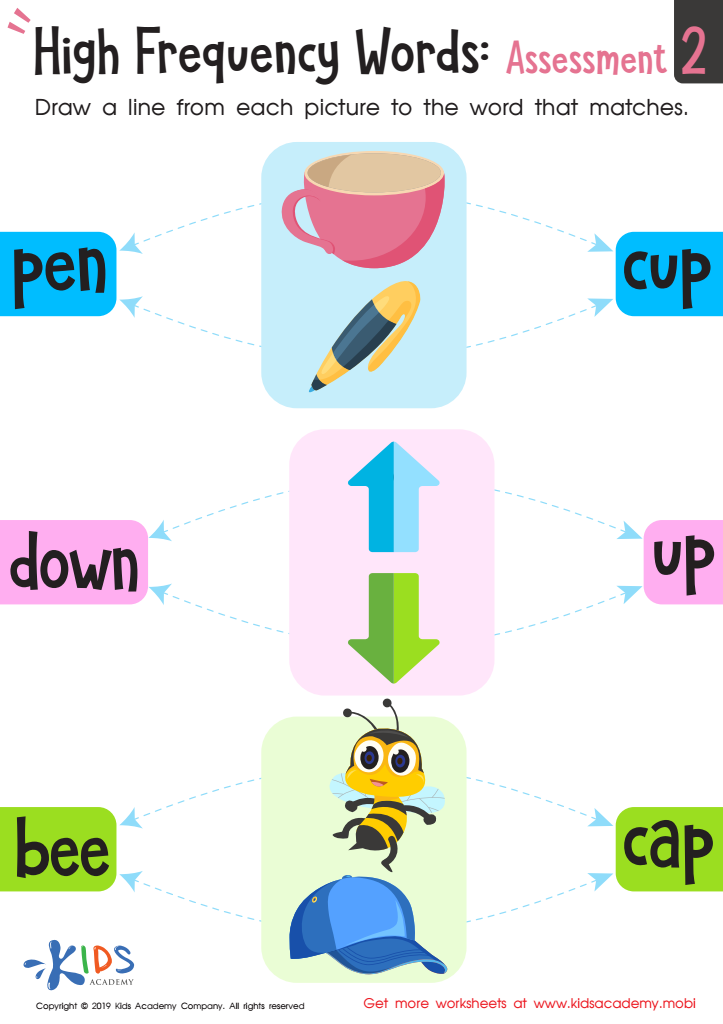
High Frequency Words: Assessment 2 Worksheet
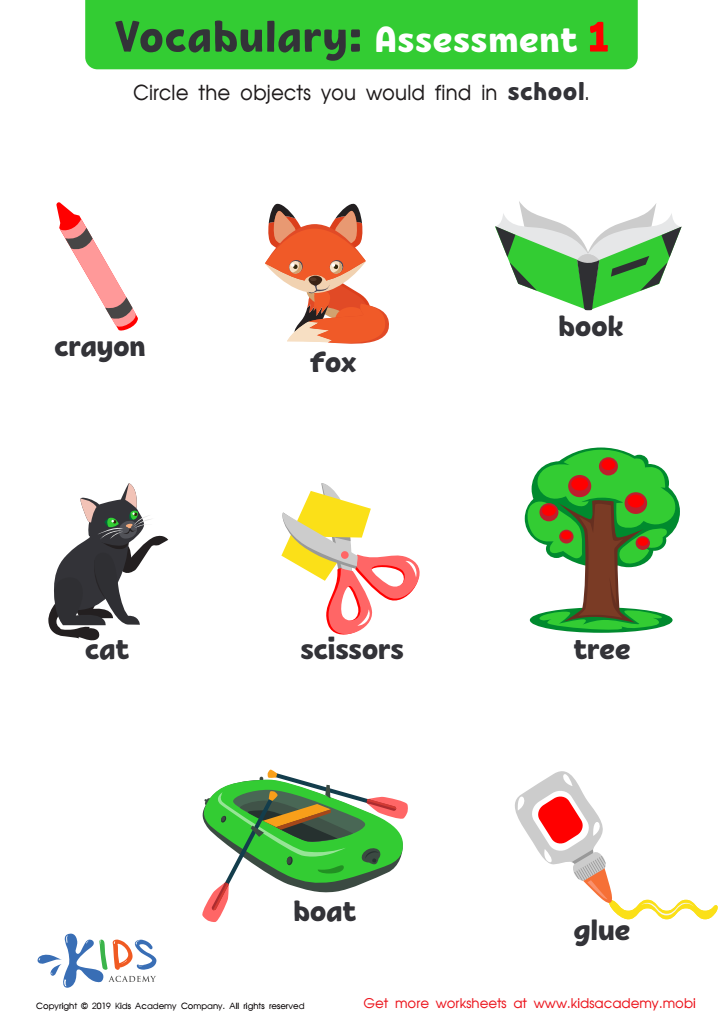
Vocabulary: Assessment 1 Worksheet
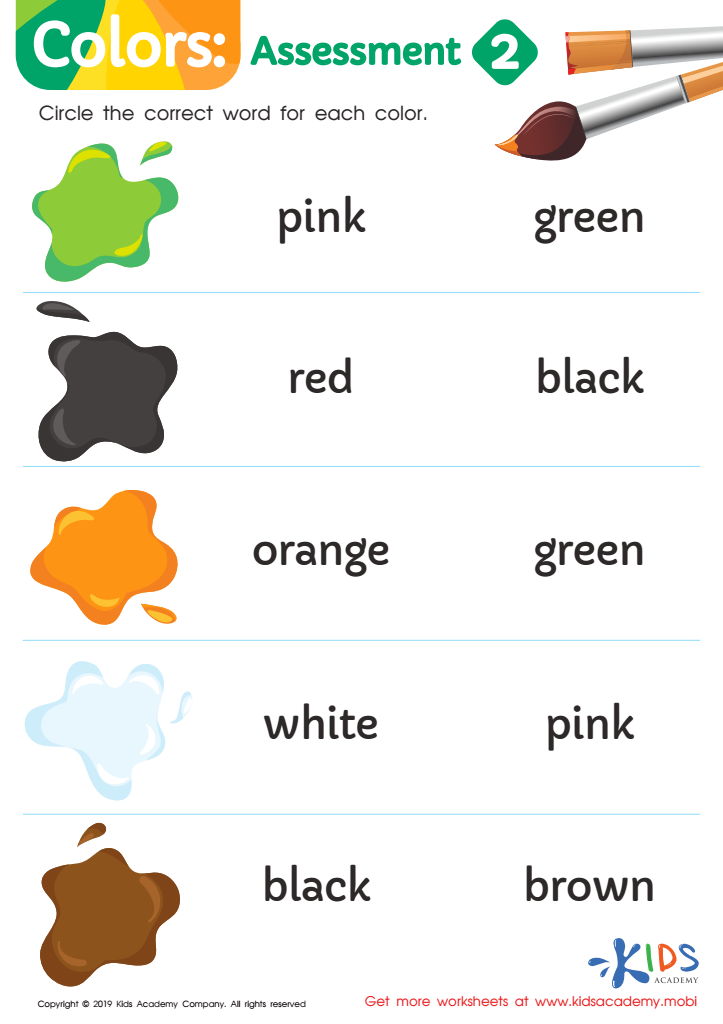
Colors: Assessment 2 Worksheet
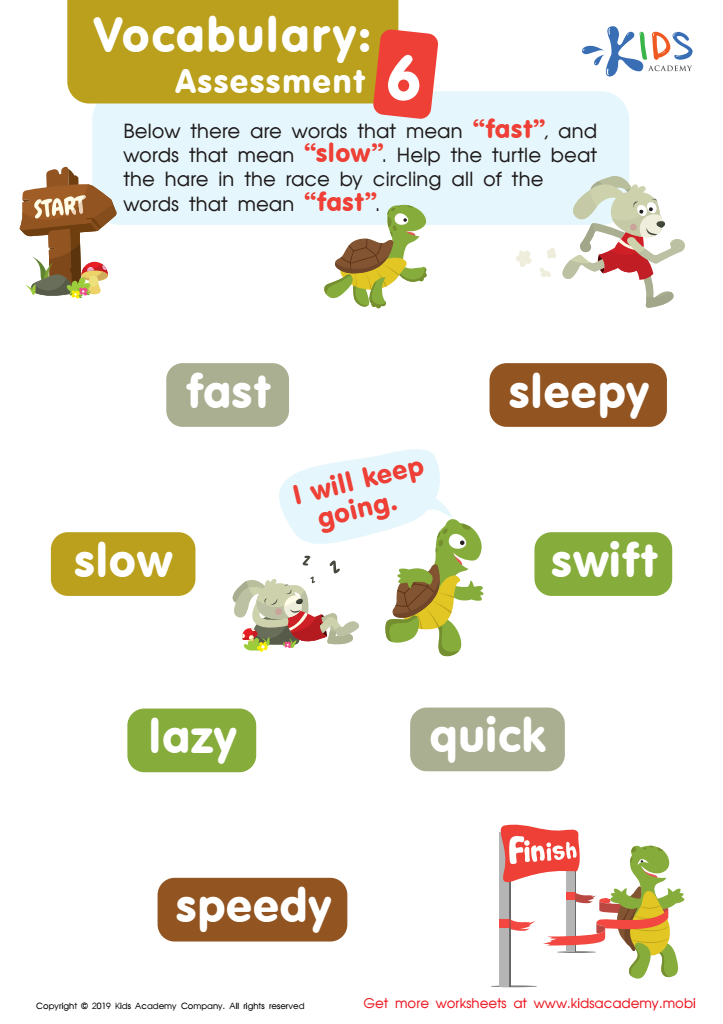
Vocabulary: Assessment 6 Worksheet
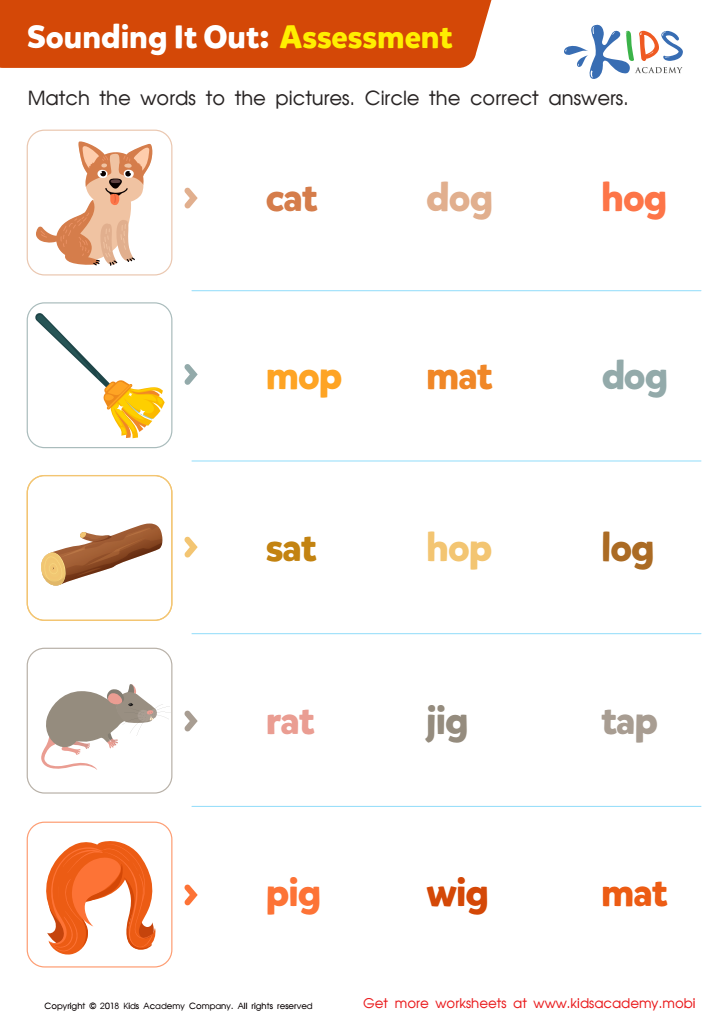
Sounding it Out: Assessment Worksheet
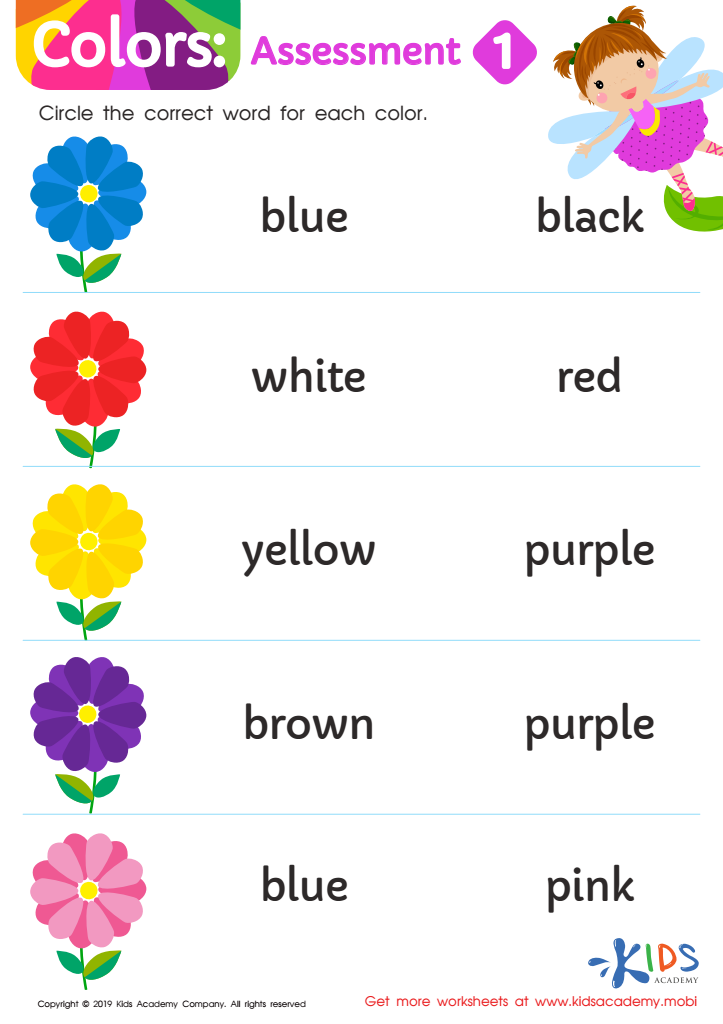
Colors: Assessment 1 Worksheet
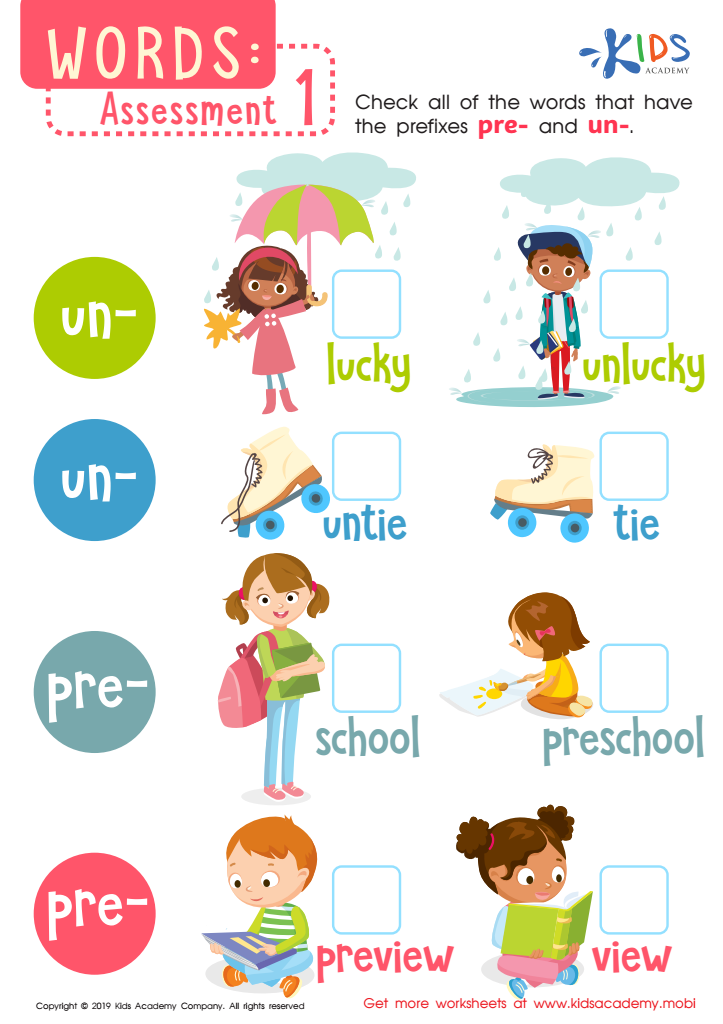
Words: Assessment 1 Worksheet
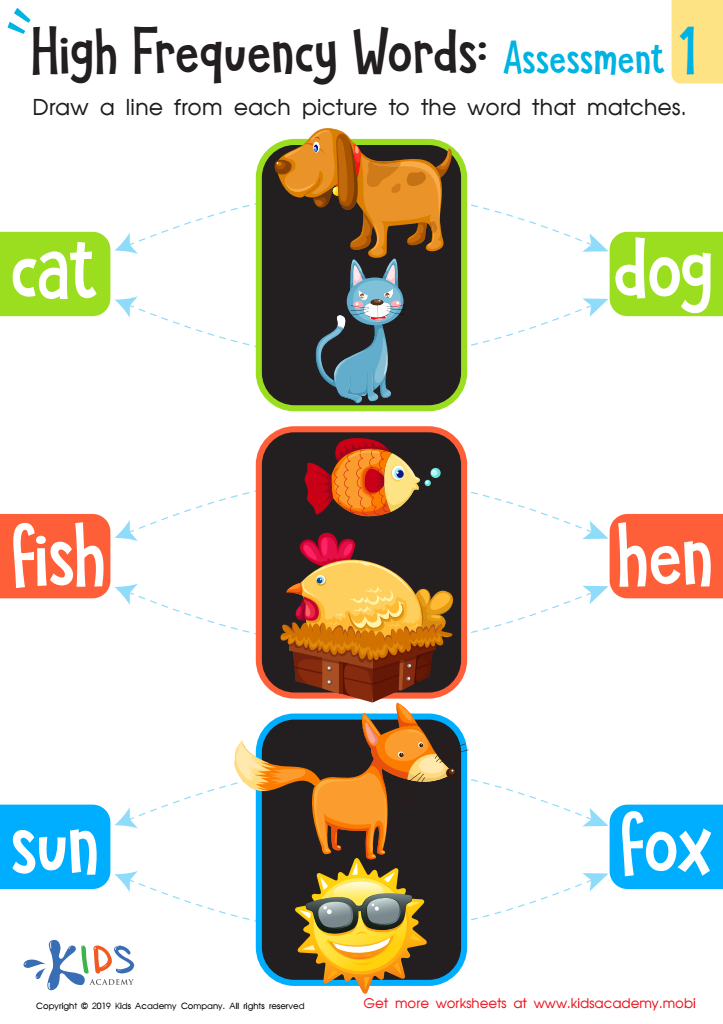
High Frequency Words: Assessment 1 Worksheet
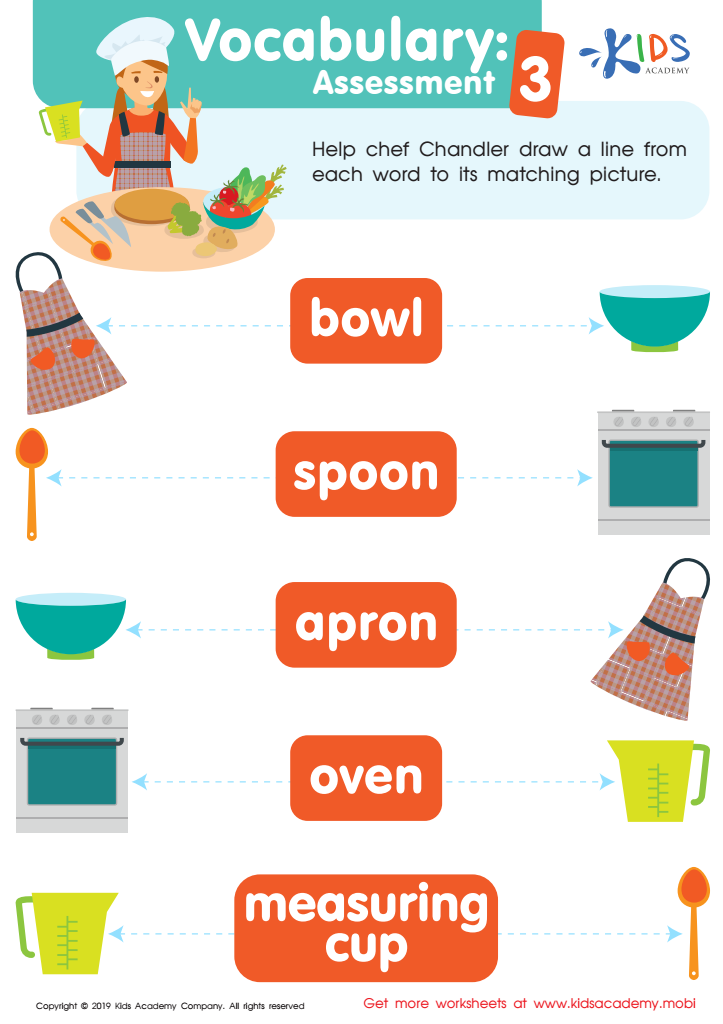
Vocabulary: Assessment 3 Worksheet
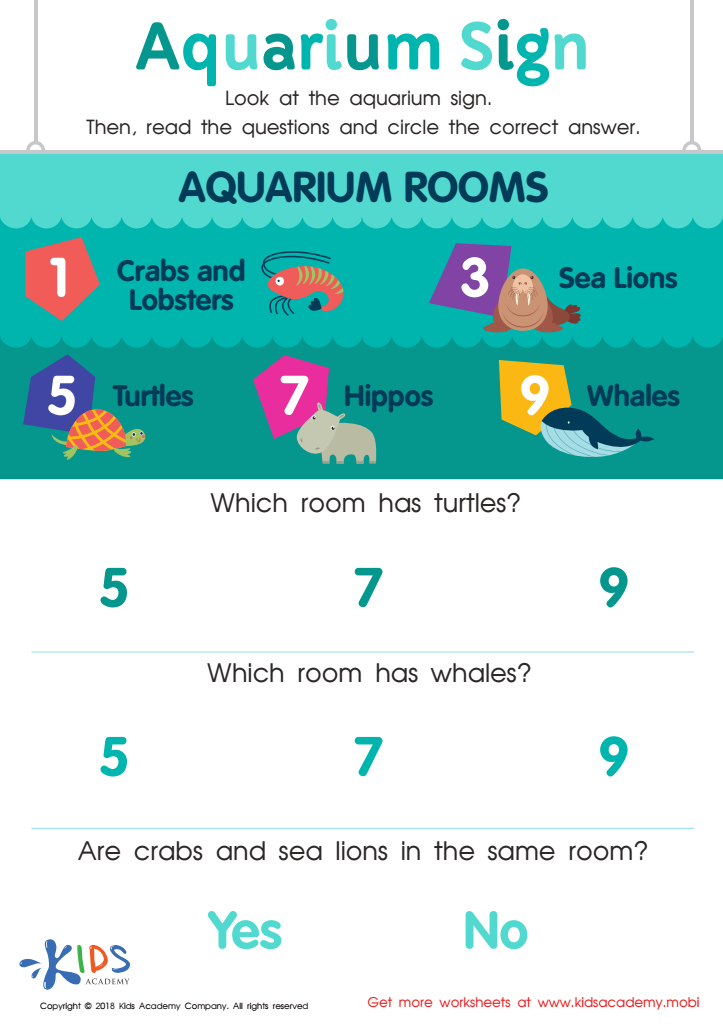
Assessment: Aquarium Sign Worksheet



.jpg)




Building vocabulary is crucial for children aged 3-7 as it lays the foundation for their future academic success and communication skills. At this formative stage, children experience rapid brain development, making them more receptive to learning new words. Engaging in vocabulary-building activities helps enhance their language skills, leading to improved reading comprehension and writing abilities later on.
Parents and teachers should prioritize these activities because a rich vocabulary fosters better expression of thoughts and feelings, which is essential for social interactions and emotional development. Children learn to articulate their needs and ideas, reducing frustration and behavioral issues associated with communication difficulties.
Moreover, vocabulary development is closely linked with cognition. When children acquire new words, they also learn to categorize information, connect concepts, and think critically. Early exposure to rich language through songs, stories, and interactive games not only strengthens children's verbal skills but also cultivates a lifelong love for learning and reading.
By investing time in vocabulary-focused activities, parents and teachers empower children with the tools they need to succeed academically and to navigate their world. Ultimately, a robust vocabulary equips young learners with confidence and curiosity, setting the stage for lifelong educational engagement.








