Songs and Poems worksheets activities for Ages 3-7 - Page 2
27 filtered results
-
From - To
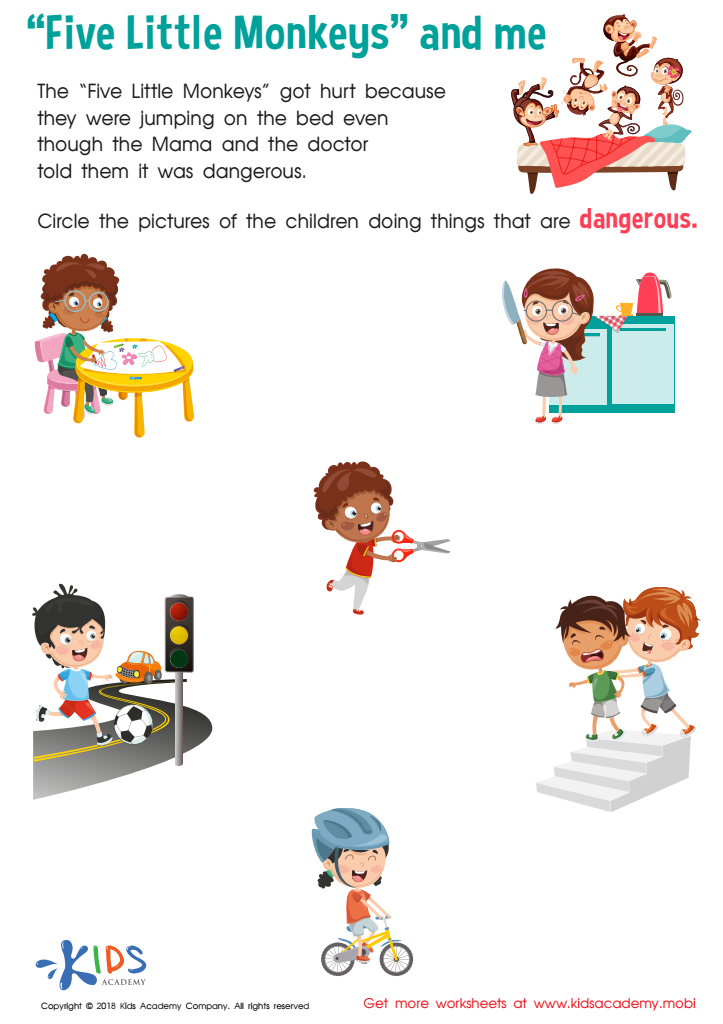
Five Little Monkeys and Me Worksheet
 Assign to My Students
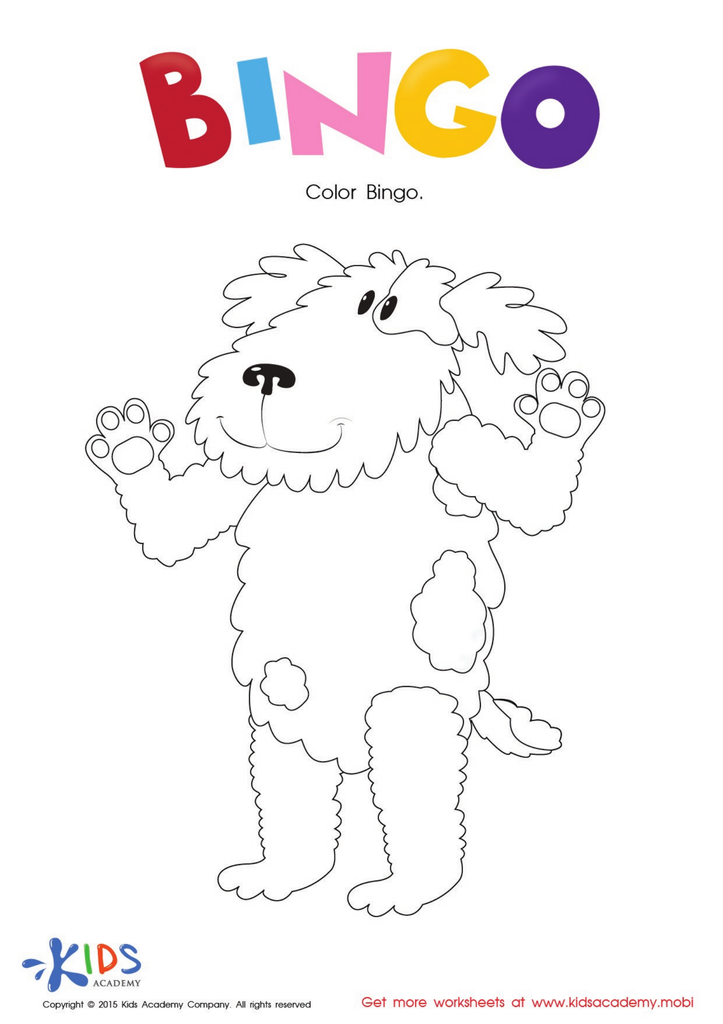
The Bingo Song: Coloring The Dog Worksheet
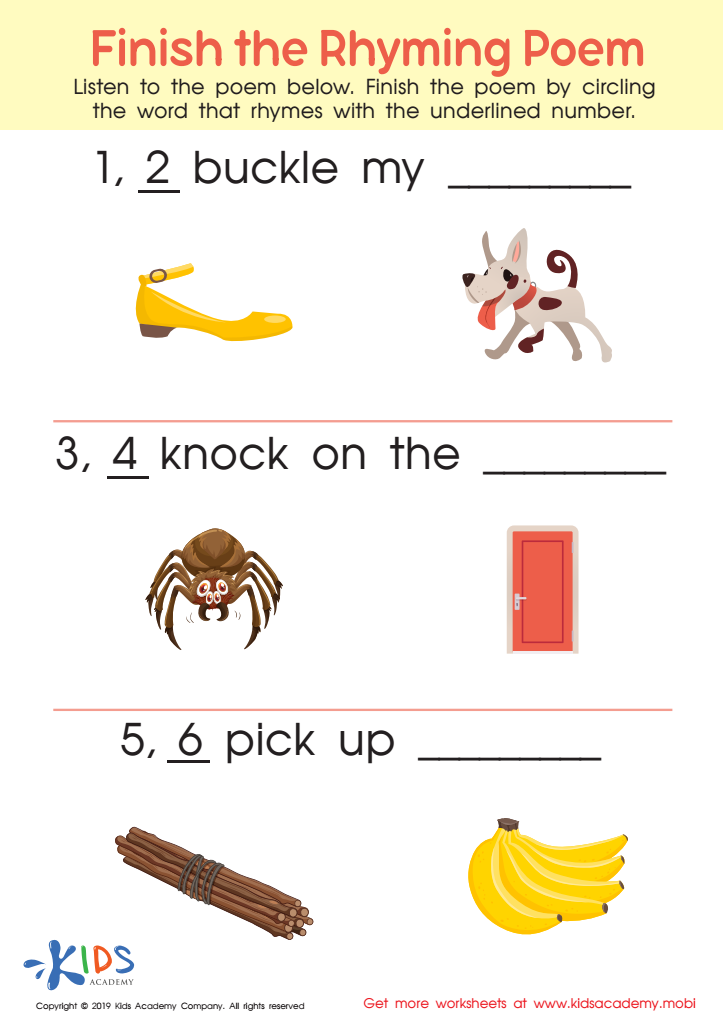
Finish Rhyming Poem Worksheet







Songs and poems are essential educational tools for children aged 3-7, as they significantly enhance language development and cognitive skills. Engaging with songs and poems helps young learners expand their vocabulary, improve pronunciation, and develop an early understanding of grammar. The rhythmic and melodic qualities of music make language learning more enjoyable and memorable, facilitating retention.
Additionally, these activities foster creativity and imagination. As children listen to or recite poems and songs, they often visualize scenarios and engage their minds in storytelling, which bolsters comprehension and narrative skills. Songs and poems also promote social interaction and cooperation during group activities, teaching children to listen, share, and collaborate.
Furthermore, rhythmic patterns in songs and poems help improve memory and attention spans. The repetition often employed, alongside movement, captures children's focus and excites their learning.
By incorporating songs and poems into early education, parents and teachers create a multi-sensory learning environment that nurtures emotional intelligence and cultural awareness. These activities encourage expression as well, allowing children to convey their feelings and experiences creatively.
In essence, songs and poems serve as foundational building blocks of literacy and social skills, making them invaluable in early childhood education.








