Building Vocabulary worksheets activities for Ages 3-9
14 filtered results
-
From - To
Welcome to our "Building Vocabulary Worksheets Activities" page, designed specifically for children aged 3-9! Our engaging resources empower young learners to enhance their vocabulary through a variety of fun and interactive activities. From creative word games to themed worksheets, each activity encourages exploration and reinforces language skills in an enjoyable way. These worksheets promote comprehension and retention, making learning fun for kids while preparing them for future reading and writing success. Ideal for classroom use or at-home learning, our materials support early literacy development and help your child build confidence in their communication skills. Discover our activities and spark your child's love for words today!
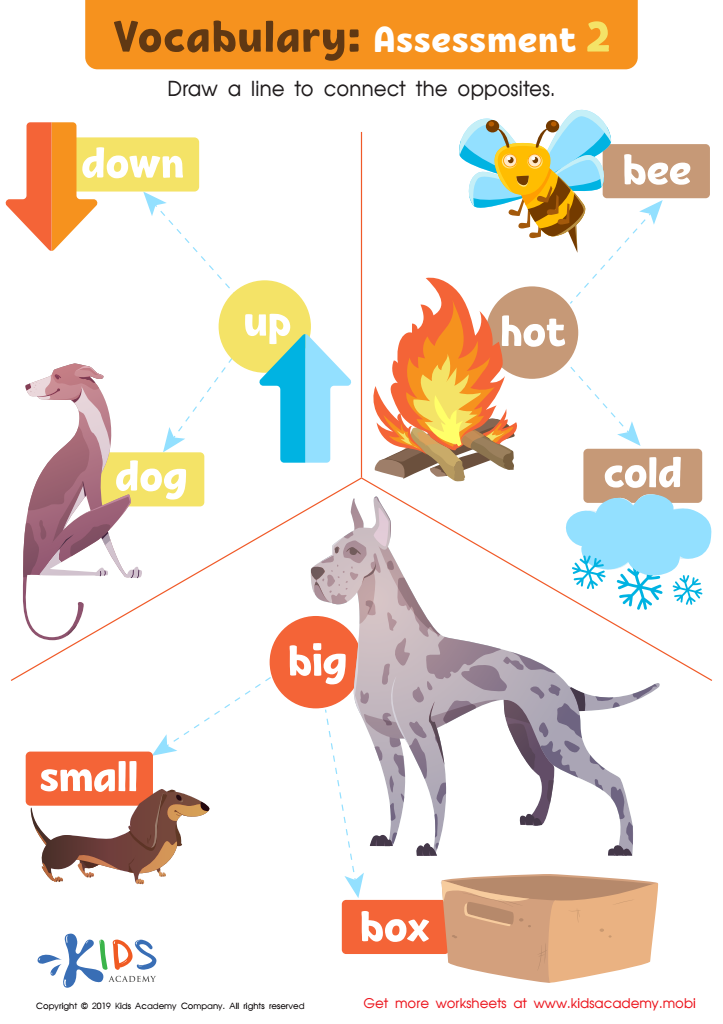
Vocabulary: Assessment 2 Worksheet
 Assign to My Students
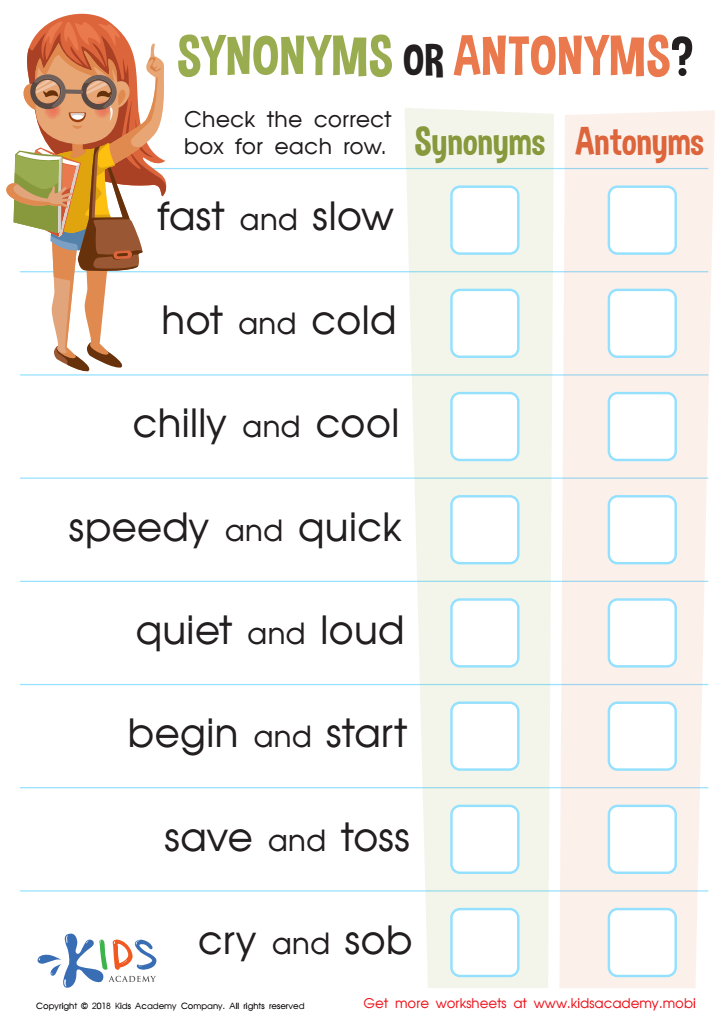
Synonyms or Antonyms: Assessment Worksheet
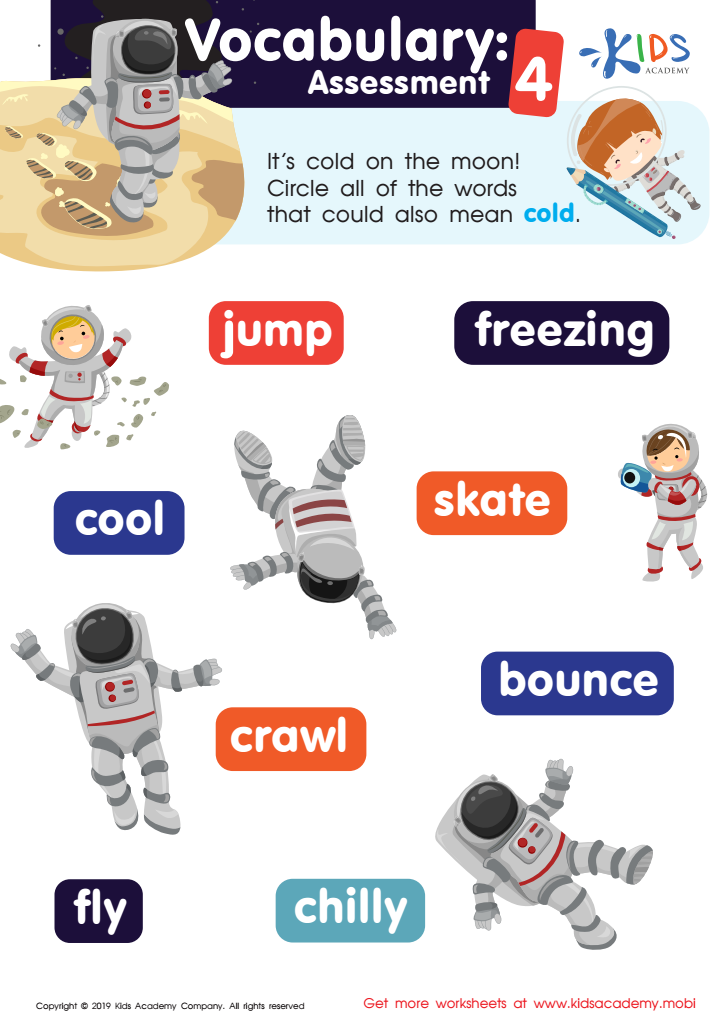
Vocabulary: Assessment 4 Worksheet
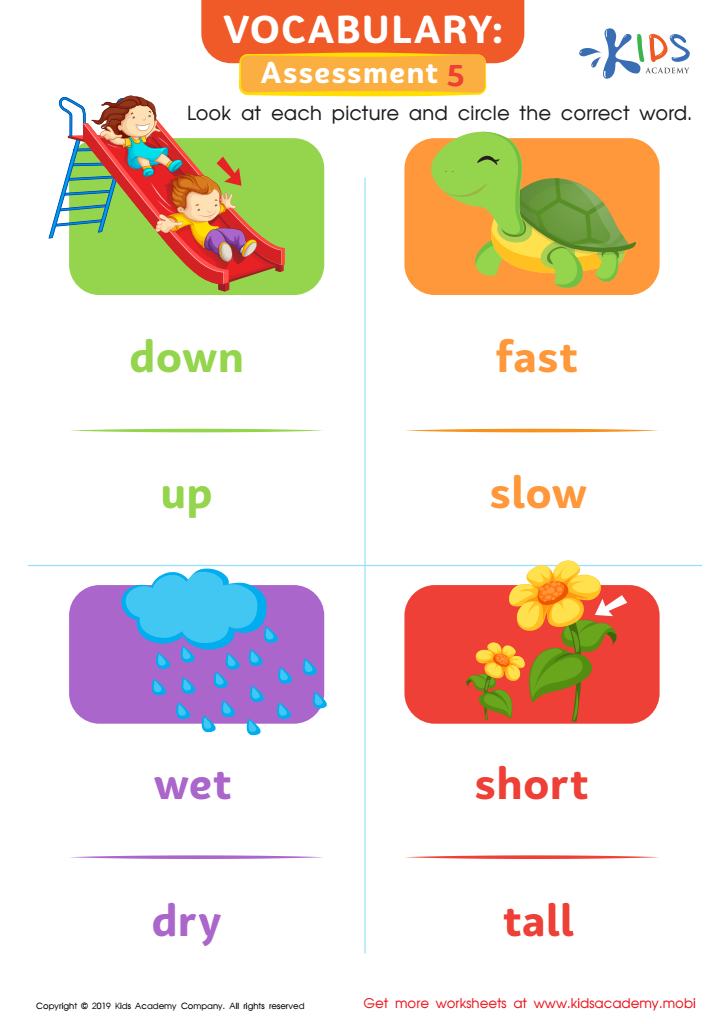
Vocabulary: Assessment 5 Worksheet
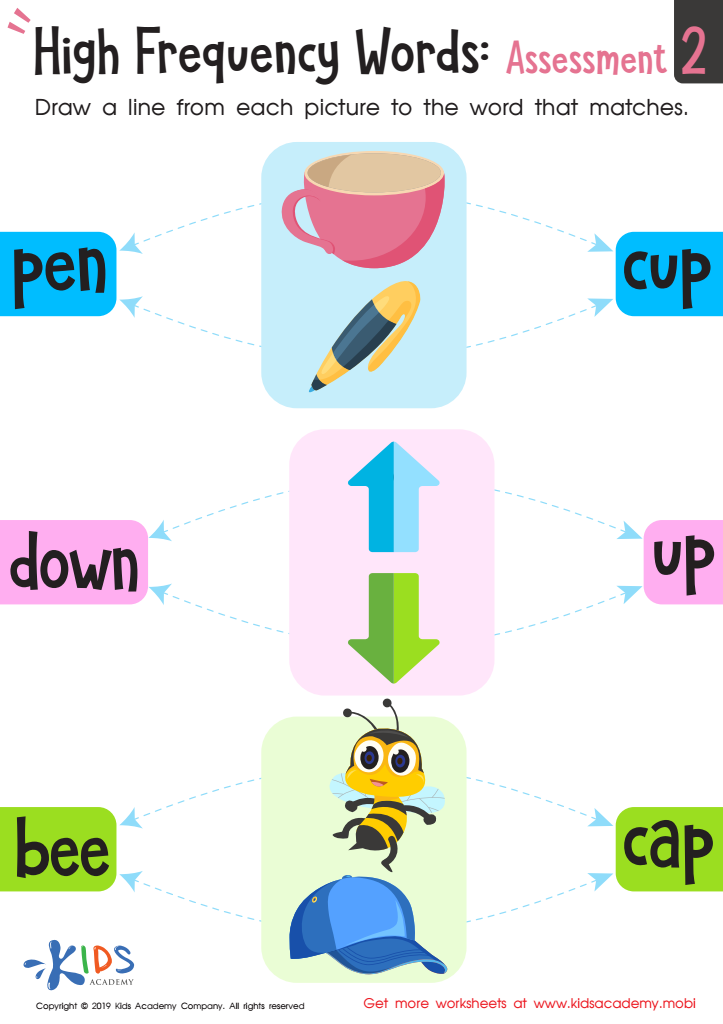
High Frequency Words: Assessment 2 Worksheet
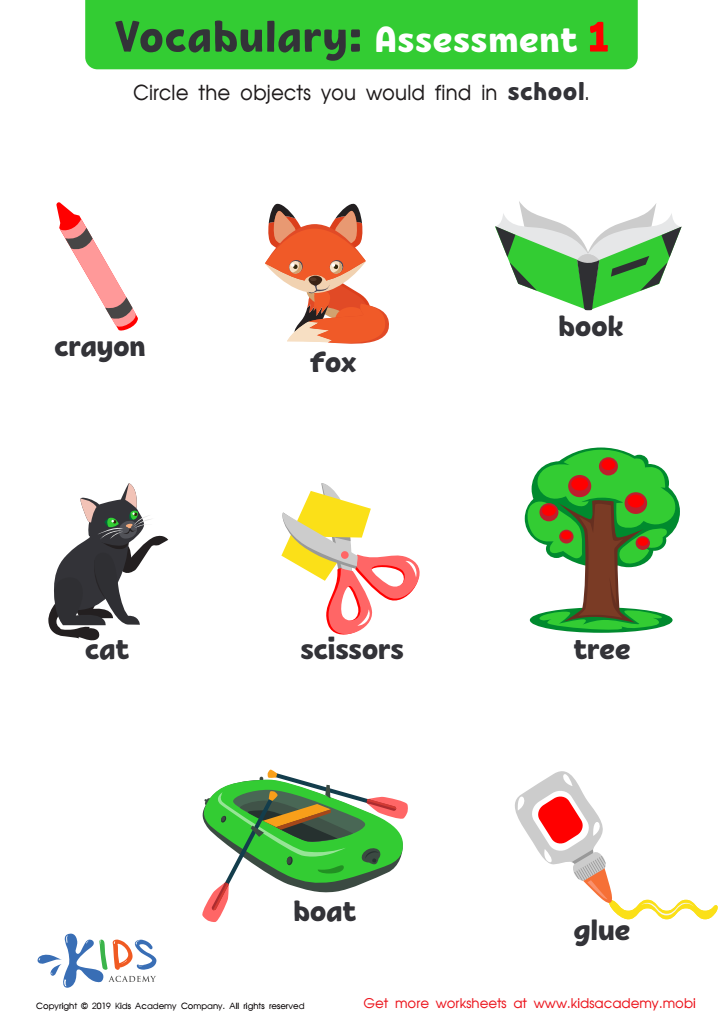
Vocabulary: Assessment 1 Worksheet
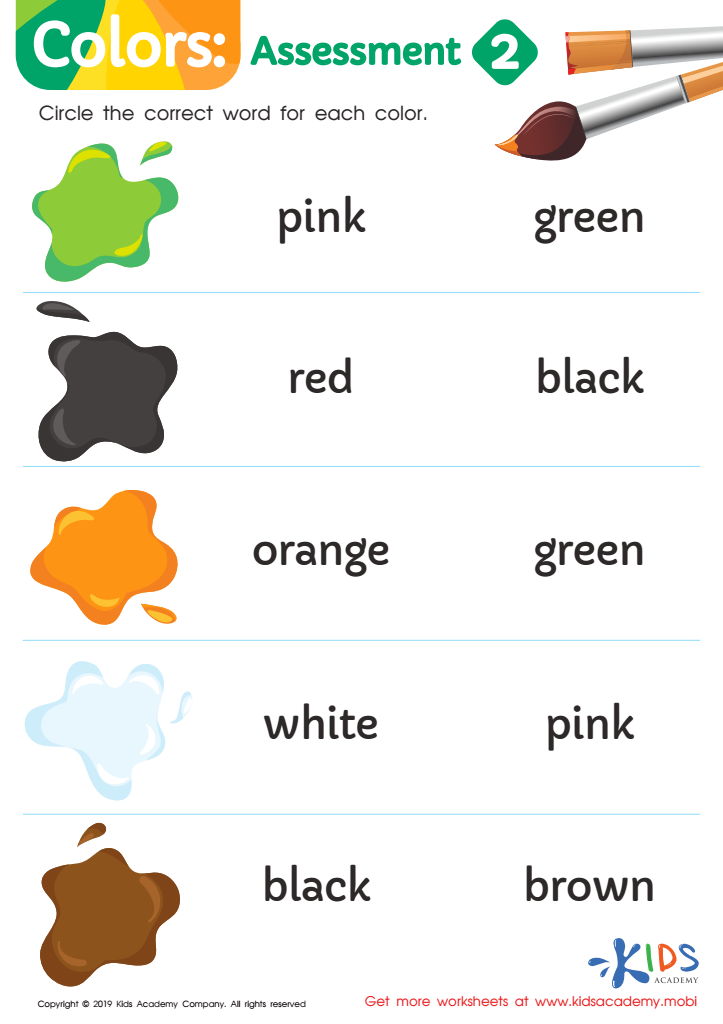
Colors: Assessment 2 Worksheet
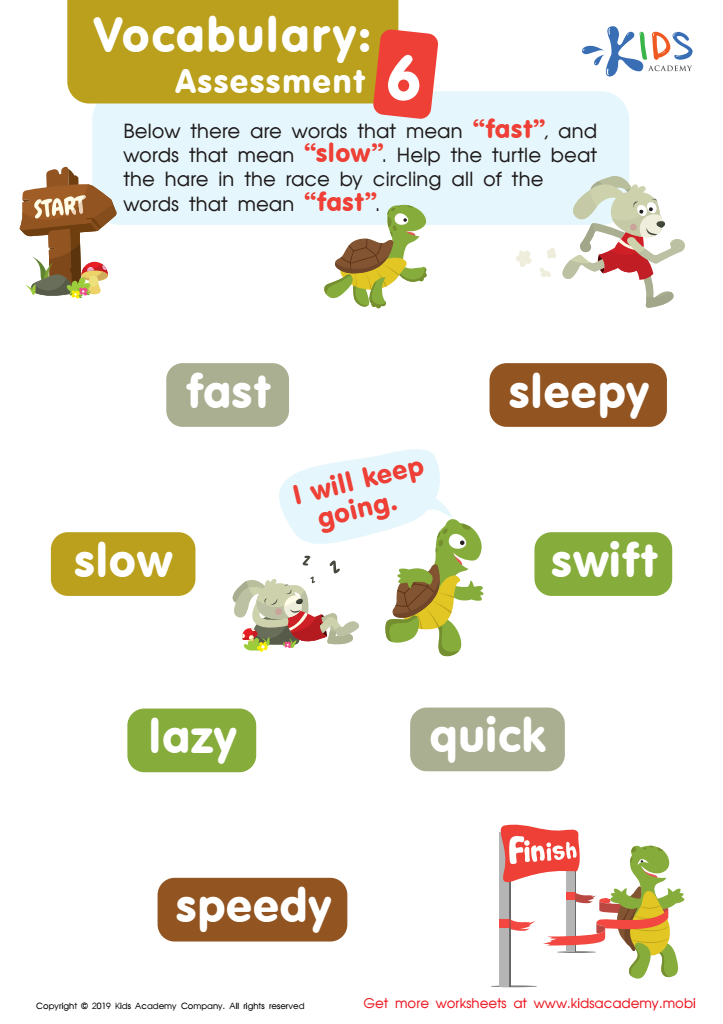
Vocabulary: Assessment 6 Worksheet
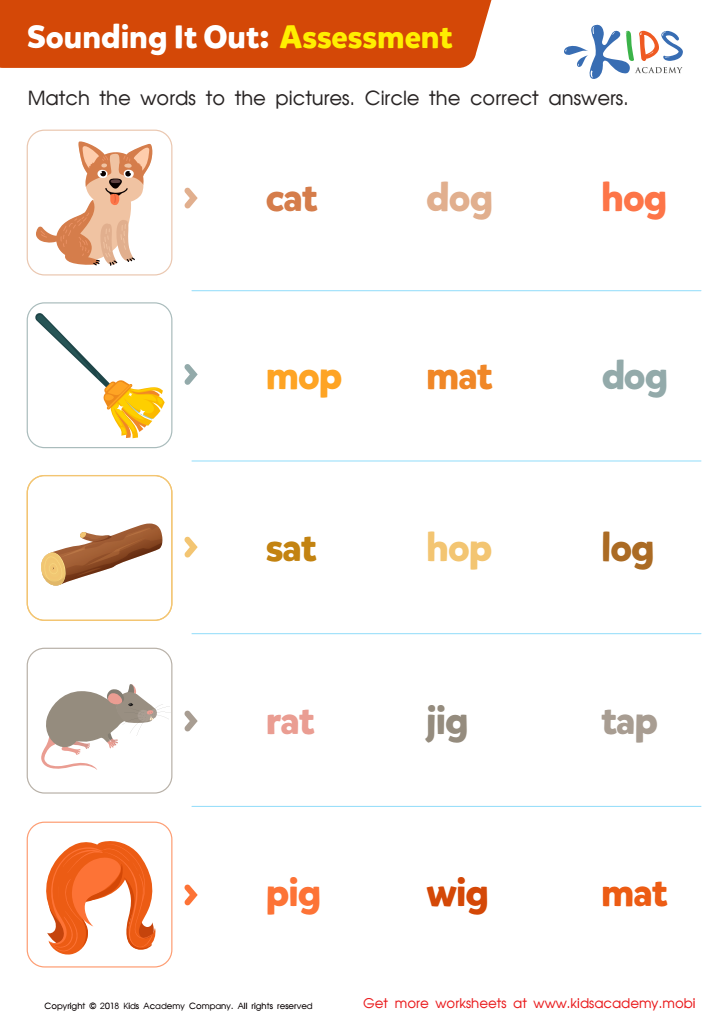
Sounding it Out: Assessment Worksheet
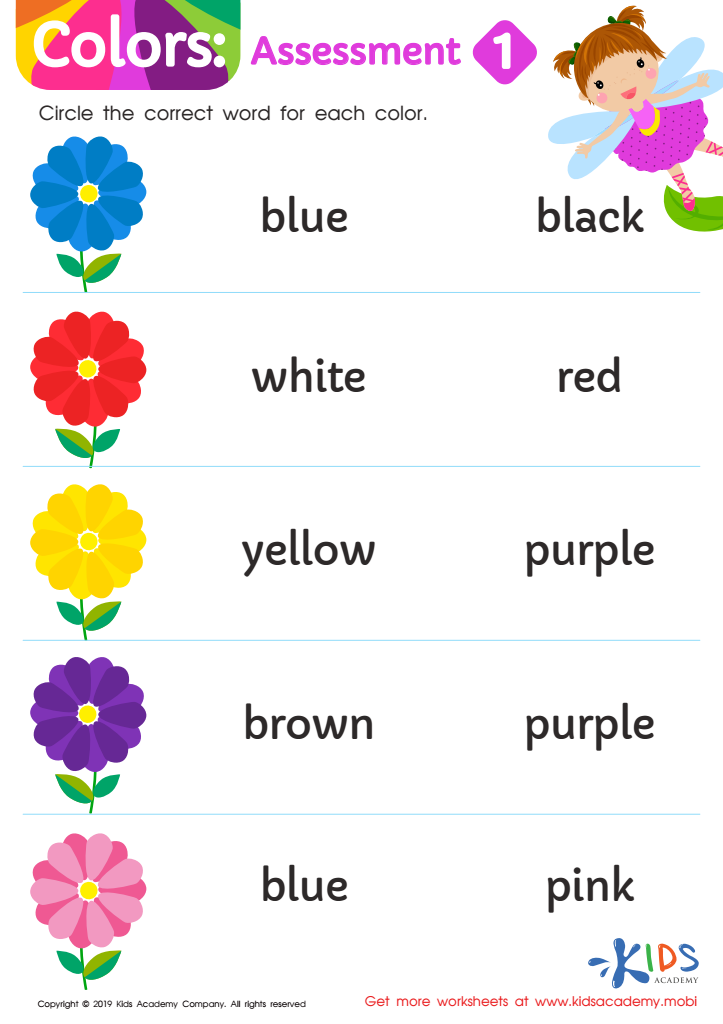
Colors: Assessment 1 Worksheet
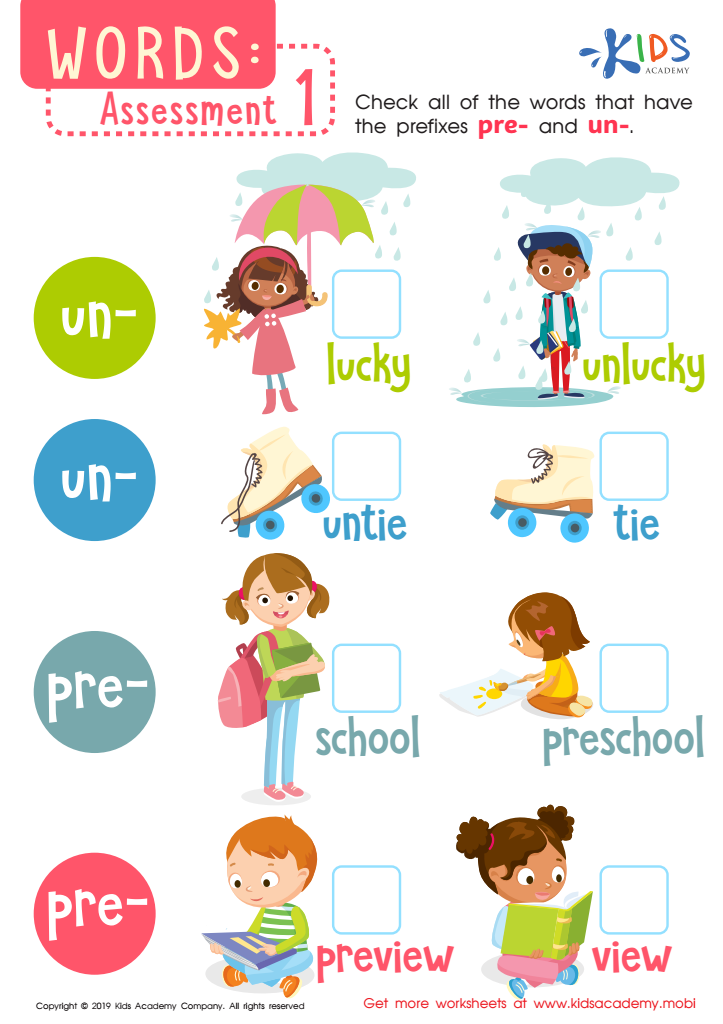
Words: Assessment 1 Worksheet
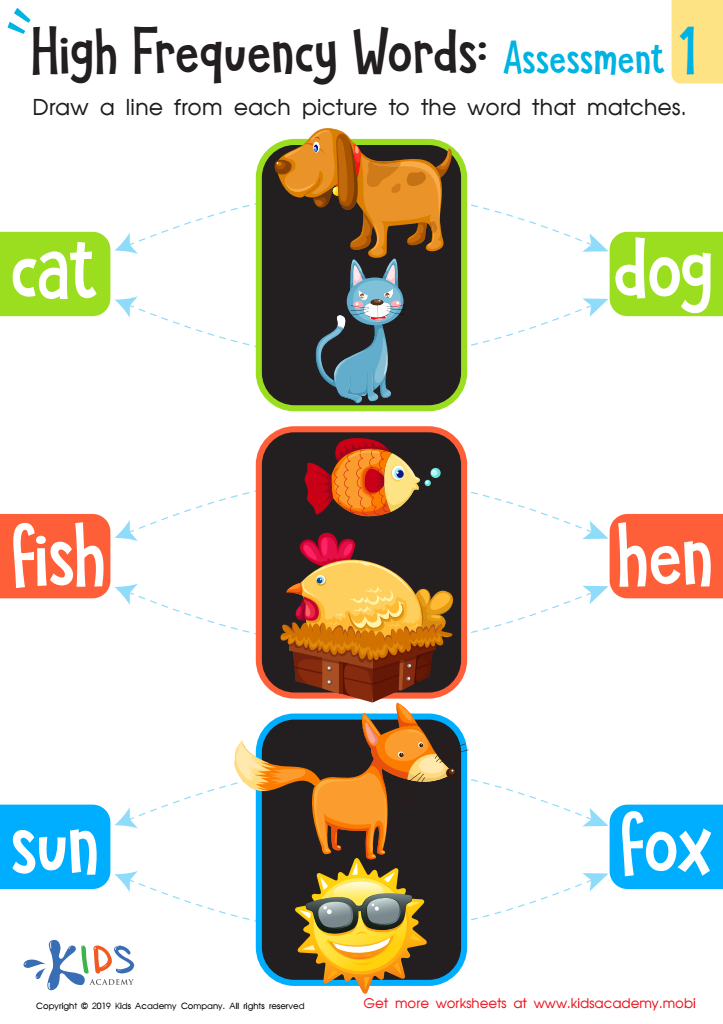
High Frequency Words: Assessment 1 Worksheet
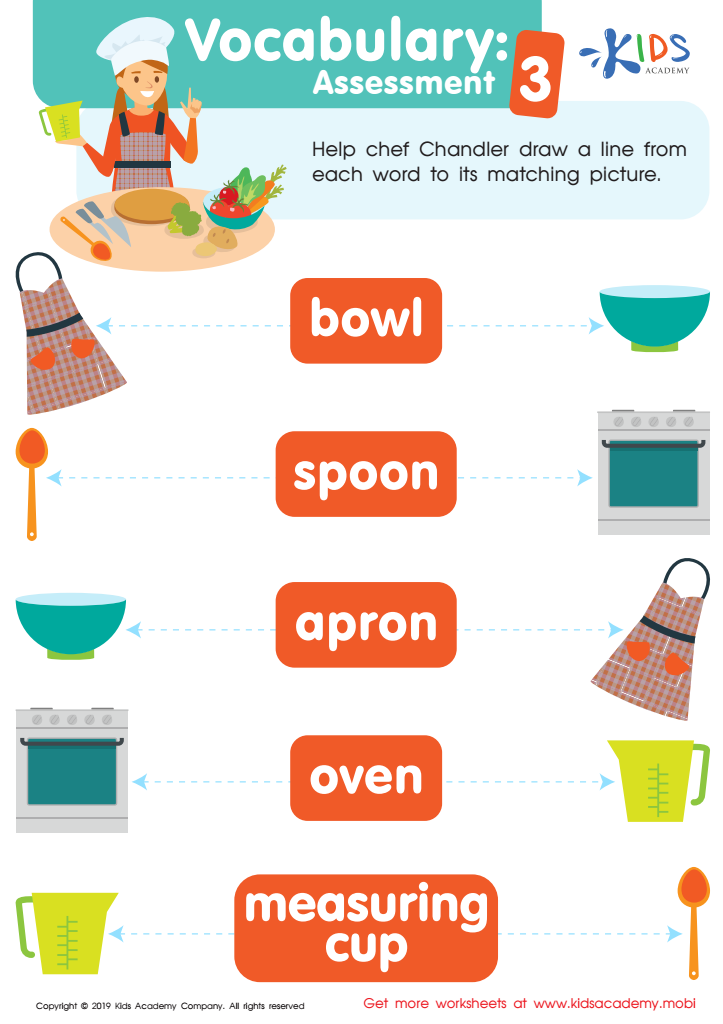
Vocabulary: Assessment 3 Worksheet
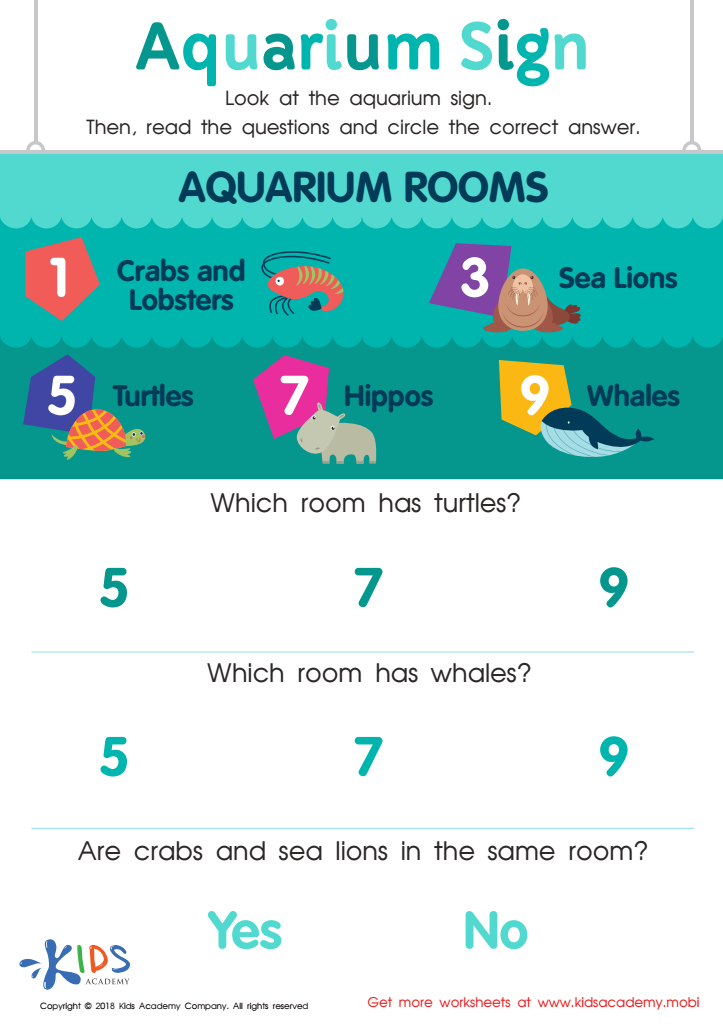
Assessment: Aquarium Sign Worksheet








Building vocabulary during the crucial early years of 3-9 years is fundamental to a child's cognitive and emotional development. This period is when children's brains are rapidly developing, and their language skills are forming. Engaging in vocabulary-building activities enhances their comprehension, communication abilities, and critical thinking. When parents or teachers prioritize vocabulary development, they set the stage for academic success, as a strong vocabulary is linked to better reading skills, writing proficiency, and overall educational achievement.
Furthermore, having a robust vocabulary allows children to express themselves confidently and understand the world around them. It fosters social skills, enabling them to engage in meaningful conversations and build relationships with peers. Simple activities, such as reading books, playing word games, and encouraging storytelling, can create an enriched language environment, making learning fun and interactive. Additionally, by introducing new words in context, children learn to use and retain them more effectively.
Ultimately, investing time in vocabulary-building activities is essential for nurturing well-rounded, articulate individuals capable of thriving academically and socially. Parents and teachers play a pivotal role in this process, as their involvement can significantly influence children's attitudes toward language and learning, setting lifelong habits for success.








