Addition & Subtraction worksheets activities for Ages 5-8 - Page 2
26 filtered results
-
From - To
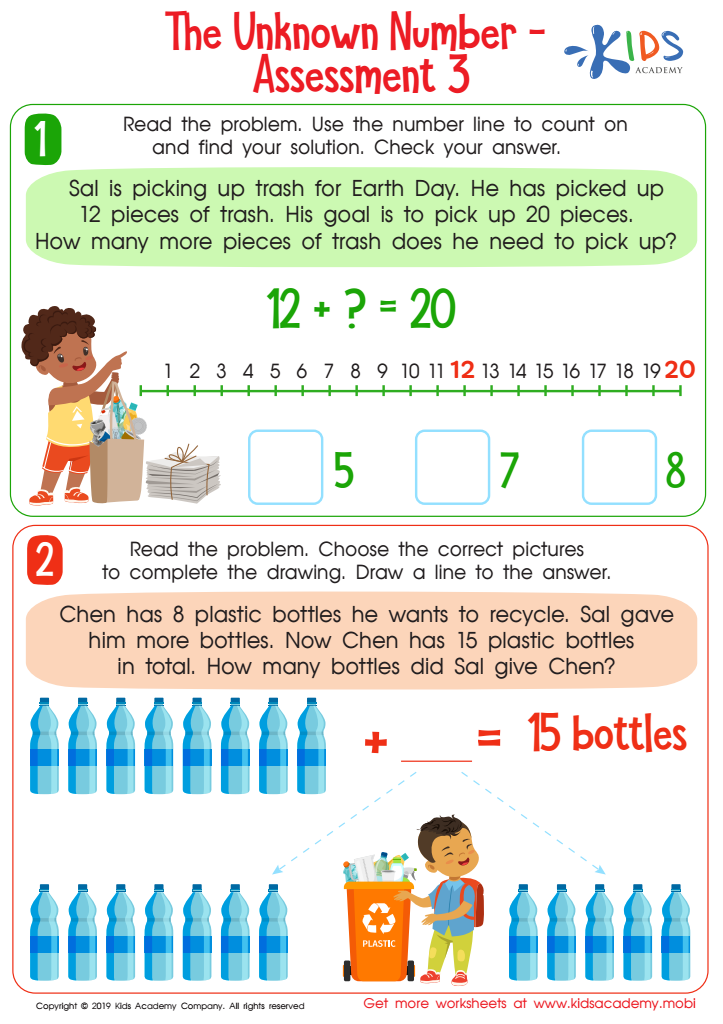
The Unknown Number - Assessment 3 Worksheet
 Assign to My Students
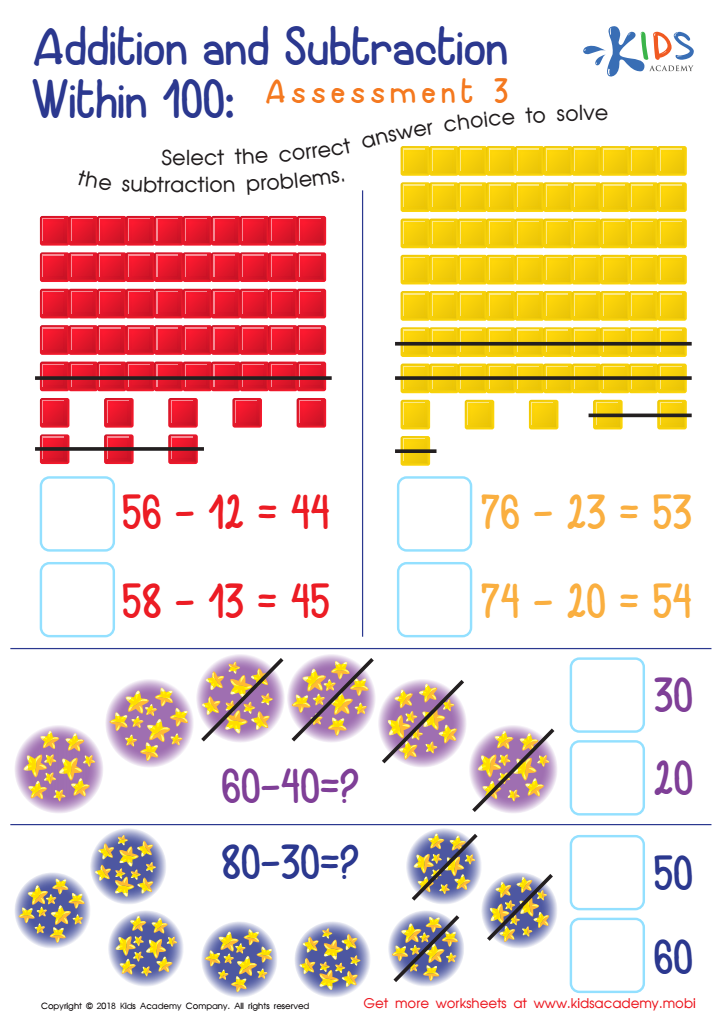
Addition and Subtraction Within 1: Assessment 3 Worksheet





.jpg)

Addition and subtraction activities for children aged 5-8 are crucial for a variety of reasons. First and foremost, they form the foundation for all future math skills. Mastering these basic operations helps children develop critical thinking and problem-solving abilities, essential in everyday life. When children engage in fun, interactive addition and subtraction activities, they learn to see numbers not just as figures but as tools for making sense of the world around them.
Moreover, these activities promote cognitive development by enhancing memory, attention, and spatial reasoning skills. They also foster perseverance as children work through challenges, building confidence in their mathematical abilities. Engaging parents and teachers in these activities creates a supportive learning environment, encouraging collaborative efforts and reinforcing concepts learned at school and home.
Furthermore, incorporating various teaching materials—such as games, manipulative objects, and technology—helps cater to diverse learning styles, ensuring that every child finds an approach that works for them. As children grasp addition and subtraction, they become better prepared for more complex mathematical concepts, leading to academic success and instilling a lifelong love of learning in mathematics. Ultimately, supporting young learners in these fundamental skills nurtures their overall educational journey.








