
Reading Non-Fiction worksheets activities for Ages 5-8
4 filtered results
Difficulty Level
Grade
Age
-
From - To
Subject
Activity
Standards
Discover engaging Reading Non-Fiction worksheets designed for children ages 5-8. Our carefully crafted activities promote critical thinking and comprehension skills while introducing young learners to the fascinating world of non-fiction literature. These worksheets feature a variety of age-appropriate topics, allowing students to explore real-world subjects, including nature, science, and history. With interactive exercises such as reading passages, comprehension questions, and fun fact-finding challenges, children will develop essential literacy skills in an enjoyable way. Perfect for both classroom and home use, our non-fiction worksheets cultivate curiosity and support a lifelong love of learning. Empower your students today with these valuable resources!
Favorites
With answer key
Interactive
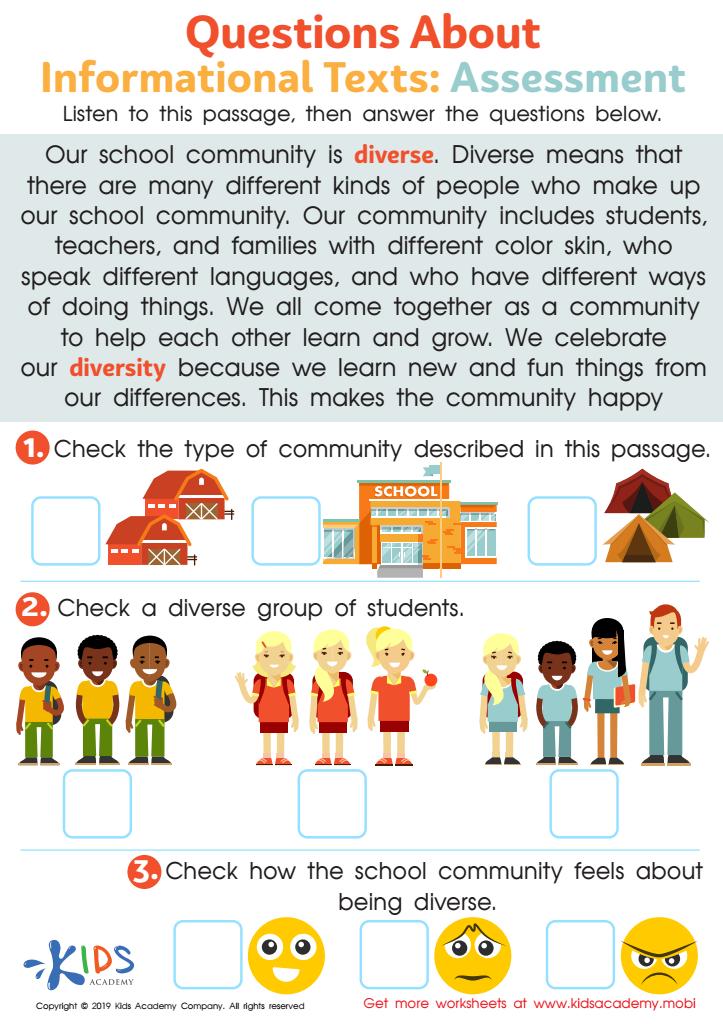
Questions About Informational Texts: Assessment 1 Worksheet
Ask your students: What comes to mind when we talk about a community? What different habits do people practice? What do fellow students do that seems strange? Read this passage aloud to your kindergartners and make sure they understand it. Then, answer the questions at the bottom of the page. (80 words)
 Assign to My Students
Questions About Informational Texts: Assessment 1 Worksheet
Worksheet
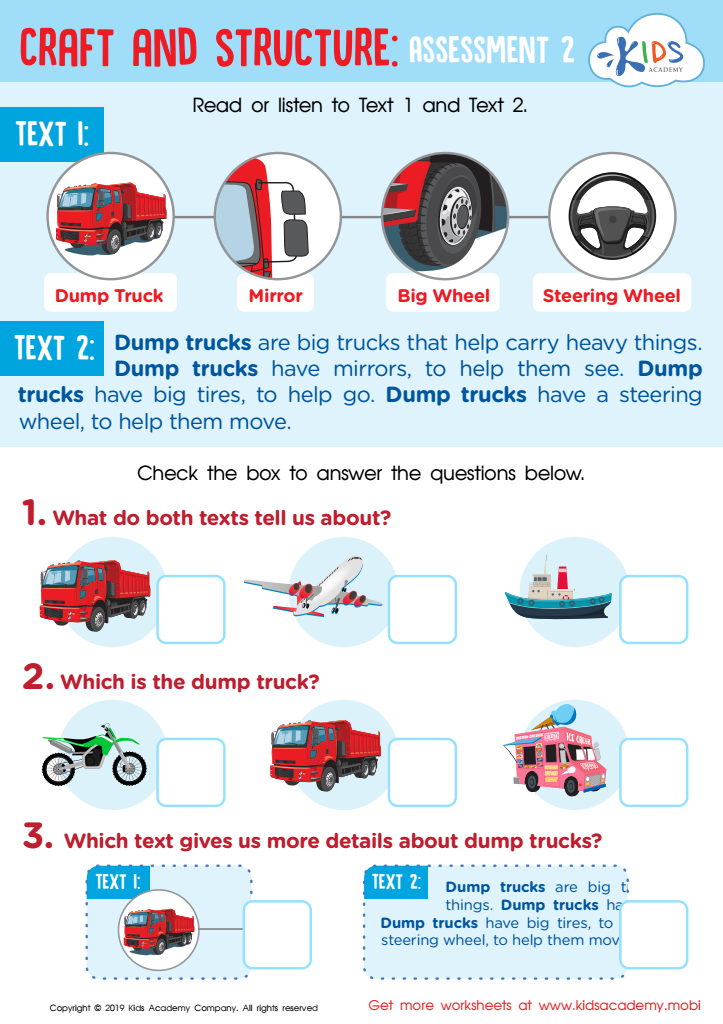
Craft and Structure: Assessment 2 Worksheet
Good readers need to analyze text features and use picture clues to understand. This assessment worksheet gives your child info in different formats and they can show understanding using answer options to check the correct answers. (80 words)
Craft and Structure: Assessment 2 Worksheet
Worksheet
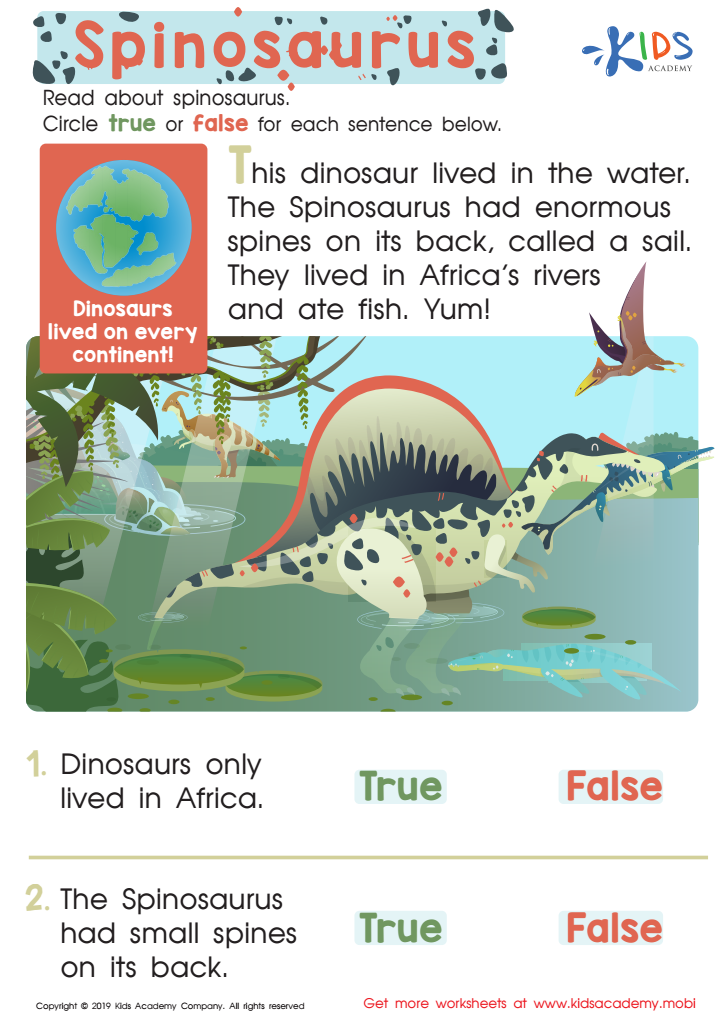
Spinosaurus Assessment Worksheet
Take your child on a journey to discover the Spinosaurus! This worksheet combines an engaging nonfiction passage about this incredible dinosaur with comprehension questions. Invite kids to read the text before deciding if the statements are true or false. Then, have them circle the right answers to complete the activity.
Spinosaurus Assessment Worksheet
Worksheet
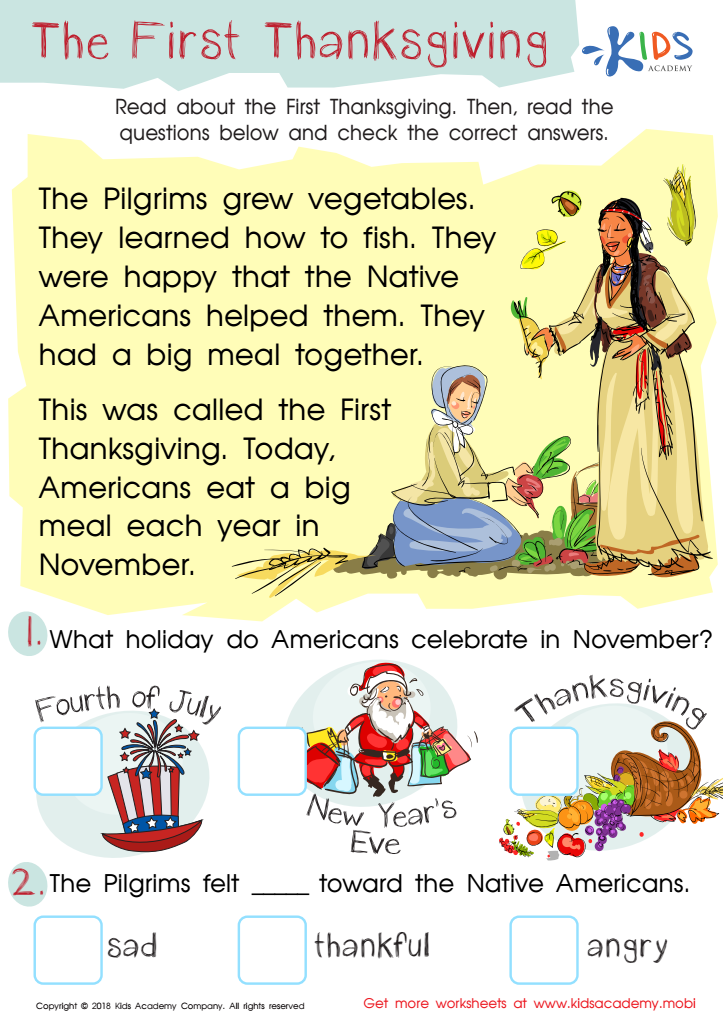
Assessment: First Thanksgiving Worksheet
When the Pilgrims arrived in America in 1620, they met the Native Americans and formed a pact to live in harmony. The Native Americans taught the Pilgrims how to survive in the new land, which helped them celebrate the First Thanksgiving. Read this text to your children and help them answer the questions below.
Assessment: First Thanksgiving Worksheet
Worksheet
Join Kids Academy for Free
Who is primarily going to use this learning content?





Parents and teachers should prioritize reading non-fiction activities for children aged 5-8 because these experiences significantly enhance a child's learning and development. At this age, children are naturally curious about the world around them, and non-fiction texts cater to that curiosity, providing factual information and knowledge about diverse subjects such as animals, history, science, and cultures. Engaging with non-fiction fosters critical thinking, as it encourages children to ask questions, analyze information, and draw conclusions based on real-world contexts.
Moreover, reading non-fiction helps develop essential literacy skills. It introduces children to different text structures and vocabulary that are often distinct from narrative literature, improving their comprehension and ability to process information. These activities also promote discourse around informative topics, enriching vocabulary and encouraging conversational skills.
Furthermore, non-fiction reading can inspire creativity and innovation. When children learn about various topics, they often draw connections to their own lives, sparking imagination and nurturing a lifelong love for learning. By integrating non-fiction reading into their educational activities, parents and teachers support not only academic skills but also a child's enthusiasm for exploration and understanding of the world, preparing them for future educational pursuits and real-life experiences.








