Grammar worksheets activities for Ages 6-9
4 filtered results
-
From - To
Explore our engaging grammar worksheets tailored for children ages 6-9! Our carefully designed activities foster a fun learning environment, helping young learners grasp essential grammar concepts. Covering topics like nouns, verbs, adjectives, and sentence structure, each worksheet encourages critical thinking and creativity. With colorful visuals and interactive exercises, students will enjoy enhancing their grammar skills while building confidence in their writing abilities. Ideal for classroom use or at-home practice, these resources support different learning styles and promote language development. Perfect for both educators and parents, our grammar worksheets are a valuable addition to every child's educational journey!
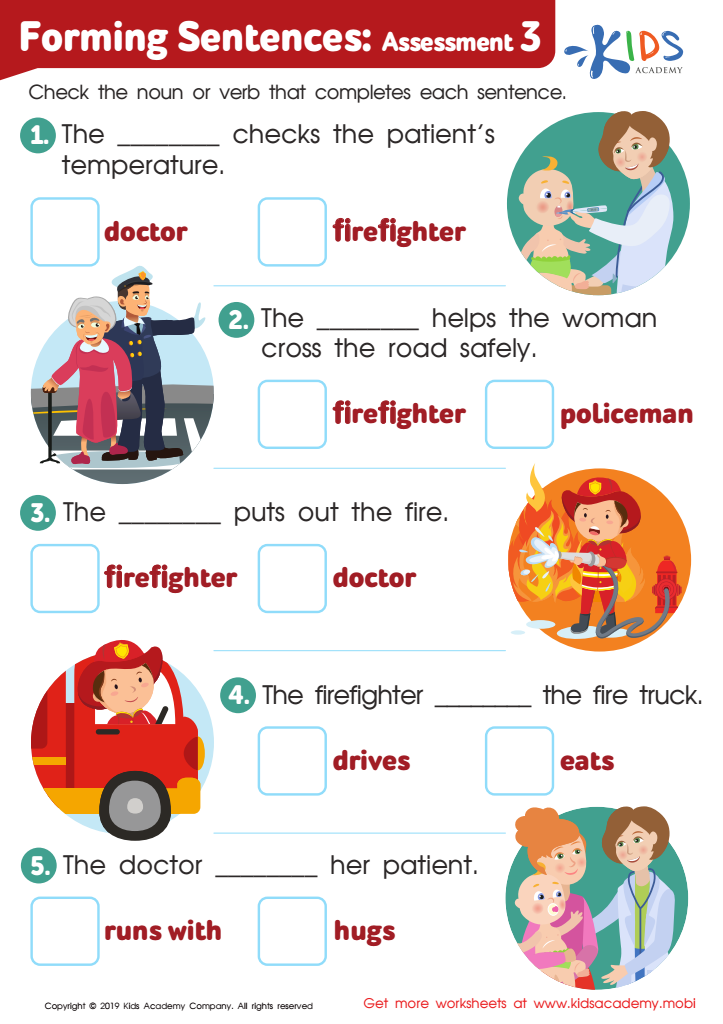
Forming Sentences: Assessment 3 Worksheet
 Assign to My Students
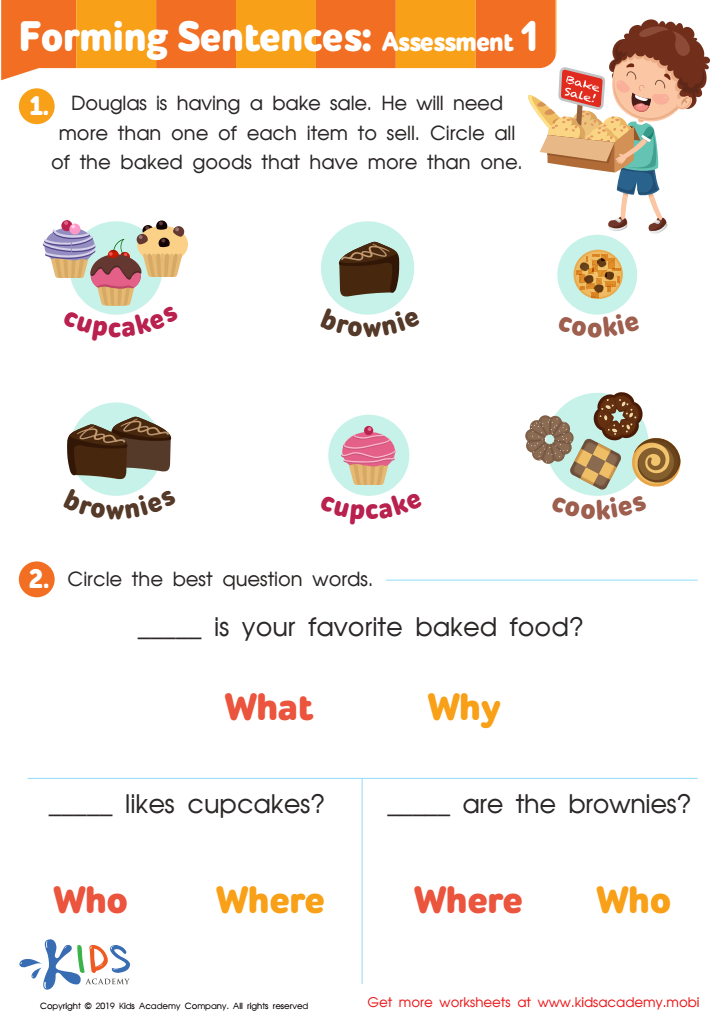
Forming Sentences: Assessment 1 Worksheet
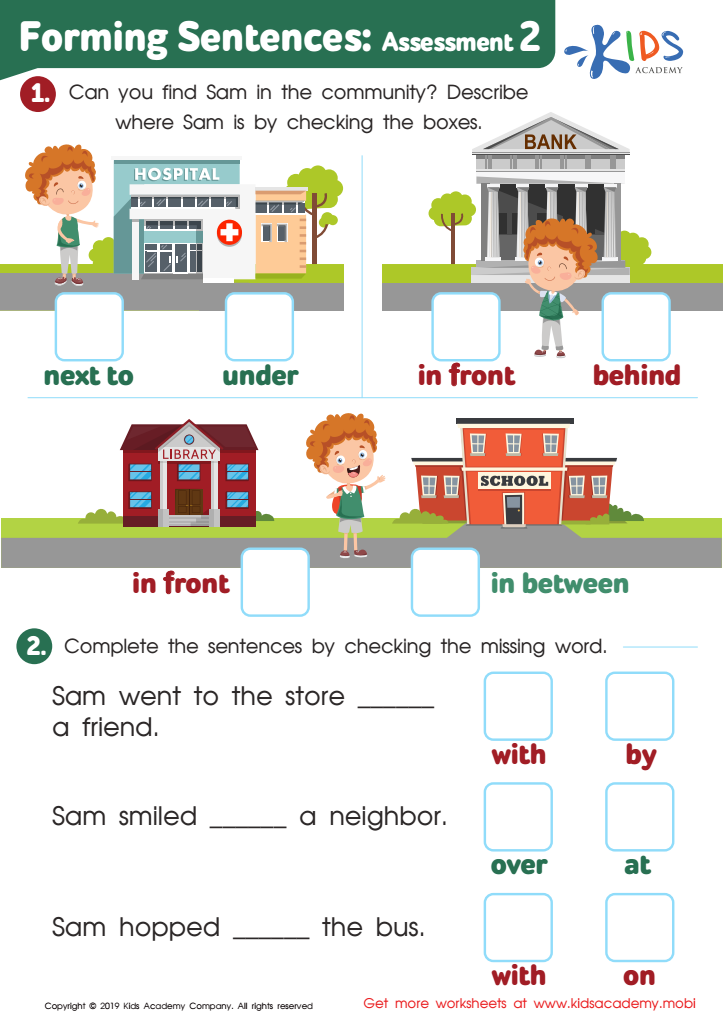
Forming Sentences: Assessment 2 Worksheet
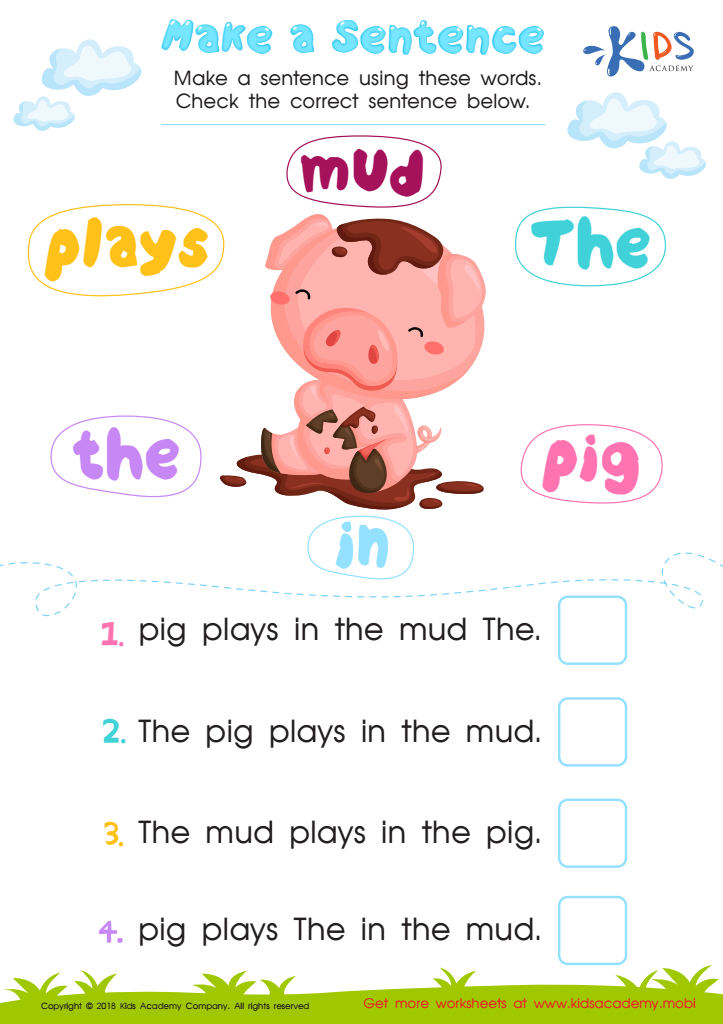
Assessment: Make a Sentence Worksheet






Grammar activities for children aged 6-9 are essential for several reasons. At this age, children are developing foundational language skills that will support their academic and social interactions throughout life. Engaging in grammar activities helps children understand the structure of sentences, the function of words, and the relationships between ideas, making their communication clearer and more effective.
Furthermore, these activities promote critical thinking, as children learn to analyze and construct sentences correctly. This skill is not only crucial for writing but also for reading comprehension, allowing children to understand and interpret the texts they encounter. Early exposure to grammar can boost a child's confidence in language arts, fostering a love for reading and writing.
Additionally, teaching grammar at a young age provides a strong framework for future learning. As children progress in their education, the complexity of language will increase. A solid understanding of grammar principles lays the groundwork for more advanced language skills, helping them excel academically.
Ultimately, grammar activities nurture communication skills, creativity, and intellectual development, ensuring children are well-prepared for future educational experiences and real-world interactions. Parents and teachers play a vital role in this process, encouraging young learners to explore and enjoy language.








