
Understanding ecosystems Science Worksheets for Ages 3-4
4 filtered results
Difficulty Level
Grade
Age
-
From - To
Subject
Activity
Standards
Discover our "Understanding Ecosystems" Science Worksheets designed specifically for children ages 3-4. These engaging resources introduce young learners to basic ecological concepts through fun activities and colorful illustrations. Kids will explore the relationships between plants, animals, and their environments, fostering a curiosity about nature. Each worksheet encourages hands-on learning, focusing on key skills such as observation and critical thinking. Ideal for parents and educators, these worksheets are a great way to spark conversations about ecosystems and promote environmental awareness from an early age. Download today and inspire your little ones to explore the wonders of the natural world!
Favorites
With answer key
Interactive
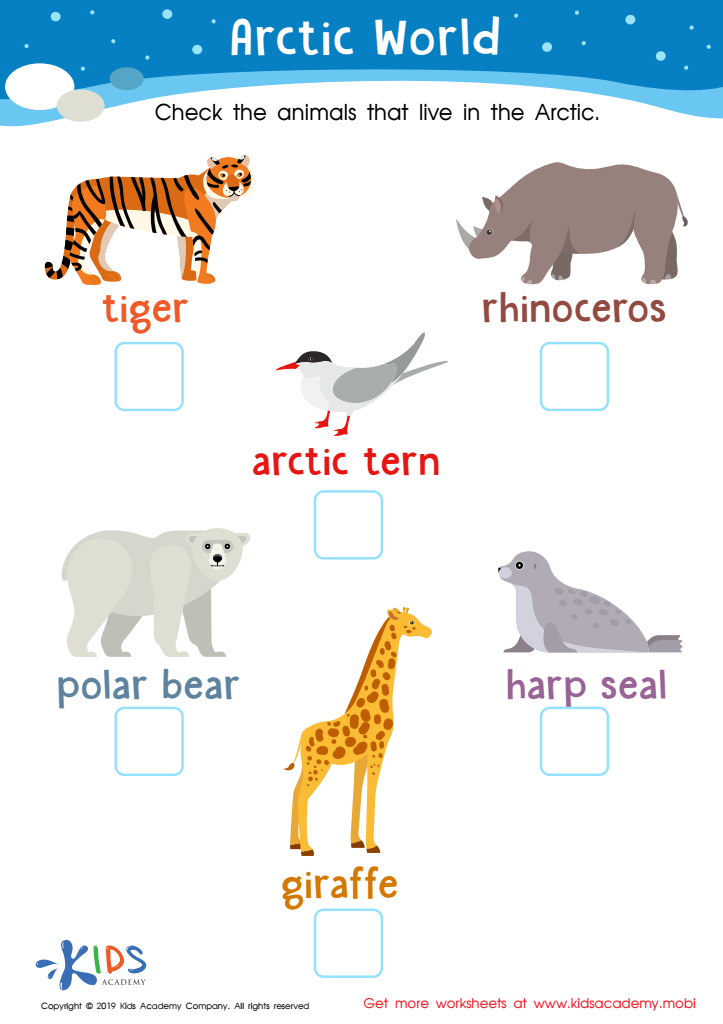
Arctic World Worksheet
Ask your students if they know where the Arctic is located and what lives there. If not, use a world atlas to show them. The Arctic is very cold and snow-covered; native animals have adapted to survive the harsh conditions. Look at the animals in the worksheet and help your students decide which ones live in the Arctic.
 Assign to My Students
Arctic World Worksheet
Worksheet
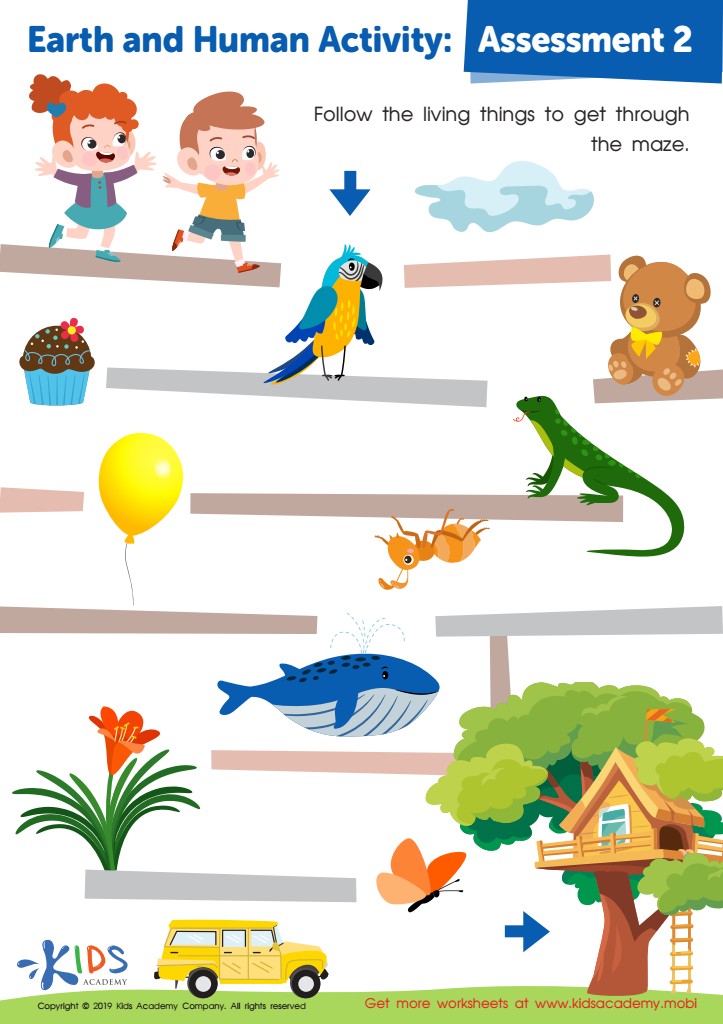
Earth and Human Activity: Assessment 2 Worksheet
Earth is alive with birds, trees, insects, and animals. Explain to your kids that the environment on Earth supports life. Ask for examples, then use the worksheet pictures to help them identify living things and complete the maze.
Earth and Human Activity: Assessment 2 Worksheet
Worksheet
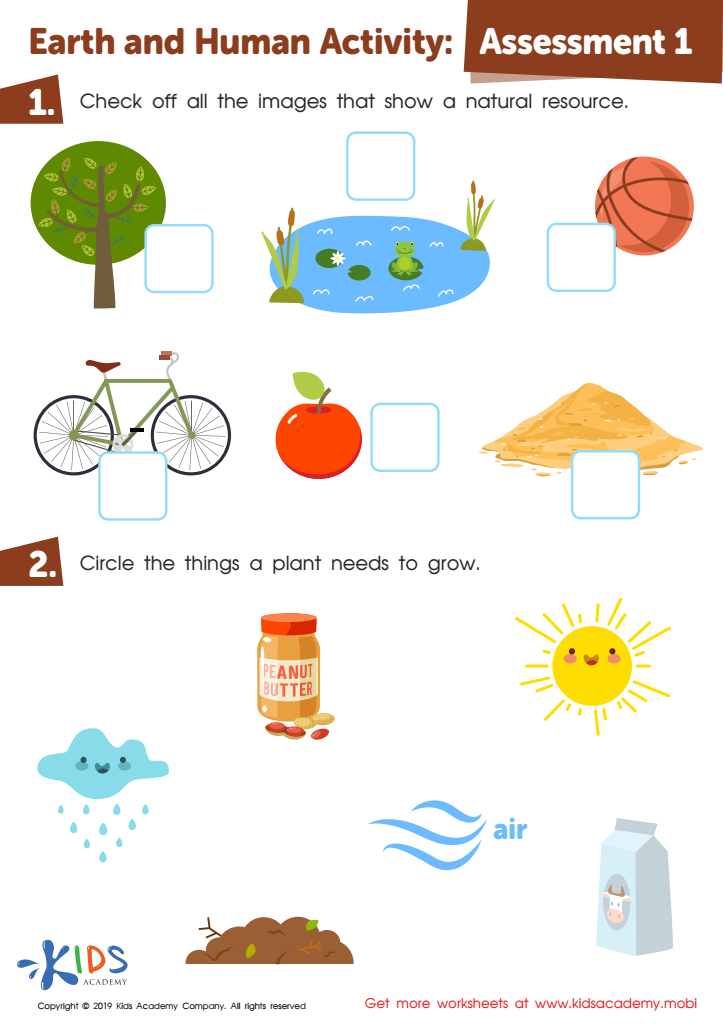
Earth and Human Activity: Assessment 1 Worksheet
Natural resources are gifts from Mother Nature that exist without man-made intervention. We use them to make essential items we use daily. Ask your kids for examples and have them check off images of natural resources on this worksheet.
Earth and Human Activity: Assessment 1 Worksheet
Worksheet
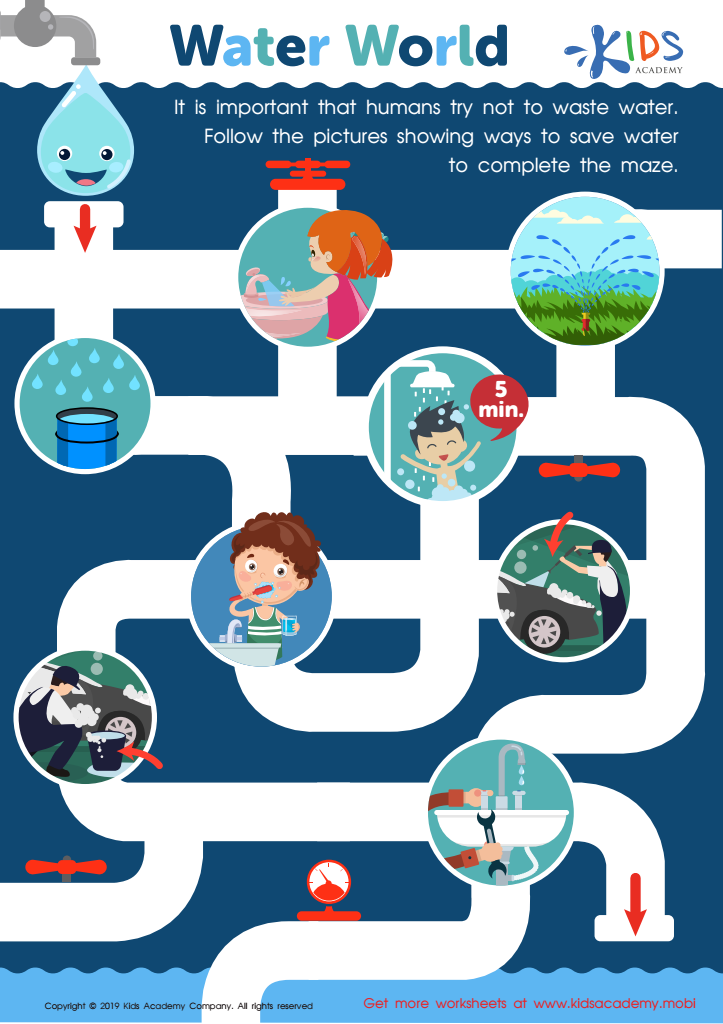
Water World Worksheet
Water is a vital necessity for living. Our bodies depend on it to stay healthy and survive. When we don't drink enough water, we become thirsty and run the risk of getting sick. Luckily, our planet is full of water and natural sources to stay hydrated. To prevent water waste, use this worksheet to teach your students how to conserve it and complete the maze.
Water World Worksheet
Worksheet
Join Kids Academy for Free
Who is primarily going to use this learning content?








Understanding ecosystems at an early age is crucial for the holistic development of children aged 3-4. This foundational knowledge fosters a sense of curiosity about the natural world. When children learn about ecosystems, they begin to understand the interdependence of plants, animals, and humans, nurturing a sense of responsibility toward nature.
For parents and teachers, introducing the basics of ecosystems enhances critical thinking and observational skills. Engaging activities, such as exploring gardens, observing insects, or discussing weather changes can promote hands-on learning and inspire scientific inquiry. This interaction with the environment encourages children to ask questions, thus developing their reasoning and comprehension skills.
Additionally, early exposure to eco-awareness helps instill values of sustainability and stewardship from a young age. Children learn the importance of preserving their surroundings, which can form the foundation for environmentally responsible behaviors in later life.
Ultimately, comprehending ecosystems enriches preschoolers’ cognitive, emotional, and social development, allowing them to convey ideas, engage in conversations about nature, and appreciate the diverse tapestry of life. Parents and educators play a pivotal role as facilitators of this exciting journey, shaping future generations who care for our planet.







