Filters

21 filtered results

Clear all filters
Favorites
With answer key
Interactive

21 filtered results

Difficulty Level

Grade


Enhance your child's learning experience with our Hand-eye Coordination Addition & Subtraction Worksheets, specifically designed for ages 3-5. These engaging worksheets not only introduce foundational math concepts through fun addition and subtraction activities, but also promote essential hand-eye coordination skills. With vibrant illustrations and interactive exercises, young learners will enjoy developing their mathematical abilities while honing their fine motor skills. Perfect for preschoolers and early learners, our worksheets encourage playful learning and creativity throughout their educational journey. Explore our collection today and provide your little ones with the tools they need for a successful start in math!
Check out this FREE Trial Lesson on Addition & Subtraction for age 3-5!

Writing Number Sentences for Subtraction Picture Problems

Favorites
With answer key
Interactive
  • 3-5
  • Hand-eye Coordination
  • Addition & Subtraction
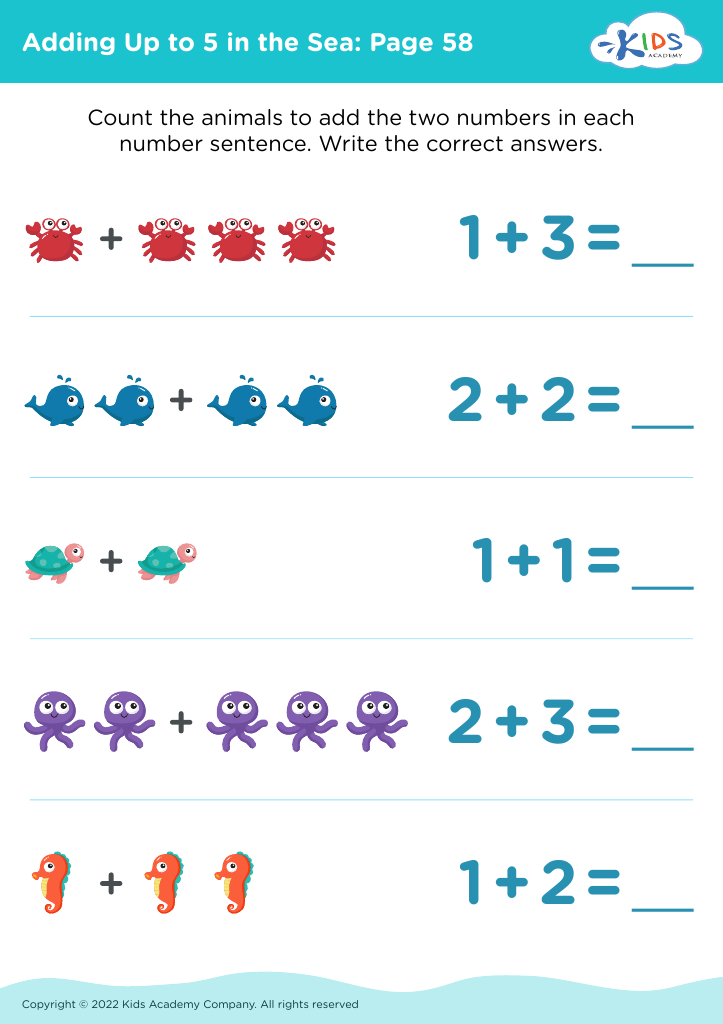
Adding Up to 5 in the Sea: Page 58
Worksheet
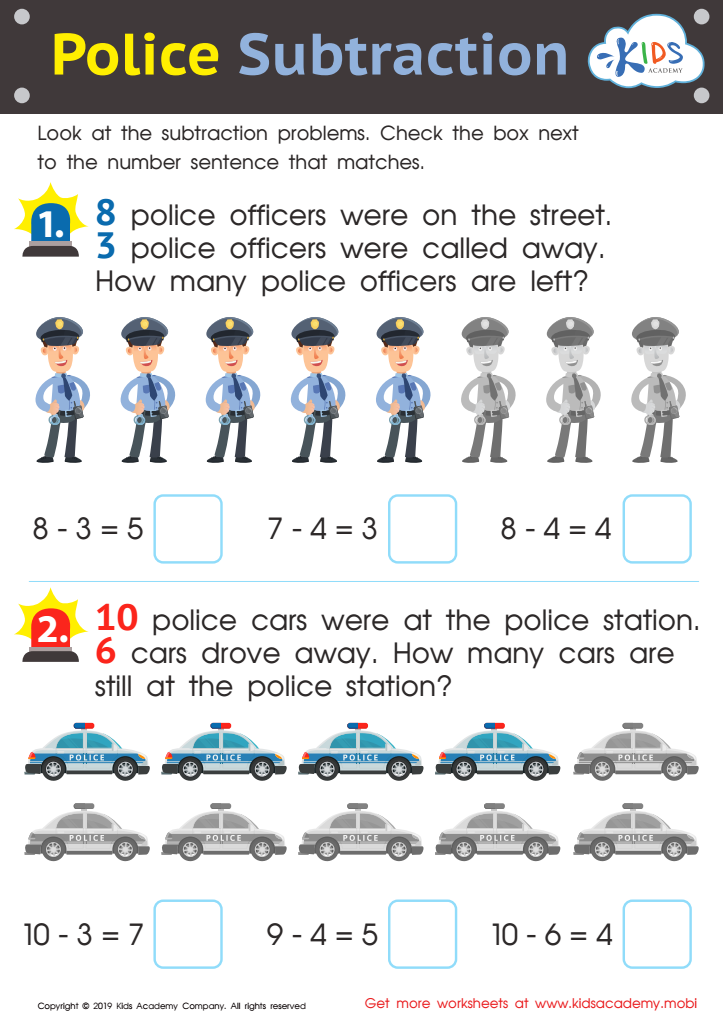
Police Subtraction Worksheet

Police Subtraction Worksheet

Police protect citizens and do more in the community. Kids can learn numbers with this math worksheet: two subtraction problems in the downloadable PDF. Read the problems with your kids, then check the box next to the number sentences that are correct.
Police Subtraction Worksheet
Worksheet
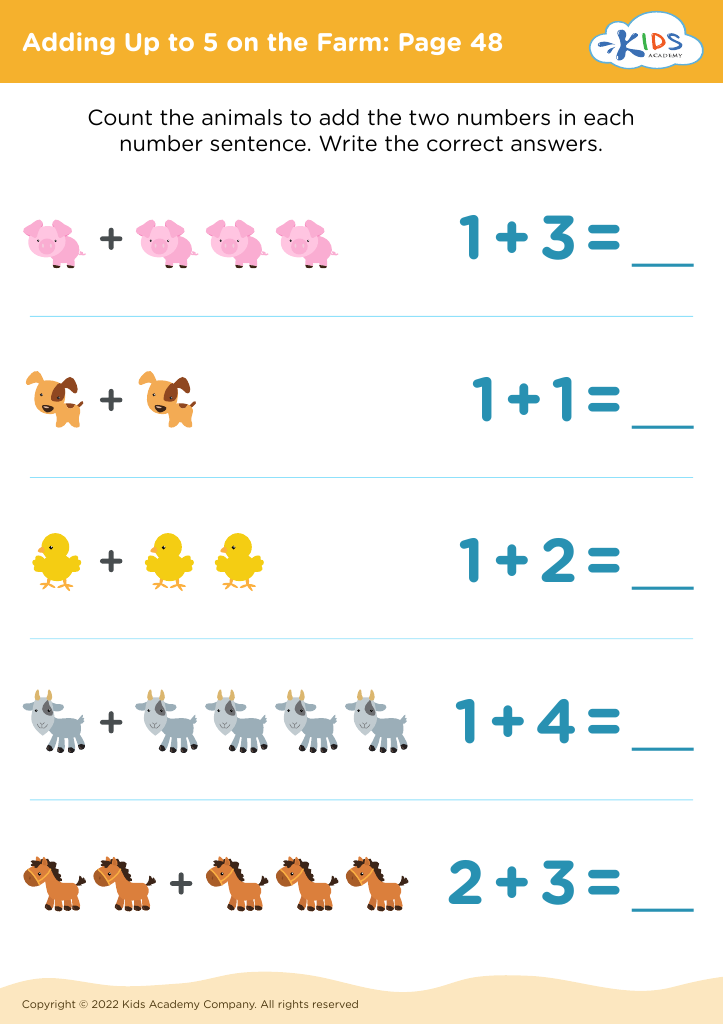
Adding Up to 5 on the Farm: Page 48
Worksheet
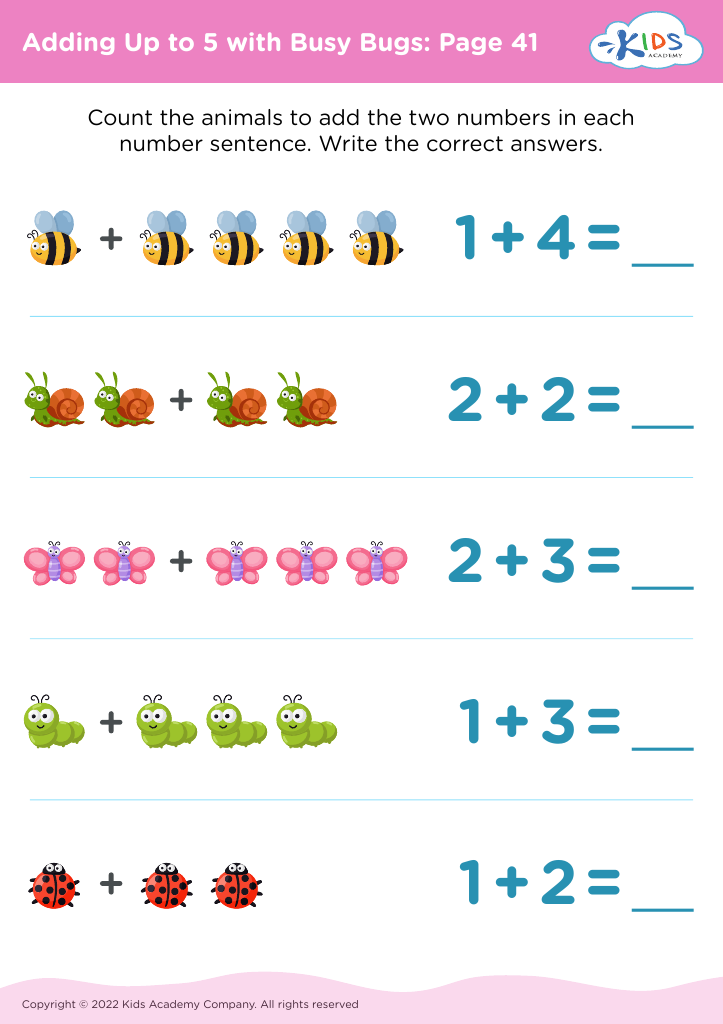
Adding Up to 5 with Busy Bugs: Page 41
Worksheet
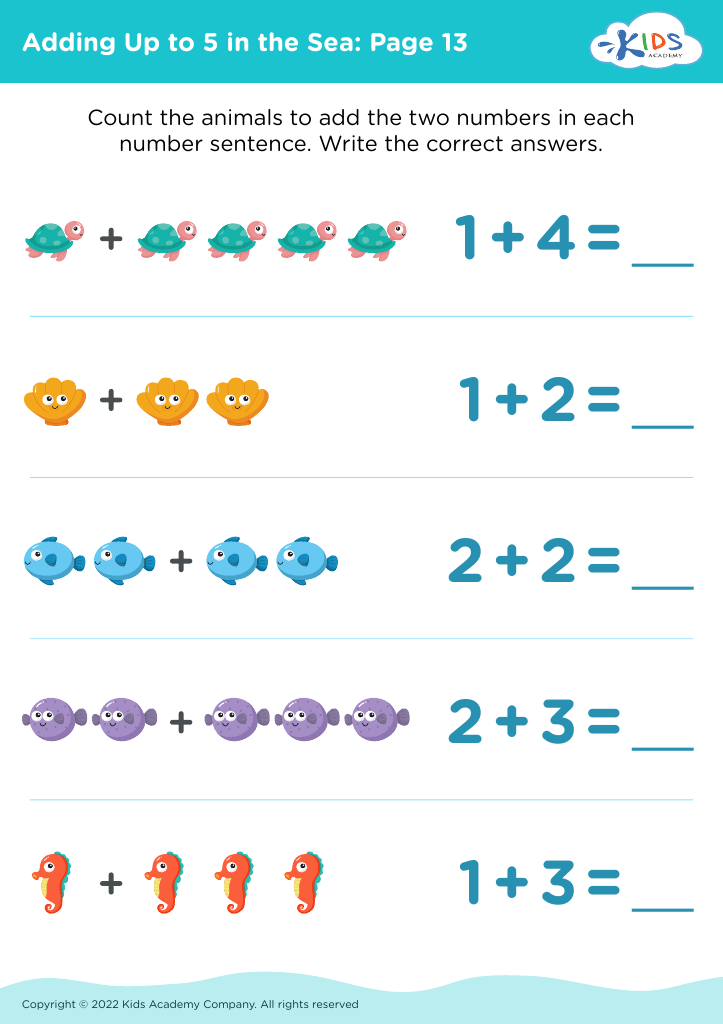
Adding Up to 5 in the Sea: Page 13
Worksheet
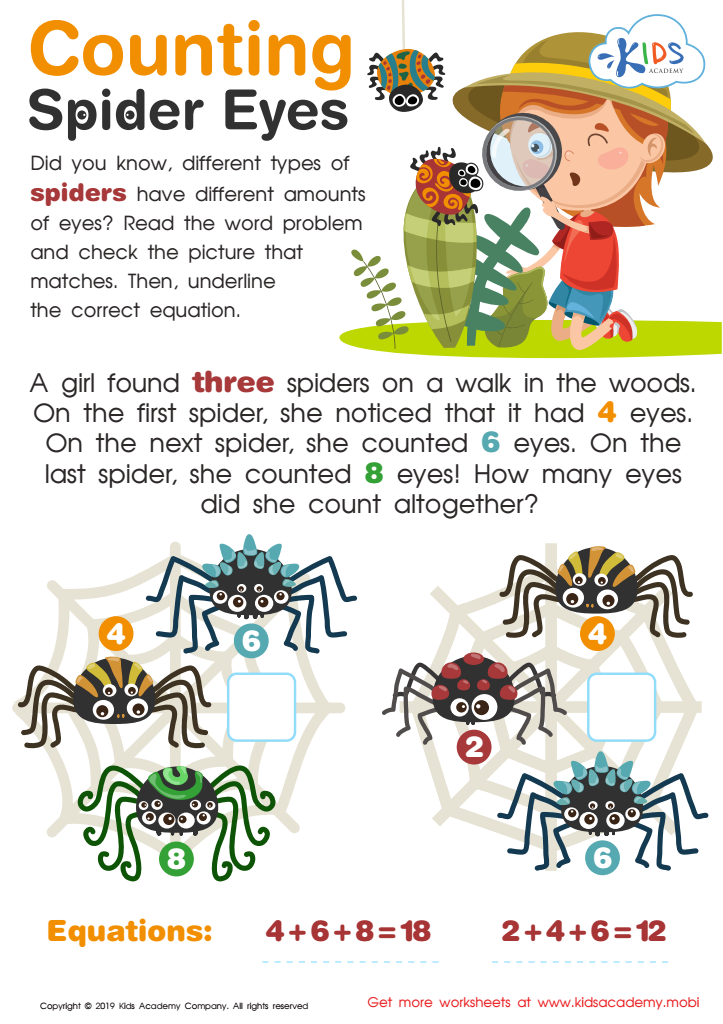
Counting Spider Eyes Worksheet

Counting Spider Eyes Worksheet

Did you know different spiders have different eye numbers? Kids will love learning this fact and solving the spider word problems on this free worksheet! Word problems promote a deeper understanding of the concept, plus they get to add up the spiders’ eyes while solving addition problems with more than one addend. Fun and math all in one!
Counting Spider Eyes Worksheet
Worksheet
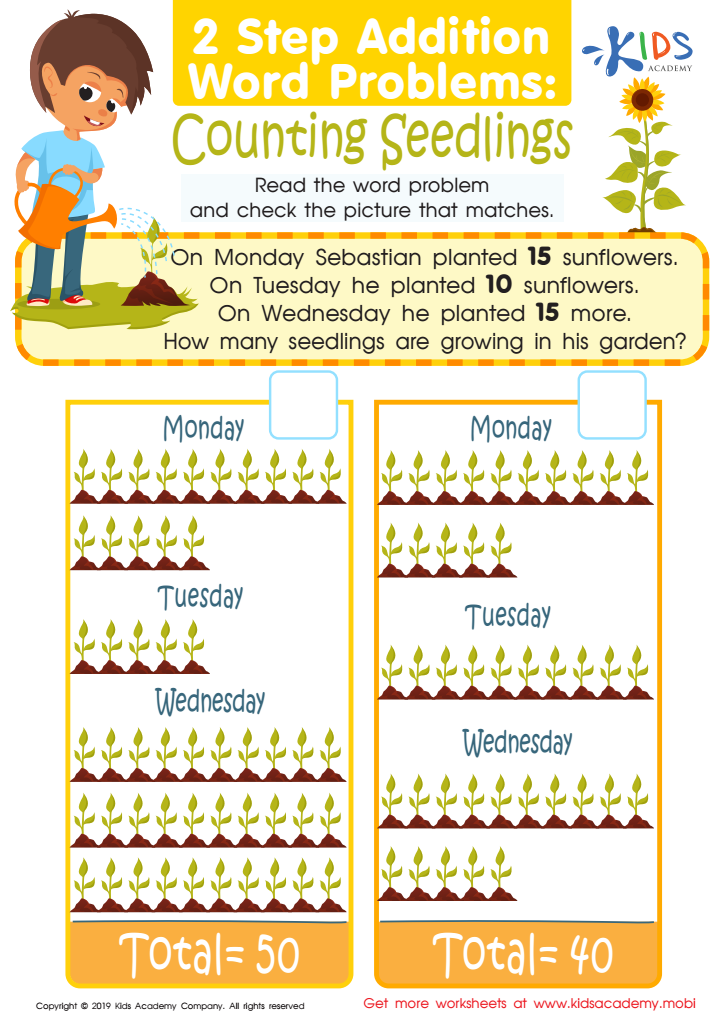
Counting Seedlings Worksheet
Counting Seedlings Worksheet
Understanding math word problems is key. Multiple steps can prove challenging - this free worksheet provides one-to-one picture representation to help kids solve multi-step addition word problems. Strengthen addition skills by choosing the matching picture to the answer.
Counting Seedlings Worksheet
Worksheet
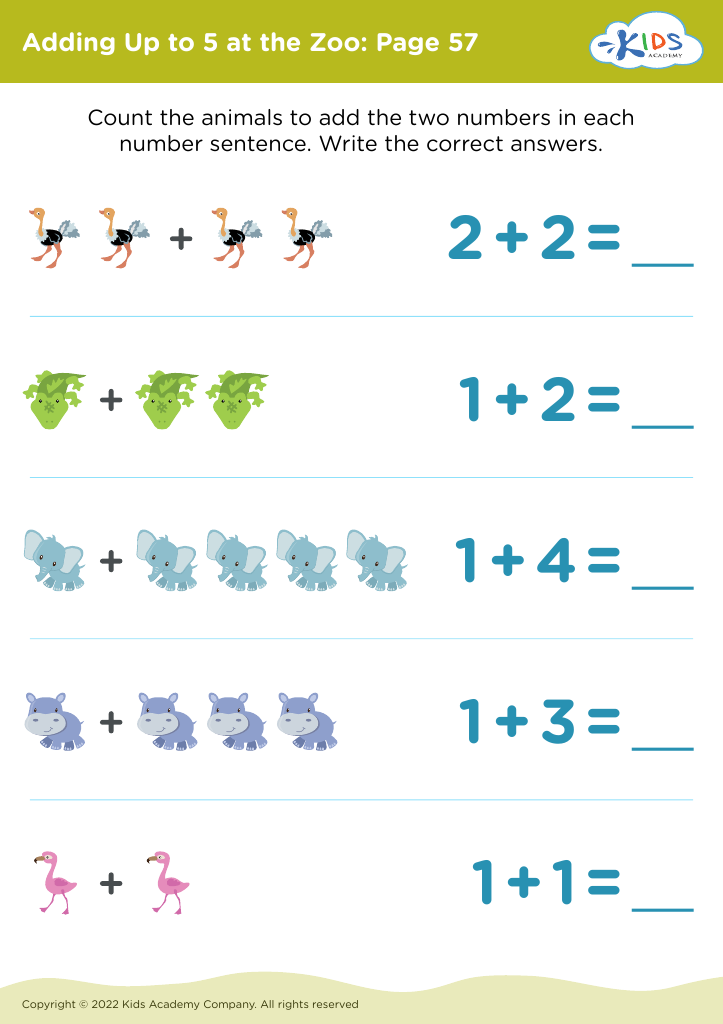
Adding Up to 5 at the Zoo: Page 57
Worksheet
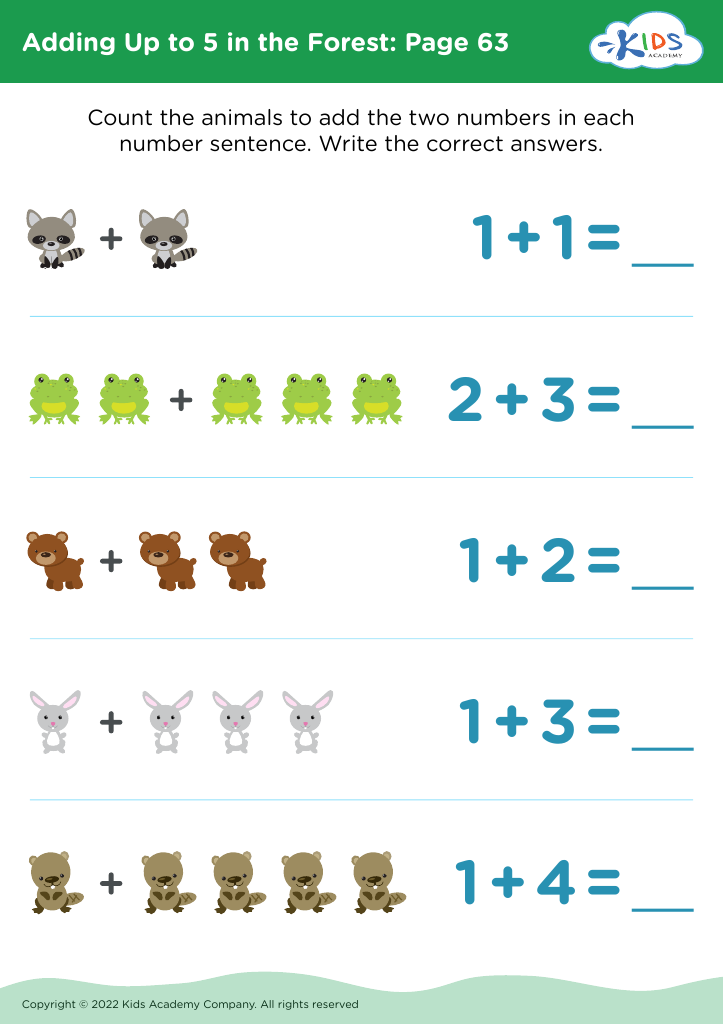
Adding Up to 5 in the Forest: Page 63
Worksheet
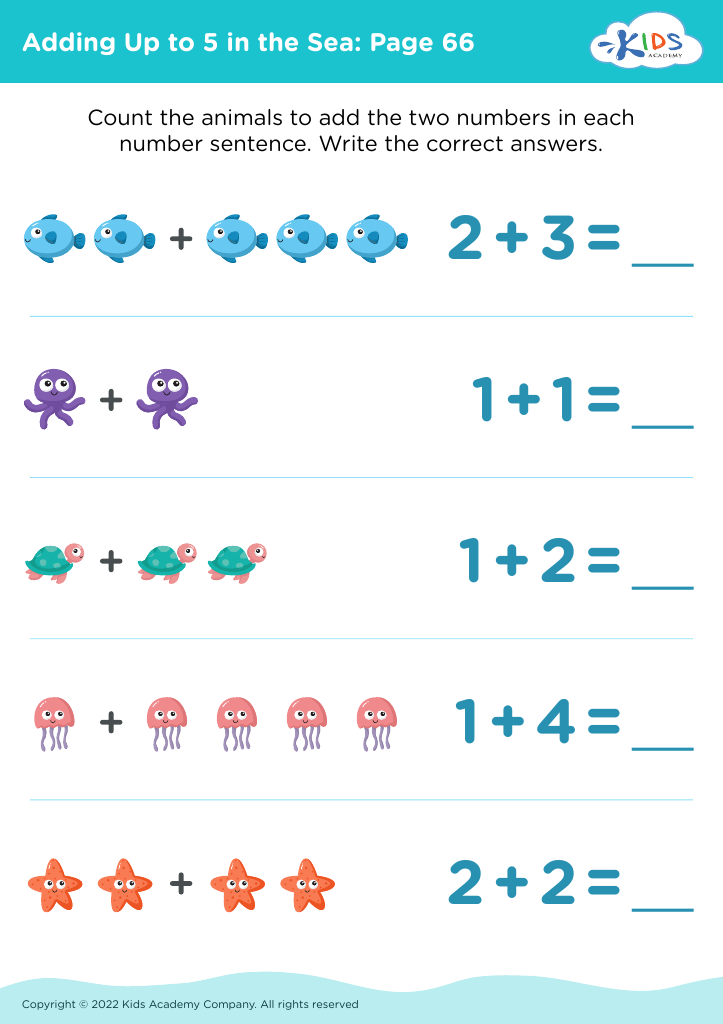
Adding Up to 5 in the Sea: Page 66
Worksheet
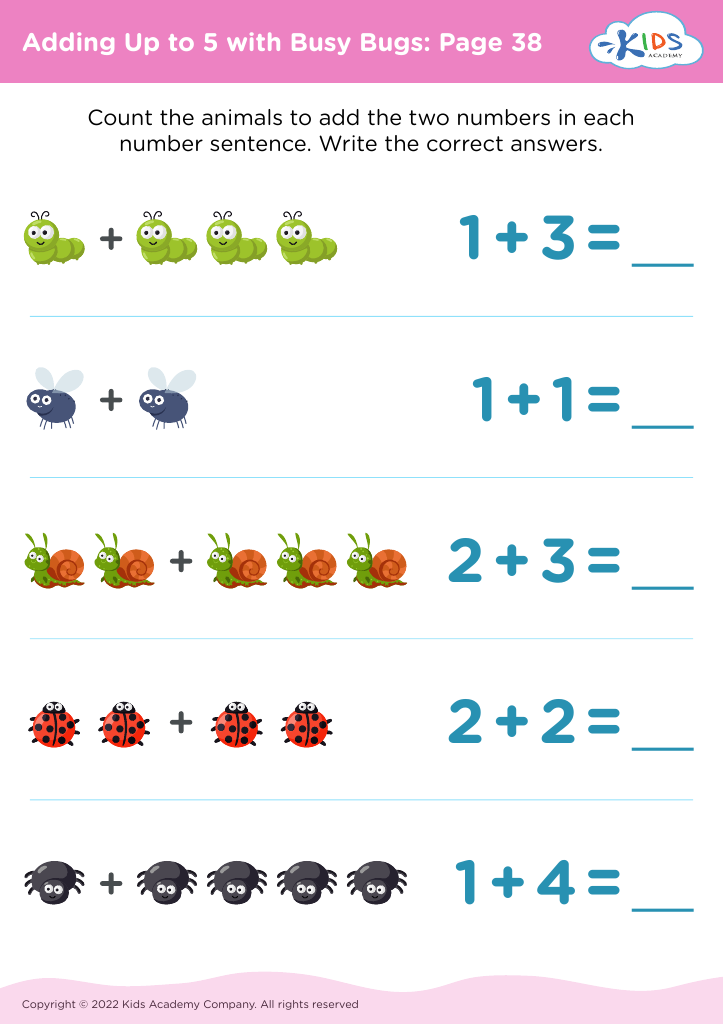
Adding Up to 5 with Busy Bugs: Page 38
Worksheet
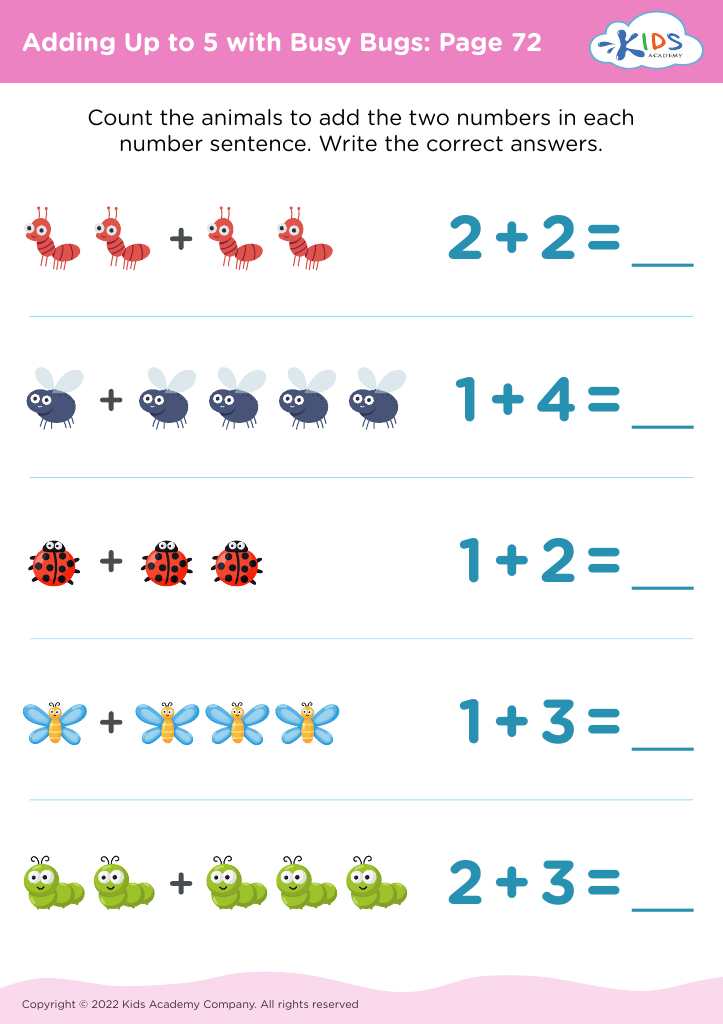
Adding Up to 5 with Busy Bugs: Page 72
Worksheet
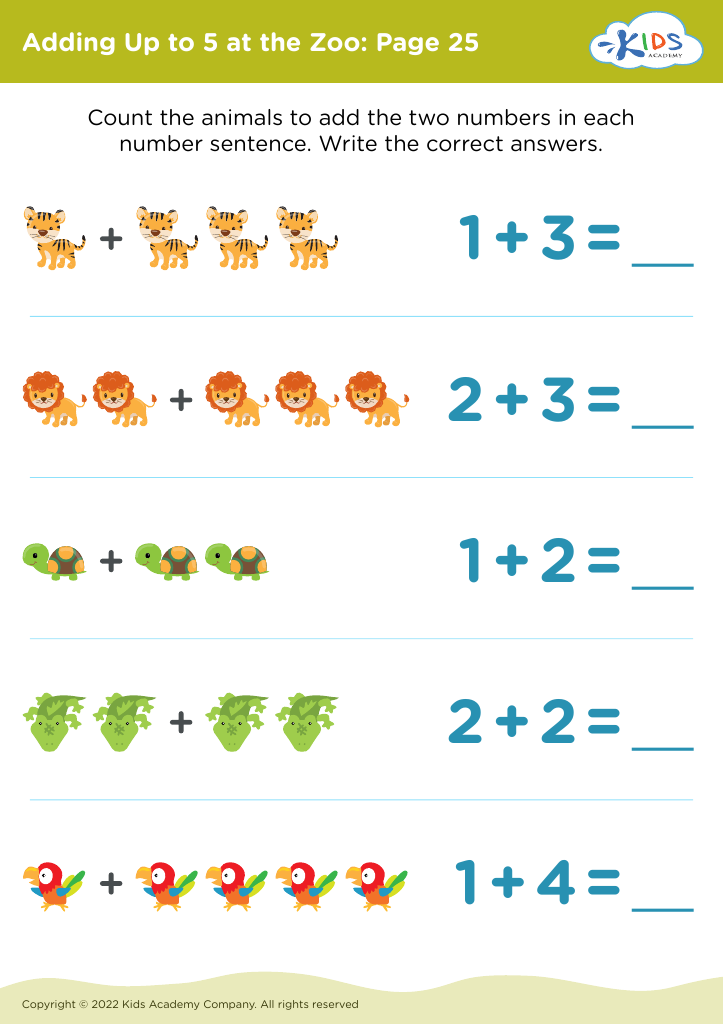
Adding Up to 5 at the Zoo: Page 25
Worksheet
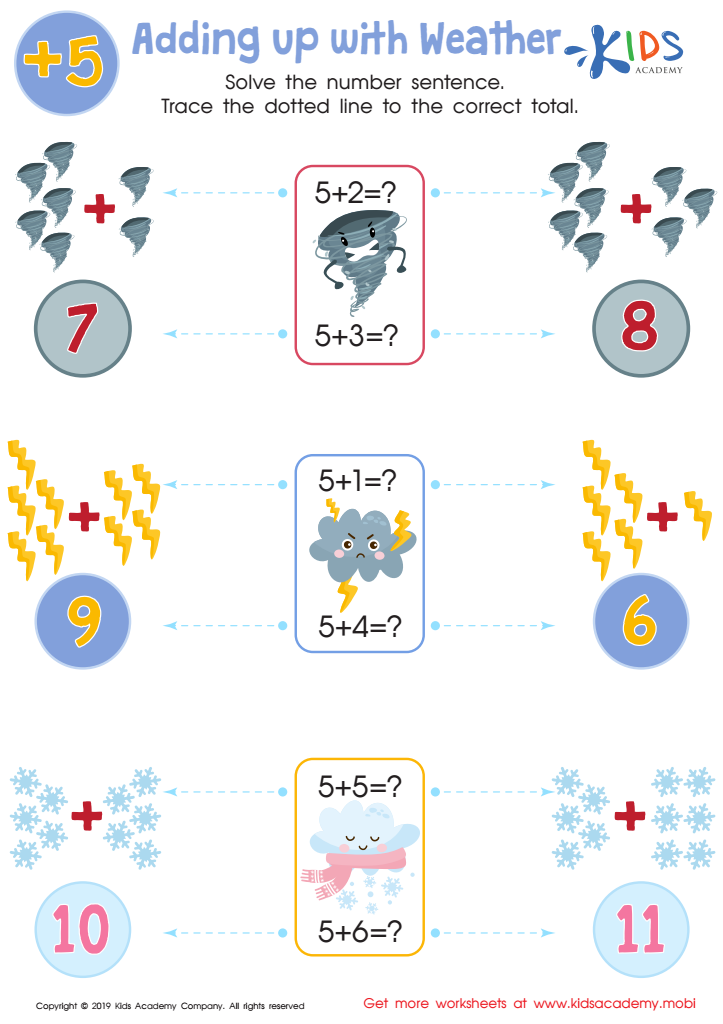
Adding up With Water Worksheet

Adding up With Water Worksheet

Ask your kids to name different kinds of weather and what it's like outside now. Then, help them solve the number sentences on the worksheet by tracing the dotted line to the correct total.
Adding up With Water Worksheet
Worksheet
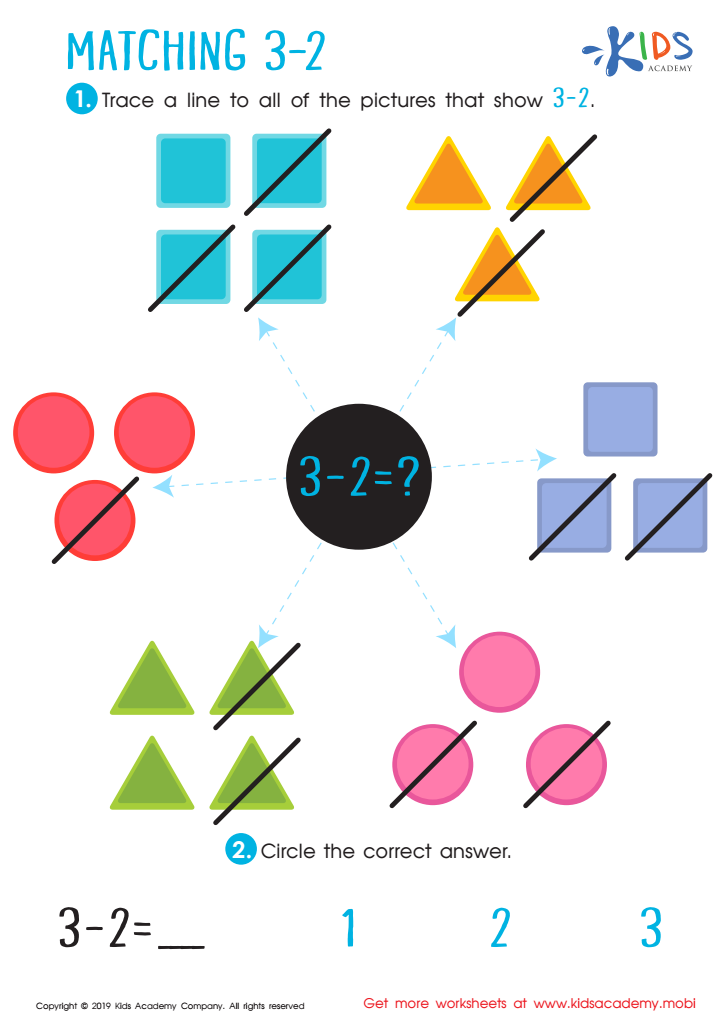
Matching 3-2 Worksheet

Matching 3-2 Worksheet

Subitizing is the ability to quickly identify sets of items without counting. It's a key skill for young learners to cultivate number sense. This worksheet takes it further, with 3-2=1 number sentences. Look at the sets of counters with slashes to decide which illustrate the sentence. Draw a line from the sentence in the middle to the right images to finish the page!
Matching 3-2 Worksheet
Worksheet
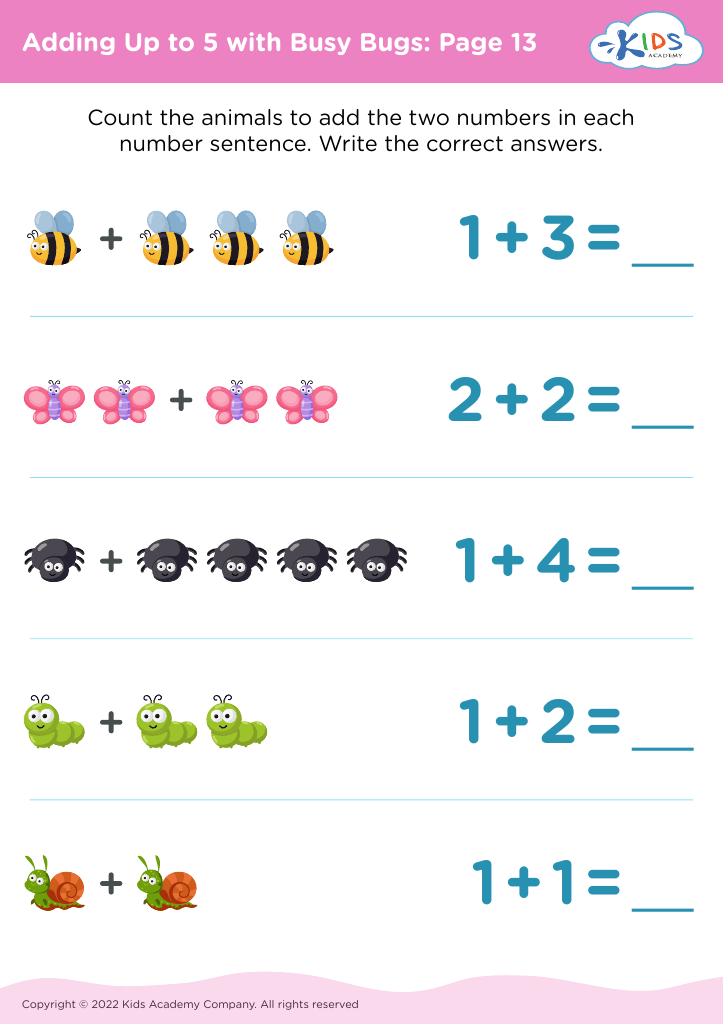
Adding Up to 5 with Busy Bugs: Page 13
Worksheet
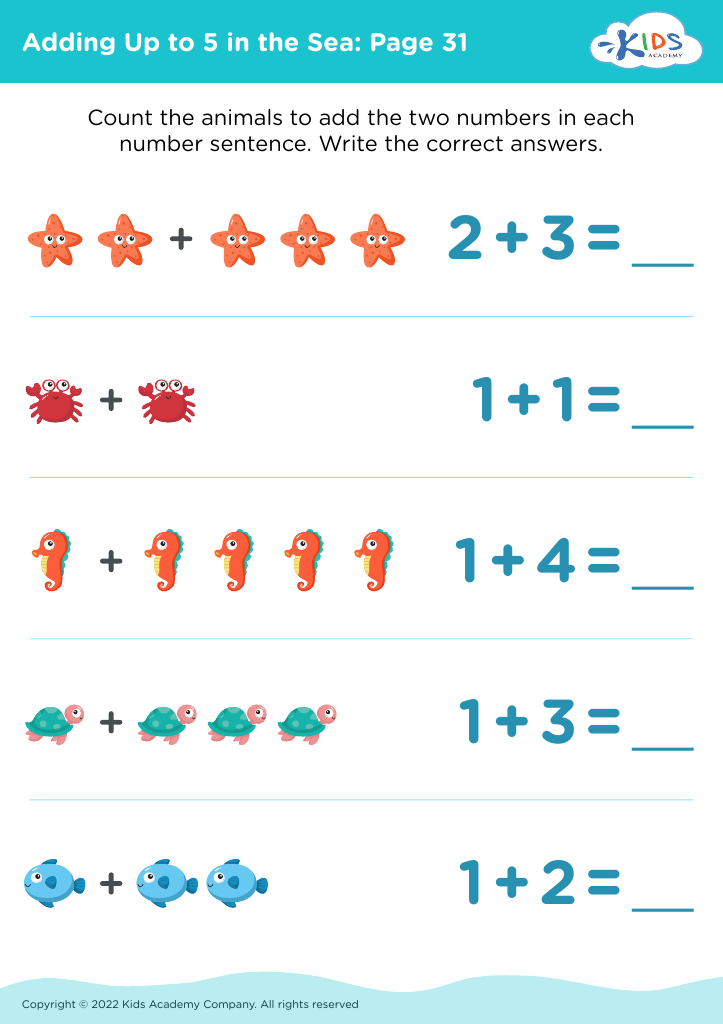
Adding Up to 5 in the Sea: Page 31
Worksheet
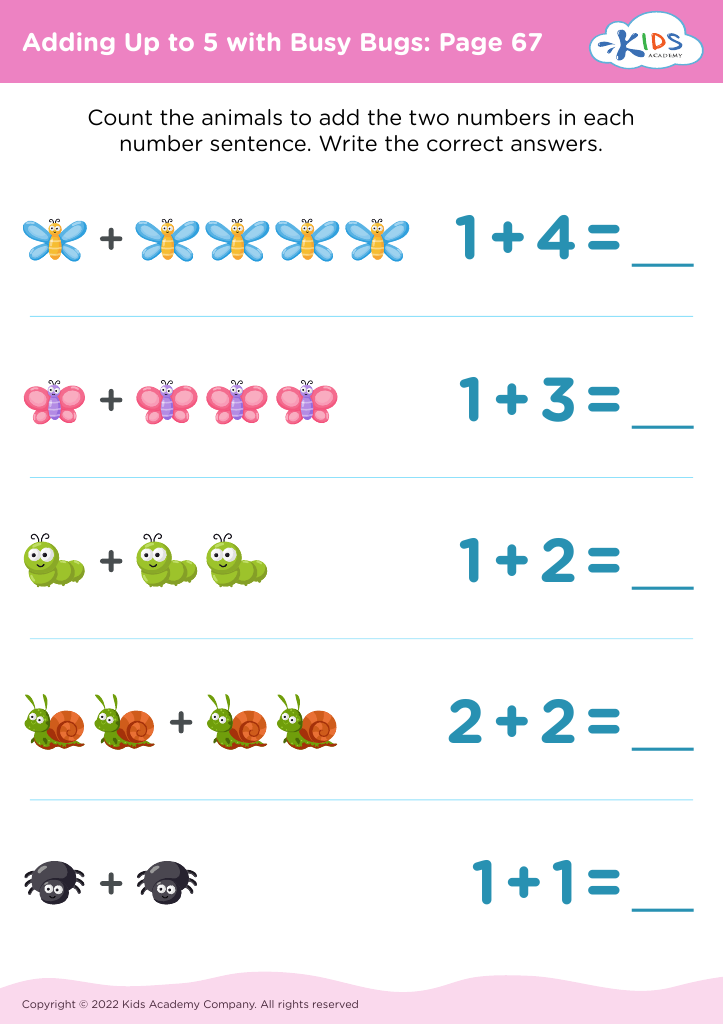
Adding Up to 5 with Busy Bugs: Page 67
Worksheet
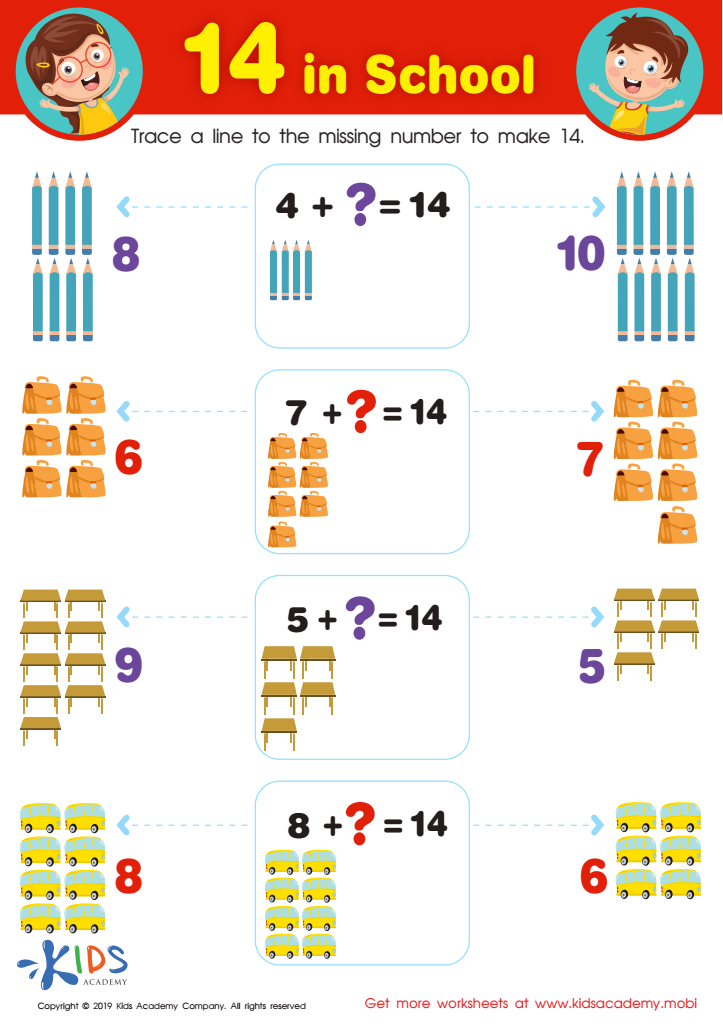
14 in School Worksheet


14 in School Worksheet

Remind your kids that adding different sets of numbers can give the same total (e.g. 2+3=5, 4+1=5). Ask them for more examples. Afterwards, work through the exercise. Help them count the objects and trace a line to the missing number that makes the total 14.
14 in School Worksheet
Worksheet
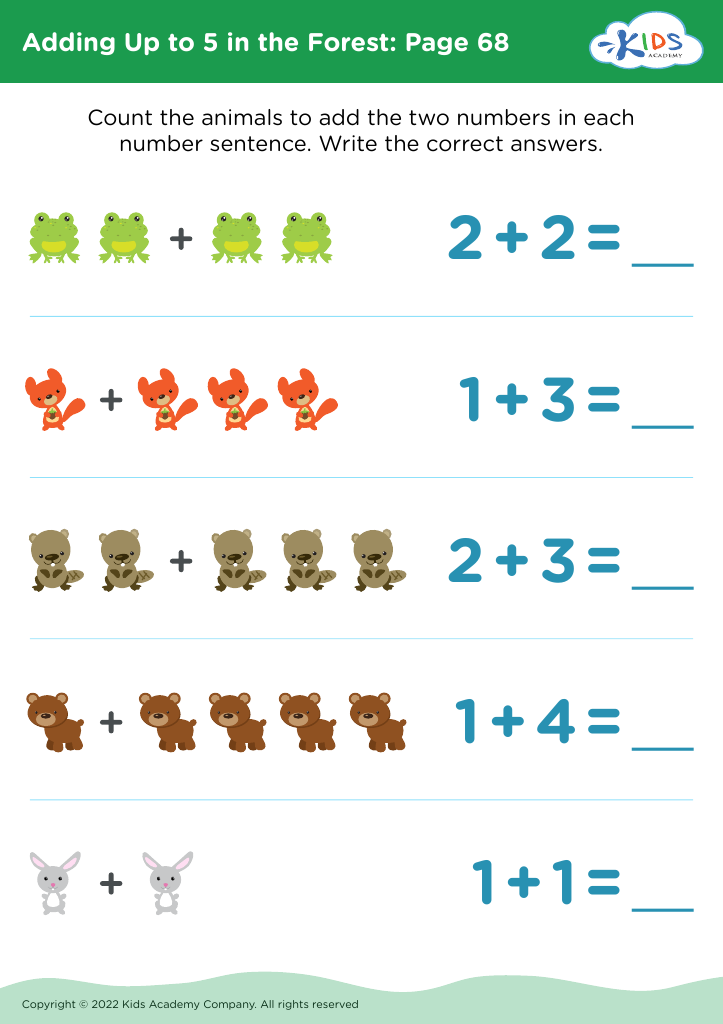
Adding Up to 5 in the Forest: Page 68
Worksheet
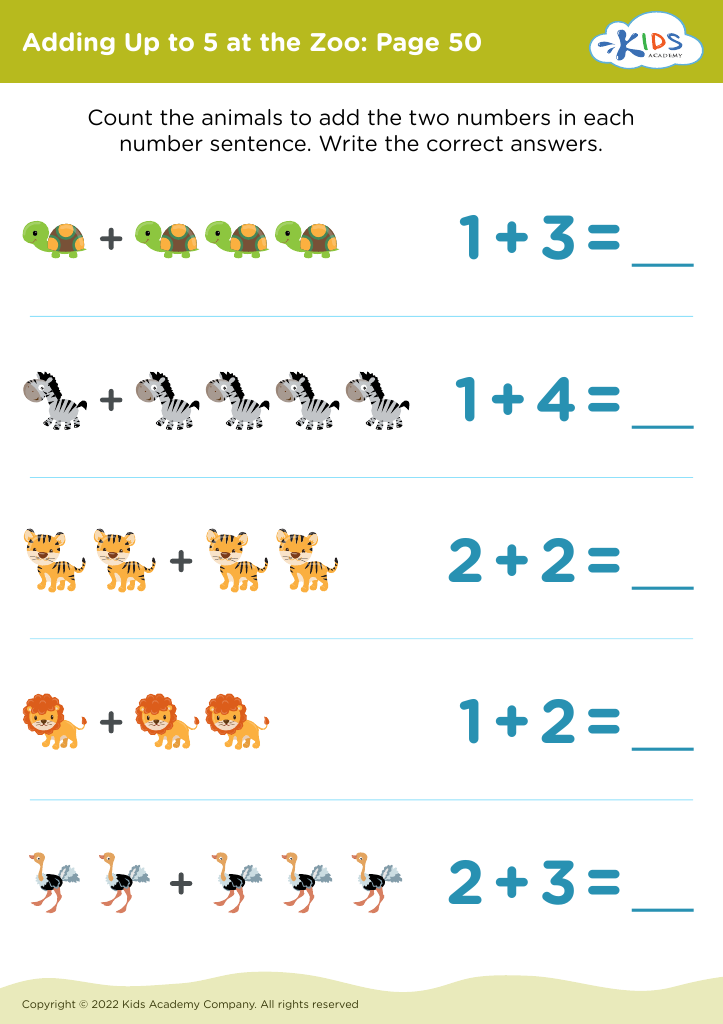
Adding Up to 5 at the Zoo: Page 50
Worksheet


Hand-eye coordination is a critical skill that plays a significant role in a child's overall development, particularly in the ages of 3-5. During this formative stage, children engage in activities that integrate motor skills and cognitive functions, laying the foundation for future learning. Fostering hand-eye coordination through addition and subtraction not only boosts mathematical understanding but also enhances fine motor skills required for tasks like writing and drawing.

Parents and teachers should prioritize activities that promote these skills, such as counting blocks, sorting shapes, or using interactive games. Engaging in these fun, hands-on experiences makes math relatable and enjoyable, helping to cultivate a positive attitude towards learning.

Furthermore, children who master basic math concepts through coordinated activities develop confidence and critical thinking abilities, preparing them for more complex tasks as they advance through school. Ensuring that children have strong hand-eye coordination alongside basic math skills in early childhood sets them up for success in both academics and everyday life. Overall, developing these skills is essential not only for immediate educational benefits but also for fostering lifelong learning habits and confidence in their abilities.