Filters

464 filtered results

Clear all filters
Favorites
With answer key
Interactive

464 filtered results

Difficulty Level

Grade


Subject

    Check out this FREE Trial Lesson on Addition for age 3-5!

    More & Less Word Problems

    Favorites
    With answer key
    Interactive
    • 3-5
    • Addition
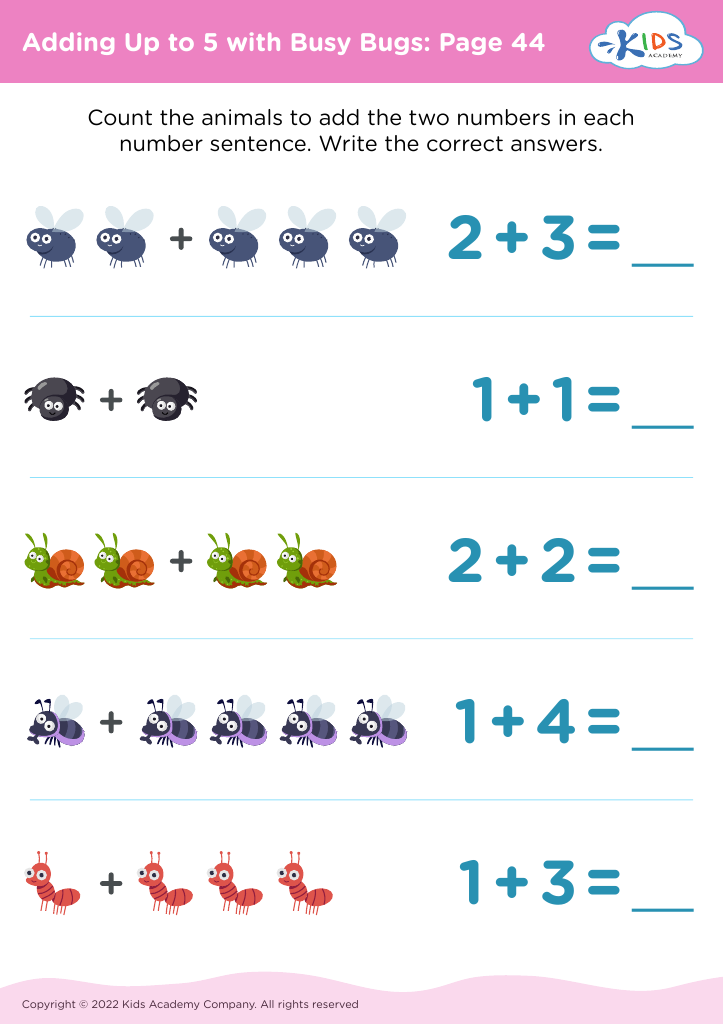
    Adding Up to 5 with Busy Bugs: Page 44
    Adding Up to 5 with Busy Bugs: Page 44
    Adding Up to 5 with Busy Bugs: Page 44
    Worksheet
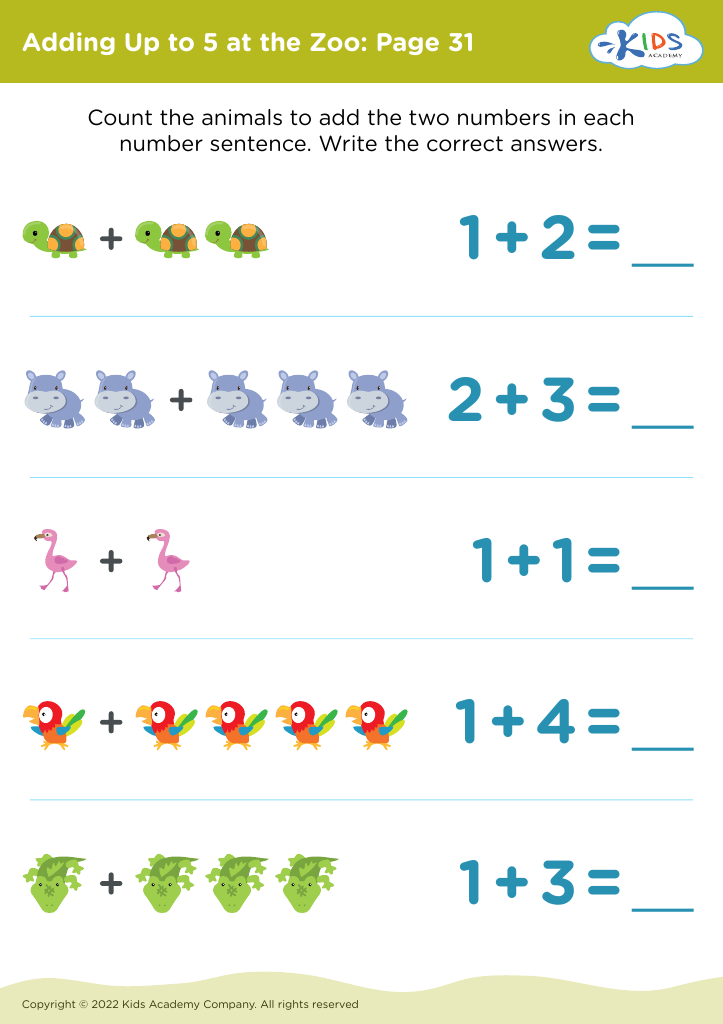
    Adding Up to 5 at the Zoo: Page 31
    Adding Up to 5 at the Zoo: Page 31
    Adding Up to 5 at the Zoo: Page 31
    Worksheet
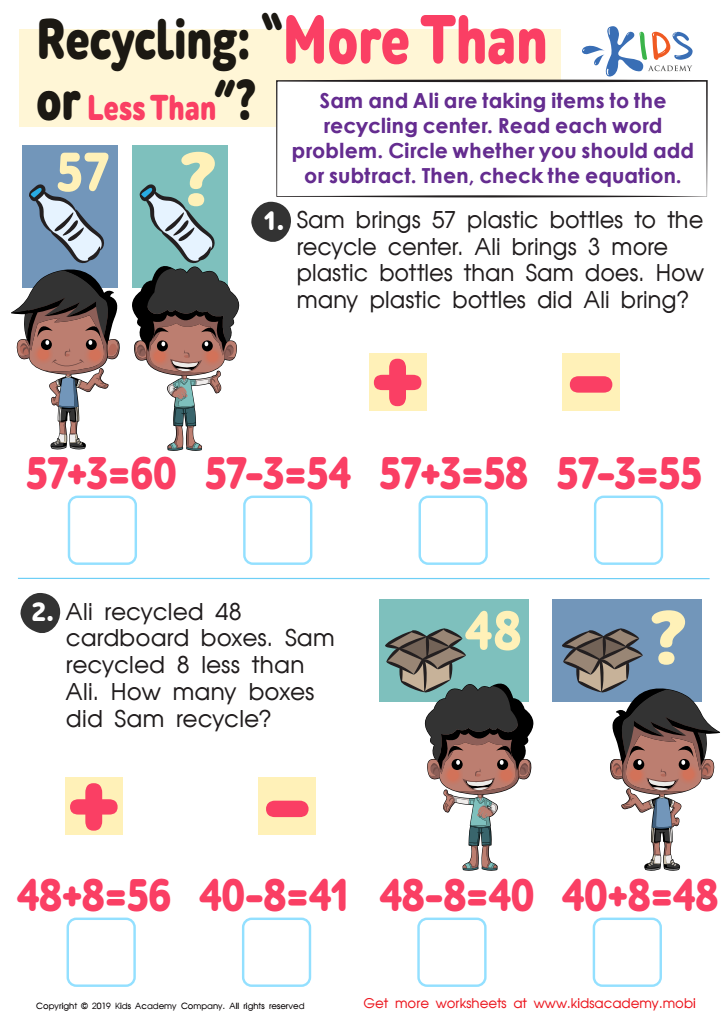
    Recycling - More or Less Worksheet
    Recycling - More or Less Worksheet

    Recycling - More or Less Worksheet

    Your child can compare numbers and solve word problems with this free worksheet. Help them understand what's being asked as Sam and Ali take items to the recycling center. They can choose the correct equation to match the word problem and apply their skills in reading and pulling out the appropriate information.
    Recycling - More or Less Worksheet
    Worksheet
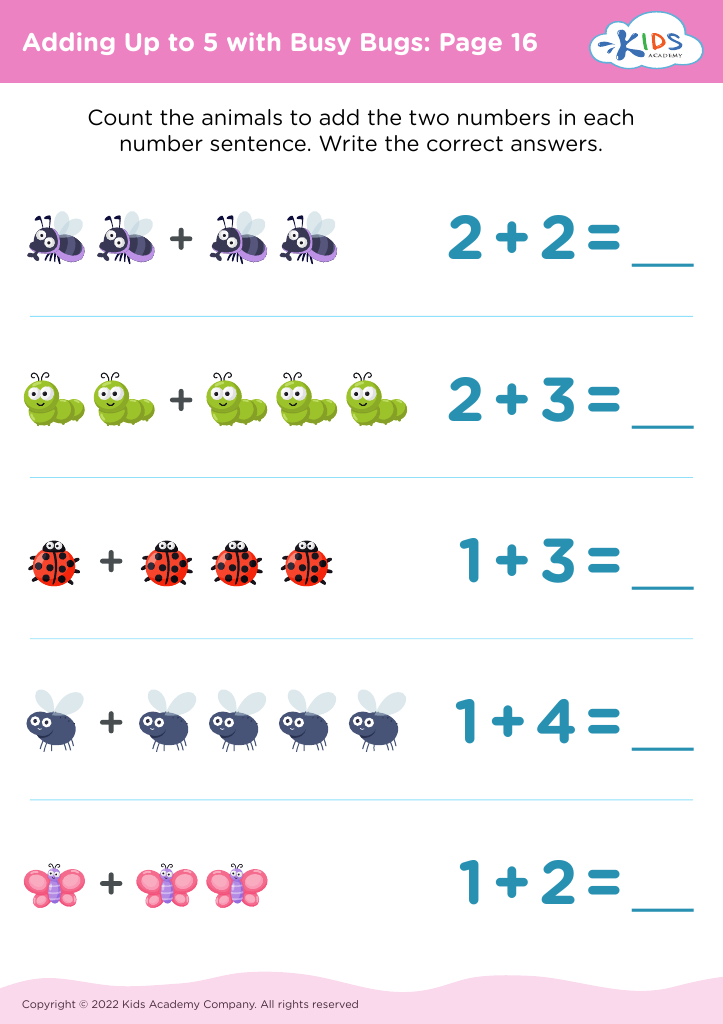
    Adding Up to 5 with Busy Bugs: Page 16
    Adding Up to 5 with Busy Bugs: Page 16
    Adding Up to 5 with Busy Bugs: Page 16
    Worksheet
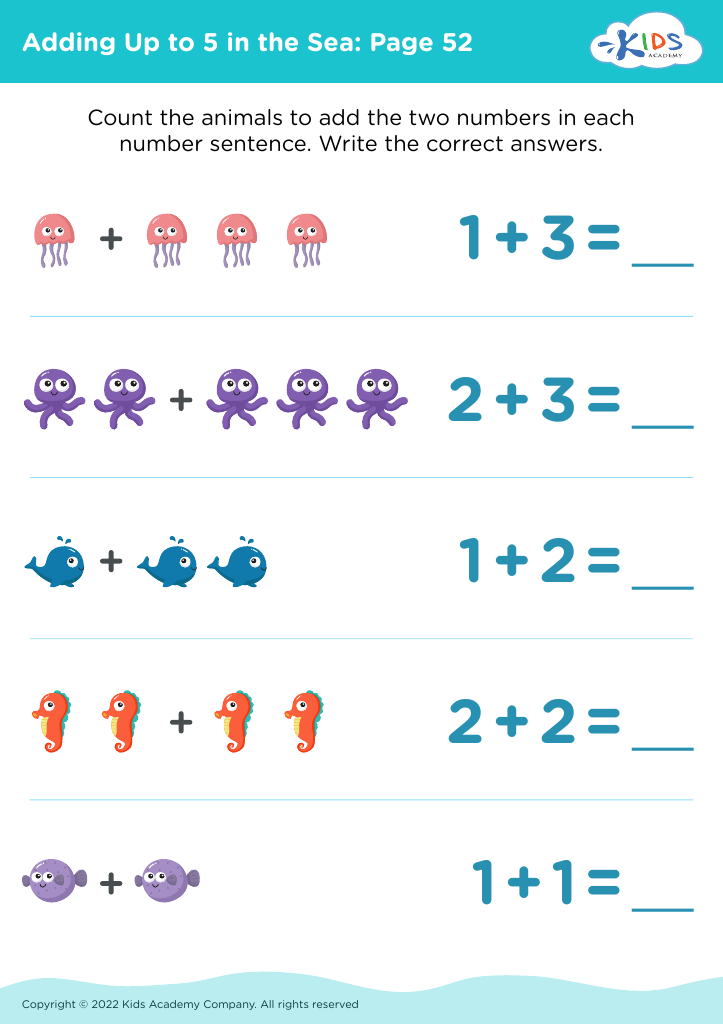
    Adding Up to 5 in the Sea: Page 52
    Adding Up to 5 in the Sea: Page 52
    Adding Up to 5 in the Sea: Page 52
    Worksheet
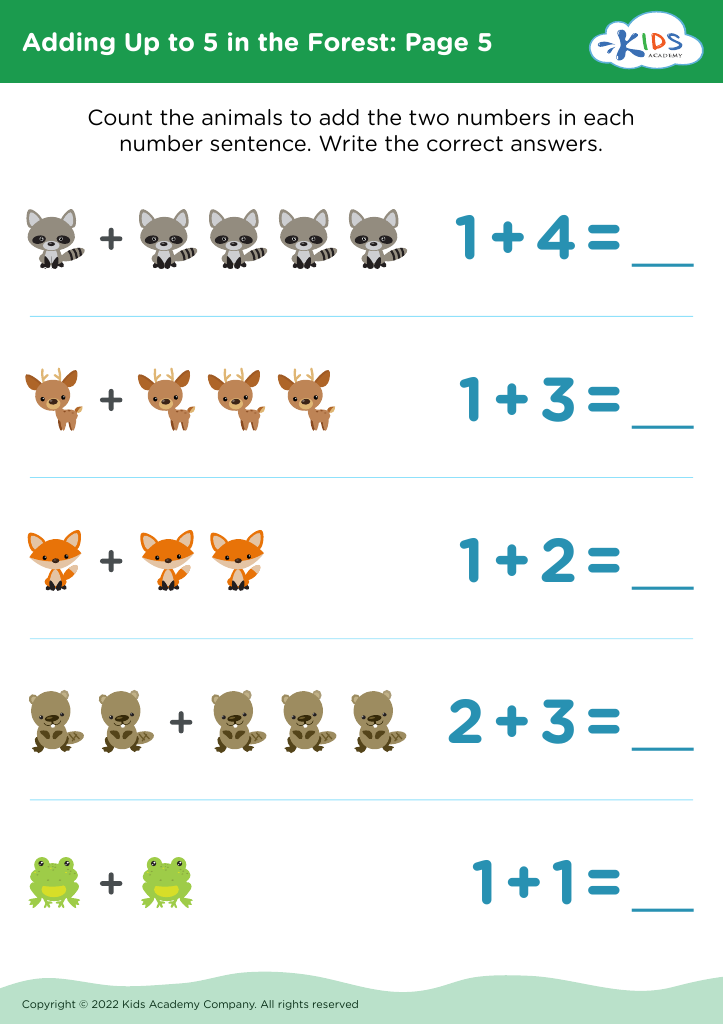
    Adding Up to 5 in the Forest: Page 5
    Adding Up to 5 in the Forest: Page 5
    Adding Up to 5 in the Forest: Page 5
    Worksheet
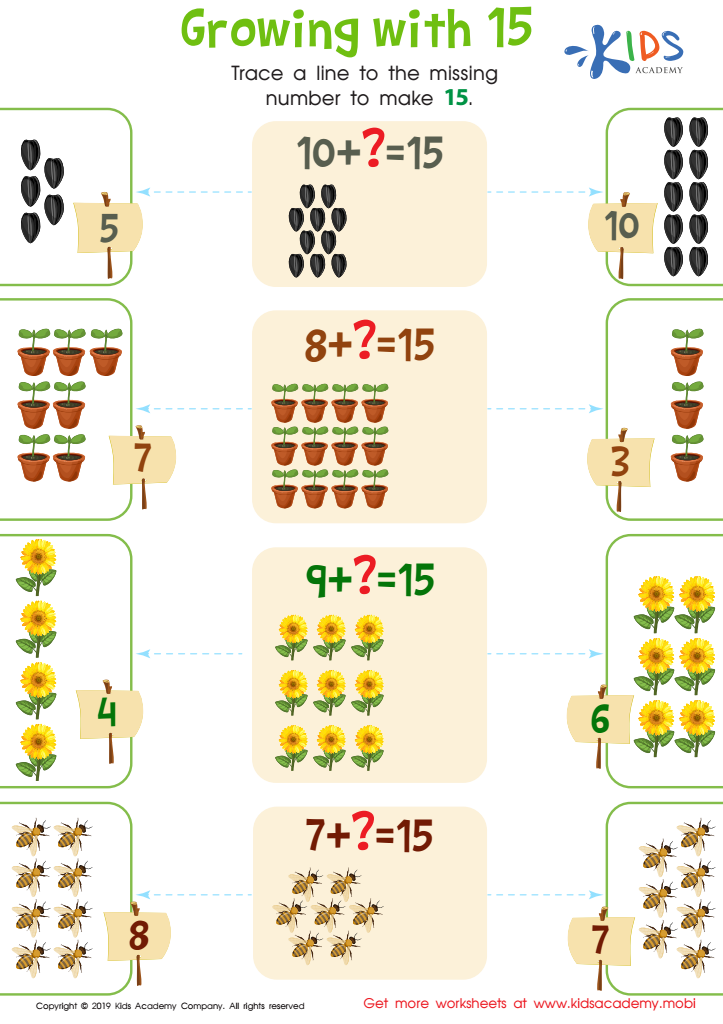
    Growing with 15 Worksheet
    Growing with 15 Worksheet

    Growing with 15 Worksheet

    Remind your kids that adding different sets of numbers can give the same total (e.g. 2+3=5, 4+1=5). Test their understanding by asking them for more examples. Move onto the worksheet: count objects, then trace the line to the number making a total of 15.
    Growing with 15 Worksheet
    Worksheet
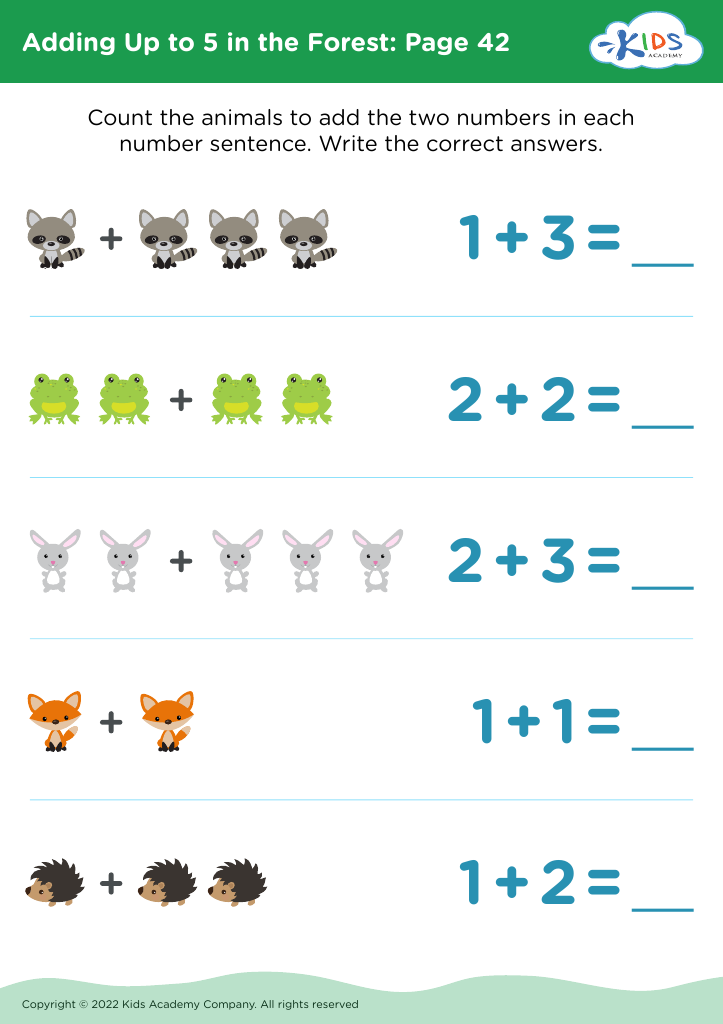
    Adding Up to 5 in the Forest: Page 42
    Adding Up to 5 in the Forest: Page 42
    Adding Up to 5 in the Forest: Page 42
    Worksheet
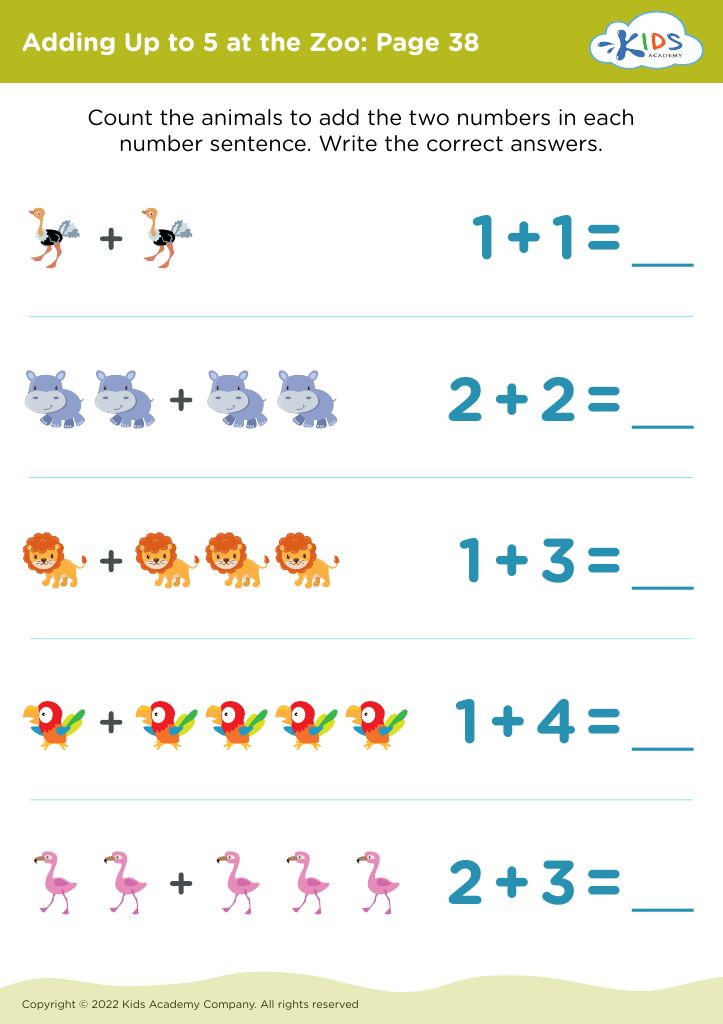
    Adding Up to 5 at the Zoo: Page 38
    Adding Up to 5 at the Zoo: Page 38
    Adding Up to 5 at the Zoo: Page 38
    Worksheet
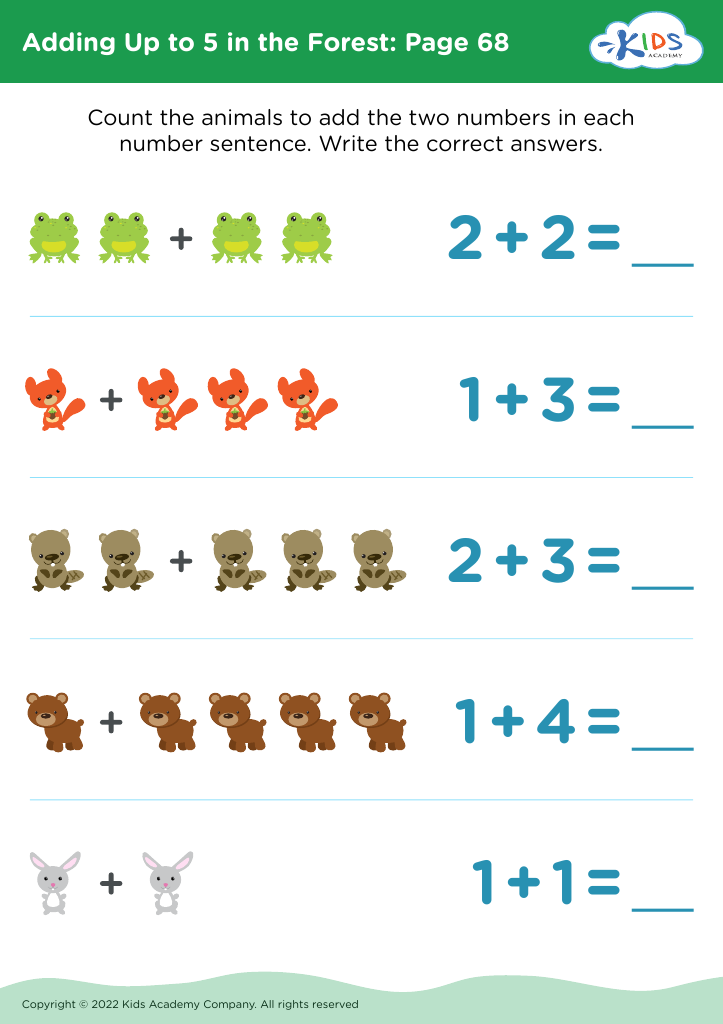
    Adding Up to 5 in the Forest: Page 68
    Adding Up to 5 in the Forest: Page 68
    Adding Up to 5 in the Forest: Page 68
    Worksheet
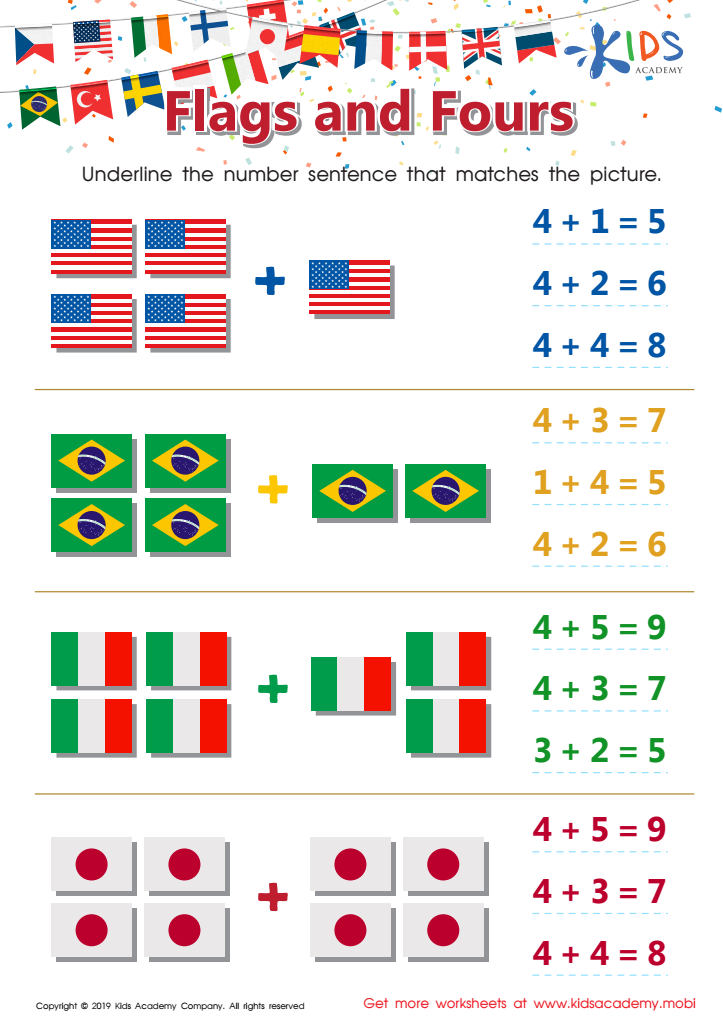
    Flags and Fours Worksheet
    Flags and Fours Worksheet
    Flags and Fours Worksheet
    Have your kids identify country flags from this colorful printout. Then, ask them to underline the number sentence that goes with each flag. Combining math with national flag recognition strengthens kids' knowledge of both, promoting an understanding of identity and numbers.
    Flags and Fours Worksheet
    Worksheet
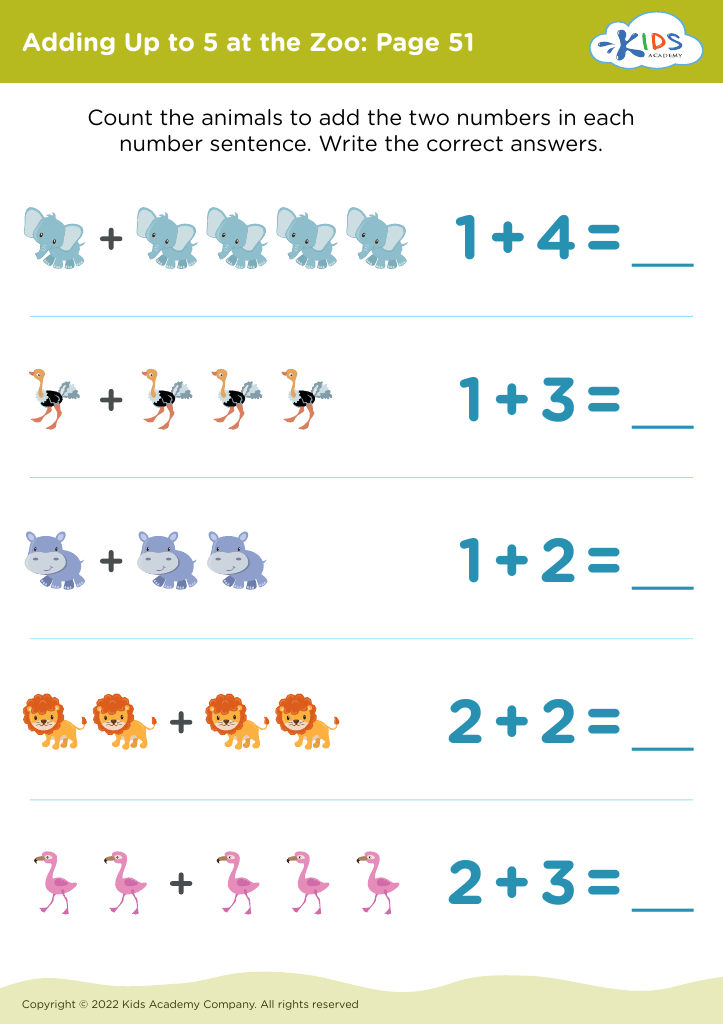
    Adding Up to 5 at the Zoo: Page 51
    Adding Up to 5 at the Zoo: Page 51
    Adding Up to 5 at the Zoo: Page 51
    Worksheet
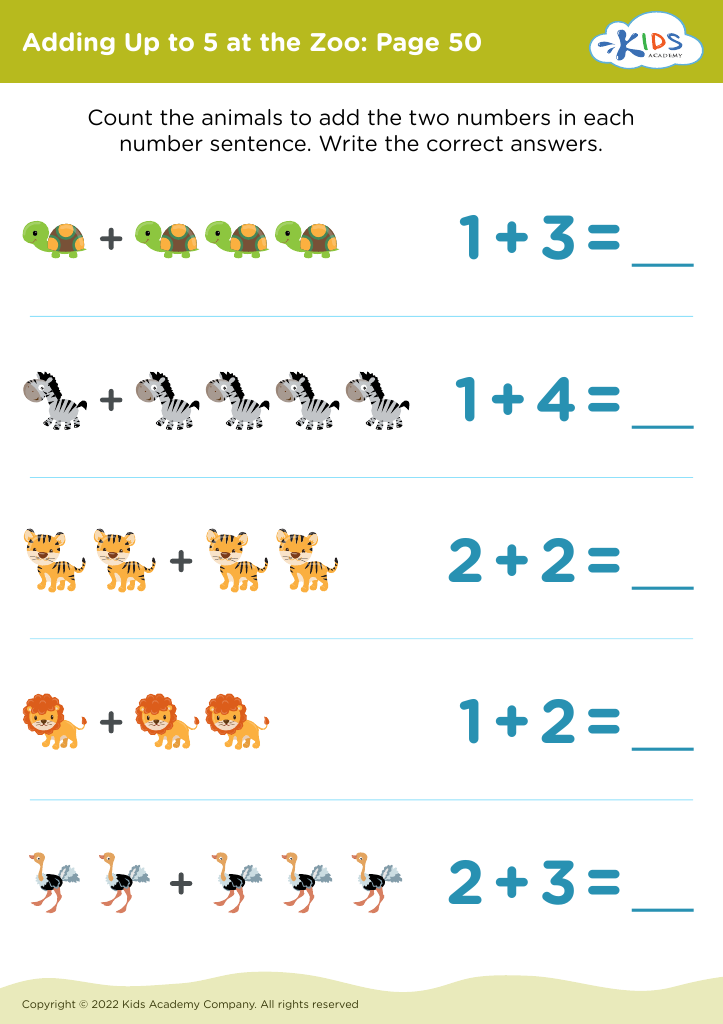
    Adding Up to 5 at the Zoo: Page 50
    Adding Up to 5 at the Zoo: Page 50
    Adding Up to 5 at the Zoo: Page 50
    Worksheet
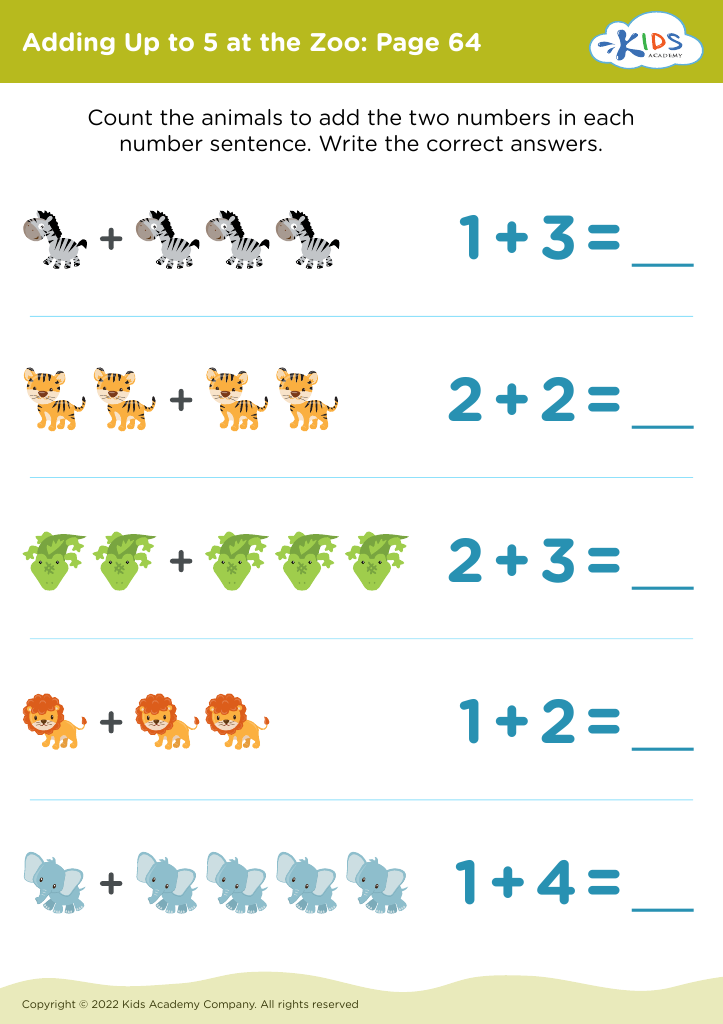
    Adding Up to 5 at the Zoo: Page 64
    Adding Up to 5 at the Zoo: Page 64
    Adding Up to 5 at the Zoo: Page 64
    Worksheet
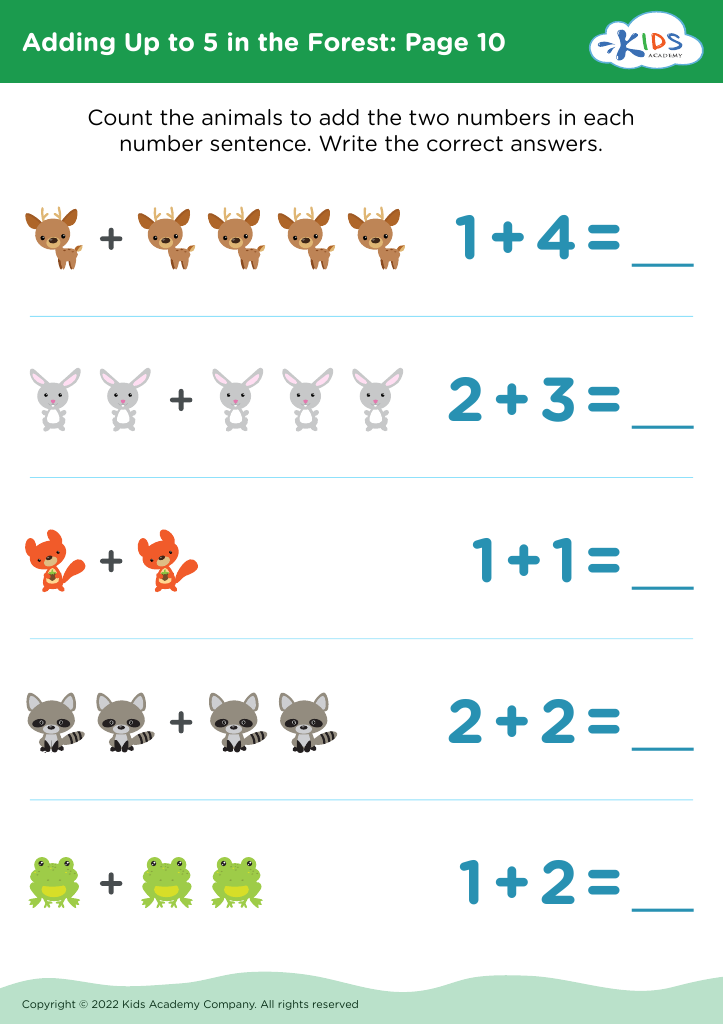
    Adding Up to 5 in the Forest: Page 10
    Adding Up to 5 in the Forest: Page 10
    Adding Up to 5 in the Forest: Page 10
    Worksheet
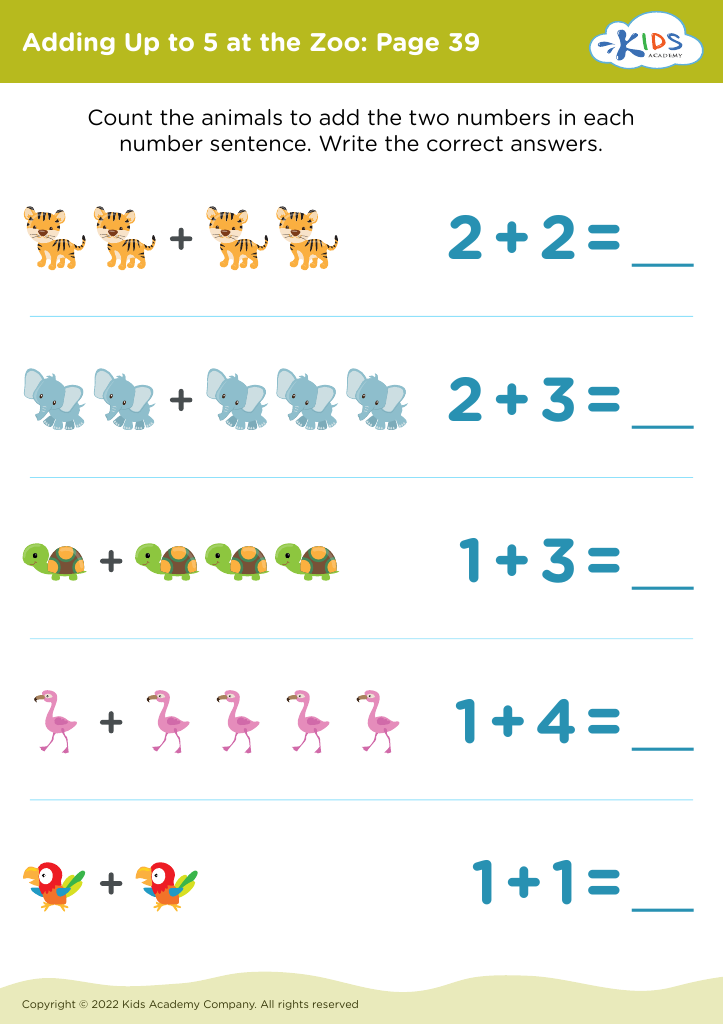
    Adding Up to 5 at the Zoo: Page 39
    Adding Up to 5 at the Zoo: Page 39
    Adding Up to 5 at the Zoo: Page 39
    Worksheet
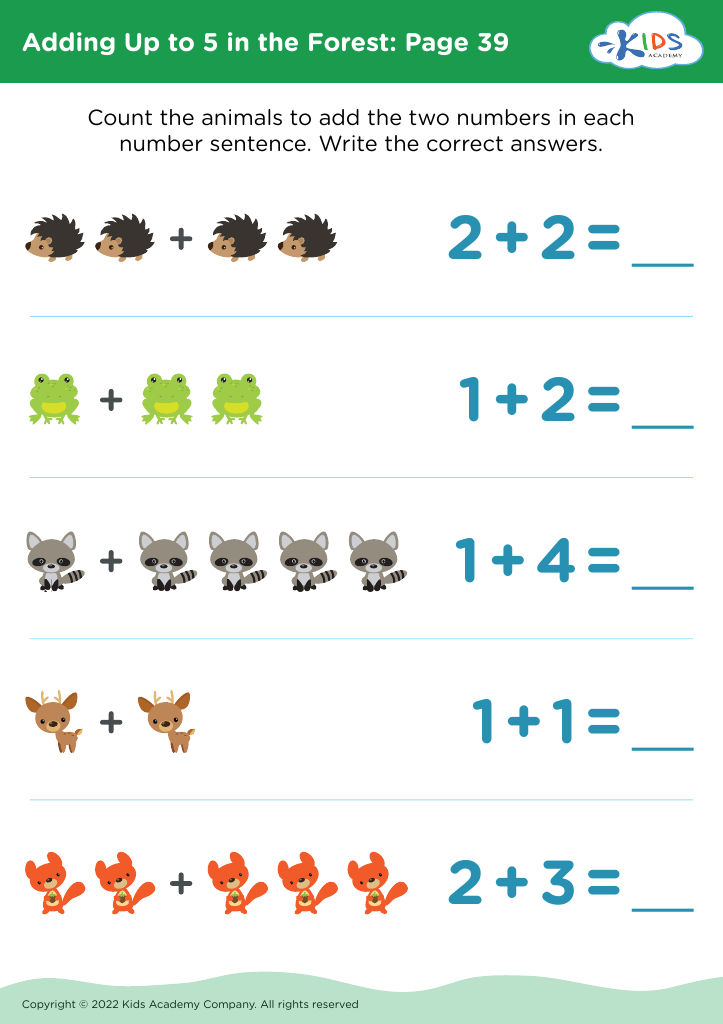
    Adding Up to 5 in the Forest: Page 39
    Adding Up to 5 in the Forest: Page 39
    Adding Up to 5 in the Forest: Page 39
    Worksheet
    Adding Fruit at the Picnic Worksheet
    Adding Fruit at the Picnic Worksheet
    Adding Fruit at the Picnic Worksheet
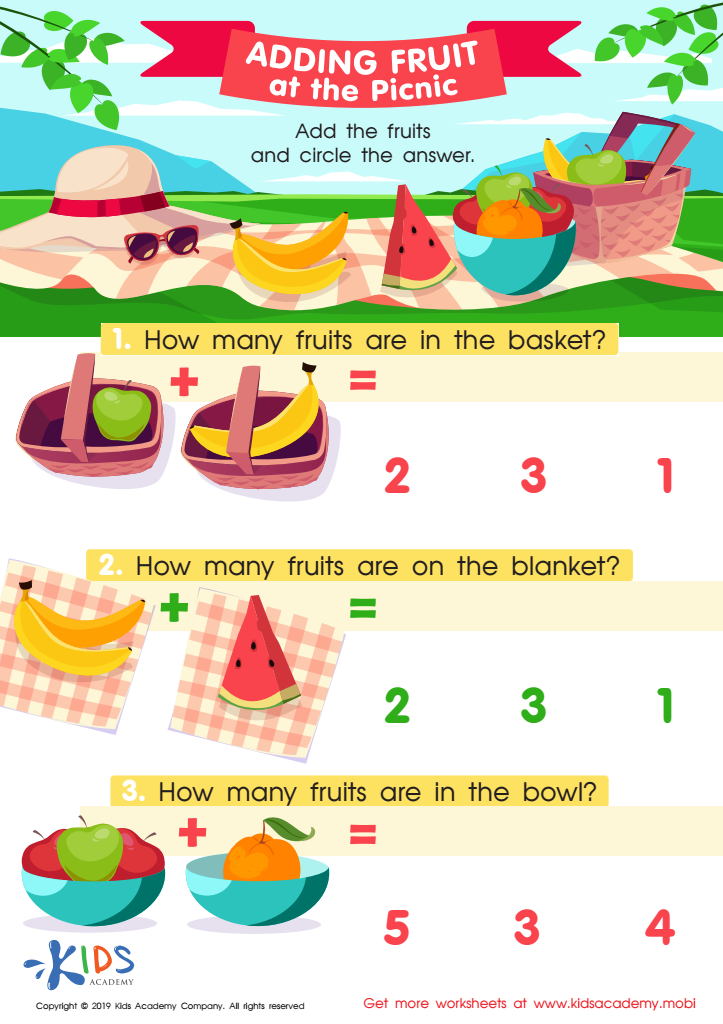
    Picnics are a great way for the family to enjoy a fun day in the sun! Get your kids involved by having them help load the picnic basket and do this worksheet to practice their math skills while they get ready. Identify the fruits in the picture, add them up, and circle the correct answer.
    Adding Fruit at the Picnic Worksheet
    Worksheet
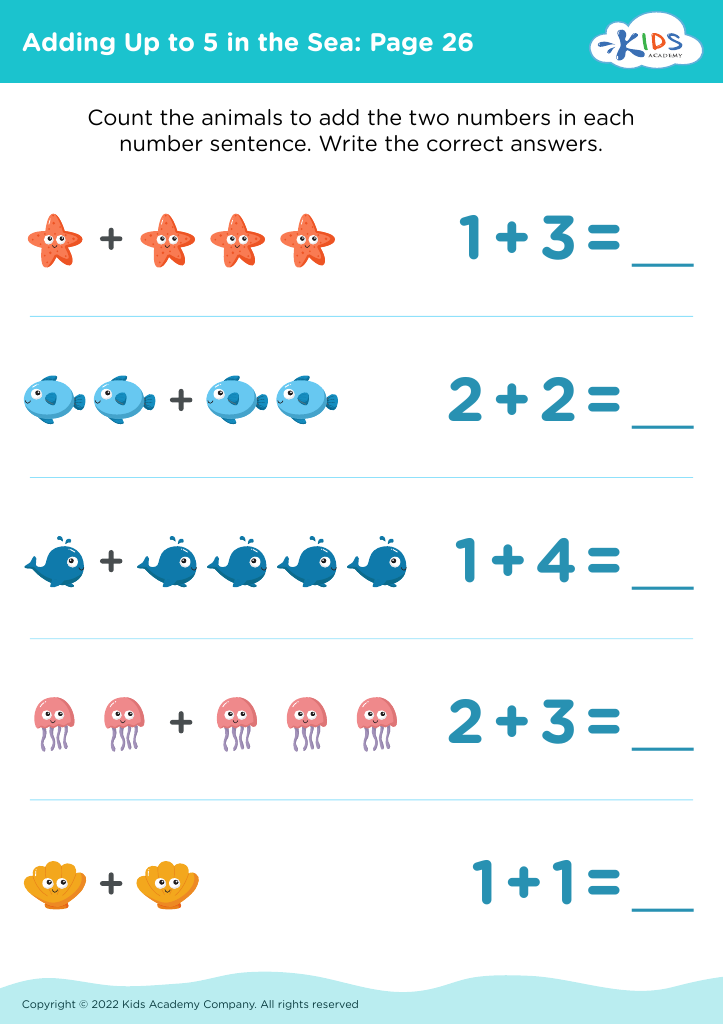
    Adding Up to 5 in the Sea: Page 26
    Adding Up to 5 in the Sea: Page 26
    Adding Up to 5 in the Sea: Page 26
    Worksheet
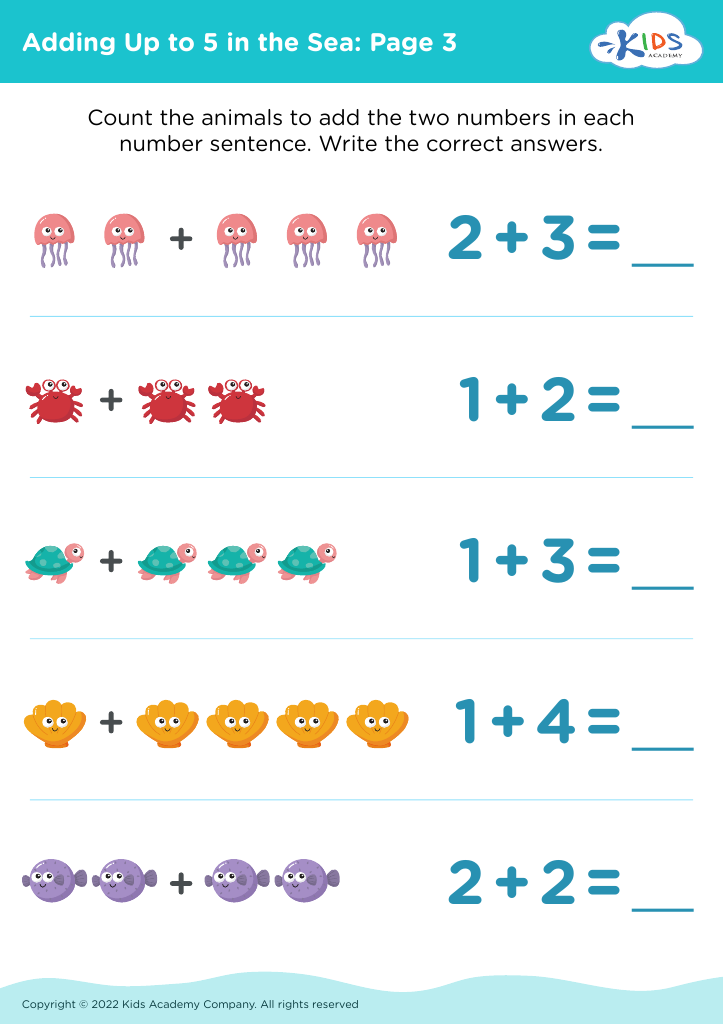
    Adding Up to 5 in the Sea: Page 3
    Adding Up to 5 in the Sea: Page 3

    Adding Up to 5 in the Sea: Page 3

    Adding Up to 5 in the Sea: Page 3
    Worksheet
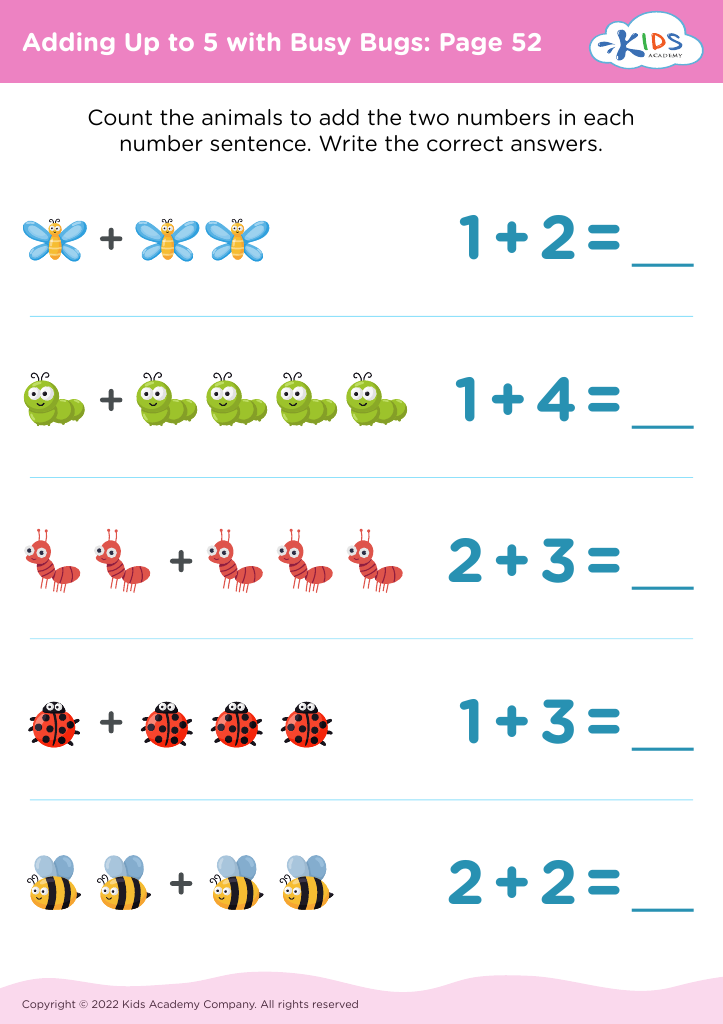
    Adding Up to 5 with Busy Bugs: Page 52
    Adding Up to 5 with Busy Bugs: Page 52
    Adding Up to 5 with Busy Bugs: Page 52
    Worksheet
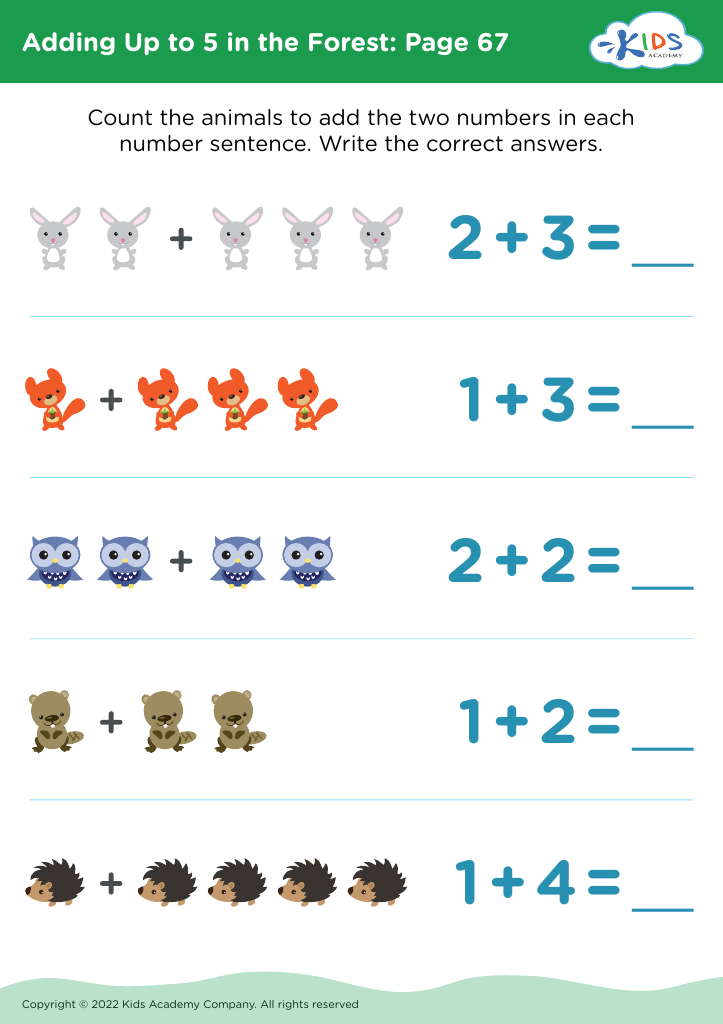
    Adding Up to 5 in the Forest: Page 67
    Adding Up to 5 in the Forest: Page 67
    Adding Up to 5 in the Forest: Page 67
    Worksheet
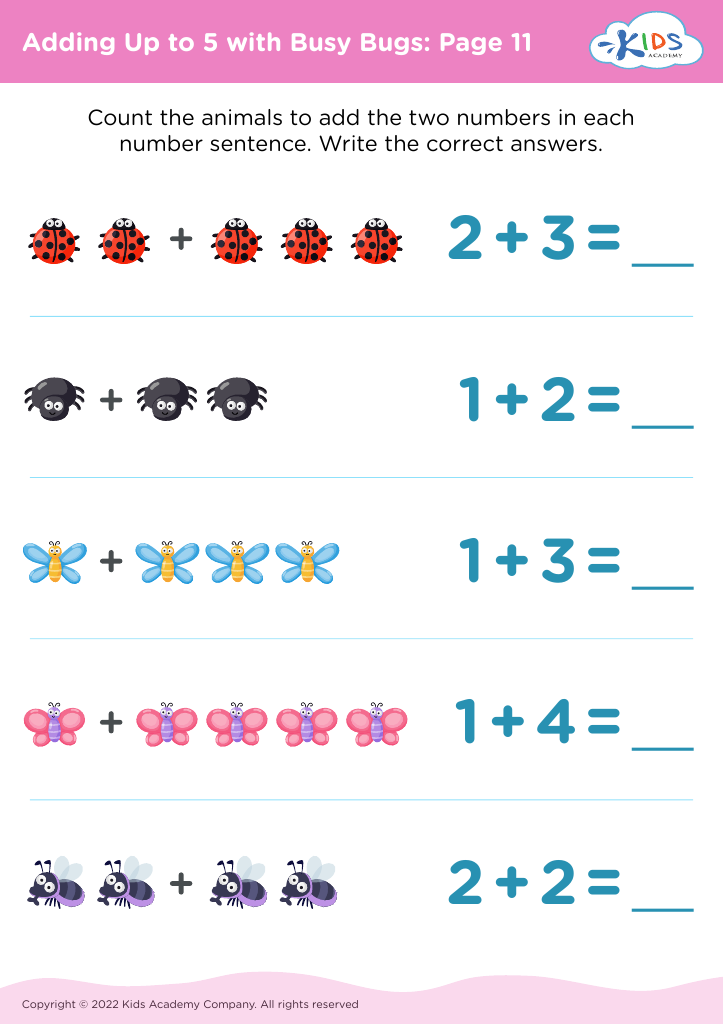
    Adding Up to 5 with Busy Bugs: Page 11
    Adding Up to 5 with Busy Bugs: Page 11
    Adding Up to 5 with Busy Bugs: Page 11
    Worksheet
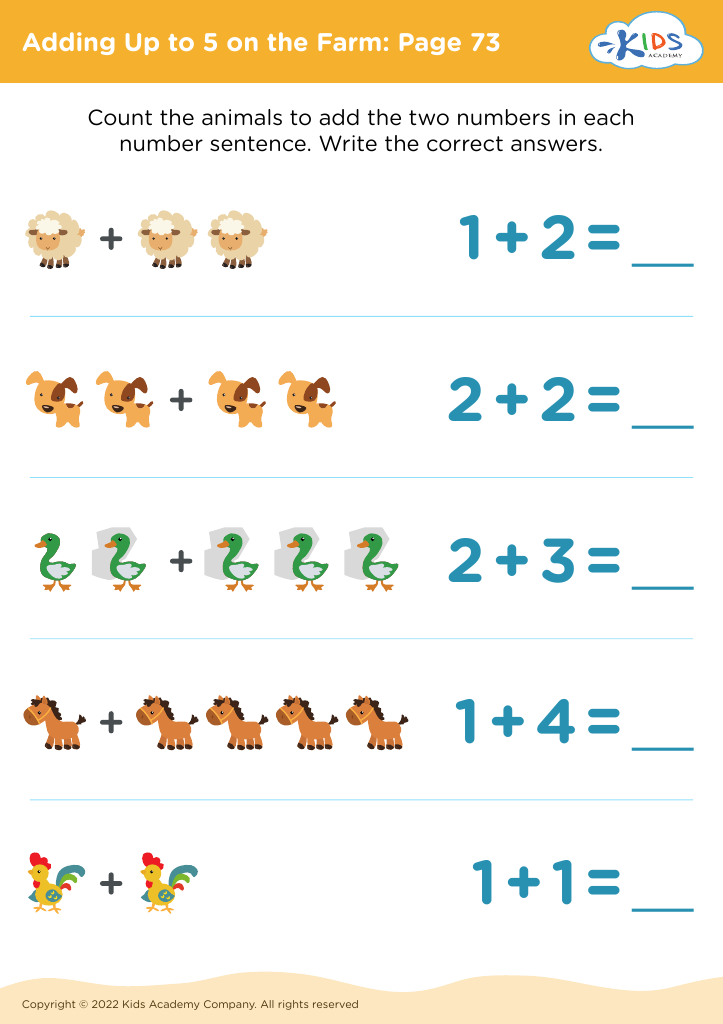
    Adding Up to 5 on the Farm: Page 73
    Adding Up to 5 on the Farm: Page 73
    Adding Up to 5 on the Farm: Page 73
    Worksheet


    Addition worksheets tailored specifically for ages 3-5 are a cornerstone tool in introducing young learners to the basics of mathematics. These worksheets are not only designed to suit the developmental stage and cognitive abilities of children in this age group, but they also offer a hands-on, engaging approach to learning that goes beyond traditional teaching methods.

    The use of addition worksheets for ages 3-5 encourages early numeracy skills, fostering an environment where young minds can begin to understand and apply the concept of adding numbers in a practical and fun way. These worksheets are meticulously crafted to include colorful, attention-grabbing illustrations and activities that are age-appropriate, making the learning process enjoyable and less intimidating for young learners.

    Moreover, addition worksheets for ages 3-5 serve as a valuable resource for parents and educators, providing them with a structured tool to guide children through the initial stages of mathematical learning. They allow for gradual progression, ensuring that each child can move forward at their own pace, building confidence as they master the basics of addition.

    In essence, addition worksheets for ages 3-5 are instrumental in laying the foundational stones of mathematical thinking and problem-solving skills in young learners, making them an indispensable part of early childhood education.